 Kia Sportage QL (2015–2021)
Specs, engines, safety and known problems
Published Sources (8) Report an error
By Sarah Whitmore, Senior Automotive Writer Reviewed by Felix Hartmann
- Power
- 85–179 kW (116–243 PS)
- Boot
- 503 l
- Fuel, 2.0 CRDi diesel
- ~1,450 EUR a year
- Generation
- 4 of 5
Model timeline
Where the QL sits in the Sportage story
Predecessor Sportage SL (2010–2015) Successor Sportage NQ5 (2021–present)


Newest first · 5 generations since 1993
-
2021
-
2015
-
2010
-
2004
-
1993
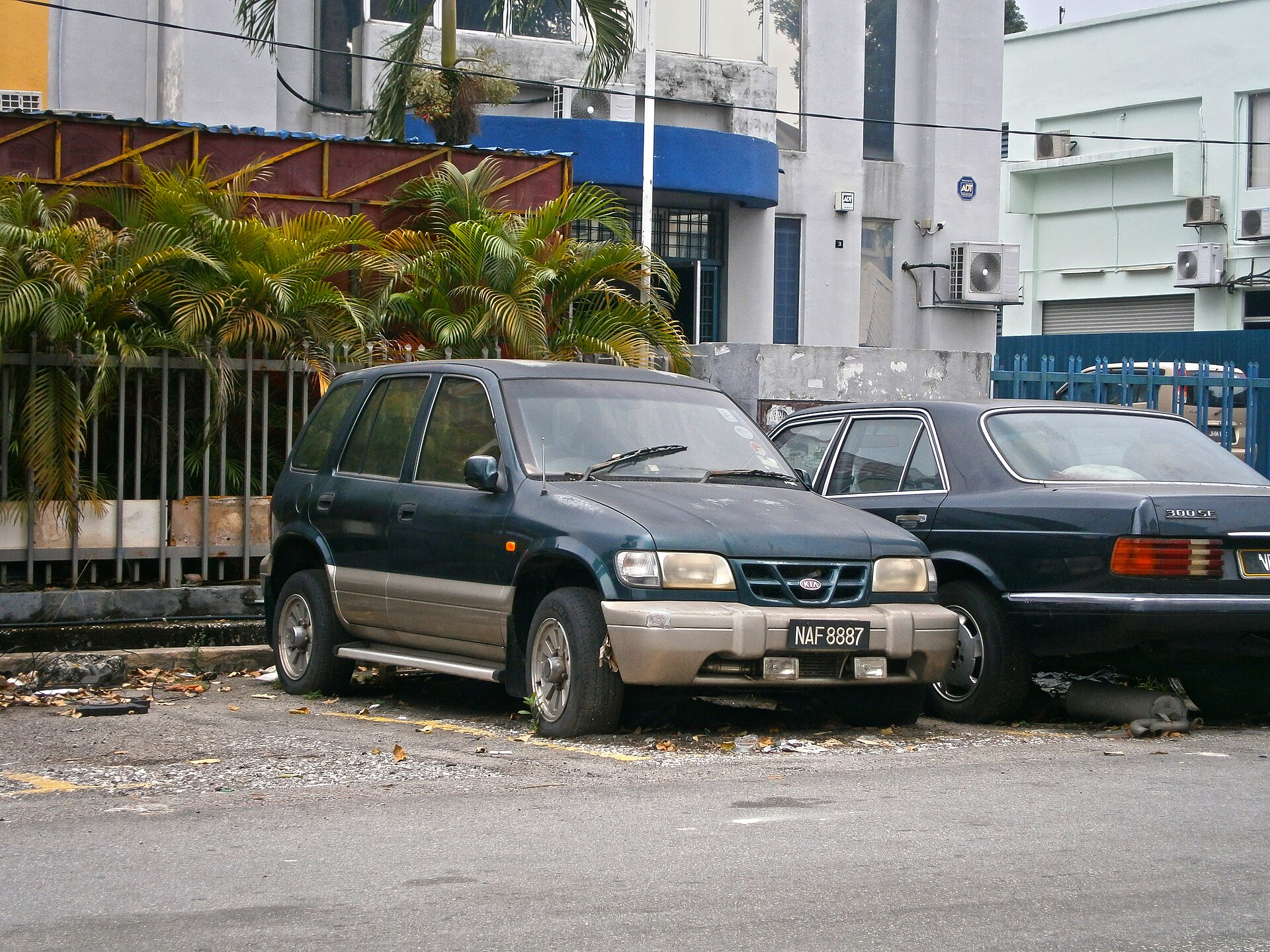
All generations by year: Sportage NQ5 (2021–now) · Sportage QL (2015–2021) · Sportage SL (2010–2015) · Sportage JE (2004–2010) · Sportage JA (1993–2002)
Which QL to buy
Our verdict · Sarah Whitmore
- 2.0 CRDi after July 2018: the mild-hybrid diesel with the eight-speed automatic suits drivers who cover long distances.
- 1.6 T-GDI with DCT: the most powerful European petrol version.
- 1.6 GDI: simple and front-wheel drive, with a 1,400 kg (3,086 lb) braked towing limit.
- Any QL: check the parking brake, front and rear suspension and brake discs, look for oil leaks, and confirm a full service history so the remaining warranty stays valid.
Rivals to compare include the Nissan Qashqai and other diesel SUVs.
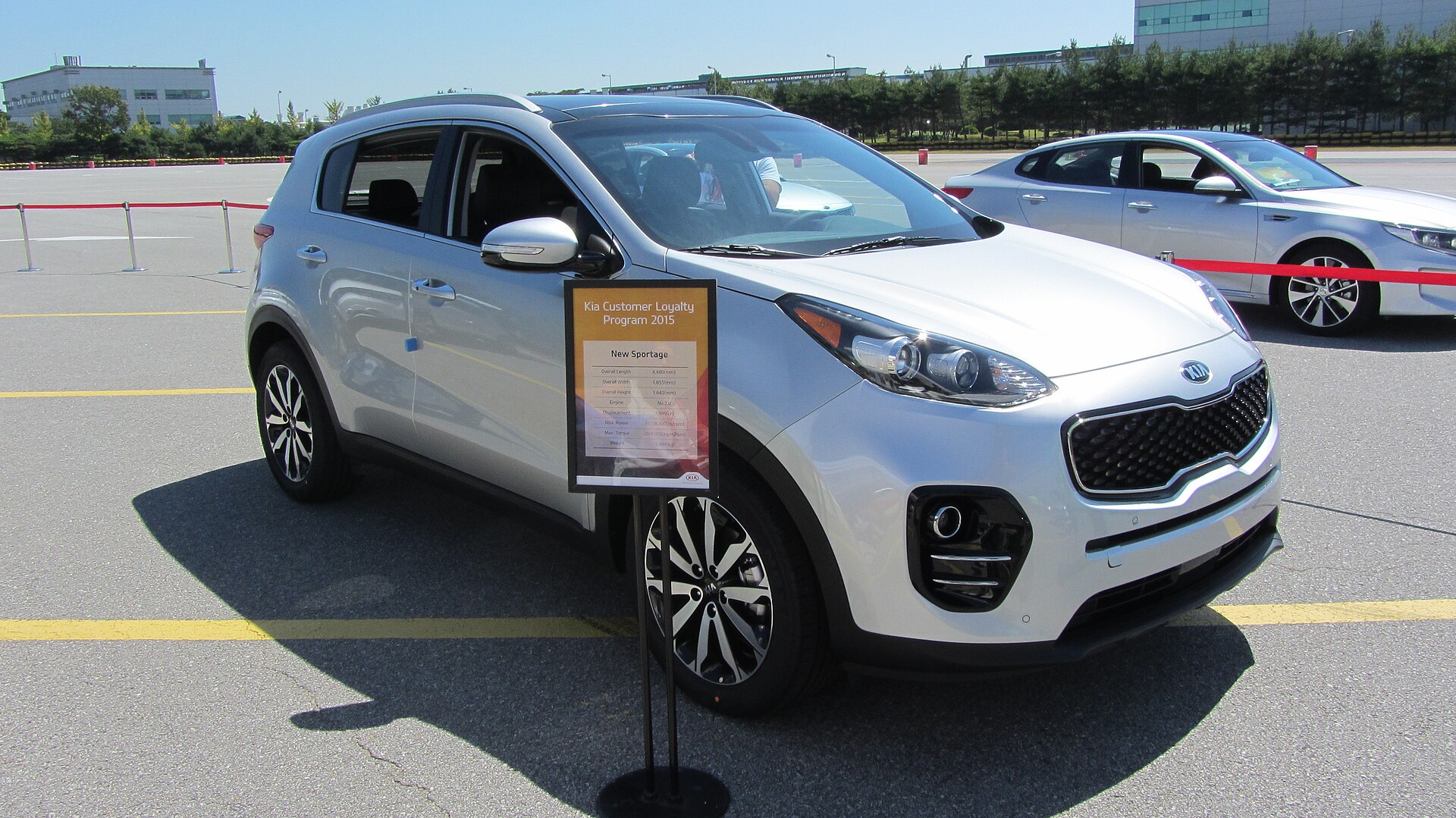
The QL is the fourth Kia Sportage, shown at the Frankfurt IAA in September 2015 and sold until the NQ5 replaced it in 2021. It shares its platform with the third-generation Hyundai Tucson, and China received a version called the KX5. In 2016, its first full year, the Sportage overtook the Rio as Kia's best-selling model worldwide.
In short
- European engines ran from the 85 kW (115 PS) 1.7 CRDi to the 136 kW (185 PS) 2.0 CRDi, with a 130 kW (177 PS) 1.6 T-GDI petrol.
- The July 2018 facelift brought a 48 V mild-hybrid diesel and an eight-speed automatic.
- Euro NCAP awarded five stars in 2015; the US model was an IIHS Top Safety Pick for 2017.
- Germany's TÜV Report 2020 rated the QL better than the SL, with the parking brake and axle suspension as weak points.
Size at a glance
Hyundai Tucson III
The Kia Sportage QL is 5 mm longer, 6 mm wider and 16 mm lower than the Hyundai Tucson III.
| Dimensions | Kia Sportage QL | Hyundai Tucson III | Difference |
|---|---|---|---|
| Length | 4,480 mm176.4 in | 4,475 mm176.2 in | +5 mm+0.2 in |
| Width | 1,855 mm73.0 in | 1,849 mm72.8 in | +6 mm+0.2 in |
| Height | 1,635 mm64.4 in | 1,651 mm65.0 in | −16 mm−0.6 in |
| Wheelbase | 2,670 mm105.1 in | 2,670 mm105.1 in | Same |
| Boot | 503 L17.8 cu ft | 513 L18.1 cu ft | −10 L−0.4 cu ft |
Nissan Qashqai J11
The Kia Sportage QL is 103 mm longer, 49 mm wider and 40 mm taller than the Nissan Qashqai J11.
| Dimensions | Kia Sportage QL | Nissan Qashqai J11 | Difference |
|---|---|---|---|
| Length | 4,480 mm176.4 in | 4,377 mm172.3 in | +103 mm+4.1 in |
| Width | 1,855 mm73.0 in | 1,806 mm71.1 in | +49 mm+1.9 in |
| Height | 1,635 mm64.4 in | 1,595 mm62.8 in | +40 mm+1.6 in |
| Wheelbase | 2,670 mm105.1 in | 2,646 mm104.2 in | +24 mm+0.9 in |
| Boot | 503 L17.8 cu ft | 430 L15.2 cu ft | +73 L+2.6 cu ft |
Kia Sportage SL
The Kia Sportage QL is 40 mm longer than the Kia Sportage SL.
| Dimensions | Kia Sportage QL | Kia Sportage SL | Difference |
|---|---|---|---|
| Length | 4,480 mm176.4 in | 4,440 mm174.8 in | +40 mm+1.6 in |
| Width | 1,855 mm73.0 in | 1,855 mm73.0 in | Same |
| Height | 1,635 mm64.4 in | 1,635 mm64.4 in | Same |
| Wheelbase | 2,670 mm105.1 in | 2,640 mm103.9 in | +30 mm+1.2 in |
| Boot | 503 L17.8 cu ft | 465 L16.4 cu ft | +38 L+1.3 cu ft |
Running cost
Fuel · Sportage QL 2.0 CRDi diesel
about 1,450 EUR fuel a year at 15,000 km
5.9 l/100 km · diesel at 1.65 EUR/l · change mileage, fuel price or version
Sportage QL specs by version
Engines
| Version | Engine | Power | Torque | Gearbox | Drive |
|---|---|---|---|---|---|
| Diesel · 5 versions | |||||
| 1.7 85 kW (116 PS) | 1.7 l · Diesel 1,700 cc | 85 kW 116 PS114 hp | - | 6-sp Manual | Front-wheel drive |
| 2.0 CRDi diesel | 2.0 l · Diesel 2,000 cc | 100 kW 136 PS134 hp | - | 6-sp Automatic | - |
| 1.7 104 kW (141 PS) | 1.7 l · Diesel 1,700 cc | 104 kW 141 PS139 hp | - | 7-sp Dual-clutch | - |
| 130 kW (177 PS) | Diesel | 130 kW 177 PS174 hp | - | - | - |
| 2.0 CRDi diesel | 2.0 l · Diesel 2,000 cc | 136 kW 185 PS182 hp | 400 Nm295 lb-ft | 6-sp Automatic | - |
| Petrol · 3 versions | |||||
| 1.6 97 kW (132 PS) | 1.6 l · Petrol 1,600 cc | 97 kW 132 PS130 hp | 161 Nm119 lb-ft | - | Front-wheel drive |
| 1.6 T-GDI petrol | 1.6 l · Petrol 1,600 cc | 130 kW 177 PS174 hp | 265 Nm195 lb-ft | 6-sp Dual-clutch | - |
| 2.4 135 kW (184 PS) | 2.4 l · Petrol 2,400 cc | 135 kW 184 PS181 hp | - | - | - |
| Other · 1 version | |||||
| 179 kW (243 PS) | - | 179 kW 243 PS240 hp | - | 6-sp Automatic | Front-wheel drive |
Performance
Show all 7 versions
| Version | 0–100 km/h | Top speed | Fuel consumption | CO₂ |
|---|---|---|---|---|
| Diesel · 5 versions | ||||
| 1.7 85 kW (116 PS) | 11.5 s 0–62 mph | 176 km/h109 mph | 4.7 l/100 km50.0 mpg US · 60.1 mpg UK | 124 g/km |
| 2.0 CRDi diesel | 12.0 s 0–62 mph | 184 km/h114 mph | 5.9 l/100 km39.9 mpg US · 47.9 mpg UK | 154 g/km |
| 1.7 104 kW (141 PS) | 11.5 s 0–62 mph | 185 km/h115 mph | 4.9 l/100 km48.0 mpg US · 57.6 mpg UK | 129 g/km |
| 130 kW (177 PS) | - | - | - | 182 g/km |
| 2.0 CRDi diesel | 9.5 s 0–62 mph | 201 km/h125 mph | 6.3 l/100 km37.3 mpg US · 44.8 mpg UK | 166 g/km |
| Petrol · 2 versions | ||||
| 1.6 97 kW (132 PS) | 11.5 s 0–62 mph | 182 km/h113 mph | - | 159 g/km |
| 1.6 T-GDI petrol | 9.1 s 0–62 mph | 201 km/h125 mph | 7.5 l/100 km31.4 mpg US · 37.7 mpg UK | 175 g/km |
Dimensions and weight
Show all 9 versions
| Version | Length | Kerb weight | Boot | Fuel tank |
|---|---|---|---|---|
| Diesel · 5 versions | ||||
| 1.7 85 kW (116 PS) | - | 1,425 kg3,142 lb | 503 l17.8 cu ft | 62 l16.4 gal US |
| 2.0 CRDi diesel | 4,485 mm176.6 in | 1,615 kg3,560 lb | 503 l17.8 cu ft | 62 l16.4 gal US |
| 1.7 104 kW (141 PS) | - | 1,470 kg3,241 lb | 503 l17.8 cu ft | 62 l16.4 gal US |
| 130 kW (177 PS) | 4,485 mm176.6 in | 1,746 kg3,849 lb | - | 62 l16.4 gal US |
| 2.0 CRDi diesel | 4,485 mm176.6 in | 1,615 kg3,560 lb | 503 l17.8 cu ft | 62 l16.4 gal US |
| Petrol · 3 versions | ||||
| 1.6 97 kW (132 PS) | 4,480 mm176.4 in | 1,490 kg3,285 lb | 503 l17.8 cu ft | 62 l16.4 gal US |
| 1.6 T-GDI petrol | 4,485 mm176.6 in | 1,534 kg3,382 lb | 503 l17.8 cu ft | 62 l16.4 gal US |
| 2.4 135 kW (184 PS) | 4,485 mm176.6 in | - | - | 62 l16.4 gal US |
| Other · 1 version | ||||
| 179 kW (243 PS) | 4,485 mm176.6 in | - | - | 62 l16.4 gal US |
Verified Manufacturer and type-approval data from our catalog · Sources and methodology
Safety
-
NHTSA 2020
US NCAP (NHTSA)
Stars from different years and organisations are not directly comparable: test protocols change every few years.
What the QL improved over the SL
The QL kept the size and five-door format of the SL but was a much stiffer, more carefully engineered car. Kia's US press material says advanced high-strength steel made up 51% of the body-in-white, against 18% before, and torsional rigidity rose by 39%. The drag coefficient fell from 0.35 to 0.33.
In Europe the body grew modestly: 4,485 mm long against 4,440 mm for the SL, with a 2,670 mm wheelbase, 30 mm more than before. Boot space increased to 503 L. The design was conceived under Peter Schreyer, Kia's chief design officer at the time, and Kia described it as inspired by modern fighter jets. The tiger-nose grille moved into a lower, wider front, with the headlights set higher up the wings.
The QL is the generation that made the Sportage Kia's volume leader. Published sales tables show 138,218 cars sold in Europe in 2016. For the full family tree, see the Kia Sportage hub page, which covers all five generations.
Platform, production and the Chinese KX5
The QL is closely related to the Hyundai Tucson of the same period, internally coded TL. The sister model is covered on our Hyundai Tucson page.
Cars for Europe came from Slovakia, as with the SL, while South Korea, China, Malaysia, Pakistan and Algeria built the model for other markets. In China the car was sold by Dongfeng Yueda Kia as the KX5, which received its own facelift in March 2019 with headlamps integrated into the grille.
All-wheel drive in the US model is the Magna-developed Dynamax system with a 50/50 locking centre differential, and AWD versions there wear a front bumper with a steeper approach angle.
QL engines and gearboxes in Europe
Over its life Europe got two petrol and four diesel outputs. Outputs are quoted in kW first, with the metric PS figure from the European sources; torque is shown only where a source confirms it. Depending on the engine, European cars had front-wheel drive or permanent all-wheel drive.
| Engine | Power | Torque | Gearbox |
|---|---|---|---|
| 1.6 GDI petrol | 97 kW (132 PS) | 161 Nm (119 lb-ft) | 6-speed manual |
| 1.6 T-GDI petrol | 130 kW (177 PS) | 265 Nm (195 lb-ft) | 6-speed manual or 7-speed DCT |
| 1.7 CRDi diesel | 85 kW (115 PS) | not confirmed | 6-speed manual |
| 1.7 CRDi diesel | 104 kW (141 PS) | not confirmed | 7-speed DCT |
| 2.0 CRDi diesel | 100 kW (136 PS) | not confirmed | 6-speed manual or automatic |
| 2.0 CRDi diesel | 136 kW (185 PS) | 400 Nm (295 lb-ft) | 6-speed automatic, 8-speed from 2018 |
The 1.6 GDI is the simplest version. mobile.de lists it at 11.5 seconds from 0 to 100 km/h and 182 km/h (113 mph), with 159 g/km of CO2. The seven-speed dual-clutch gearbox was paired with the 1.6 T-GDI and the 141 PS diesel.
North American cars were different. They used a 2.4-litre petrol engine with 135 kW (181 hp) or a 2.0 turbo with 179 kW (240 hp) in front-wheel-drive form, both with a six-speed automatic. Those figures are SAE horsepower.
The 2018 facelift and the mild-hybrid diesel
Kia facelifted the European QL in July 2018. The changes were visual and mechanical: a new headlight signature, a chrome strip running across the tailgate around the number plate, reshaped bumpers with new auxiliary lights and rear lamp surrounds colour-matched to the lights.
The technical headline was a 48 V mild-hybrid system on the 2.0 CRDi, marketed as EcoDynamics+, together with a new eight-speed automatic for the 2.0 CRDi. Engines were updated to Euro 6d-TEMP from July 2018. Kia's 2018 announcement of the updated Sportage covered the changes at the time.
The North American update came later, in mid-2019 for the 2020 model year, with redesigned headlights and bumpers and a new S trim between LX and EX.
QL dimensions and capacities
The table shows a European 1.6 GDI with front-wheel drive. Other versions differ in kerb weight and towing limits.
| Parameter | Metric | Imperial |
|---|---|---|
| Length | 4,485 mm | 176.6 in |
| Width | 1,855 mm | 73.0 in |
| Height | 1,635 mm | 64.4 in |
| Wheelbase | 2,670 mm | 105.1 in |
| Boot, seats up | 503 L | 17.8 cu ft |
| Boot, seats folded | 1,492 L | 52.7 cu ft |
| Kerb weight (1.6 GDI) | 1,490 kg | 3,285 lb |
| Fuel tank | 62 L | 13.6 UK gal |
| Towing, braked / unbraked (1.6 GDI) | 1,400 / 650 kg | 3,086 / 1,433 lb |
Combined consumption for the 1.6 GDI is listed at 6.9 L/100 km (40.9 mpg UK); across the range, mobile.de quotes 4.2 to 7.6 L/100 km.
Crash tests: Euro NCAP, ANCAP and IIHS
Euro NCAP rated the QL five stars in 2015. Detailed percentages for that test are not confirmed by an official source we could open, so only the star rating is given here.
In Australia, ANCAP's 2016 test recorded 13.62 of 16 points in the frontal offset crash, full marks in the side and pole impacts and an Adequate pedestrian rating. In the United States the 2017 Sportage was an IIHS Top Safety Pick, with Good ratings in both small-overlap tests, the moderate-overlap test and the roof test. Weaker results were Marginal in the updated side test and Poor for headlights.
Each of these results applies to the QL only. A Latin NCAP zero-star result from 2021 concerns a Korean-built version with two airbags and no stability control tested for Latin American markets, not the European car.
QL reliability: TÜV and ADAC findings
German inspection data favour the QL. The Auto Bild TÜV Report 2020, as reported by dpa in December 2019, rated it better than the SL. The weak points it named for both generations were:
- axle suspension, flagged above average from the first inspection;
- brake discs, flagged more often from the second inspection;
- oil loss, a common finding;
- the parking brake, criticised in all model years.
On the positive side, drive shafts, steering, brake lines and the exhaust system rarely caused failures, and rust did not raise the defect rate. ADAC breakdown statistics showed younger Sportage model years doing better than older ones, with 2015 registrations performing well.
Did you know?
- The Sportage QL is generation 4 of 5 of the Kia Sportage in our catalog.
- The Sportage QL offers up to 179 kW (243 PS) - 44 kW more than the Sportage SL (2010–2015) (+33%).
- At up to 4,485 mm long, it is 45 mm longer than the Sportage SL (2010–2015).
- Its lightest version weighs 1,425 kg, 45 kg more than in the Sportage SL (2010–2015).
Image credits · Photos from Wikimedia Commons under free licences
- Kia Sportage JA · Photo: Manoj Prasad from Kuala Lumpur, Malaysia / Wikimedia Commons, CC BY-SA 2.0
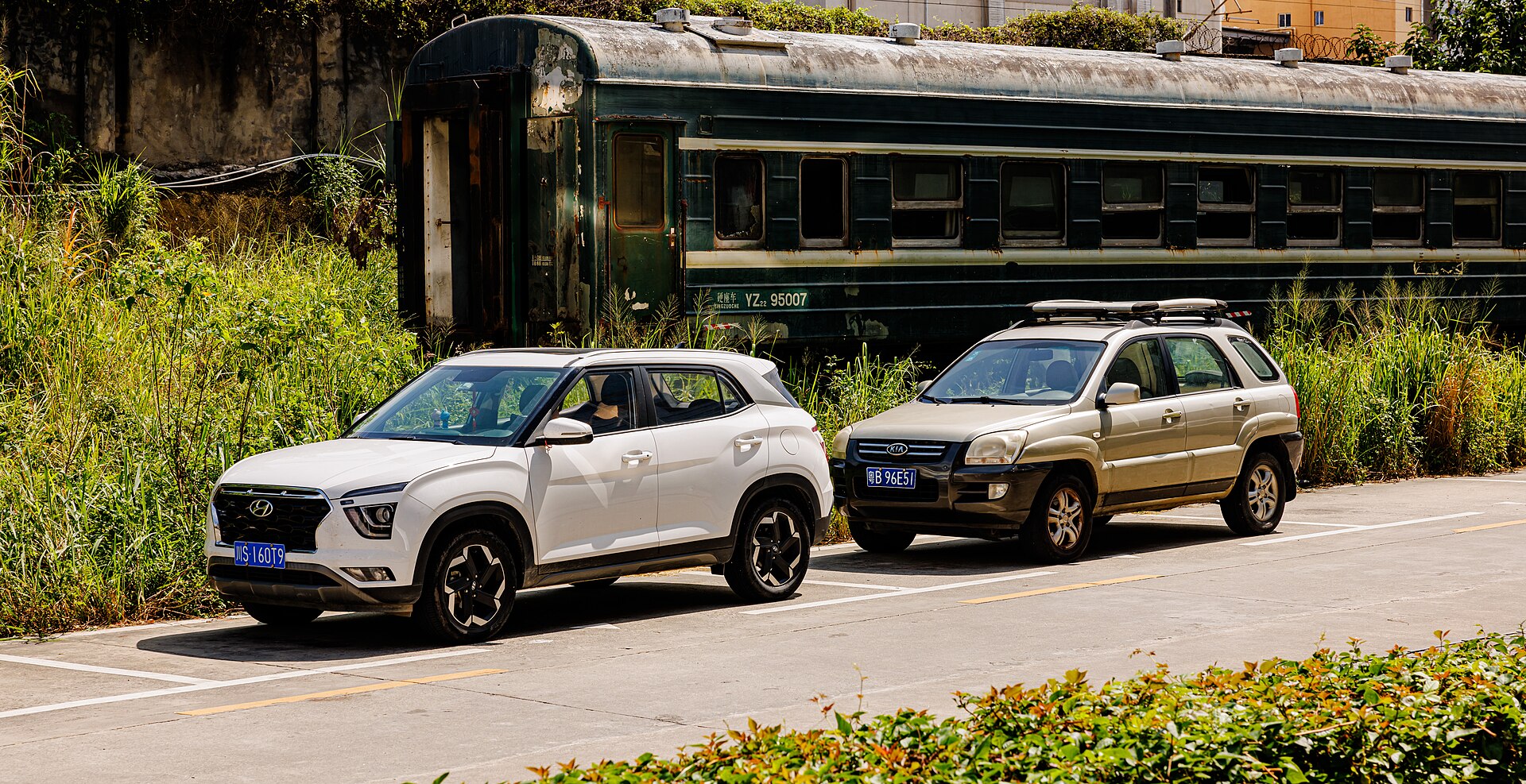
- Kia Sportage JE · Photo: Dinkun Chen / Wikimedia Commons, CC BY-SA 4.0
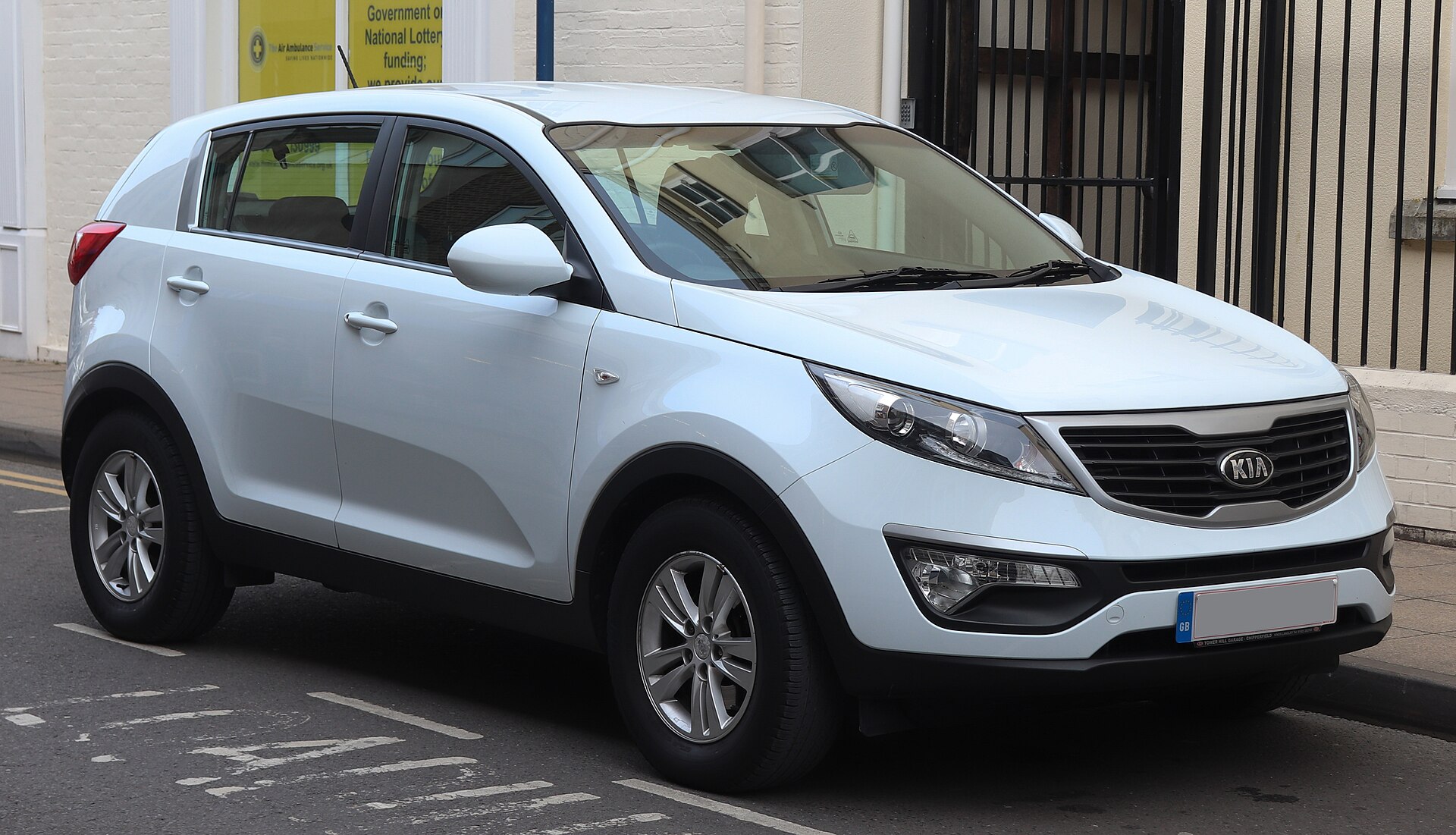
- Kia Sportage SL · Photo: Vauxford / Wikimedia Commons, CC BY-SA 4.0
- Kia Sportage QL · Photo: Areaseven / Wikimedia Commons, CC BY-SA 4.0
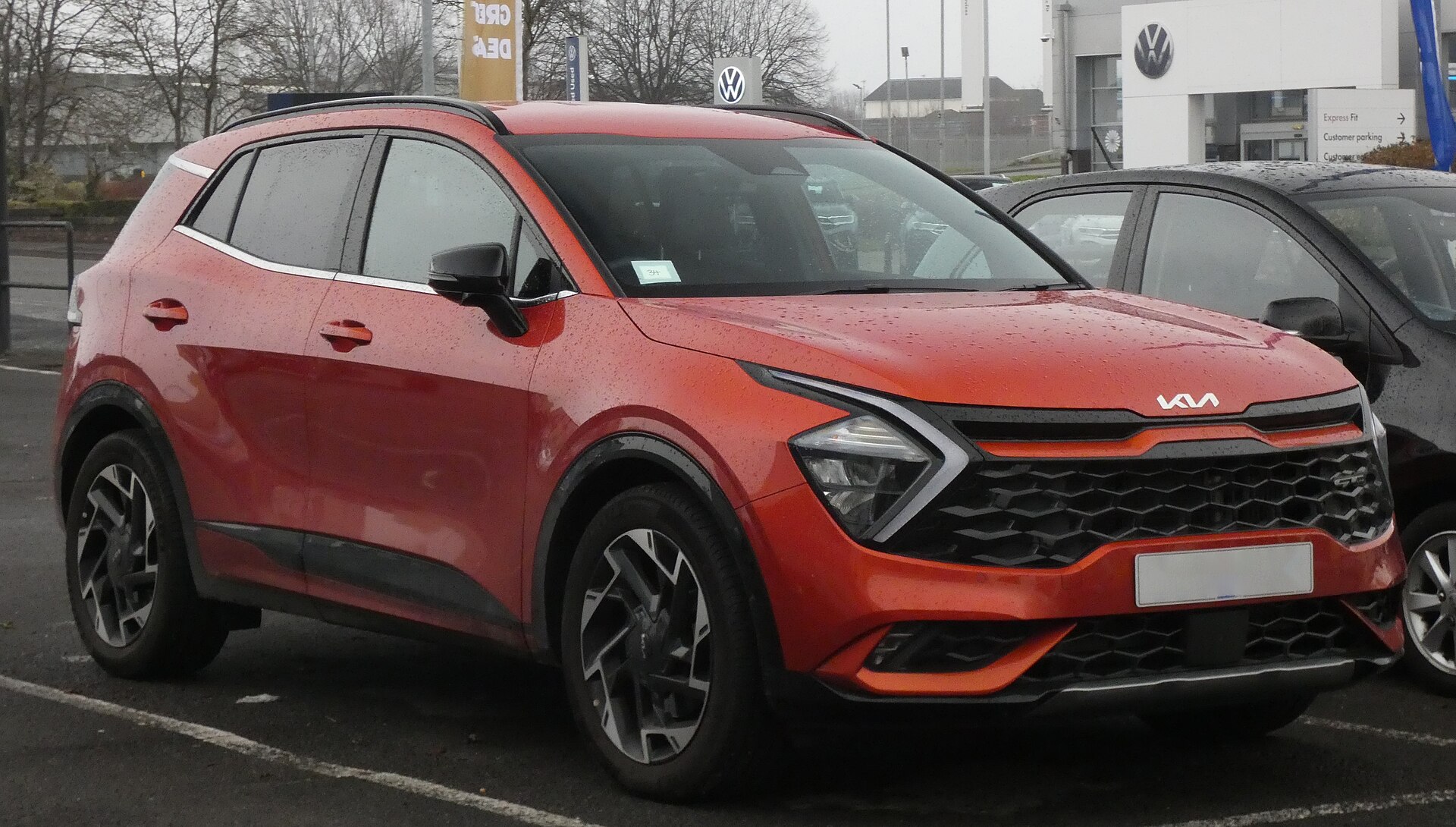
- Kia Sportage NQ5 · Photo: Harvey Bold / Wikimedia Commons, CC0
QL rivals
-
Ended 2018
- Years
- 2004–2018
- Body
- SUV
- Fuel
- Petrol, Diesel
- Power
- 100–136 kW (136–185 PS)
4 generations
- JM
- LM
- III
- Tucson
-
In production
- Years
- 2006–present
- Body
- SUV
- Fuel
- Petrol, Diesel, Hybrid
- Power
- 81–139 kW (110–189 PS)
3 generations
- J10
- J11
- III
-
In production
- Years
- 2008–present
- Body
- SUV
- Fuel
- Petrol, Diesel, Hybrid
- Power
- 88–178 kW (120–242 PS)
3 generations
- I
- II
- III
-
In production
- Years
- 2000–present
- Body
- SUV
- Fuel
- Petrol, Diesel, Hybrid
- Power
- 84–206 kW (114–280 PS)


Popular comparisons
FAQ
What years is the Kia Sportage QL?
The QL was shown in September 2015, went on sale in 2016 (as a 2017 model in North America) and was replaced by the NQ5 in 2021. The European facelift arrived in July 2018.
Does the Kia Sportage QL have a hybrid?
Only as a mild hybrid. From the 2018 facelift the 2.0 CRDi diesel was offered with a 48 V mild-hybrid system. Full and plug-in hybrids arrived with the NQ5.
Which engine is best in the Sportage QL?
For long distances, the post-2018 2.0 CRDi mild hybrid with the eight-speed automatic. For petrol buyers, the 130 kW (177 PS) 1.6 T-GDI is the strongest European option.
What are common problems with the Kia Sportage QL?
The TÜV Report 2020 flagged axle suspension, brake discs, oil loss and the parking brake. Overall it rated the QL better than the earlier SL.
What is the boot size of the Kia Sportage QL?
503 L with the rear seats up and 1,492 L with them folded, according to mobile.de data for the 1.6 GDI.
Data sources
Data checked by an editor against the sources below.
- 1cars archive: Kia Sportage Generations: Specs, Safety and History
- The text of this article (1cars archive)
- Wikipedia - Kia Sportage
- Mobile - Daten Fakten
- Co - Five Stars Awarded To 11 Cars In Latest Euro Ncap Tests
- ADAC
- EEA CO₂ monitoring (European Environment Agency, CC BY 4.0)
- NHTSA 5-Star Safety Ratings (US NCAP) — U.S. Government work, public domain