Best hybrid cars 2026: seven self-charging hybrids and what they save
A self-charging (full) hybrid can drive short distances on electric power, recovers energy when braking and never needs a plug. That makes it the simplest way to cut fuel use without changing how you live with a car. The seven hybrids below are on sale new in Europe in 2026 and range from a supermini to a family SUV.
Where the same model is also sold with a plain petrol engine, we compare the two. That shows what the hybrid system actually saves in the official WLTP test, and what it costs to buy. All figures are the versions listed by ADAC, Germany's motoring club.
Quick picks
- Most economical: Renault Clio E-Tech – 4.1 l/100 km WLTP.
- Best all-rounder: Toyota Corolla Hybrid.
- Longest warranty: Kia Niro Hybrid – seven years.
- Best hybrid SUV: Toyota RAV4 – 4.9 l/100 km in a mid-size body.
| Model (hybrid version) | System power | Hybrid WLTP | Same model, petrol | Saving | Hybrid list price from, Germany |
|---|---|---|---|---|---|
| Toyota Corolla 1.8 Hybrid | 103 kW (140 PS) | 4.4 l/100 km | hybrid only | – | €33,340 (2025) |
| Renault Clio E-Tech 160 | 116 kW (158 PS) | 4.1 l/100 km | 5.1 l/100 km (TCe 115) | 1.0 l (20%) | €24,200 (2026) |
| Kia Niro 1.6 GDI HEV | 102 kW (138 PS) | 4.6 l/100 km | hybrid only | – | €33,690 (2026) |
| Hyundai Kona 1.6 GDI HEV | 102 kW (138 PS) | 4.6 l/100 km | 5.7 l/100 km (1.0 T-GDI) | 1.1 l (19%) | €33,450 (2025) |
| Honda Civic e:HEV | 135 kW (184 PS) motor | 4.8 l/100 km | hybrid only | – | €37,900 (2025) |
| Toyota RAV4 2.5 Hybrid | 136 kW (185 PS) | 4.9 l/100 km | hybrid or plug-in only | – | €43,990 (2026) |
| Kia Sportage 1.6 T-GDI Hybrid | 176 kW (239 PS) | 5.8 l/100 km | 7.2 l/100 km (1.6 T-GDI) | 1.4 l (19%) | €38,990 (2025) |
The saving is our own calculation from the two WLTP figures. One litre per 100 km means 150 litres less fuel over 15,000 km a year. Your own saving depends on how and where you drive. Plug-in hybrids are a different choice, because they need regular charging to deliver their low official figures.
-
1. Toyota Corolla E210
Best all-rounder
- Production years
- 2018–present
- Body type
- Sedan, Hatchback, Station wagon
- Fuel
- Petrol, Hybrid
- Power output
- 85–144 kW (116–196 PS)
Toyota sells the European Corolla hatchback only as a hybrid, built at Burnaston in the UK. The fifth-generation hybrid system, introduced with the 2023 update, gives the 1.8 Hybrid 103 kW (140 PS) and an official 4.4 l/100 km WLTP. A 2.0 Hybrid with up to 144 kW (196 PS) is the choice for brisker performance. Prices start at €33,340 in Germany, and Euro NCAP awarded five stars in 2019. The drawbacks: the 361-litre boot is small for the class, and ADAC lists the 12-volt starter battery as a frequent breakdown cause on 2019–2023 cars.
Pros
- 4.4 l/100 km WLTP
- Choice of 1.8 or 2.0 hybrid
- Five-star Euro NCAP (2019)
Cons
- Starter-battery breakdowns in ADAC statistics
Spec sheet: Toyota Corolla E210 1.2 Turbo 85 kW (116 PS)
Full review: Toyota Corolla E210 -
2. Renault Clio VI
Most economical and best value
- Production years
- 2025–present
- Body type
- Hatchback
- Fuel
- Petrol, Diesel, Hybrid
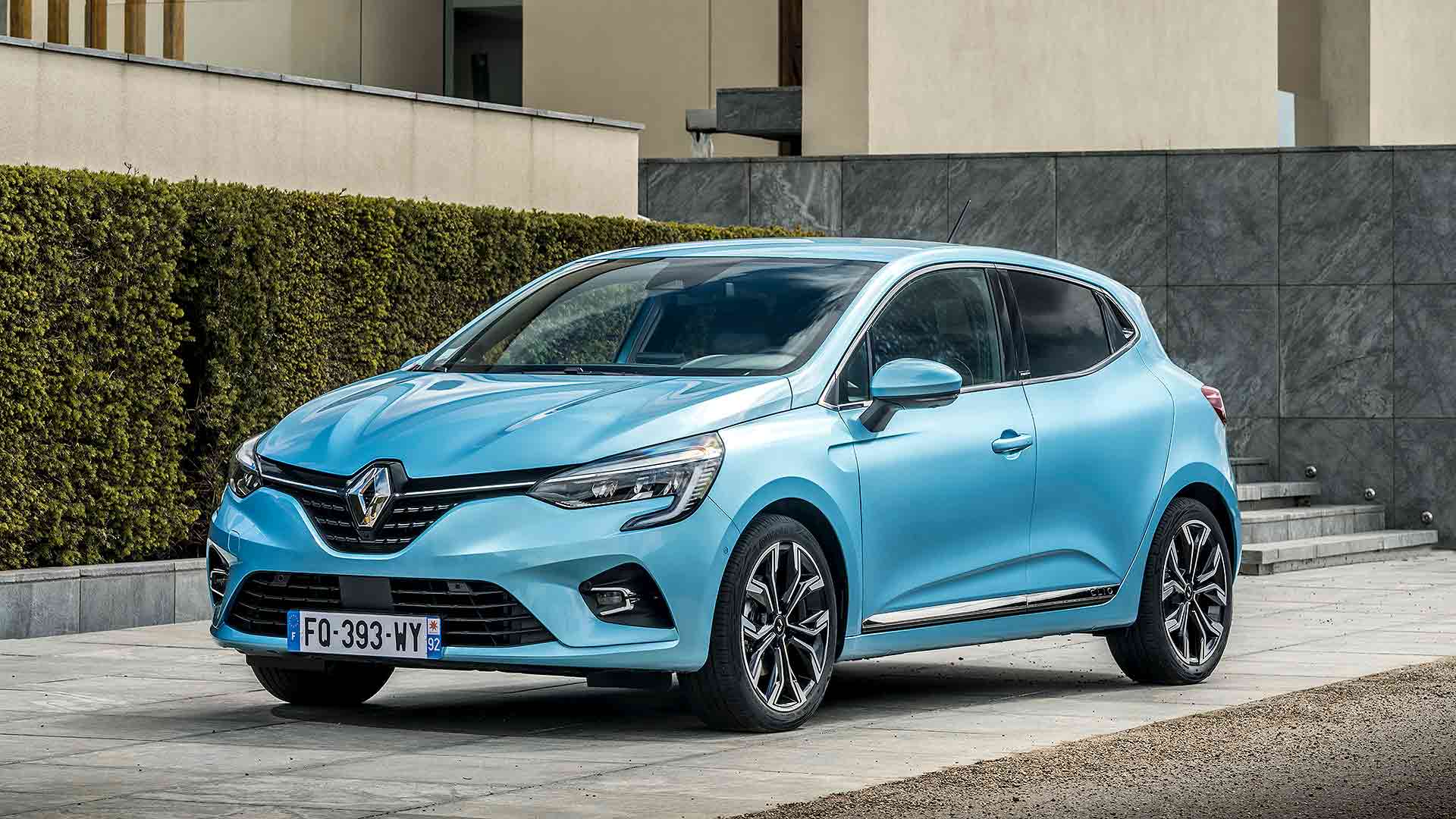
The sixth Clio went on sale in Germany in January 2026, and its E-Tech full hybrid is the most frugal car here at 4.1 l/100 km WLTP. With 116 kW (158 PS) it also reaches 100 km/h in 8.3 s, two seconds quicker than the petrol TCe 115. The hybrid costs €24,200 in Germany, €4,300 more than the TCe, and saves 1.0 l/100 km in the official test. That makes it the cheapest full hybrid in this list. The drawbacks: the hybrid battery cuts the boot from 327 to 301 litres, and the car may tow only 900 kg.
Full review: Renault Clio VIPros
- 4.1 l/100 km WLTP
- Cheapest hybrid here at €24,200
- 0–100 km/h in 8.3 s
Cons
- 301-litre boot in hybrid form
-
3. Kia Niro SG2
Longest warranty
- Production years
- 2022–present
- Body type
- SUV
- Fuel
- Hybrid, Plug-in hybrid, Electric
- Power output
- 104–150 kW (141–204 PS)
The second-generation Niro arrived in 2022 and was facelifted for 2026. In Germany the updated car is listed only as a 1.6 GDI hybrid with 102 kW (138 PS) and a six-speed dual-clutch gearbox. It uses 4.6 l/100 km WLTP, carries 430 litres of luggage and costs from €33,690. Kia's warranty runs for seven years or 150,000 km, the longest in this list. The drawbacks: Euro NCAP awarded only four stars in 2022, and the hybrid needs 11.3 s to reach 100 km/h.
Pros
- Seven-year or 150,000 km warranty
- 430-litre boot
- 4.6 l/100 km WLTP
Cons
- Four-star Euro NCAP (2022)
Spec sheet: Kia Niro SG2 1.6 l GDi Hybrid 104 kW (141 PS)
Full review: Kia Niro SG2 -
4. Hyundai Kona II (SX2)
Biggest boot
- Production years
- 2023–present
- Body type
- SUV
- Fuel
- Petrol, Hybrid, Electric
The Kona shows what a hybrid saves in a small SUV. ADAC lists the 1.6 GDI hybrid at 4.6 l/100 km WLTP, against 5.7 l/100 km for the 1.0 T-GDI petrol – 1.1 litres or 19 per cent less. Unusually, the hybrid loses no boot space: both hold 466 litres, the most of any hybrid here. Prices start at €33,450 in Germany, and the vehicle warranty runs for five years. The drawback: the hybrid takes 11.0 s to reach 100 km/h and costs several thousand euros more than the petrol.
Full review: Hyundai Kona II (SX2)Pros
- 466-litre boot, same as the petrol
- 19 per cent lower WLTP consumption than the petrol
- Five-year warranty
Cons
- Hybrid premium over the petrol version
-
5. Honda Civic XI
Best hybrid to drive
- Production years
- 2021–present
- Body type
- Sedan, Liftback
- Fuel
- Petrol, Hybrid
- Power output
- 118–135 kW (160–184 PS)
The Civic's e:HEV pairs a 2.0-litre Atkinson-cycle petrol engine with a 135 kW (184 PS) electric drive motor; Wikipedia gives the combined output as 158 kW. In the Civic that means 0–100 km/h in 7.8 s, the quickest hybrid here, and 4.8 l/100 km WLTP. Prices start at €37,900 in Germany. Euro NCAP awarded five stars in 2022. The drawbacks: it is the second most expensive car in this list and may tow only 750 kg.
Pros
- 0–100 km/h in 7.8 s
- 4.8 l/100 km WLTP
- Five-star Euro NCAP (2022)
Cons
- High price and 750 kg towing limit
Spec sheet: Honda Civic XI 2.0 e:HEV 135 kW (184 PS)
Full review: Honda Civic XI -
6. Toyota RAV4 XA60
Best hybrid SUV
- Production years
- 2025–present
- Body type
- SUV
- Fuel
- Hybrid, Plug-in hybrid
- Power output
- 135–224 kW (184–305 PS)
The new RAV4, on sale in Germany from June 2026, is offered only with hybrid and plug-in hybrid drives. ADAC lists the front-wheel-drive 2.5 Hybrid with 136 kW (185 PS) at 4.9 l/100 km WLTP, remarkable for a 4,600 mm SUV weighing 1,655 kg. It reaches 100 km/h in 8.0 s and costs from €43,990. An all-wheel-drive AWD-i version has 143 kW (194 PS). The drawbacks: the 514-litre boot is modest for the class, and the new generation had no Euro NCAP result at the time of writing.
Pros
- 4.9 l/100 km WLTP in a mid-size SUV
- AWD-i all-wheel drive available
- 0–100 km/h in 8.0 s
Cons
- No Euro NCAP result yet for the new generation
Spec sheet: Toyota RAV4 XA60 2.5 Hybrid FWD 135 kW (184 PS)
Full review: Toyota RAV4 XA60 -
7. Kia Sportage NQ5
Biggest saving over petrol
- Production years
- 2021–present
- Body type
- SUV
- Fuel
- Petrol, Diesel, Hybrid, Plug-in hybrid
- Power output
- 85–195 kW (116–265 PS)
The Sportage shows the largest gap between hybrid and petrol in this list. ADAC lists the 1.6 T-GDI Hybrid at 5.8 l/100 km WLTP and the plain 1.6 T-GDI at 7.2 l/100 km, a saving of 1.4 litres. The hybrid is also more powerful, with 176 kW (239 PS) against 110 kW, and its boot is bigger: 587 litres against 562. It costs €5,000 more in Germany, from €38,990. Euro NCAP awarded five stars in 2022. The drawback: it is the thirstiest hybrid here, as expected for a 1,665 kg SUV.
Pros
- 1.4 l/100 km less than the petrol version
- 176 kW (239 PS)
- 587-litre boot
Cons
- Highest hybrid consumption here: 5.8 l/100 km
Spec sheet: Kia Sportage NQ5 1.6 l T-GDI 48V mild hybrid 110 kW (150 PS)
Full review: Kia Sportage NQ5



Data ranking: Most economical cars — all 256 models in our catalog with a figure, ranked by the numbers.
How we chose
Selection. We considered full (self-charging) hybrids sold new in Europe in 2026 with a published model page on 1cars. Mild hybrids with 48-volt systems were not counted, because they cannot drive on electric power alone. The current Toyota Prius is sold in Europe only as a plug-in hybrid, so it belongs in a plug-in list. Models without a page in our catalogue yet, such as the Toyota Yaris and Honda Jazz, could not be included.
Data sources. WLTP consumption, system power, boot volumes, braked towing limits, warranty terms and German list prices come from the ADAC Autokatalog pages for the named versions (accessed October 2026). Generation years and Euro NCAP stars with their test year come from the 1cars catalogue. Hybrid system details come from English-language Wikipedia. Breakdown causes are from the ADAC breakdown statistics on the model pages.
Ranking. The order is editorial and weighs economy, price, space and safety. It is not a test score. Prices are German list prices with the year the version went on sale and differ in other markets. Full engine histories are on our model pages, for example the Toyota Corolla and Kia Niro.
Frequently asked questions
How much fuel does a hybrid save over a petrol car?
In the WLTP figures listed by ADAC, the hybrid versions of the Renault Clio, Hyundai Kona and Kia Sportage use 1.0–1.4 l/100 km less than their petrol versions, about 19–20 per cent.
Do self-charging hybrids need to be plugged in?
No. A full hybrid charges its small battery from the engine and from braking. Only plug-in hybrids and electric cars need a charging cable.
Is a hybrid worth the extra price?
It depends on your mileage. In Germany the Clio E-Tech costs €4,300 more than the Clio TCe 115 and saves 1.0 l/100 km in the WLTP test. At 15,000 km a year, that WLTP saving equals 150 litres of fuel.
Are hybrid cars reliable?
ADAC's breakdown statistics name the 12-volt starter battery as a common breakdown cause for the Toyota Corolla and RAV4. A regular check of the starter battery is worthwhile on any hybrid, and a long warranty such as Kia's seven years adds peace of mind.