
 Honda Accord
All generations, specs and history
Updated Published Sources (7) Report an error
By Felix Hartmann, Automotive Technology & EV Contributor Reviewed by Oleksandr Hnatiuk
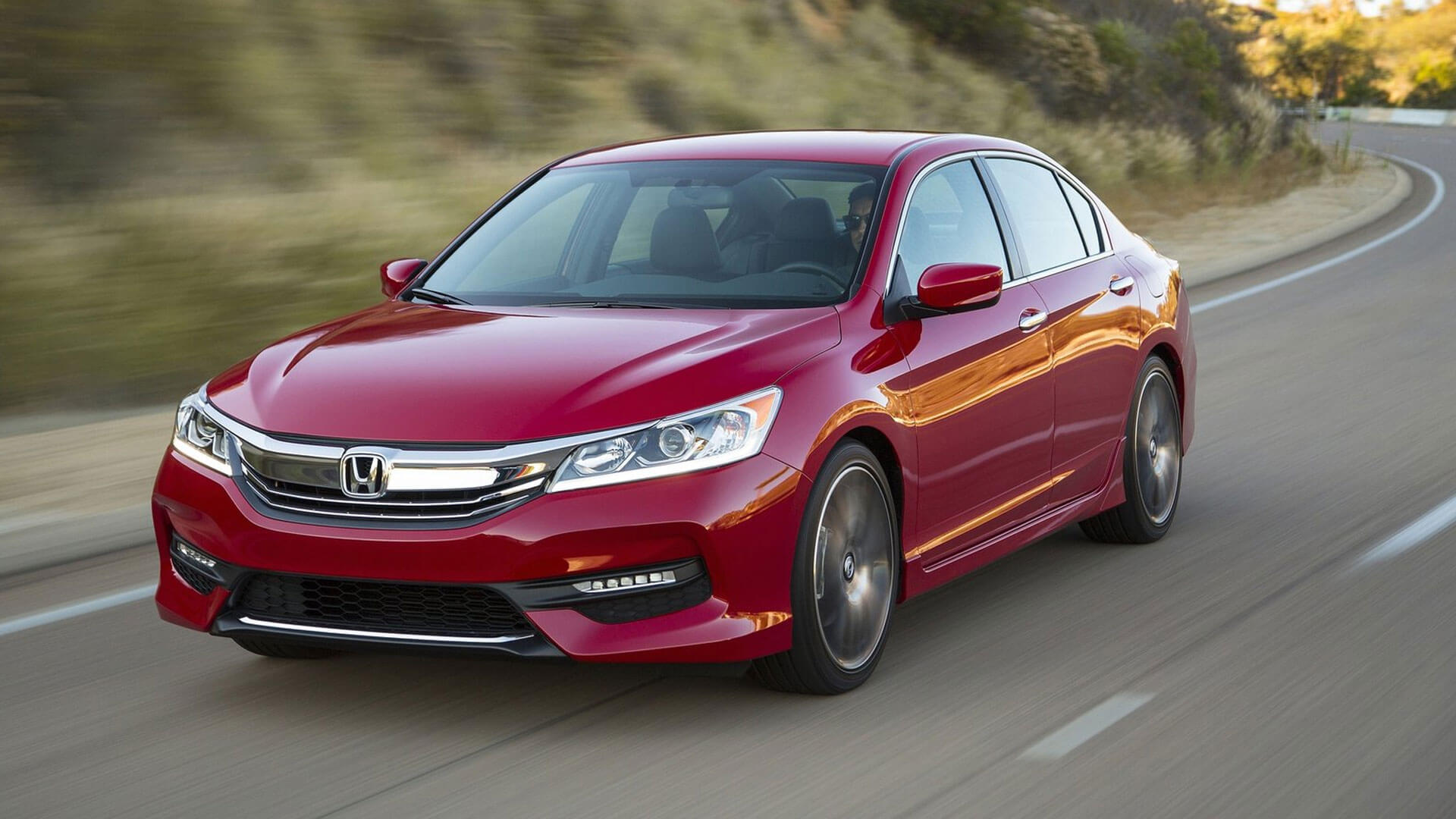
- Built
- 1976–present
- Generations
- 11
- Top power
- 207 kW (281 PS)
- New price
- from about €24,800 (2008)
Timeline
Accord generations
Click a generation for its own page
VIII and IX overlapped in 2012–2013, so IX sits on a second lane
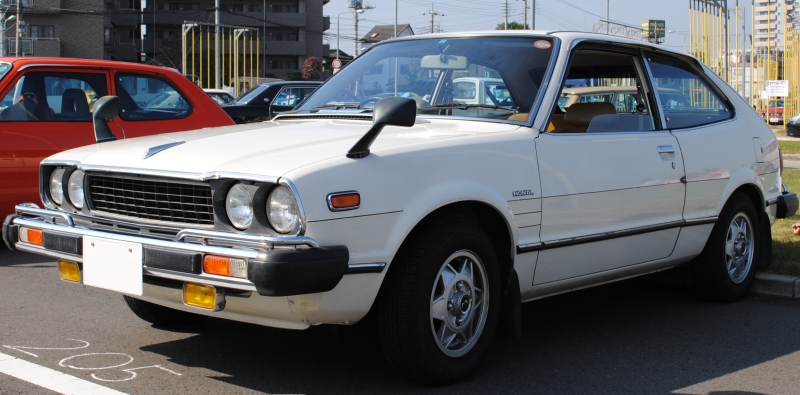
- Accord I 1976–1981 · Sedan, Hatchback · 50–59 kW (68–80 PS)
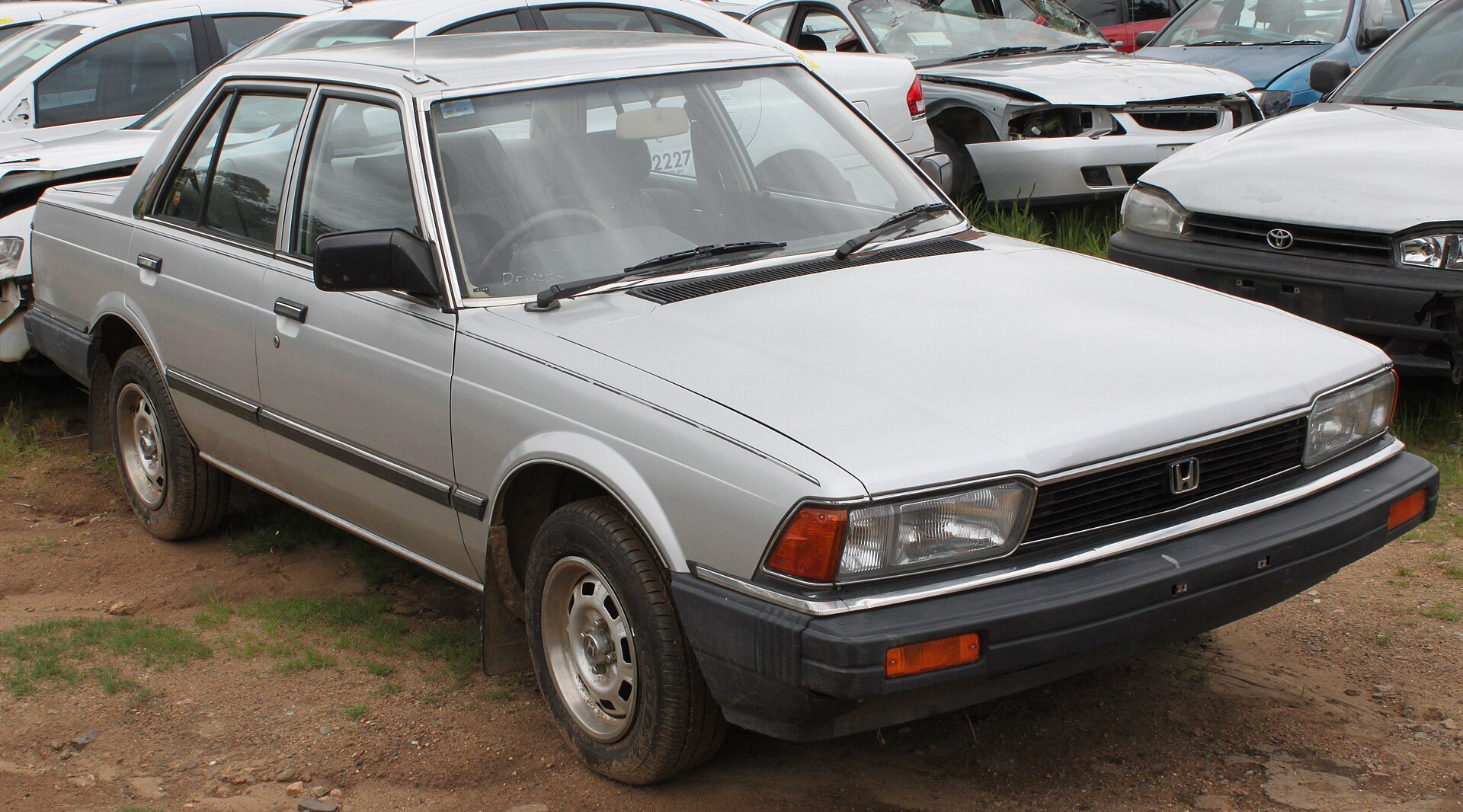
- Accord II 1981–1985 · Sedan, Hatchback · 59–74 kW (80–101 PS)
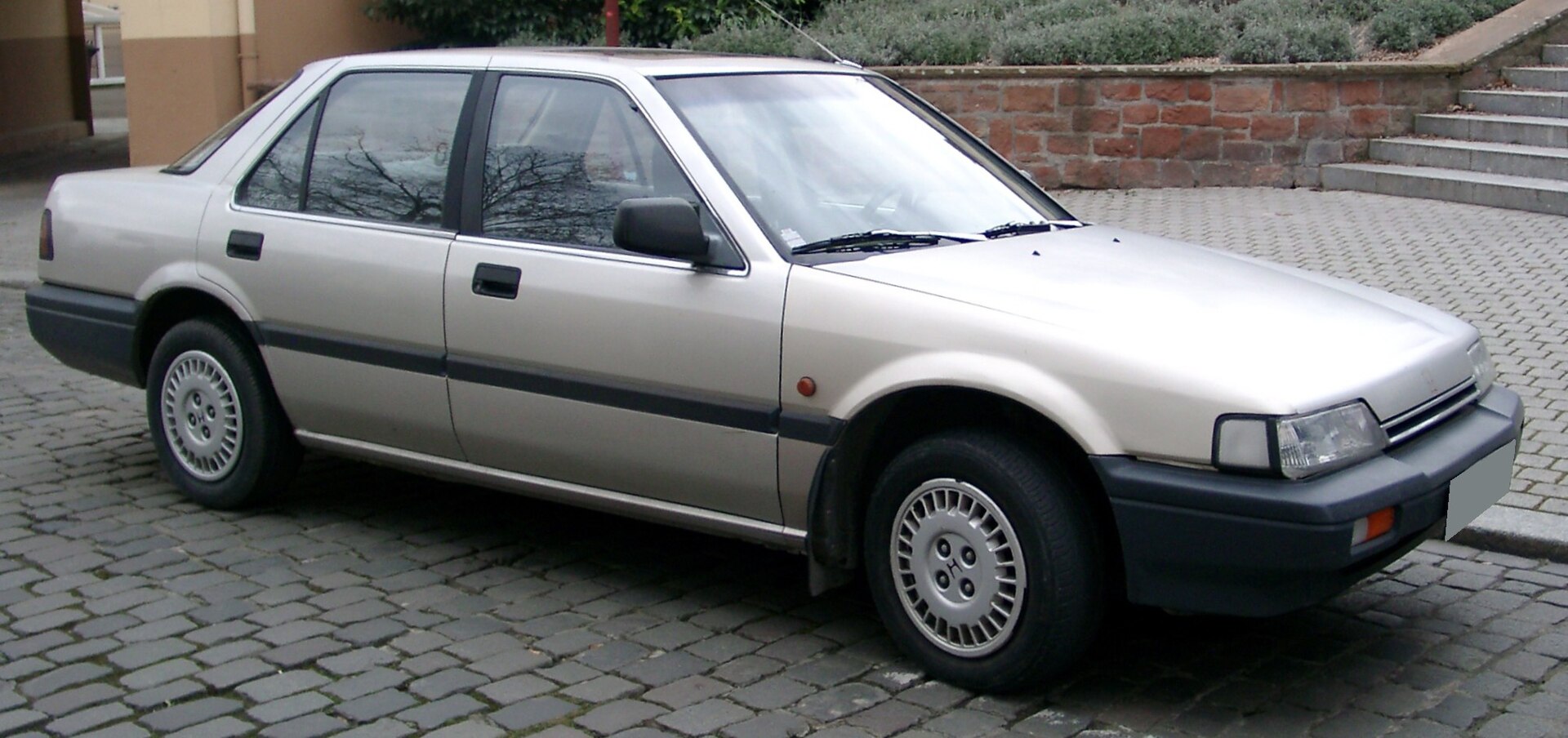
- Accord CA 1985–1989 · Sedan, Hatchback · 74–118 kW (101–160 PS)
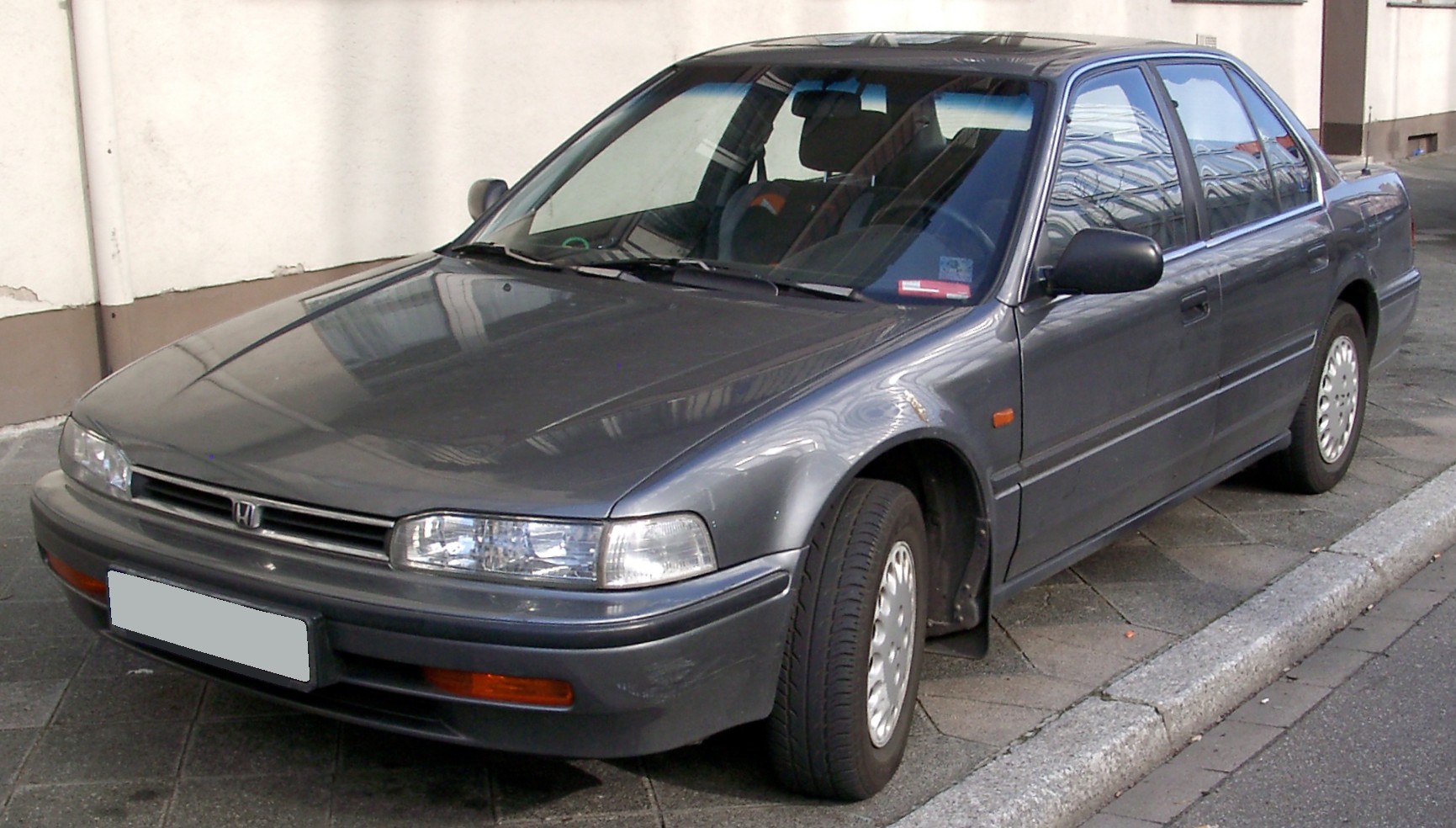
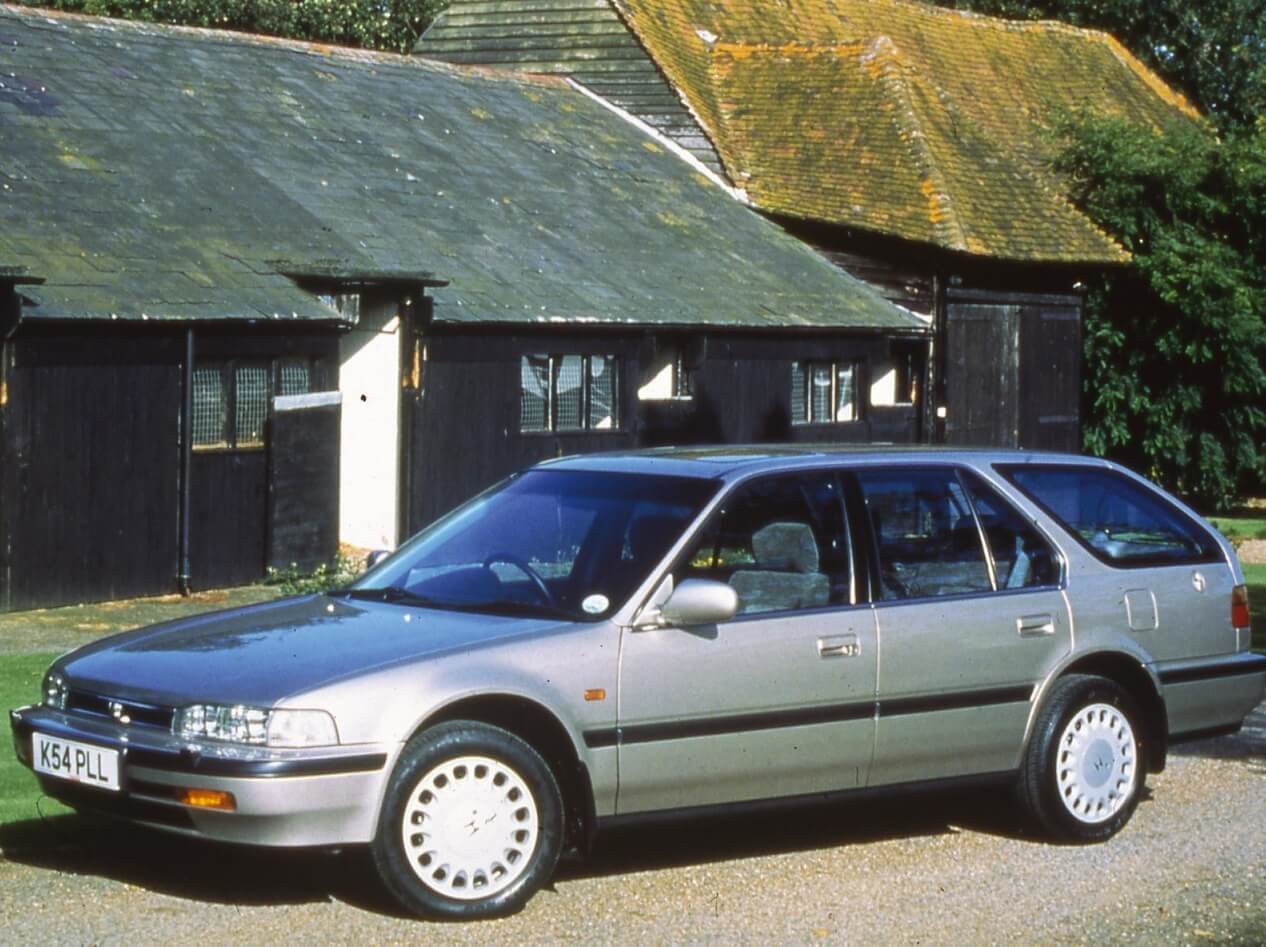
- Accord CB 1989–1993 · Sedan, Station wagon · 98–118 kW (133–160 PS)
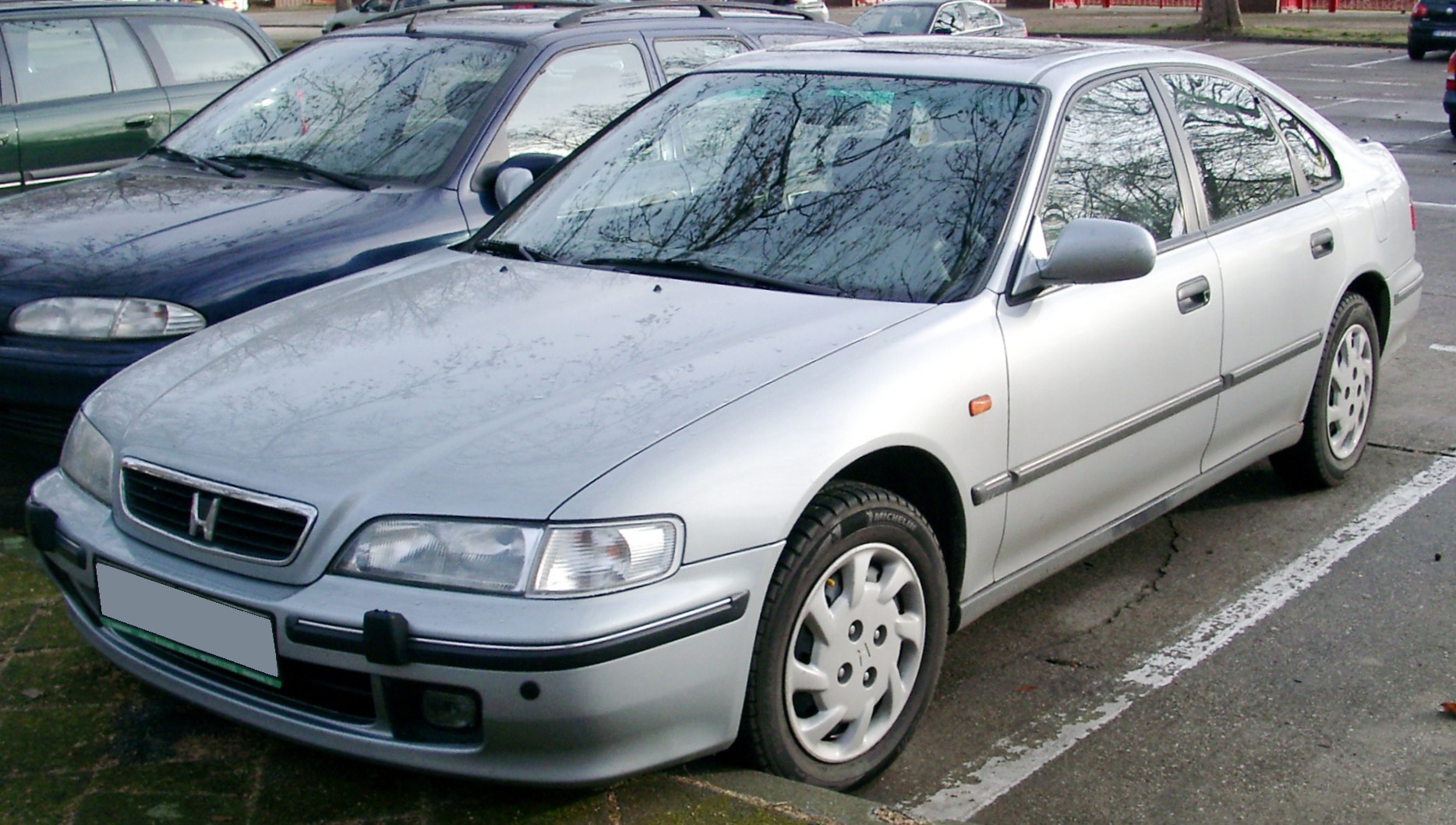
- Accord CD 1993–1998 · 77–140 kW (105–190 PS)
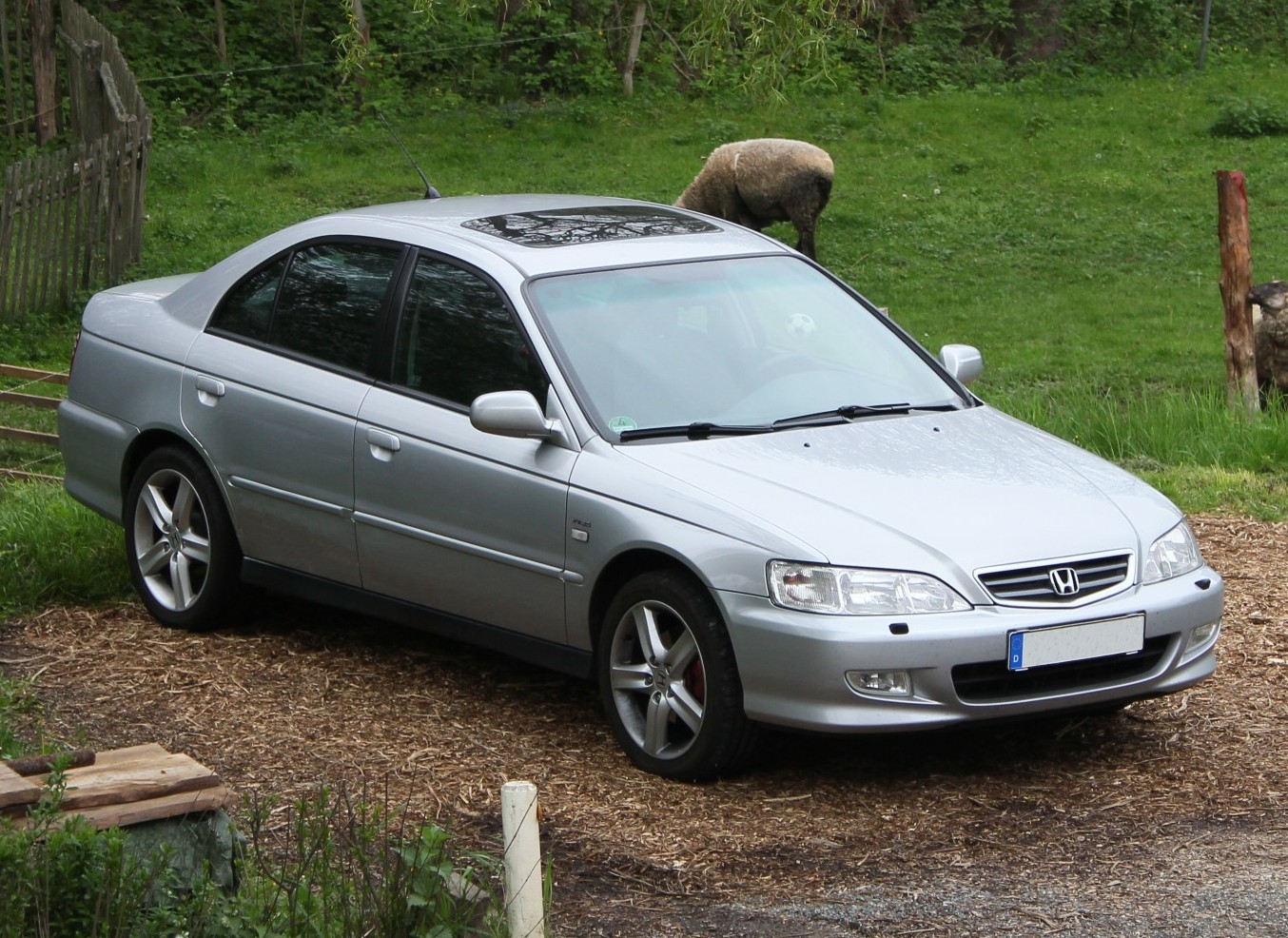
- Accord VI 1998–2002 · 85–147 kW (116–200 PS)
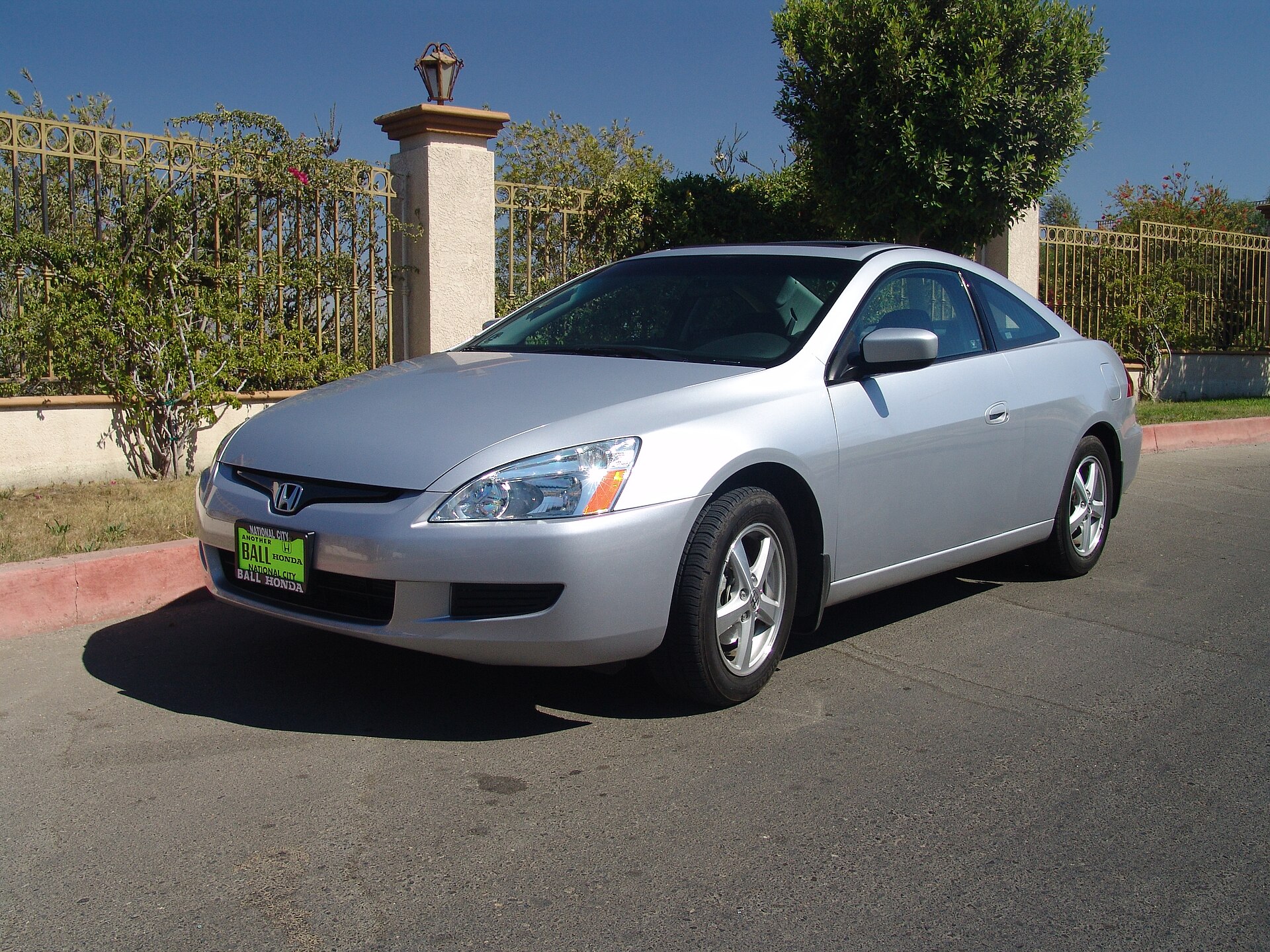
- Accord VII 2002–2007 · Sedan, Station wagon · 103–140 kW (140–190 PS)
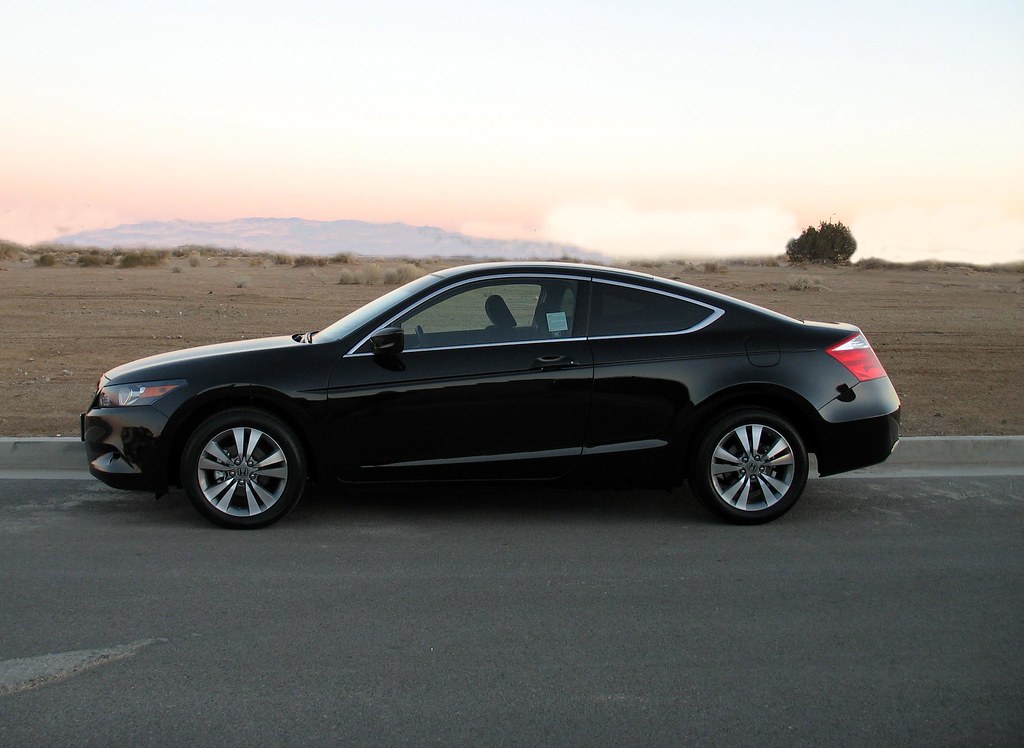
- Accord VIII 2008–2013 · Sedan, Station wagon · 115–148 kW (156–201 PS)
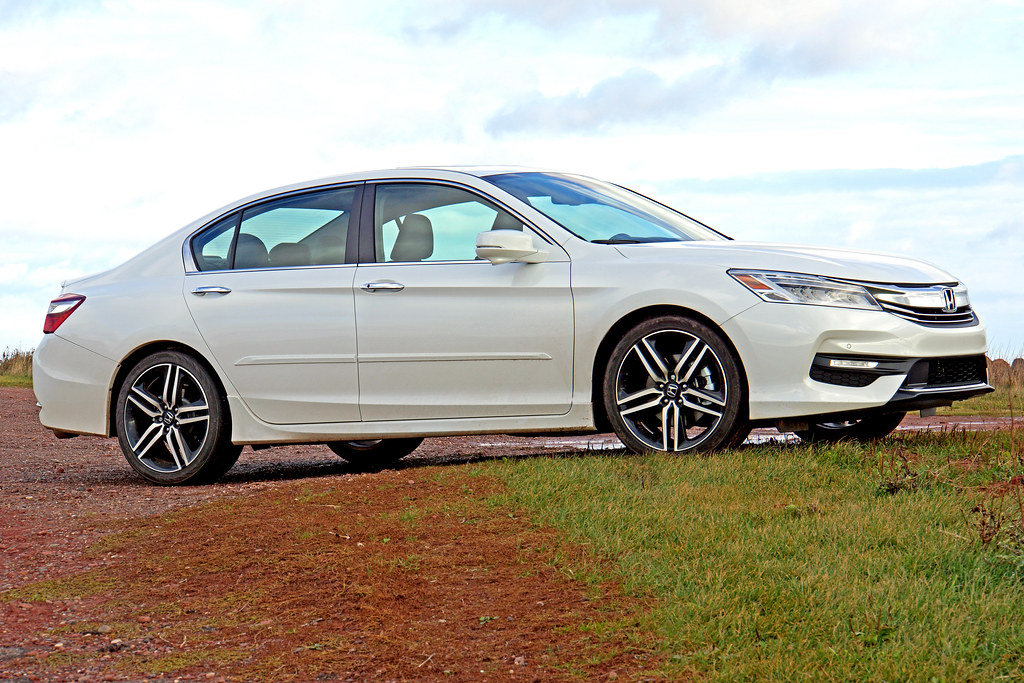
- Accord IX 2012–2017 · Sedan, Coupe · 114–207 kW (155–281 PS)
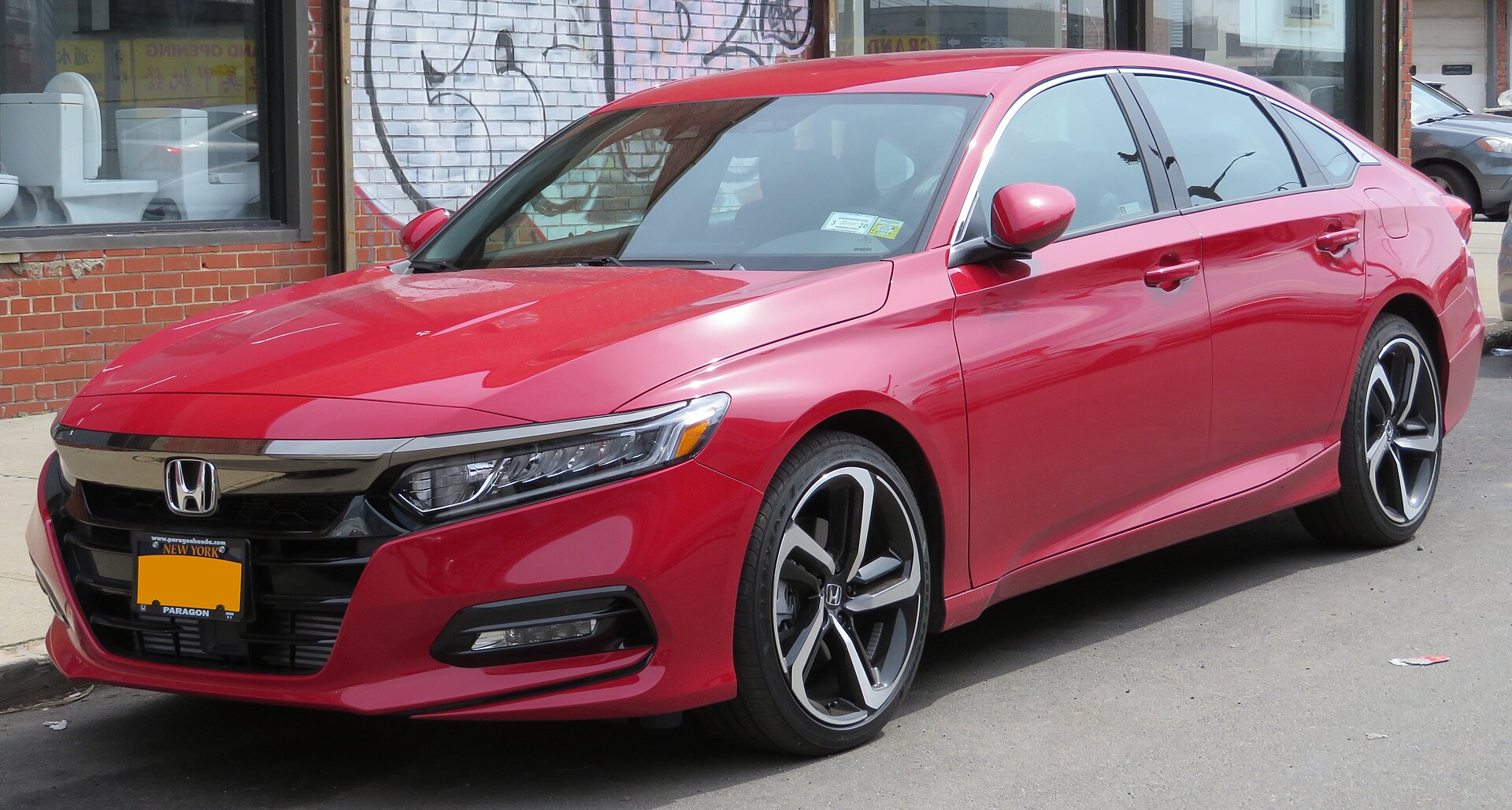
- Accord CV 2017–2022 · Sedan · 141–185 kW (192–252 PS)
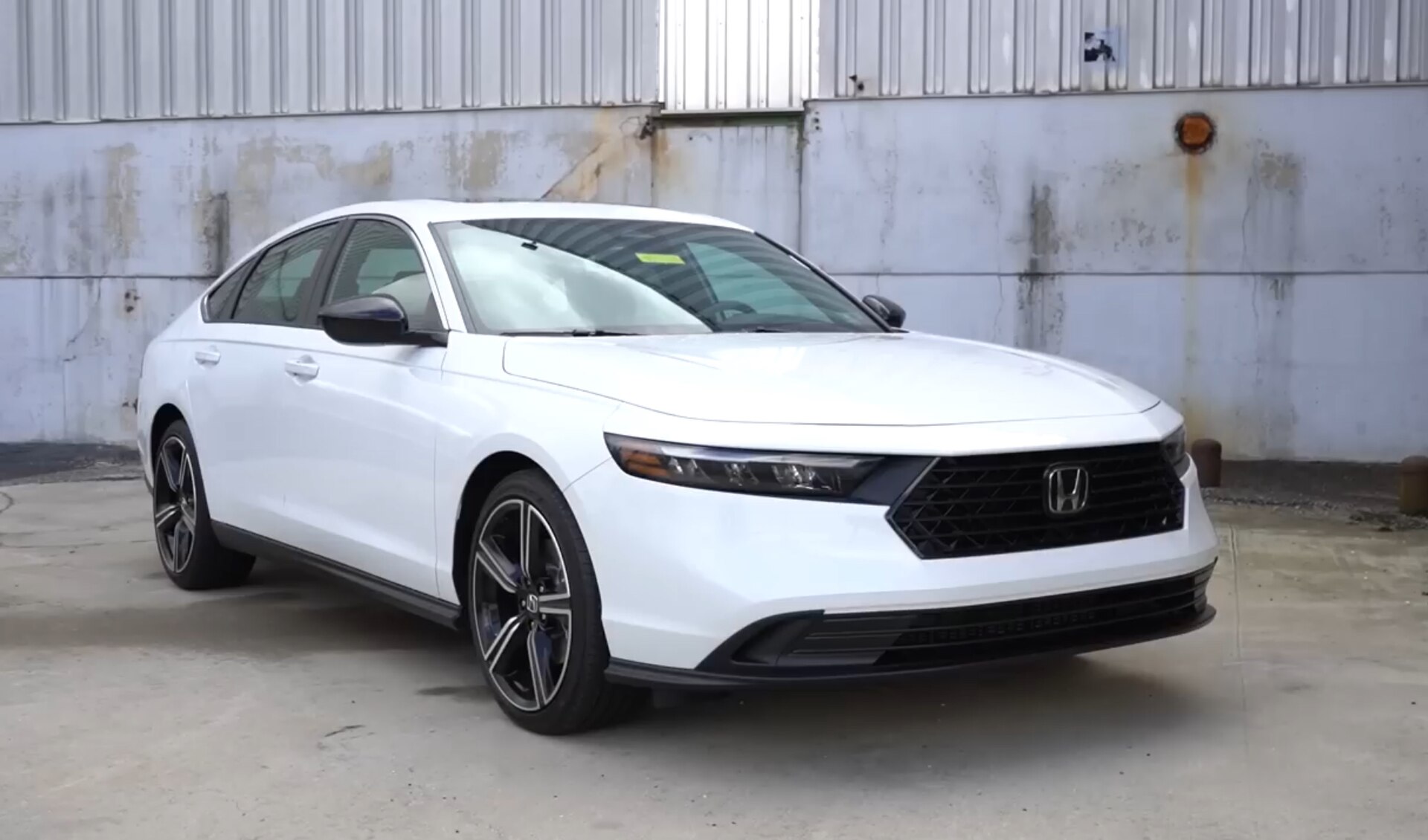
- Accord XI Current 2022–now · Sedan · 143–152 kW (194–207 PS)
Newest first · 11 generations since 1976
-
2022
-
2017
-
2012
-
2008
-
2002
-
1998
-
1993
-
1989
-
1985
-
1981
-
1976


All generations by year: Accord XI (2022–now) · Accord CV (2017–2022) · Accord IX (2012–2017) · Accord VIII (2008–2013) · Accord VII (2002–2007) · Accord VI (1998–2002) · Accord CD (1993–1998) · Accord CB (1989–1993) · Accord CA (1985–1989) · Accord II (1981–1985) · Accord I (1976–1981)
Which one is mine?
Pick the year of first registration to see which generation it is.
- Accord XI 2022–present
- CV 2017–2022
- Accord IX 2012–2017
- Accord VIII 2008–2013
- Accord VII 2002–2007
- Accord VI 1998–2002
- CD 1993–1998
- CB 1989–1993
- CA 1985–1989
- Accord II 1981–1985
- Accord I 1976–1981
Which Honda Accord to buy
Our verdict · Felix Hartmann
In Europe, the eighth-generation Accord (2008–2015) with the 2.0 i-VTEC or 2.2 i-DTEC is the newest and most practical choice, especially as a Tourer estate. Enthusiasts seek out the seventh-generation 2.4 Type S and, in Japan, the Euro R and Type R. Where the current model is sold, the 2.0 e:HEV hybrid offers the best economy. More Japanese family cars are listed among Japanese cars, and the full Honda range is in the Honda catalogue.
The Honda Accord is a mid-size car built since 1976 in eleven generations, from a small CVCC hatchback to today's hybrid saloon. It was the first Japanese-brand car built in the United States (Ohio, 1982) and has sold more than 18 million units. From 1993 Europe received its own Accord, until Honda dropped the model there after the eighth generation.
In short
- Generations: 1976, 1981, 1985, 1989, 1993, 1997/98, 2002, 2007/08, 2012, 2017 and 2022.
- Firsts: CVCC low-emission engine, US production from 1982, double wishbones at both ends from 1985, VTEC on the Accord from 1993.
- The current eleventh generation offers a 143 kW 1.5 turbo and a 152 kW 2.0 e:HEV hybrid.
- European Accords (2002–2015) had 2.0 and 2.4 i-VTEC petrol and 2.2 i-CTDi / i-DTEC diesel engines.

Size at a glance
Volkswagen Passat B9
The Honda Accord XI is 54 mm longer and 57 mm lower than the Volkswagen Passat B9.
| Dimensions | Honda Accord XI | Volkswagen Passat B9 | Difference |
|---|---|---|---|
| Length | 4,971 mm195.7 in | 4,917 mm193.6 in | +54 mm+2.1 in |
| Width | - | 1,852 mm72.9 in | - |
| Height | 1,449 mm57.0 in | 1,506 mm59.3 in | −57 mm−2.2 in |
| Wheelbase | 2,830 mm111.4 in | 2,841 mm111.9 in | −11 mm−0.4 in |
| Boot | 473 L16.7 cu ft | 690 L24.4 cu ft | −217 L−7.7 cu ft |
Toyota Camry XV80
The Honda Accord XI is 86 mm longer than the Toyota Camry XV80.
| Dimensions | Honda Accord XI | Toyota Camry XV80 | Difference |
|---|---|---|---|
| Length | 4,971 mm195.7 in | 4,885 mm192.3 in | +86 mm+3.4 in |
| Width | - | 1,840 mm72.4 in | - |
| Height | 1,449 mm57.0 in | 1,445 mm56.9 in | +4 mm+0.2 in |
| Wheelbase | 2,830 mm111.4 in | 2,825 mm111.2 in | +5 mm+0.2 in |
| Boot | 473 L16.7 cu ft | - | - |
Honda Accord CV
The Honda Accord XI is 92 mm longer than the Honda Accord CV.
| Dimensions | Honda Accord XI | Honda Accord CV | Difference |
|---|---|---|---|
| Length | 4,971 mm195.7 in | 4,879 mm192.1 in | +92 mm+3.6 in |
| Width | - | 1,862 mm73.3 in | - |
| Height | 1,449 mm57.0 in | 1,450 mm57.1 in | −1 mm |
| Wheelbase | 2,830 mm111.4 in | 2,830 mm111.4 in | Same |
| Boot | 473 L16.7 cu ft | 472 L16.7 cu ft | +1 L |
Running cost
Fuel · Accord 2.0 e:HEV Hybrid
about 1,400 EUR fuel a year at 15,000 km
5.3 l/100 km · petrol at 1.75 EUR/l · change mileage, fuel price or version
Specs by version
Engines
| Version | Engine | Power | Torque | Gearbox | Drive | Production years |
|---|---|---|---|---|---|---|
| Hybrid · 3 versions | ||||||
| Accord IX · 2.0 Hybrid | 2.0 l · 4 cyl · Hybrid 2,000 cc | 146 kW 199 PS196 hp | 306 Nm226 lb-ft | - | Front-wheel drive | 2013–2015 |
| Accord IX · 2.0 Hybrid (facelift) | 2.0 l · 4 cyl · Hybrid 2,000 cc | 158 kW 215 PS212 hp | 315 Nm232 lb-ft | - | Front-wheel drive | 2016–2017 |
| Accord XI · 2.0 e:HEV Hybrid | 2.0 l · 4 cyl · Hybrid 1,993 cc | 152 kW 207 PS204 hp | 335 Nm247 lb-ft | CVT | Front-wheel drive | 2023 |
| Diesel · 2 versions | ||||||
| CD · 2.0 77 kW (105 PS) | 2.0 l · Diesel 2,000 cc | 77 kW 105 PS103 hp | 210 Nm155 lb-ft | - | - | - |
| Accord VII · 2.0 103 kW (140 PS) | 2.0 l · Diesel 2,000 cc | 103 kW 140 PS138 hp | - | - | All-wheel drive | - |
| Petrol · 7 versions | ||||||
| Accord IX · 2.0 i-VTEC | 2.0 l · 4 cyl · Petrol R20Z1 | 114 kW 155 PS153 hp | 190 Nm140 lb-ft | - | Front-wheel drive | 2013–2019 |
| Accord IX · 2.4 i-VTEC (LX/EX) | 2.4 l · 4 cyl · Petrol K24W1 | 138 kW 188 PS185 hp | 245 Nm181 lb-ft | - | Front-wheel drive | 2012–2017 |
| Accord IX · 2.4 i-VTEC coupe | 2.4 l · 4 cyl · Petrol K24W1 | 138 kW 188 PS185 hp | 245 Nm181 lb-ft | - | Front-wheel drive | 2012–2017 |
| Accord IX · 2.4 i-VTEC Sport | 2.4 l · 4 cyl · Petrol K24W1 | 141 kW 192 PS189 hp | 247 Nm182 lb-ft | - | Front-wheel drive | 2012–2017 |
| Accord IX · 3.5 V6 | 3.5 l · 6 cyl · Petrol J35Y1 | 207 kW 281 PS278 hp | 342 Nm252 lb-ft | 6-sp Automatic | Front-wheel drive | 2012–2017 |
| Accord IX · 3.5 V6 coupe 6MT | 3.5 l · 6 cyl · Petrol J35Y2 | 207 kW 281 PS278 hp | 342 Nm252 lb-ft | 6-sp Manual | Front-wheel drive | 2012–2017 |
| Accord XI · 1.5 VTEC Turbo CVT | 1.5 l · 4 cyl · Petrol 1,498 cc | 143 kW 194 PS192 hp | 260 Nm192 lb-ft | CVT | Front-wheel drive | 2023 |
| Other · 23 versions | ||||||
| Accord II · 1.8 74 kW (101 PS) | 1.8 l 1,800 cc | 74 kW 101 PS99 hp | - | - | Front-wheel drive | - |
| CD · 2.7 127 kW (173 PS) | 2.7 l 2,700 cc | 127 kW 173 PS170 hp | - | - | - | - |
| Accord VI · 3.0 147 kW (200 PS) | 3.0 l · 3 cyl 3,000 cc | 147 kW 200 PS197 hp | - | - | - | - |
| Accord VIII · 2.0 115 kW (156 PS) | 2.0 l 2,000 cc | 115 kW 156 PS154 hp | 192 Nm142 lb-ft | - | - | - |
| Accord VIII · 2.5 148 kW (201 PS) | 2.5 l 2,500 cc | 148 kW 201 PS198 hp | 234 Nm173 lb-ft | - | - | - |
| CV · 1.5 L 4 cyl Automatic (variable gear ratios) · 2021 (EPA) | 1.5 l · 4 cyl 1,500 cc | - | - | CVT | Front-wheel drive | 2021 |
| CV · 1.5 L 4 cyl Automatic (AV-S7) · 2020 (EPA) | 1.5 l · 4 cyl 1,500 cc | - | - | CVT | Front-wheel drive | 2020 |
| CV · 1.5 L 4 cyl Automatic (variable gear ratios) · 2020 (EPA) | 1.5 l · 4 cyl 1,500 cc | - | - | CVT | Front-wheel drive | 2020 |
| CV · 1.5 L 4 cyl Manual 6-spd · 2020 (EPA) | 1.5 l · 4 cyl 1,500 cc | - | - | 6-sp Manual | Front-wheel drive | 2020 |
| CV · 1.5 L 4 cyl Automatic (AV-S7) · 2019 (EPA) | 1.5 l · 4 cyl 1,500 cc | - | - | CVT | Front-wheel drive | 2019 |
| CV · 1.5 L 4 cyl Automatic (variable gear ratios) · 2019 (EPA) | 1.5 l · 4 cyl 1,500 cc | - | - | CVT | Front-wheel drive | 2019 |
| CV · 1.5 L 4 cyl Manual 6-spd · 2019 (EPA) | 1.5 l · 4 cyl 1,500 cc | - | - | 6-sp Manual | Front-wheel drive | 2019 |
| CV · 2 L 4 cyl Automatic (S10) · 2020 (EPA) | 2.0 l · 4 cyl 2,000 cc | - | - | 10-sp Automatic | Front-wheel drive | 2020 |
| CV · 2 L 4 cyl Manual 6-spd · 2020 (EPA) | 2.0 l · 4 cyl 2,000 cc | - | - | 6-sp Manual | Front-wheel drive | 2020 |
| CV · 2 L 4 cyl Automatic 10-spd · 2019 (EPA) | 2.0 l · 4 cyl 2,000 cc | - | - | 10-sp Automatic | Front-wheel drive | 2019 |
| CV · 2 L 4 cyl Manual 6-spd · 2019 (EPA) | 2.0 l · 4 cyl 2,000 cc | - | - | 6-sp Manual | Front-wheel drive | 2019 |
| CV · 1.5 141 kW (192 PS) | 1.5 l 1,500 cc | 141 kW 192 PS189 hp | 260 Nm192 lb-ft | - | - | - |
| CV · 2.0 185 kW (252 PS) | 2.0 l 2,000 cc | 185 kW 252 PS248 hp | 370 Nm273 lb-ft | - | - | - |
| Accord XI · 1.5 L 4 cyl Automatic (variable gear ratios) · 2026 (EPA) | 1.5 l · 4 cyl 1,500 cc | - | - | CVT | Front-wheel drive | 2026 |
| Accord XI · 1.5 L 4 cyl Automatic (variable gear ratios) · 2025 (EPA) | 1.5 l · 4 cyl 1,500 cc | - | - | CVT | Front-wheel drive | 2025 |
| Accord XI · 1.5 L 4 cyl Automatic (variable gear ratios) · 2024 (EPA) | 1.5 l · 4 cyl 1,500 cc | - | - | CVT | Front-wheel drive | 2024 |
| Accord XI · 1.5 L 4 cyl Automatic (variable gear ratios) · 2023 (EPA) | 1.5 l · 4 cyl 1,500 cc | - | - | CVT | Front-wheel drive | 2023 |
| Accord XI · 1.5 L 4 cyl Automatic (variable gear ratios) · 2022 (EPA) | 1.5 l · 4 cyl 1,500 cc | - | - | CVT | Front-wheel drive | 2022 |
Performance
Show all 18 versions
| Version | Fuel consumption |
|---|---|
| Hybrid · 1 version | |
| Accord XI · 2.0 e:HEV Hybrid | 5.3 l/100 km44.4 mpg US · 53.3 mpg UK |
| Petrol · 1 version | |
| Accord XI · 1.5 VTEC Turbo CVT | 7.3 l/100 km32.2 mpg US · 38.7 mpg UK |
| Other · 16 versions | |
| CV · 1.5 L 4 cyl Automatic (variable gear ratios) · 2021 (EPA) | 7.1 l/100 km33.1 mpg US · 39.8 mpg UK |
| CV · 1.5 L 4 cyl Automatic (AV-S7) · 2020 (EPA) | 7.6 l/100 km30.9 mpg US · 37.2 mpg UK |
| CV · 1.5 L 4 cyl Automatic (variable gear ratios) · 2020 (EPA) | 7.1 l/100 km33.1 mpg US · 39.8 mpg UK |
| CV · 1.5 L 4 cyl Manual 6-spd · 2020 (EPA) | 7.8 l/100 km30.2 mpg US · 36.2 mpg UK |
| CV · 1.5 L 4 cyl Automatic (AV-S7) · 2019 (EPA) | 7.6 l/100 km30.9 mpg US · 37.2 mpg UK |
| CV · 1.5 L 4 cyl Automatic (variable gear ratios) · 2019 (EPA) | 7.1 l/100 km33.1 mpg US · 39.8 mpg UK |
| CV · 1.5 L 4 cyl Manual 6-spd · 2019 (EPA) | 7.8 l/100 km30.2 mpg US · 36.2 mpg UK |
| CV · 2 L 4 cyl Automatic (S10) · 2020 (EPA) | 8.7 l/100 km27.0 mpg US · 32.5 mpg UK |
| CV · 2 L 4 cyl Manual 6-spd · 2020 (EPA) | 9.0 l/100 km26.1 mpg US · 31.4 mpg UK |
| CV · 2 L 4 cyl Automatic 10-spd · 2019 (EPA) | 8.7 l/100 km27.0 mpg US · 32.5 mpg UK |
| CV · 2 L 4 cyl Manual 6-spd · 2019 (EPA) | 9.0 l/100 km26.1 mpg US · 31.4 mpg UK |
| Accord XI · 1.5 L 4 cyl Automatic (variable gear ratios) · 2026 (EPA) | 7.4 l/100 km31.8 mpg US · 38.2 mpg UK |
| Accord XI · 1.5 L 4 cyl Automatic (variable gear ratios) · 2025 (EPA) | 7.4 l/100 km31.8 mpg US · 38.2 mpg UK |
| Accord XI · 1.5 L 4 cyl Automatic (variable gear ratios) · 2024 (EPA) | 7.4 l/100 km31.8 mpg US · 38.2 mpg UK |
| Accord XI · 1.5 L 4 cyl Automatic (variable gear ratios) · 2023 (EPA) | 7.4 l/100 km31.8 mpg US · 38.2 mpg UK |
| Accord XI · 1.5 L 4 cyl Automatic (variable gear ratios) · 2022 (EPA) | 7.1 l/100 km33.1 mpg US · 39.8 mpg UK |
Dimensions and weight
Show all 18 versions
| Version | Length | Width | Height | Wheelbase | Boot |
|---|---|---|---|---|---|
| Hybrid · 3 versions | |||||
| Accord IX · 2.0 Hybrid | 4,862 mm191.4 in | 1,849 mm72.8 in | 1,466 mm57.7 in | 2,776 mm109.3 in | - |
| Accord IX · 2.0 Hybrid (facelift) | 4,862 mm191.4 in | 1,849 mm72.8 in | 1,466 mm57.7 in | 2,776 mm109.3 in | - |
| Accord XI · 2.0 e:HEV Hybrid | 4,971 mm195.7 in | - | 1,449 mm57.0 in | 2,830 mm111.4 in | 473 l16.7 cu ft |
| Diesel · 2 versions | |||||
| CD · 2.0 77 kW (105 PS) | - | - | - | - | 405 l14.3 cu ft |
| Accord VII · 2.0 103 kW (140 PS) | 4,813 mm189.5 in | 1,816 mm71.5 in | 1,450 mm57.1 in | 2,741 mm107.9 in | 450 l15.9 cu ft |
| Petrol · 7 versions | |||||
| Accord IX · 2.0 i-VTEC | 4,862 mm191.4 in | 1,849 mm72.8 in | 1,466 mm57.7 in | 2,776 mm109.3 in | - |
| Accord IX · 2.4 i-VTEC (LX/EX) | 4,862 mm191.4 in | 1,849 mm72.8 in | 1,466 mm57.7 in | 2,776 mm109.3 in | - |
| Accord IX · 2.4 i-VTEC coupe | 4,806 mm189.2 in | - | 1,435 mm56.5 in | 2,725 mm107.3 in | - |
| Accord IX · 2.4 i-VTEC Sport | 4,862 mm191.4 in | 1,849 mm72.8 in | 1,466 mm57.7 in | 2,776 mm109.3 in | - |
| Accord IX · 3.5 V6 | 4,862 mm191.4 in | 1,849 mm72.8 in | 1,466 mm57.7 in | 2,776 mm109.3 in | - |
| Accord IX · 3.5 V6 coupe 6MT | 4,806 mm189.2 in | - | 1,435 mm56.5 in | 2,725 mm107.3 in | - |
| Accord XI · 1.5 VTEC Turbo CVT | 4,971 mm195.7 in | - | 1,449 mm57.0 in | 2,830 mm111.4 in | 473 l16.7 cu ft |
| Other · 6 versions | |||||
| Accord II · 1.8 74 kW (101 PS) | - | - | - | 2,450 mm96.5 in | - |
| CD · 2.7 127 kW (173 PS) | - | - | - | - | 405 l14.3 cu ft |
| Accord VI · 3.0 147 kW (200 PS) | 4,635 mm182.5 in | 1,695 mm66.7 in | 1,420 mm55.9 in | 2,665 mm104.9 in | - |
| Accord VIII · 2.0 115 kW (156 PS) | 4,725 mm186.0 in | 1,840 mm72.4 in | 1,440 mm56.7 in | 2,705 mm106.5 in | 467 l16.5 cu ft |
| Accord VIII · 2.5 148 kW (201 PS) | - | - | - | - | 467 l16.5 cu ft |
| CV · 1.5 141 kW (192 PS) | 4,879 mm192.1 in | 1,862 mm73.3 in | 1,450 mm57.1 in | 2,830 mm111.4 in | 472 l16.7 cu ft |
Verified Manufacturer and type-approval data from our catalog · Sources and methodology
Safety
-
CV · NHTSA 2021
US NCAP (NHTSA)
Full NHTSA rating
-
Accord IX · NHTSA 2016
US NCAP (NHTSA)
Full NHTSA rating
-
Accord VIII · NHTSA 2011
US NCAP (NHTSA)
Full NHTSA rating
Stars from different years and organisations are not directly comparable: test protocols change every few years.
Honda Accord at a glance
The Accord is Honda's main family saloon and one of the best-selling cars in North America: it was the best-selling Japanese car in the US for 16 years from 1982 to 1997, and in 1989 it became the first import to top the US sales chart. It has been built in Japan, the USA, Canada, Mexico, China, Thailand and several other Asian countries.

Body styles changed with each generation. The early cars were hatchbacks and saloons; later generations added coupés, estates (Aerodeck and Tourer) and, for one generation, the Crosstour fastback. Since 2017 the Accord has been a four-door saloon only. Honda's wider story, from motorcycles to the Honda NSX, is covered in the history of Honda.
Honda Accord generations
Power is shown as quoted for the main markets: PS for Japanese and European ratings, hp for US figures.

| Generation | Code | Years | Body styles | Key engines | Power (kW) |
|---|---|---|---|---|---|
| I | SJ/SM | 1976–1981 | 3-door hatch, saloon (1977) | 1.6 and 1.75 CVCC | 50–59 |
| II | AC/AD | 1981–1985 | hatch, saloon | 1.6 and 1.8 CVCC, PGM-FI | 59–96 |
| III | CA | 1985–1989 | saloon, hatch, Aerodeck, coupé | 1.8–2.0 (A18A, A20A, B20A) | 74–118 |
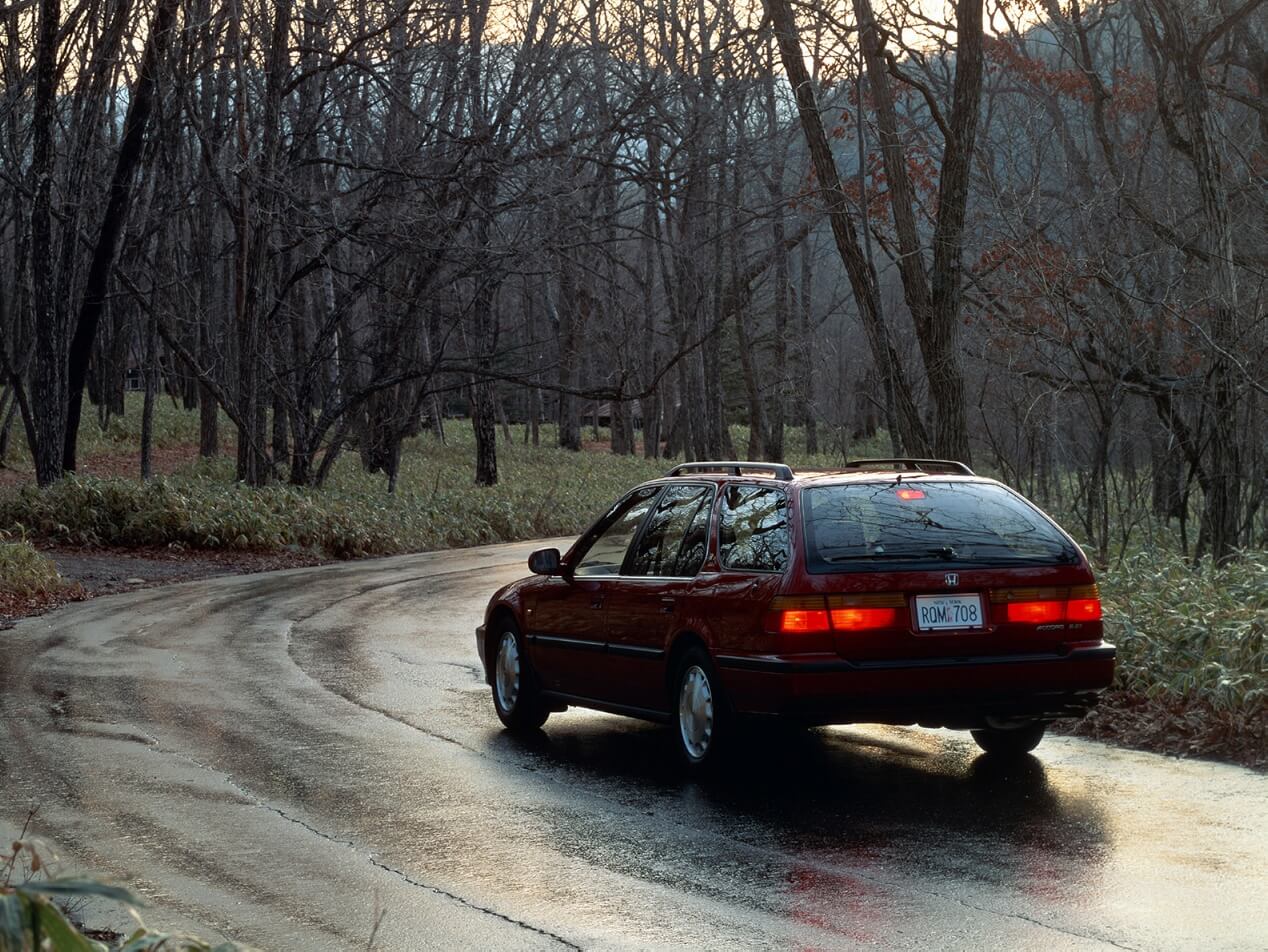
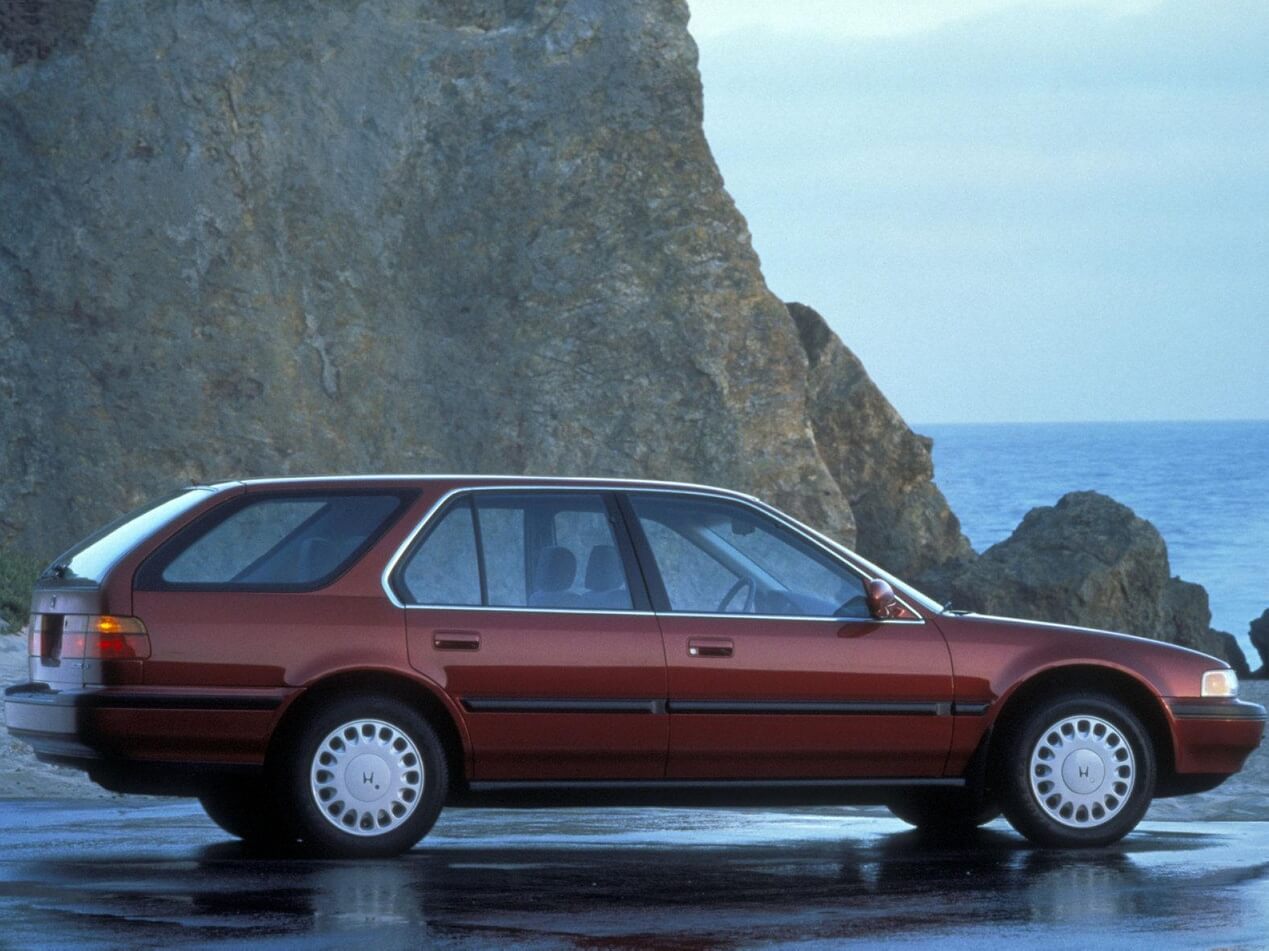
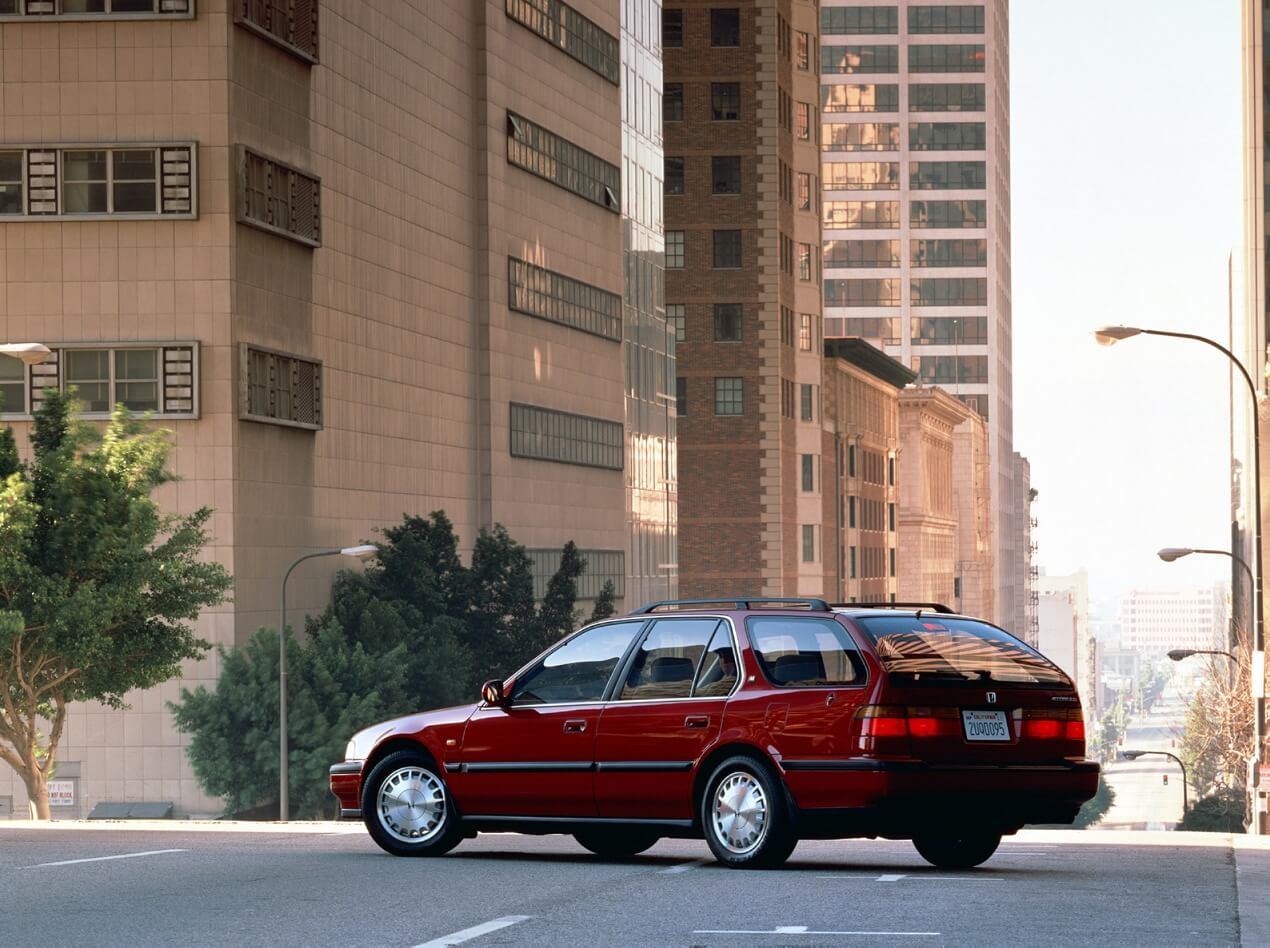
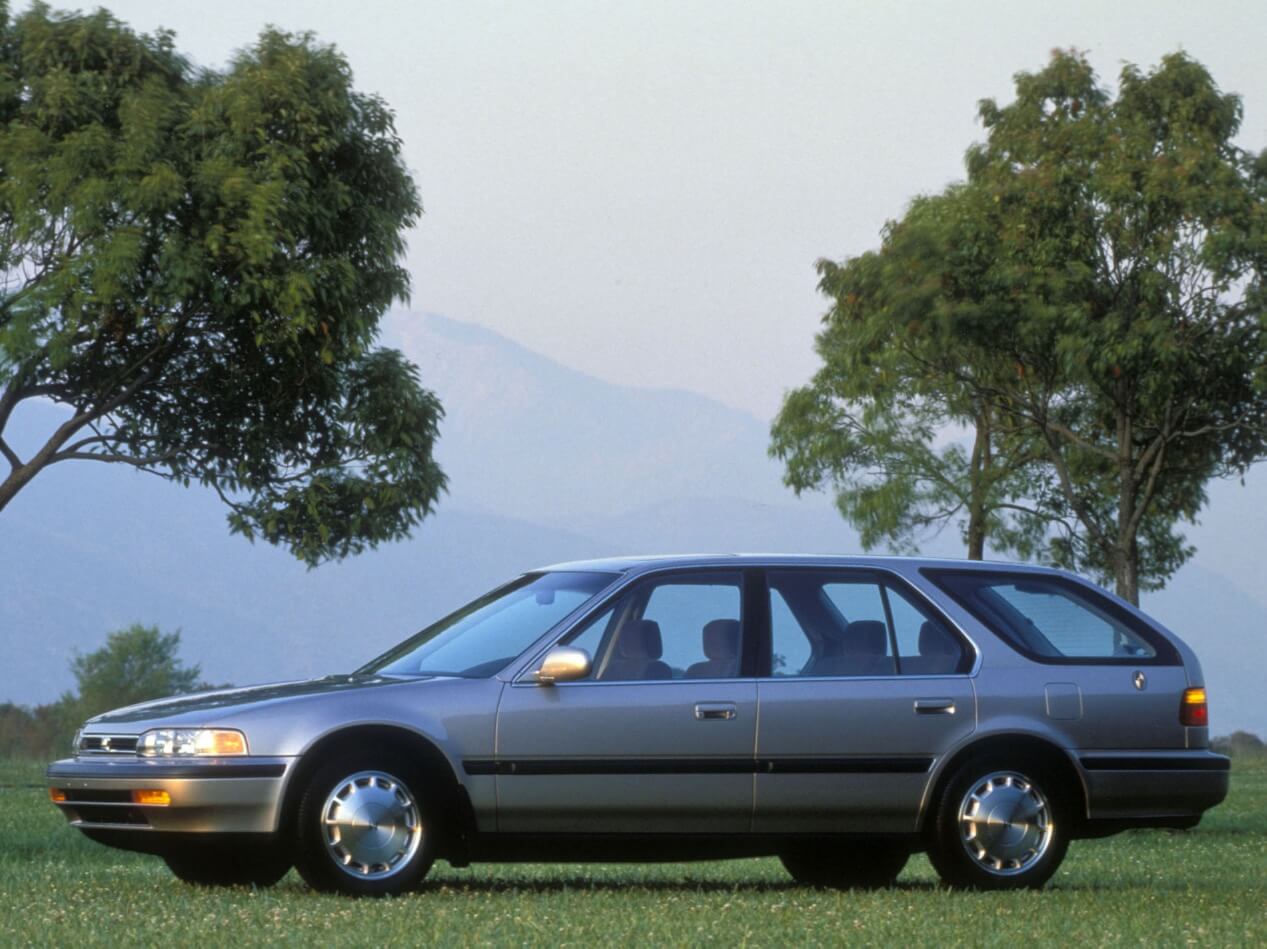
| IV | CB | 1989–1993 | saloon, coupé, estate | 2.0–2.2 (F22A) | 93–104 |
| V | CD / CE (Europe) | 1993–1998 | saloon, coupé, estate | 2.0–2.2, H22A, 2.7 V6 (US) | 97–142 |
| VI | CF/CG/CH | 1997–2002 | saloon, coupé, estate (by market) | 1.8–2.3, 3.0 V6 | 85–147 |
| VII | CL/CM | 2002–2007 | saloon, estate (EU/JP), coupé (US) | 2.0 and 2.4 i-VTEC, 2.2 i-CTDi, 3.0 V6 | 103–179 |
| VIII | CU/CW/CP | 2007–2013 | saloon, estate (EU/JP), coupé, Crosstour (US) | 2.0 and 2.4 i-VTEC, 2.2 i-DTEC, 3.5 V6 | 110–203 |
| IX | CR/CT | 2012–2017 | saloon, coupé | 2.0 and 2.4, 3.5 V6, hybrid, plug-in hybrid | 114–207 |
| X | CV | 2017–2022 | saloon | 1.5 and 2.0 turbo, 2.0 hybrid | 139–188 |
| XI | CY | 2022– | saloon | 1.5 turbo, 2.0 e:HEV hybrid | 143–152 |
First and second generations (1976–1985)
The first Accord appeared as a three-door hatchback in 1976, with a saloon from October 1977. Its CVCC engine met strict emission rules without a catalytic converter, and power steering was rare in its class. The second generation added PGM-FI fuel injection in Japan in 1984 and became the first Japanese-brand car built in the US when production started at Marysville, Ohio, in 1982.
Third and fourth generations (1985–1993)
The third generation brought retractable headlights, the Aerodeck shooting brake and double-wishbone suspension front and rear, a first for Honda, and won Japan's Car of the Year in 1985. The fourth generation (CB) grew larger, gained a 2.2-litre 16-valve engine with up to 104 kW (140 hp), an estate built in Ohio and, in 1992, dual front airbags on the US SE saloon.
Fifth and sixth generations (1993–2002)
From 1993 Europe got its own Accord (CE), a saloon developed alongside Rover, while North America and Japan received the wider CD with VTEC engines and, from 1995, the first Accord V6. Japan's SiR used the 2.2 H22A with 142 kW (193 PS). The sixth generation used one platform with different bodies for Japan, North America and Europe, and Japan and Europe received the high-revving Accord Type R.
Seventh generation (2002–2007)
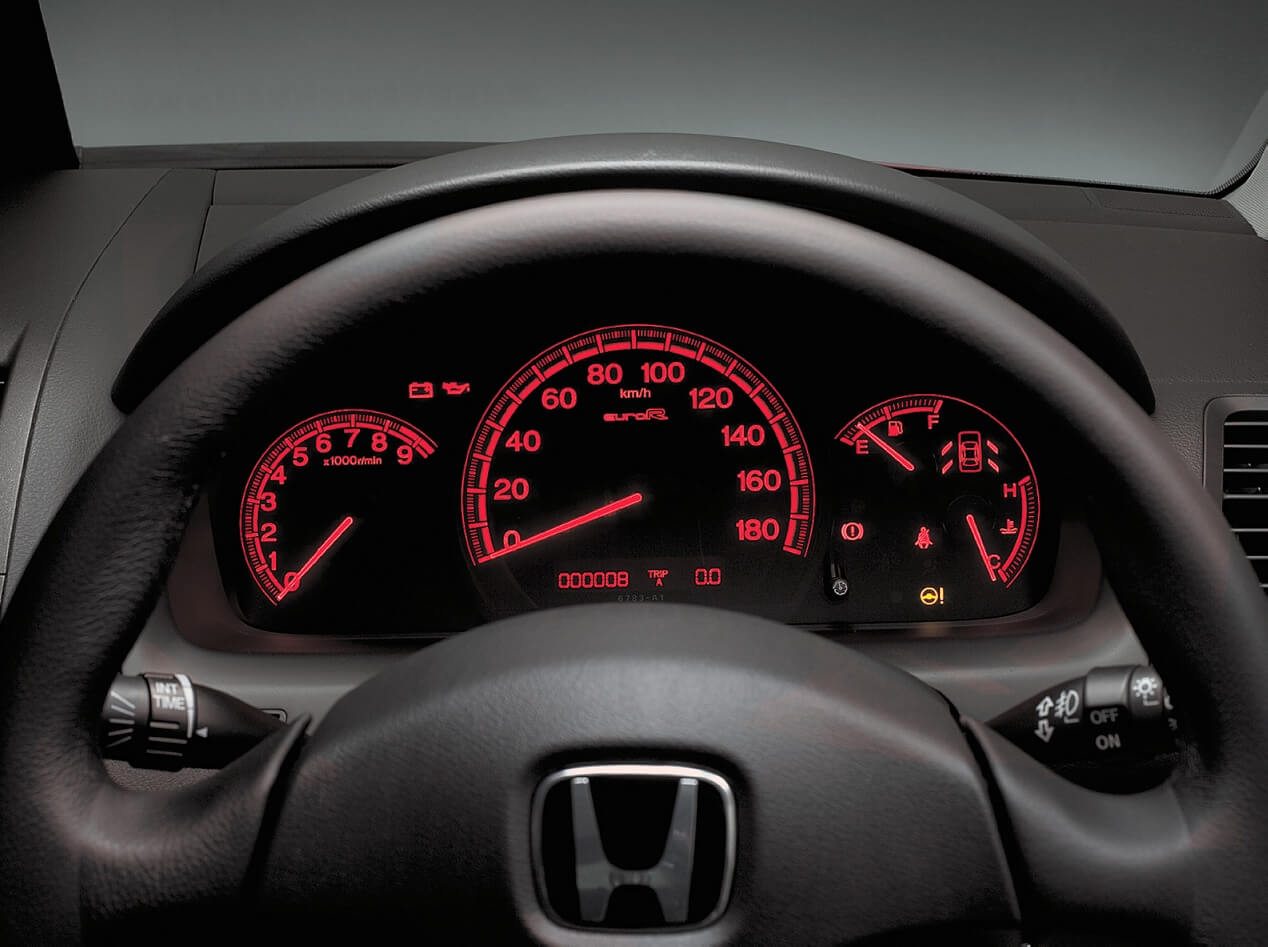
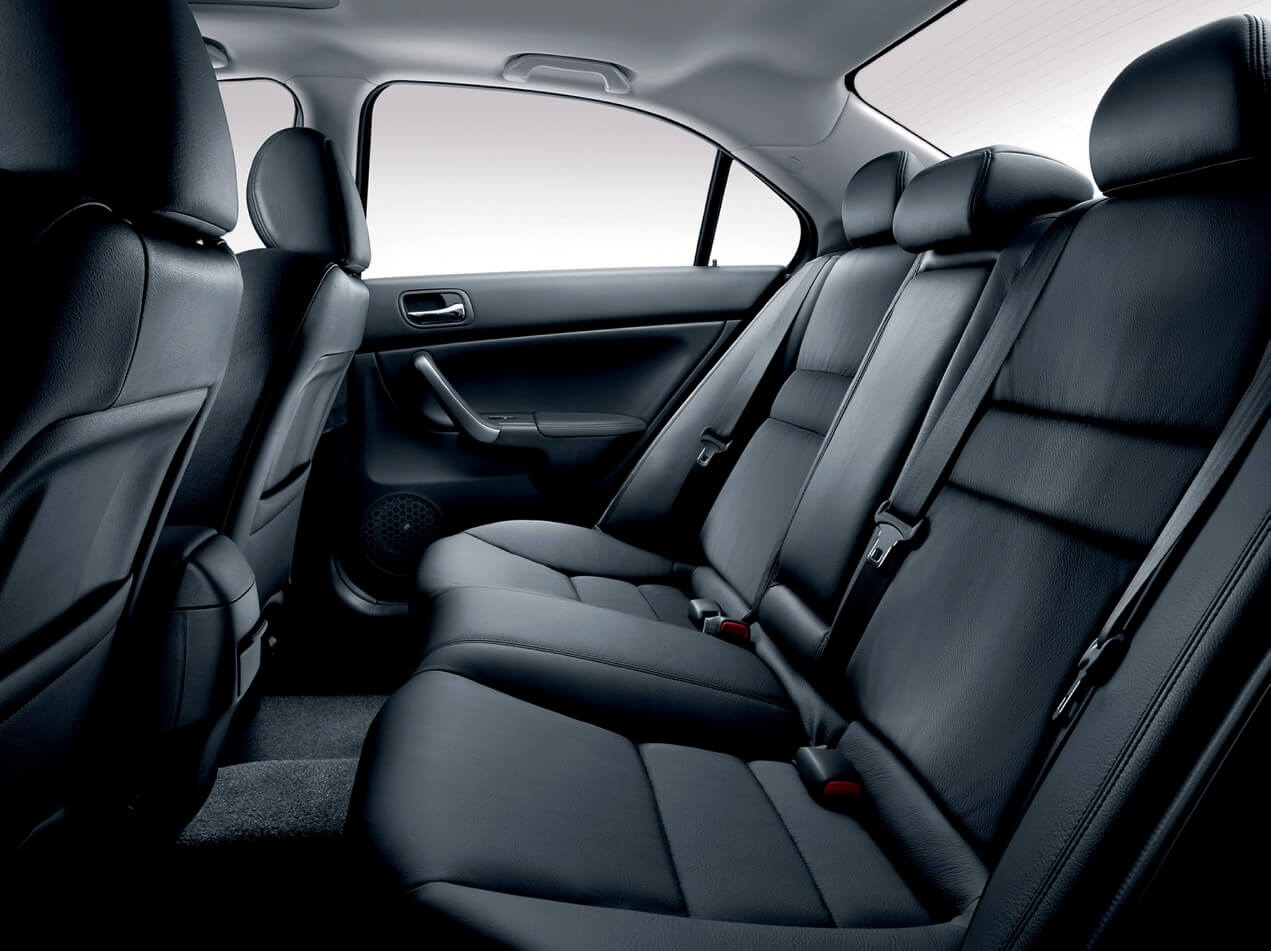
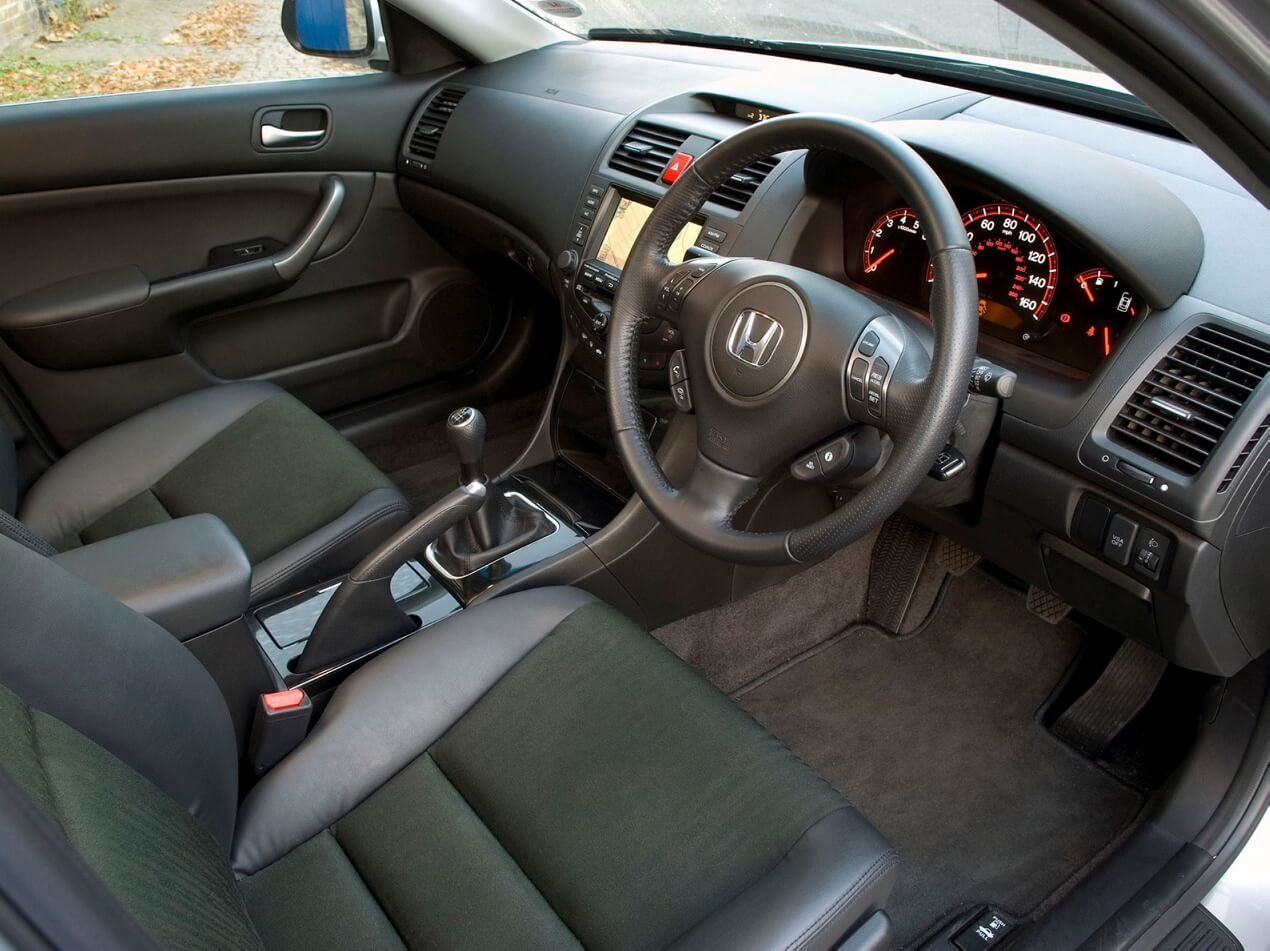
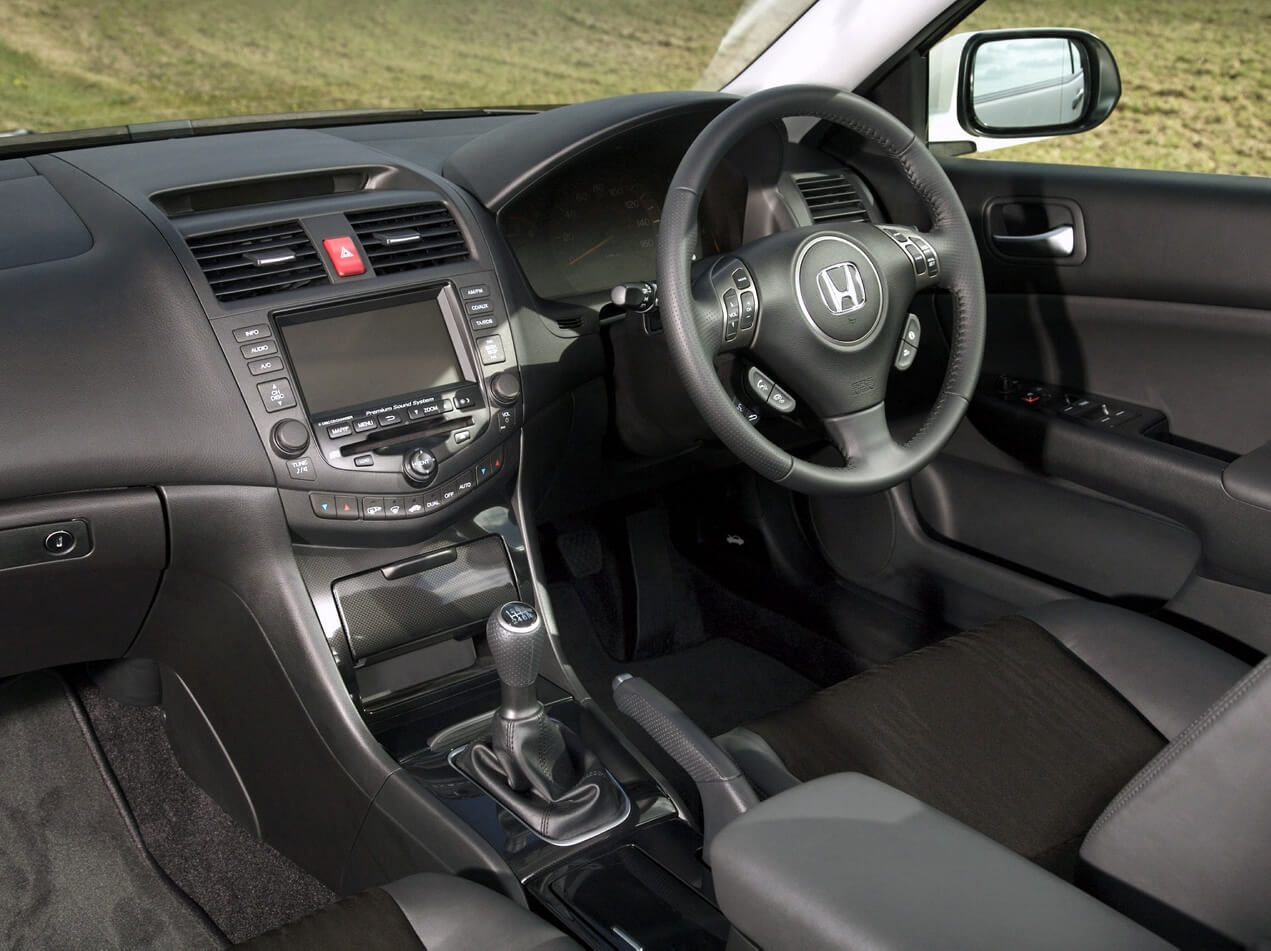
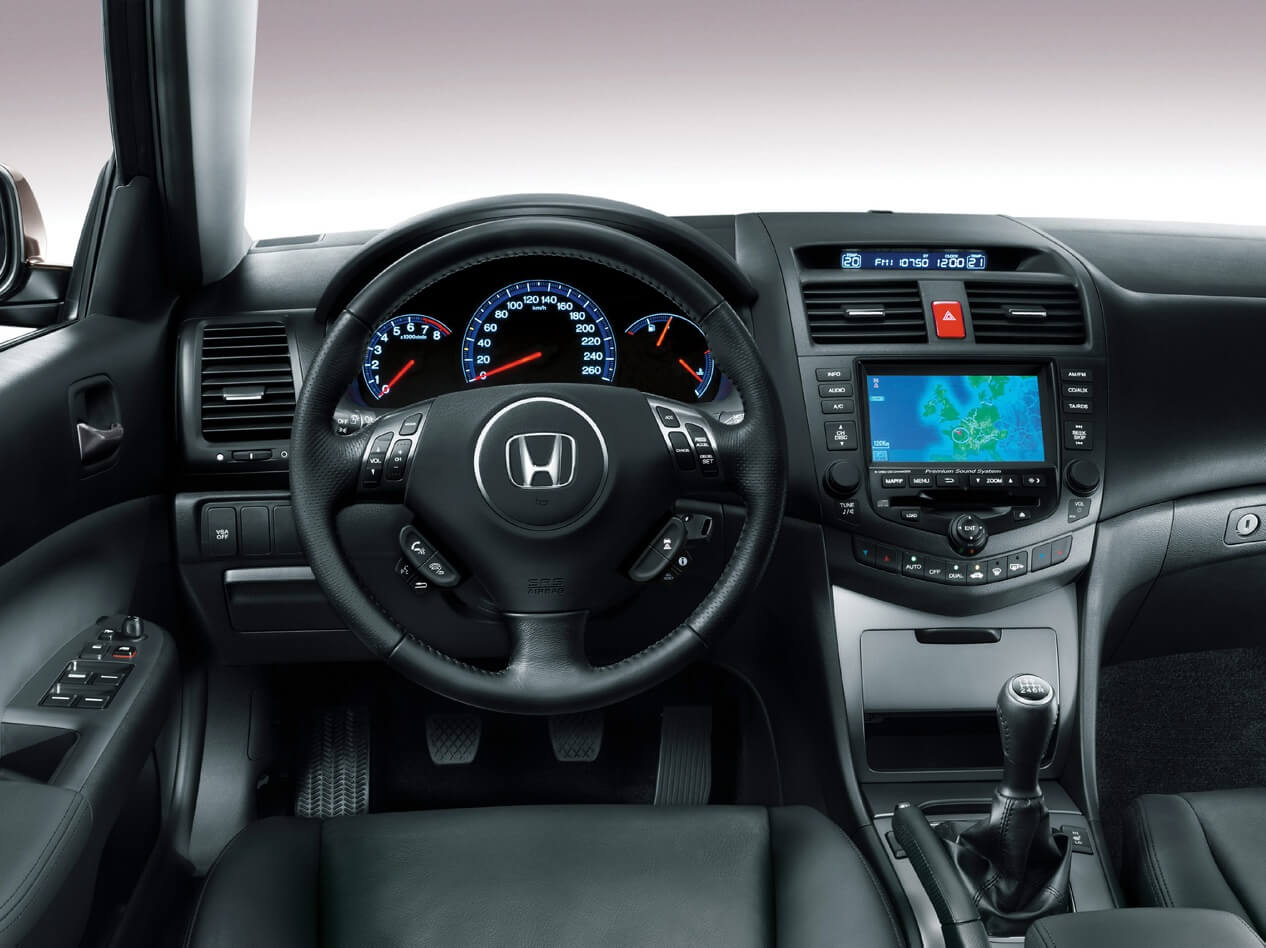
The Accord for Japan and Europe became a separate, sportier car, sold in North America as the Acura TSX. It offered the 2.0 i-VTEC (114 kW / 155 PS), 2.4 i-VTEC (140 kW / 190 PS), the Euro R with 162 kW (220 PS) in Japan, and Honda's first diesel, the 2.2 i-CTDi with 103 kW (140 PS). It was Japan's Car of the Year again, the Accord's third win. The US Accord kept a 2.4 four-cylinder and a 179 kW 3.0 V6.
Eighth generation (2007–2013)
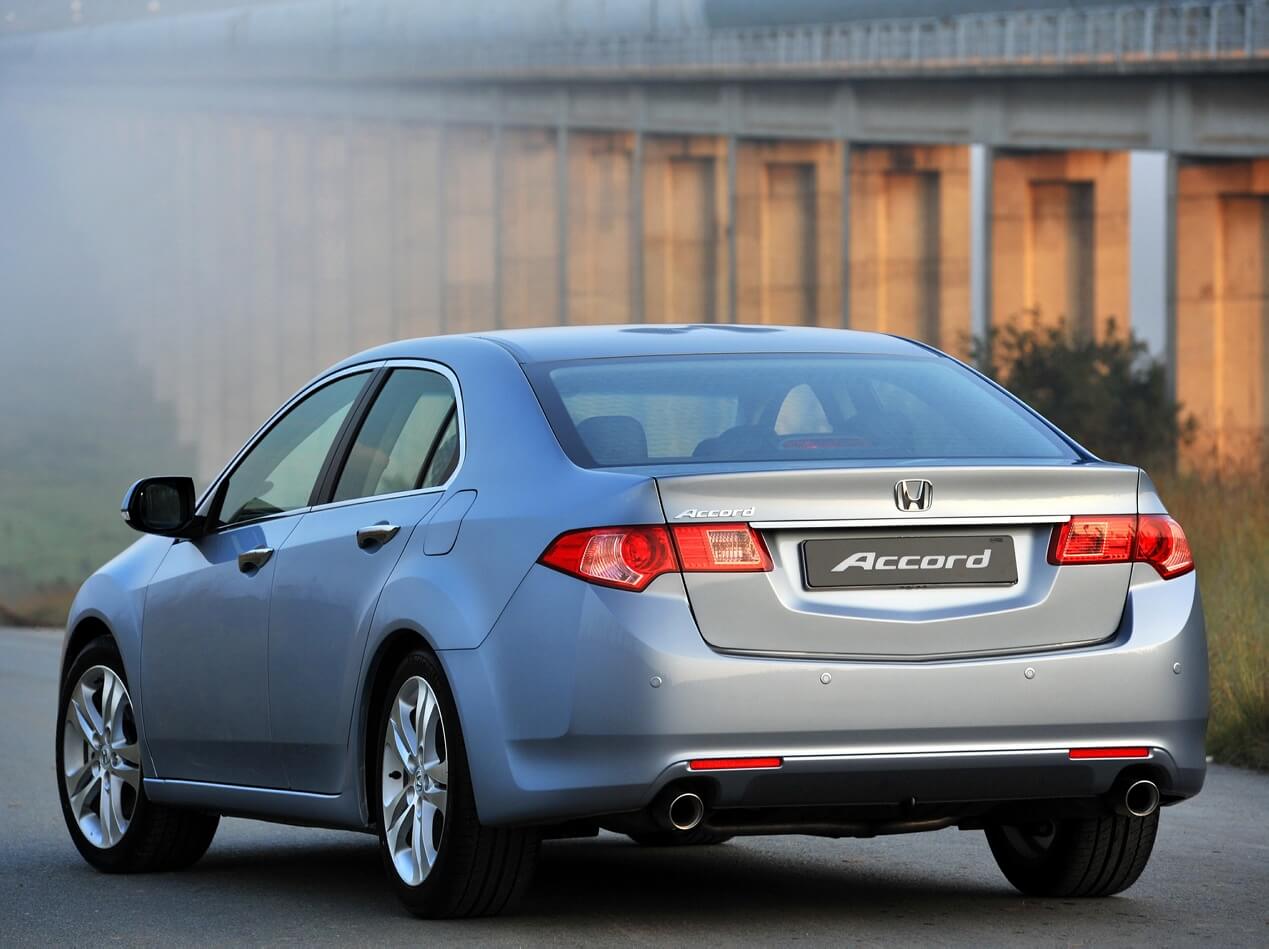
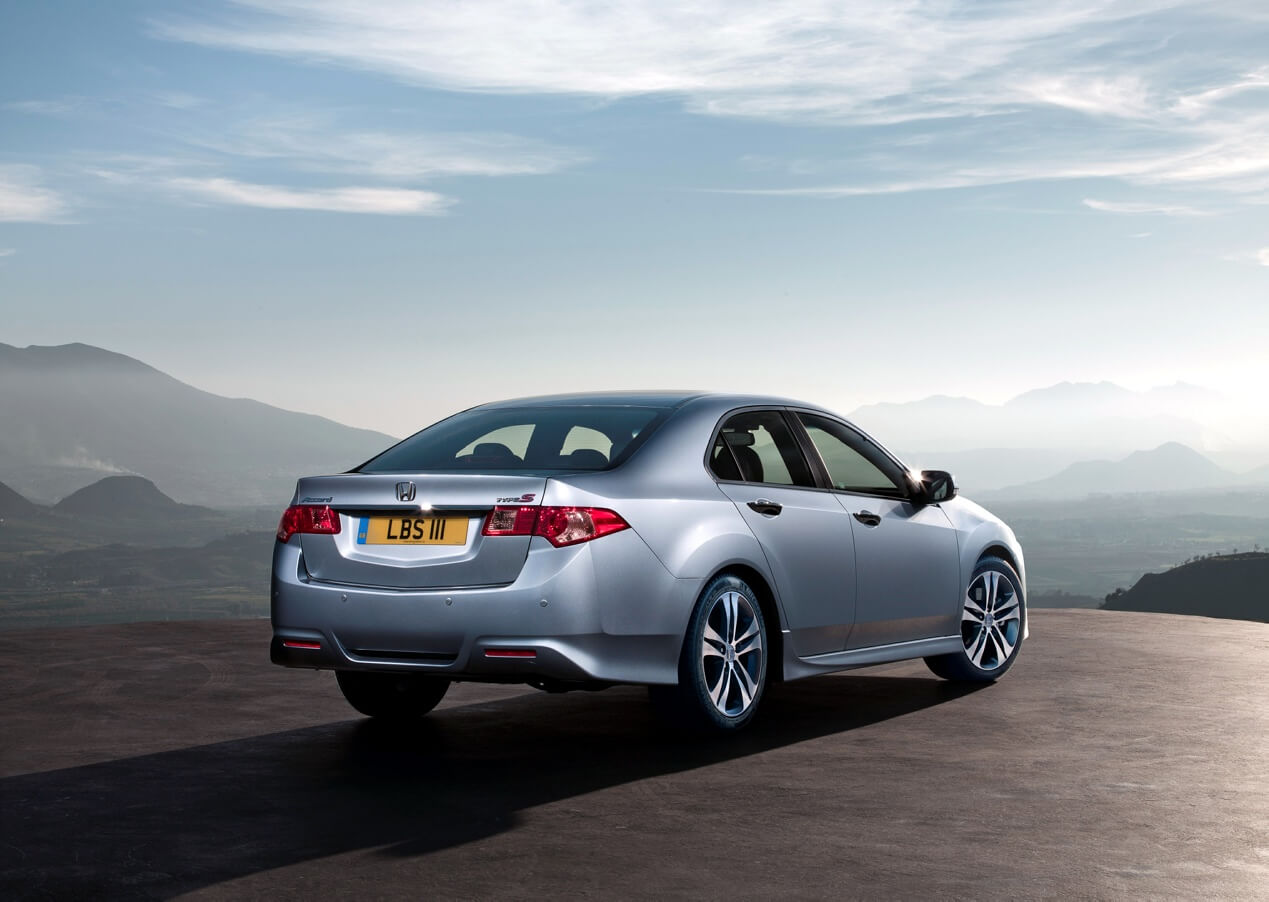
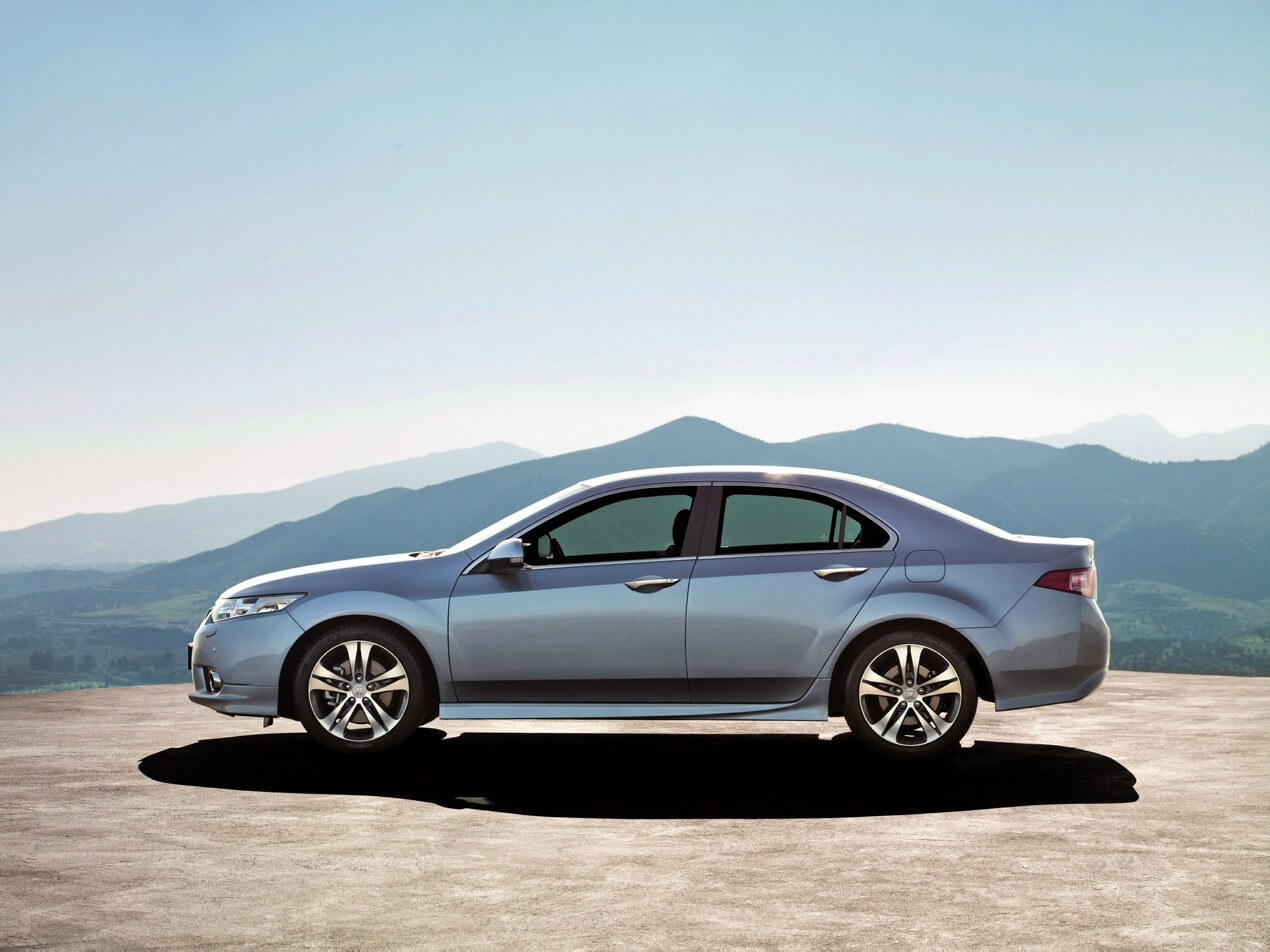
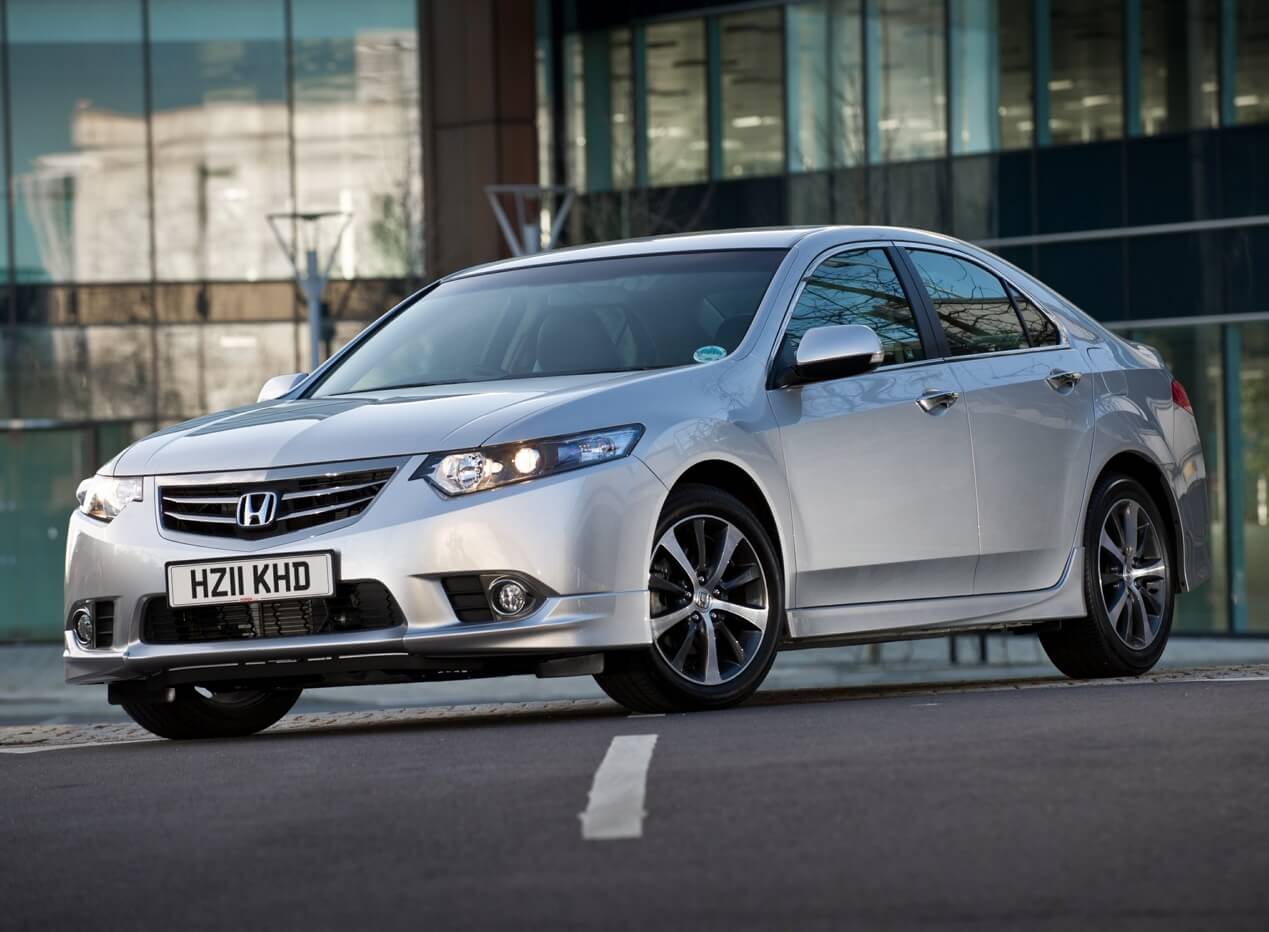
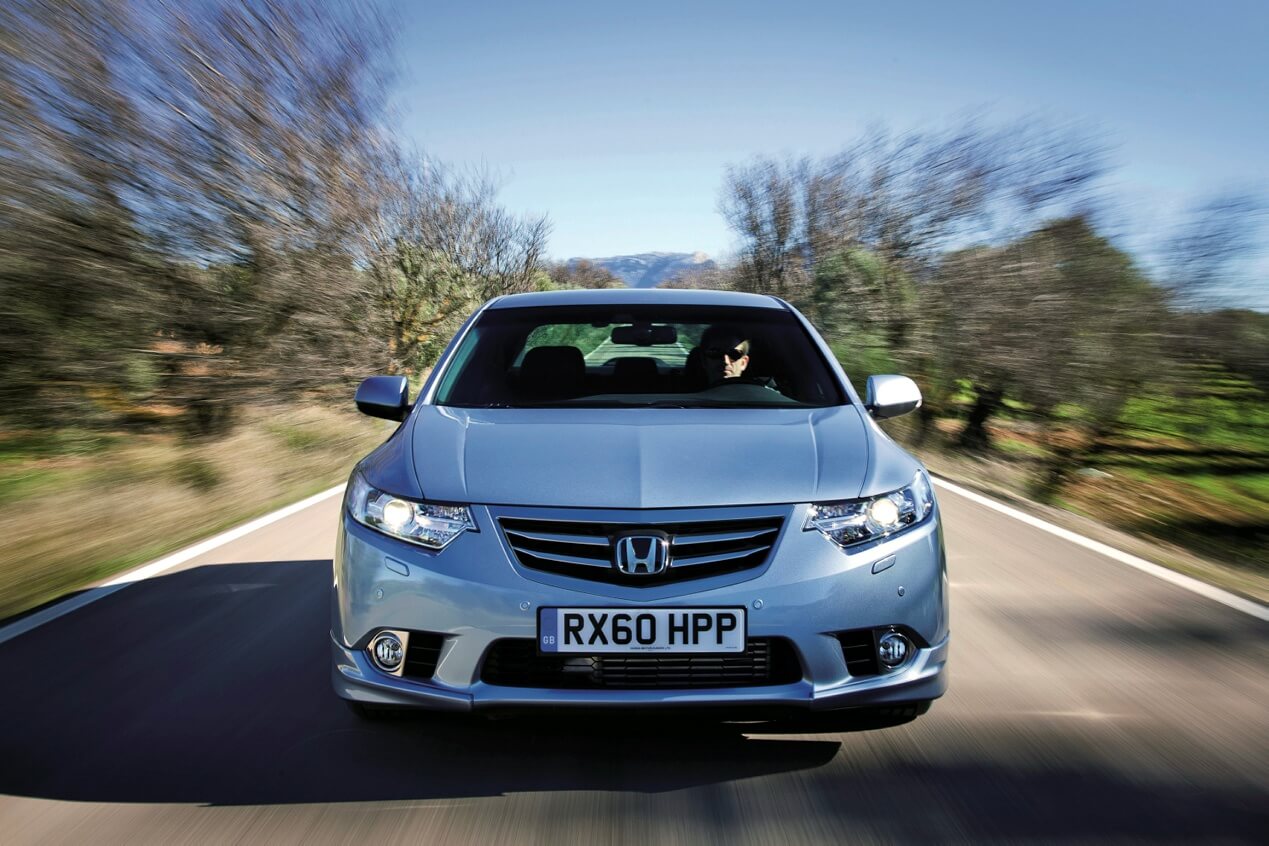
The US Accord grew to full-size dimensions, with a 203 kW 3.5 V6 and a Crosstour fastback from 2009. In Europe the saloon and Tourer estate offered 2.0 and 2.4 i-VTEC petrol engines and the 2.2 i-DTEC diesel with 110 kW (150 PS), or 132 kW (180 PS) in the Type S. This was the last Accord sold in Europe.
Ninth to eleventh generations (2012–present)
The ninth generation shrank back to mid-size, offered a 2.4 four-cylinder with up to 141 kW, a 207 kW 3.5 V6, a hybrid and a plug-in hybrid, and was built in Thailand until 2019. The tenth generation (2017) dropped the coupé and V6 for 1.5 and 2.0 turbo engines, the latter derived from the Civic Type R, plus a 158 kW hybrid. The eleventh generation was unveiled on 10 November 2022 as a 2023 model, with a 1.5 turbo and a 2.0 e:HEV hybrid.
Engines, transmissions and performance of the current Accord
The eleventh-generation Accord is a front-wheel-drive saloon:
- 1.5 VTEC Turbo: 1,498 cc, 143 kW (192 hp) and 260 Nm (192 lb-ft), CVT.
- 2.0 e:HEV hybrid: 1,993 cc petrol engine with two electric motors, 152 kW (204 hp) combined and 335 Nm (247 lb-ft), e-CVT.

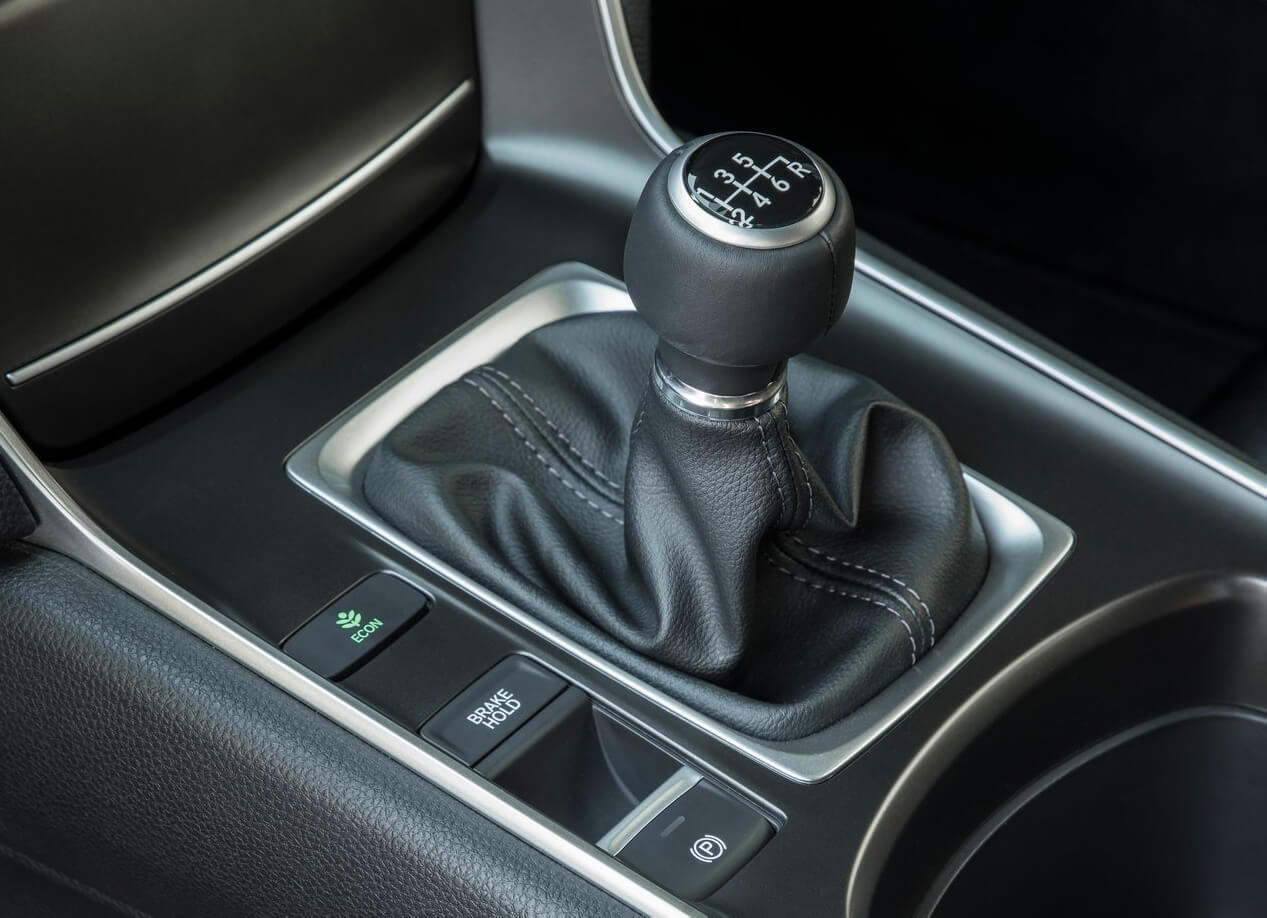
Honda Canada quotes combined consumption of 7.3 L/100 km (32.2 mpg US) for the 1.5 turbo and 5.3 L/100 km (44.4 mpg US) for the hybrid on the Canadian five-cycle test. The previous tenth generation offered the 2.0 turbo with 188 kW (252 hp) and a ten-speed automatic, plus a six-speed manual in the US.
Dimensions and key specifications (2023 Accord)

| Parameter | Metric | Imperial |
|---|---|---|
| Length | 4,971 mm | 195.7 in |
| Height | 1,449 mm | 57.0 in |
| Wheelbase | 2,830 mm | 111.4 in |
| Boot | 473 L | 16.7 cu ft |
| Kerb weight, 1.5 turbo EX | 1,493 kg | 3,291 lb |
| Kerb weight, Sport Hybrid | 1,582 kg | 3,488 lb |
| Fuel tank, 1.5 turbo | 56 L | 14.8 US gal |
| Engines | 1.5 turbo 143 kW; 2.0 e:HEV 152 kW | 192 / 204 hp |
Accord safety ratings
Safety ratings depend on the market and test year. For the European Accord, Euro NCAP awarded five stars to the seventh generation (2003) and the eighth generation (2008). In the US, recent Accords have been tested by the IIHS and NHTSA; check the rating for the exact model year before buying.

Reliability and common problems by generation
The Accord has a long-standing reputation for durability in owner surveys. Weak points are generation-specific:
- Older generations (up to 2002): rust in sills and wheel arches is the main enemy; automatic gearboxes on some late-1990s and early-2000s V6 models were a known weak point.
- Seventh and eighth generations (Europe): the 2.2 diesels reward a full service history, and a manual car's clutch and flywheel should be checked on high-mileage examples.
- Recent generations: check the recall history for the model year, as several Honda models of 2018–2020 were recalled to replace fuel pumps.

Rivals: how the Honda Accord compares
In North America the Accord competes mainly with the Toyota Camry, Hyundai Sonata and Nissan Altima. In Europe its rivals were the Ford Mondeo, Volkswagen Passat, Toyota Avensis and Mazda6. The Accord usually stood out for its engines and build quality. Honda's own CR-V now takes many of its family buyers.

Honda Accord evolution in numbers
Did you know?
- The Honda Accord has been around for 50 years: 11 generations in our catalog since 1976.
- The biggest jump in power came with the Accord IX: up to 207 kW (281 PS), 59 kW more than the Accord VIII.
- The most powerful Honda Accord is not the newest: the Accord IX (2012–2017) offered up to 207 kW (281 PS), the Accord XI up to 152 kW (207 PS).
Most powerful version, kW
Length, mm
Figures from the 1cars catalog: power is the strongest version of each generation; generations without the figure are left out.
Honda Accord: first vs latest generation
| Spec | Accord I | Accord XI | Change |
|---|---|---|---|
| Years | 1976–1981 | 2022–present | 46 years apart |
| Most powerful version | 59 kW (80 PS) | 152 kW (207 PS) | +93 kW (+158%) |
Oldest and newest generation in the 1cars catalog. Power is the strongest version of each; other rows are shown only when both generations have the figure.
Image credits · Photos from Wikimedia Commons under free licences
- Honda Accord I · Photo: Ypy31 / Wikimedia Commons, Public domain
- Honda Accord II · Photo: Jeremy from Sydney, Australia / Wikimedia Commons, CC BY 2.0
- Honda Accord CA · Photo: Rudolf Stricker / Wikimedia Commons, CC BY-SA 3.0
- Honda Accord CB · Photo: Rudolf Stricker / Wikimedia Commons, CC BY-SA 3.0
- Honda Accord CD · Photo: Rudolf Stricker / Wikimedia Commons, CC BY-SA 3.0
- Honda Accord VI · Photo: Rolander / Wikimedia Commons, CC BY-SA 3.0
- Honda Accord VII · Photo: Nakedicarus at English Wikipedia / Wikimedia Commons, Public domain
- Honda Accord VIII · Photo: Rennett Stowe / Flickr, CC BY 2.0
- Honda Accord IX · Photo: archer10 (Dennis) / Flickr, CC BY-SA 2.0
- Honda Accord CV · Photo: Kevauto / Wikimedia Commons, CC BY-SA 4.0
- Honda Accord XI · Photo: Gold Pony / Wikimedia Commons, CC BY 3.0
Rivals
Compare with…
Compare Honda Accord with
- Nissan Cefiro quick spec comparison
- GAZ Volga Siber quick spec comparison
- GAZ-3111 quick spec comparison
-
Ended 2003
- Years
- 1988–2003
- Body
- Sedan
- Fuel
- Petrol
- Power
- 103–141 kW (140–192 PS)
3 generations
- A31
- A32
- A33
-
Ended 2010
- Years
- 2008–2010
- Body
- Sedan
- Fuel
- Petrol
- Power
- 105–107 kW (143–145 PS)
-
In production
- Years
- 1982–present
- Body
- Sedan, Liftback
- Fuel
- Petrol, Diesel, Hybrid
- Power
- 107–200 kW (145–272 PS)
9 generations
- XV20
- XV30
- XV40
- XV50
- XV70
- XV80
- +3 earlier


Honda Accord in our rankings
- No. 4 of 454 · Cars with the most generations (11 generations)
- No. 10 of 54 · Most economical sedans (5.3 l/100 km)
- No. 20 of 1153 · Longest-running car nameplates (50 years · top 2%)
- No. 15 of 383 · Oldest car models still on sale (50 years · top 4%)
- No. 67 of 570 · Longest cars (4,971 mm · top 12%)
- No. 21 of 111 · Longest coupes (4,806 mm · top 19%)
More generations than 99% of ranked nameplates in the 1CARS catalog (No. 4 of 454).
Honda Accord photos 64









Honda Accord videos 7

Honda Accord video 1

Honda Accord video 2

Honda Accord video 3

Honda Accord video 4

Honda Accord video 5

Honda Accord video 6

Honda Accord video 7
FAQ
How many generations of the Honda Accord are there?
There are eleven: 1976, 1981, 1985, 1989, 1993, 1997, 2002, 2007, 2012, 2017 and 2022. From 1993 to 2015, Europe and Japan often received a different Accord from North America.
Which Honda Accord generation is the most reliable?
No single survey ranks all eleven, but the Accord as a whole has a strong durability record, and four-cylinder versions are the simplest to own. Older cars are mainly threatened by rust, and some V6 automatics from around 2000 had gearbox problems.
What is the fuel consumption of the Honda Accord?
For the 2023 Accord, Honda Canada quotes 7.3 L/100 km for the 1.5 turbo and 5.3 L/100 km for the 2.0 e:HEV hybrid on the combined five-cycle test. Older petrol versions use more.
Is the Honda Accord available with all-wheel drive or as a hybrid?
The Accord is front-wheel drive. Hybrids were offered in the seventh (US), ninth, tenth and eleventh generations, and a plug-in hybrid was sold in the ninth generation.
Why did Honda stop selling the Accord in Europe?
Honda withdrew the Accord from Europe after the eighth generation, ending sales in 2015, as demand for mid-size saloons in Europe fell and buyers moved to SUVs such as the CR-V. Later generations were developed for North America and Asia.
Data sources
Data checked by an editor against the sources below.
- The text of this article (1cars archive)
- Wikipedia - Honda Accord
- Latribuneauto - 2625 Retrouvez Tous Les Resultats Et Les Classements Des Crashs Tests Euro Ncap 2009 2
- Wikipedia - Honda Accord (ninth generation)
- Wikipedia - Honda Accord (eleventh generation)
- Wikipedia - Honda Accord (sixth generation)
- NHTSA 5-Star Safety Ratings (US NCAP) — U.S. Government work, public domain


