Honda: History, Landmark Models and Line-up
Honda began in 1948 as a small Japanese maker of motorcycle engines, became the world's biggest motorcycle manufacturer and then a global carmaker. Soichiro Honda supplied the engineering, Takeo Fujisawa the business sense. Its first car, the T360 kei truck, arrived in 1963, and the Civic of 1972 and the Accord of 1976 carried the name to Europe and North America.

Key takeaways
- Honda Motor Co. is usually dated to 24 September 1948; Takeo Fujisawa joined Soichiro Honda as business partner around 1949.
- The Super Cub of 1958 passed 100 million units in October 2017, and Honda had built 500 million motorcycles by May 2025.
- Car production started in 1963 with the T360 truck and the S500 roadster; the Civic followed in July 1972 and the Accord in May 1976.
- In 1982 the Accord became the first car from a Japanese maker to be built in the United States, at Marysville, Ohio.

Honda at a glance
Honda is a publicly listed Japanese maker of motorcycles, cars, power products and business jets, and it has no controlling shareholder. Key facts as of October 2026:
| Fact | Value |
|---|---|
| Founder | Soichiro Honda, with business partner Takeo Fujisawa |
| Founded | Honda Technical Research Institute, October 1946; Honda Motor Co., Ltd., 24 September 1948 |
| Country | Japan |
| Ownership | Listed company; the largest holders are trust-bank accounts with under 5% each |
| Businesses | Motorcycles, cars, power products, aircraft (HondaJet) |
| Premium car brand | Acura, launched in the United States in March 1986 |
| Employees | About 194,000 (2025) |
| Motorsport | Isle of Man TT from 1959; Formula One engine titles 1986–1991 and 2021 |

Soichiro Honda, Takeo Fujisawa and the first Dream
Honda grew out of one engineer's workshop and one partner's head for sales and finance. Before the war Soichiro Honda ran Tokai Seiki, founded in 1937 to make piston rings. After the business was damaged in the war he sold it to Toyota, whose own path is traced in the history of Toyota.

In October 1946 he opened the Honda Technical Research Institute. Honda Motor Co., Ltd. followed and is usually dated to 24 September 1948; one account places the incorporation in 1949, after the institute was wound up. The first complete Honda motorcycle, the Dream D-Type, came out in 1949.
Takeo Fujisawa joined around 1949. He ran sales and money while Honda ran engineering, a split that lasted until the two men stepped down together in October 1973. Power products began in 1953 with the H-type engine.
1948–1962: Dream, Super Cub and the Isle of Man TT
Honda's first era was about two wheels only, and it ended with the company at the top of the motorcycle industry. The step that made it was the Super Cub of 1958. The original C100 used a 49 cc air-cooled four-stroke single of about 3.4 kW (4.5 hp) in a step-through frame.
Super Cub production passed 60 million in 2008, and the 100 millionth was completed in October 2017 at the Kumamoto plant.
Honda first entered the Isle of Man TT in 1959, and a sixth place in the 125 cc class brought its first world championship point. In 1961 it won its first world titles, in the 125 cc and 250 cc classes. Sources disagree on when Honda became the largest motorcycle maker in the world, giving both 1959 and 1964; it is safest to say it held that position by the early 1960s.
1963–1979: T360, S500 and the Civic with CVCC
Honda moved into cars in 1963 with a kei truck and a roadster. The T360 truck went on sale in August 1963 and was Honda's first four-wheeled production vehicle. The S500 roadster followed later in 1963 (October in most listings) and was its first passenger car. Its 531 cc DOHC four-cylinder engine had four Keihin carburettors and produced 33 kW (44 hp) at 8,000 rpm.

The L700 delivery van appeared in 1965 and the air-cooled Honda 1300 four-door saloon in 1969, the year the CB750 Four motorcycle was launched.
The car that defined Honda was the Civic, introduced on 11 July 1972 as a 1973 model, with a three-door hatchback in September 1972. In December 1973 it gained the CVCC engine (Compound Vortex Controlled Combustion). The idea was to burn a lean mixture cleanly by lighting it from a small pre-chamber filled with a richer one, so that emissions were cut by the way the fuel burned.
The Accord was launched on 7 May 1976 as a three-door hatchback, one size up from the Civic.
1980–1999: Marysville, Acura and the aluminium NSX
The 1980s turned Honda into a carmaker with factories on three continents. Accord production began in 1982 at Marysville, Ohio, the first car from a Japanese maker to be built in the United States. The Honda Accord was the best-selling Japanese car in the US for 16 years, 1982–1997, and in 1989 it became the first import-brand car to top the US sales chart.

Honda of the UK Manufacturing was set up at Swindon in 1985, built engines from 1989 and added cars in 1992. In March 1986 Honda launched Acura in the United States as its premium brand.
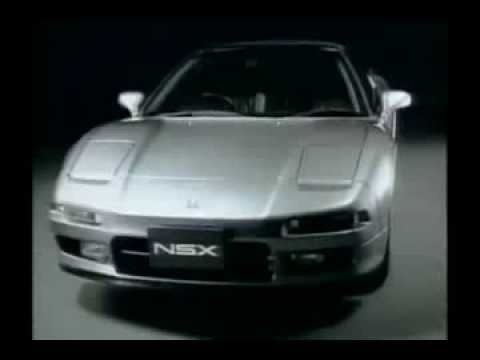
The Honda NSX, launched in 1990 (some sources say 1991), it had an all-aluminium semi-monocoque body and a mid-mounted 3.0-litre V6 with VTEC variable valve timing. Ayrton Senna gave feedback during late development. In North America it was sold as the Acura NSX, and production of the first generation ended in December 2005, or 2006 in some records.
Practical cars kept pace. The first Odyssey MPV came in 1994, and the Honda CR-V went on sale in Japan in October 1995, although some sources date it to 1994. The Honda S2000 roadster, launched on 15 April 1999, had a 1,997 cc F20C engine rated at 177 kW (241 PS) in Europe and 184 kW (250 PS) in Japan. The Insight, on sale in the US in late 1999, was the first hybrid sold there, about seven months before the Toyota Prius.
2000–2014: hybrids, ASIMO, fuel cells and the HondaJet
In the 2000s Honda spread its engineering beyond cars and motorcycles. The first ASIMO humanoid robot was presented in 2000. The Civic Hybrid went on sale in the US in 2002, and by the end of September 2012 Honda had sold one million hybrids.

The Pilot SUV, launched in 2002 with a 3.5-litre V6 of 179 kW (240 hp), is built at Lincoln, Alabama; the third-generation Pilot went on sale in June 2015.
The FCX fuel-cell car was presented in 1999, the first FCX Clarity was handed over on 16 June 2008, and about 1,900 had been delivered when production ended in 2014.
The CR-Z hybrid coupé, previewed in Tokyo in October 2007 and revealed in January 2010, was built at Suzuka from 2010 to 2016. Its IMA hybrid system gave 90 kW (121 hp) combined, rising to 97 kW (130 hp) with the 2013 update. In the air, GE Honda Aero Engines was formed in 2004, Honda Aircraft Company in 2006, and HondaJet production started in 2012.
2015–2026: Swindon's closure, Sony and the Nissan talks
The HondaJet received FAA type certification and was first delivered in December 2015. The second-generation NSX was built at Marysville from 27 May 2016 to November 2022 with 427 kW (581 PS) in standard form.

The small electric Honda e was launched in 2020, followed by the e:Ny1 electric SUV in 2023. On 30 July 2021 Honda closed the Swindon plant, which still employed about 3,400 people. In 2023 US Accord production moved from Marysville to Greensburg, Indiana.
Sony Honda Mobility, a joint venture with Sony, was announced on 13 October 2022. On 23 December 2024 Honda and Nissan signed a memorandum of understanding to explore a merger, but the boards voted to end the talks in February 2025 and both companies remain independent.
Honda in Formula One and its technical landmarks
Honda has raced in Formula One in four separate periods. It debuted with its own team in 1964, won for the first time in Mexico in 1965 and again in Italy in 1967, then withdrew after 1968.

The second period, 1983–1992, was the most successful. As an engine supplier Honda won six consecutive constructors' titles and five consecutive drivers' titles between 1986 and 1991, and more than 70 races. In 1988 McLaren-Honda won 15 of the 16 Grands Prix. A third period followed from 2000 to 2008.
In 2015 Honda returned as a hybrid power-unit supplier, to McLaren until 2017, Toro Rosso in 2018 and Red Bull from 2019. The first win of this era came in 2019, and in 2021 Max Verstappen won the drivers' title with Red Bull-Honda. Honda then ended its official works programme, and it later announced a return as Aston Martin's works supplier from the 2026 season.
Away from racing, Honda's best-known technical landmarks are the CVCC engine, VTEC valve timing, the aluminium NSX body and the first hybrid sold in the US.
Who owns Honda and where its cars are built
Honda is a listed company with widely spread shares. Its largest holders are trust-bank accounts with about 4.71% and 3.23%, so no single shareholder controls it.

Its car plants are spread across Japan, North America and, until 2021, the UK:
- Japan: Suzuka built the CR-Z; Kumamoto builds motorcycles and completed the 300 millionth Honda motorcycle in November 2014.
- United States: Marysville, Ohio (Accord 1982–2023, NSX 2016–2022), Greensburg, Indiana (Accord from 2023) and Lincoln, Alabama (Pilot).
- United Kingdom: Swindon built the Accord 1992–2002, the Civic 1994–2021, the CR-V 2000–2018 and the Jazz 2009–2014.
Worldwide car output peaked at 5,357,013 in 2018, against 3,012,000 in 2009.
Landmark Hondas: from the Super Cub to the CR-Z
Eleven vehicles mark the turning points of Honda history.
| Model | Years | Why it matters |
|---|---|---|
| Super Cub | 1958– | Step-through motorcycle; 100 million built by October 2017 |
| T360 | from 1963 | Kei truck, Honda's first four-wheeled production vehicle |
| S500 | 1963–1964 | First passenger car; 531 cc DOHC engine |
| Civic | 1972– | Longest-running Honda car nameplate; over 27 million sold by 2021 |
| Accord | 1976– | First Japanese-brand car built in the US (1982); over 19 million sold |
| NSX | 1990–2005, 2016–2022 | Aluminium mid-engined sports car |
| CR-V | 1995– | Compact SUV; second best-selling SUV worldwide in 2020 |
| S2000 | 1999–2009 | Two-seat roadster with a 1,997 cc F20C engine; 113,889 built |
| Insight | from 1999 | First hybrid sold in the US |
| Pilot | 2002– | Three-row SUV built in North America |
| CR-Z | 2010–2016 | Hybrid sports coupé built at Suzuka |
The sporty Civic line has its own story: the first Civic Si appeared in Japan in 1984 with a 96 kW (130 PS) DOHC engine, and the US Honda Civic Si followed with a 68 kW (91 hp) SOHC engine.
Honda's car line-up in October 2026
Honda's core car range rests on four long-running nameplates; electric models vary by region.

| Model | Segment | Body | Years |
|---|---|---|---|
| Civic | Compact | Hatchback, saloon | 1972– (11th generation from June 2021) |
| Accord | Mid-size | Saloon | 1976– (11th generation unveiled November 2022) |
| CR-V | Compact SUV | SUV | 1995– (6th generation from 2023; hybrid since the 2020 model year) |
| Pilot | Mid-size SUV | Three-row SUV | 2002– (4th generation from November 2022) |
| e:Ny1 | Electric compact SUV | SUV | 2023– |
The NSX, S2000 and CR-Z are no longer built. Every Honda covered on the site, with specifications by version, is listed in the Honda catalogue.
Honda timeline
These are the dated milestones of Honda history, from the research institute to the Nissan talks.

| Year | Event |
|---|---|
| 1946 | Honda Technical Research Institute opens (October) |
| 1948 | Honda Motor Co., Ltd. incorporated (24 September) |
| 1958 | Super Cub launched |
| 1963 | T360 truck (August) and S500 roadster (October) |
| 1972 | Civic introduced (11 July) |
| 1976 | Accord launched (7 May) |
| 1982 | Accord production starts at Marysville, Ohio |
| 1986 | Acura launched in the US (March) |
| 1990 | NSX launched |
| 1999 | S2000 and Insight launched |
| 2015 | HondaJet certified and first delivered (December) |
| 2021 | Swindon plant closes (30 July); Red Bull-Honda wins the F1 drivers' title |
| 2024–2025 | Merger talks with Nissan (23 December 2024 to February 2025) |
Honda in numbers: motorcycles, Civics and Accords
Honda's production and sales milestones:
- 500 million motorcycles built by May 2025, after 100 million in 1997 and 400 million at the end of 2019.
- 100 million Super Cubs by October 2017.
- Over 27 million Civics sold worldwide through 2021, and over 19 million Accords.
- 1,209,174 CR-Vs built at Swindon.
- 113,889 S2000s built by the end of production in 2009.

FAQ
Who founded Honda and when?
Soichiro Honda founded the Honda Technical Research Institute in October 1946, and Honda Motor Co., Ltd. is usually dated to 24 September 1948. Takeo Fujisawa joined as business partner around 1949.
What was Honda's first car?
The T360 kei truck, on sale from August 1963, was Honda's first four-wheeled production vehicle. The first passenger car was the S500 roadster, launched later in 1963 (October in most listings) with a 531 cc DOHC engine.
Why is the Civic so important to Honda?
The Civic, introduced in July 1972, carried Honda into the mass market outside Japan. It is the longest-running Honda car nameplate, with over 27 million sold through 2021.
Who owns Honda?
Honda is a publicly listed company with no controlling shareholder. Its largest holders are trust-bank accounts with stakes of under 5% each, so no single investor controls it.
Did Honda and Nissan merge?
No. The two companies signed a memorandum of understanding to explore a merger on 23 December 2024, but their boards voted to end the talks in February 2025.
Where are Honda cars built?
Mainly in Japan and North America, with US plants in Ohio, Indiana and Alabama. Honda built cars at Swindon in the UK from 1992 until the plant closed on 30 July 2021.
Photos (2)