The History of Suzuki: Looms, Motorcycles and Small Cars
Suzuki Motor Corporation is a Japanese maker of small cars, motorcycles and outboard engines based in Hamamatsu. It began in October 1909, when Michio Suzuki founded Suzuki Loom Works to make weaving looms, and built its first car, the Suzulight, in 1955. Today its biggest market is India, through Maruti Suzuki, and it produced about 3.9 million vehicles in 2021.

Key takeaways
- 1909–1951: Suzuki makes looms; a small-car project of 1937 is stopped by the war.
- 1952–1961: the Power Free motorised bicycle, the 1955 Suzulight and the Suzulight Carry van turn it into a vehicle maker.
- 1970s–1980s: the Jimny 4x4, the Alto and the Swift, plus the Maruti joint venture in India from 1982.
- Partnerships: GM (1981–2008), a short and disputed alliance with Volkswagen (2009–2015) and Toyota since 2019.

The company in brief

| Fact | Value |
|---|---|
| Founder | Michio Suzuki |
| Founded | October 1909, as Suzuki Loom Works, Hamamatsu |
| Name since 1954 | Suzuki Motor Co., Ltd. (today Suzuki Motor Corporation) |
| Headquarters | Hamamatsu, Shizuoka Prefecture, Japan |
| Leadership | Toshihiro Suzuki, president and chairman |
| Key subsidiary | Maruti Suzuki, India (Suzuki holds 54.2 %) |
| Output | About 3.9 million vehicles (2021) |
| Best-known cars | Jimny, Swift, Vitara, Alto, Wagon R, Carry |
Michio Suzuki and the loom company (1909–1951)
The founder set up Suzuki Loom Works in the coastal town of Hamamatsu in October 1909 to make looms for silk and cotton weaving. The company was reorganised and incorporated as Suzuki Loom Manufacturing Co. in 1920. For three decades it built only textile machinery, and it did well.

He still wanted a wider business. In 1937 the company began a small-car project, and by about 1939 it had finished prototypes. The old 1cars text describes them as using an advanced water-cooled four-stroke four-cylinder engine. The Second World War stopped the project before production began, and after 1945 the company went back to looms.
Motorcycles and the first Suzulight (1952–1969)
When the Japanese textile market collapsed in 1951, the company turned to transport. In 1952 it launched the Power Free, a bicycle with a clip-on 36 cc two-stroke engine of about 1 hp. Demand grew fast: according to the old 1cars text, output reached about 6,000 motorcycles a month by 1954. That year the company changed its name to Suzuki Motor Co., Ltd.

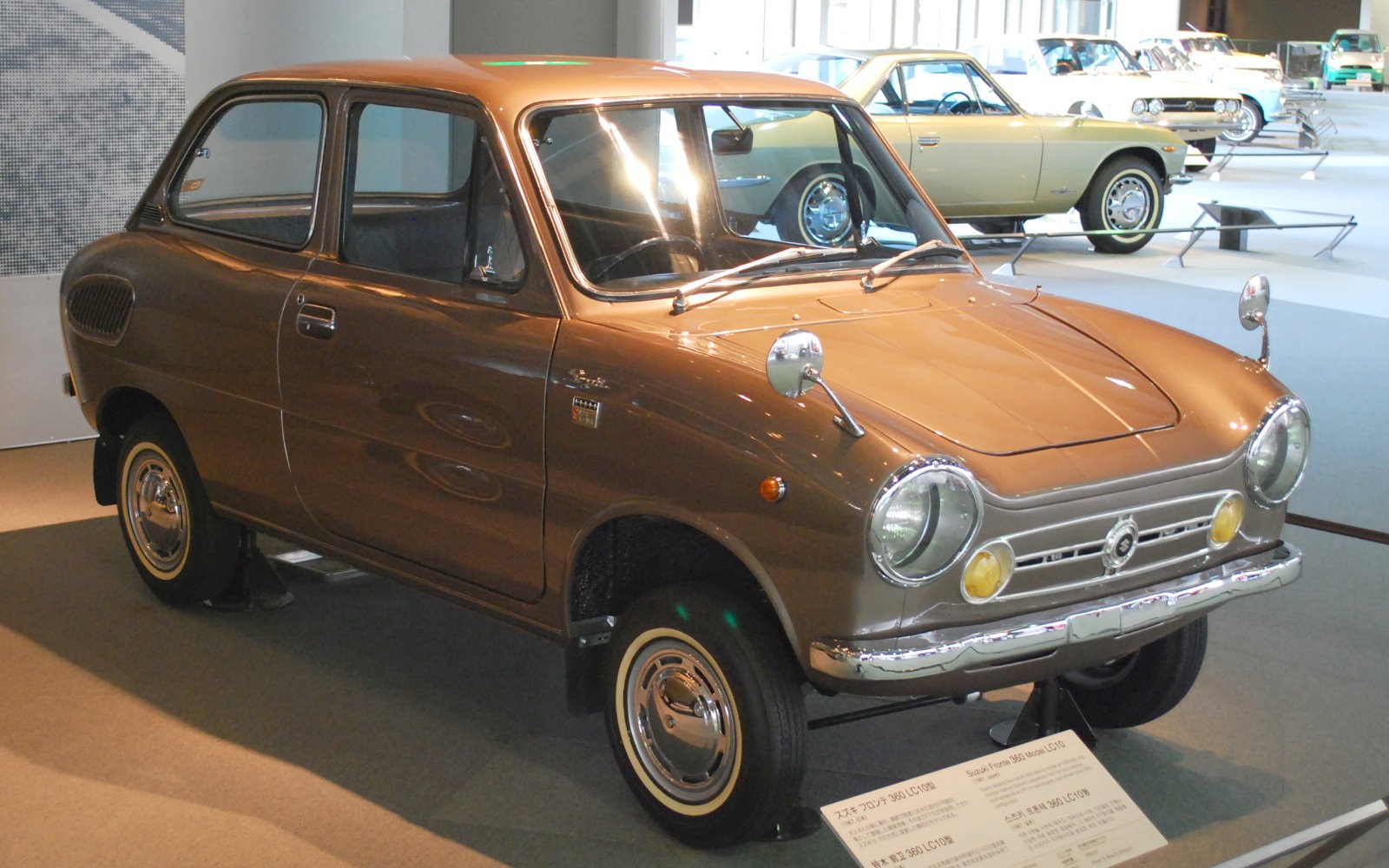
In 1955 came the first car, the Suzulight. Its front-wheel drive, all-round independent suspension and rack-and-pinion steering were advanced features for Japan at the time. In 1961 a new plant at Toyokawa started building the 360 cc two-stroke Suzulight Carry light truck, the start of the long-running Carry line. The Fronte saloon followed in the 1960s, and the company's motorcycle racing brought international fame: in 1963 Mitsuo Itoh became the first Japanese rider to win at the Isle of Man TT.
The Jimny, Alto and Swift (1970–1989)
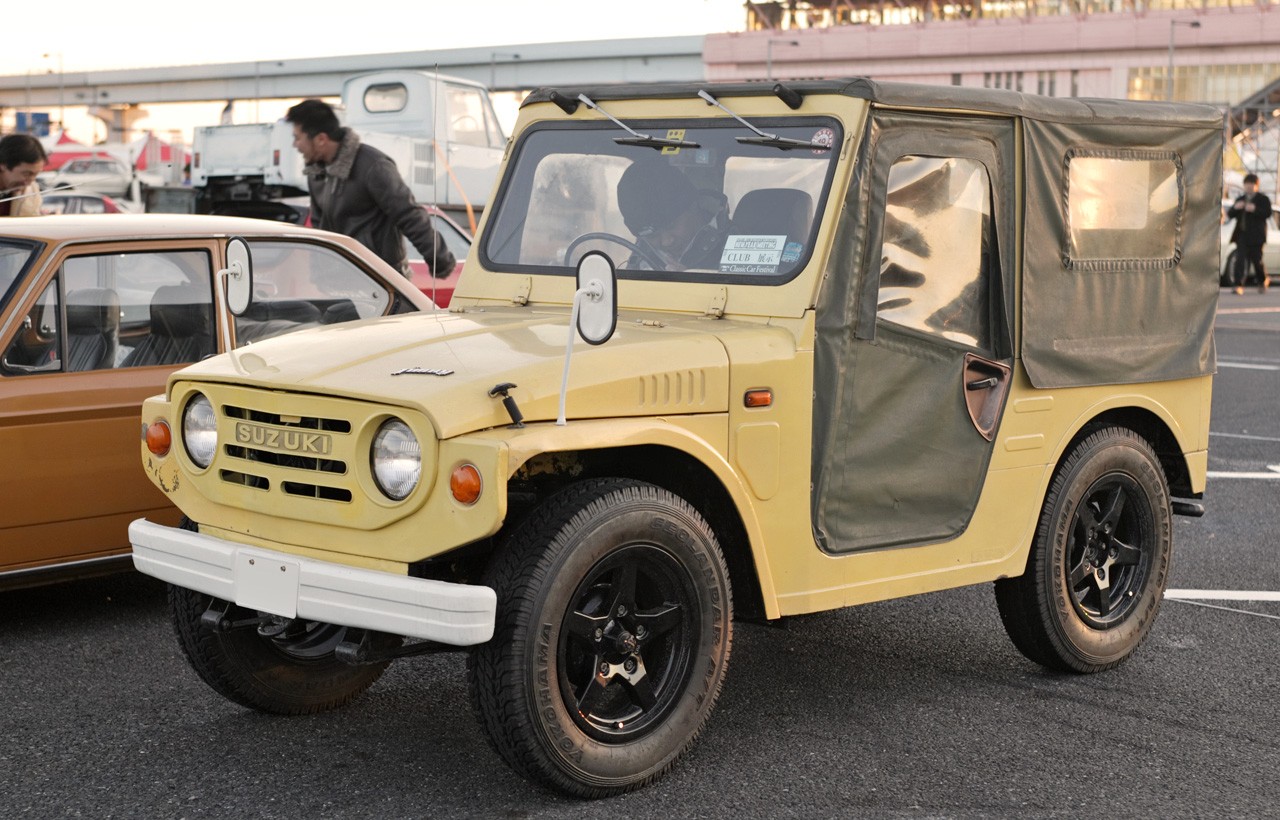
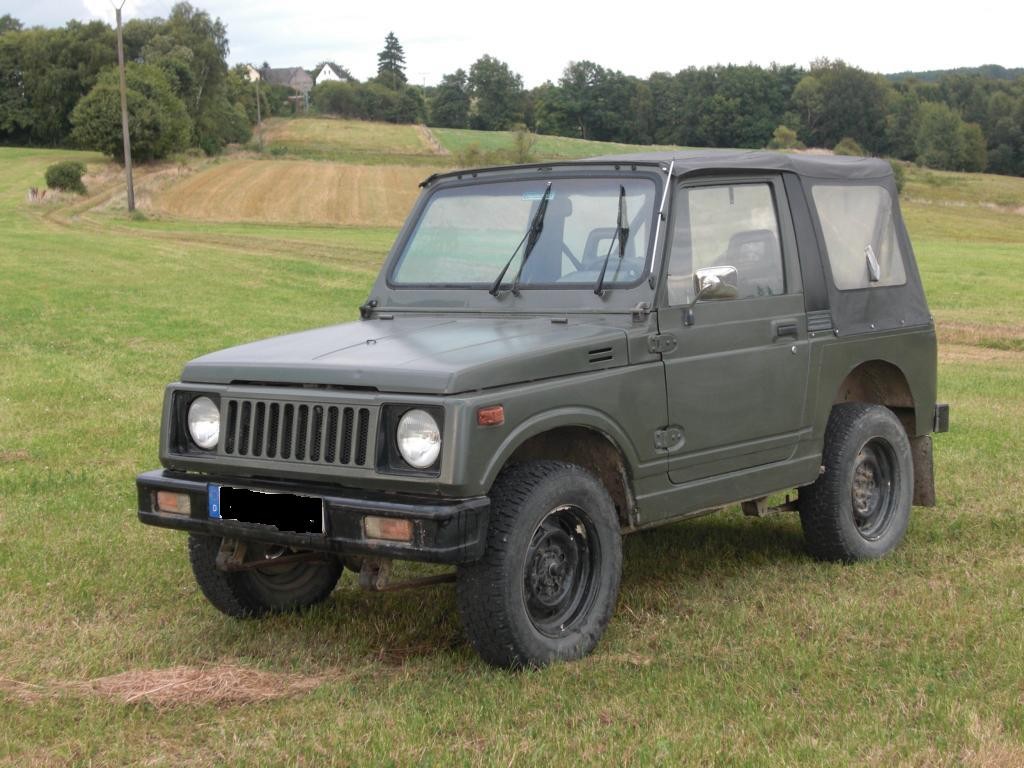
In 1968 the company bought the design of the HopeStar ON360, a tiny 4x4 made by the Hope Motor Company. It became the LJ10 Jimny of April 1970, with a 359 cc air-cooled two-stroke engine. The second-generation SJ series of 1981 went abroad as the SJ410 and, in some markets, the Samurai. Santana in Spain built the SJ under licence from March 1985.
The 1979 Alto was a cheap kei car that sold strongly in Japan, and the Cultus of 1983, sold as the Swift in many markets, became the brand's global small car. In 1988 the Escudo, known in Europe as the Vitara, created one of the first compact soft-roaders. The story of that model and its successors is on the Suzuki Vitara and Grand Vitara pages.
The biggest strategic step came in India. In 1982 the company set up Maruti Udyog as a joint venture with the Government of India, and in 1983 the Maruti 800 went into production. Suzuki took a majority in 2007 and today holds 54.2 % of Maruti Suzuki. Osamu Suzuki, president from 1978, drove this expansion.
Europe, partners and crises (1990–2018)
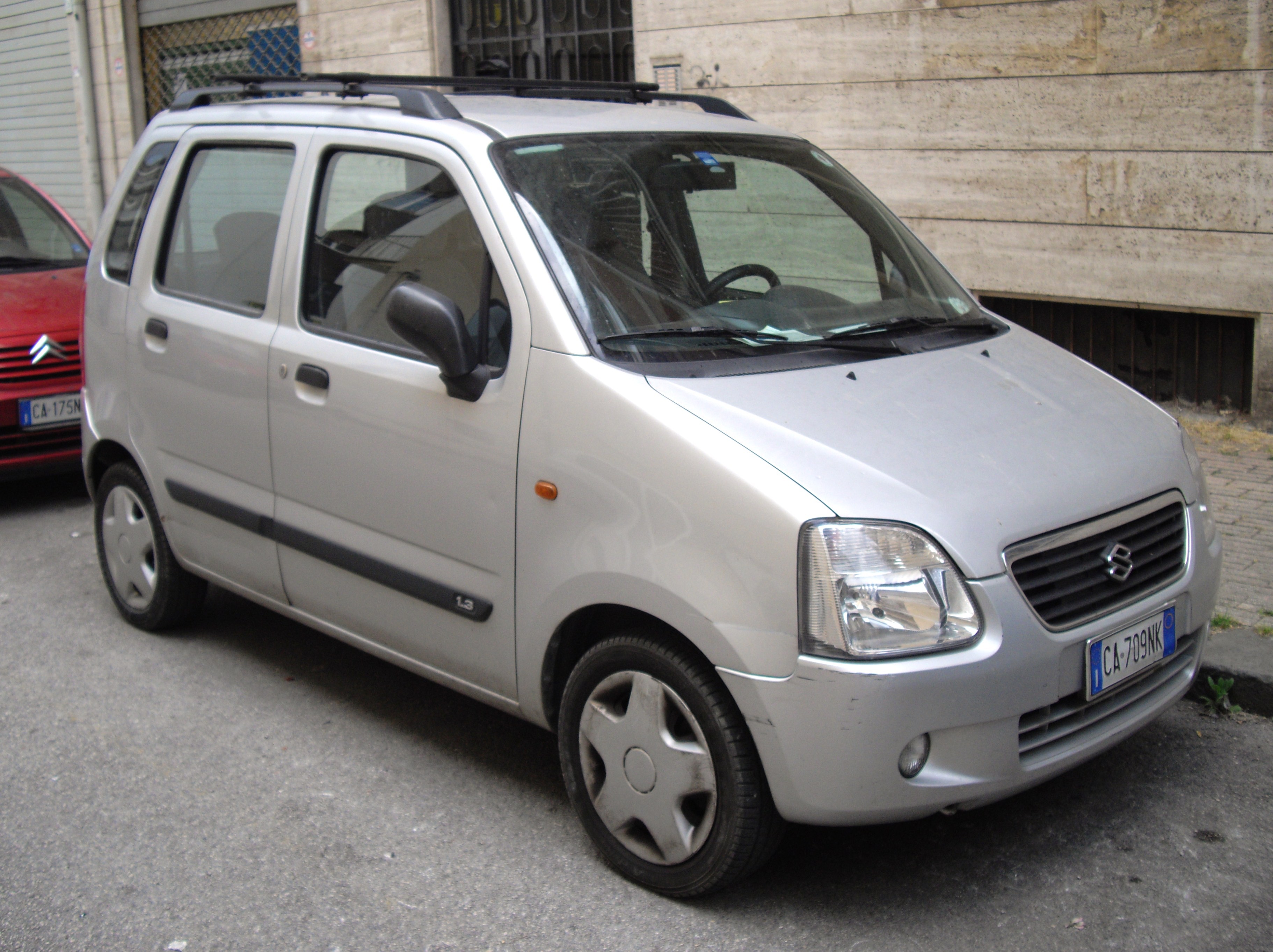
A 1991 contract created Magyar Suzuki in Hungary, which builds cars for Europe. The two-seat Cappuccino roadster of 1991 and the tall Wagon R kei car of 1993 were hits at home; Wagon R sales in Japan passed 1 million in 1999. In 2001 Jimny and SJ sales passed 2 million worldwide.
Partnerships shaped this period:
- General Motors bought 5.3 % in 1981 and formed a strategic alliance in 1998, then sold its last 3 % in 2008.
- Volkswagen bought 19.9 % in 2009–2010. Suzuki ended the partnership in 2011, and a 2015 arbitration ruling ordered VW to sell the stake back.
- In November 2012 American Suzuki filed for bankruptcy and stopped selling cars in the United States; Canada followed after the 2014 model year.
From 2016 Europe also received India-built cars such as the Baleno, whose 1.0 Boosterjet turbo produced 82 kW (111 PS). The fourth-generation Jimny, launched in Japan on 5 July 2018, revived the brand's image in Europe. More than 2.85 million Jimnys had been sold in 194 countries by September 2018.
Toyota alliance and electrification (2019–today)
In August 2019 Toyota announced a 4.9 % stake in Suzuki, with Suzuki taking a small stake in Toyota. The deal brought Toyota-built hybrids under the Suzuki badge in Europe, such as the Across and Swace from 2020, and joint work on electric cars. Strict European CO2 rules forced the Jimny passenger car out of the EU in 2020, and only a commercial version remained until 2025. India received a five-door Jimny on 7 June 2023.
Osamu Suzuki retired as chairman in June 2021 and died in December 2024; his son Toshihiro leads the company. The e Vitara, Suzuki's first global battery-electric SUV, arrived in 2025. For a modern Suzuki on the European market, see the Suzuki Baleno, and for the latest kei car, the new Wagon R.
Landmark models from the Suzulight to the e Vitara

| Model | Years | Why it matters |
|---|---|---|
| Power Free | 1952 | First Suzuki vehicle: a motorised bicycle |
| Suzulight | 1955 | First Suzuki car, front-wheel drive |
| Suzulight Carry | 1961– | Start of the Carry van and truck line |
| Jimny LJ10 | 1970 | First Suzuki 4x4, ancestor of every Jimny |
| Alto | 1979– | Cheap kei car and long-running best-seller |
| Swift (Cultus) | 1983– | Suzuki's global small car |
| Maruti 800 | 1983 | Car that opened the Indian market |
| Vitara (Escudo) | 1988– | Early compact SUV |
| e Vitara | 2025– | First global battery-electric Suzuki |
Production and sales milestones
| Year | Milestone |
|---|---|
| 1954 | About 6,000 motorcycles a month (old 1cars text) |
| 1999 | Wagon R sales in Japan pass 1 million |
| 2001 | Jimny and SJ sales pass 2 million worldwide |
| 2018 | More than 2.85 million Jimnys sold in 194 countries |
| 2021 | About 3.9 million vehicles produced |
By our calculation, the Jimny family added roughly 850,000 sales in the 17 years between 2001 and 2018, about 50,000 a year, for a car that stayed in the same small niche throughout.
Motorsport and records
The brand's racing fame comes mainly from motorcycles: it has 94 Isle of Man TT wins, and Joan Mir won the 2020 MotoGP title, the brand's first since Kenny Roberts Jr. in 2000. On four wheels, Nobuhiro "Monster" Tajima won the Pikes Peak hill climb seven times between 1995 and 2011 in Suzukis. His 2011 run in an SX4 was the first under ten minutes, at 9:51.278. The company also entered the World Rally Championship with the SX4 WRC in 2008.
Compared with Toyota and other Japanese brands
The two companies share an unusual origin: both began as loom makers, as told in Toyota's history from weaving machines to cars. The difference is scale and focus. Hamamatsu stayed with small, light and cheap cars and became the leader in India, while Toyota grew into a full-range global maker. Compared with Daihatsu, its rival in kei cars, it is far stronger outside Japan. To compare its models with rivals, use the 1cars comparison tool and the best small city cars guide.
Which Suzuki model to choose
For a small car that is cheap to buy and run, the Swift is the best all-round choice: light, reliable and easy to drive. Buyers who need real off-road ability in a compact size should look for a Jimny, keeping in mind its firm ride and small boot. The Vitara is the sensible family SUV, available with all-wheel drive. Older models are simple to maintain, but check for rust on the sills and floors of Jimnys and early Swifts.
FAQ
When was Suzuki founded?
Michio Suzuki founded Suzuki Loom Works in Hamamatsu, Japan, in October 1909 to build weaving looms. The company made its first motorised vehicle, the Power Free, in 1952 and its first car, the Suzulight, in 1955.
Does Suzuki still sell cars in the United States?
No. American Suzuki filed for bankruptcy in November 2012 and stopped selling cars in the US, and Canada stopped after the 2014 model year. Suzuki motorcycles and outboard engines are still sold there.
Who owns Suzuki?
Suzuki Motor Corporation is an independent public company. Toyota has held a stake of about 4.9 % since 2019. Suzuki in turn owns 54.2 % of Maruti Suzuki, India's largest car maker.
What was the first Suzuki car?
The first Suzuki car was the 1955 Suzulight, a small front-wheel-drive car with four-wheel independent suspension and rack-and-pinion steering. Prototypes of an earlier car were finished around 1939, but the war stopped production.
Why did Suzuki stop selling the Jimny in Europe?
The Jimny's CO2 emissions were too high for EU fleet targets, so the passenger version was withdrawn in 2020. It returned in 2021 as a two-seat commercial vehicle and was withdrawn again in 2025.
Videos 2

Video 1

Video 2