
 Suzuki Grand Vitara
All generations, specs and history
Updated Published Sources (5) Report an error
By Sarah Whitmore, Senior Automotive Writer Reviewed by Oleksandr Hnatiuk

- Built
- 1998–present
- Generations
- 2 · FT/GT to JT
- Top power
- 135 kW (184 PS)
Timeline
Grand Vitara generations
Click a generation for its own page


- Grand Vitara I (FT/GT) 1998–2005 · Convertible, SUV · 64–135 kW (87–184 PS)
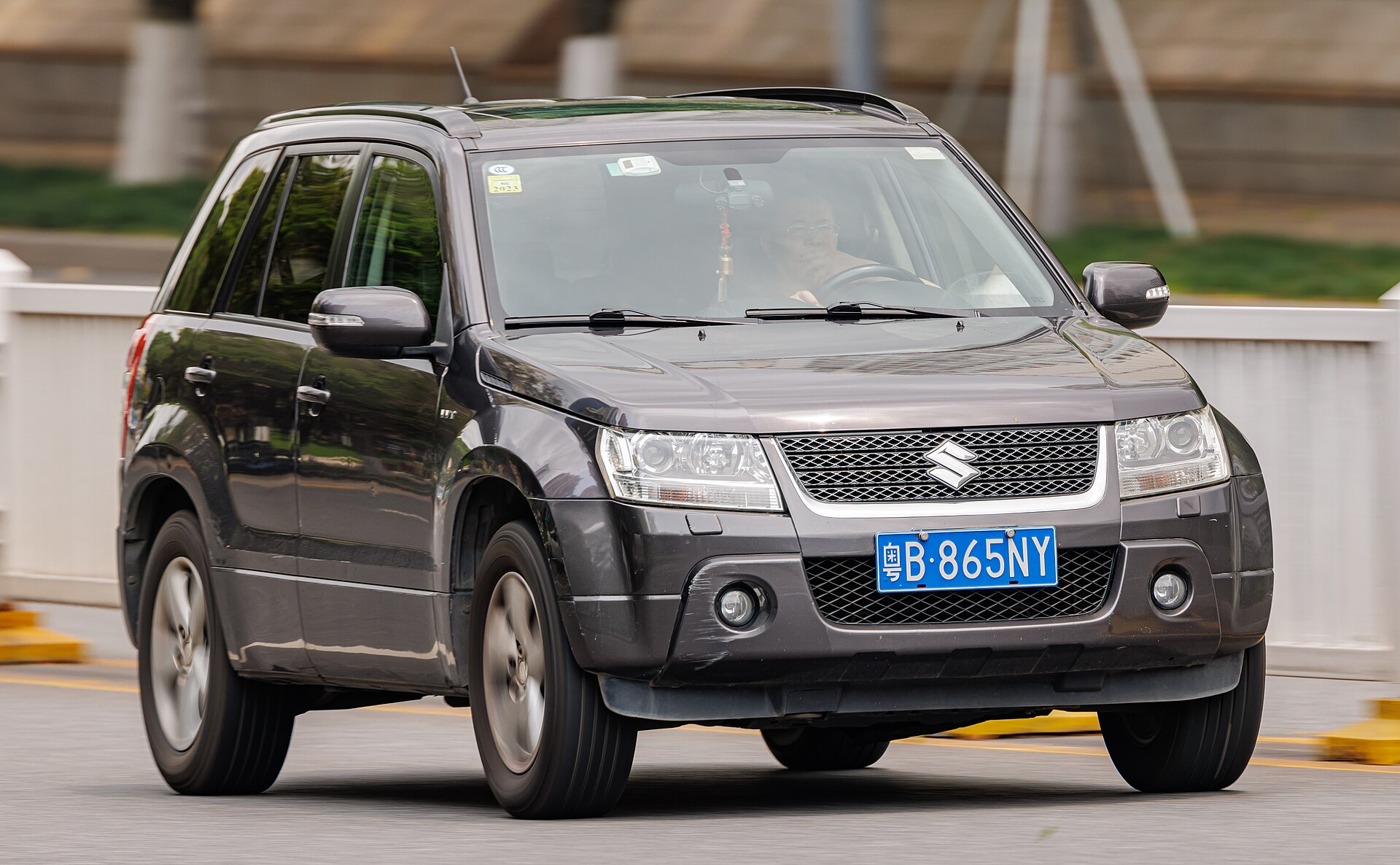
- Grand Vitara II (JT) 2005–2015 · SUV · 78–124 kW (106–169 PS)
Newest first · 2 generations since 1998
-
2005
-
1998
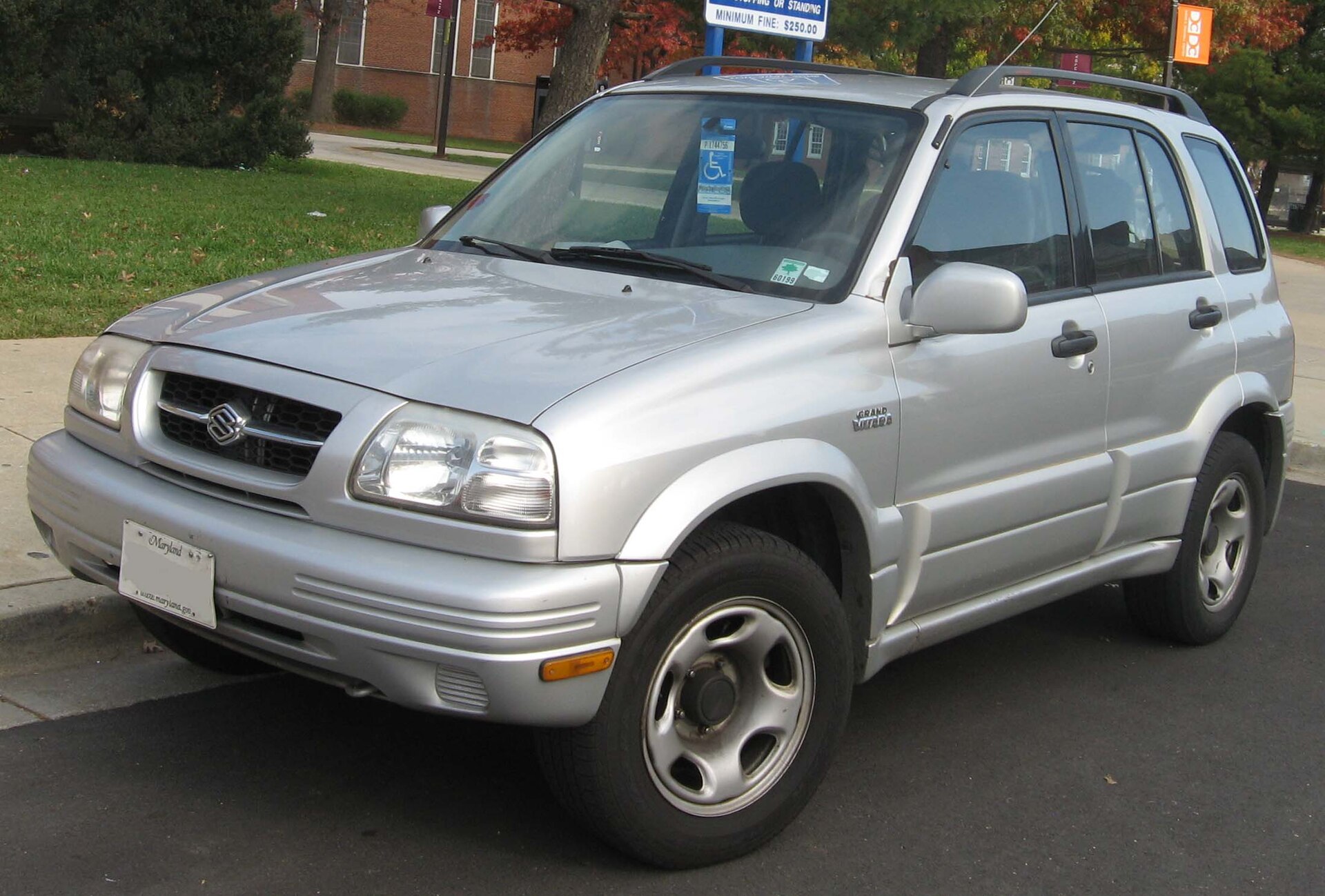
All generations by year: Grand Vitara II (JT) (2005–2015) · Grand Vitara I (FT/GT) (1998–2005)
Which one is mine?
Pick the year of first registration to see which generation it is.
Check by VINWhich Suzuki Grand Vitara to buy: verdict
Our verdict · Sarah Whitmore
A petrol JT is the sensible choice for most buyers. AutoScout24 recommends the 2.0 with 140 PS for cars built up to 2008 and the 2.4 for later ones or for anyone who wants more pull. The 3.2 V6 is described as long-lasting but sluggish and thirsty, and the diesel is best avoided unless it has a full service history.
Before buying, check the brake lines and discs, the lights, the gearbox for noise or stiff gear changes, clutch wear on towing cars, the underbody for rust and off-road damage, and the recall work. When new in Germany, ADAC lists 2005–2008 prices from 21,400 EUR for a 1.6 Club three-door to 32,300 EUR for a 1.9 DDiS Comfort+ five-door. In May 2026 Auto Bild reported used offers from about 2,900 EUR.
The Suzuki Grand Vitara is a compact 4x4 sold in Europe in two generations: the first from 1998 to 2005 and the JT from 2005 to 2015. The JT, the version most buyers look at today, combines a monocoque body with a built-in ladder frame, permanent four-wheel drive and a low-range transfer box. Since 2022 the name has also been used for an unrelated India-built hybrid.
In short
- European JT engines: 1.6, 2.0 and 2.4 petrol, 2.7 and 3.2 V6, plus a Renault-sourced 1.9 DDiS diesel.
- Four-wheel drive is permanent, with a lockable centre differential and a 1.97:1 low range.
- Euro NCAP tested the five-door in March 2007: four stars for adults, three for children and pedestrians.
- In Germany, ADAC lists the last JT cars as built until August 2015.

Running cost
Fuel · Grand Vitara FT/GT 80 kW (109 PS)
about 1,800 EUR fuel a year at 15,000 km
7.3 l/100 km · diesel at 1.65 EUR/l · change mileage, fuel price or version
Specs by version
Engines
| Version | Engine | Power | Torque | Gearbox | Drive | Production years |
|---|---|---|---|---|---|---|
| Diesel · 2 versions | ||||||
| FT/GT · 64 kW (87 PS) | 6 cyl · Diesel | 64 kW 87 PS86 hp | - | - | Four-wheel drive (4×4) | 2001 |
| FT/GT · 80 kW (109 PS) | 6 cyl · Diesel | 80 kW 109 PS107 hp | - | - | Four-wheel drive (4×4) | - |
| Petrol · 5 versions | ||||||
| FT/GT · 1.6 petrol | 1.6 l · Petrol 1,590 cc | 69 kW 94 PS93 hp | 138 Nm102 lb-ft | - | Four-wheel drive (4×4) | - |
| FT/GT · 80 kW (109 PS) | 6 cyl · Petrol | 80 kW 109 PS107 hp | - | - | Four-wheel drive (4×4) | - |
| FT/GT · 2.0 petrol | 2.0 l · 6 cyl · Petrol 1,995 cc | 94 kW 128 PS126 hp | 174 Nm128 lb-ft | - | Four-wheel drive (4×4) | - |
| JT · 1.6 78 kW (106 PS) SUV | 1.6 l · Petrol 1,600 cc | 78 kW 106 PS105 hp | - | 5-sp Manual | - | - |
| JT · 2.4 124 kW (169 PS) SUV | 2.4 l · Petrol 2,400 cc | 124 kW 169 PS166 hp | - | 4-sp Automatic | - | - |
| Other · 6 versions | ||||||
| FT/GT · 2.0 TD diesel | 2.0 l 1,997 cc | - | 250 Nm184 lb-ft | - | Four-wheel drive (4×4) | - |
| FT/GT · 2.5 V6 petrol | 2.5 l 2,493 cc | - | 213 Nm157 lb-ft | - | Four-wheel drive (4×4) | - |
| FT/GT · 116 kW (158 PS) | 6 cyl | 116 kW 158 PS156 hp | - | Automatic | Four-wheel drive (4×4) | 2001 |
| FT/GT · 127 kW (173 PS) | 6 cyl | 127 kW 173 PS170 hp | - | - | Four-wheel drive (4×4) | 2001 |
| FT/GT · 135 kW (184 PS) | - | 135 kW 184 PS181 hp | - | - | Four-wheel drive (4×4) | 2003 |
| JT · 2.0 103 kW (140 PS) SUV | 2.0 l 2,000 cc | 103 kW 140 PS138 hp | - | 5-sp Manual | - | 2005–2008 |
Performance
Show all 2 versions
| Version | 0–100 km/h | Top speed | Fuel consumption |
|---|---|---|---|
| FT/GT · 1998–2005 | |||
| FT/GT · 80 kW (109 PS) | - | - | 7.3 l/100 km32.2 mpg US · 38.7 mpg UK |
| FT/GT · 116 kW (158 PS) | 12.4 s 0–62 mph | 170 km/h106 mph | 10.9 l/100 km21.6 mpg US · 25.9 mpg UK |
Dimensions and weight
Show all 13 versions
| Version | Length | Kerb weight |
|---|---|---|
| Diesel · 2 versions | ||
| FT/GT · 64 kW (87 PS) | 4,700 mm185.0 in | 1,245 kg2,745 lb |
| FT/GT · 80 kW (109 PS) | 4,700 mm185.0 in | 1,245 kg2,745 lb |
| Petrol · 5 versions | ||
| FT/GT · 1.6 petrol | 4,700 mm185.0 in | 1,245 kg2,745 lb |
| FT/GT · 80 kW (109 PS) | 4,700 mm185.0 in | 1,245 kg2,745 lb |
| FT/GT · 2.0 petrol | 4,700 mm185.0 in | 1,245 kg2,745 lb |
| JT · 1.6 78 kW (106 PS) SUV | - | - |
| JT · 2.4 124 kW (169 PS) SUV | - | - |
| Other · 6 versions | ||
| FT/GT · 2.0 TD diesel | 4,700 mm185.0 in | 1,245 kg2,745 lb |
| FT/GT · 2.5 V6 petrol | 4,700 mm185.0 in | 1,245 kg2,745 lb |
| FT/GT · 116 kW (158 PS) | 4,700 mm185.0 in | 1,245 kg2,745 lb |
| FT/GT · 127 kW (173 PS) | 4,700 mm185.0 in | 1,245 kg2,745 lb |
| FT/GT · 135 kW (184 PS) | 4,700 mm185.0 in | 1,245 kg2,745 lb |
| JT · 2.0 103 kW (140 PS) SUV | - | - |
Verified Manufacturer and type-approval data from our catalog · Sources and methodology
Suzuki Grand Vitara at a glance: segment, body styles, where it is built
The Grand Vitara is Suzuki's compact off-roader, one size up from the original Vitara of 1988 and sold in Japan as the Escudo. The European JT was offered as a three-door on a 2,440 mm (96.1 in) wheelbase and a five-door on 2,640 mm (103.9 in). Cars for Europe are reported to have come from Suzuki's Iwata plant in Japan. Background on the maker is in the history of Suzuki and the full Suzuki range.

English-language references number the generations differently because they count the Vitara family from 1988. This page follows the German and ADAC convention and gives the years each time.
| Generation | Code | Years | Body styles | Engines | Power (kW / PS) |
|---|---|---|---|---|---|
| 1st Grand Vitara | FT/GT | 1998–2005 | 3-door, 5-door, soft-top; XL-7 long version | 1.6, 2.0 petrol; 2.5 and 2.7 V6; 2.0 TD diesel | 64–135 / 87–184 |
| 2nd Grand Vitara | JT | 2005–2015 | 3-door, 5-door | 1.6, 2.0, 2.4 petrol; 2.7 and 3.2 V6; 1.9 DDiS diesel | 78–171 / 106–233 |
| 3rd Grand Vitara (India) | – | 2022– | 5-door SUV | 1.5 mild hybrid and strong hybrid | 76–85 / 103–116 |
First generation (1998–2005)
The first Grand Vitara was announced in November 1997 and launched in March 1998. It used a ladder-frame construction and part-time, switchable four-wheel drive, the layout of a traditional off-roader. Suzuki added the XL-7 in September 2001, a 4.70 m long version sold only with a V6. Related models include the Mazda Proceed Levante and the North American Chevrolet Tracker.
Second generation, JT (2005–2015)
The JT appeared in September 2005 as an all-new car. Its body is a monocoque with an integrated ladder frame, and the suspension is independent all round, with MacPherson struts at the front and a multi-link layout at the back.
Two updates shaped the JT. In 2008 the 2.0 and 2.7 were replaced by a 2.4 four-cylinder and a 3.2 V6, extra airbags arrived and traction control became standard. A 2012 facelift for model year 2013 brought a new grille, bumpers, wheels and lights, and the V6 was dropped. European sales ended in 2015, while the Japanese Escudo is reported to have continued until April 2017.
The India-built Grand Vitara (2022–)
Since September 2022 Maruti Suzuki has built a new Grand Vitara in India. It shares its platform with the Toyota Urban Cruiser Hyryder, uses a 1.5-litre petrol engine as a mild hybrid with 76 kW (103 PS) or a strong hybrid with 85 kW (116 PS), and replaced the S-Cross there. It is not sold in Europe. In Europe the JT was succeeded in 2015 by the Suzuki Vitara, built in Esztergom, Hungary.
Engines, transmissions and performance
The JT had six engines over its life, but not all at the same time. The 1.6 was reserved for the three-door and the diesel came from Renault.

| Engine | Capacity | Power | Torque | Gearbox | Built |
|---|---|---|---|---|---|
| 1.6 petrol | 1,586 cc | 78 kW (106 PS) | 145 Nm (107 lb-ft) | 5-speed manual | 2005–2015, 3-door only |
| 2.0 petrol | 1,995 cc | 103 kW (140 PS) | 183 Nm (135 lb-ft) | 5-speed manual, 4-speed automatic | 2005–2008 |
| 2.4 petrol (J24B) | 2,393 cc | 122–124 kW (166–169 PS) | 225–227 Nm (166–167 lb-ft) | 5-speed manual, 4-speed automatic | 2008–2015 |
| 2.7 V6 | 2,736 cc | 135 kW (184 PS) | 250 Nm (184 lb-ft) | 5-speed manual, 5-speed automatic | 2005–2008 |
| 3.2 V6 (GM) | 3,195 cc | 171 kW (233 PS) | 291 Nm (215 lb-ft) | 5-speed automatic | 2008–2012 |
| 1.9 DDiS diesel (Renault) | 1.9 L | 95 kW (129 PS) | – | – | from 2005, Euro 5 from 2012 |
The lower 2.4 figures are for the three-door. English sources list the 3.2 at 172 kW and the diesel at 93 kW (127 PS).
The four-wheel-drive system is the JT's main technical strength. Drive is permanent through a torque-sensing centre differential with a 47:53 front-to-rear split. A rotary switch selects 4H Lock, which locks the centre differential, and 4L Lock, which adds a 1.97:1 reduction. Early three-doors did not all have the lock and low range; from the 2008 update they were fitted across the range.
Dimensions, interior space and boot capacity
ADAC's European data for the 2.4 automatic five-door built from January 2013 to August 2015 are shown below; performance is modest, and the 1.6 is often called underpowered. Length varies between sources because not all cars carry the spare wheel on the tailgate.

| Parameter | Metric | Imperial |
|---|---|---|
| Engine | 2.4 L (2,393 cc) petrol inline-four, J24B | 146 cu in |
| Power | 124 kW (169 PS) | 166 hp |
| Torque | 227 Nm at 3,800 rpm | 167 lb-ft |
| Gearbox | 4-speed automatic (5-speed manual offered) | – |
| Drive | permanent 4WD, centre-diff lock, low range | – |
| Length | about 4,300 mm without tailgate spare, up to about 4,500 mm with it | 169.3–177.2 in |
| Width | 1,810 mm | 71.3 in |
| Height | 1,695 mm | 66.7 in |
| Wheelbase | 2,640 mm | 103.9 in |
| Kerb weight (EU) | 1,659 kg | 3,657 lb |
| Boot (seats up / to roof) | 398 / 1,386 L | 14.1 / 48.9 cu ft |
| Towing (braked / unbraked) | 1,700 / 750 kg | 3,748 / 1,653 lb |
| Fuel tank | 66 L | 14.5 UK gal |
| 0–100 km/h | 12.0 s | 0–62 mph 12.0 s |
| Top speed | 175 km/h | 109 mph |
| Combined consumption (NEDC) | 9.6 L/100 km | 29.4 mpg (UK) |
Loaded to the window line rather than the roof, the five-door boot holds 758 L (26.8 cu ft). The three-door is shorter and has a smaller boot, so the 398 L figure does not apply to it.
Fuel economy and running costs
The Grand Vitara is thirsty by modern standards. On the NEDC cycle ADAC lists the 2.4 automatic at 9.6 L/100 km (29.4 mpg UK) combined, 12.1 L/100 km urban and 8.1 L/100 km extra-urban, with 221 g/km of CO2. Real-world figures are usually higher, and AutoScout24 calls the 3.2 V6 thirsty.

Safety ratings: Euro NCAP 2007
Euro NCAP published its result for the five-door JT in March 2007: four stars for adult occupant protection, three stars for child occupants and three stars for pedestrian protection. Testers criticised the driver airbag, the risk of injury to the feet and from the dashboard and the fact that the passenger airbag could not be switched off. The rating covers the 2005–2008 car only, not the first generation or the 2015 Vitara. We found no IIHS rating for the JT.

According to AutoScout24, ESP was not standard at the 2005 launch but became standard from 2008. ADAC lists front, front side and curtain airbags, ESP, traction control, ABS and rear ISOFIX mountings as standard on 2013–2015 cars.
Reliability, recalls and common problems
Age shows in the brakes, lights and steering. Auto Bild's summary of the TÜV Report 2026 says brake lines are criticised about 2.5 times as often as the average car, brake discs score clearly worse than average, dipped beams and indicators are weak points, and steering faults rise slightly above average with age. Oil leaks are less frequent than average.

Recalls listed by the German KBA cover incorrectly routed engine wiring harnesses, faulty charge-air hoses on the diesel and a risk of power-steering assist failure. ADAC also records a March 2017 recall because the gear-lever shaft could break, affecting 4,462 vehicles in Germany.
For the 1.9 DDiS, AutoScout24 reports chronic oil loss, fault-prone turbochargers and starter motor failures, and recommends a petrol engine instead. Auto Bild also mentions vague steering, a notchy gearshift, noise at speed and occasional rust.
Rivals: how the Suzuki Grand Vitara compares
Many compact SUVs of its time were car-based, and few offered a low range, so the Grand Vitara's transfer box and centre-differential lock gave it a real advantage off the road. On the road it is noisier than car-based rivals. In the same March 2007 Euro NCAP round, the Land Rover Freelander 2 was reported as the first car in its class to earn five stars. For more choices, see our overview of Japanese SUVs and the wider list of Japanese cars.

Suzuki Grand Vitara: first vs latest generation
| Spec | Grand Vitara I (FT/GT) | Grand Vitara II (JT) | Change |
|---|---|---|---|
| Years | 1998–2005 | 2005–2015 | 7 years apart |
| Most powerful version | 135 kW (184 PS) | 124 kW (169 PS) | −11 kW (−8%) |
Oldest and newest generation in the 1cars catalog. Power is the strongest version of each; other rows are shown only when both generations have the figure.
Image credits · Photos from Wikimedia Commons under free licences
- Suzuki Grand Vitara I (FT/GT) · Photo: IFCAR / Wikimedia Commons, Public domain
- Suzuki Grand Vitara II (JT) · Photo: Dinkun Chen / Wikimedia Commons, CC BY-SA 4.0
Rivals
Compare with…
Compare Suzuki Grand Vitara with
- Ford Escape quick spec comparison
- SsangYong Actyon quick spec comparison
- Chevrolet Niva quick spec comparison
-
Ended 2025
- Years
- 2000–2025
- Body
- SUV
- Fuel
- Petrol, Hybrid
- Power
- 95–186 kW (129–253 PS)
5 generations
- I
- II
- III
- Escape
- IV
-
Ended 2015
- Years
- 2006–2015
- Body
- SUV
- Fuel
- Petrol, Diesel
- Power
- 104–110 kW (141–150 PS)
-
Ended 2020
- Years
- 2002–2020
- Body
- SUV
- Fuel
- Petrol
- Power
- 59–90 kW (80–122 PS)
-
Ended 2015
- Years
- 2006–2015
- Body
- SUV
- Fuel
- Petrol, Diesel
- Power
- 103–183 kW (140–249 PS)


Suzuki Grand Vitara in our rankings
- No. 92 of 391 · Lightest cars (1,245 kg · top 24%)
- No. 250 of 1082 · Longest-running car nameplates (17 years · top 25%)
- No. 198 of 531 · Longest cars (4,700 mm · top 38%)
- No. 176 of 388 · Power-to-weight: cars (108 kW/t · top 46%)
- No. 145 of 297 · Most economical cars (7.3 l/100 km · top 49%)
- No. 78 of 155 · Biggest engines: SUVs and crossovers (2,400 cc · top 51%)
Lighter than 76% of ranked cars in the 1CARS catalog (No. 92 of 391).
Suzuki Grand Vitara photos 17


Suzuki Grand Vitara videos 2

Suzuki Grand Vitara video 1

Suzuki Grand Vitara video 2
FAQ
What engines did the Suzuki Grand Vitara have?
The 2005–2015 JT had 1.6, 2.0 and 2.4 petrol engines from 78 to 124 kW (106 to 169 PS), 2.7 and 3.2 V6 engines, and a Renault 1.9 DDiS diesel with 95 kW (129 PS).
Is the Suzuki Grand Vitara a proper 4x4 with low range?
Yes. The JT has permanent four-wheel drive with a centre differential that can be locked and a 1.97:1 low range selected by a rotary switch.
What are the common problems of the Suzuki Grand Vitara?
Brake lines and discs, lights and steering wear are the main TÜV complaints. The 1.9 DDiS diesel is known for oil loss, turbocharger and starter faults.
Did the Suzuki Grand Vitara get a Euro NCAP rating?
Yes. In March 2007 the five-door JT received four stars for adult occupants, three for child occupants and three for pedestrians.
How much can the Suzuki Grand Vitara tow?
ADAC lists 1,700 kg (3,748 lb) braked and 750 kg (1,653 lb) unbraked for the 2.4 automatic. AutoScout24 quotes a maximum of 2,000 kg (4,409 lb) braked, depending on the version.
Data sources
Data checked by an editor against the sources below.
- The text of this article (1cars archive)
- 1cars archive: First-Generation Suzuki Grand Vitara (FT/GT): Versions and Buying
- Wikipedia - Suzuki Grand Vitara
- ADAC - 2generation
- ADAC


