
 Honda CR-V
All generations, specs and history
Updated Published Sources (8) Report an error
By Oleksandr Hnatiuk, Automotive Editor & Used Car Specialist

- Built
- 1995–present
- Generations
- 6
- Top power
- 142 kW (193 PS)
- New price
- from about €49,600 (2023)
Timeline
CR-V generations
Click a generation for its own page


- CR-V I 1995–2001 · SUV
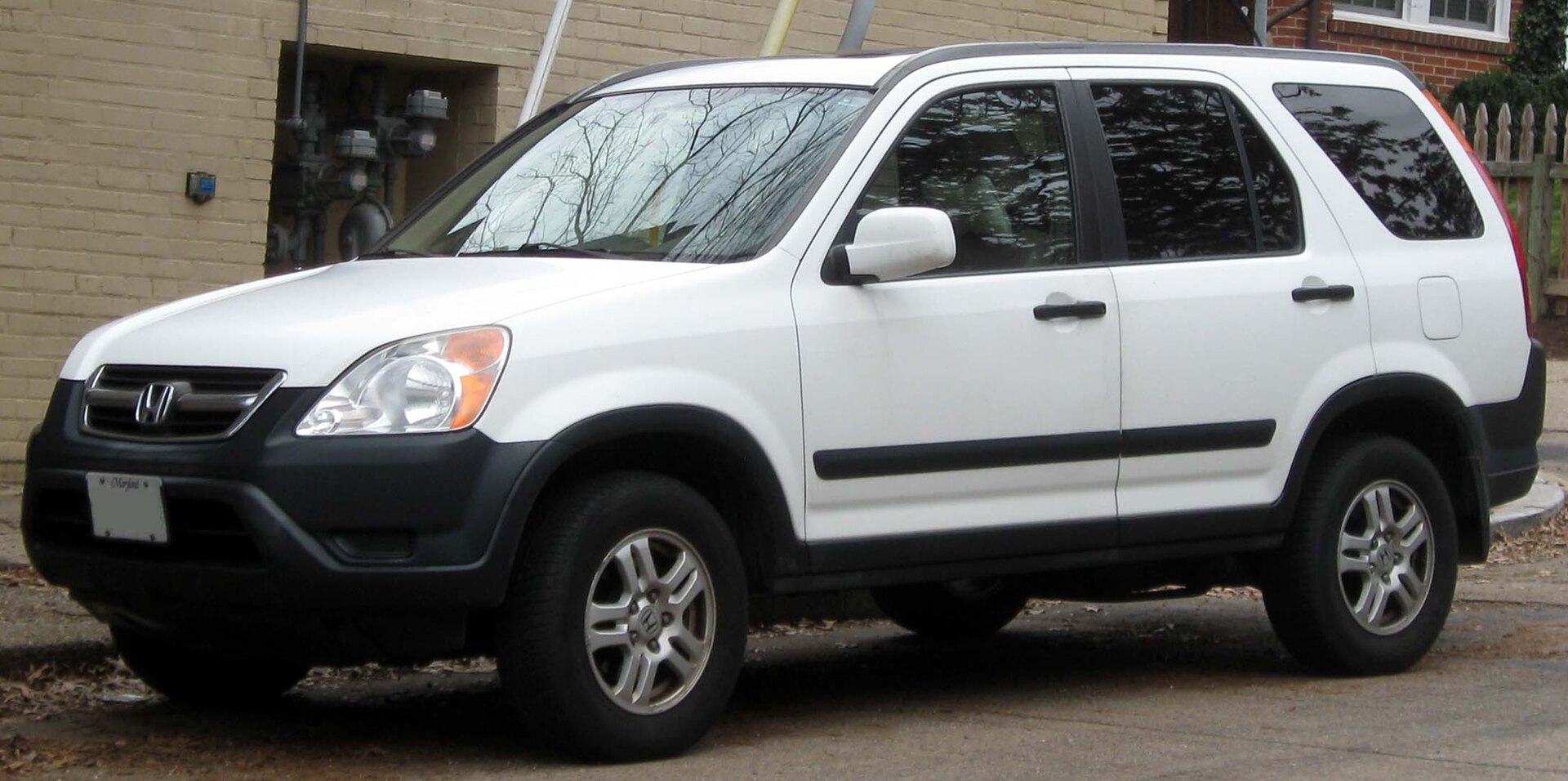
- CR-V II 2001–2006 · SUV
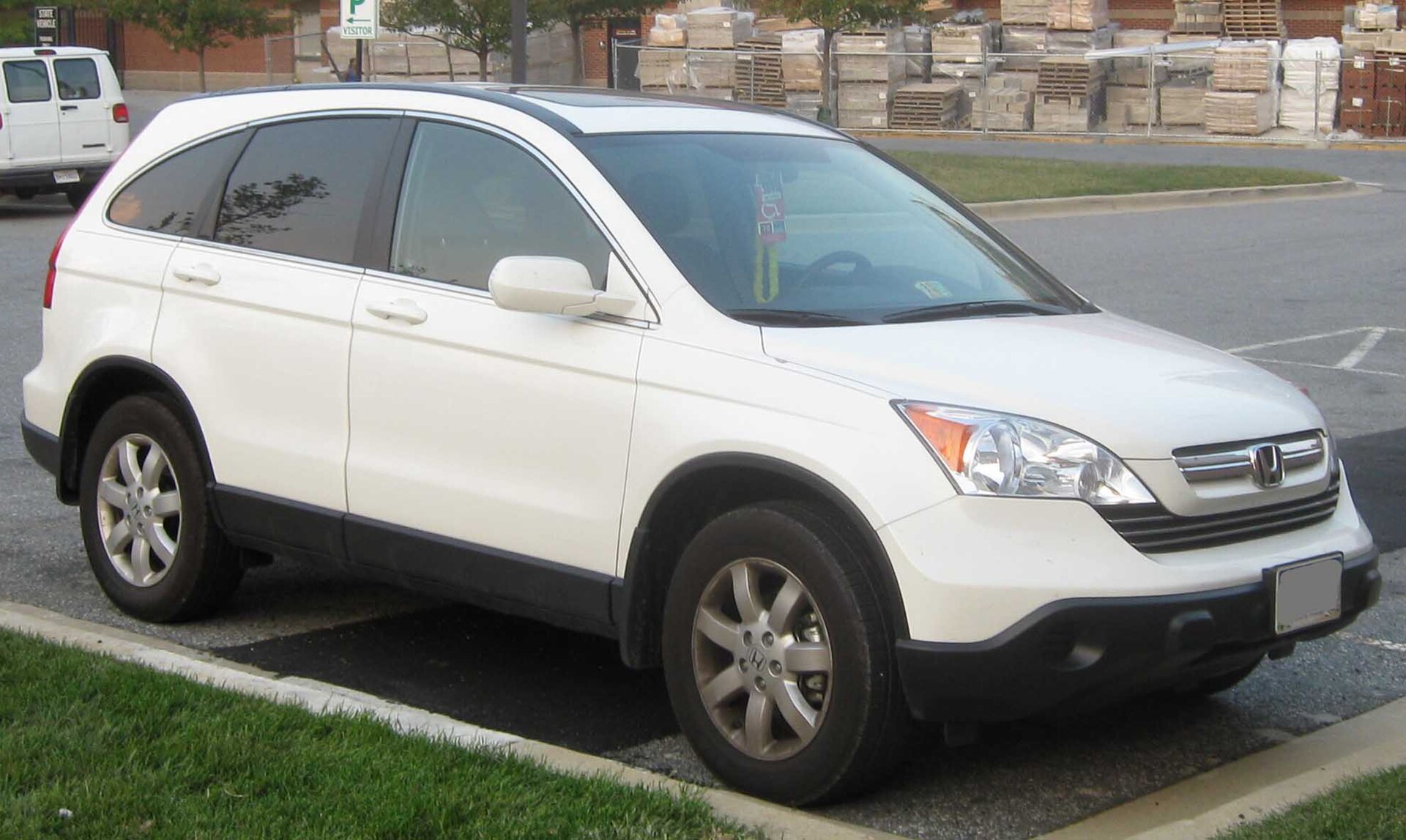
- CR-V III 2006–2011 · SUV
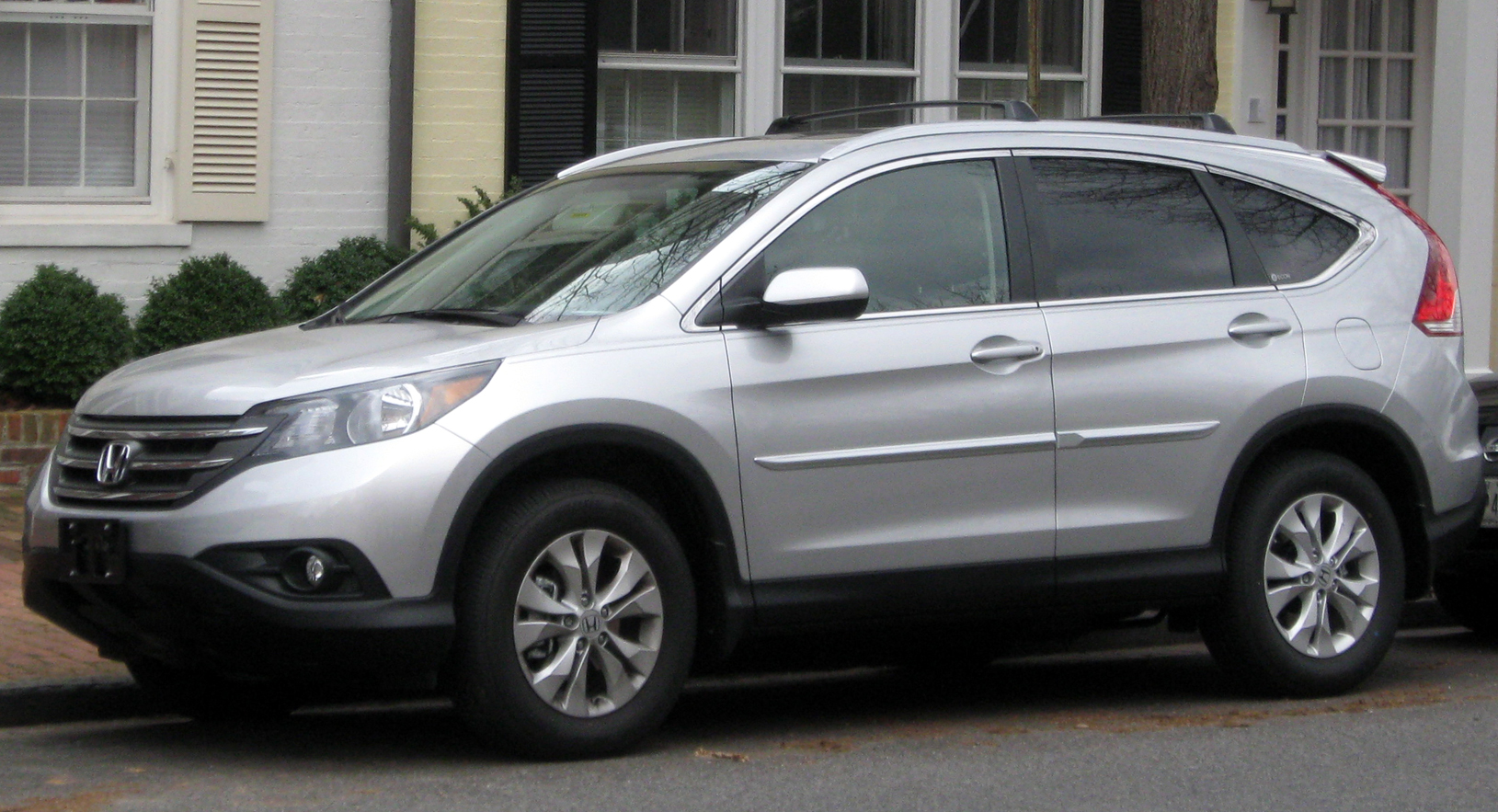
- CR-V IV 2011–2016 · SUV
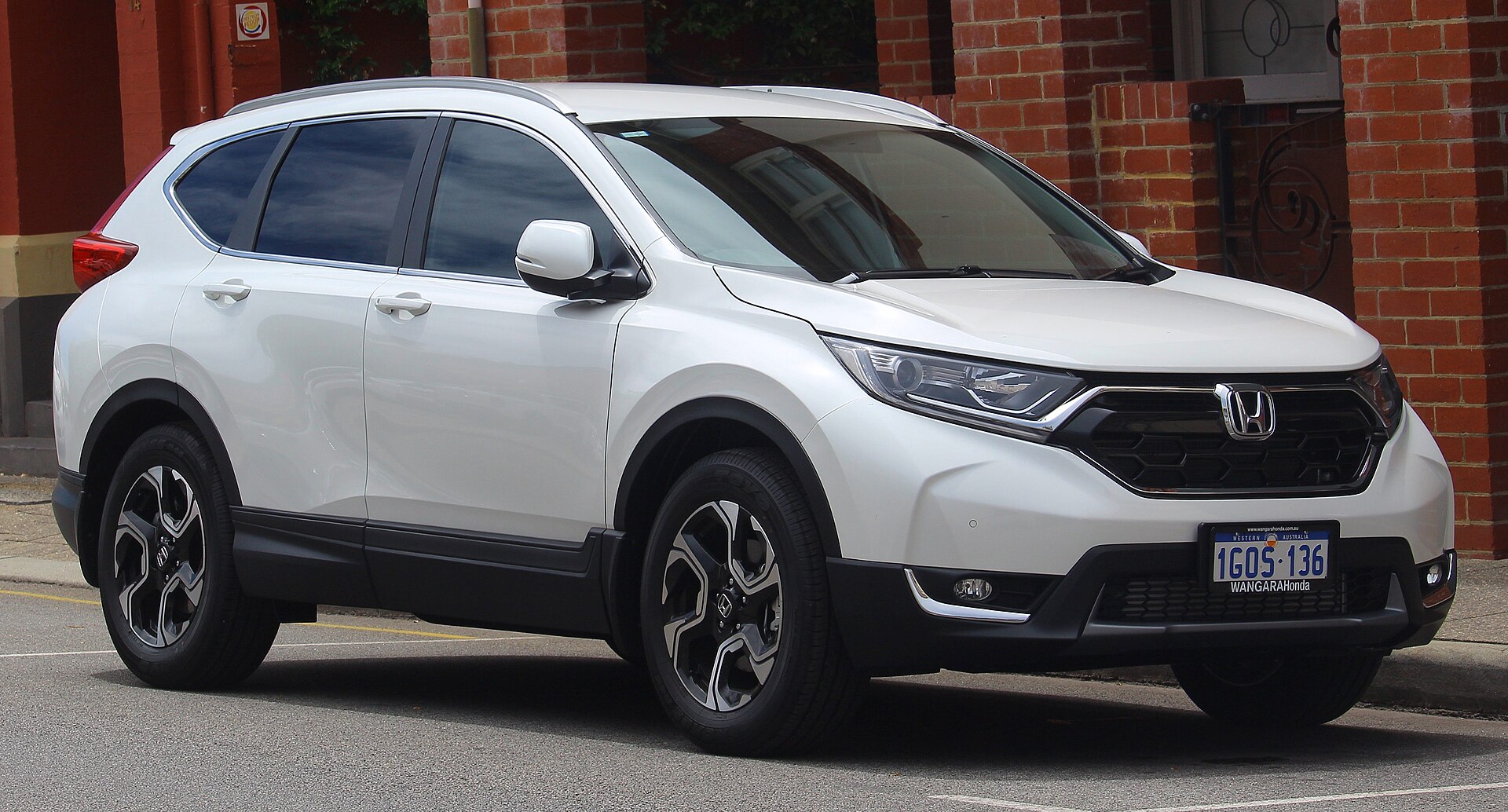
- CR-V 2016–2022 · SUV · 88–140 kW (120–190 PS)
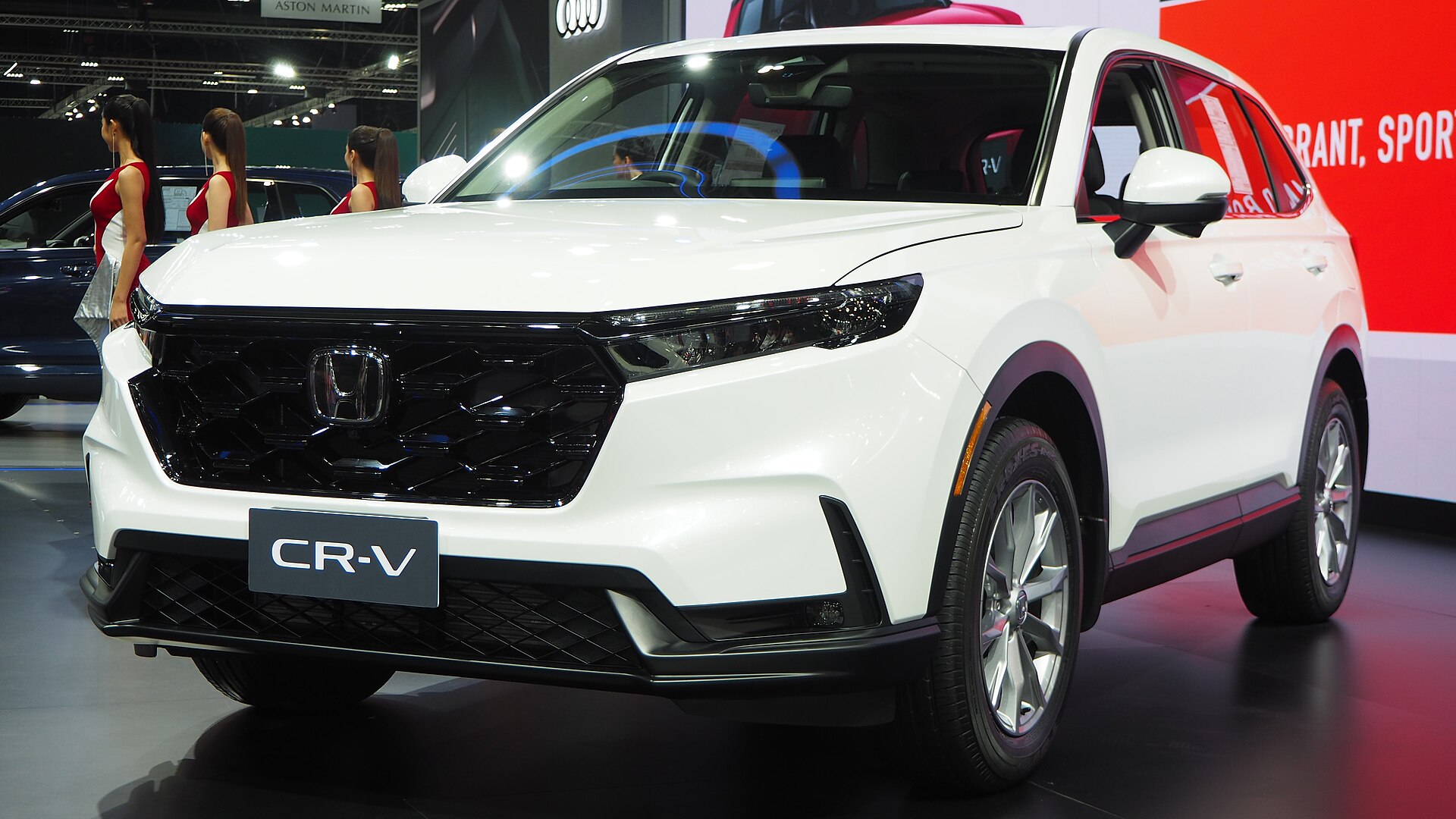
- CR-V VI Current 2022–now · SUV
Newest first · 6 generations since 1995
-
2022
-
2016
-
2011
-
2006
-
2001
-
1995

All generations by year: CR-V VI (2022–now) · CR-V (2016–2022) · CR-V IV (2011–2016) · CR-V III (2006–2011) · CR-V II (2001–2006) · CR-V I (1995–2001)
Which one is mine?
Pick the year of first registration to see which generation it is.
Check by VINWhich Honda CR-V to buy
Our verdict · Oleksandr Hnatiuk
In Europe, the fifth-generation 2.0 hybrid (2019–2022) is the best all-rounder, combining low running costs with Honda Sensing. For high mileage and towing, a fourth-generation 1.6 i-DTEC (160 PS AWD) remains a strong used choice. More options are listed among Japanese SUVs and in the Honda catalogue.
The Honda CR-V is a compact SUV built since 1995 in six generations, from the Civic-based original to the 2023 e:HEV hybrid. It offers front-wheel drive or Real Time all-wheel drive, petrol, diesel and hybrid engines, and one of the largest boots in its class. It was the world's second-best-selling SUV in 2020.
In short
- Generations: 1995, 2001, 2006, 2011/12, 2016/17 and 2022/23.
- Europe had 2.0 and 2.4 petrol, 2.2 and 1.6 i-DTEC diesels, the 1.5 VTEC Turbo and hybrids.
- 2018 fifth generation in Spain: 1.5 Turbo 127 kW (173 PS) manual or 142 kW (193 PS) CVT, 561-litre boot, from €29,900.
- Built in Japan, the UK (Swindon), the USA, China and other plants; Europe has been supplied from China since 2023.

Size at a glance
Toyota RAV4 XA60
The Honda CR-V VI is 94 mm longer and 14 mm narrower than the Toyota RAV4 XA60.
| Dimensions | Honda CR-V VI | Toyota RAV4 XA60 | Difference |
|---|---|---|---|
| Length | 4,694 mm184.8 in | 4,600 mm181.1 in | +94 mm+3.7 in |
| Width | 1,866 mm73.5 in | 1,880 mm74.0 in | −14 mm−0.6 in |
| Height | 1,682 mm66.2 in | 1,680 mm66.1 in | +2 mm+0.1 in |
| Wheelbase | 2,700 mm106.3 in | 2,690 mm105.9 in | +10 mm+0.4 in |
| Boot | 617 L21.8 cu ft | 514 L18.2 cu ft | +103 L+3.6 cu ft |
Nissan X-Trail T33
The Honda CR-V VI is 14 mm longer, 26 mm wider and 38 mm lower than the Nissan X-Trail T33.
| Dimensions | Honda CR-V VI | Nissan X-Trail T33 | Difference |
|---|---|---|---|
| Length | 4,694 mm184.8 in | 4,680 mm184.3 in | +14 mm+0.6 in |
| Width | 1,866 mm73.5 in | 1,840 mm72.4 in | +26 mm+1.0 in |
| Height | 1,682 mm66.2 in | 1,720 mm67.7 in | −38 mm−1.5 in |
| Wheelbase | 2,700 mm106.3 in | 2,705 mm106.5 in | −5 mm−0.2 in |
| Boot | 617 L21.8 cu ft | 560 L19.8 cu ft | +57 L+2.0 cu ft |
Honda CR-V
The Honda CR-V VI is 110 mm longer, 11 mm wider and 25 mm taller than the Honda CR-V.
| Dimensions | Honda CR-V VI | Honda CR-V | Difference |
|---|---|---|---|
| Length | 4,694 mm184.8 in | 4,584 mm180.5 in | +110 mm+4.3 in |
| Width | 1,866 mm73.5 in | 1,855 mm73.0 in | +11 mm+0.4 in |
| Height | 1,682 mm66.2 in | 1,657 mm65.2 in | +25 mm+1.0 in |
| Wheelbase | 2,700 mm106.3 in | 2,660 mm104.7 in | +40 mm+1.6 in |
| Boot | 617 L21.8 cu ft | - | - |
Running cost
Fuel · CR-V 2.0 e:PHEV
about 200 EUR fuel a year at 15,000 km
0.8 l/100 km · petrol at 1.75 EUR/l · change mileage, fuel price or version
Specs by version
Engines
| Version | Engine | Power |
|---|---|---|
| Hybrid · 1 version | ||
| CR-V VI · 2.0 e:HEV | 4 cyl · Hybrid | 135 kW 184 PS181 hp |
| Plug-in hybrid · 1 version | ||
| CR-V VI · 2.0 e:PHEV | 4 cyl · Plug-in hybrid | 135 kW 184 PS181 hp |
| Diesel · 1 version | ||
| CR-V · 110 kW (150 PS) SUV | Diesel | 110 kW 150 PS148 hp |
| Petrol · 2 versions | ||
| CR-V · 2.0 110 kW (150 PS) SUV | 2.0 l · 4 cyl · Petrol 2,000 cc | 110 kW 150 PS148 hp |
| CR-V · 1.5 142 kW (193 PS) SUV | 1.5 l · Petrol 1,500 cc | 142 kW 193 PS190 hp |
| Other · 2 versions | ||
| CR-V · 1.6 88 kW (120 PS) SUV | 1.6 l 1,600 cc | 88 kW 120 PS118 hp |
| CR-V · 2.4 135 kW (184 PS) SUV | 2.4 l · 4 cyl 2,400 cc | 135 kW 184 PS181 hp |
Performance
Show all 3 versions
| Version | 0–100 km/h | Top speed | Fuel consumption | Range | CO₂ |
|---|---|---|---|---|---|
| Hybrid · 1 version | |||||
| CR-V VI · 2.0 e:HEV | 9.0 s 0–62 mph | 194 km/h121 mph | 5.9 l/100 km39.9 mpg US · 47.9 mpg UK | - | 134 g/km |
| Plug-in hybrid · 1 version | |||||
| CR-V VI · 2.0 e:PHEV | 9.4 s 0–62 mph | 195 km/h121 mph | 0.8 l/100 km294.0 mpg US · 353.1 mpg UK | 82 km51 mi | 18 g/km |
| Petrol · 1 version | |||||
| CR-V · 2.0 110 kW (150 PS) SUV | - | - | 7.9 l/100 km29.8 mpg US · 35.8 mpg UK | - | 156 g/km |
Dimensions and weight
Show all 7 versions
| Version | Length | Width | Wheelbase | Kerb weight |
|---|---|---|---|---|
| Hybrid · 1 version | ||||
| CR-V VI · 2.0 e:HEV | - | 1,866 mm73.5 in | 2,700 mm106.3 in | 1,821 kg4,015 lb |
| Plug-in hybrid · 1 version | ||||
| CR-V VI · 2.0 e:PHEV | 4,694 mm184.8 in | 1,866 mm73.5 in | 2,700 mm106.3 in | 1,988 kg4,383 lb |
| Diesel · 1 version | ||||
| CR-V · 110 kW (150 PS) SUV | 4,570 mm179.9 in | 1,820 mm71.7 in | 2,620 mm103.1 in | - |
| Petrol · 2 versions | ||||
| CR-V · 2.0 110 kW (150 PS) SUV | 4,570 mm179.9 in | 1,820 mm71.7 in | 2,620 mm103.1 in | 1,685 kg3,715 lb |
| CR-V · 1.5 142 kW (193 PS) SUV | 4,570 mm179.9 in | 1,820 mm71.7 in | 2,620 mm103.1 in | - |
| Other · 2 versions | ||||
| CR-V · 1.6 88 kW (120 PS) SUV | 4,584 mm180.5 in | 1,855 mm73.0 in | 2,660 mm104.7 in | - |
| CR-V · 2.4 135 kW (184 PS) SUV | 4,570 mm179.9 in | 1,820 mm71.7 in | 2,620 mm103.1 in | - |
Verified Manufacturer and type-approval data from our catalog · Sources and methodology
Safety
-
CR-V VI · Euro NCAP 2024
Full Euro NCAP result
-
CR-V · Euro NCAP 2019
Older protocol · Full Euro NCAP result
-
CR-V VI · NHTSA 2025
US NCAP (NHTSA)
Full NHTSA rating
-
CR-V · NHTSA 2021
US NCAP (NHTSA)
Full NHTSA rating
-
CR-V IV · NHTSA 2015
US NCAP (NHTSA)
Full NHTSA rating
-
CR-V III · NHTSA 2011
US NCAP (NHTSA)
Full NHTSA rating
Stars from different years and organisations are not directly comparable: test protocols change every few years.
Honda CR-V at a glance
The CR-V ("Comfortable Runabout Vehicle" in Honda's marketing) started as a car-like SUV with a unibody and independent suspension at a time when many off-roaders still used separate frames. Every generation offers front-wheel drive or Honda's Real Time AWD, which sends torque to the rear wheels when the front ones slip. Five seats are standard, and some markets have offered seven.
The CR-V has been built at Sayama in Japan, Swindon in the UK, East Liberty, Ohio, and Greensburg, Indiana, in the US, Wuhan in China and plants across Southeast Asia. Honda's story is told in the history of Honda, and the brand's saloon counterpart is the Honda Accord.
Honda CR-V generations
| Generation | Code | Years | Body styles | Engines | Power (kW) |
|---|---|---|---|---|---|
| 1st | RD1–RD3 | 1995–2001 | 5-door SUV | 2.0 petrol (B20B, B20Z) | 95–110 |
| 2nd | RD4–RD9 | 2001–2006 | 5-door SUV | 2.0 and 2.4 petrol, 2.2 i-CTDi diesel | 103–119 |
| 3rd | RE | 2006–2011 | 5-door SUV | 2.0 and 2.4 petrol, 2.2 i-CTDi / i-DTEC diesel | 103–124 |
| 4th | RM | 2011–2016 | 5-door SUV | 2.0 and 2.4 petrol, 1.6 and 2.2 i-DTEC diesel | 88–140 |
| 5th | RW/RT | 2016–2022 | 5-door SUV, 5 or 7 seats | 1.5 VTEC Turbo, 2.0 hybrid, 2.4 (some markets) | 127–142 |
| 6th | RS | 2022– | 5-door SUV, 5 or 7 seats | 1.5 Turbo, 2.0 e:HEV, e:PHEV | – |
First generation (1995–2001)
Based on the Civic platform, the first CR-V went on sale in Japan in October 1995 and in North America in February 1997. Its 2.0-litre B20B produced 128 hp, rising to about 147 hp with the B20Z in the 2000 update.

Second generation (2001–2006)
Launched on 13 November 2001 on the seventh-generation Civic platform, it added a 2.4-litre K24 for North America and, for Europe, the 2.2 i-CTDi diesel with 103 kW (140 PS), Honda's first diesel in the CR-V. Car and Driver named it Best Small SUV in 2002 and 2003.
Third generation (2006–2011)
The third CR-V replaced the side-hinged tailgate with a top-hinged liftgate and adopted a lower, sleeker body; it went on sale in the US in September 2006. Europe received a 2.0 petrol and the 2.2 diesel; the range was refreshed for 2010.
Fourth generation (2011–2016)
Shown at the 2011 Los Angeles Auto Show, the fourth CR-V offered a 2.0 petrol with about 112 kW (150 hp) and, in Europe, the 2.2 i-DTEC with 110 kW (150 PS) and from 2013 the 1.6 i-DTEC with 88 kW (120 PS), the first front-wheel-drive diesel CR-V. The 2015 facelift brought a direct-injection engine with a CVT in North America and a nine-speed automatic for the 1.6 diesel in Europe.
Fifth generation (2016–2022)
Unveiled on 13 October 2016, the fifth CR-V moved to the Civic's global platform and dropped diesels in Europe. The 1.5 VTEC Turbo produced 127 kW (173 PS) and 220 Nm with a six-speed manual, or 142 kW (193 PS) and 243 Nm with the CVT; only the manual came with front-wheel drive. A 2.0 hybrid with about 135 kW (184 PS) arrived in early 2019, and a seven-seat option was offered on petrol models outside North America.
Sixth generation (2022 to today)
Unveiled on 12 July 2022 on the Honda Architecture platform of the eleventh-generation Civic, the current CR-V is longer and offers 1.5 Turbo, 2.0 e:HEV hybrid and, in Europe, e:PHEV plug-in hybrid versions. European cars have been shipped from the Dongfeng Honda plant in China since June 2023.
Engines and transmissions in Europe
European buyers chose between petrol, diesel and hybrid power depending on the generation:
- 2.0 i-VTEC petrol: about 110 kW (150 PS) in the third and fourth generations.
- 2.2 i-CTDi / i-DTEC diesel: 103–110 kW (140–150 PS).
- 1.6 i-DTEC diesel: 88 kW (120 PS) front-wheel drive or 118 kW (160 PS) AWD with a nine-speed automatic.
- 1.5 VTEC Turbo: 127 kW (173 PS) manual, 142 kW (193 PS) CVT.
- 2.0 i-MMD hybrid: about 135 kW (184 PS), single fixed gear, front-wheel drive or AWD.

Dimensions, interior and boot space
The CR-V has always been one of the roomiest cars in its class. The fifth generation's boot holds 561 litres (19.8 cu ft) with a two-position floor, and folding the rear seats creates a long, flat load area. Seven-seat fifth-generation cars have a smaller boot with all seats in use.

CR-V fuel economy and running costs
The 1.6 i-DTEC diesel and the 2.0 hybrid are the most economical CR-Vs in Europe; the 2.0 and 2.4 petrol engines with all-wheel drive use the most fuel. AWD versions use slightly more fuel than front-wheel-drive ones because of the extra weight and driveline losses.

Trims, equipment and prices
In Spain in September 2018, the fifth-generation CR-V cost from €29,900 (1.5 Turbo manual FWD, Comfort) to €43,900 (1.5 Turbo CVT AWD, Executive). Trims were Comfort, Elegance Navi, Lifestyle and Executive, and seven-seat versions cost €1,700 more. The Honda Sensing safety suite was standard across the range.

| Version (Spain, Sept 2018) | Comfort | Elegance Navi | Lifestyle | Executive |
|---|---|---|---|---|
| 173 PS manual, FWD, 5 seats | €29,900 | €32,550 | – | – |
| 173 PS manual, AWD, 5 seats | – | €34,550 | €37,700 | €41,200 |
| 193 PS CVT, AWD, 5 seats | – | €37,250 | €40,400 | €43,900 |
CR-V safety ratings
The fifth generation came with the Honda Sensing package as standard, including collision mitigation braking, adaptive cruise control and lane-keeping assist. Euro NCAP awarded the CR-V Hybrid five stars in 2019. Older CR-Vs were rated under earlier, less strict protocols; the first generation scored only "marginal" in the US IIHS frontal offset test.

CR-V reliability and known faults
The CR-V has a strong reputation for durability, but each generation has weak points:
- First and second generations: rust on sills and rear arches is the main threat at this age.
- Third and fourth generations: diesels should come with a documented service history and regular oil changes.
- Fifth generation 1.5 Turbo: some cars in cold climates suffered oil dilution with fuel; Honda issued software updates in affected markets.

Rivals: how the CR-V compares
The CR-V's main rivals are the Toyota RAV4, the Nissan X-Trail, the Kia Sportage, Ford Kuga and Volkswagen Tiguan. It usually leads the class for cabin and boot space.

Image credits · Photos from Wikimedia Commons under free licences
- Honda CR-V II · Photo: IFCAR / Wikimedia Commons, Public domain
- Honda CR-V III · Photo: IFCAR / Wikimedia Commons, Public domain
- Honda CR-V IV · Photo: IFCAR / Wikimedia Commons, Public domain
- Honda CR-V · Photo: EurovisionNim / Wikimedia Commons, CC BY-SA 4.0
- Honda CR-V VI · Photo: Chanokchon / Wikimedia Commons, CC BY-SA 4.0
Rivals
Compare with…
Compare Honda CR-V with
- Toyota RAV4 full comparison
- Nissan X-Trail quick spec comparison
- Mitsubishi Outlander quick spec comparison
-
In production
- Years
- 1994–present
- Body
- Convertible, SUV
- Fuel
- Petrol, Diesel, Hybrid
- Power
- 91–145 kW (124–197 PS)
6 generations
- XA10
- XA20
- XA30
- XA40
- XA50
- XA60
-
In production
- Years
- 2000–present
- Body
- SUV
- Fuel
- Petrol, Diesel, Hybrid
- Power
- 84–206 kW (114–280 PS)
-
In production
- Years
- 2001–present
- Body
- SUV
- Fuel
- Petrol, Diesel, Plug-in hybrid
- Power
- 100–225 kW (136–306 PS)
-
In production
- Years
- 2012–present
- Body
- SUV
- Fuel
- Petrol, Diesel
- Power
- 104–190 kW (141–258 PS)
3 generations
- KE
- KF
- III


Honda CR-V in our rankings
- No. 71 of 1154 · Longest-running car nameplates (31 years · top 7%)
- No. 20 of 325 · Biggest boot: cars (617 l · top 7%)
- No. 16 of 144 · Biggest boot: SUVs and crossovers (617 l · top 12%)
- No. 57 of 454 · Cars with the most generations (6 generations · top 14%)
- No. 56 of 384 · Oldest car models still on sale (31 years · top 16%)
- No. 100 of 430 · Heaviest cars (1,988 kg · top 24%)
In production longer than 93% of ranked nameplates in the 1CARS catalog (No. 71 of 1154).
Honda CR-V photos 28


Honda CR-V videos 4

Honda CR-V video 1

Honda CR-V video 2

Honda CR-V video 3

Honda CR-V video 4
FAQ
How many generations of the Honda CR-V are there?
There are six: 1995, 2001, 2006, 2011/12, 2016/17 and the current model unveiled in July 2022. Each generation offered front-wheel drive or Real Time AWD.
Which Honda CR-V generation is the most reliable?
No survey ranks all six, but the CR-V scores well for durability overall. Check rust on early cars, service history on 2.2 diesels and oil dilution updates on the fifth-generation 1.5 Turbo.
What is the fuel consumption of the Honda CR-V?
The 1.6 i-DTEC diesel and the hybrids are the most economical CR-Vs, while AWD petrol versions use the most fuel. Consumption depends heavily on generation, engine and drive.
Is the Honda CR-V available with all-wheel drive or as a hybrid?
Yes. Every generation offers Real Time AWD, and the fifth generation added a 2.0 hybrid in 2019. The sixth generation is sold in Europe as the e:HEV hybrid and e:PHEV plug-in hybrid.
What are the main rivals of the Honda CR-V?
Its main rivals are the Toyota RAV4, Nissan X-Trail, Kia Sportage, Ford Kuga and Volkswagen Tiguan. The CR-V is usually among the roomiest, with a boot of over 550 litres in recent generations.
Data sources
Data checked by an editor against the sources below.
- The text of this article (1cars archive)
- Wikipedia - Honda CR V
- Co
- Euro NCAP - Euro Ncap Releases Results For Two New Cars And New Advanced Rewards
- Wikipedia - Honda CR V (fifth generation)
- Euro NCAP - When The Going Gets Tough Honda Mercedes Benz And Seat Off Roaders Get Top Marks For Safety
- EEA CO₂ monitoring (European Environment Agency, CC BY 4.0)
- NHTSA 5-Star Safety Ratings (US NCAP) — U.S. Government work, public domain


