 Honda NSX
Specs, engines and history
Updated Published Sources (4) Report an error
By Felix Hartmann, Automotive Technology & EV Contributor
- Built
- 1990–2005
- Top power
- 216 kW (294 PS)
- New price
- from about €83,852 (1990)
Which Honda NSX to buy
Our verdict · Felix Hartmann
A manual coupé holds its value best; the 3.2-litre six-speed is the quickest, while the early 3.0 has the lightest standard body. The NSX-T suits drivers who want open-air motoring and costs about the same as a coupé. The Type R and Type S models are collector's cars. Check the service history for cambelt changes, the gearbox on pre-1992 cars, panel gaps around the front wings and A-pillars, and kerb damage to the suspension. Honda's later sports cars include the S2000, and the second-generation hybrid NSX of 2016 is covered on the new Acura NSX page. All models are in the Honda catalogue.
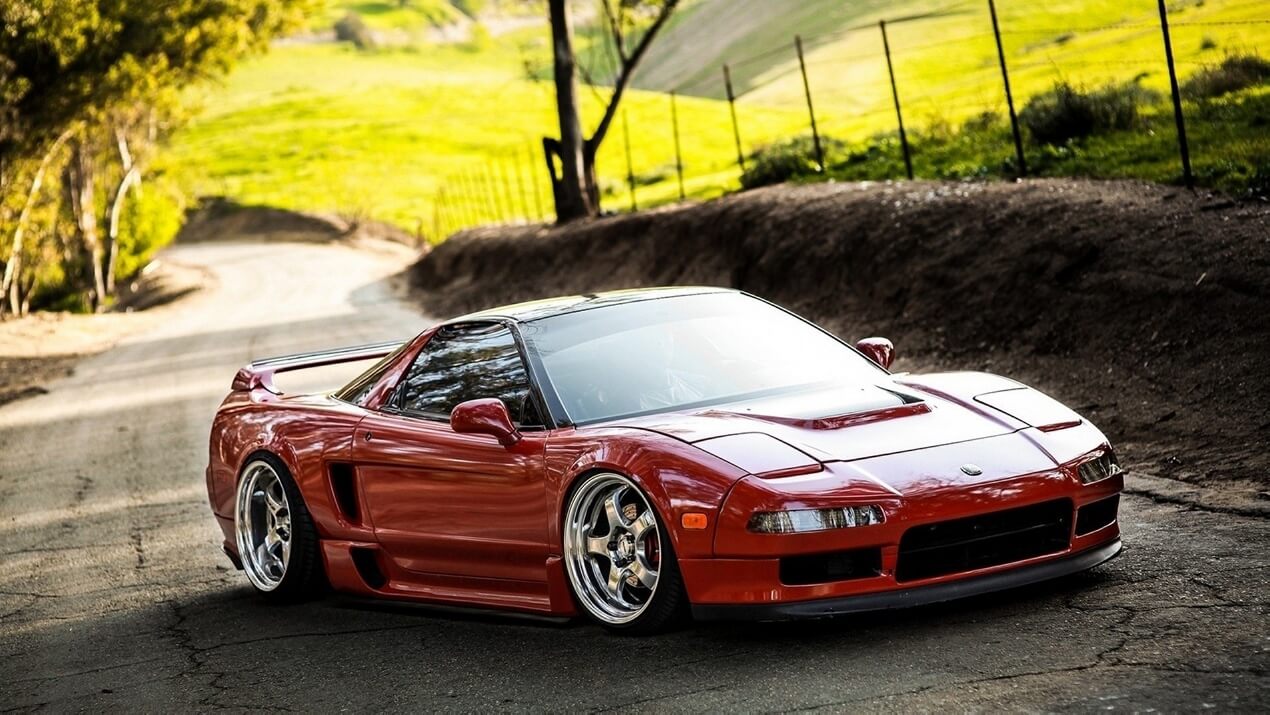
The first-generation Honda NSX is a mid-engined two-seat sports car built from August 1990 to November 2005, sold in North America as the Acura NSX. It was the first production car with an all-aluminium monocoque body. Its VTEC V6 grew from 3.0 litres and 201 kW to 3.2 litres and 216 kW, and more than 18,000 were sold.
In short
- Developed from the 1984 HP-X concept; shown in Chicago and Tokyo in 1989, built by hand at Takanezawa in Tochigi.
- Aluminium body saved almost 200 kg over steel; titanium connecting rods allowed an 8,000 rpm redline.
- Engines: 3.0 C30A with 201 kW (274 PS), automatic 188 kW, and from 1997 the 3.2 C32B with 216 kW (294 PS) and a six-speed manual.
- Light NSX-R versions of 1992 and 2002, the NSX-T targa from 1995 and fixed xenon headlights from the 2002 facelift.

Size at a glance
Toyota Supra A70
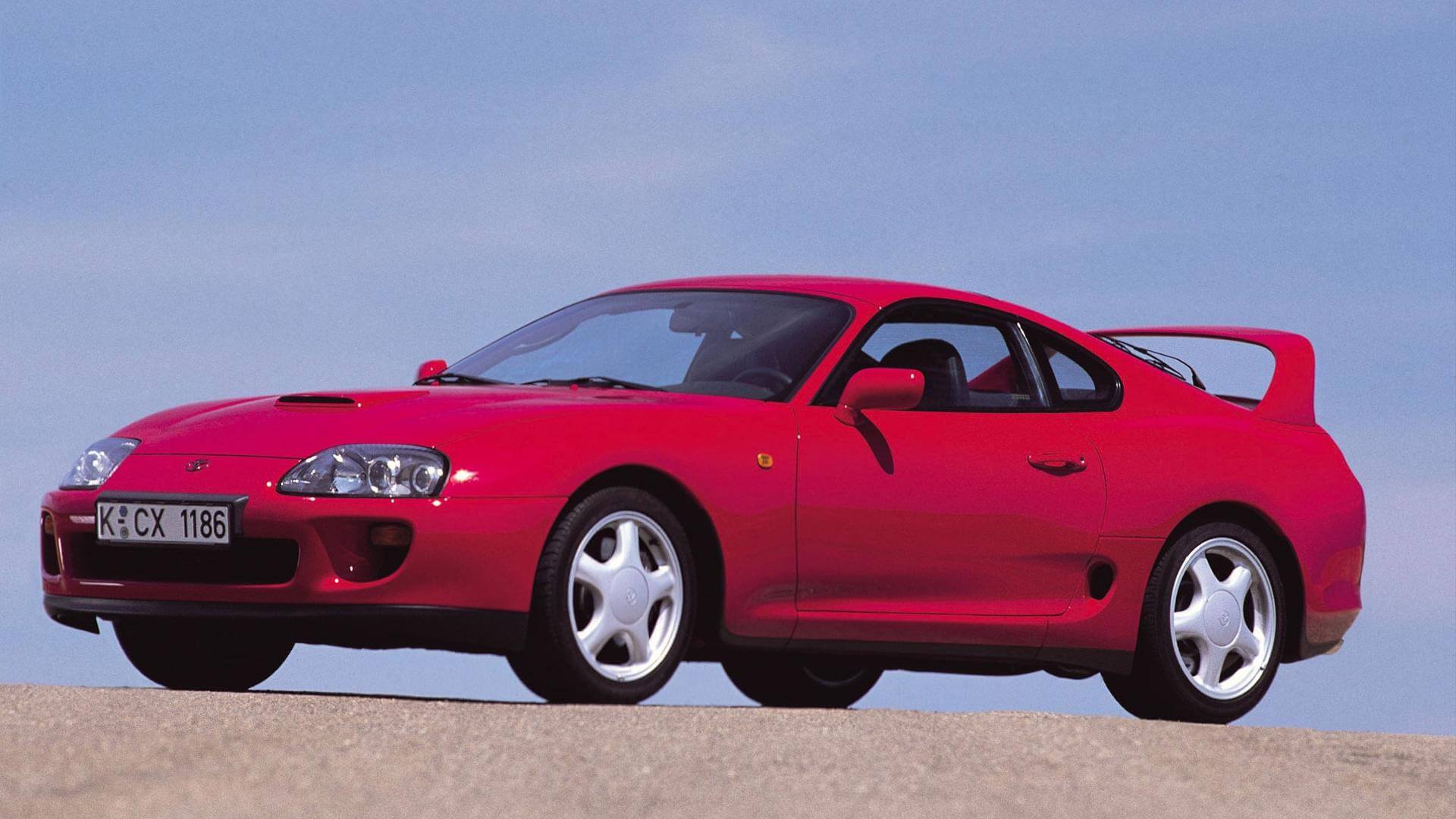
The Honda NSX is 205 mm shorter, 50 mm wider and 140 mm lower than the Toyota Supra A70.
| Dimensions | Honda NSX | Toyota Supra A70 | Difference |
|---|---|---|---|
| Length | 4,425 mm174.2 in | 4,630 mm182.3 in | −205 mm−8.1 in |
| Width | 1,810 mm71.3 in | 1,760 mm69.3 in | +50 mm+2.0 in |
| Height | 1,170 mm46.1 in | 1,310 mm51.6 in | −140 mm−5.5 in |
| Wheelbase | 2,530 mm99.6 in | 2,596 mm102.2 in | −66 mm−2.6 in |
| Boot | 154 L5.4 cu ft | 185 L6.5 cu ft | −31 L−1.1 cu ft |
Specs by version
Engines
| Version | Engine | Power | Gearbox | Drive |
|---|---|---|---|---|
| 3.0 199 kW (271 PS) Coupe | 3.0 l · 6 cyl · Petrol 3,000 cc | 199 kW 271 PS267 hp | 5-sp Automatic | Rear-wheel drive |
Dimensions and weight
Show all 1 versions
| Version | Length | Width | Height | Wheelbase | Kerb weight | Boot |
|---|---|---|---|---|---|---|
| 3.0 199 kW (271 PS) Coupe | 4,425 mm174.2 in | 1,810 mm71.3 in | 1,170 mm46.1 in | 2,530 mm99.6 in | 1,450 kg3,197 lb | 154 l5.4 cu ft |
Verified Manufacturer and type-approval data from our catalog · Sources and methodology
Honda NSX at a glance
Honda wanted a car that could rival Ferrari and Porsche for performance while being easy to live with every day. The project began with the HP-X concept, designed by Pininfarina in 1984 with a 2.0-litre V6. Under project leaders Masahito Nakano and Shigeru Uehara it became the NS-X prototype, and the production NSX made its debut at the Chicago Auto Show in February 1989 and the Tokyo Motor Show that October.

Ayrton Senna, then driving for McLaren-Honda, tested the car during the final suspension work at Suzuka and gave feedback on the chassis tuning. Honda's development driver was Motoharu Kurosawa, though, and Senna only consulted. The company's wider story is in the history of Honda.
| Parameter | Metric | Imperial |
|---|---|---|
| Length | 4,405 mm (1991–1993); 4,425 mm (from 1994) | 173.4 / 174.2 in |
| Width | 1,810 mm | 71.3 in |
| Height | 1,170 mm; 1,160 mm from 1997 | 46.1 / 45.7 in |
| Wheelbase | 2,530 mm | 99.6 in |
| Kerb weight | 1,365 kg (1991) to 1,435 kg (1997–2001) | 3,009–3,164 lb |
| Layout | Mid-engine, rear-wheel drive, two seats | – |
VTEC engines and gearboxes
The engine sits transversely behind the cabin. Late in development Honda switched to the VTEC-equipped C30A, which had to be tilted by about five degrees to fit.

| Engine | Years | Power | Torque | Gearboxes |
|---|---|---|---|---|
| 3.0 C30A V6 (manual) | 1990–1997 | 201 kW (274 PS) | 285 Nm | 5-speed manual |
| 3.0 C30A V6 (automatic) | 1990–2005 | 188 kW (256 PS) | – | 4-speed automatic, SportShift option |
| 3.2 C32B V6 | 1997–2005 | 216 kW (294 PS); 206 kW (280 PS) in UK figures | 305 Nm | 6-speed manual |
Titanium connecting rods let the engine rev to 8,000 rpm. The NSX has no turbocharger, unlike the Toyota Supra and Nissan rivals of its era, and relies on high revs for its performance. Car and Driver recorded 0–60 mph in 4.5 seconds for a 3.2-litre coupé in 1998, and Honda gave a top speed of 282 km/h (175 mph) after the 2002 facelift.
Body, cabin and weight
Honda claimed the aluminium semi-monocoque saved almost 200 kg compared with a steel body, and the aluminium suspension arms saved about 20 kg more. Thin roof pillars and a low scuttle give an excellent view forward. The body grew by 20 mm in length in 1994.

The cabin is strictly for two. Seats have integrated headrests and good side support, with Recaro seats on some versions, and the controls are simple and logically arranged. The boot behind the engine takes soft bags rather than suitcases.
Running costs and reliability
The NSX has a reputation for Honda reliability, but servicing is specialist work. Both engines need a new cambelt every seven years or 70,000 miles (about 113,000 km). A clutch should last at least 50,000 miles (80,000 km) unless the car is driven hard. Early cars built before 1992 can suffer from a broken circlip on the gearbox countershaft bearing, and aluminium suspension parts are expensive to replace after kerb damage. No official EU fuel figure exists for the early cars; the high-revving V6 is economical only when driven gently.

NSX-T, Type S and NSX-R versions
| Version | Years | Market | Details |
|---|---|---|---|
| NSX-R | 1992–1995 | Japan | About 120 kg lighter, 1,230 kg; 483 built |
| NSX-T | 1995–2005 | Japan, North America and other markets | Removable targa roof; replaced the coupé in North America |
| Type S | 1997–2001 | Japan | Lightened, 1,320 kg; 209 built |
| Type S-Zero | 1997–2001 | Japan | Most stripped-out version, 1,270 kg; 30 built |
| Zanardi Edition | 1999 | US | 51 cars in Formula Red |
| NSX-R | 2002–2005 | Japan | Second-generation R, 1,270 kg |
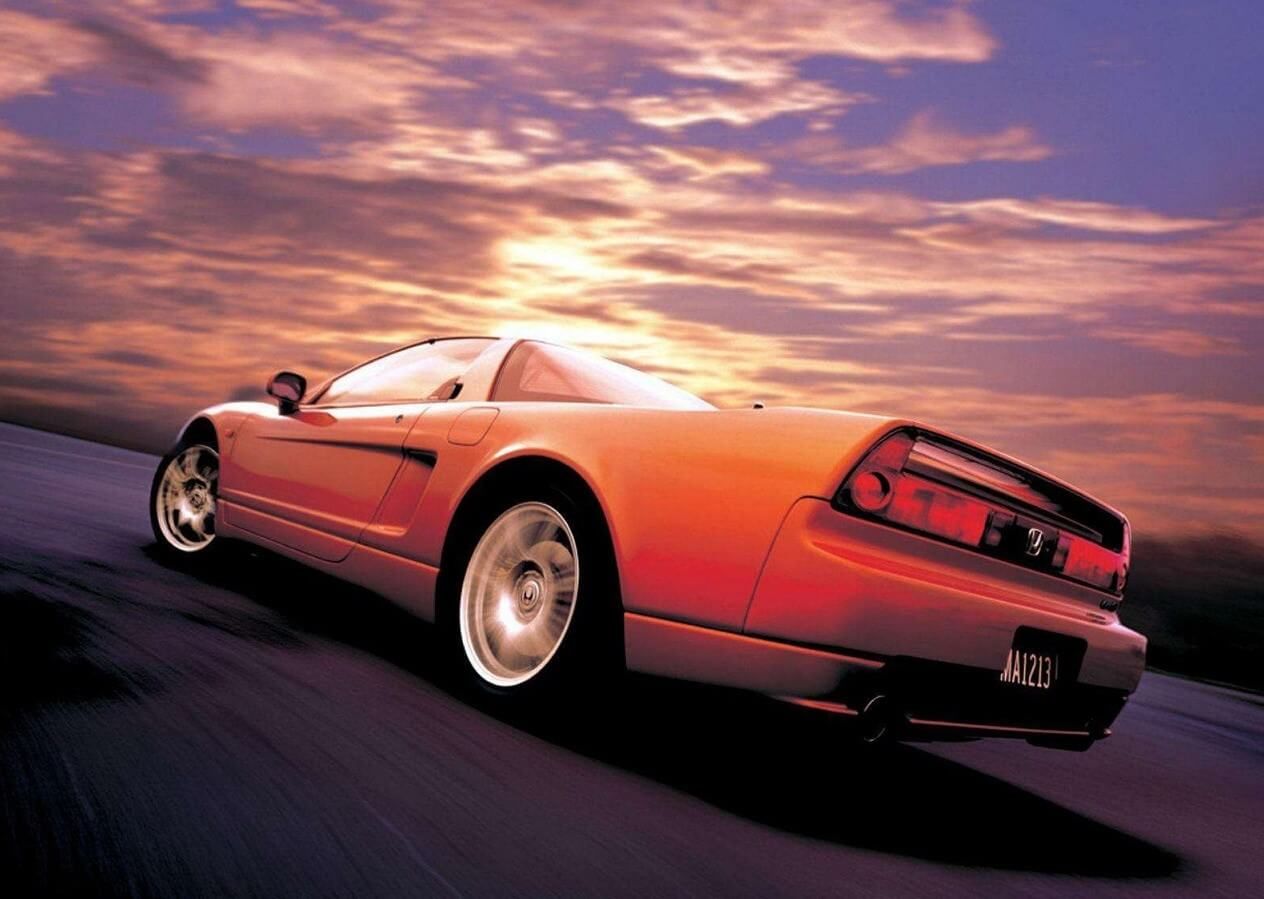
The facelift of December 2001 replaced the pop-up headlamps with fixed xenon units and brought new bumpers and lights. Fans call the early cars NA1 and the 3.2-litre cars NA2. Compared with the 1997–2001 coupé, the 2002 NSX-R is 165 kg lighter.
Crash tests and the aluminium monocoque
The first NSX was never crash-tested by Euro NCAP, which began testing in 1997 and rarely covers low-volume sports cars, so no official rating exists. Its crash protection rests on the stiff aluminium monocoque.

Rivals: how the NSX compares
| Model | Engine | Power |
|---|---|---|
| Honda NSX 3.2 | 3.2 V6, mid-mounted | 216 kW (294 PS) |
| Ferrari 348 | 3.4 V8, mid-mounted | about 220 kW (300 PS) |
| Porsche 911 (993) | 3.6 flat-six, rear-mounted | 200–210 kW (272–285 PS) |
| Toyota Supra A80 Turbo | 3.0 straight-six twin turbo | 206–243 kW (280–330 PS) |
| Mazda RX-7 FD | 1.3 twin-rotor twin turbo | 188–206 kW (255–280 PS) |
The NSX matched European supercars for pace and was widely praised for its usability, build quality and reliability. Compare these cars in detail with the 1cars comparison tool or browse versions in the specifications section.

Rivals
Compare with…
Compare Honda NSX with
- Toyota Supra quick spec comparison
- Nissan Skyline quick spec comparison
-
Ended 2026
- Years
- 1978–2026
- Body
- Liftback, Coupe
- Fuel
- Petrol
- Power
- 82–320 kW (111–435 PS)
5 generations
- A40/A50
- A60
- A70
- A80
- A90
-
In production
- Years
- 1957–present
- Body
- Sedan, Station wagon
- Fuel
- Petrol, Diesel, Hybrid
- Power
- 44–309 kW (60–420 PS)

Popular comparisons
Honda NSX in our rankings
- No. 244 of 912 · Longest-running car nameplates (15 years · top 28%)
- No. 27 of 89 · Smallest coupes (4,425 mm · top 31%)
- No. 29 of 88 · Most powerful Japanese cars (216 kW · top 33%)
- No. 108 of 301 · Power-to-weight: cars (137 kW/t · top 36%)
- No. 34 of 91 · Most powerful cars of the 1990s (199 kW · top 38%)
- No. 163 of 420 · Smallest cars (4,425 mm · top 40%)
In production longer than 72% of ranked nameplates in the 1CARS catalog (No. 244 of 912).
Honda NSX photos 13


FAQ
What engine does the Honda NSX have?
The first NSX uses a mid-mounted VTEC V6: the 3.0 C30A with 201 kW (274 PS) from 1990, and from 1997 the 3.2 C32B with 216 kW (294 PS) and a six-speed manual. Automatic cars kept the 3.0 litre engine.
Is the Honda NSX available with all-wheel drive?
No. The first-generation NSX is rear-wheel drive only, with a five- or six-speed manual or a four-speed automatic. The second-generation NSX of 2016 introduced a hybrid all-wheel-drive system.
Did Ayrton Senna develop the Honda NSX?
Senna tested the car at Suzuka during final suspension tuning and gave feedback, but he was a consultant. Honda's development driver was Motoharu Kurosawa, who worked on the car throughout the project.
How many first-generation NSXs were made?
Honda sold more than 18,000 between 1990 and 2005. The United States took the most, with a peak of 1,940 Acura NSX sales in 1991, and special versions such as the NSX-R and Type S were built in hundreds.
What are the main rivals of the Honda NSX?
When new, the NSX competed with the Ferrari 348, the Porsche 911 and Japanese rivals such as the Toyota Supra and Mazda RX-7. It matched them for pace while offering everyday comfort and Honda reliability.
Data sources
Data checked by an editor against the sources below.
- The text of this article (1cars archive)
- Wikipedia - Honda NSX
- Wikipedia - Honda NSX (first generation)
- Carsized - Honda Nsx 1990 Coupe