
 Acura NSX
All generations, specs and history
Updated Published Sources (3) Report an error
By Felix Hartmann, Automotive Technology & EV Contributor Reviewed by Oleksandr Hnatiuk

- Built
- 1990–2022
- Generations
- 2
- Top power
- 449 kW (610 PS)
- New price
- from about €185,000 (2016)
Timeline
NSX generations
Click a generation for its own page


Newest first · 2 generations since 1990
All generations by year: NSX II (2016–2022) · NSX I (1990–2005)
Which one is mine?
Pick the year of first registration to see which generation it is.
- NSX II 2016–2022
- NSX I 1990–2005
Which NSX II to choose
Our verdict · Felix Hartmann
For most buyers, a 2019–2021 car is the sweet spot: it has the improved chassis without the Type S price premium. Early 2017–2018 cars cost less and have the same powertrain. The Type S is a collector's car, and its value depends on the 350-car run.
Check these points on any used NSX II:
- the service history at an Acura or Honda dealer trained on the car, including hybrid system checks;
- the condition of the carbon-ceramic brakes, if fitted, because replacement is costly;
- tyre wear, which is high with 305 mm rear tyres;
- any warning messages from the 1.3 kWh battery or the front motor unit.
The NSX II suits a driver who wants a supercar for daily use: it starts silently, is easy to drive slowly and has all-wheel-drive traction in the wet. Drivers who want a loud, analogue car will prefer the R8 or a Porsche 911 GT model. Acura's full background is in the history of Acura.
The second-generation Acura NSX, sold as the Honda NSX outside North America, is a mid-engined hybrid supercar with all-wheel drive, built in Marysville, Ohio, from 2016 to 2022. A twin-turbo 3.5-litre V6 and three electric motors give 427 kW (581 PS; 573 hp); the final Type S had 449 kW. Honda built 2,908 cars.
In short
- Codename NC1; shown as a concept in January 2012, revealed in production form at Detroit on 12 January 2015, first car built on 24 May 2016.
- Powertrain: JNC1 3.5 V6 twin-turbo (373 kW) plus two front motors and one rear motor, 1.3 kWh battery, 9-speed dual-clutch gearbox.
- 2019 model-year update sharpened the chassis; the 2022 Type S (350 cars) ended production.
- European sales were small: about 220 cars from 2017 to 2021, according to published sales data.
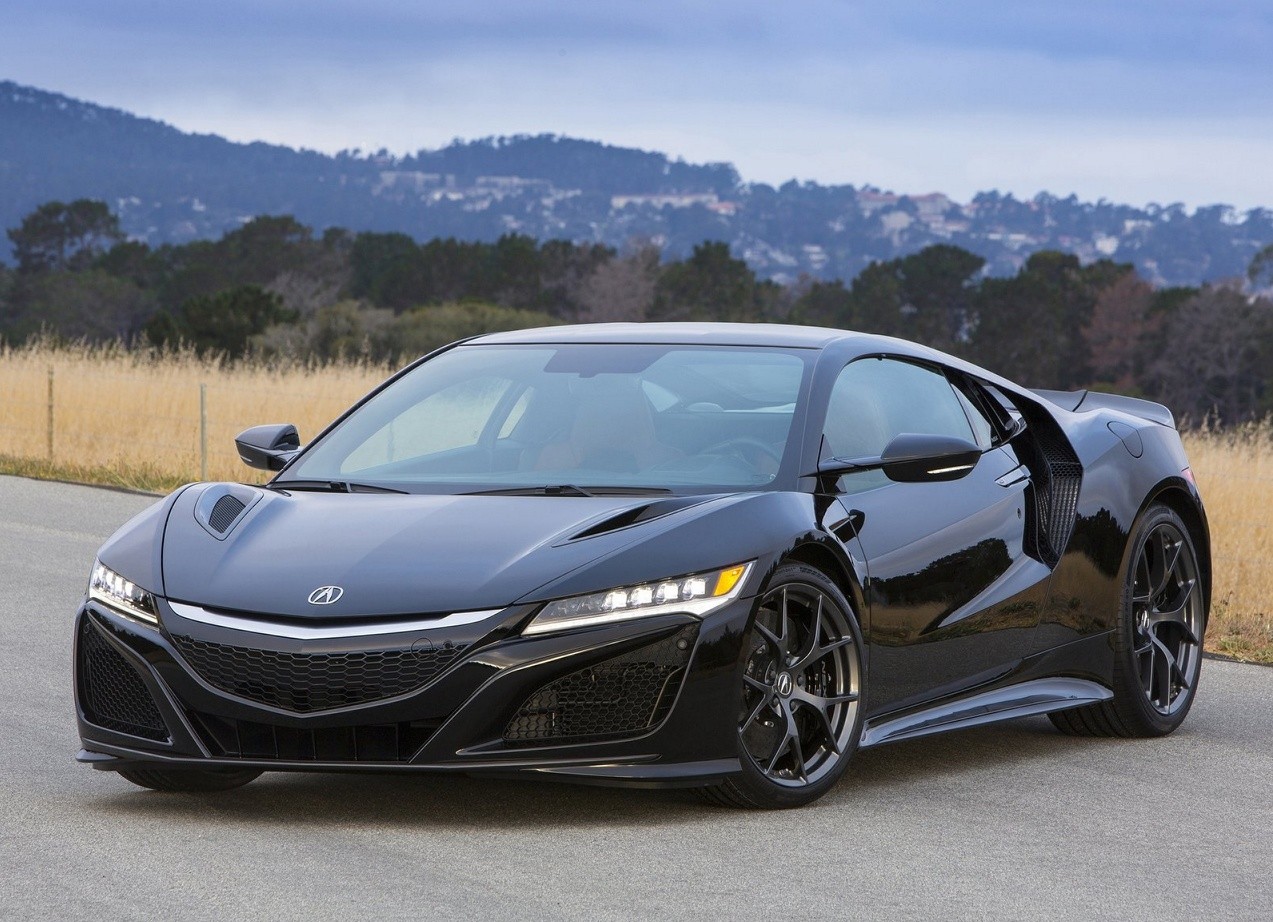
Size at a glance
| Dimensions | Acura NSX II |
|---|---|
| Length | 4,470 mm176.0 in |
| Width | 1,938 mm76.3 in |
| Height | 1,215 mm47.8 in |
| Wheelbase | 2,630 mm103.5 in |
Specs by version
Engines
Performance
Show all 1 versions
| Version | 0–100 km/h | Top speed |
|---|---|---|
| NSX II · 421 kW (572 PS) Coupe | 3.8 s 0–62 mph | 307 km/h191 mph |
Dimensions and weight
Verified Manufacturer and type-approval data from our catalog · Sources and methodology
Acura NSX II at a glance
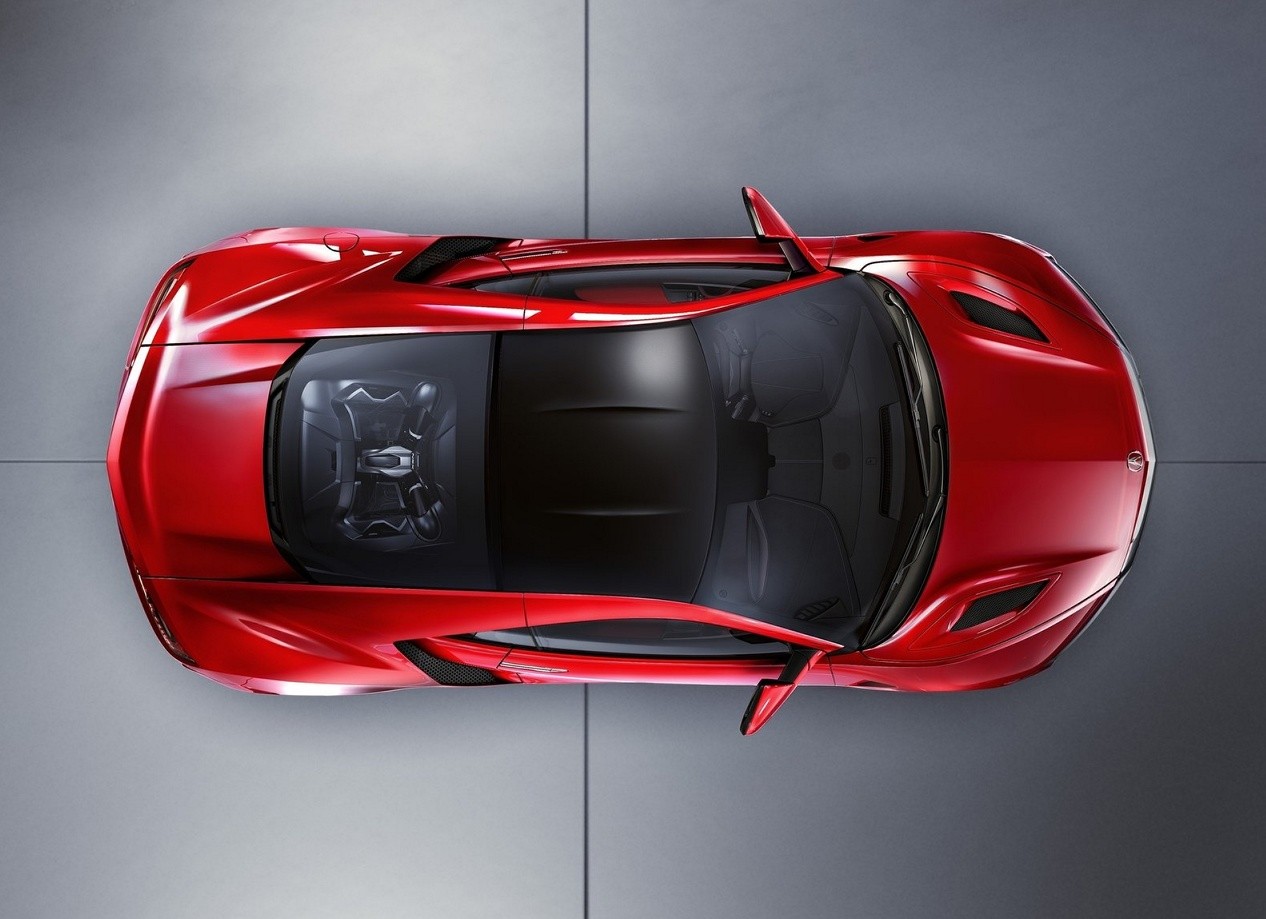
The NC1 is a two-seat coupé with the engine behind the cabin and an electric front axle, a layout Honda calls Sport Hybrid SH-AWD. It replaced nothing directly: the first Honda NSX left production in 2005, and a front-engined V10 successor was cancelled in December 2008. The new car was developed under global project leader Ted Klaus, and the production design came from Michelle Christensen's team in Los Angeles.

Acura sold the car in North America and Honda sold it in Japan, Europe and Australia. Every car came from the Performance Manufacturing Center (PMC) in Marysville, a dedicated plant in a former logistics building, while the engines were assembled at Honda's Anna engine plant, also in Ohio.
| Parameter | Metric | Imperial |
|---|---|---|
| Length (2016–2018 / 2019–2021 / Type S) | 4,470 / 4,490 / 4,535 mm | 176.0 / 176.8 / 178.5 in |
| Width | 1,940 mm | 76.4 in |
| Height | 1,215 mm | 47.8 in |
| Wheelbase | 2,630 mm | 103.5 in |
| Kerb weight | 1,725–1,796 kg | 3,803–3,960 lb |
| Weight distribution | 42 / 58 front / rear | |
| System output (standard / Type S) | 427 / 449 kW | 573 / 602 hp |
| System torque (standard / Type S) | 645 / 667 Nm | 476 / 492 lb-ft |
| Top speed | 307 km/h | 191 mph |
| 0–60 mph (Honda claim) | 2.9 s |
From the 2012 concept to the production car
Honda first showed the NSX Concept at the North American International Auto Show on 9 January 2012 and updated it in 2013. The production car followed at the same show on 12 January 2015, and its European debut came at Geneva that March. Orders opened in summer 2015 and VIN 001 was auctioned for charity in January 2016.
Series production began on 24 May 2016. That delay explains why the old 1cars text spoke of 2015 deliveries "shifting" into 2016: the first customer cars arrived in the second half of 2016 as 2017 models.
| Year | Event |
|---|---|
| 2012 | NSX Concept shown in Detroit (9 January) |
| 2015 | Production car revealed (12 January); Geneva debut; orders open |
| 2016 | First production car built in Marysville (24 May) |
| 2018 | 2019 model-year chassis update announced (August) |
| 2020 | Sales end in Japan, Australia and Europe, including the UK |
| 2021 | Type S announced (3 August), limited to 350 cars |
| 2022 | Type S production from January; last NSX built |
Hybrid powertrain: one V6, three electric motors
The heart of the NSX II is the JNC1 engine: a 3,493 cc V6 with a 75-degree bank angle, dry-sump lubrication and two turbochargers at 1.05 bar. It produces 373 kW (507 PS; 500 hp) between 6,500 and 7,500 rpm and 550 Nm from 2,000 rpm.
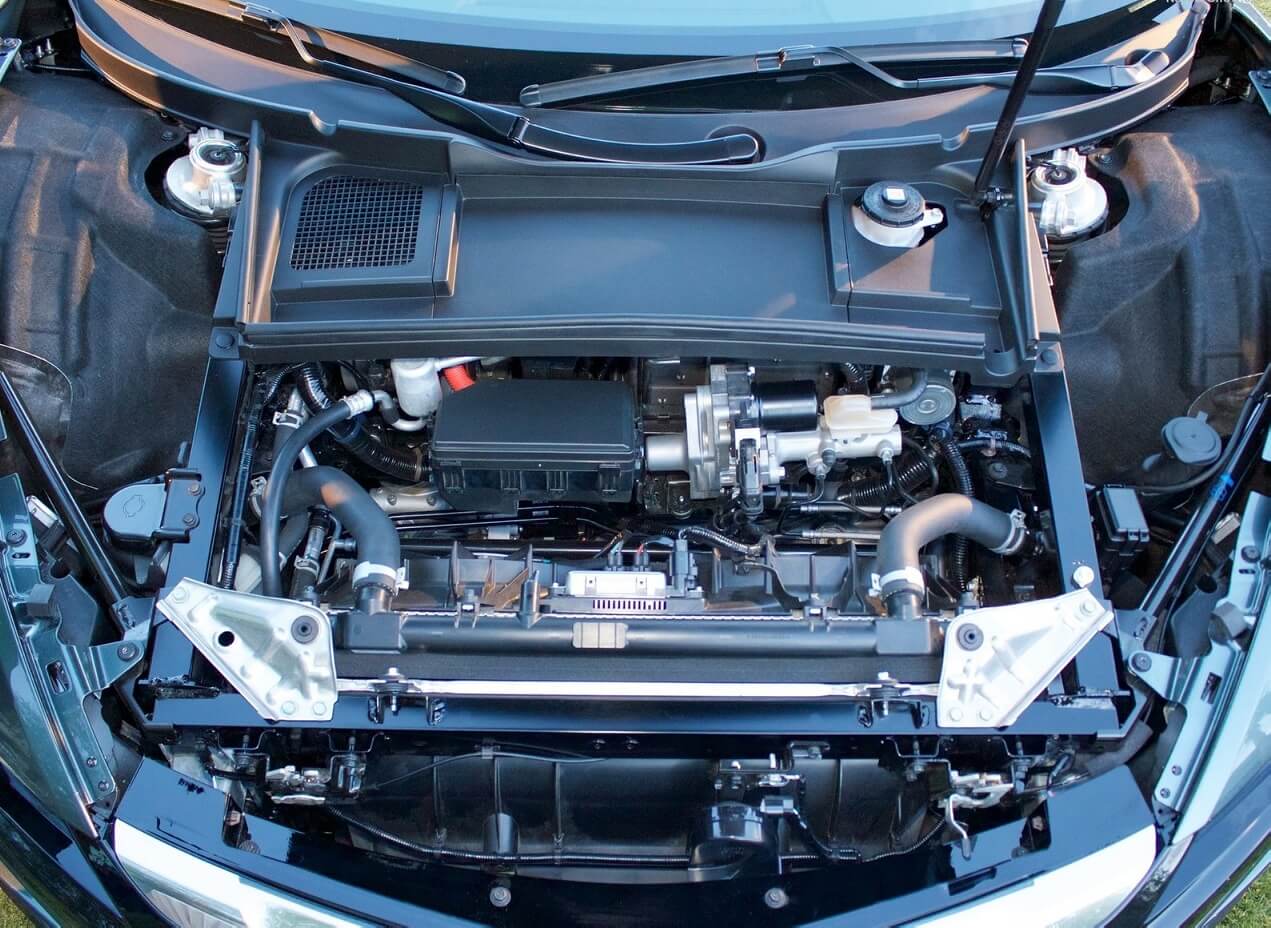
Three electric motors add to it:
- a Twin Motor Unit on the front axle, with two motors of 27 kW (36 hp) and 73 Nm each, which also vectors torque between the front wheels;
- a direct-drive motor of 35 kW (47 hp) and 148 Nm between the engine and the gearbox, which fills the gap before the turbos build boost and starts the engine.
A 1.3 kWh lithium-ion battery sits behind the seats. Combined output is 427 kW (581 PS; 573 hp) and 645 Nm, sent through a nine-speed dual-clutch gearbox with an integrated limited-slip differential.
The Integrated Dynamic System offers four modes: Quiet, Sport, Sport+ and Track. Quiet mode lets the car start and move off on electric power for short distances, which is the "electric start" the old article described.
Performance figures
Honda quoted 0–60 mph in 2.9 seconds and an electronically limited 307 km/h. Car and Driver measured 3.1 seconds and a quarter mile in 11.2 seconds at 203 km/h. At the 2016 Pikes Peak hill climb, an NSX won its Time Attack 2 production class by more than 11 seconds. With a 1,725 kg kerb weight and 427 kW, the car has about 248 kW per tonne; you can repeat that sum for any rival with the power-to-weight calculator.
Body, chassis and cabin
The structure is an aluminium multi-material space frame with a carbon-fibre floor, panels in sheet moulding compound and aluminium, and ultra-high-strength steel in the A-pillars and roof rails. A carbon-fibre roof was optional. Honda claimed three times the dynamic torsional stiffness of a Ferrari 458 Italia.

Wheels are 19 inches at the front with 245 mm tyres and 20 inches at the rear with 305 mm tyres. Steel brake discs measure 370 mm front and 360 mm rear; carbon-ceramic brakes with 380 mm front discs were an option. Ten radiators cool the engine, motors, battery and gearbox.
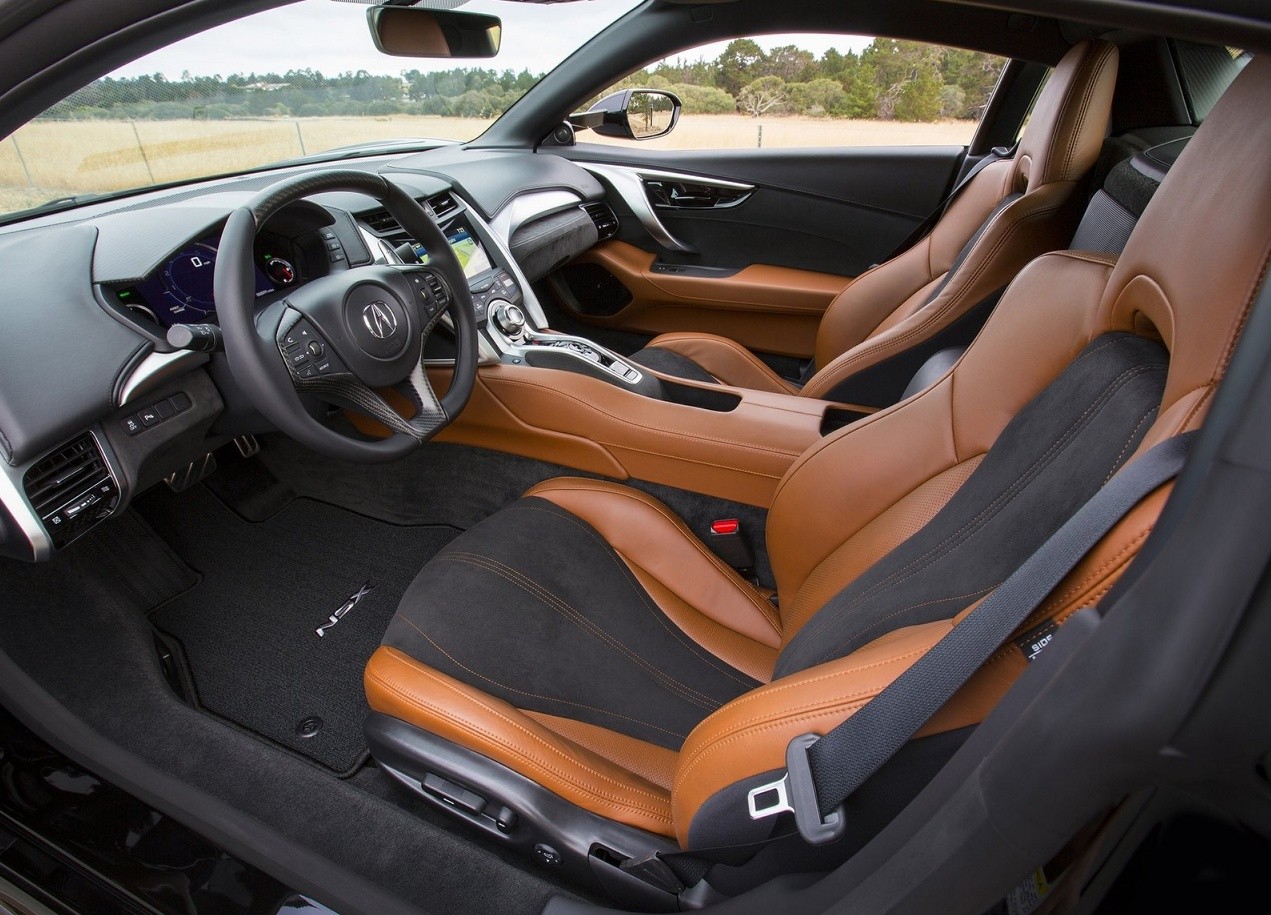
Inside, the NSX is a strict two-seater with a digital instrument panel that changes with the drive mode, a rotary mode selector on the centre console and a central touchscreen. Sports seats with power adjustment were standard, and lighter manually adjusted seats were offered. Luggage space is a small rear compartment behind the engine.
2019 update and the 2022 Type S
For the 2019 model year Honda stiffened the front anti-roll bar by 26% and the rear by 19%, made the rear toe-link bushings 21% stiffer and retuned the software. The result was 1.9 seconds quicker around Suzuka. Body length grew to 4,490 mm, and new colours followed each year.

The Type S of 2022 was the finale. Boost went up to 1.11 bar, injector flow rose by 25% and the intercoolers became more efficient. The engine now made 389 kW, and the system 449 kW (610 PS; 602 hp) and 667 Nm. Usable battery capacity grew by 20%, the front motor gearing was shortened, and the body got a new front end and a 4,535 mm length. Of the 350 cars, 300 went to the United States, 30 to Japan and 15 to Canada. Honda says the Type S laps Suzuka 2 seconds faster than a 2019–2021 car.
| Version | Years | System output | Changes |
|---|---|---|---|
| NSX (NC1) | 2016–2018 | 427 kW (573 hp) | launch version |
| NSX 2019 update | 2019–2021 | 427 kW (573 hp) | stiffer anti-roll bars and bushings, retuned controls |
| NSX Type S | 2022 | 449 kW (602 hp) | more boost and battery power, new front end, 350 built |
Sales, production and safety
The NSX II was a rare car. Honda built 2,908, including the 350 Type S cars. The US took most of them, with 581 cars in its best year (2017). In Europe, sales peaked at 126 cars in 2017 and fell to single figures by 2020, when Honda withdrew the model from Europe, the UK, Japan and Australia.

No Euro NCAP or IIHS crash test exists for the NSX II, which is normal for a low-volume supercar. Standard safety equipment included stability control (VSA), ABS with brake-force distribution and multiple airbags.
Rivals: how the NSX II compares
| Model | Engine | Power | Drive |
|---|---|---|---|
| Acura / Honda NSX II | 3.5 V6 twin-turbo + 3 motors | 427 kW (581 PS) | AWD |
| Audi R8 V10 Plus (2015–2018) | 5.2 V10 | 449 kW (610 PS) | AWD |
| BMW i8 | 1.5 three-cylinder turbo + motor | 266 kW (362 PS) | AWD |
| McLaren 570S | 3.8 V8 twin-turbo | 419 kW (570 PS) | RWD |
Against the Audi R8 the NSX is quieter in town and quicker off the line; the R8's naturally aspirated V10 has more character at high revs. The BMW i8 is a plug-in hybrid with far less power. The McLaren is lighter and more focused on track driving. You can line these cars up in the 1cars comparison tool.

Image credits · Photos from Wikimedia Commons under free licences
- Acura NSX I · Photo: BrokenSphere / Wikimedia Commons, CC BY-SA 3.0
- Acura NSX II · Photo: Zytonits / Wikimedia Commons, CC BY-SA 2.0
Acura NSX in our rankings
- No. 1 of 139 · Most powerful Japanese cars (449 kW)
- No. 2 of 67 · Fastest Japanese cars (307 km/h)
- No. 2 of 57 · Quickest Japanese cars, 0–100 (3.8 s)
- No. 52 of 476 · Fastest cars (307 km/h · top 12%)
- No. 159 of 1152 · Most powerful cars (449 kW · top 14%)
- No. 63 of 373 · Most powerful cars of the 2010s (421 kW · top 17%)
More powerful than 99% of ranked Japanese cars in the 1CARS catalog (No. 1 of 139).
Acura NSX photos 15




Acura NSX videos 2

Test drive
Video overview
FAQ
How much horsepower does the Acura NSX II have?
The standard car has a combined 427 kW (581 PS; 573 hp) from the twin-turbo V6 and three electric motors. The 2022 NSX Type S raised that to 449 kW (610 PS; 602 hp) and 667 Nm of torque.
How many second-generation NSX were made?
Honda built 2,908 cars between 2016 and 2022 at its Performance Manufacturing Center in Marysville, Ohio. The figure includes the 350 Type S cars made in 2022, the last year of production.
Is the Acura NSX II a plug-in hybrid?
No. The 1.3 kWh battery is charged by the engine and by braking, and cannot be plugged in. It powers the three electric motors for torque fill, torque vectoring and short silent drives in Quiet mode.
Is the NSX II all-wheel drive?
Yes. The V6 and one electric motor drive the rear wheels through a nine-speed dual-clutch gearbox, and two independent electric motors drive the front wheels. Honda calls this layout Sport Hybrid SH-AWD.
Why was the Acura NSX discontinued?
Sales were low, especially outside the United States: Europe took 126 cars in its best year and fewer than ten in 2020. Honda ended sales in Europe, Japan and Australia in 2020 and stopped production after the 2022 Type S.
Data sources
Data checked by an editor against the sources below.
- The text of this article (1cars archive)
- Wikipedia - Honda NSX (first generation)
- Wikipedia - Honda NSX (second generation)


