
 Acura TL
All generations, specs and history
Updated Published Sources (7) Report an error
By Sarah Whitmore, Senior Automotive Writer Reviewed by Oleksandr Hnatiuk

- Built
- 1995–2014
- Generations
- 4
- Top power
- 227 kW (309 PS)
Timeline
TL generations
Click a generation for its own page
- TL I 1995–1998 · Sedan
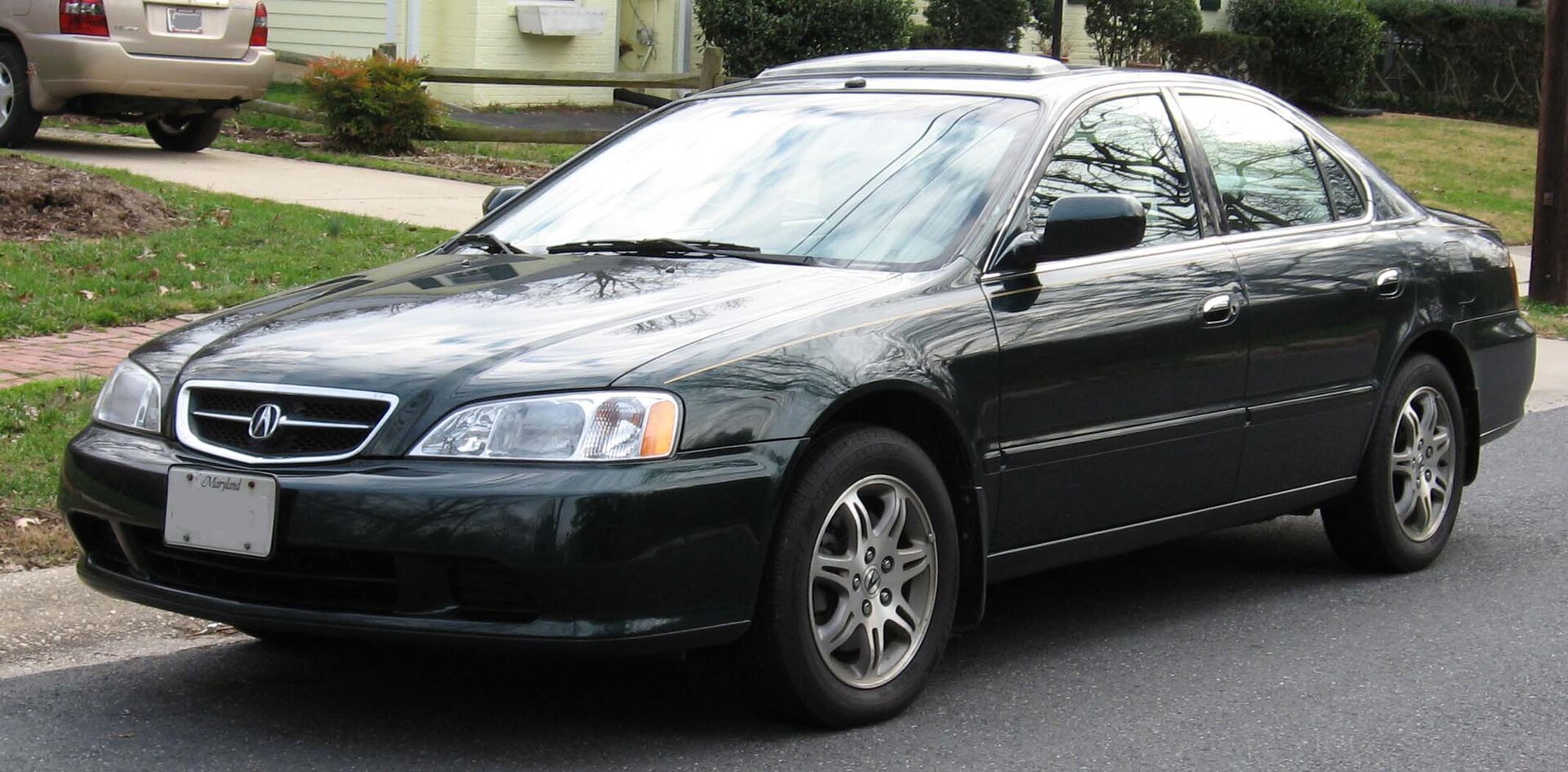
- TL II 1998–2003 · Sedan
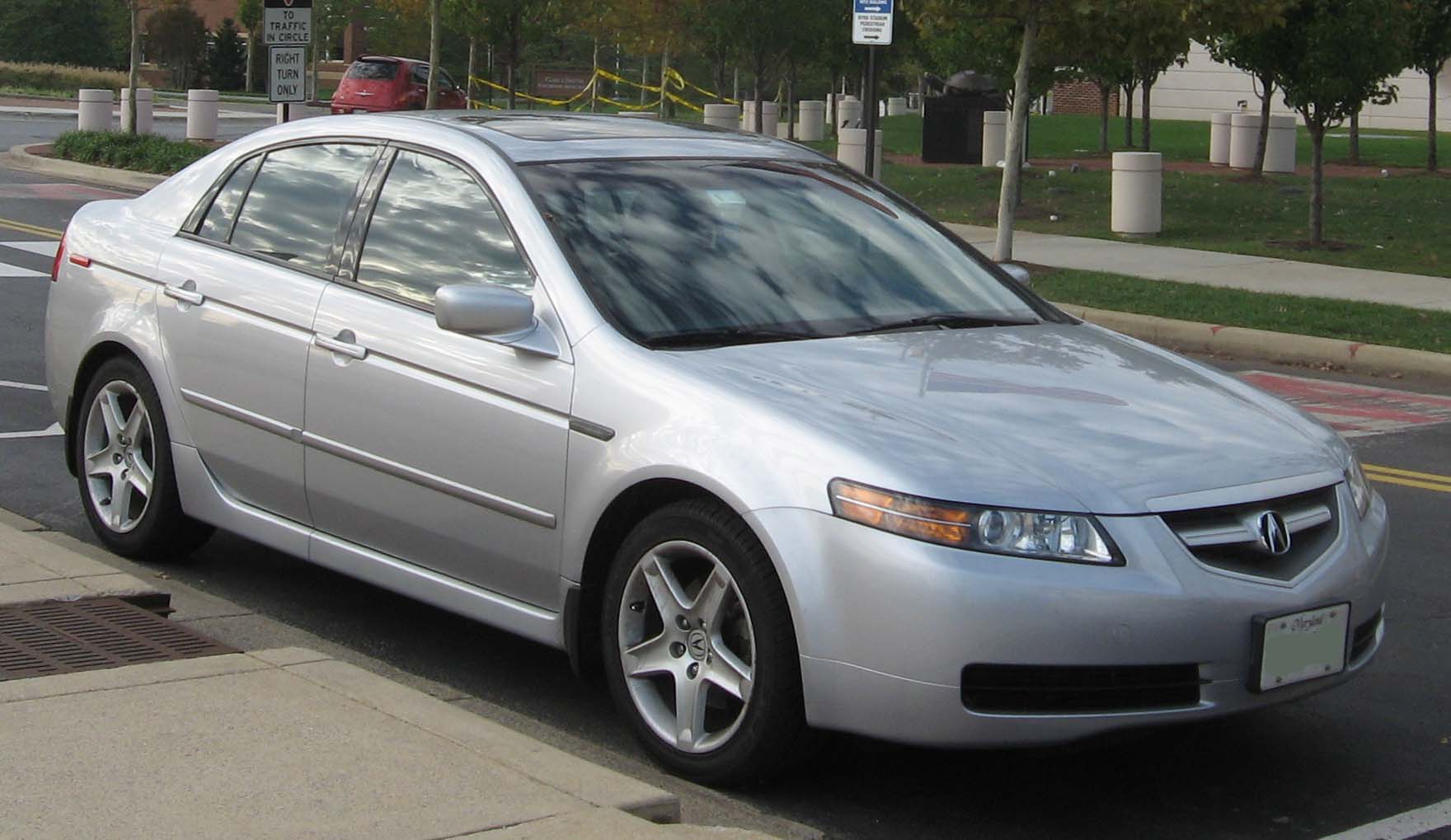
- TL III 2003–2008 · Sedan
- TL IV 2008–2014 · Sedan · 209–227 kW (284–309 PS)
Newest first · 4 generations since 1995
-
2008

-
2003
-
1998
-
1995
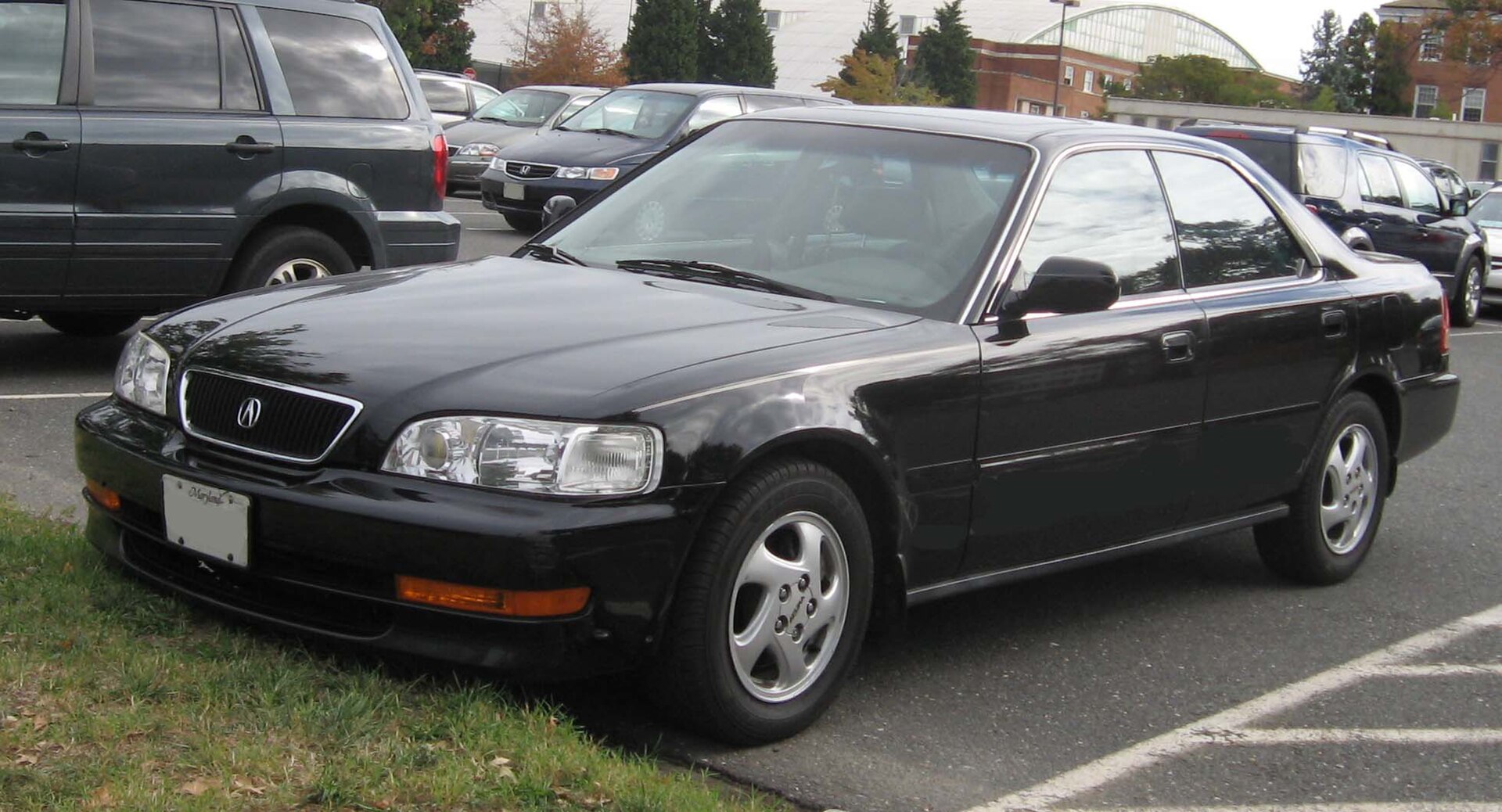


All generations by year: TL IV (2008–2014) · TL III (2003–2008) · TL II (1998–2003) · TL I (1995–1998)
Which one is mine?
Pick the year of first registration to see which generation it is.
Check by VINOur verdict: which TL to buy
Our verdict · Sarah Whitmore
The third generation (2004–2008) is the classic TL: it sold best, the six-speed manual with Brembo brakes is a rare enthusiast choice, and the 2007–2008 Type-S adds 213 kW. The fourth-generation SH-AWD is the pick for all-weather grip and the strongest engine, ideally a 2012–2014 car with the six-speed automatic. Avoid a 2001–2003 car unless the automatic gearbox has documented repair work.
The Acura TL is a four-door luxury saloon that Honda sold under its Acura brand from 1995 to 2014, for model years 1996 to 2014. It replaced the Acura Vigor and was replaced by the TLX. Four generations used five-cylinder and V6 engines from 131 to 227 kW, and in its best years only the BMW 3 Series outsold it among American luxury saloons.
In short
- 1995–1998: first generation built in Sayama, Japan, with a 2.5 five-cylinder or a 3.2 V6.
- 1998–2003: second generation moves to Marysville, Ohio, and shares its basis with the US Accord; Type-S from 2002.
- 2003–2008: third generation, the best seller, with a 3.2 V6, a six-speed manual and a 3.5-litre Type-S.
- 2008–2014: fourth generation, larger, with a 3.5 V6 and the first all-wheel-drive TL, the 3.7 SH-AWD.

Specs by version
Engines
| Version | Engine | Gearbox | Drive | Production years |
|---|---|---|---|---|
| TL III · 3.2 L 6 cyl Automatic (S5) · 2007 (EPA) | 3.2 l · 6 cyl 3,200 cc | 5-sp Automatic | Front-wheel drive | 2007 |
| TL III · 3.5 L 6 cyl Automatic (S5) · 2007 (EPA) | 3.5 l · 6 cyl 3,500 cc | 5-sp Automatic | Front-wheel drive | 2007 |
| TL III · 3.5 L 6 cyl Manual 6-spd · 2007 (EPA) | 3.5 l · 6 cyl 3,500 cc | 6-sp Manual | Front-wheel drive | 2007 |
| TL IV · 3.2 L 6 cyl Automatic (S5) · 2008 (EPA) | 3.2 l · 6 cyl 3,200 cc | 5-sp Automatic | Front-wheel drive | 2008 |
| TL IV · 3.5 L 6 cyl Automatic (S5) · 2008 (EPA) | 3.5 l · 6 cyl 3,500 cc | 5-sp Automatic | Front-wheel drive | 2008 |
| TL IV · 3.5 L 6 cyl Manual 6-spd · 2008 (EPA) | 3.5 l · 6 cyl 3,500 cc | 6-sp Manual | Front-wheel drive | 2008 |
| TL IV · 3.5 209 kW (284 PS) Sedan | 3.5 l · 6 cyl · Petrol 3,500 cc | - | Front-wheel drive | - |
| TL IV · 3.7 227 kW (309 PS) Sedan | 3.7 l · 6 cyl · Petrol 3,700 cc | - | All-wheel drive | - |
Performance
Show all 6 versions
| Version | Fuel consumption |
|---|---|
| TL III · 3.2 L 6 cyl Automatic (S5) · 2007 (EPA) | 11.2 l/100 km21.0 mpg US · 25.2 mpg UK |
| TL III · 3.5 L 6 cyl Automatic (S5) · 2007 (EPA) | 11.8 l/100 km19.9 mpg US · 23.9 mpg UK |
| TL III · 3.5 L 6 cyl Manual 6-spd · 2007 (EPA) | 11.2 l/100 km21.0 mpg US · 25.2 mpg UK |
| TL IV · 3.2 L 6 cyl Automatic (S5) · 2008 (EPA) | 11.2 l/100 km21.0 mpg US · 25.2 mpg UK |
| TL IV · 3.5 L 6 cyl Automatic (S5) · 2008 (EPA) | 11.8 l/100 km19.9 mpg US · 23.9 mpg UK |
| TL IV · 3.5 L 6 cyl Manual 6-spd · 2008 (EPA) | 11.2 l/100 km21.0 mpg US · 25.2 mpg UK |
Dimensions and weight
Show all 2 versions
| Version | Boot |
|---|---|
| TL IV · 3.5 209 kW (284 PS) Sedan | 371 l13.1 cu ft |
| TL IV · 3.7 227 kW (309 PS) Sedan | 371 l13.1 cu ft |
Verified Manufacturer and type-approval data from our catalog · Sources and methodology
Safety
-
TL IV · NHTSA 2014
US NCAP (NHTSA)
Stars from different years and organisations are not directly comparable: test protocols change every few years.
Acura TL at a glance

| Fact | Detail |
|---|---|
| Maker | Acura (Honda) |
| Class | entry-level to mid-size luxury saloon |
| Production | 1995–2014 (model years 1996–2014) |
| Plants | Sayama, Japan (first generation); Marysville, Ohio (1998–2014) |
| Predecessor / successor | Acura Vigor / Acura TLX |
| Engines | 2.5 five-cylinder; 3.2, 3.5 and 3.7 V6 |
| Power | 131 kW (176 hp) to 227 kW (305 hp) |
| Related models | Honda Inspire and Saber (Japan), US Honda Accord |
The four generations of the TL
| Generation | Model years | Plant | Engines | Power |
|---|---|---|---|---|
| First | 1996–1998 | Sayama, Japan | 2.5 five-cylinder; 3.2 V6 | 131 kW (176 hp); 149 kW (200 hp) |
| Second | 1999–2003 | Marysville, Ohio | 3.2 V6; Type-S 3.2 V6 | 168 kW (225 hp); 194 kW (260 hp) |
| Third | 2004–2008 | Marysville, Ohio | 3.2 V6; Type-S 3.5 V6 | 192–201 kW (258–270 hp); 213 kW (286 hp) |
| Fourth | 2009–2014 | Marysville, Ohio | 3.5 V6; 3.7 V6 SH-AWD | 209–210 kW (280 hp); 227 kW (305 hp) |
The TL was Acura's first model with the alphanumeric naming scheme, and it remained Acura's best seller until the MDX overtook it in 2007. Its place in the brand's story is told in our history of Acura.
First generation (1996–1998): five or six cylinders
The first TL was built at Sayama in Japan from 28 March 1995. Both engines were mounted lengthways: the 2.5 TL had the Vigor's 2.5-litre five-cylinder with 131 kW (176 hp), and the 3.2 TL used the 3.2-litre V6 from the second-generation Legend with 149 kW (200 hp). The 2.5 was the sportier car with firmer suspension, while the 3.2 had leather as standard.

A trade dispute between the United States and Japan delayed the 3.2 TL until late 1995; threatened 100 % tariffs on Japanese luxury cars were never applied. In Japan the same cars were sold as the Honda Inspire and Honda Saber, and in some other markets as the Honda Vigor. The old version of this page said Japan built the TL for its own market until 2000 and 2004; those dates refer to the Inspire and Saber names, not to TL production.
Second generation (1999–2003): built in Ohio
From August 1998 the TL was built at Marysville, Ohio, alongside the Honda Accord, on a basis derived from the US-market Accord. It had only one engine, a 3.2-litre VTEC V6 with 168 kW (225 hp). A four-speed automatic was used for 1999, then a five-speed automatic with SportShift.

The Type-S of 2002 raised power to 194 kW (260 hp) and added 17-inch wheels, firmer seats and firmer suspension. The same year brought a facelift with a new front, new tail lamps and a six-CD changer. The five-speed automatic had a known weakness: wear in the third-gear clutch could block oil passages, and Honda extended the warranty on affected cars to 7.75 years or 109,000 miles. Any second-generation TL on sale today should have proof that the gearbox was repaired or replaced.
Third generation (2004–2008): the best-selling TL
The third TL went on sale in October 2003. It was developed mainly in the United States by a team led by Erik Berkman, with a body by Honda designer Jon Ikeda, and it was not sold in Japan. The 3.2-litre V6 was first rated at 201 kW (270 hp) and later at 192 kW (258 hp) under new SAE standards, without any technical change. It was offered with a five-speed automatic or a six-speed manual; manual cars added Brembo four-piston front calipers and a limited-slip differential.

Technology was a strong point: a DVD-Audio system tuned by Elliot Scheiner, Bluetooth hands-free, an 8-inch touchscreen with voice control and XM radio. In 2004 Acura sold about 79,000 TLs, and in 2005 the TL was the second-best-selling luxury saloon in the United States, behind only the BMW 3 Series. The Type-S returned for 2007 with the 3.5-litre V6 from the RL, 213 kW (286 hp), quad exhausts and Brembo brakes.
Fourth generation (2009–2014): larger, with SH-AWD
The first fourth-generation TL left the Marysville line on 23 September 2008. It grew by 6.2 in (157 mm) in length, 1.8 in (46 mm) in width and 0.5 in (13 mm) in height, figures the old version of this page also gave. Its "Keen Edge Dynamic" styling, with a large silver "Power Plenum" grille, divided opinion.

The base car had a 3.5-litre V6 with 209–210 kW (280 hp) and front-wheel drive. The TL SH-AWD used a 3.7-litre V6 with 227 kW (305 hp) and Acura's torque-vectoring all-wheel drive. The system normally sent 90 % of the power to the front and could send up to 70 % to the rear, split between the rear wheels in corners. A six-speed manual became available with SH-AWD for 2010.
| Parameter | TL 3.5 (FWD) | TL SH-AWD 3.7 |
|---|---|---|
| Engine | 3.5-litre V6 | 3.7-litre V6 |
| Power | 209–210 kW (280 hp) | 227 kW (305 hp) |
| Torque | 344 Nm (254 lb-ft) | 370–373 Nm (273–275 lb-ft) |
| Gearbox | 5-speed auto, 6-speed auto from 2012 | 5/6-speed auto or 6-speed manual |
| Kerb weight | 3,699 lb (1,678 kg) | 3,948 lb (1,791 kg) |
| Length | 4,966 mm (2009–2011), 4,928 mm (2012–2014) | same |
| Wheelbase | 2,780 mm | 2,780 mm |
| Front / rear brakes | 320 mm / 340 mm discs | 320 mm / 340 mm discs |
By our calculation, the SH-AWD carried about 7.9 kg per kW and the front-drive car about 8.0 kg per kW. You can check such ratios with our power-to-weight calculator; in short, the extra engine size mainly offset the weight of all-wheel drive. The old version of this page listed boot volumes of 371 litres for the front-drive car and 354 litres for SH-AWD; we keep these figures as stated there.
The 2012 facelift and fuel economy
For 2012 Acura toned down the grille, revised the rear and fitted a six-speed automatic with rev-matched downshifts. Ventilated front seats, a 60 GB hard drive and blind-spot information arrived, and the car became 3 dB quieter at motorway speed. Fuel economy improved by 2 mpg in town and 3 mpg on the motorway, to 20 and 29 mpg (US), about 11.8 and 8.1 l/100 km. You can convert other figures with our fuel economy converter.

In crash tests by the IIHS, the 2012–2014 TL was rated Good in moderate overlap, small overlap, side and roof strength tests. Production ended in March 2014, and the TLX took over for the 2015 model year, also replacing the smaller TSX; see our pages on the Acura TLX and the Acura TSX.
US sales by year
| Year | US sales |
|---|---|
| 1996 | 24,700 |
| 1999 | 56,566 |
| 2001 | 69,484 |
| 2004 | 77,895 |
| 2005 | 78,218 |
| 2007 | 58,545 |
| 2009 | 33,620 |
| 2012 | 33,572 |
| 2013 | 24,318 |
| 2014 | 10,616 |
The best year was 2005, with 78,218 cars. By our calculation, sales fell by about 57 % between the third generation's peak and the fourth generation's first full year, which reflects both the economic crisis and the controversial styling.

How the TL grew, and its link to the Accord
| Generation | Model years | Length |
|---|---|---|
| First (2.5 / 3.2) | 1996–1998 | 4,864–4,869 mm |
| Second | 1999–2000 / 2001–2003 | 4,900 mm / 4,890 mm |
| Third (base / Type-S) | 2004–2008 | 4,808 mm / 4,821 mm |
| Fourth | 2009–2011 / 2012–2014 | 4,966 mm / 4,928 mm |
The third generation was the most compact TL of all, which suited its sporty brief, while the fourth was the longest. From the second generation onwards the TL shared its basis with the US Honda Accord and was built in the same Ohio plant. Even so, it had its own body, larger V6 engines and a richer cabin. Every Acura model is listed in our Acura catalogue.


Acura TL evolution in numbers
Did you know?
- The Acura TL ran for 19 years, from 1995 to 2014, over 4 generations in our catalog.
- The longest-running generation is the TL IV (2008–2014): 6 years.
Image credits · Photos from Wikimedia Commons under free licences
- Acura TL I · Photo: IFCAR / Wikimedia Commons, Public domain
- Acura TL II · Photo: IFCAR / Wikimedia Commons, Public domain
- Acura TL III · Photo: IFCAR / Wikimedia Commons, Public domain
Acura TL in our rankings
- No. 203 of 1083 · Longest-running car nameplates (19 years · top 21%)
- No. 34 of 130 · Most powerful Japanese cars (227 kW · top 27%)
- No. 44 of 143 · Biggest engines: sedans (3,700 cc · top 31%)
- No. 58 of 174 · Most powerful sedans (227 kW · top 34%)
- No. 226 of 636 · Biggest engines: cars (3,700 cc · top 37%)
- No. 76 of 201 · Most powerful cars of the 2000s (227 kW · top 39%)
In production longer than 79% of ranked nameplates in the 1CARS catalog (No. 203 of 1083).
Acura TL photos 14


FAQ
What years did Acura make the TL?
Production ran from 1995 until March 2014, covering the 1996 to 2014 model years. It was then replaced by the Acura TLX, which went on sale for the 2015 model year.
What engine does the Acura TL have?
It depends on the generation. The first cars had a 2.5 five-cylinder or a 3.2 V6, followed by 3.2 V6 engines with 168–201 kW, a 3.5 V6 in the 2007–2008 Type-S and the 2009–2014 base car, and a 3.7 V6 with 227 kW in the SH-AWD.
Is the Acura TL a Honda Accord?
Not exactly. From 1999 the TL was built in Ohio on a basis derived from the US Accord, yet Acura gave it unique styling, bigger engines and a plusher interior. In Japan earlier TLs were sold as the Honda Inspire and Saber.
Which Acura TL has all-wheel drive?
Only the fourth generation. The TL SH-AWD of 2009–2014 used a 3.7-litre V6 with 227 kW and Acura's Super Handling All-Wheel Drive, which could send up to 70 % of the power to the rear axle.
What problems does the Acura TL have?
The best-known weakness is the five-speed automatic of 2001–2003, whose third-gear clutch wear could block oil passages; Honda extended the warranty. Driver's airbag inflators on 2002–2003 cars were also recalled.
Data sources
Data checked by an editor against the sources below.
- The text of this article (1cars archive)
- Wikipedia - Acura TL
- US EPA fueleconomy.gov - 24346.shtml
- US EPA fueleconomy.gov - 24348.shtml
- US EPA fueleconomy.gov - 24347.shtml
- US EPA fueleconomy.gov - 23551.shtml
- NHTSA 5-Star Safety Ratings (US NCAP) — U.S. Government work, public domain


