
 Hyundai Tucson
All generations, specs and history
Updated Published Sources (8) Report an error
By Sarah Whitmore, Senior Automotive Writer Reviewed by Oleksandr Hnatiuk

- Built
- 2004–present
- Generations
- 4
- Top power
- 136 kW (185 PS)
- New price
- from about €22,840 (2015)
Timeline
Tucson generations
Click a generation for its own page


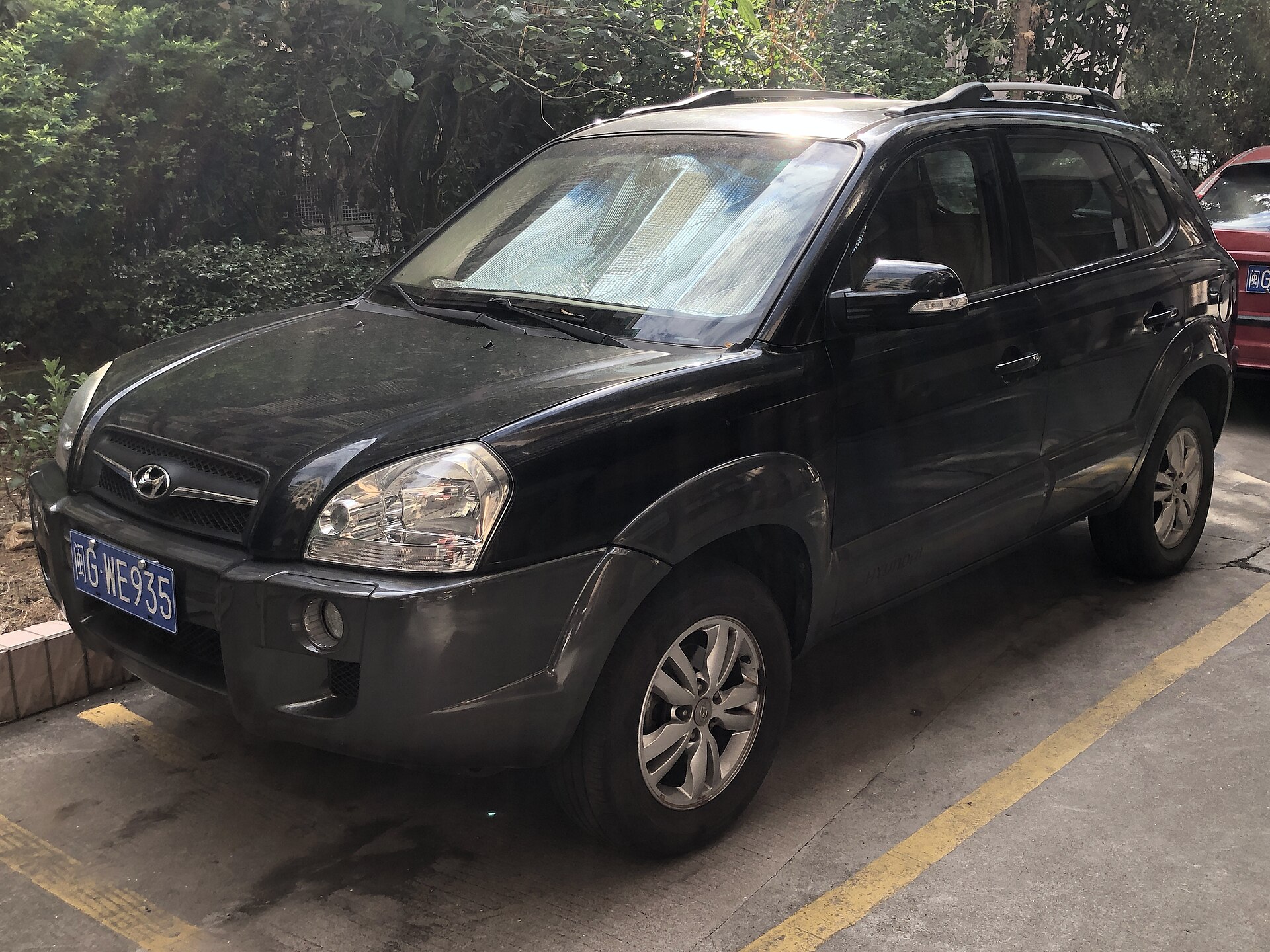
- Tucson JM 2004–2009 · SUV · 104–129 kW (141–175 PS)
- Tucson LM 2009–2015 · SUV · 100–135 kW (136–184 PS)
- Tucson III 2015–2018 · SUV · 110–136 kW (150–185 PS)
- Tucson Current 2018–now
Newest first · 4 generations since 2004
-
2018
-
2015

-
2009

-
2004

All generations by year: Tucson (2018–now) · Tucson III (2015–2018) · Tucson LM (2009–2015) · Tucson JM (2004–2009)
Which one is mine?
Pick the year of first registration to see which generation it is.
- Tucson 2018
- Tucson III 2015–2018
- LM 2009–2015
- JM 2004–2009
Which Tucson to buy
Our verdict · Sarah Whitmore
The fourth-generation Tucson Hybrid is the best all-round choice for low fuel use, while the plug-in hybrid suits drivers who can charge at home. A facelifted third-generation car from 2019 with the 1.6 T-GDi or 1.6 CRDi is a sensible used buy, and the ix35 remains a simple, affordable option. On any used Tucson, check the service history and, on dual-clutch versions, the gearbox.
Watch out
- ABS module short circuit, fire risk (recall 2021) (Tucson III (2015–2018))
- Bonnet secondary safety catch can fail (recall) (Tucson III (2015–2018))
- Low-speed judder of the 7-speed dual-clutch gearbox (Tucson III (2015–2018))
- Clutch judder and flywheel wear (manual diesels) (Tucson III (2015–2018))
Watch-out points come from our verified ownership data, each with a source.
The Hyundai Tucson is a compact SUV launched in 2004 and Hyundai's best-selling model, with more than 7 million sold worldwide, about 1.4 million of them in Europe. Its four generations include the second-generation ix35 of 2009, which was built for Europe in Nošovice, Czech Republic. The current fourth generation of 2020 offers 1.6 T-GDi hybrid and plug-in hybrid versions with up to 195 kW.
In short
- First generation (2004): Elantra-based, 2.0 and 2.7 V6 petrol and 2.0 CRDi diesel; Canadian Car of the Year Best New Crossover 2005.
- Second generation (2009): sold as the ix35 in most markets, Frankfurt Motor Show debut, 1.6 to 2.4 petrol and 1.7 and 2.0 CRDi diesels.
- Third generation (2015): Geneva debut on 3 March 2015, Euro NCAP 86% adult occupant, N Line from 2019.
- Fourth generation (2020): revealed on 15 September 2020; hybrid with 169 kW and plug-in hybrid with 195 kW.
Size at a glance
Nissan Qashqai J11
The Hyundai Tucson III is 98 mm longer, 43 mm wider and 56 mm taller than the Nissan Qashqai J11.
| Dimensions | Hyundai Tucson III | Nissan Qashqai J11 | Difference |
|---|---|---|---|
| Length | 4,475 mm176.2 in | 4,377 mm172.3 in | +98 mm+3.9 in |
| Width | 1,849 mm72.8 in | 1,806 mm71.1 in | +43 mm+1.7 in |
| Height | 1,651 mm65.0 in | 1,595 mm62.8 in | +56 mm+2.2 in |
| Wheelbase | 2,670 mm105.1 in | 2,646 mm104.2 in | +24 mm+0.9 in |
| Boot | 513 L18.1 cu ft | 430 L15.2 cu ft | +83 L+2.9 cu ft |
Kia Sportage QL
The Hyundai Tucson III is 5 mm shorter, 6 mm narrower and 16 mm taller than the Kia Sportage QL.
| Dimensions | Hyundai Tucson III | Kia Sportage QL | Difference |
|---|---|---|---|
| Length | 4,475 mm176.2 in | 4,480 mm176.4 in | −5 mm−0.2 in |
| Width | 1,849 mm72.8 in | 1,855 mm73.0 in | −6 mm−0.2 in |
| Height | 1,651 mm65.0 in | 1,635 mm64.4 in | +16 mm+0.6 in |
| Wheelbase | 2,670 mm105.1 in | 2,670 mm105.1 in | Same |
| Boot | 513 L18.1 cu ft | 503 L17.8 cu ft | +10 L+0.4 cu ft |
Hyundai Tucson LM
The Hyundai Tucson III is 65 mm longer and 19 mm lower than the Hyundai Tucson LM.
| Dimensions | Hyundai Tucson III | Hyundai Tucson LM | Difference |
|---|---|---|---|
| Length | 4,475 mm176.2 in | 4,410 mm173.6 in | +65 mm+2.6 in |
| Width | 1,849 mm72.8 in | - | - |
| Height | 1,651 mm65.0 in | 1,670 mm65.7 in | −19 mm−0.7 in |
| Wheelbase | 2,670 mm105.1 in | 2,640 mm103.9 in | +30 mm+1.2 in |
| Boot | 513 L18.1 cu ft | 591 L20.9 cu ft | −78 L−2.8 cu ft |
Running cost
Fuel · Tucson 2.0 136 kW (185 PS)
about 1,450 EUR fuel a year at 15,000 km
5.9 l/100 km · diesel at 1.65 EUR/l · change mileage, fuel price or version
Known problems
-
Critical Tucson III (2015–2018)
ABS module short circuit, fire risk (recall 2021) 2017–2020
No warning in advance; an overloaded ABS module can short-circuit and start a fire in the engine bay.
Fix: Free recall: a new fuse for the ABS module and an ESP software update; 78,542 cars in Germany.
Verified Source: ADAC Gebrauchtwagen-Infos: Hyundai Tucson (model history as of 18 November 2025) -
High Tucson III (2015–2018)
Bonnet secondary safety catch can fail (recall) 2015–2016
If the bonnet is not fully closed, the catch may not hold it at speed, and the warning may not show.
Fix: A stronger catch is fitted and the open-bonnet warning software updated.
Verified Source: What Car? Used Hyundai Tucson 2015-2020 reliability -
Medium Tucson III (2015–2018)
Low-speed judder of the 7-speed dual-clutch gearbox all years
Abnormal vibration when pulling away or creeping in traffic.
Fix: Transmission control unit update and, if needed, a new dual clutch (Hyundai TSB 22-AT-007H).
Verified Source: Hyundai TSB 22-AT-007H, 7-speed DCT clutch judder (NHTSA, May 2022), via CarComplaints -
Medium Tucson III (2015–2018)
Clutch judder and flywheel wear (manual diesels) all years
Shudder when pulling away, excessive clutch wear, noise from the dual-mass flywheel.
Fix: Fit the redesigned clutch, with a new flywheel if worn.
Verified Source: Auto Express: Used Hyundai Tucson Mk3 (2015-2020) buyer's guide -
Medium Tucson III (2015–2018)
Worn steering joints and brakes at inspection all years
Knocking over bumps and play in the steering; brakes and steering joints sometimes fail the HU test.
Fix: Replace the worn steering joints, discs and pads.
Verified Source: ADAC Gebrauchtwagen-Info Hyundai Tucson (2015-2020) Diesel, with ADAC Pannenstatistik 2025 -
Medium Tucson III (2015–2018)
Electric parking brake faults all years
The parking brake warning lights up or the brake does not apply or release.
Fix: Diagnosis of the actuator motors and control unit; replace the faulty caliper motor.
Verified Source: ADAC Gebrauchtwagen-Info Hyundai Tucson (2015-2020) Benziner, with ADAC Pannenstatistik 2025 -
Low Tucson III (2015–2018)
Flat starter batteries (2015-2016 cars) 2015–2016
Slow cranking or no start, the main breakdown cause for early cars.
Fix: Battery test and replacement.
Verified Source: ADAC Gebrauchtwagen-Info Hyundai Tucson (2015-2020) Benziner, with ADAC Pannenstatistik 2025 -
Low Tucson III (2015–2018)
Exhaust system faults all years
Owners in What Car?'s survey reported exhaust faults on 7% of cars.
Fix: Repair or replace the affected exhaust section or sensor.
Verified Source: What Car? Used Hyundai Tucson 2015-2020 reliability -
Low Tucson (2018)
eCall may not send the VIN after a crash (recall 2021) 2020
No symptom; after an airbag deployment the emergency call may not transmit the vehicle number.
Fix: Dealer checks and corrects the stored VIN, about 10 minutes.
Verified Source: ADAC Gebrauchtwagen-Infos: Hyundai Tucson (model history as of 18 November 2025)
Specs by version
Engines
| Version | Engine | Power | Torque |
|---|---|---|---|
| Diesel · 3 versions | |||
| LM · 100 kW (136 PS) | Diesel | 100 kW 136 PS134 hp | - |
| LM · 2.0 CRDi | 2.0 l · Diesel 1,995 cc | 135 kW 184 PS181 hp | 392 Nm289 lb-ft |
| Tucson III · 2.0 136 kW (185 PS) | 2.0 l · Diesel 2,000 cc | 136 kW 185 PS182 hp | 400 Nm295 lb-ft |
| Petrol · 3 versions | |||
| JM · 2.0 (141 PS) | 2.0 l · Petrol 2,000 cc | 104 kW 141 PS139 hp | - |
| JM · 2.7 129 kW (175 PS) | 2.7 l · 6 cyl · Petrol 2,700 cc | 129 kW 175 PS173 hp | - |
| Tucson III · 2.0 110 kW (150 PS) | 2.0 l · Petrol 2,000 cc | 110 kW 150 PS148 hp | 192 Nm142 lb-ft |
| Other · 2 versions | |||
| LM · 110 kW (150 PS) | - | 110 kW 150 PS148 hp | 191 Nm141 lb-ft |
| LM · 2.0 120 kW (163 PS) | 2.0 l 2,000 cc | 120 kW 163 PS161 hp | - |
Performance
Show all 2 versions
| Version | 0–100 km/h | Top speed | Fuel consumption | CO₂ |
|---|---|---|---|---|
| Diesel · 1 version | ||||
| Tucson III · 2.0 136 kW (185 PS) | 9.9 s 0–62 mph | 201 km/h125 mph | 5.9 l/100 km39.9 mpg US · 47.9 mpg UK | 154 g/km |
| Petrol · 1 version | ||||
| JM · 2.7 129 kW (175 PS) | 10.5 s 0–62 mph | 180 km/h112 mph | 10.0 l/100 km23.5 mpg US · 28.2 mpg UK | 237 g/km |
Dimensions and weight
Show all 8 versions
| Version | Length | Height | Wheelbase | Kerb weight | Boot |
|---|---|---|---|---|---|
| Diesel · 3 versions | |||||
| LM · 100 kW (136 PS) | - | - | - | - | 591 l20.9 cu ft |
| LM · 2.0 CRDi | 4,410 mm173.6 in | 1,670 mm65.7 in | 2,640 mm103.9 in | 1,380 kg3,042 lb | 591 l20.9 cu ft |
| Tucson III · 2.0 136 kW (185 PS) | - | - | - | 1,662 kg3,664 lb | 513 l18.1 cu ft |
| Petrol · 3 versions | |||||
| JM · 2.0 (141 PS) | 4,325 mm170.3 in | 1,730 mm68.1 in | 2,630 mm103.5 in | 1,537 kg3,389 lb | 540 l19.1 cu ft |
| JM · 2.7 129 kW (175 PS) | - | - | - | 1,668 kg3,677 lb | 540 l19.1 cu ft |
| Tucson III · 2.0 110 kW (150 PS) | 4,475 mm176.2 in | 1,651 mm65.0 in | 2,670 mm105.1 in | 1,454 kg3,206 lb | 513 l18.1 cu ft |
| Other · 2 versions | |||||
| LM · 110 kW (150 PS) | - | - | - | - | 591 l20.9 cu ft |
| LM · 2.0 120 kW (163 PS) | - | - | - | - | 591 l20.9 cu ft |
Verified Manufacturer and type-approval data from our catalog · Sources and methodology
Safety
-
Tucson · NHTSA 2018
US NCAP (NHTSA)
Full NHTSA rating
-
Tucson III · NHTSA 2017
US NCAP (NHTSA)
Full NHTSA rating
-
LM · NHTSA 2014
US NCAP (NHTSA)
Full NHTSA rating
Stars from different years and organisations are not directly comparable: test protocols change every few years.
Hyundai Tucson at a glance
The Tucson was Hyundai's first compact crossover and sits below the larger Hyundai Santa Fe. According to the old 1cars text, it is named after the city of Tucson in Arizona, following a Hyundai naming tradition. Hyundai's story is told in the history of Hyundai Motor, and its range, up to the large Hyundai Palisade, is in the Hyundai catalogue.

| Generation | Debut | Name in Europe | Main engines | Euro NCAP |
|---|---|---|---|---|
| First | 2004 | Tucson | 2.0 petrol, 2.7 V6, 2.0 CRDi | 4 stars adult (2006) |
| Second (LM) | Frankfurt 2009 | ix35 | 1.6/2.0 petrol, 1.7/2.0 CRDi | – |
| Third | Geneva, 3 March 2015 | Tucson | 1.6 T-GDi, 2.0 GDi, 1.6/2.0 CRDi | 86% adult (2015) |
| Fourth (NX4) | 15 September 2020 | Tucson | 1.6 T-GDi, hybrid, plug-in hybrid, 1.6 CRDi | 86% adult (2021) |
First generation (2004–2009)
The name Tucson was announced in November 2003, and the car was launched in 2004. It shared its Elantra-based platform with the second-generation Kia Sportage. According to the old 1cars text, even early versions offered stability control, ABS, traction control and six airbags, including curtain airbags for both rows, and the rear window opens separately from the tailgate.

| Engine | Fuel | Power |
|---|---|---|
| 2.0 Beta II | Petrol | 104 kW (142 PS) |
| 2.7 Delta V6 | Petrol | 129 kW (175 PS) |
| 2.0 CRDi | Diesel | 83–110 kW (113–150 PS) |
Gearboxes were a five-speed manual and a four-speed automatic, with a six-speed manual for diesels from 2006 to 2009. In the 2006 Euro NCAP test it received four stars for adult occupants, three for children and one for pedestrians. Hyundai also built a fuel-cell Tucson, unveiled at the 2005 Los Angeles Auto Show, with a range of 300 km.
Second generation: Hyundai ix35 (2009–2015)
The second generation was unveiled at the 2009 Frankfurt Motor Show and sold as the ix35 in most markets outside South Korea and North America. Styled in Hyundai's "fluidic sculpture" design language, it took 36 months and 280 billion won to develop. European cars were built in Nošovice (Czech Republic) and Žilina (Slovakia), alongside plants in Ulsan, Beijing, Brazil and Asia.

| Engine | Fuel | Power |
|---|---|---|
| 1.6 GDi | Petrol | 99 kW (135 PS) |
| 2.0 MPi / 2.0 GDi | Petrol | 122 kW (166 PS) |
| 2.4 MPi | Petrol | 130 kW (177 PS) |
| 1.7 CRDi | Diesel | 85 kW (116 PS) |
| 2.0 CRDi | Diesel | 100–135 kW (136–184 PS) |
The ix35 was an IIHS Top Safety Pick in 2010. A facelift arrived in South Korea on 2 May 2013, and GDi engines joined the range for the 2014 model year.
Third generation (2015–2020)
Hyundai showed the third generation at the Geneva Motor Show on 3 March 2015 and dropped the ix35 name. The car is 65 mm longer and 30 mm wider than its predecessor, and boot space rose from 465 to 513 litres.

| Engine | Fuel | Power | Gearbox |
|---|---|---|---|
| 1.6 GDi | Petrol | 97 kW (132 PS) | 6-speed manual |
| 1.6 T-GDi | Turbo petrol | 130 kW (177 PS) | 6-speed manual, 7-speed DCT |
| 2.0 GDi | Petrol | 122 kW (166 PS) | 6-speed automatic |
| 1.6 CRDi | Diesel | 85–100 kW (115–136 PS) | Manual, DCT |
| 2.0 CRDi | Diesel | 136 kW (185 PS), 2018–2020 | 8-speed automatic |
In its 2015 Euro NCAP test it scored 86% for adult occupants, 85% for children, 71% for pedestrians and 71% for safety assist. The facelift was shown at the 2018 New York show for the 2019 model year, and the sporty-looking N Line was added in early 2019.
Fourth generation (from 2020)
The fourth Tucson was revealed on 15 September 2020 after the Vision T concept at the 2019 Los Angeles Auto Show. It uses a shortened version of the N3 platform shared with the Santa Fe, with wheelbases of 2,680 and 2,755 mm.

| Engine | Type | Power |
|---|---|---|
| 1.6 T-GDi | Turbo petrol, also 48 V mild hybrid | 132 kW (180 PS) |
| 1.6 T-GDi Hybrid | Full hybrid | 169 kW (230 PS) |
| 1.6 T-GDi Plug-in Hybrid | Plug-in hybrid | 195 kW (265 PS) |
| 1.6 CRDi | Diesel | 85 kW (115 PS) |
| 2.0 CRDi | Diesel | 137 kW (186 PS) |
Gearboxes include a six-speed manual, a six-speed intelligent manual (iMT) for mild hybrids, a seven-speed dual-clutch and six- and eight-speed automatics. Euro NCAP rated it in 2021 at 86% for adult occupants, 87% for children, 66% for vulnerable road users and 70% for safety assist. A facelift for the 2025 model year was announced in December 2023, and a fifth generation was revealed on 19 August 2026.
Tucson sales
The Tucson is Hyundai's best-selling model, with more than 7 million sold globally since 2004. European sales peaked at 158,113 in 2016. In the United States, sales grew from 7,074 in 2004 to 234,230 in 2025.

Rivals: how the Tucson compares
The Tucson competes with compact SUVs such as the Nissan Qashqai, the Ford Kuga and the Kia Niro. Its strengths are a wide choice of powertrains, including hybrids, good Euro NCAP results and strong equipment levels. Its main weak point among older models is the ix35's Poor rating in the IIHS small-overlap frontal test.

Hyundai Tucson evolution in numbers
Did you know?
- The Hyundai Tucson has been around for 22 years: 4 generations in our catalog since 2004.
- The longest-running generation is the Tucson LM (2009–2015): 6 years.
Most powerful version, kW
Length, mm
Figures from the 1cars catalog: power is the strongest version of each generation; generations without the figure are left out.
Owning a Hyundai Tucson
Common problems, best and worst years, maintenance and running costs - only data checked by our editors, with sources.
Best years
- 2018–2020 Tucson (2018) - Facelift cars score 7.4, 5.3 and 5.9 in ADAC's 2025 breakdown index and have Euro 6d-TEMP engines. Verified Source: ADAC Gebrauchtwagen-Info Hyundai Tucson (2015-2020) Benziner, with ADAC Pannenstatistik 2025
Years to avoid
- 2015–2016 Tucson III (2015–2018) - ADAC indices of 18.2 and 15.6, mostly flat batteries, plus the bonnet catch recall on cars built up to March 2016. Verified Source: ADAC Gebrauchtwagen-Info Hyundai Tucson (2015-2020) Benziner, with ADAC Pannenstatistik 2025
Questions and answers
What are the most common Hyundai Tucson problems?
ABS module short circuit, fire risk (recall 2021) (2017–2020): No warning in advance; an overloaded ABS module can short-circuit and start a fire in the engine bay.; Bonnet secondary safety catch can fail (recall) (2015–2016): If the bonnet is not fully closed, the catch may not hold it at speed, and the warning may not show.; Low-speed judder of the 7-speed dual-clutch gearbox (all years): Abnormal vibration when pulling away or creeping in traffic.; Clutch judder and flywheel wear (manual diesels) (all years): Shudder when pulling away, excessive clutch wear, noise from the dual-mass flywheel.; Worn steering joints and brakes at inspection (all years): Knocking over bumps and play in the steering; brakes and steering joints sometimes fail the HU test..
What are the best years for the Hyundai Tucson?
2018–2020: Facelift cars score 7.4, 5.3 and 5.9 in ADAC's 2025 breakdown index and have Euro 6d-TEMP engines..
Which Hyundai Tucson years should you avoid?
2015–2016: ADAC indices of 18.2 and 15.6, mostly flat batteries, plus the bonnet catch recall on cars built up to March 2016..
Data checked November 5, 2026 Used Hyundai Tucson buying guide
Image credits · Photos from Wikimedia Commons under free licences
- Hyundai Tucson · Photo: JamesYoung8167 / Wikimedia Commons, CC BY-SA 4.0
Rivals
Compare with…
Compare Hyundai Tucson with
- Kia Sportage full comparison
- Ford Kuga quick spec comparison
- Toyota RAV4 quick spec comparison
-
In production
- Years
- 1993–present
- Body
- Convertible, SUV
- Fuel
- Petrol, Diesel, Hybrid
- Power
- 61–195 kW (83–265 PS)
-
In production
- Years
- 2008–present
- Body
- SUV
- Fuel
- Petrol, Diesel, Hybrid
- Power
- 88–178 kW (120–242 PS)
3 generations
- I
- II
- III
-
In production
- Years
- 1994–present
- Body
- Convertible, SUV
- Fuel
- Petrol, Diesel, Hybrid
- Power
- 91–145 kW (124–197 PS)
6 generations
- XA10
- XA20
- XA30
- XA40
- XA50
- XA60
-
In production
- Years
- 2006–present
- Body
- SUV
- Fuel
- Petrol, Diesel, Hybrid
- Power
- 81–139 kW (110–189 PS)
3 generations
- J10
- J11
- III


Hyundai Tucson in our rankings
- No. 9 of 25 · Fastest Korean cars (201 km/h)
- No. 30 of 321 · Biggest boot: cars (591 l · top 10%)
- No. 22 of 140 · Biggest boot: SUVs and crossovers (591 l · top 18%)
- No. 45 of 198 · Smallest SUVs and crossovers (4,325 mm · top 24%)
- No. 33 of 144 · Lightest SUVs and crossovers (1,380 kg · top 25%)
- No. 312 of 1124 · Longest-running car nameplates (14 years · top 29%)
Bigger boot than 90% of ranked cars in the 1CARS catalog (No. 30 of 321).
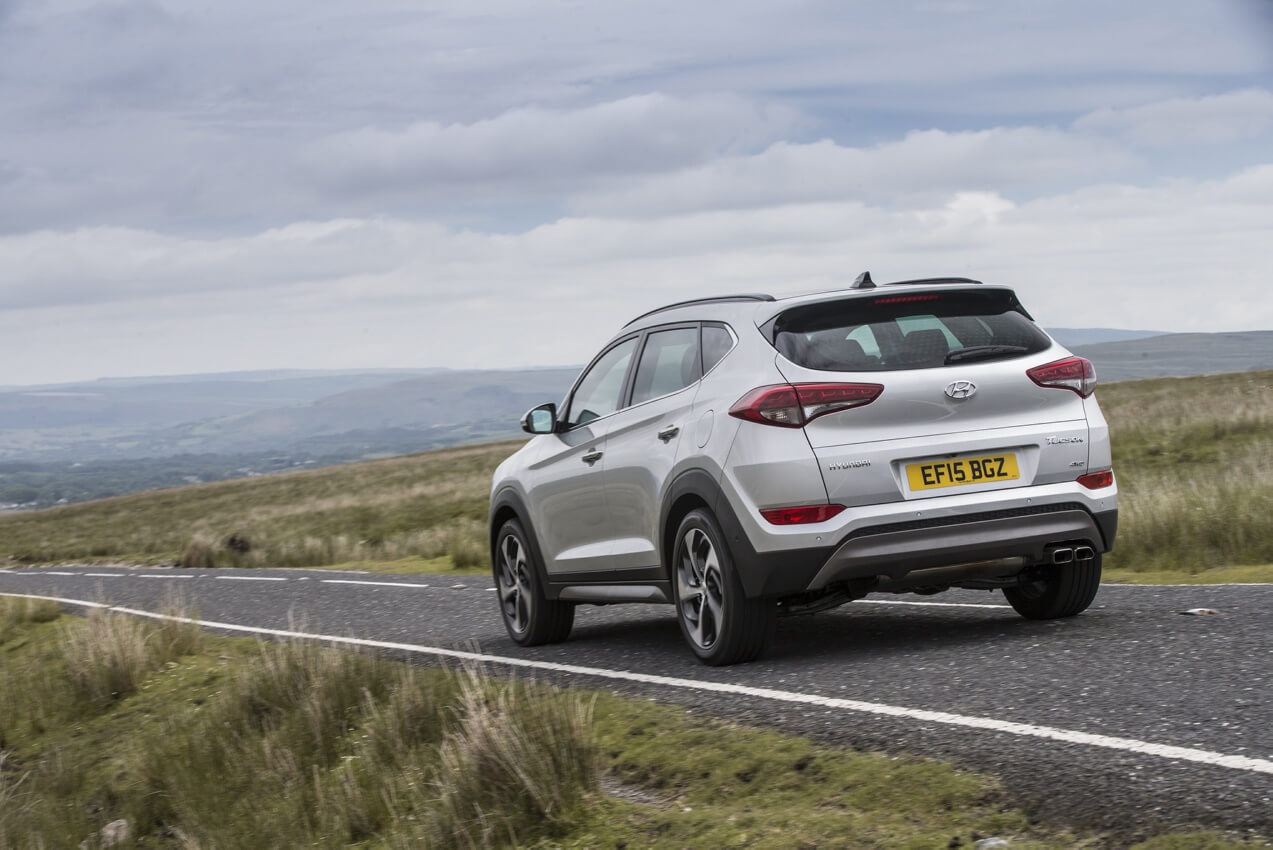
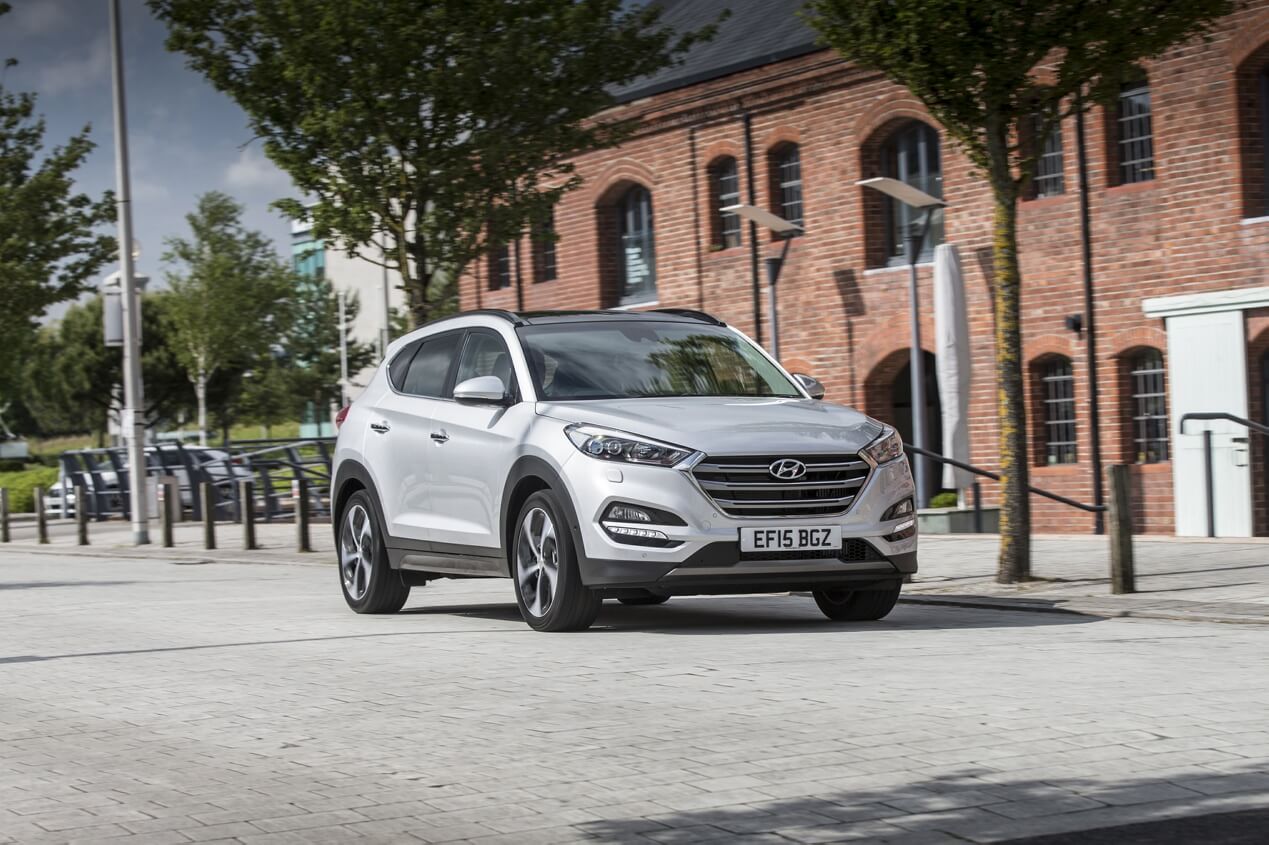
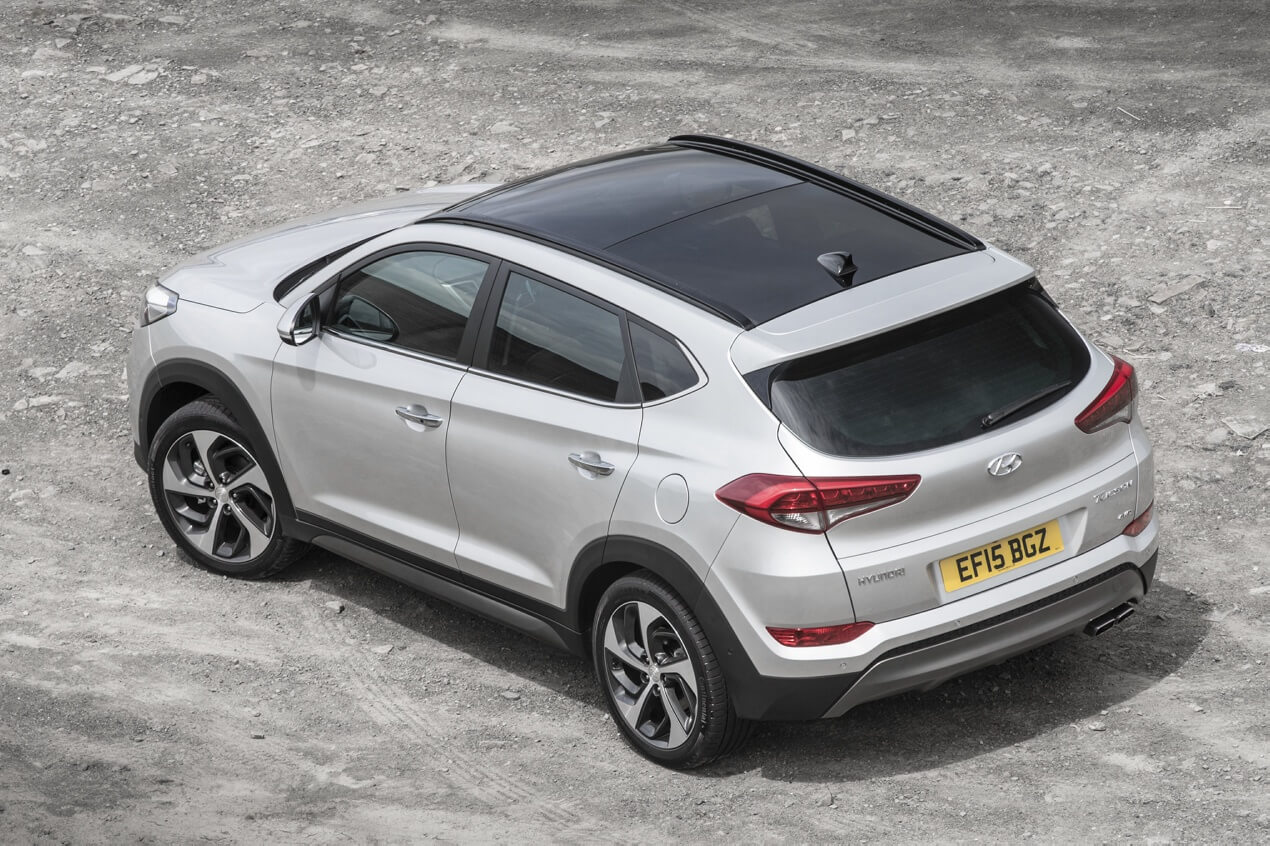
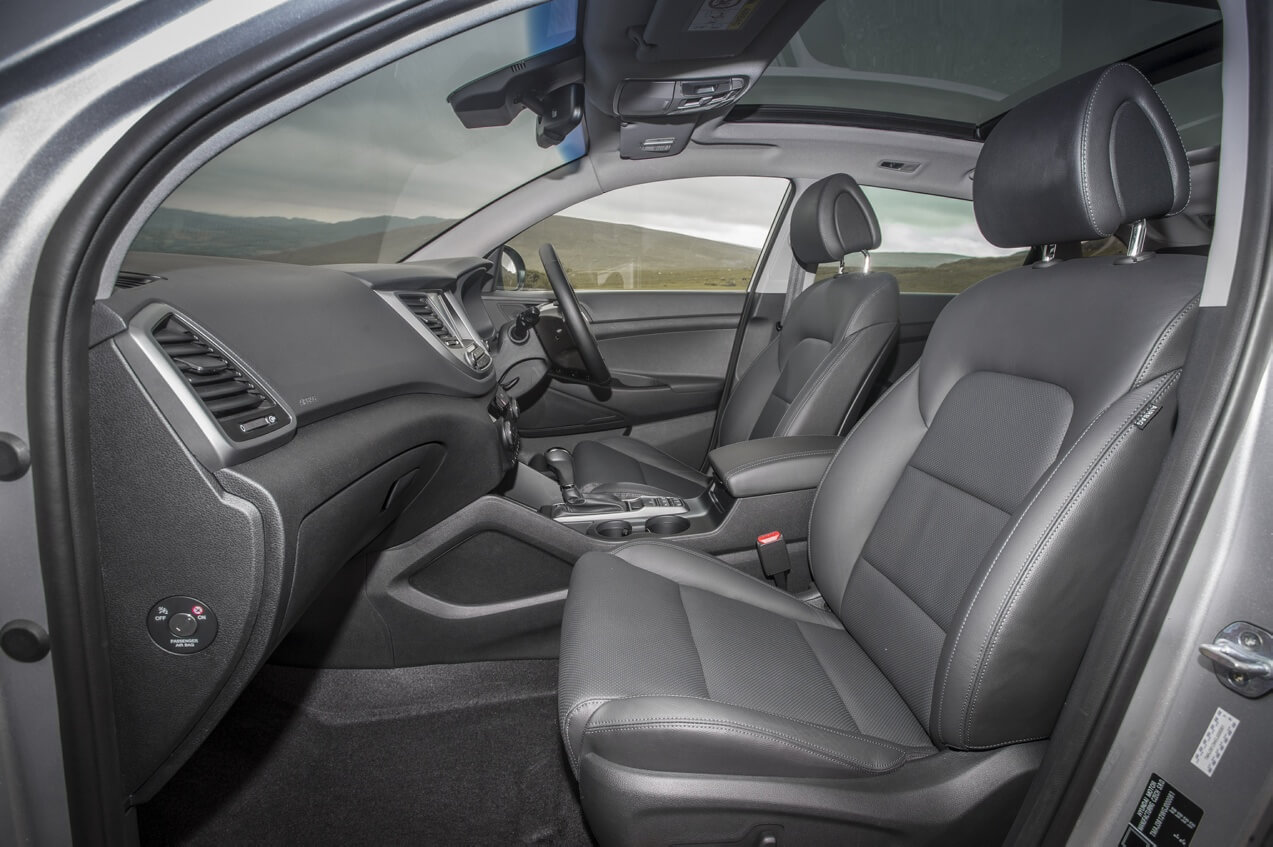
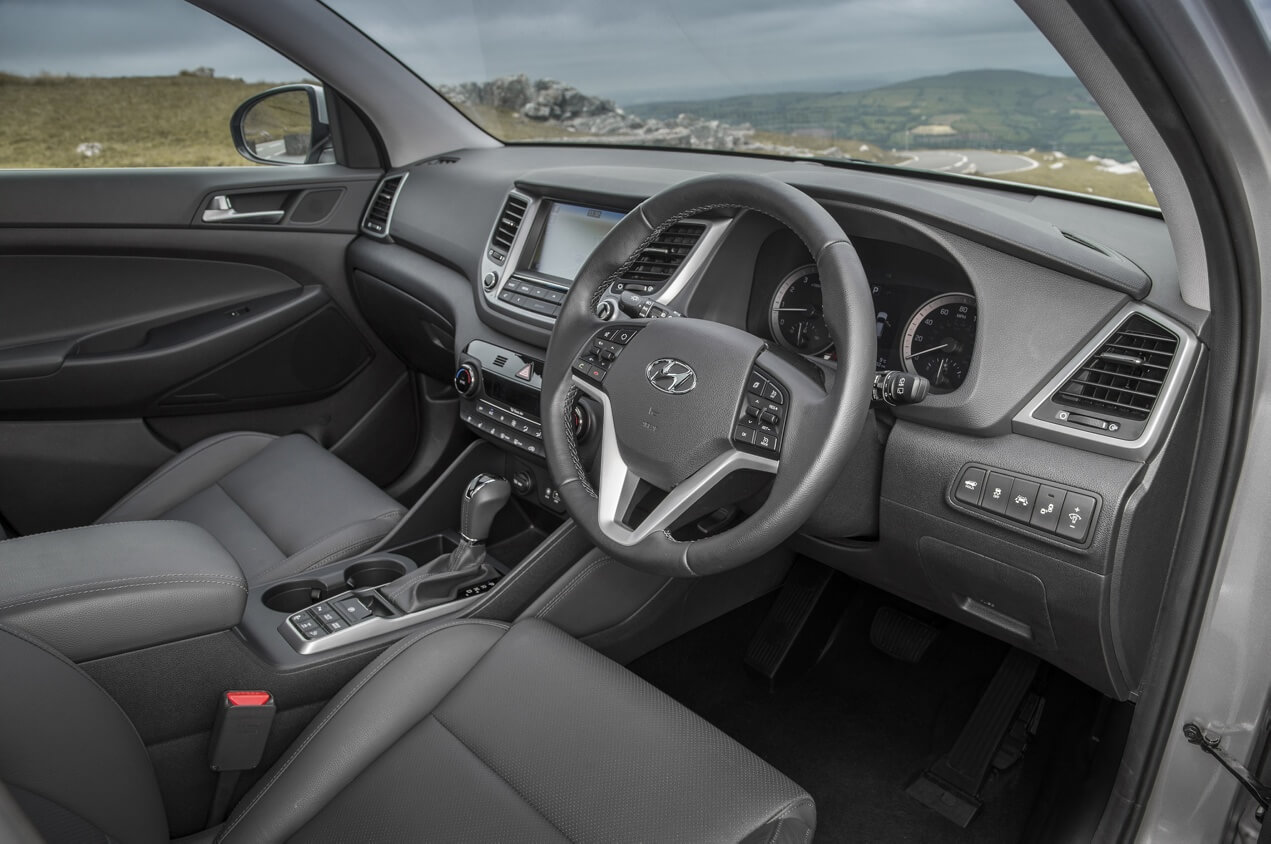
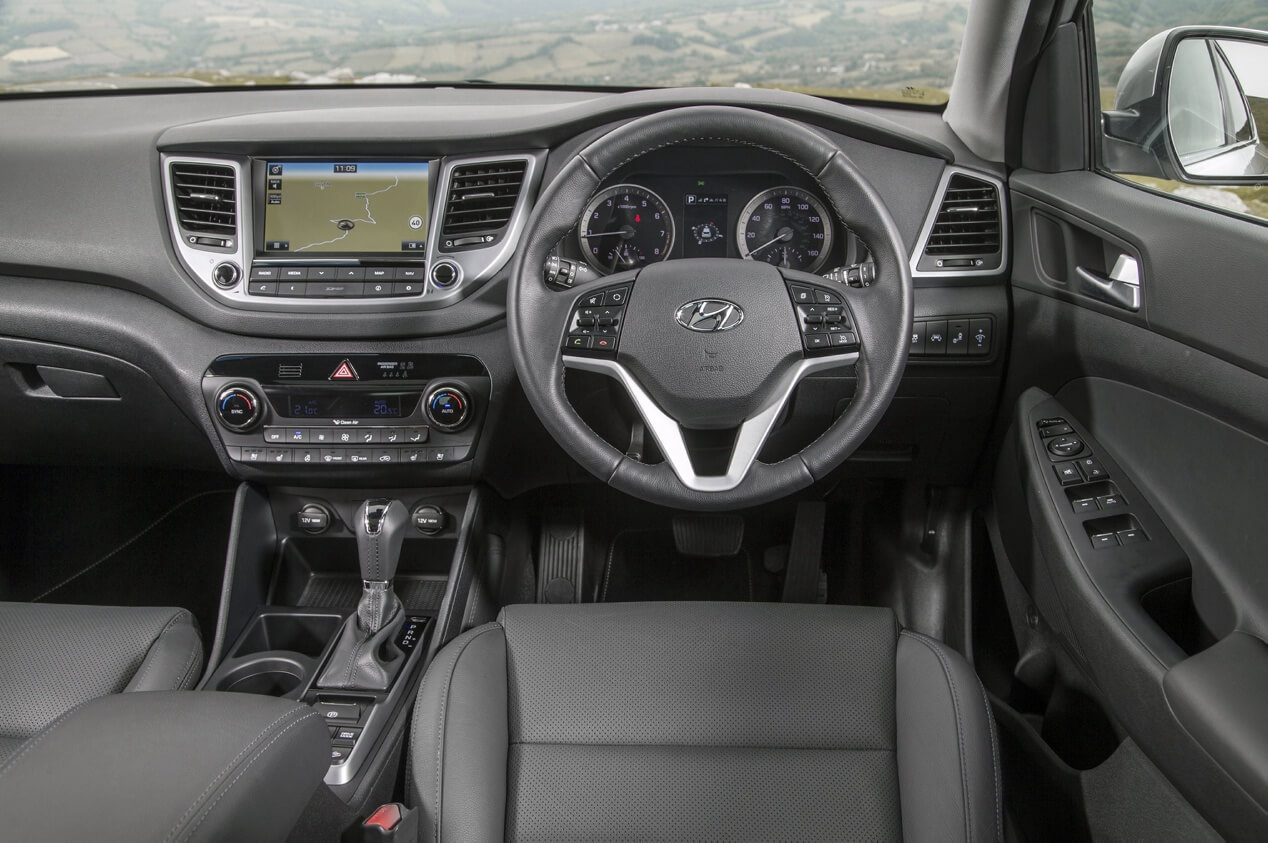
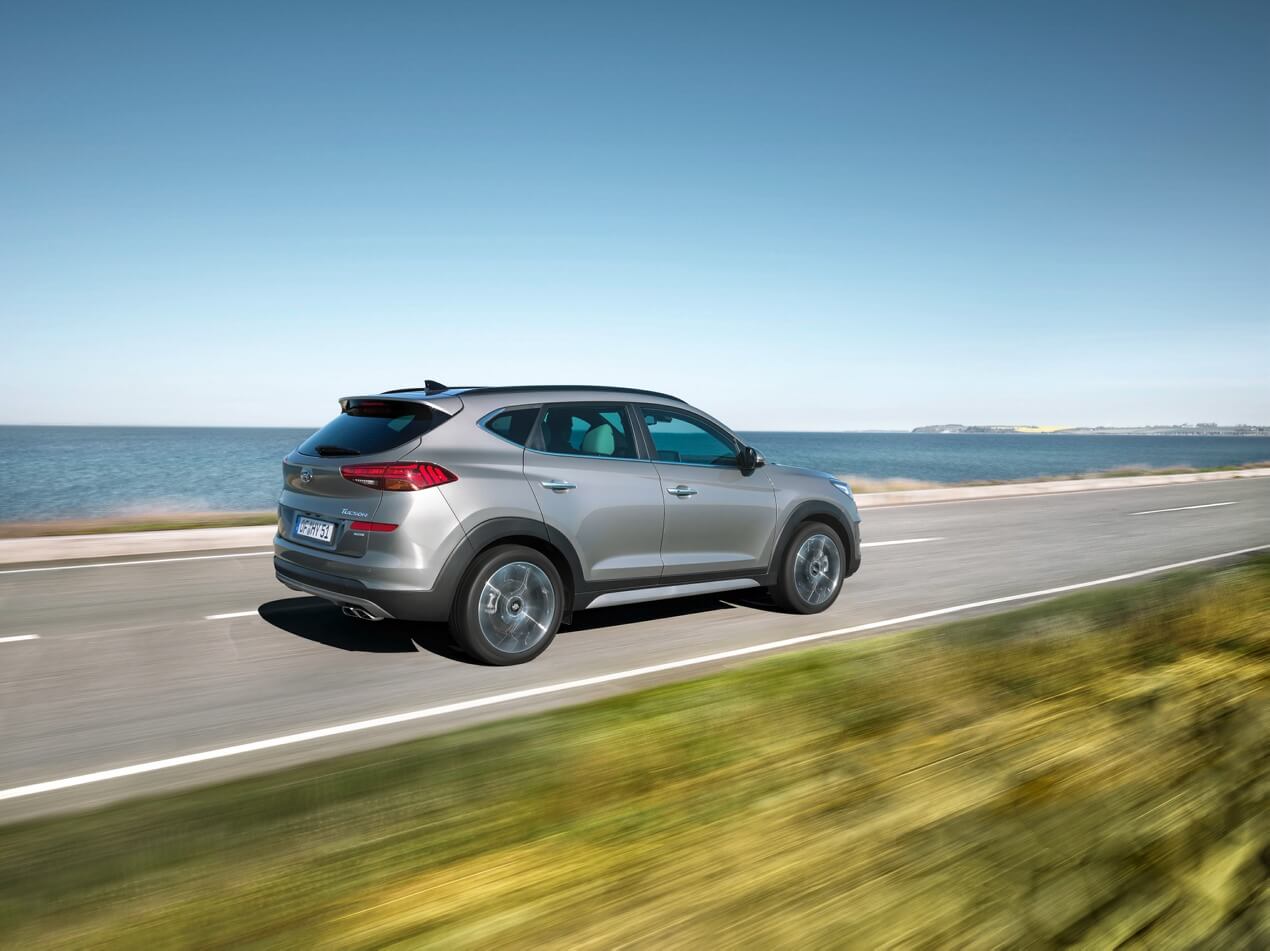
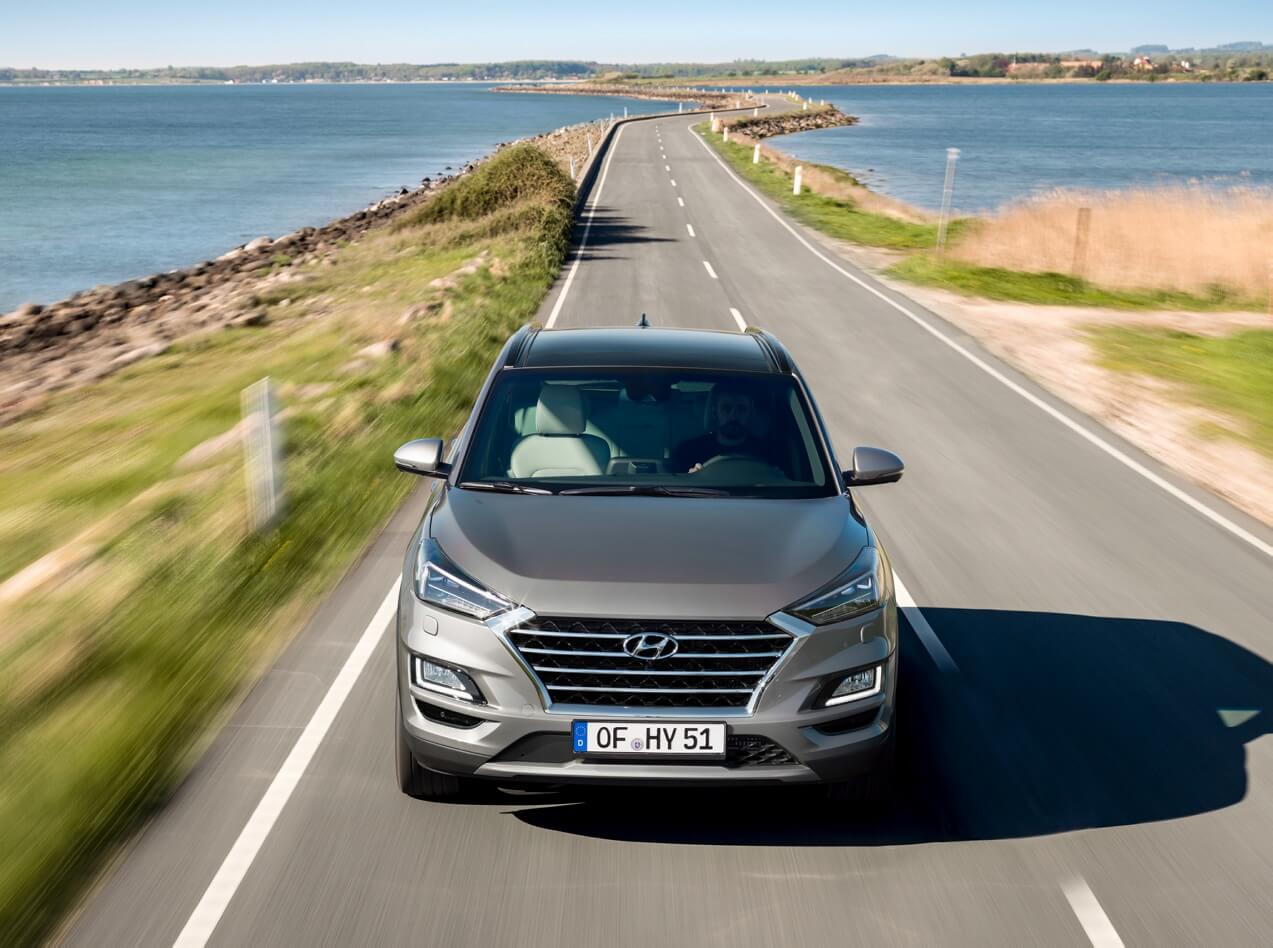
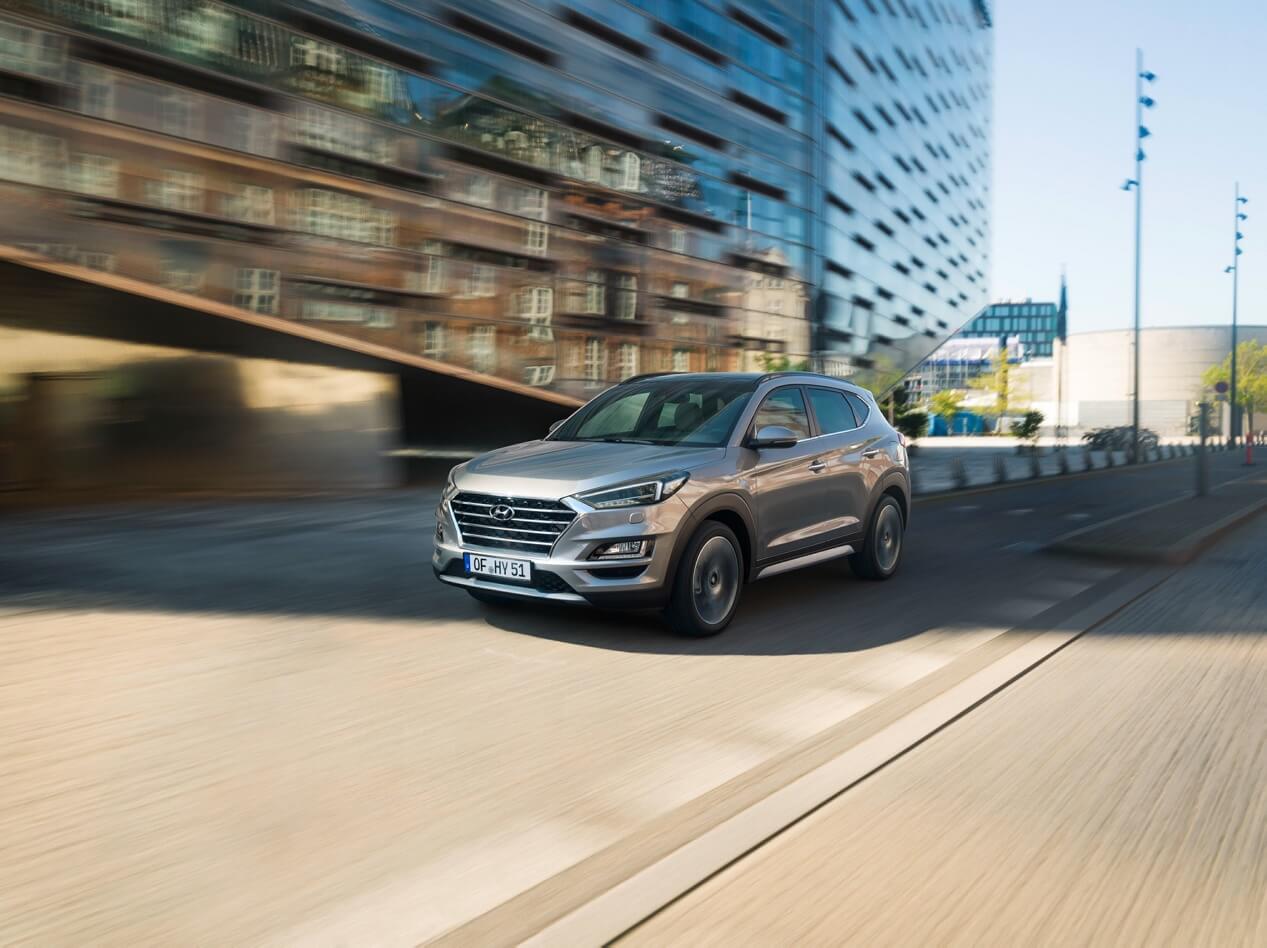
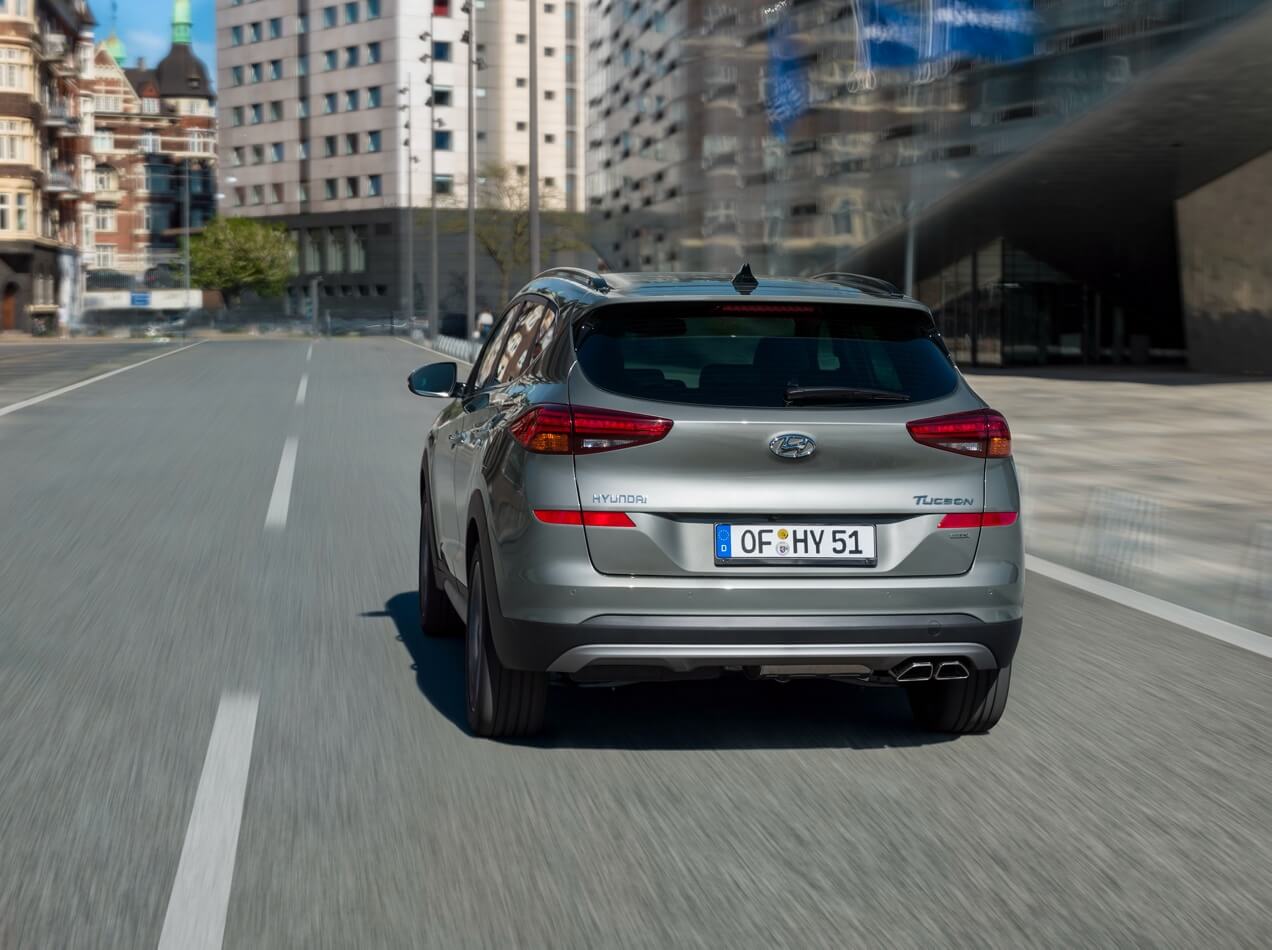
Hyundai Tucson photos 55








Hyundai Tucson videos 7

Hyundai Tucson video 1

Hyundai Tucson video 2

Hyundai Tucson video 3

Hyundai Tucson video 4

Hyundai Tucson video 5

Hyundai Tucson video 6

Hyundai Tucson video 7
FAQ
How many generations of the Hyundai Tucson are there?
Four generations were sold from 2004 to 2026: the original (2004), the second known as the ix35 (2009), the third (2015) and the fourth (2020). A fifth generation was revealed on 19 August 2026.
Is the Hyundai ix35 the same as the Tucson?
Yes. The second-generation Tucson, unveiled in 2009, was sold as the ix35 in most markets outside South Korea and North America. The third generation of 2015 returned to the Tucson name.
Is there a Hyundai Tucson hybrid?
Yes. The fourth generation offers a 1.6 T-GDi full hybrid with 169 kW (230 PS), a plug-in hybrid with 195 kW (265 PS) and a 48 V mild hybrid.
How safe is the Hyundai Tucson?
The fourth generation scored 86% for adult occupants and 87% for children in its 2021 Euro NCAP test. The third generation also scored 86% for adult occupants in 2015.
Where is the Hyundai Tucson built for Europe?
European Tucsons have been built at Hyundai's plant in Nošovice, Czech Republic, since the ix35 generation. The car is also made in Ulsan, South Korea, and at plants in the United States, Mexico, China and Asia.
Data sources
Data checked by an editor against the sources below.
- The text of this article (1cars archive)
- Wikipedia - List of Hyundai vehicles
- Wikipedia - Hyundai Tucson
- Co
- Vibilagare - Euro Ncap Best Performing Cars 2010
- Euro NCAP - Tucson Tops Latest Euro Ncap Results
- EEA CO₂ monitoring (European Environment Agency, CC BY 4.0)
- NHTSA 5-Star Safety Ratings (US NCAP) — U.S. Government work, public domain


