 Hyundai Grandeur
All generations, specs and history
Updated Published Sources (2) Report an error
By Felix Hartmann, Automotive Technology & EV Contributor Reviewed by Oleksandr Hnatiuk

- Built
- 1986–present
- Generations
- 6
- Top power
- 218 kW (296 PS)
Timeline
Grandeur generations
Click a generation for its own page


- Grandeur I 1986–1992 · Sedan · 88–121 kW (120–165 PS)
- Grandeur II 1992–1998 · Sedan · 88–118 kW (120–160 PS)
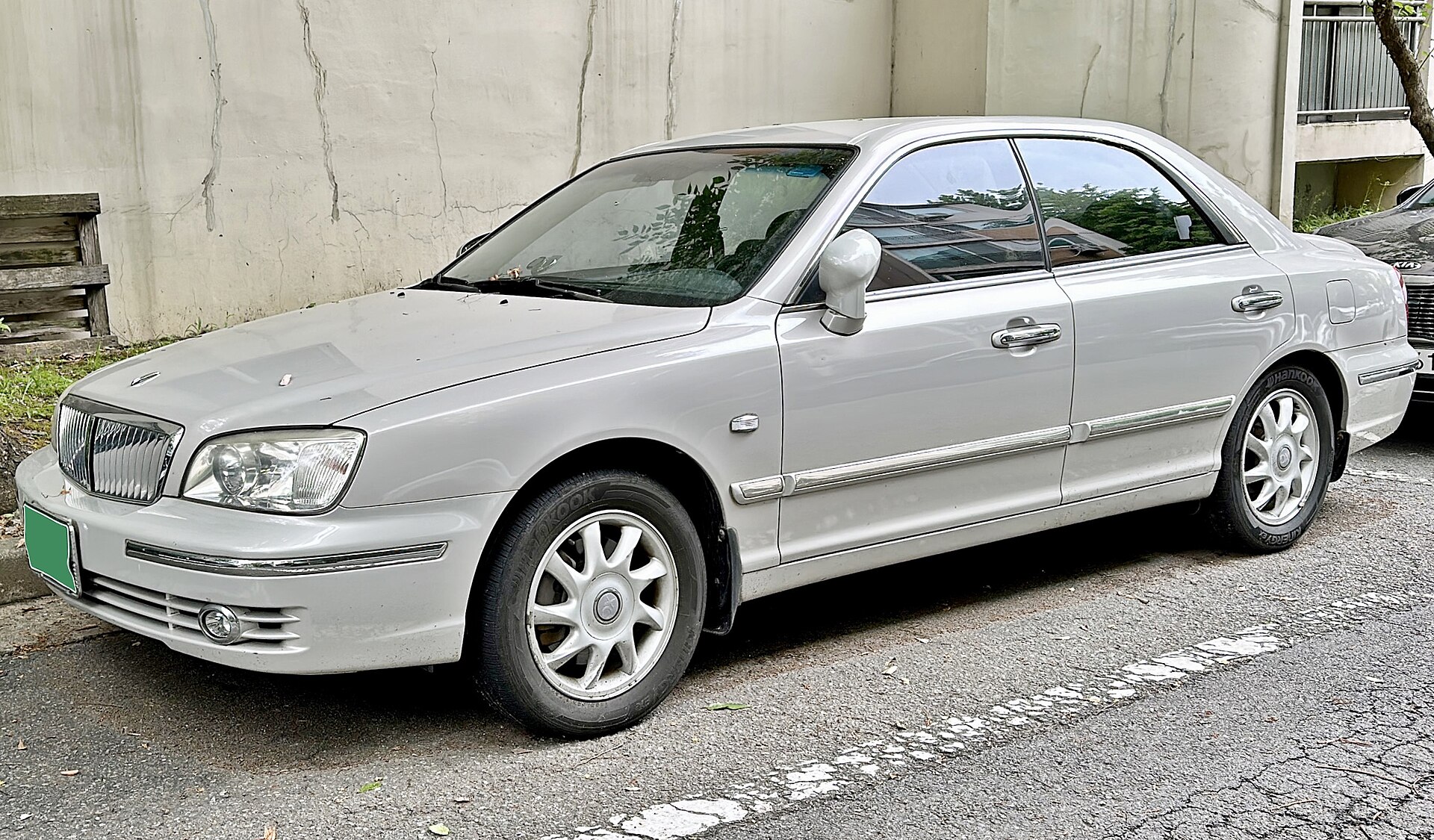
- Grandeur XG 1998–2005 · Sedan · 101–147 kW (137–200 PS)
- Grandeur TG 2005–2011 · Sedan · 110–190 kW (150–258 PS)
- Grandeur HG 2011–2016 · Sedan · 133–218 kW (181–296 PS)
- Grandeur IG 2016–2022 · Sedan · 139–213 kW (189–290 PS)
Newest first · 6 generations since 1986
-
2016

-
2011

-
2005

-
1998
- 1992 II 1992–1998 · Sedan · 88–118 kW (120–160 PS)
- 1986 I 1986–1992 · Sedan · 88–121 kW (120–165 PS)
All generations by year: Grandeur IG (2016–2022) · Grandeur HG (2011–2016) · Grandeur TG (2005–2011) · Grandeur XG (1998–2005) · Grandeur II (1992–1998) · Grandeur I (1986–1992)
Which one is mine?
Pick the year of first registration to see which generation it is.
Check by VINWhich Hyundai Grandeur to buy
Our verdict · Felix Hartmann
In Europe, the TG 3.3 V6 or 2.2 CRDi is the most common used Grandeur. Where the IG is available, the hybrid is the most economical choice. The GN7 is the most modern, with the 1.6 turbo hybrid offering the best balance of power and economy.
The Hyundai Grandeur is a large front-wheel-drive saloon built since 1986 in seven generations and sold abroad as the XG, Azera or Grandeur. It began as a Mitsubishi-based luxury car and became Korea's best-selling large saloon, now offered with petrol, LPG and hybrid engines. In Europe it was mainly sold as the fourth-generation Grandeur TG (2005–2011).
In short
- Generations: 1986, 1992, 1998 (XG), 2005 (TG), 2011 (HG), 2016 (IG) and 2022 (GN7).
- The first two generations were joint projects with Mitsubishi; the XG of 1998 was the first fully Hyundai-developed Grandeur.
- Engines range from 2.0 four-cylinders to a 3.8 V6 with 198 kW (265 hp); hybrids since 2013.
- The current GN7 shares its platform with the Kia K8 and offers a 169 kW (227 hp) 1.6 turbo hybrid.

Specs by version
| Version | Engine | Power | Torque | Drive |
|---|---|---|---|---|
| Hybrid · 1 version | ||||
| IG · 2.4 | 2.4 l · 4 cyl · Hybrid 2,400 cc | - | 206 Nm152 lb-ft | Front-wheel drive |
| Petrol · 1 version | ||||
| TG · 2.0 132 kW (179 PS) | 2.0 l · 4 cyl · Petrol 2,000 cc | 132 kW 179 PS177 hp | 230 Nm170 lb-ft | Front-wheel drive |
| Other · 5 versions | ||||
| TG · 110 kW (150 PS) | 4 cyl | 110 kW 150 PS148 hp | 335 Nm247 lb-ft | Front-wheel drive |
| IG · 140 kW (190 PS) | - | 140 kW 190 PS188 hp | 241 Nm178 lb-ft | Front-wheel drive |
| IG · 149 kW (203 PS) | - | 149 kW 203 PS200 hp | 441 Nm325 lb-ft | Front-wheel drive |
| IG · 196 kW (266 PS) | - | 196 kW 266 PS263 hp | 308 Nm227 lb-ft | Front-wheel drive |
| IG · 213 kW (290 PS) | - | 213 kW 290 PS286 hp | 344 Nm254 lb-ft | Front-wheel drive |
Verified Manufacturer and type-approval data from our catalog · Sources and methodology
Hyundai Grandeur at a glance
The Grandeur has been Hyundai's executive saloon for almost four decades, positioned above the Sonata and, until the Genesis brand arrived, at the top of the range. Every generation is a four-door saloon. In North America it was sold as the XG and later the Azera until 2017, while Europe received the XG30 and the Grandeur TG; today the model is mainly sold in South Korea and the Middle East.

Hyundai's rise from a construction company to a global carmaker is told in the history of Hyundai, and its current range, from the Hyundai Tucson to the Hyundai Palisade, is in the Hyundai catalogue.
Hyundai Grandeur generations
| Generation | Code | Years | Body | Engines | Power (kW) |
|---|---|---|---|---|---|
| 1st | – | 1986–1992 | 4-door saloon | 2.0 and 2.4 four-cylinder, 3.0 V6 | 88–121 |
| 2nd | – | 1992–1998 | 4-door saloon | 2.0–3.5 V6 | 88–118 |
| 3rd | XG | 1998–2005 | 4-door saloon | 2.5, 3.0 and 3.5 V6 | 123–145 |
| 4th | TG | 2005–2011 | 4-door saloon | 2.4, 2.7, 3.3, 3.8 V6, 2.2 CRDi | up to 198 |
| 5th | HG | 2011–2017 | 4-door saloon | 2.4, 3.0, 3.3 V6, 2.2 diesel, hybrid | 133–218 |
| 6th | IG | 2016–2022 | 4-door saloon | 2.4, 2.5, 3.0, 3.3 V6, hybrid | 139–213 |
| 7th | GN7 | 2022– | 4-door saloon | 2.5, 3.5 V6, 3.5 LPG, 1.6 turbo hybrid | 145–221 |
First and second generations (1986–1998)
The first Grandeur was a rebadged Mitsubishi Debonair, sold in Japan as the Debonair V, with 2.0 and 2.4-litre four-cylinders and, from 1991, a 3.0 V6. Hyundai presented it at the 1988 Seoul Olympics, and about 122,000 were built, making it Korea's best-selling large car. The second generation was a joint project in which Mitsubishi supplied the V6 powertrains (2.0 to 3.5 litres) and Hyundai the body; it was not exported and became a status symbol in Korea.

Third generation XG (1998–2005)
The XG was the first Grandeur developed entirely by Hyundai and shared its platform with the Kia Opirus. Export versions were named after their engines: the XG250 with a 2.5 V6 of 123 kW (165 bhp), the XG30 with a 3.0 V6 of 135 kW (181 bhp), sold in Europe, and the XG350 with a 3.5 V6 of 145 kW (194 hp) for North America. It was built in Korea, Turkey and Taiwan.
Fourth generation TG (2005–2011)
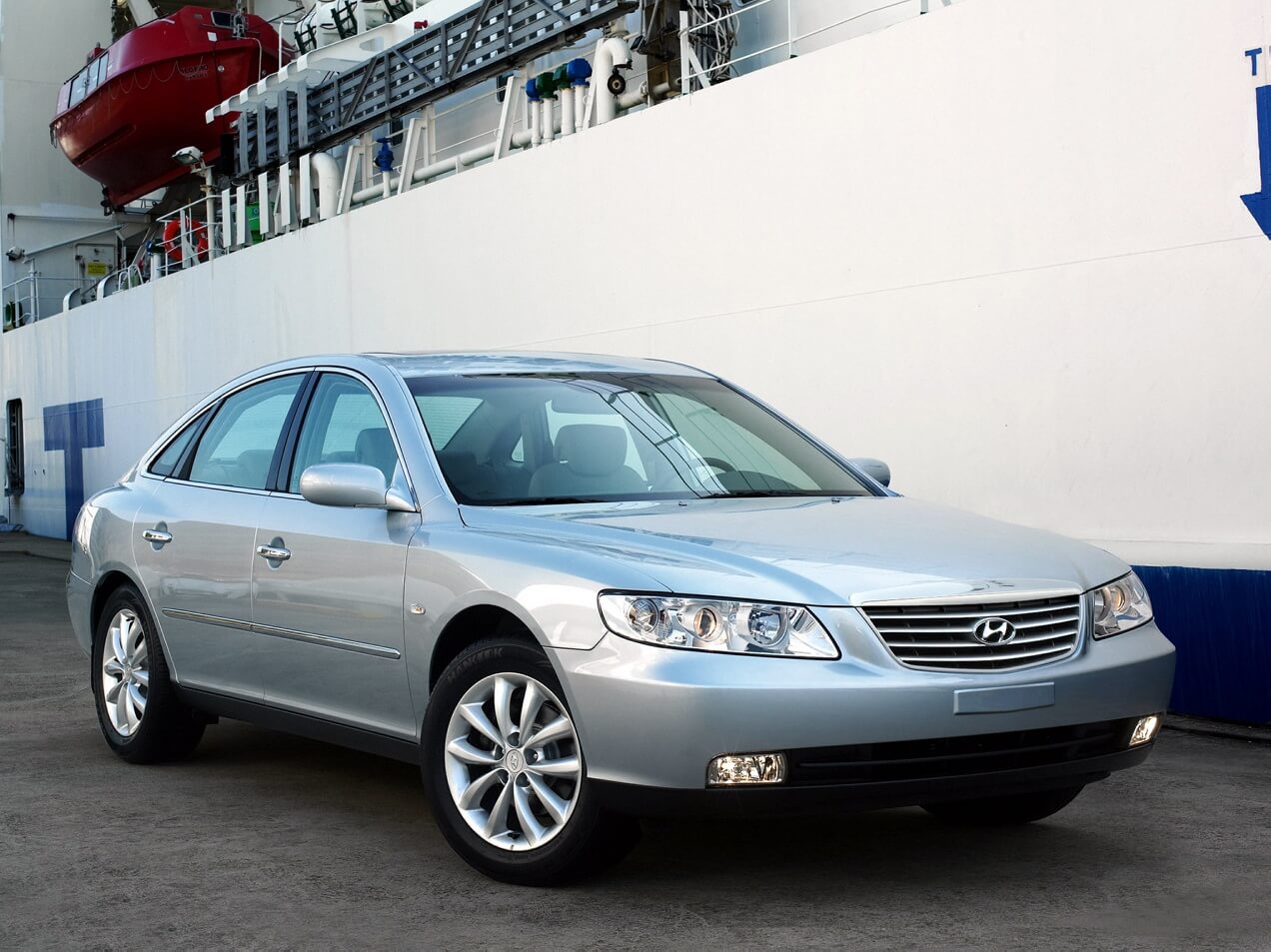
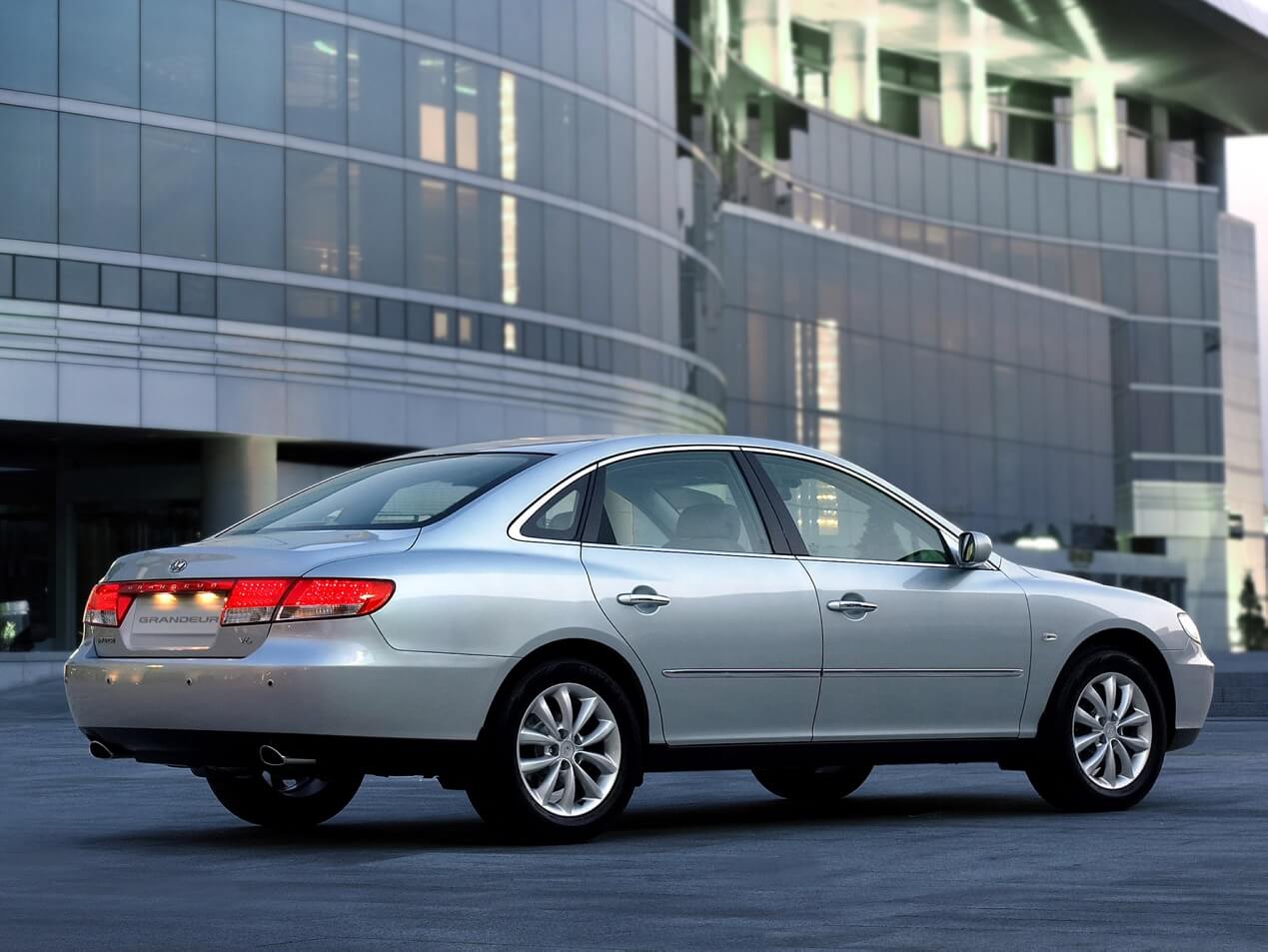
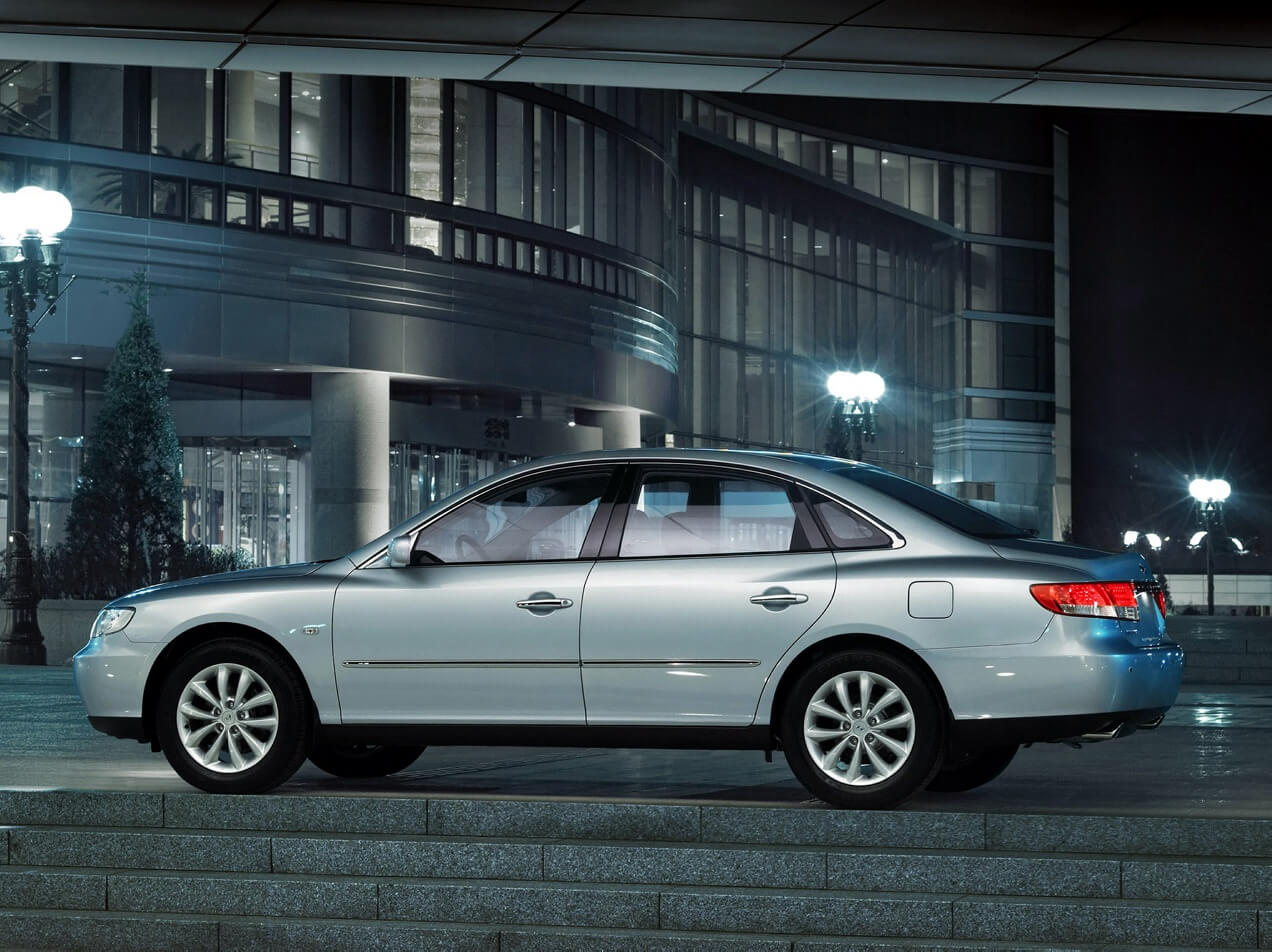
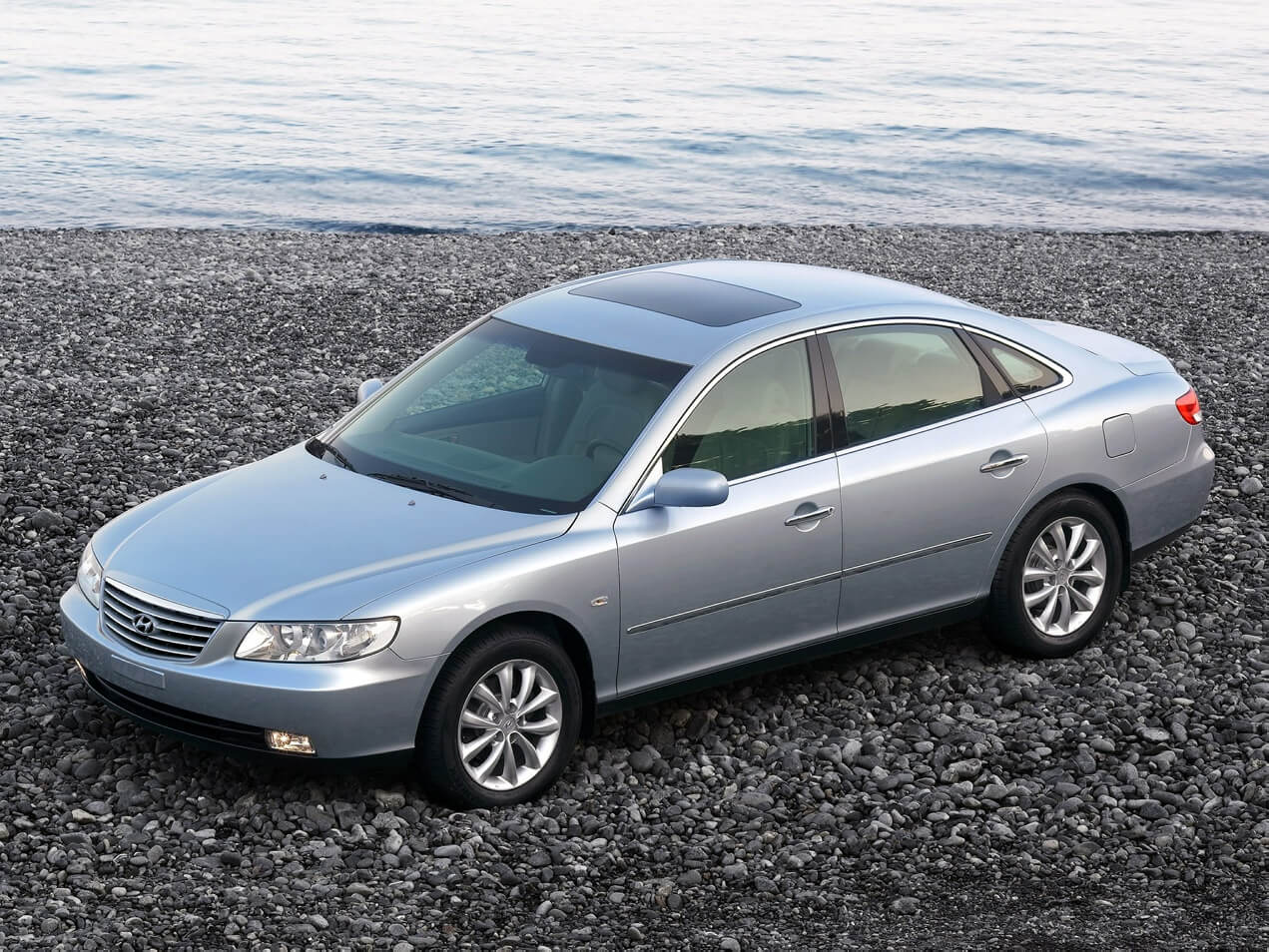
The TG shared its platform with the Sonata and was sold as the Grandeur in most of Europe (as the Azera in France and, from 2006, Belgium), Australia and Japan. The 3.8 Lambda V6 produced 198 kW (265 hp), and Europe also offered the 2.2 CRDi diesel from the Santa Fe. Until the Genesis saloon of 2008 it was the most expensive Hyundai in most export markets.
Fifth generation HG (2011–2017)
Unveiled for export at the 2011 Los Angeles Auto Show as the 2012 Azera, the HG offered a 2.4 Theta II with 133 kW (178 hp), a 3.0 V6 with up to 198 kW and a 3.3 GDi V6 with 218 kW (293 hp), plus a 2.2 diesel. A hybrid joined the range in 2013. The Azera left North America after 2017.
Sixth generation IG (2016–2022)
The IG was not sold in North America. It offered 2.4 and 2.5-litre four-cylinders with 139–145 kW, 3.0 and 3.3 V6 engines with up to 213 kW (286 hp), and a hybrid from March 2017. Hyundai sold about 132,000 in 2017 and 110,000 in 2018, making it the best-selling car in its Korean segment, and facelifted it in 2019.
Seventh generation GN7 (2022 to today)
Launched in South Korea in November 2022, the GN7 shares the N3 platform with the Kia K8 and is longer than before. Engines are the 2.5 Smartstream GDi with 145 kW (195 hp), the 3.5 GDi V6 with 221 kW (296 hp), a 3.5 LPG V6 with 177 kW (237 hp) and a 1.6 turbo hybrid with 169 kW (227 hp); all-wheel drive is available. A facelift followed in April 2026.
Grandeur V6, four-cylinder and hybrid engines
Grandeurs are front-wheel drive with automatic gearboxes, and most generations centre on V6 engines from 2.5 to 3.8 litres. The 3.8 Lambda V6 of the TG and the 3.3 GDi of the HG and IG are the strongest older engines, while the GN7's 3.5 GDi V6 is the most powerful Grandeur so far. Korean buyers also have LPG versions, and hybrids have been offered since 2013.

Grandeur cabin and comfort features
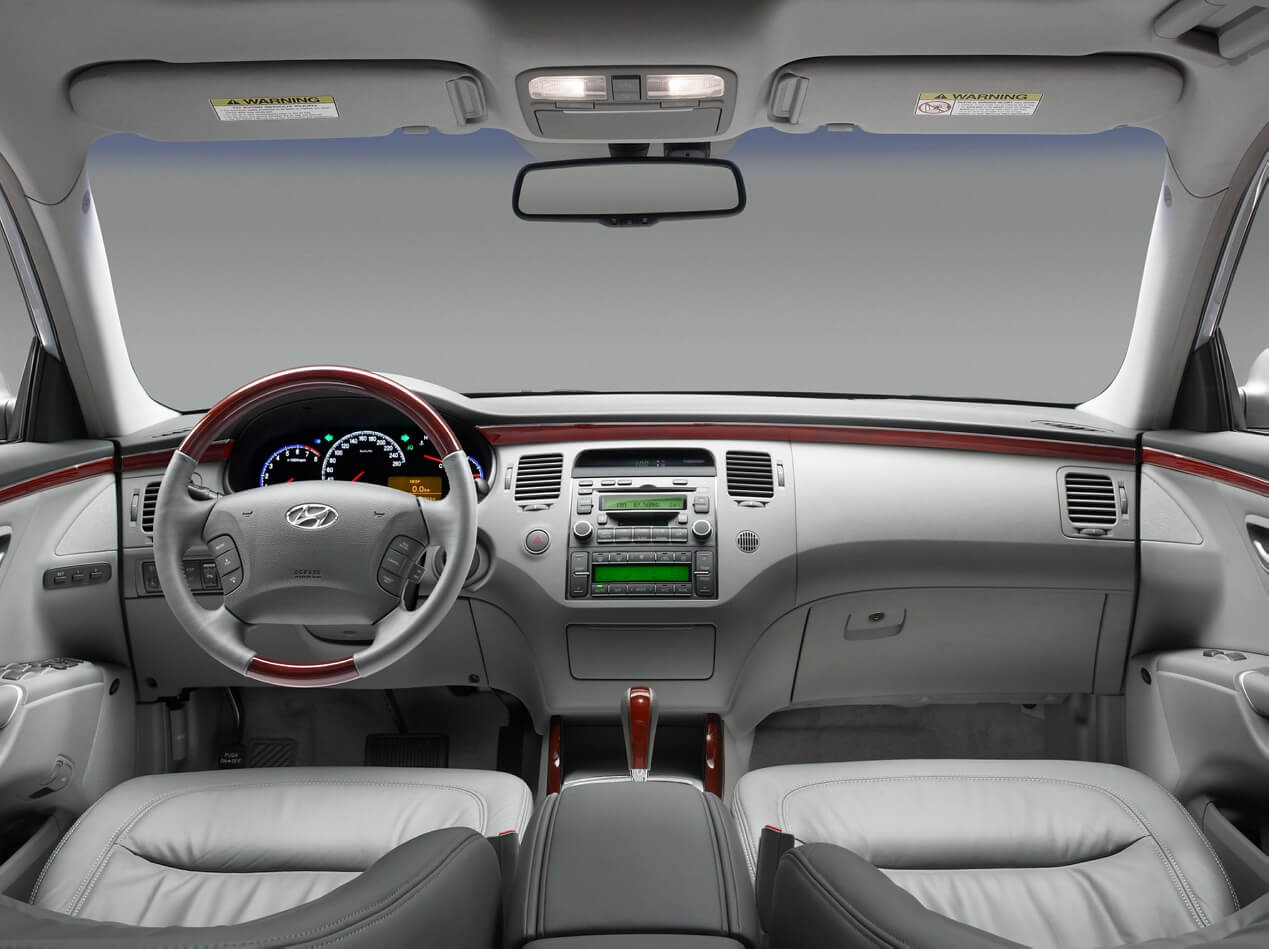
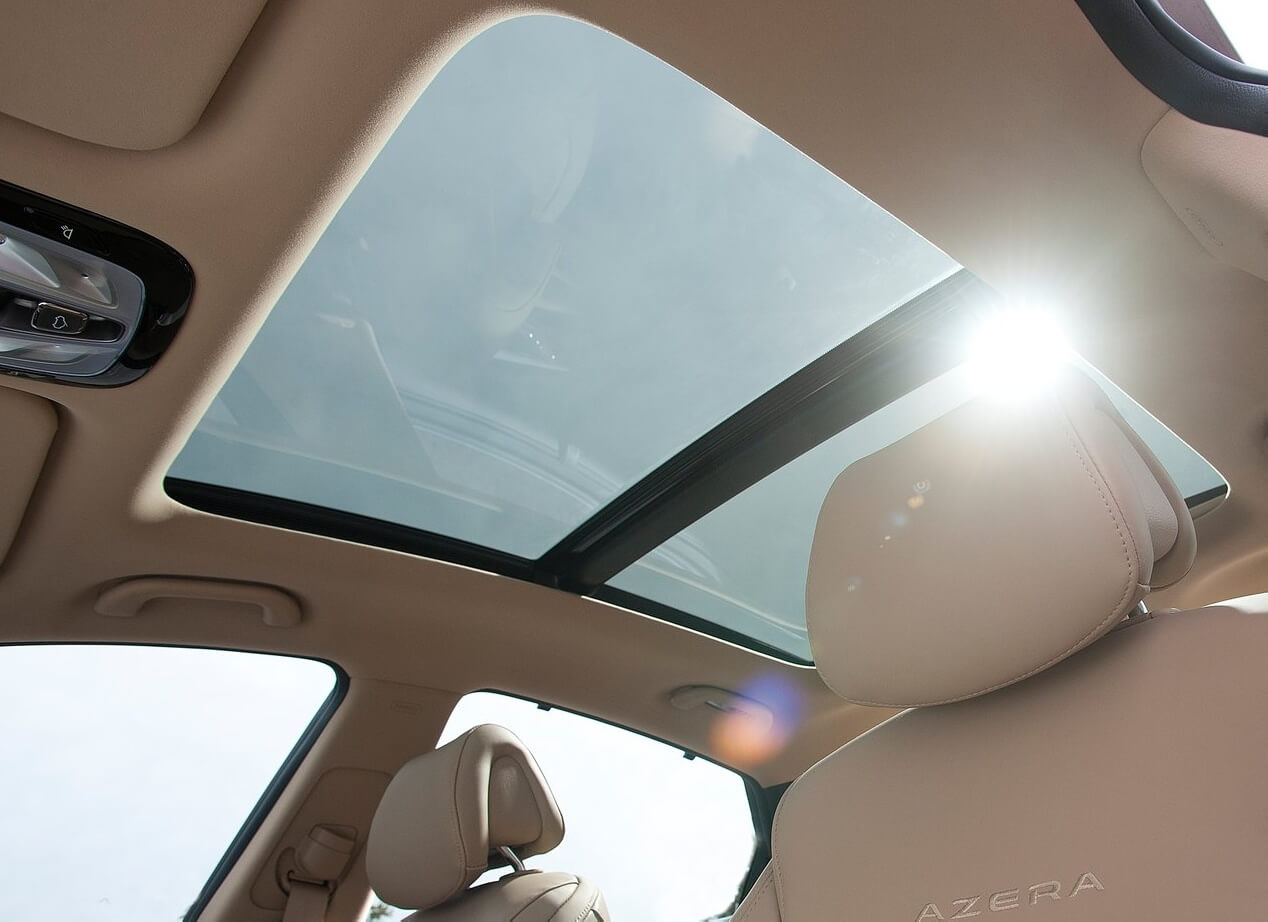
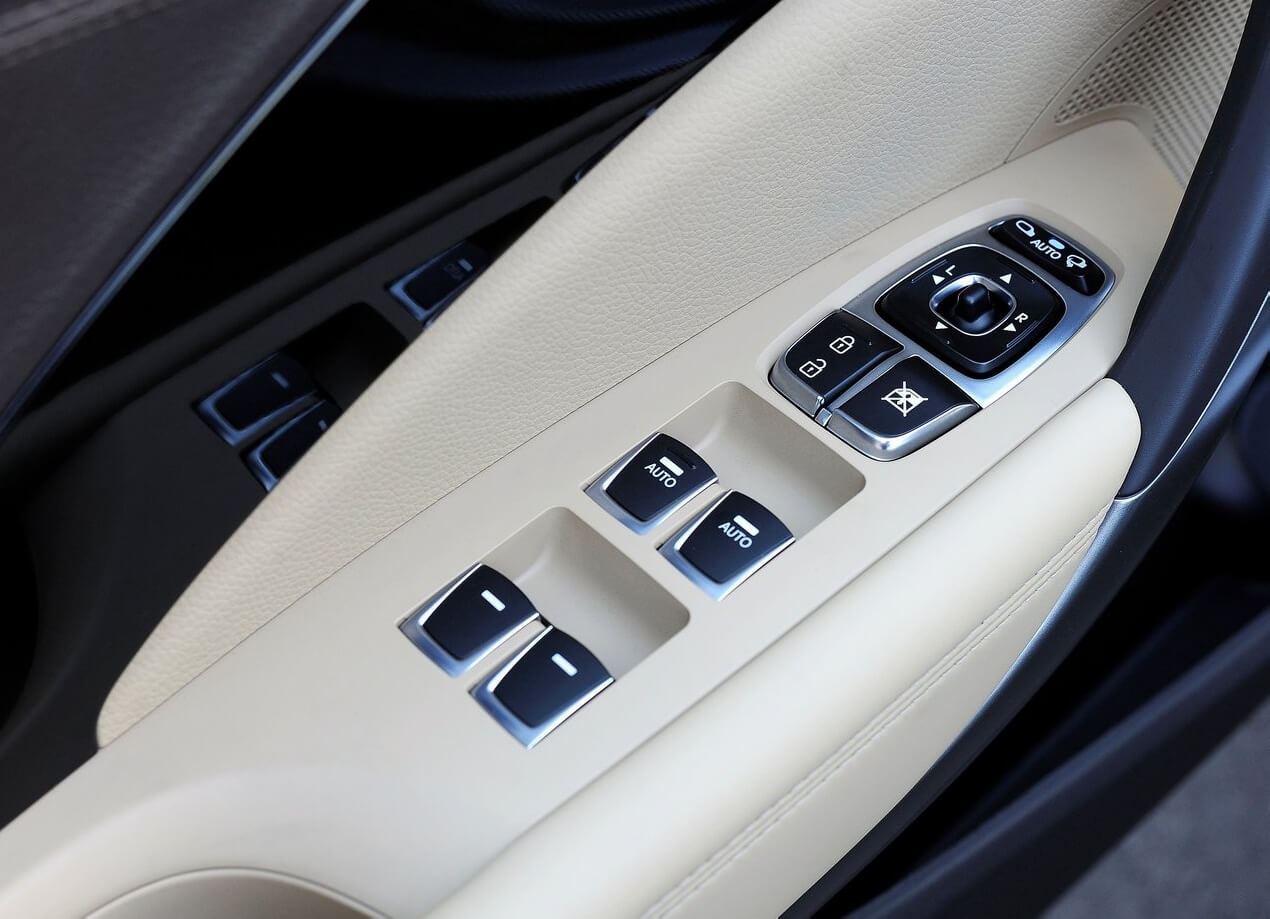
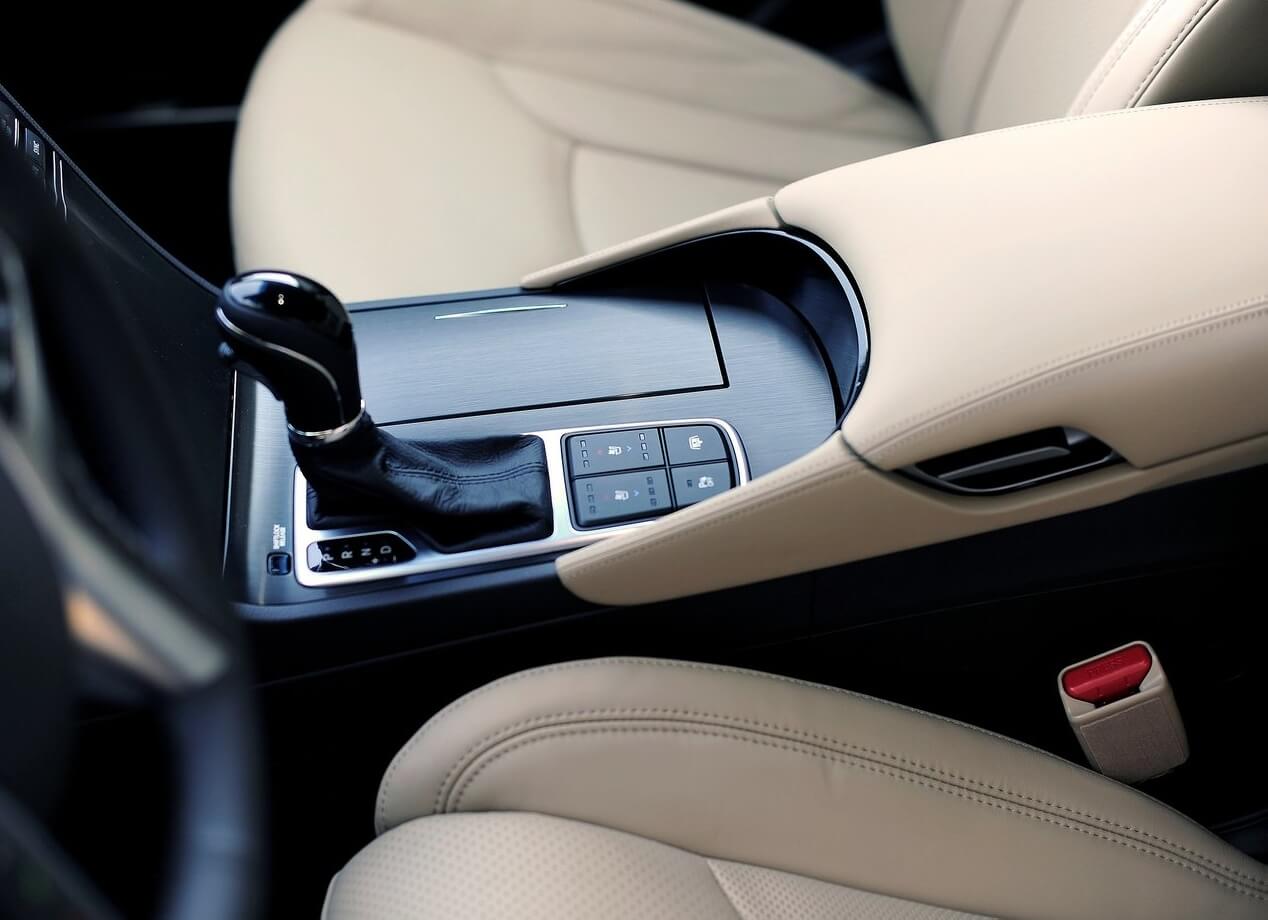
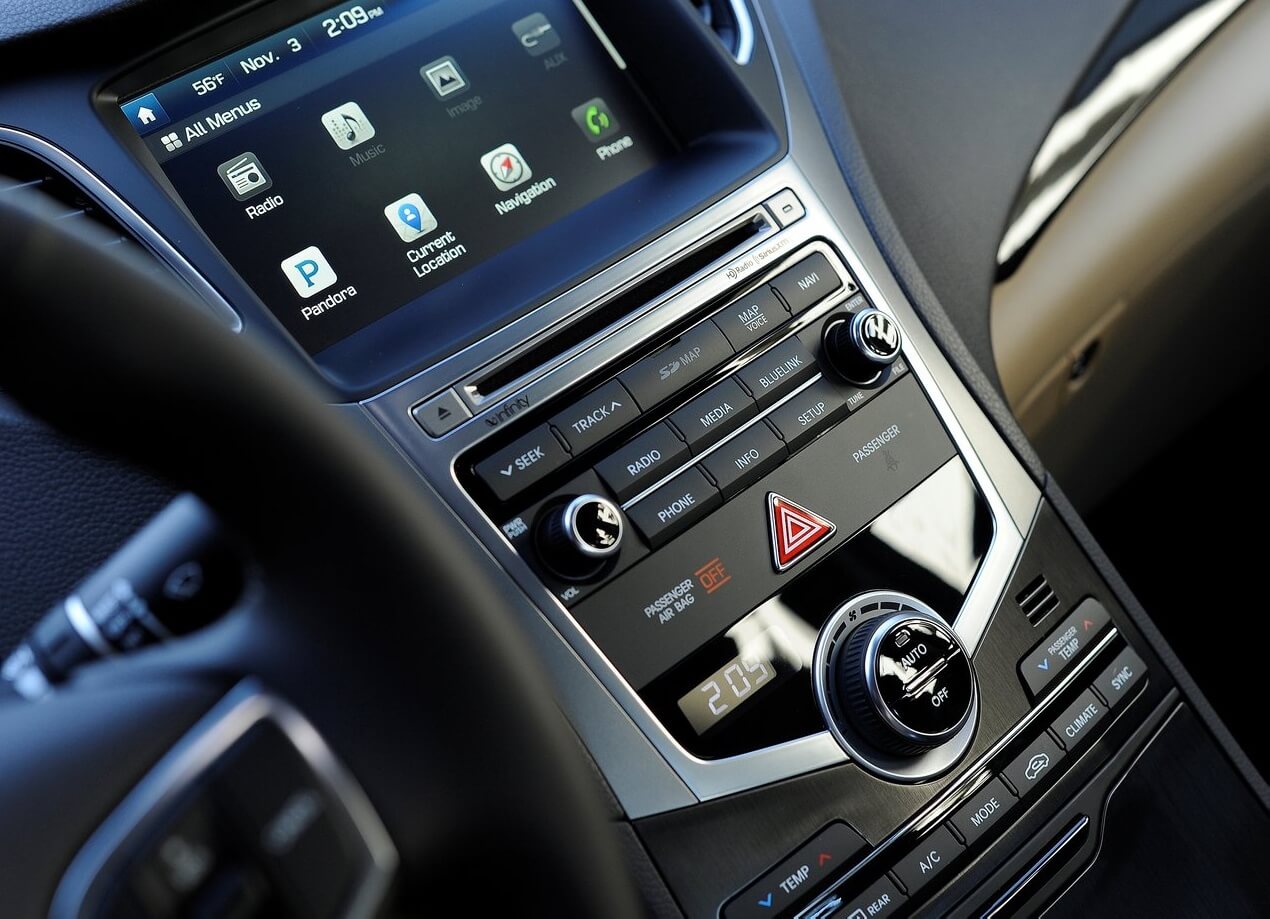
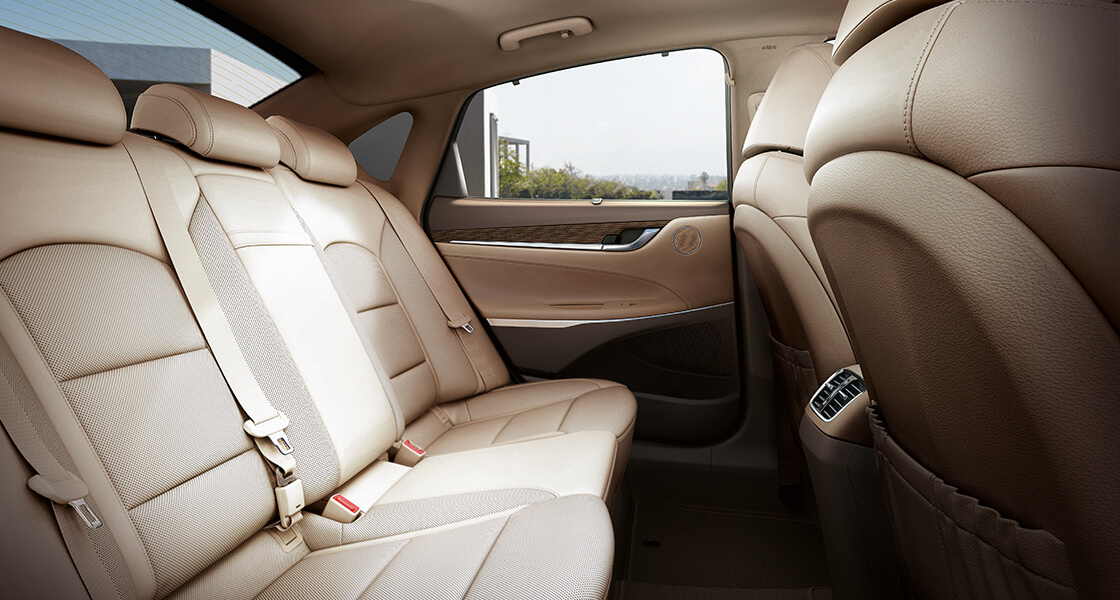
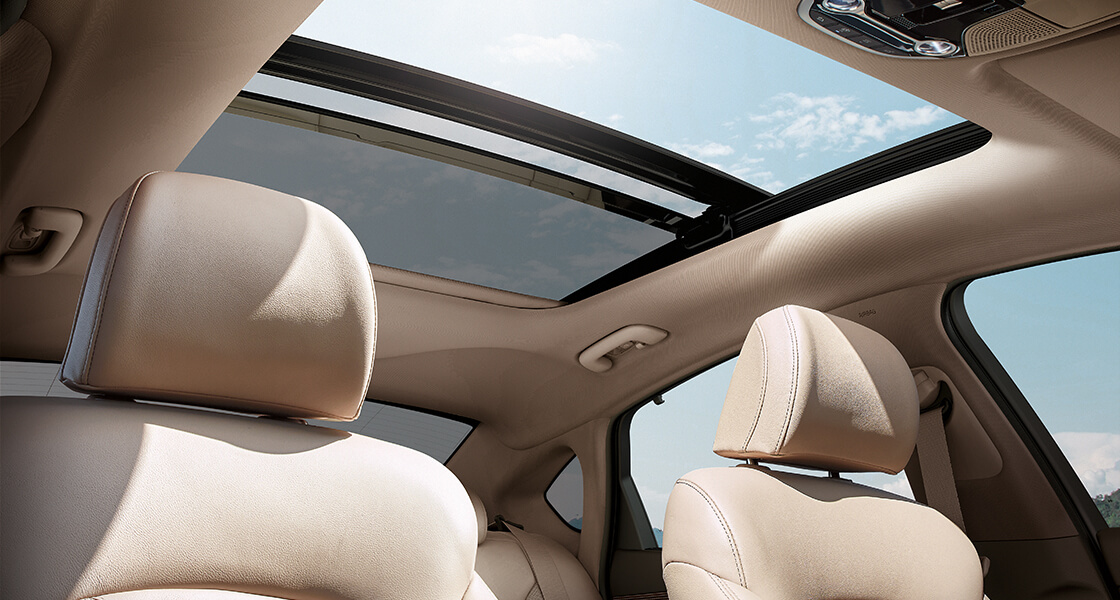
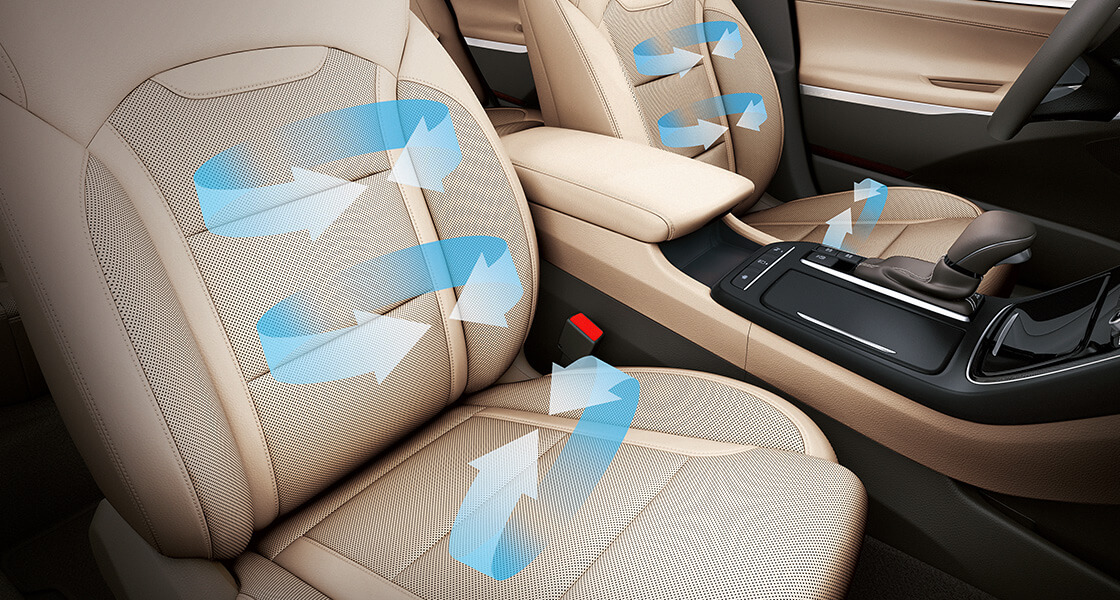
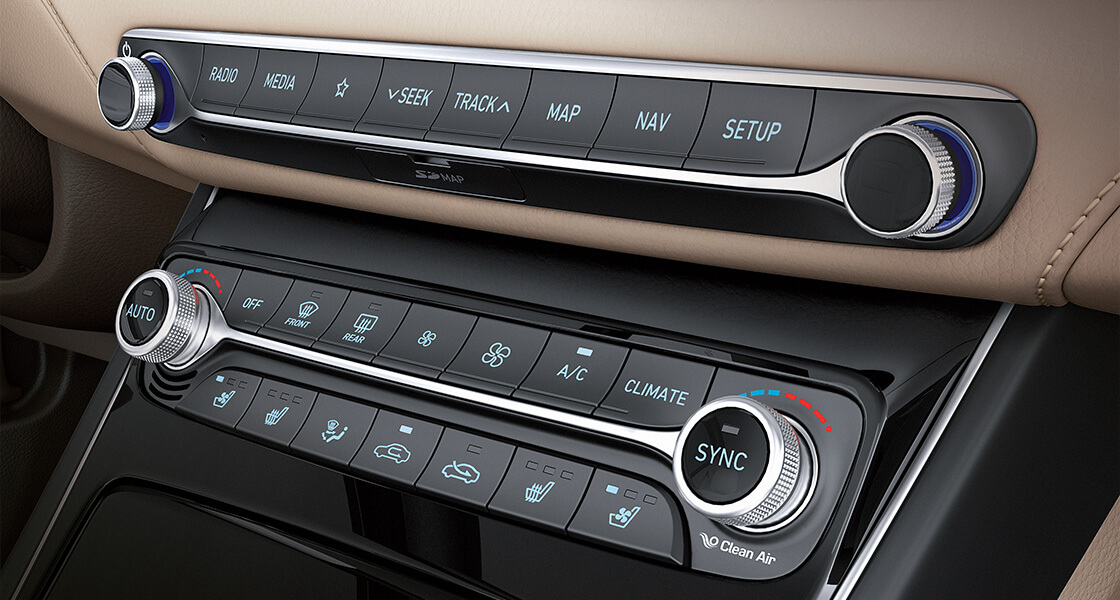
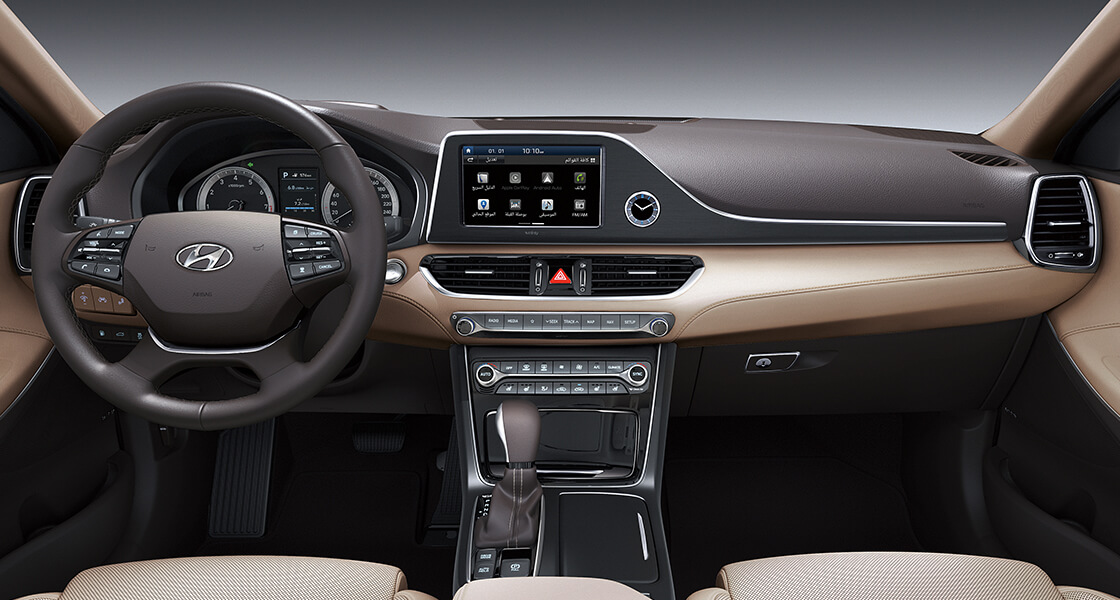
The Grandeur has always been sold on comfort and equipment. Top IG versions offered wireless phone charging, a 12-speaker JBL audio system, leather seats, a heated steering wheel, electric steering-column adjustment, dual-zone climate control, an electric parking brake, keyless entry, full LED headlights, an around-view monitor and an electric rear blind. The boot is practical rather than large.

Grandeur weak points to check
The Grandeur shares engines and electronics with other Hyundai and Kia models, so parts are widely available in markets where it was sold. On older TG and HG cars, check the automatic gearbox fluid history, the condition of the V6 timing components and the electrics of heavily equipped versions. In Europe, the TG is now rare, so specific parts may need to be ordered.
Rivals: how the Grandeur compares
In Korea the Grandeur competes with the Kia K8 (and earlier the Kia Opirus and Cadenza). In export markets it faced the Toyota Avalon and Toyota Camry, the Nissan Maxima and, in Europe, large front-wheel-drive saloons such as the Ford Mondeo and Opel Insignia. It usually offered more equipment for the money. More Korean models are listed among Korean cars.

Hyundai Grandeur evolution in numbers
Did you know?
- The Hyundai Grandeur has been around for 40 years: 6 generations in our catalog since 1986.
- The longest-running generation is the Grandeur XG (1998–2005): 7 years.
- The biggest jump in power came with the Grandeur TG: up to 190 kW (258 PS), 43 kW more than the Grandeur XG.
Most powerful version, kW
Figures from the 1cars catalog: power is the strongest version of each generation; generations without the figure are left out.
Hyundai Grandeur: first vs latest generation
| Spec | Grandeur I | Grandeur IG | Change |
|---|---|---|---|
| Years | 1986–1992 | 2016–2022 | 30 years apart |
| Most powerful version | 121 kW (165 PS) | 213 kW (290 PS) | +92 kW (+76%) |
Oldest and newest generation in the 1cars catalog. Power is the strongest version of each; other rows are shown only when both generations have the figure.
Image credits · Photos from Wikimedia Commons under free licences
- Hyundai Grandeur XG · Photo: Benespit / Wikimedia Commons, CC BY-SA 4.0
- Hyundai Grandeur TG · Photo: Rutger van der Maar / Flickr, CC BY 2.0
- Hyundai Grandeur HG · Photo: CEFICEFI / Wikimedia Commons, CC BY-SA 3.0
- Hyundai Grandeur IG · Photo: Ki hoon / Wikimedia Commons, CC BY-SA 4.0
Rivals
Compare with…
Compare Hyundai Grandeur with
- GAZ-3111 quick spec comparison
- GAZ Volga Siber quick spec comparison
- GAZ-3102 quick spec comparison
-
Ended 2010
- Years
- 2008–2010
- Body
- Sedan
- Fuel
- Petrol
- Power
- 105–107 kW (143–145 PS)
-
Ended 2009
- Years
- 1982–2009
- Body
- Sedan
- Fuel
- Petrol
- Power
- 77–96 kW (105–131 PS)
5 generations
- GAZ-3102
- GAZ-3102
- GAZ-3102
- GAZ-3102
- GAZ-3102
-
Ended 2009
- Years
- 1997–2009
- Body
- Sedan
- Fuel
- Petrol, Diesel
- Power
- 51–125 kW (69–170 PS)
2 generations
- 3110
- 31105


Hyundai Grandeur in our rankings
- No. 10 of 38 · Most powerful Korean cars (218 kW)
- No. 40 of 912 · Longest-running car nameplates (36 years · top 5%)
- No. 40 of 345 · Cars with the most generations (6 generations · top 16%)
- No. 57 of 149 · Most powerful sedans (218 kW · top 39%)
- No. 131 of 312 · Most powerful cars of the 2010s (218 kW · top 42%)
- No. 28 of 68 · Most torque: sedans (441 Nm · top 42%)
In production longer than 95% of ranked nameplates in the 1CARS catalog (No. 40 of 912).
Hyundai Grandeur photos 48





Hyundai Grandeur videos 8

Hyundai Grandeur video 1

Hyundai Grandeur video 2

Hyundai Grandeur video 3

Hyundai Grandeur video 4

Hyundai Grandeur video 5

Hyundai Grandeur video 6

Hyundai Grandeur video 7

Hyundai Grandeur video 8
FAQ
How many generations of the Hyundai Grandeur are there?
There are seven: 1986, 1992, 1998 (XG), 2005 (TG), 2011 (HG), 2016 (IG) and 2022 (GN7). Some markets sold it as the XG or Azera rather than the Grandeur.
Is the Hyundai Azera the same as the Grandeur?
Yes. Azera was the export name of the fourth and fifth generations in North America, France, China and the Middle East, while Korea and most of Europe used the Grandeur name.
Is the Hyundai Grandeur available as a hybrid?
Yes. Hyundai has offered hybrid Grandeurs since 2013. The current GN7 hybrid uses a 1.6-litre turbo petrol engine and an electric motor with a combined 169 kW (227 hp).
Was the Hyundai Grandeur sold in Europe?
Yes. Europe received the XG30 from the third generation and the Grandeur TG from 2005 to 2011, with a 3.3 or 3.8 V6 or a 2.2 CRDi diesel. Later generations were not sold in Europe.
What engine does the latest Grandeur have?
The GN7 offers a 2.5 GDi with 145 kW, a 3.5 GDi V6 with 221 kW, a 3.5 LPG V6 with 177 kW and a 1.6 turbo hybrid with 169 kW. All-wheel drive is available.
Data sources
Data checked by an editor against the sources below.
- The text of this article (1cars archive)
- Wikipedia - Hyundai Grandeur