
 Hyundai i20
All generations, specs and history
Updated Published Sources (6) Report an error
By Felix Hartmann, Automotive Technology & EV Contributor Reviewed by Oleksandr Hnatiuk

- Built
- 2008–present
- Generations
- 3
- Top power
- 88 kW (120 PS)
- New price
- from about €14,410 (2020)
Timeline
i20 generations
Click a generation for its own page


I and GB overlapped in 2014–2015, so GB sits on a second lane
- i20 I 2008–2015 · Hatchback
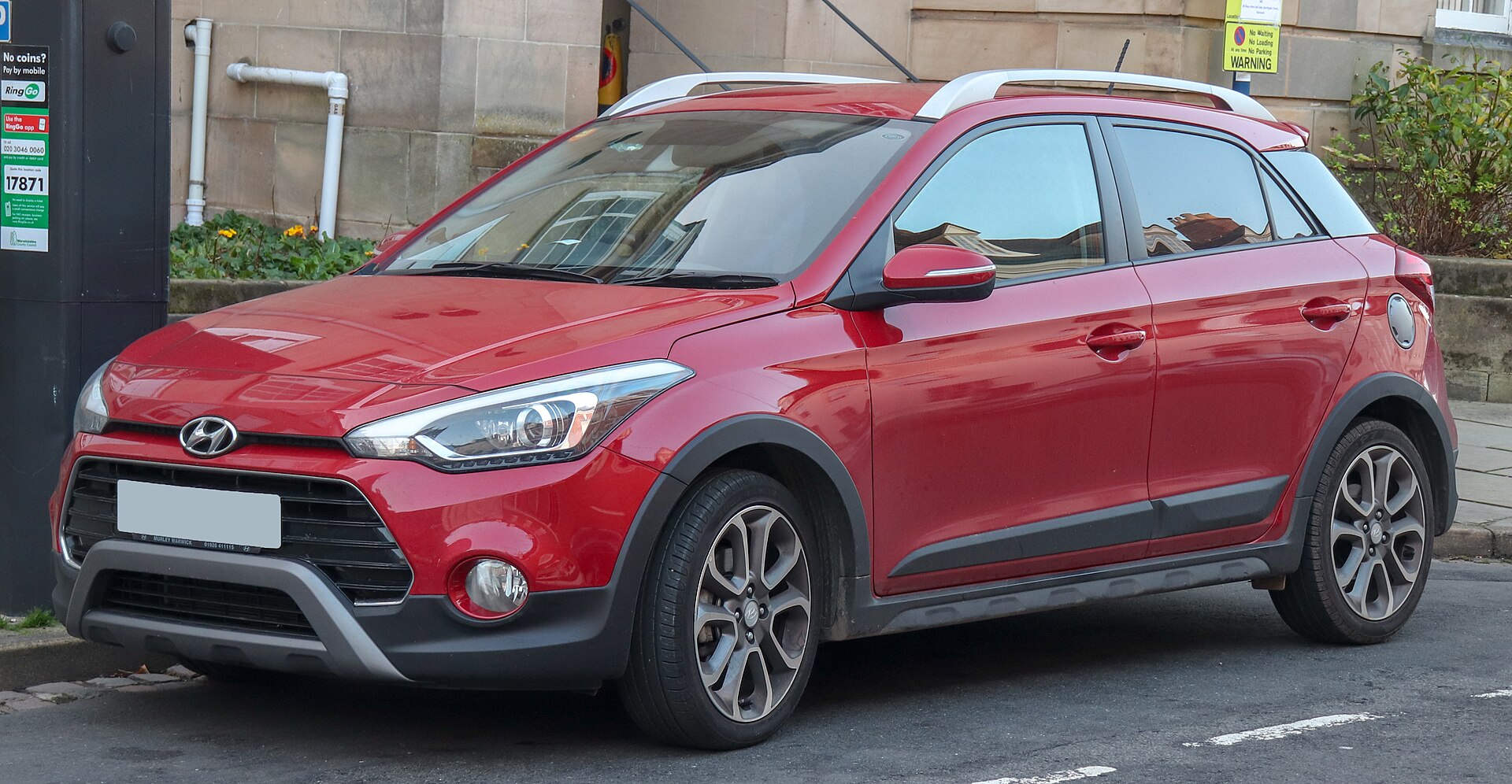
- i20 II (GB) 2014–2020 · Hatchback
- i20 BC3 Current 2020–now · Hatchback · 62–88 kW (84–120 PS)
Newest first · 3 generations since 2008
-
2020

-
2014
-
2008
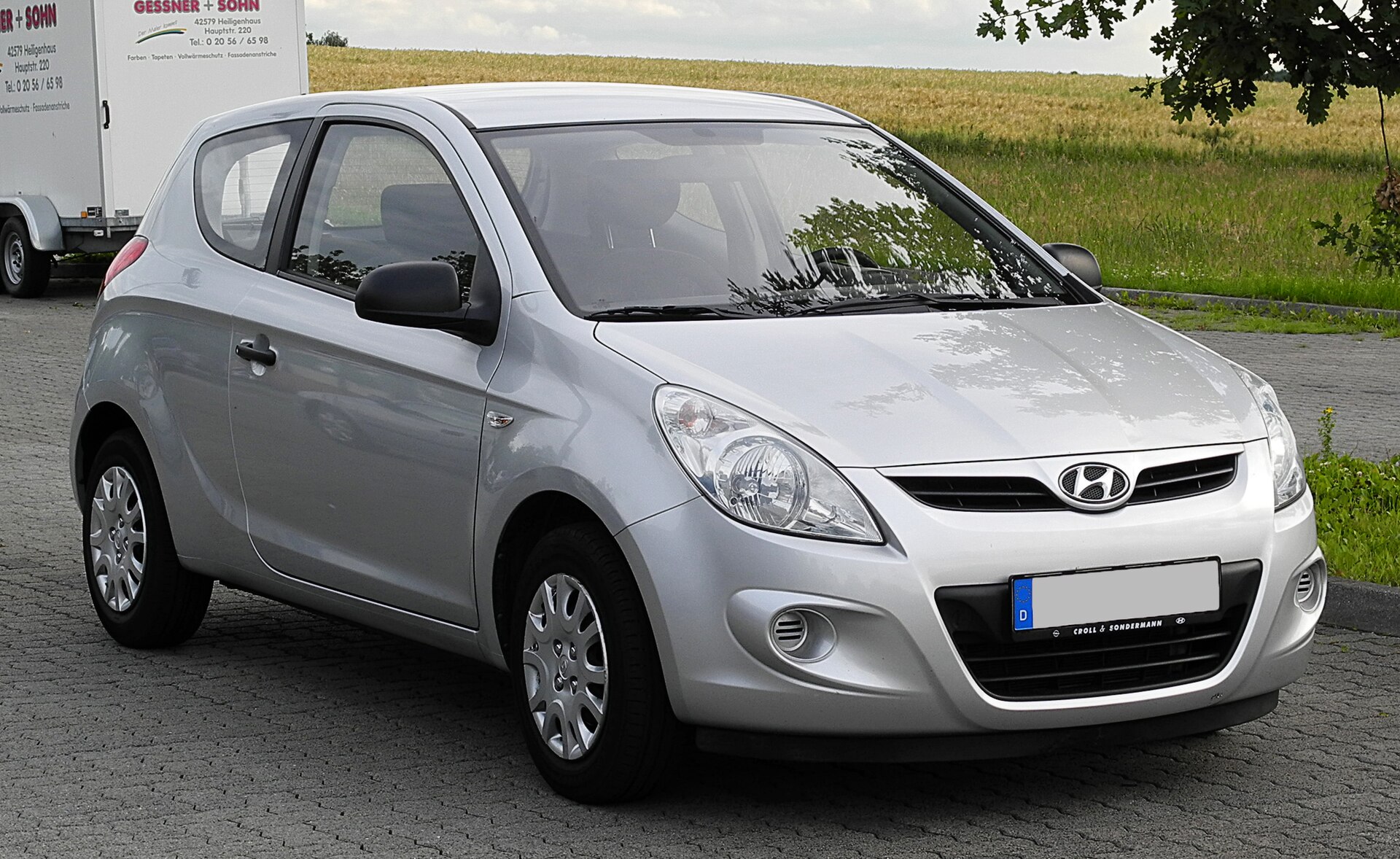
All generations by year: i20 BC3 (2020–now) · i20 II (GB) (2014–2020) · i20 I (2008–2015)
Which one is mine?
Pick the year of first registration to see which generation it is.
- BC3 2020–present
- GB 2014–2020
- i20 I 2008–2015
Which i20 to buy
Our verdict · Felix Hartmann
A post-2023 facelift i20 1.0 T-GDi with the manual gearbox is the best all-rounder: economical, well equipped and still under warranty. Buyers on a budget can choose a second-generation 1.0 T-GDi, while the i20 N is the enthusiast's pick and one of the last small petrol hot hatches. Other small cars are collected in the hatchbacks section, and every Hyundai model is in the Hyundai catalogue.
The Hyundai i20 is a front-wheel-drive supermini sold in Europe since 2008, when it replaced the Getz. The current third generation (BC3) was revealed on 19 February 2020 and is built in İzmit, Turkey, with 1.0 T-GDi turbo petrol engines of 66–88 kW (90–120 PS). From 2021 to February 2024 it was also offered as the 150 kW (204 PS) i20 N hot hatch.
In short
- First generation 2008–2015 (Paris debut, five Euro NCAP stars in 2009), second 2014–2020, third from 2020, facelifted in May 2023.
- Current European engine: a 1.0-litre three-cylinder turbo; earlier versions had 48-volt mild-hybrid assistance and a 1.2 MPi with 62 kW (84 PS).
- Third-generation boot: 352 litres, up to 1,165 litres with the rear seats folded, according to Hyundai's launch data.
- In Italy the 2026 model year starts at 21,850 EUR (1.0 T-GDi 90 CV Connectline, December 2025 list).

Size at a glance
Volkswagen Polo VI
The Hyundai i20 BC3 is 13 mm shorter, 24 mm wider and 12 mm taller than the Volkswagen Polo VI.
| Dimensions | Hyundai i20 BC3 | Volkswagen Polo VI | Difference |
|---|---|---|---|
| Length | 4,040 mm159.1 in | 4,053 mm159.6 in | −13 mm−0.5 in |
| Width | 1,775 mm69.9 in | 1,751 mm68.9 in | +24 mm+0.9 in |
| Height | 1,450 mm57.1 in | 1,438 mm56.6 in | +12 mm+0.5 in |
| Wheelbase | 2,580 mm101.6 in | 2,564 mm100.9 in | +16 mm+0.6 in |
| Boot | 352 L12.4 cu ft | 351 L12.4 cu ft | +1 L |
Running cost
Fuel · i20 BC3 62 kW (84 PS) Hatchback
about 1,450 EUR fuel a year at 15,000 km
5.6 l/100 km · petrol at 1.75 EUR/l · change mileage, fuel price or version
Specs by version
Engines
| Version | Engine | Power | Torque | Drive |
|---|---|---|---|---|
| BC3 · 2020–present | ||||
| BC3 · 62 kW (84 PS) Hatchback | Petrol | 62 kW 84 PS83 hp | 122 Nm90 lb-ft | Front-wheel drive |
| BC3 · 74 kW (101 PS) Hatchback | Petrol | 74 kW 101 PS99 hp | 172 Nm127 lb-ft | Front-wheel drive |
| BC3 · 88 kW (120 PS) Hatchback | Petrol | 88 kW 120 PS118 hp | 172 Nm127 lb-ft | Front-wheel drive |
Performance
Show all 3 versions
| Version | 0–100 km/h | Top speed | Fuel consumption | CO₂ |
|---|---|---|---|---|
| BC3 · 2020–present | ||||
| BC3 · 62 kW (84 PS) Hatchback | 13.1 s 0–62 mph | 173 km/h107 mph | 5.6 l/100 km42.0 mpg US · 50.4 mpg UK | 127 g/km |
| BC3 · 74 kW (101 PS) Hatchback | 10.4 s 0–62 mph | 188 km/h117 mph | 5.6 l/100 km42.0 mpg US · 50.4 mpg UK | 127 g/km |
| BC3 · 88 kW (120 PS) Hatchback | 10.1 s 0–62 mph | 188 km/h117 mph | 5.5 l/100 km42.8 mpg US · 51.4 mpg UK | 124 g/km |
Dimensions and weight
Show all 3 versions
| Version | Length | Width | Height | Wheelbase | Kerb weight | Boot | Fuel tank |
|---|---|---|---|---|---|---|---|
| BC3 · 2020–present | |||||||
| BC3 · 62 kW (84 PS) Hatchback | 4,040 mm159.1 in | 1,775 mm69.9 in | 1,450 mm57.1 in | 2,580 mm101.6 in | 1,088 kg2,399 lb | 352 l12.4 cu ft | 40 l10.6 gal US |
| BC3 · 74 kW (101 PS) Hatchback | - | - | - | - | 1,140 kg2,513 lb | 352 l12.4 cu ft | 40 l10.6 gal US |
| BC3 · 88 kW (120 PS) Hatchback | - | - | - | - | 1,165 kg2,568 lb | 262 l9.3 cu ft | 40 l10.6 gal US |
Verified Manufacturer and type-approval data from our catalog · Sources and methodology
Safety
-
BC3 · Euro NCAP 2021
Full Euro NCAP result
-
i20 I · Euro NCAP 2009
Older protocol · Full Euro NCAP result
Stars from different years and organisations are not directly comparable: test protocols change every few years.
Hyundai i20 at a glance
The i20 is Hyundai's B-segment five-door hatchback for Europe and India, sitting between the smaller i10 and the Kona and Bayon crossovers. The European car was developed at Hyundai's technical centre in Rüsselsheim, Germany, and every generation has been built for Europe in Turkey. The brand's background is in Hyundai's history.

| Generation | Code | Years | Body styles | Engines | Power (kW / PS) |
|---|---|---|---|---|---|
| First | PB | 2008–2015 | 3- and 5-door hatchback | 1.2, 1.4 petrol; 1.4, 1.6 CRDi diesel | 55–94 kW (75–128 PS) |
| Second | GB / IB | 2014–2020 | 5-door, 3-door Coupé, i20 Active | 1.0 T-GDi, 1.2, 1.4 petrol; 1.1, 1.4 CRDi | 55–88 kW (75–120 PS) |
| Third | BC3 | 2020– | 5-door hatchback, i20 N | 1.0 T-GDi (48V), 1.2 MPi; 1.6 T-GDi (N) | 62–150 kW (84–204 PS) |
First and second generations (2008–2020)
The first i20 made its debut at the Paris Motor Show in October 2008. It had a 2,525 mm wheelbase and diesel engines from 55 kW (75 PS) to 94 kW (128 PS); the 85 kW (115 PS) 1.6 CRDi was claimed at 4.3 l/100 km on the European combined cycle. Euro NCAP gave it five stars in 2009, with 88% for adult protection. Cars for Asia came from Sriperumbudur near Chennai, and the European plant in İzmit assembled kits from India at first. Sales in Europe climbed from 785 cars in 2008 to 91,758 in 2015.

The second generation arrived in Europe in November 2014. It grew to about 4 metres long, gained a 326-litre boot and kept a strong diesel line-up. A three-door i20 Coupé and the raised i20 Active, with extra ground clearance, followed in 2015. It scored 85% for adult occupants in its 2015 safety test, and European sales peaked at 100,571 cars in 2017. A 2018 facelift added a seven-speed dual-clutch gearbox for the turbo petrol engine.
Third generation (BC3): design, platform and interior
The third i20, revealed online on 19 February 2020 after the Geneva show was cancelled, was the first European Hyundai in the "Sensuous Sportiness" design language. It rides on the Hyundai-Kia K2 platform with 66% high-strength steel. European production began at İzmit in August 2020; the plant builds about 85,000 cars a year, around half of all i20s.

The body is lower and wider than before, with a full-width grille, Z-shaped tail-light graphics joined by a light strip and a contrasting roof. Inside, higher trims have two 10.25-inch screens, one for the instruments and one for infotainment, with wireless Apple CarPlay and Android Auto, wireless charging and an optional Bose system with eight speakers and a subwoofer. Lower trims use an 8-inch touchscreen. The longer wheelbase gives more rear legroom than the second generation.
Engines, gearboxes and performance
| Engine | Power | Torque | Gearbox | Notes |
|---|---|---|---|---|
| 1.2 MPi | 62 kW (84 PS) | 122 Nm | 5-speed manual | Entry engine, early years |
| 1.0 T-GDi | 74 kW (100 PS) | 172 Nm | 6-speed manual or 7-speed DCT | 48V mild hybrid optional |
| 1.0 T-GDi 48V | 88 kW (120 PS) | 172 Nm | 6-speed manual or 7-speed DCT | 0–100 km/h about 10 s |
| 1.0 T-GDi (MY2026, Italy) | 66 kW (90 CV) | – | 6-speed manual or 7-speed DCT | Euro 6e-bis |
| 1.6 T-GDi (i20 N) | 150 kW (204 PS) | 275 Nm | 6-speed manual | 0–100 km/h 6.2 s, 230 km/h |
The 48-volt mild-hybrid system lets the six-speed manual "sail" with the clutch disengaged when the driver lifts off, and Hyundai claimed 3–4% lower fuel use. The UK later dropped the mild hybrid, and by the 2026 model year Italy listed a single 90 CV 1.0 T-GDi. UK figures for the current car are 52.3–55.4 mpg, about 5.1–5.4 l/100 km. See how it ranks in the most economical cars list.

Chassis, dimensions and boot
The i20 has MacPherson struts at the front and a torsion beam at the rear, electric power steering and disc brakes on all four wheels, according to the old 1cars text. The boot holds 352 litres, 26 litres more than its predecessor, and 1,165 litres with the seats folded.

| Parameter | Metric | Imperial |
|---|---|---|
| Length (European car) | about 4,040 mm | 159 in |
| Boot, seats up | 352 l | 12.4 cu ft |
| Boot, seats folded | 1,165 l | 41.1 cu ft |
| Platform | Hyundai-Kia K2 | – |
| Kerb weight (i20 N) | 1,190 kg | 2,624 lb |
The i20 N hot hatch
The i20 N was revealed in October 2020, drawing on Hyundai's World Rally Championship programme with the i20 WRC and the later i20 N Rally1. Its 1.6-litre turbo four produces 150 kW (204 PS) and 275 Nm, driven through a six-speed manual, and the car weighs 1,190 kg. Hyundai ended European production in February 2024 to concentrate its performance work on electric cars, so the N is now a used-only choice in Europe.

Safety, trims and 2026 prices
The third generation received four Euro NCAP stars in 2021, sharing results with the related Bayon crossover. Standard driver aids include autonomous emergency braking with pedestrian detection and lane-keeping assist, and higher trims add blind-spot monitoring and navigation-based adaptive cruise control.

For the 2026 model year Italy simplified the range to two trims, as reported in December 2025:
| Version | Gearbox | Price (Italy, EUR) |
|---|---|---|
| 1.0 T-GDi 90 CV Connectline | 6-speed manual | 21,850 |
| 1.0 T-GDi 90 CV Connectline | 7-speed DCT | 23,350 |
| 1.0 T-GDi 90 CV Prime | 6-speed manual | 23,350 |
| 1.0 T-GDi 90 CV Prime | 7-speed DCT | 24,850 |
Connectline includes 16-inch alloys, LED lights and a 10.25-inch navigation screen; Prime adds full-LED headlights, 17-inch wheels, automatic climate control and wireless charging.
Rivals and reliability
| Model | Engines | Power | Boot |
|---|---|---|---|
| Hyundai i20 (BC3) | 1.0 turbo petrol | 66–88 kW (90–120 PS) | 352 l |
| Volkswagen Polo | 1.0 petrol and TSI, 2.0 TSI (GTI) | 59–152 kW | 351 l |
| Peugeot 208 | 1.2 petrol, hybrid, electric | 55–115 kW | 311 l |
| Renault Clio | 1.0 turbo, full hybrid | 67–107 kW | 301–391 l |
UK reviewers praise the equipment, the bold styling and the technology but criticise some cheap cabin plastics, the single engine and the dual-clutch gearbox's low-speed behaviour. Hyundai's five-year unlimited-mileage warranty in most of Europe covers the newer cars. Owners of older turbo models should check that the dual-clutch gearbox shifts smoothly and that the 48V system has no warning lights. Compare any two superminis in the 1cars comparison tool.


Hyundai i20 evolution in numbers
Did you know?
- The Hyundai i20 has been around for 18 years: 3 generations in our catalog since 2008.
- The longest-running generation is the i20 I (2008–2015): 7 years.
Image credits · Photos from Wikimedia Commons under free licences
- Hyundai i20 I · Photo: M 93 / Wikimedia Commons, CC BY-SA 3.0 de
- Hyundai i20 II (GB) · Photo: Vauxford / Wikimedia Commons, CC BY-SA 4.0
Rivals
Compare with…
Compare Hyundai i20 with
- Mini Cooper quick spec comparison
- Volkswagen Polo quick spec comparison
- Renault Sandero quick spec comparison
-
In production
- Years
- 2001–present
- Body
- Hatchback
- Fuel
- Petrol, Diesel
- Power
- 55–225 kW (75–306 PS)
4 generations
- R50/R53
- R56
- F56
- F66
-
In production
- Years
- 1975–present
- Body
- Sedan, Hatchback
- Fuel
- Petrol, Diesel, LPG / CNG
- Power
- 29–110 kW (39–150 PS)
6 generations
- 86
- 86C
- 6N
- 9N
- 6R
- VI
-
Ended 2020
- Years
- 2007–2020
- Body
- Hatchback
- Fuel
- Petrol, Diesel, LPG / CNG
- Power
- 55–83 kW (75–113 PS)
2 generations
- I
- II


Popular comparisons
Hyundai i20 in our rankings
- No. 72 of 607 · Smallest cars (4,040 mm · top 13%)
- No. 61 of 465 · Lightest cars (1,088 kg · top 14%)
- No. 246 of 1192 · Longest-running car nameplates (18 years · top 21%)
- No. 22 of 89 · Lightest hatchbacks (1,088 kg · top 25%)
- No. 91 of 332 · Most economical cars (5.5 l/100 km · top 29%)
- No. 136 of 415 · Oldest car models still on sale (18 years · top 34%)
Shorter than 87% of ranked cars in the 1CARS catalog (No. 72 of 607).
Hyundai i20 photos 17


FAQ
How many generations of the Hyundai i20 are there?
Europe has had three: the first from 2008 to 2015, the second from 2014 to 2020 and the third, coded BC3, from 2020. The third generation was facelifted in May 2023 and is built in İzmit, Turkey.
Which Hyundai i20 generation is the most reliable?
The third generation with the simple 1.2 MPi or the 1.0 T-GDi and a manual gearbox has the fewest complaints, and many cars are still within Hyundai's five-year warranty. Older cars depend mostly on their service history.
What is the fuel consumption of the Hyundai i20?
UK figures for the current 1.0 T-GDi are 52.3 to 55.4 mpg, roughly 5.1 to 5.4 l/100 km. The first-generation 1.6 CRDi diesel was claimed at 4.3 l/100 km on the old European cycle.
Is the Hyundai i20 available as a hybrid?
The third-generation 1.0 T-GDi was offered with a 48-volt mild-hybrid system that cut fuel use by about 3–4%. There is no full hybrid or electric i20; the mild hybrid was later dropped in some markets.
What are the main rivals of the Hyundai i20?
Its main rivals are the Volkswagen Polo, Peugeot 208, Renault Clio, Toyota Yaris, Opel Corsa and Škoda Fabia. The i20 competes on equipment, warranty and boot space rather than on price.
Data sources
Data checked by an editor against the sources below.
- The text of this article (1cars archive)
- Wikipedia - Hyundai I20
- Co
- Co - Euro Ncap Results
- Euro NCAP
- Carsized - Hyundai I20 2020 5 Door Hatchback


