
 Hyundai Ioniq
Specs, engines and history
Updated Published Sources (7) Report an error
By Felix Hartmann, Automotive Technology & EV Contributor Reviewed by Oleksandr Hnatiuk

- Built
- 2016–2022
- Top power
- 104 kW (141 PS)
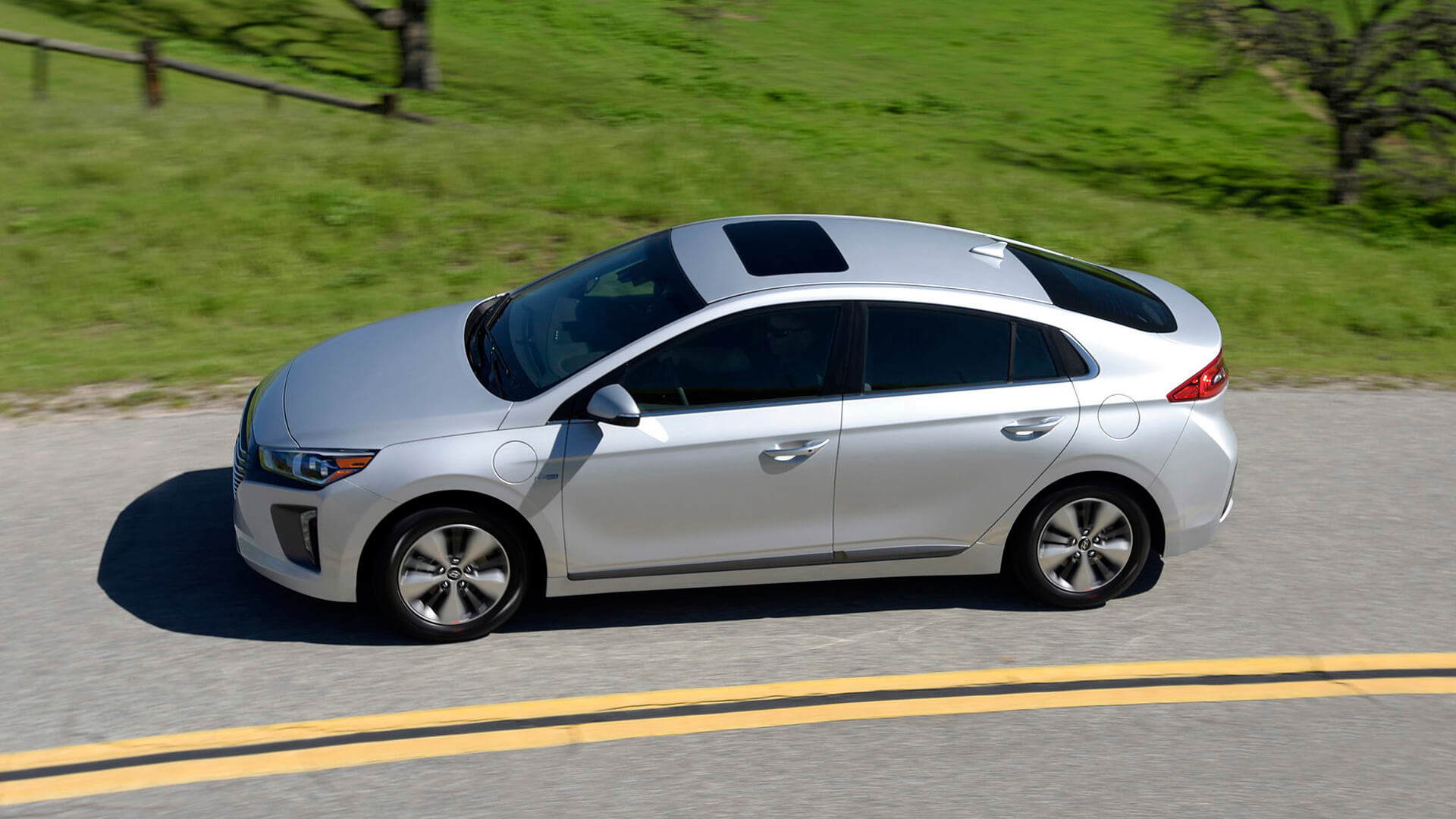
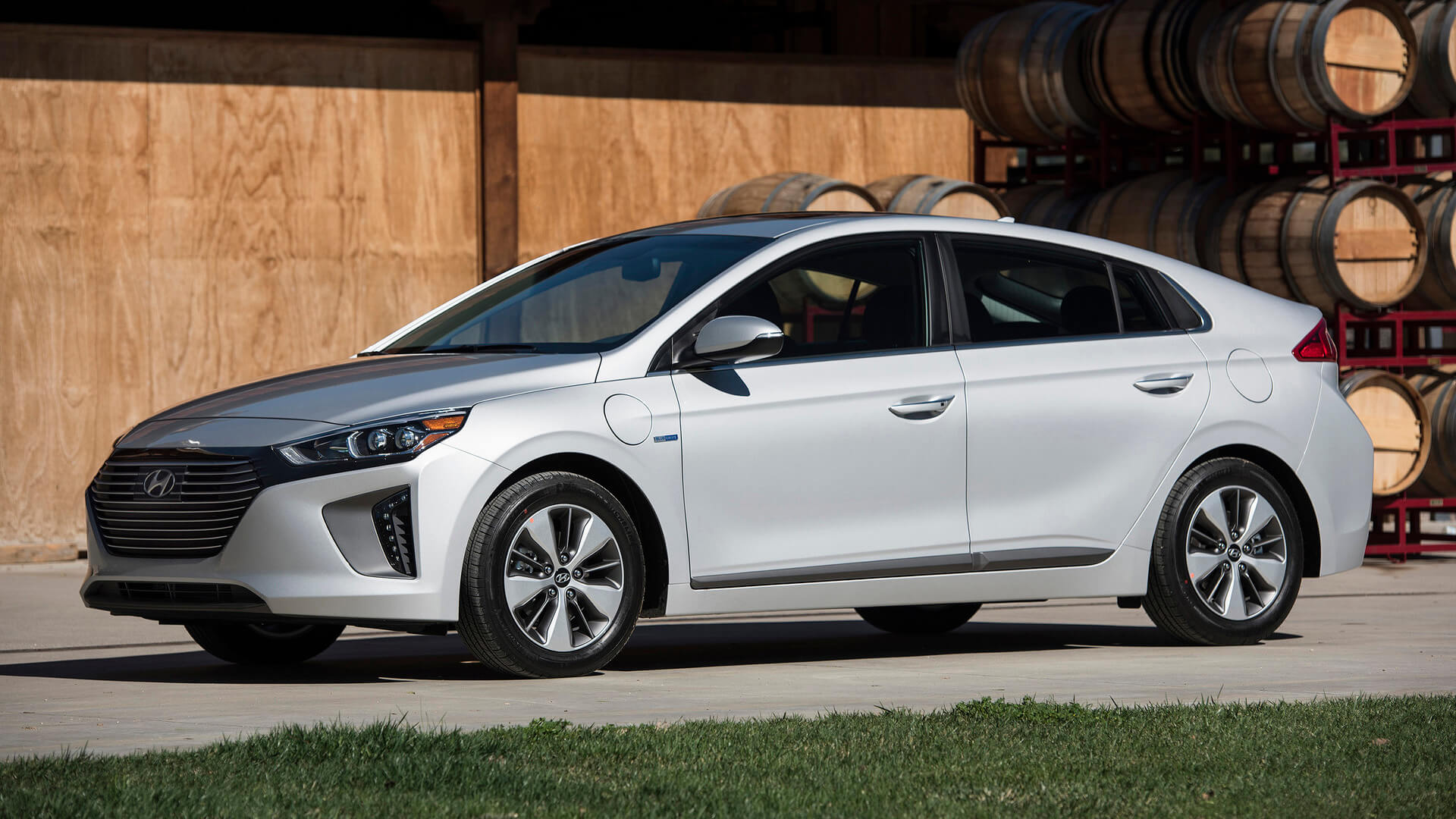
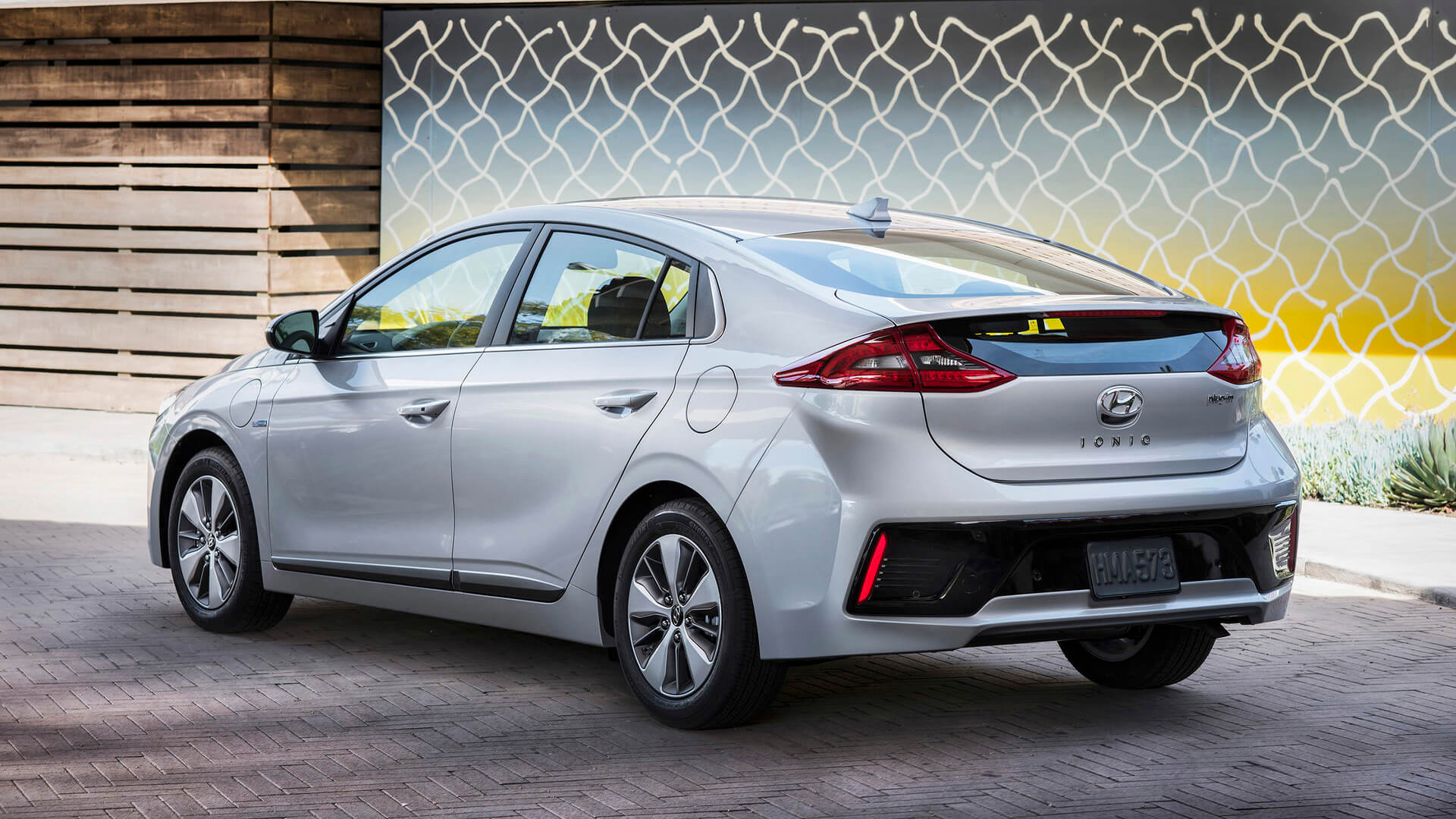
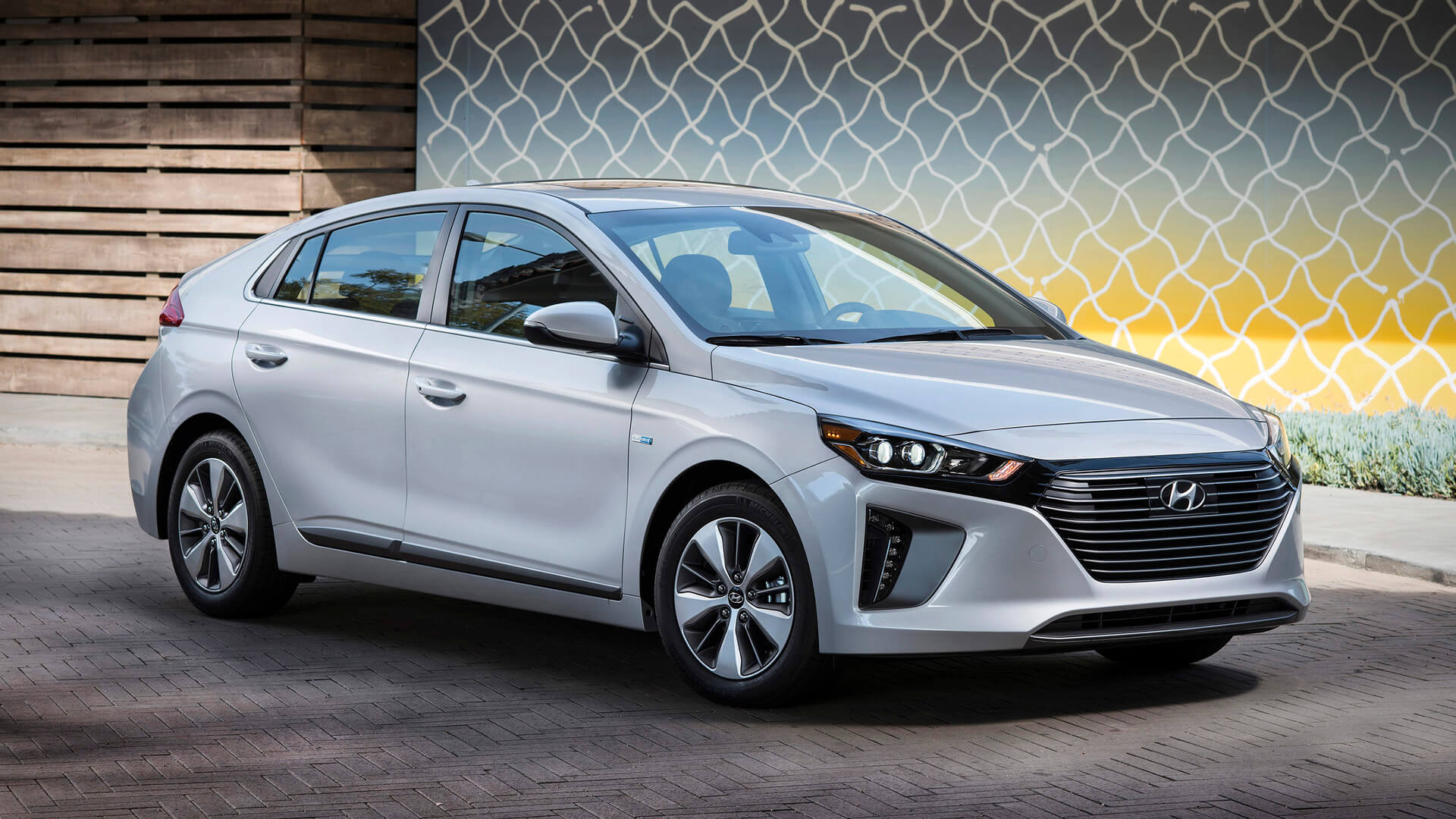
The Hyundai Ioniq was a compact five-door liftback built from 2016 to July 2022 and sold in three forms: hybrid, plug-in hybrid and fully electric. It was Hyundai's first car without a conventional petrol-only version. The Ioniq Electric was rated the most efficient car in the US for three model years, and about 325,500 Ioniqs had been sold by January 2021.
In short
- Built 2016–2022 in Ulsan, South Korea; 4,470 mm long on a 2,700 mm wheelbase shared with the Kia Niro.
- Hybrid: 1.6-litre petrol engine plus a 32 kW motor, 104 kW (141 PS) combined, six-speed dual-clutch gearbox.
- Electric: 88 kW with a 28 kWh battery (2016), then 100 kW with 38.3 kWh and 311 km WLTP range (2019 update).
- Five-star Euro NCAP rating in 2016; replaced by the Ioniq 5 and Ioniq 6 family of electric cars.

Size at a glance
Kia Niro I
The Hyundai Ioniq is 115 mm longer, 15 mm wider and 95 mm lower than the Kia Niro I.
| Dimensions | Hyundai Ioniq | Kia Niro I | Difference |
|---|---|---|---|
| Length | 4,470 mm176.0 in | 4,355 mm171.5 in | +115 mm+4.5 in |
| Width | 1,820 mm71.7 in | 1,805 mm71.1 in | +15 mm+0.6 in |
| Height | 1,450 mm57.1 in | 1,545 mm60.8 in | −95 mm−3.7 in |
| Wheelbase | 2,700 mm106.3 in | 2,700 mm106.3 in | Same |
| Boot | - | 450 L15.9 cu ft | - |
Running cost
Fuel · Ioniq 1.6 L 4 cyl Automatic (AM6) · 2020 (EPA)
about 1,150 EUR fuel a year at 15,000 km
4.3 l/100 km · petrol at 1.75 EUR/l · change mileage, fuel price or version
Specs by version
Engines
| Version | Engine | Power | Gearbox | Drive | Production years |
|---|---|---|---|---|---|
| Hybrid · 7 versions | |||||
| 1.6 L 4 cyl Automatic (AM-S6) · 2022 (EPA) | 1.6 l · 4 cyl · Hybrid 1,600 cc | - | 6-sp Dual-clutch | Front-wheel drive | 2022 |
| 1.6 L 4 cyl Automatic (AM-S6) · 2021 (EPA) | 1.6 l · 4 cyl · Hybrid 1,600 cc | - | 6-sp Dual-clutch | Front-wheel drive | 2021 |
| 1.6 L 4 cyl Automatic (AM6) · 2020 (EPA) | 1.6 l · 4 cyl · Hybrid 1,600 cc | - | 6-sp Dual-clutch | Front-wheel drive | 2020 |
| 1.6 L 4 cyl Automatic (AM6) · 2019 (EPA) | 1.6 l · 4 cyl · Hybrid 1,600 cc | - | 6-sp Dual-clutch | Front-wheel drive | 2019 |
| 1.6 L 4 cyl Automatic (AM6) · 2018 (EPA) | 1.6 l · 4 cyl · Hybrid 1,600 cc | - | 6-sp Dual-clutch | Front-wheel drive | 2018 |
| 1.6 L 4 cyl Automatic (AM6) · 2017 (EPA) | 1.6 l · 4 cyl · Hybrid 1,600 cc | - | 6-sp Dual-clutch | Front-wheel drive | 2017 |
| 1.6 GDi Hybrid | 4 cyl · Hybrid | 104 kW 141 PS139 hp | 6-sp Dual-clutch | Front-wheel drive | 2016 |
| Plug-in hybrid · 1 version | |||||
| 1.6 GDi Plug-in | 4 cyl · Plug-in hybrid | - | 6-sp Dual-clutch | Front-wheel drive | 2017 |
| Electric · 2 versions | |||||
| Electric (2016) | Electric | 88 kW 120 PS118 hp | Single-speed | Front-wheel drive | 2016 |
| Electric (2019 update) | Electric | 100 kW 136 PS134 hp | Single-speed | Front-wheel drive | 2019 |
Performance
Show all 9 versions
| Version | Fuel consumption | Range |
|---|---|---|
| Hybrid · 6 versions | ||
| 1.6 L 4 cyl Automatic (AM-S6) · 2022 (EPA) | 4.3 l/100 km54.7 mpg US · 65.7 mpg UK | - |
| 1.6 L 4 cyl Automatic (AM-S6) · 2021 (EPA) | 4.3 l/100 km54.7 mpg US · 65.7 mpg UK | - |
| 1.6 L 4 cyl Automatic (AM6) · 2020 (EPA) | 4.3 l/100 km54.7 mpg US · 65.7 mpg UK | - |
| 1.6 L 4 cyl Automatic (AM6) · 2019 (EPA) | 4.3 l/100 km54.7 mpg US · 65.7 mpg UK | - |
| 1.6 L 4 cyl Automatic (AM6) · 2018 (EPA) | 4.3 l/100 km54.7 mpg US · 65.7 mpg UK | - |
| 1.6 L 4 cyl Automatic (AM6) · 2017 (EPA) | 4.3 l/100 km54.7 mpg US · 65.7 mpg UK | - |
| Plug-in hybrid · 1 version | ||
| 1.6 GDi Plug-in | - | 47 km29 mi |
| Electric · 2 versions | ||
| Electric (2016) | 11.5 kWh/100 km18.5 kWh/100 mi | 280 km174 mi |
| Electric (2019 update) | 13.8 kWh/100 km22.2 kWh/100 mi | 311 km193 mi |
Dimensions and weight
Show all 4 versions
| Version | Length | Width | Height | Wheelbase | Kerb weight | Battery |
|---|---|---|---|---|---|---|
| Hybrid · 1 version | ||||||
| 1.6 GDi Hybrid | 4,470 mm176.0 in | 1,820 mm71.7 in | 1,450 mm57.1 in | 2,700 mm106.3 in | - | - |
| Plug-in hybrid · 1 version | ||||||
| 1.6 GDi Plug-in | 4,470 mm176.0 in | 1,820 mm71.7 in | 1,450 mm57.1 in | 2,700 mm106.3 in | - | 9 kWh |
| Electric · 2 versions | ||||||
| Electric (2016) | 4,470 mm176.0 in | 1,820 mm71.7 in | 1,450 mm57.1 in | 2,700 mm106.3 in | 1,495 kg3,296 lb | 28 kWh |
| Electric (2019 update) | 4,470 mm176.0 in | 1,820 mm71.7 in | 1,450 mm57.1 in | 2,700 mm106.3 in | 1,602 kg3,532 lb | 38 kWh |
Verified Manufacturer and type-approval data from our catalog · Sources and methodology
Hyundai Ioniq at a glance

| Item | Data |
|---|---|
| Production | 2016 – July 2022 (model years 2017–2022) |
| Body | five-door liftback, drag coefficient 0.24 |
| Length / width / height | 4,470 / 1,820 / 1,450 mm |
| Wheelbase | 2,700 mm |
| Versions | Hybrid, Plug-in, Electric |
| Power range | 88–104 kW |
| Main plant | Ulsan, South Korea |
| Euro NCAP | five stars (2016) |
| Sales | about 325,500 by January 2021 |
Three powertrains in one body
Hyundai revealed the Ioniq Hybrid in South Korea in January 2016, and all three versions appeared at the Geneva and New York shows that spring. Sales started at home with the hybrid in February 2016, the electric car in July 2016 and the plug-in hybrid in February 2017. One body for three drivetrains was the car's main idea: a buyer could choose the level of electrification without changing the car's size, cabin or price class.

| Version | Engine / motor | Power | Battery | Gearbox | Key figure |
|---|---|---|---|---|---|
| Hybrid | 1.6 GDi Atkinson petrol 78 kW + 32 kW motor | 104 kW (141 PS), 264 Nm | 1.56 kWh | 6-speed DCT | 4.1 l/100 km in US tests |
| Plug-in | same engine + 45 kW motor | 104 kW (141 PS) | 8.9 kWh | 6-speed DCT | 47 km EPA electric range |
| Electric (2016) | electric motor | 88 kW (120 PS), 295 Nm | 28 kWh | single speed | 280 km NEDC, 200 km EPA |
| Electric (2019) | electric motor | 100 kW (136 PS), 295 Nm | 38.3 kWh | single speed | 311 km WLTP, 274 km EPA |
Every Ioniq is front-wheel drive. The hybrid and plug-in use a multi-link rear suspension, while the electric car has a torsion-beam rear axle.
Ioniq Hybrid: built to beat the Prius
The hybrid uses a 1.6-litre Kappa direct-injection petrol engine running on the Atkinson cycle with 78 kW, plus a 32 kW electric motor. Combined output is 104 kW (141 PS) and 264 Nm. Unlike most hybrids of the time, it has a six-speed dual-clutch gearbox instead of a continuously variable transmission, so it drives more like a conventional car.

Hyundai cut weight with an aluminium bonnet and tailgate, saving about 12 kg, and placed the 1.56 kWh lithium-ion polymer battery under the rear seat. In US tests the most economical version was rated at 58 mpg, which by our calculation is about 4.1 l/100 km. That made it the most fuel-efficient mass-produced hybrid of its day. The hybrid was the best seller of the three: 211,755 of the roughly 325,500 Ioniqs sold by January 2021.
Ioniq Plug-in: short electric trips, long range
The plug-in hybrid arrived in February 2017. It keeps the 1.6-litre engine but adds a 45 kW motor and an 8.9 kWh battery. The EPA rated its electric range at 47 km and its electric efficiency at 119 MPGe. With the fuel tank full, total range reached about 967 km. It was the rarest Ioniq, with 35,757 sold by January 2021.

For a driver with a daily trip under 40 km and a socket at home, the plug-in covers most journeys on electricity and still crosses a continent without planning charging stops. Our fuel cost comparison shows how much that saves at your own fuel and electricity prices.
Ioniq Electric: the efficiency record
The first Ioniq Electric had a 28 kWh battery under the rear seats and an 88 kW motor with 295 Nm. Its NEDC range was 280 km and its EPA range 200 km. The old version of this page said that real-world range was 160–180 km; that is an estimate from the old text, not a test figure. The EPA rated it at 136 MPGe combined, which by our calculation is about 15.4 kWh per 100 km. That made it the most efficient vehicle the EPA tested from the 2017 to the 2019 model year.

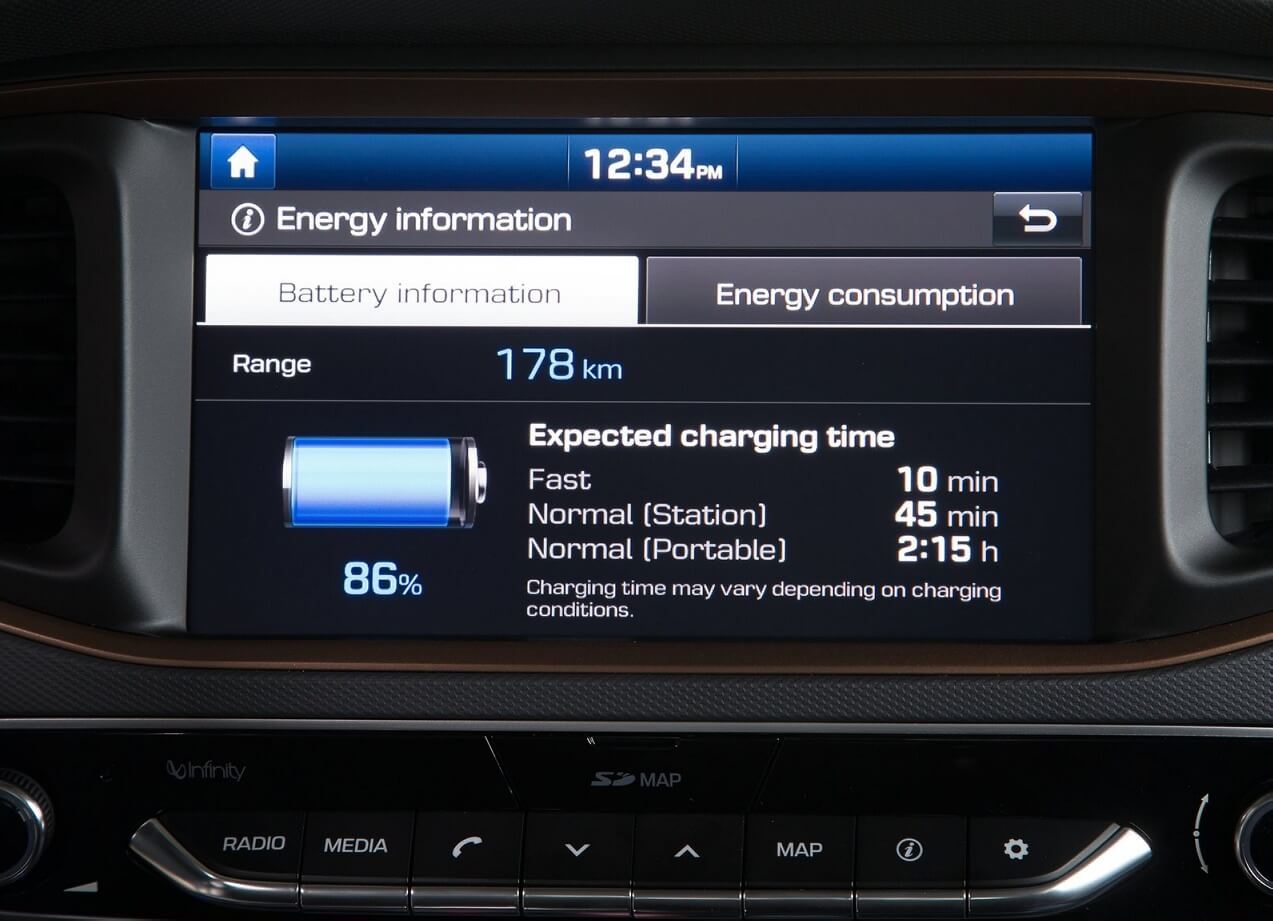
Fast charging used a CCS socket. The 28 kWh car accepted up to 100 kW, and a charge to 80 % took about half an hour. The old page also quoted an eight-year or 200,000 km battery warranty; terms differed by market.
The 2019 update brought a 38.3 kWh battery, 100 kW and 295 Nm, a WLTP range of 311 km and a faster 7.2 kW on-board charger. Its DC charging was limited to 50 kW, so a long-distance stop took longer than in the first version. Holding the regenerative paddle gave one-pedal driving. About 77,972 Electrics were sold by January 2021, and nearly half of them went to Europe.
Crash-test result and driver aids
The Ioniq earned five stars in the Euro NCAP test of 2016. Autonomous emergency braking, lane keeping assist and blind-spot detection were available, depending on market and trim. In 2019 the Ioniq Electric also scored 10 out of 10 for clean air in the Green NCAP programme.

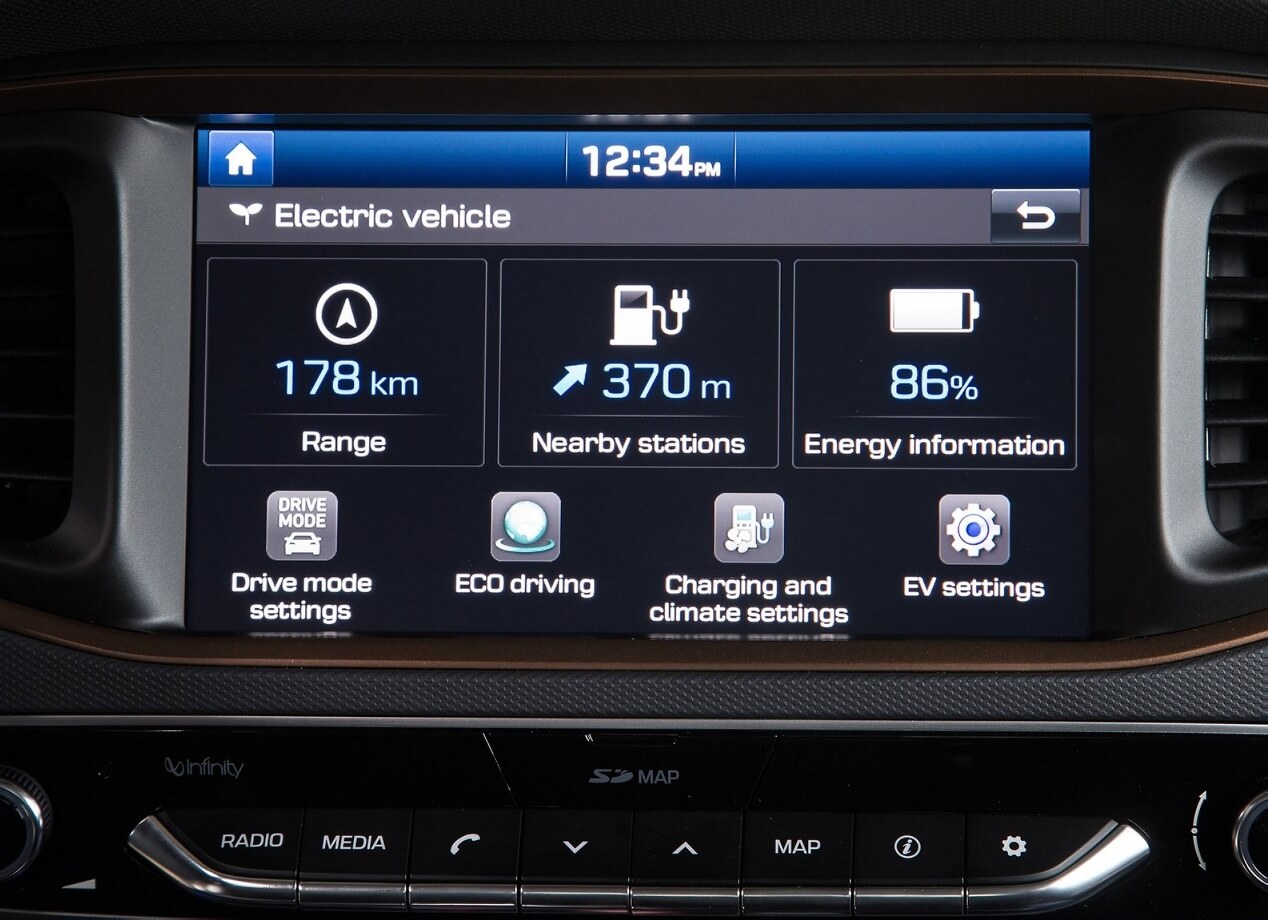
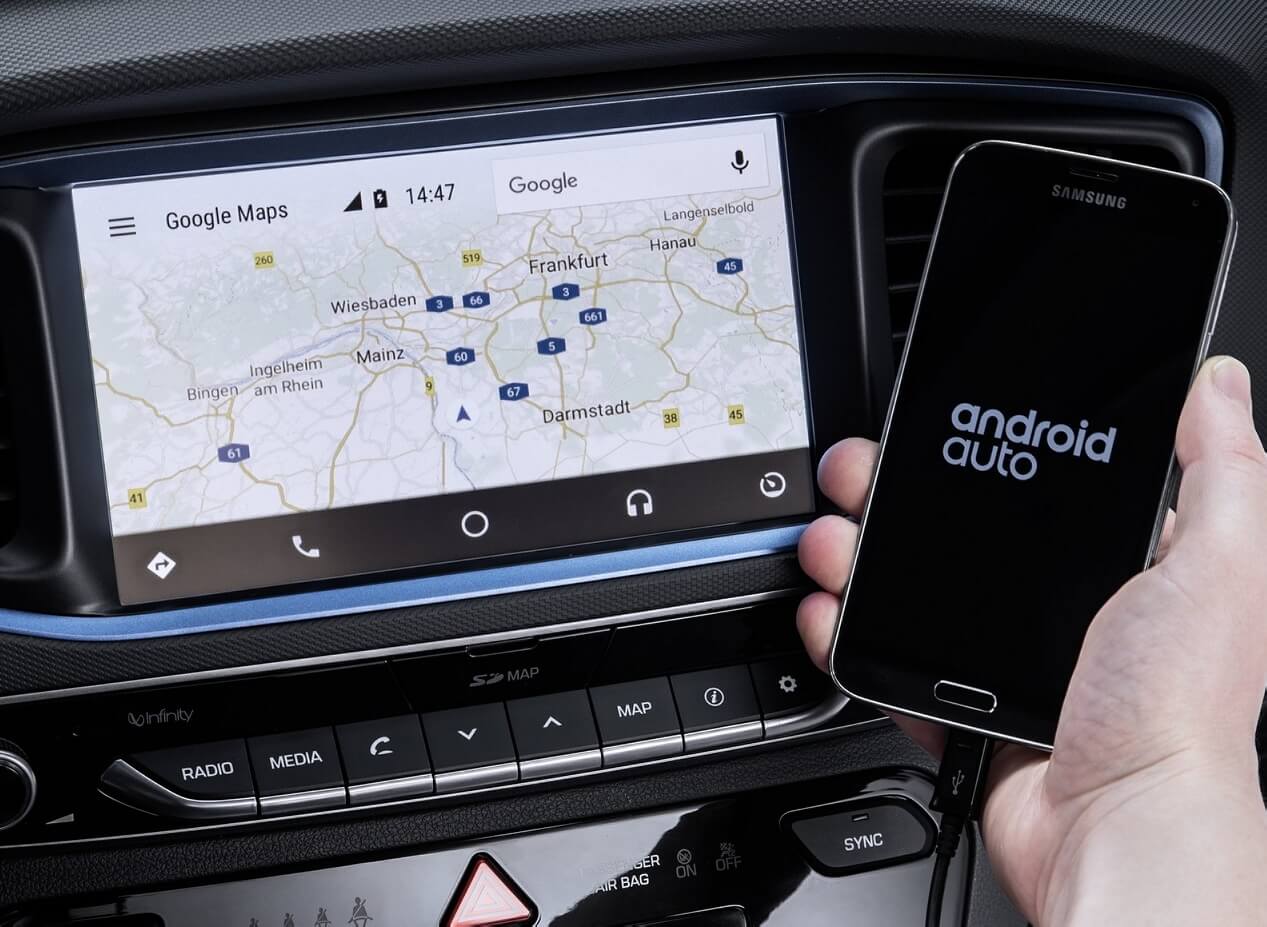
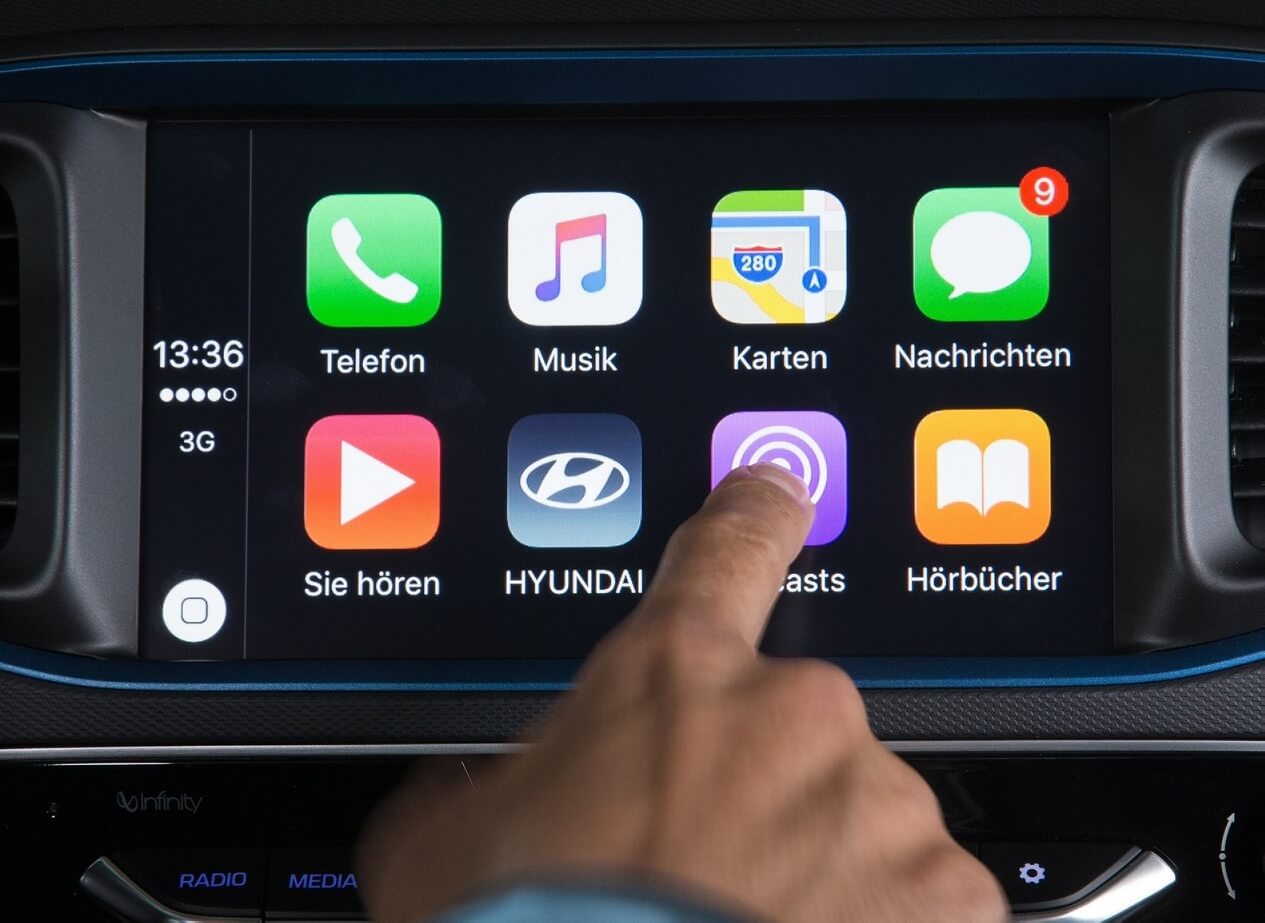
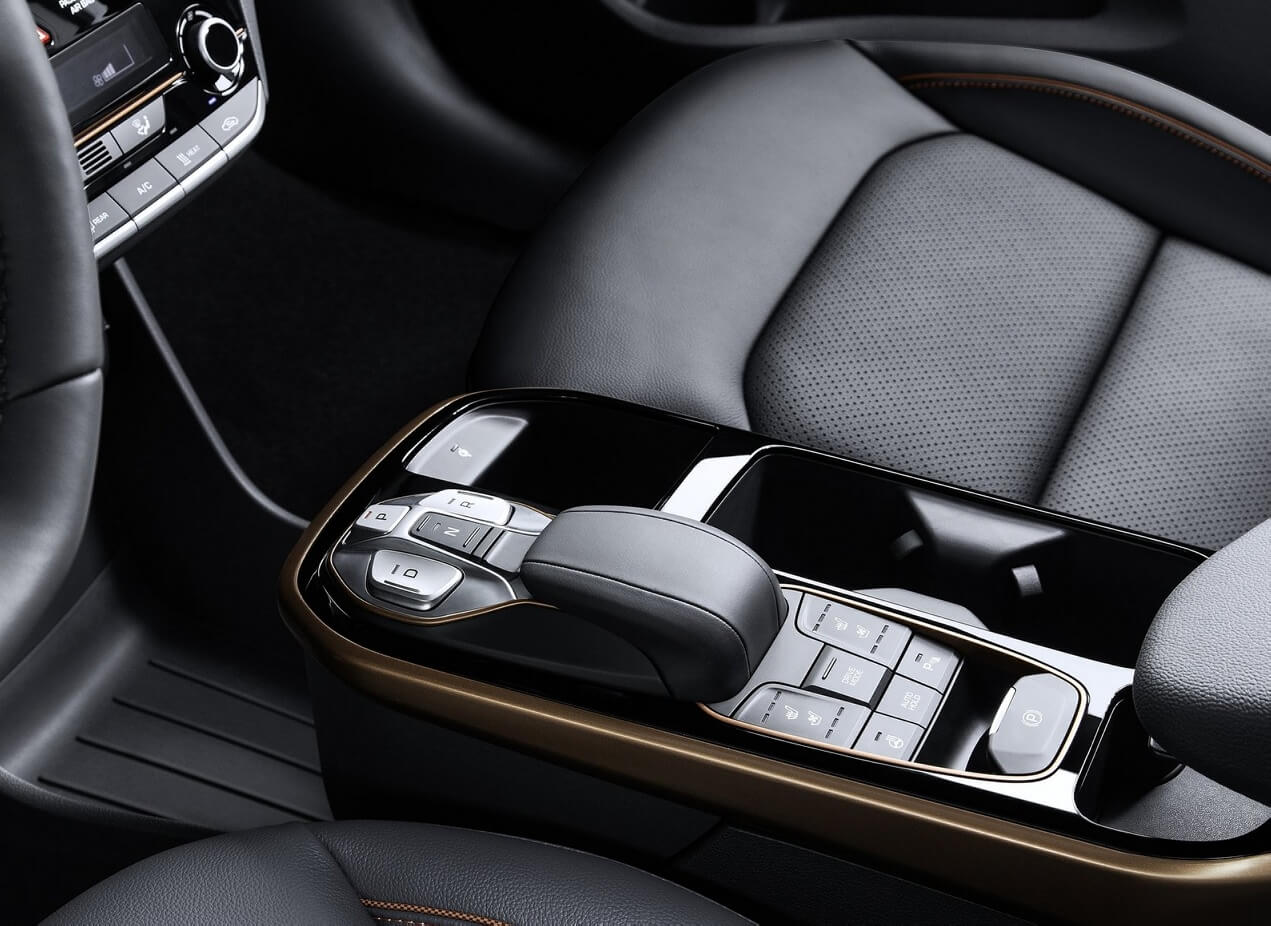
Inside, the Ioniq used a conventional layout with a central touchscreen, physical climate controls and copper-coloured trim on electric cars. The old version of this page gave a ground clearance of 140 mm and a boot of up to 1,505 litres with the rear seats folded. These figures come from the old text and vary by version, because the batteries sit under the rear seat and boot floor.
How many Ioniqs were sold, and why it ended
By January 2021 about 325,500 Ioniqs had been sold worldwide. Europe took 118,575 and the US 60,354. Hyundai ended production in July 2022. The name now belongs to Hyundai's electric sub-brand, which began with the Ioniq 5, and the hybrid's role in North America and South Korea passed to the Elantra Hybrid.

| Version | Sold to January 2021 | Share |
|---|---|---|
| Hybrid | 211,755 | 65 % |
| Electric | 77,972 | 24 % |
| Plug-in | 35,757 | 11 % |
Ioniq versus its rivals
The Ioniq Hybrid competed with the Toyota Prius and the Kia Niro, which shares its platform. The Electric competed with the Nissan Leaf, the BMW i3 and the Renault Zoe. Its advantage was efficiency: on the same battery size it went further than most rivals. Its drawback was the small 28 kWh battery of the first version. Our Hyundai Ioniq vs Toyota Prius comparison sets the hybrid against its main rival, and the electric cars section lists current alternatives.

Buying a used Ioniq: which version to choose
- For high mileage on long trips: the Hybrid. It needs no charging, has the best official fuel figures of the three and the simplest drivetrain.
- For short commutes with home charging: the Plug-in, if you find one; it is the rarest version.
- For town and regional driving: the 38.3 kWh Electric from 2019 onwards, for its 311 km WLTP range.
- For the lowest price and short trips: the 28 kWh Electric, which charges faster but covers about 200 km on a full battery.
On any used electric Ioniq, ask for a battery health report and check that the charging socket and cable are in good order. On a hybrid, check that the dual-clutch gearbox shifts smoothly at low speed. More of the brand's story is in our Hyundai history.


Rivals
Compare with…
Compare Hyundai Ioniq with
- Kia Niro full comparison
-
EV version
In production
- Years
- 2016–present
- Body
- SUV
- Fuel
- Hybrid, Plug-in hybrid, Electric
- Power
- 100–150 kW (136–204 PS)
2 generations
- I
- SG2

Hyundai Ioniq in our rankings
- No. 28 of 297 · Most economical cars (4.3 l/100 km · top 10%)
- No. 15 of 91 · Widest hatchbacks (1,820 mm · top 17%)
- No. 17 of 93 · Longest hatchbacks (4,470 mm · top 19%)
- No. 20 of 76 · Heaviest hatchbacks (1,602 kg · top 27%)
- No. 19 of 54 · Most economical hatchbacks (4.3 l/100 km · top 36%)
- No. 34 of 91 · Most torque: hatchbacks (295 Nm · top 38%)
More economical than 90% of ranked cars in the 1CARS catalog (No. 28 of 297).
Hyundai Ioniq photos 47




Hyundai Ioniq videos 6

Hyundai Ioniq video 1

Hyundai Ioniq video 2

Hyundai Ioniq video 3

Hyundai Ioniq video 4

Hyundai Ioniq video 5

Video overview
FAQ
What versions of the Hyundai Ioniq were made?
Three: a hybrid with a 1.6-litre petrol engine, a plug-in hybrid with an 8.9 kWh battery, and a fully electric version with a 28 kWh battery, later 38.3 kWh. All three shared the same liftback body.
How far can a Hyundai Ioniq Electric go on a charge?
The 2016 version with a 28 kWh battery was rated at 280 km NEDC and 200 km by the EPA. The 2019 update with 38.3 kWh reached 311 km WLTP and 274 km EPA.
Is the Hyundai Ioniq still made?
No. Production ended in July 2022 after about six years. Hyundai now uses the Ioniq name for its family of electric cars, starting with the Ioniq 5 crossover.
How economical is the Ioniq Hybrid?
The most economical version was rated at 58 mpg in US tests, about 4.1 l/100 km. That made it the most fuel-efficient mass-produced hybrid of its time.
Is the Hyundai Ioniq related to the Kia Niro?
Yes. The Ioniq shares its 2,700 mm wheelbase and suspension parts with the Kia Niro, which was sold as a crossover with similar hybrid, plug-in and electric drivetrains.
Data sources
Data checked by an editor against the sources below.
- The text of this article (1cars archive)
- Wikipedia - Hyundai Ioniq
- Hyundai - Safe And Sound All New Ioniq Achieves Five Star Euro Ncap Rating
- US EPA fueleconomy.gov - 44137.shtml
- US EPA fueleconomy.gov - 43570.shtml
- US EPA fueleconomy.gov - 42242.shtml
- EEA CO₂ monitoring (European Environment Agency, CC BY 4.0)


