
 Ford Kuga
All generations, specs and history
Updated Published Sources (5) Report an error
By Felix Hartmann, Automotive Technology & EV Contributor

- Built
- 2008–present
- Generations
- 3
- Top power
- 178 kW (242 PS)
- New price
- from about €26,076 (2020)
Timeline
Kuga generations
Click a generation for its own page · facelift


- Kuga I 2008–2012 · SUV · 100–147 kW (136–200 PS)
- Kuga II 2012–2019 · SUV · 103–178 kW (140–242 PS) · facelift 2016
- Kuga III Current 2019–now · SUV · 88–165 kW (120–224 PS)
Newest first · 3 generations since 2008
-
2019
-
2012
- 2016FL 2016 · facelift
-
2008
All generations by year: Kuga III (2019–now) · Kuga II (2012–2019) · Kuga I (2008–2012)
Which one is mine?
Pick the year of first registration to see which generation it is.
Check by VINWhich Ford Kuga to buy
Our verdict · Felix Hartmann
A facelifted second-generation Kuga (2016–2019) with the 2.0 TDCi or 1.5 EcoBoost is a sensible used buy, while the third-generation Plug-in Hybrid suits drivers who can charge at home. On second-generation 1.6 EcoBoost cars, check that all recall work has been done. On older cars, check the PowerShift gearbox, the Haldex clutch service history on four-wheel-drive versions and the condition of the diesel particulate filter on cars used mainly in town.
The Ford Kuga is a compact SUV developed by Ford of Europe and sold since 2008. The first generation (2008–2012) was built in Saarlouis, Germany, on the Focus platform; the second (2012–2019) was also sold as the Ford Escape in North America; and the third, launched in 2019, offers mild-hybrid, full-hybrid and plug-in hybrid versions and has been Europe's best-selling plug-in hybrid.
In short
- First generation: premiere at Frankfurt in September 2007, 2.0 Duratorq diesels with 100–120 kW (136–163 PS) and a 2.5 five-cylinder petrol with 147 kW (200 PS).
- Second generation: built in Valencia, Spain; 1.5 and 1.6 EcoBoost, 2.0 EcoBoost with 178 kW (242 PS), 2.0 TDCi diesels; facelift in 2016.
- Third generation: debut on 2 April 2019 on the C2 platform; plug-in hybrid with 165 kW (225 PS) and a 14.4 kWh battery; facelift in 2024.
- Euro NCAP: 94% adult protection for the second generation (2012), 92% for the third (2019).

Ford Kuga at a glance
The Kuga was Ford's first compact crossover developed in Europe, replacing the slow-selling Maverick in the region. It was previewed by the Iosis X concept at the 2006 Paris Motor Show and aimed at buyers of cars like the Toyota RAV4 rather than the smaller Nissan Qashqai. European sales grew from 26,761 in 2008 to a peak of 161,635 in 2019. The wider range, from the Ford Focus to the Ford Mondeo, is in the Ford catalogue.

| Generation | Years | Plant (Europe) | Platform | Main engines |
|---|---|---|---|---|
| Kuga I | 2008–2012 | Saarlouis, Germany | C1 (Focus, C-Max) | 2.0 TDCi, 2.5 petrol |
| Kuga II | 2012–2019 | Valencia, Spain | C1 | 1.5/1.6/2.0 EcoBoost, 2.0 TDCi |
| Kuga III | 2019– | Valencia, Spain | C2 (Focus) | 1.5 EcoBoost, 1.5/2.0 EcoBlue, hybrid, PHEV |
First-generation Kuga (2008–2012)
Design and interior
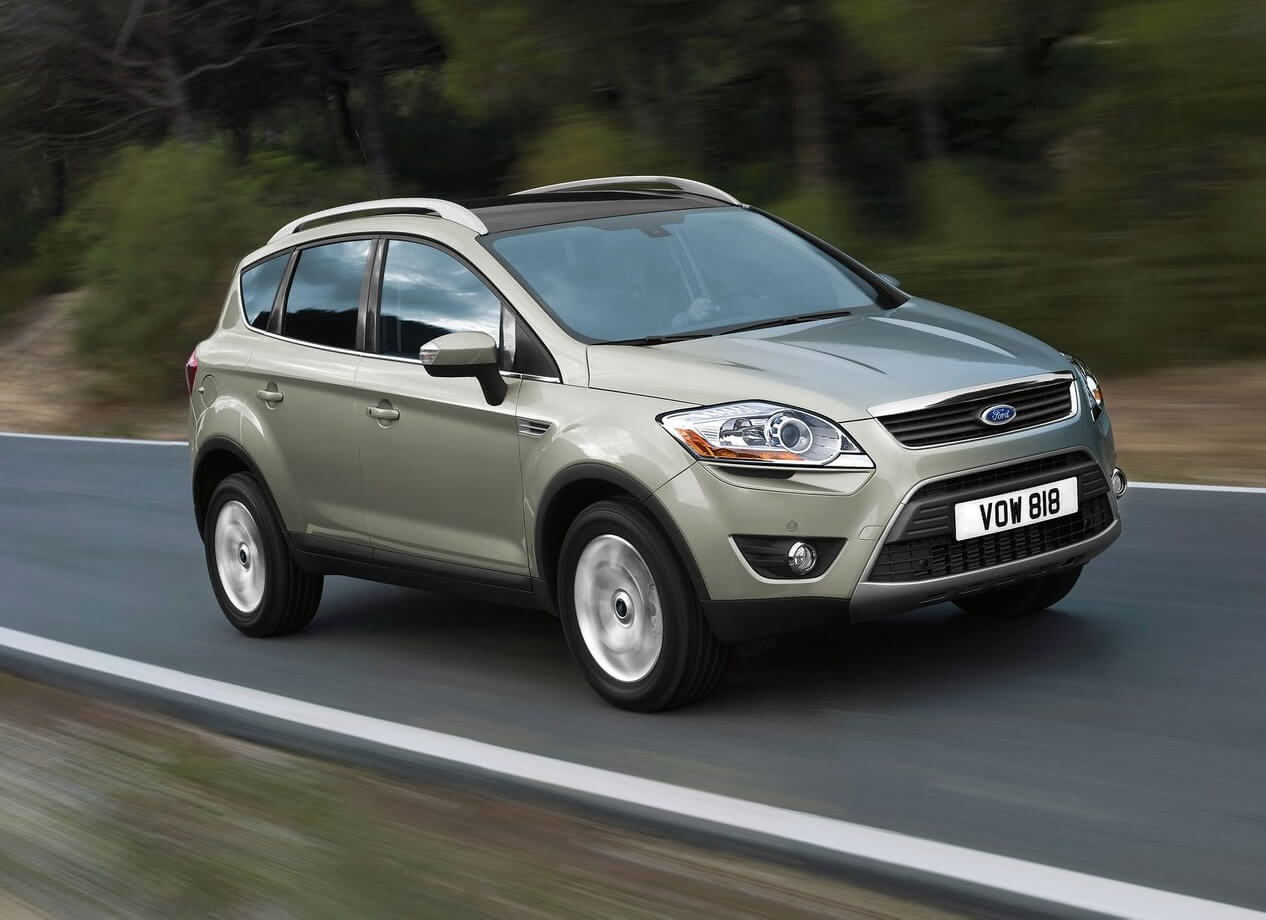
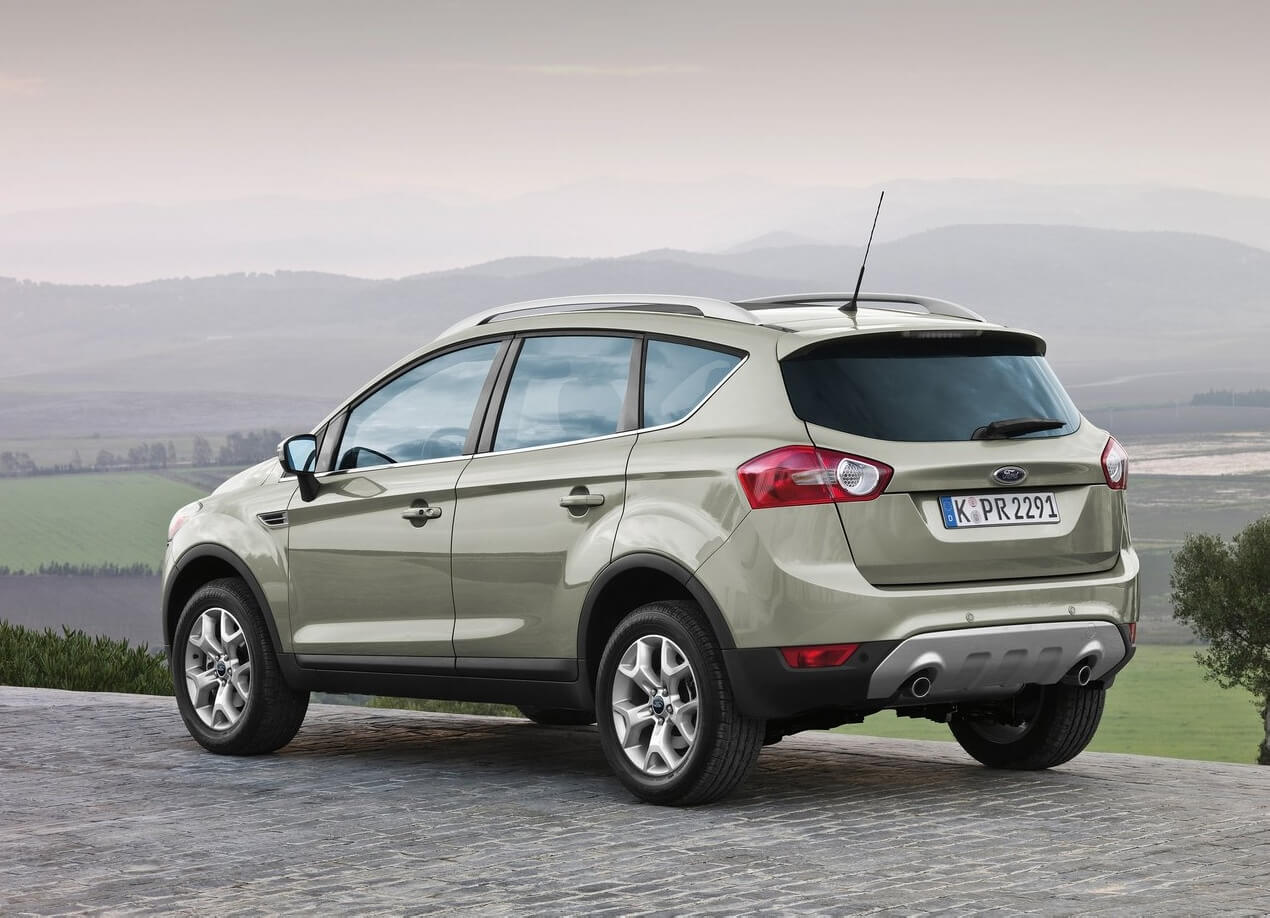
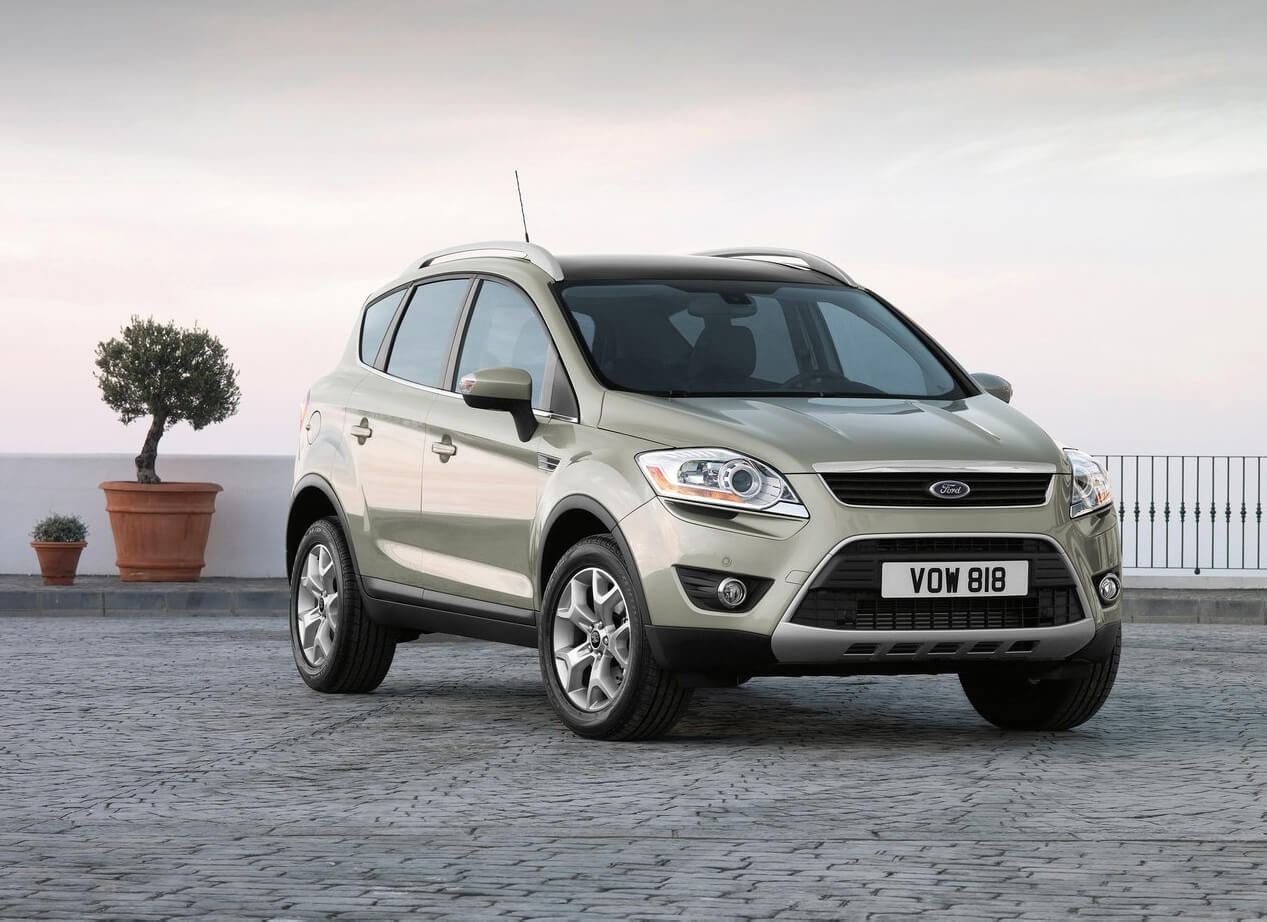
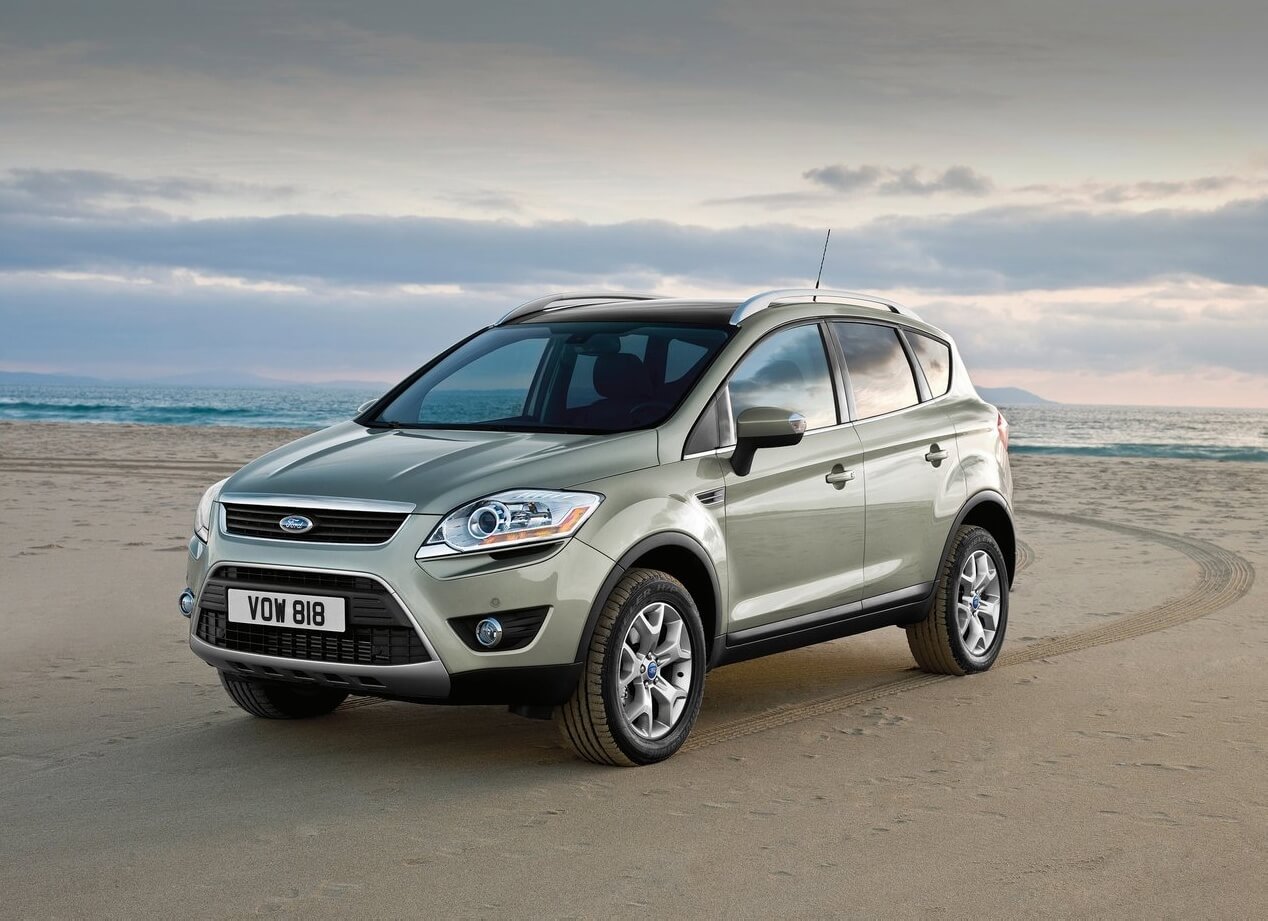
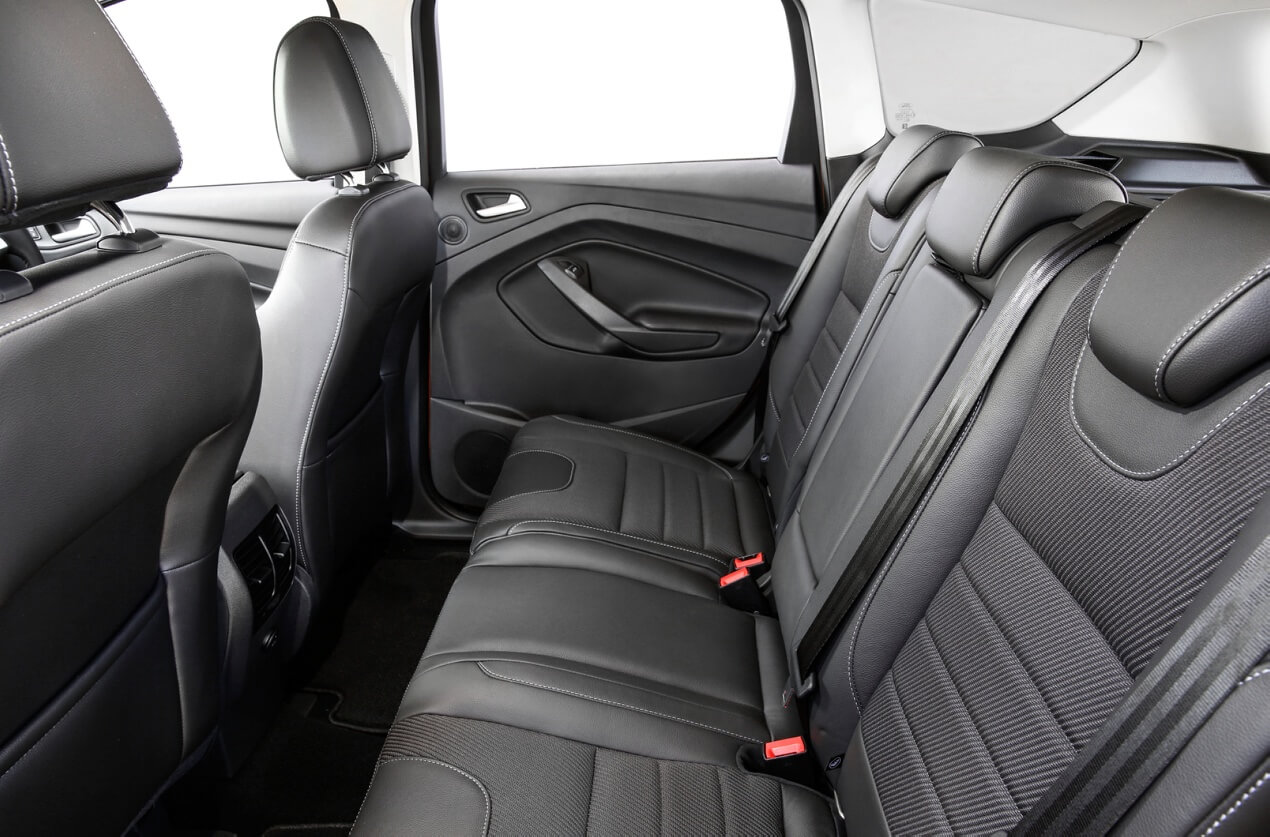
The first Kuga was presented at the Frankfurt Motor Show in September 2007 and went on sale in the first half of 2008. It used Ford's "kinetic design", with a large lower grille, big headlights, pronounced wheel arches, high-mounted tail lights and a sloping rear window that narrows at the sides. Ground clearance is 188 mm. The cabin is closely related to the C-Max, with clear dials and plenty of storage, and the rear bench folds 60:40 to a flat floor. The tailgate has a separately opening glass section. Boot space is about 400 litres, rising to 1,405 litres with the rear seats folded. The rear seat is best for two adults, as the centre passenger has little room.

Kuga I engines and four-wheel drive
| Engine | Power | Torque | Gearbox | 0–100 km/h |
|---|---|---|---|---|
| 2.0 Duratorq TDCi diesel | 100 kW (136 PS) | 320 Nm | 6-speed manual | about 10 s |
| 2.0 Duratorq TDCi diesel | 120 kW (163 PS) | 340 Nm | 6-speed manual or PowerShift | – |
| 2.5 Duratec five-cylinder turbo petrol | 147 kW (200 PS) | 320 Nm | 6-speed manual or 5-speed automatic | 8.2 s (automatic 8.8 s) |
The all-wheel-drive versions use a Haldex clutch that can send up to 50% of the torque to the rear wheels when needed; from late 2008 a fourth-generation Haldex unit with an electric pump was fitted. The rear suspension is a multi-link design from the Focus, giving tidy handling with a firm ride, and the steering has electro-hydraulic assistance. All four wheels have disc brakes, with ventilated discs at the front.
Kuga I safety and trims
The first Kuga has six airbags and ESP. In its 2008 Euro NCAP test it received five stars for adult occupants, four for children and three for pedestrians. Trims were Trend, Titanium and Titanium S; Titanium added alloy wheels, rain and light sensors, dual-zone climate control and cruise control. A facelift was revealed in July 2010.
Second-generation Kuga (2012–2019)
Design and practicality
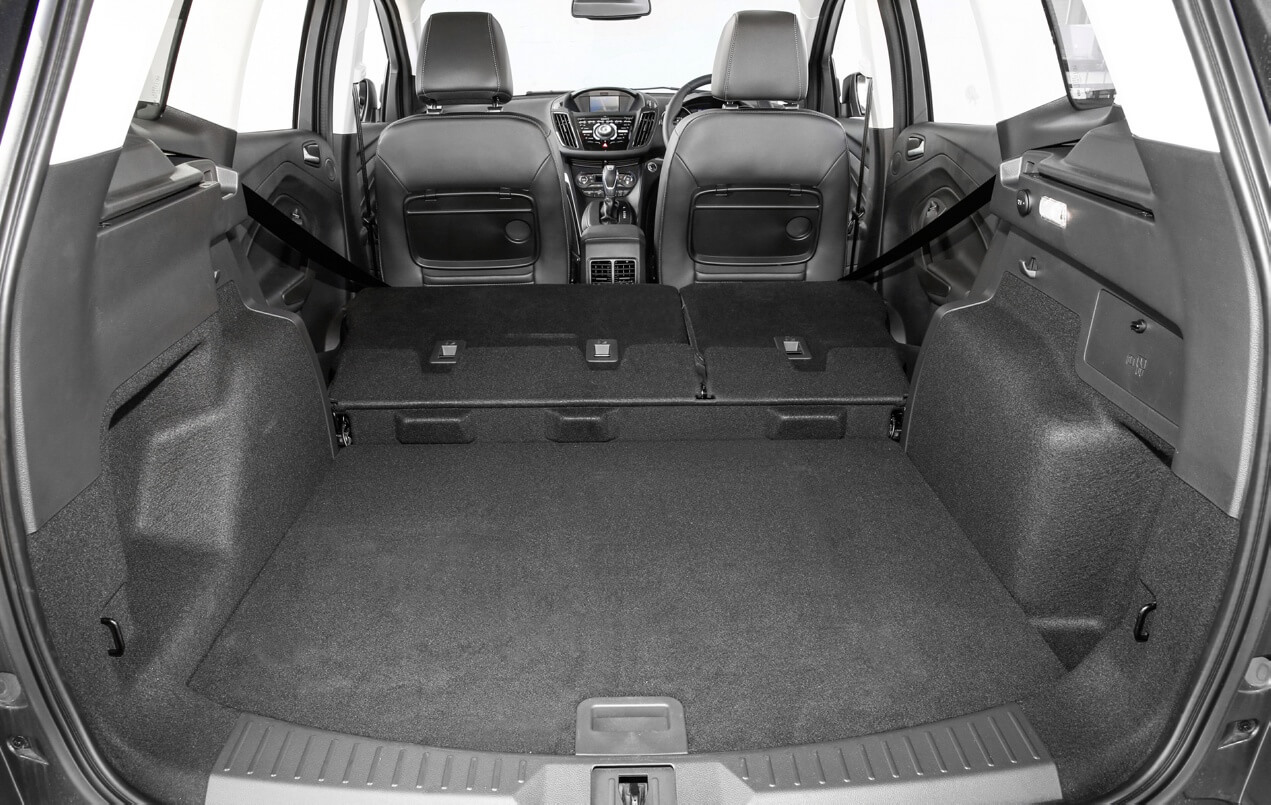
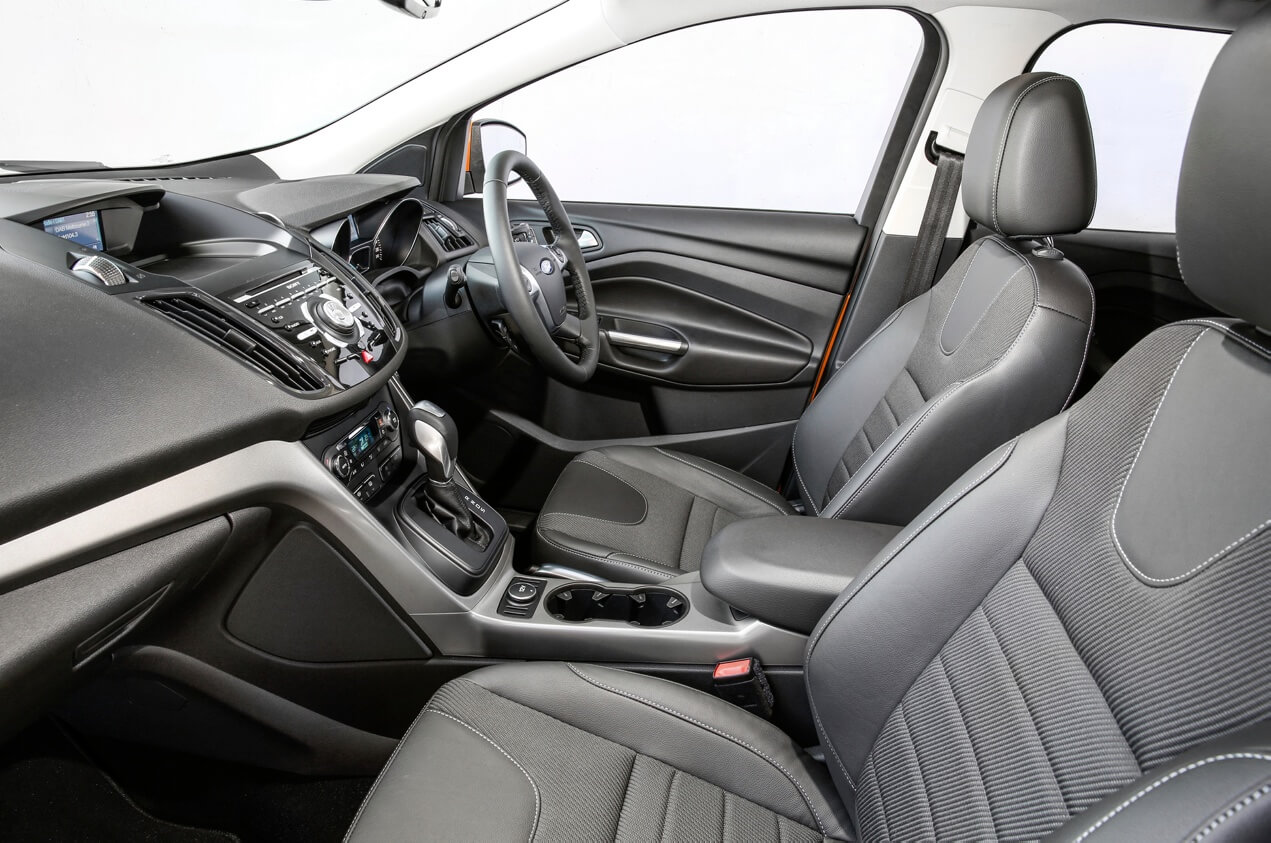
The second Kuga was previewed by the Vertrek concept at the Detroit Motor Show in January 2011 and developed mainly by Ford of Europe under the "One Ford" policy. In North America it became the 2013 Ford Escape, with about 80% of parts shared. It grew by 81 mm in length, gained a wider grille, angular headlights with LED strips and adaptive cornering lights, and an interior closely based on the third-generation Focus. Boot space rose to 456 litres, or 1,653 litres with the seats folded, and a hands-free tailgate opens with a kicking motion under the rear bumper when the key is nearby. A panoramic roof and folding tables on the front seat backs were offered.

Kuga II engines
| Engine | Power | Torque | Drive |
|---|---|---|---|
| 1.5 EcoBoost petrol | 110 kW (150 PS) | – | FWD |
| 1.6 EcoBoost petrol | 110 kW (150 PS) | 240 Nm | FWD |
| 1.6 EcoBoost petrol | 134 kW (182 PS) | 240 Nm | FWD or AWD |
| 2.0 EcoBoost petrol | 178 kW (242 PS) | – | AWD |
| 2.0 TDCi Duratorq diesel | 103–132 kW (140–180 PS) | 340 Nm (140 PS) | FWD or AWD |
Petrol engines were paired with a six-speed manual or a six-speed automatic, and diesels with a six-speed manual or the PowerShift dual-clutch gearbox. Suspension uses MacPherson struts at the front and a multi-link rear axle, with electric power steering. Options included torque vectoring, blind-spot monitoring and Active City Stop automatic braking. In Euro NCAP's 2012 test the Kuga scored 94% for adult occupants, 86% for children, 70% for pedestrians and 100% for safety assist. The facelift, shown at the Mobile World Congress in Barcelona in February 2016, brought a new front end. In South Africa, fires in 1.6 EcoBoost Kugas led to several recalls between 2017 and 2018.
Third-generation Kuga (2019 to today)
The third Kuga debuted on 2 April 2019 and went on sale in the third quarter of that year. It moved to the C2 platform of the latest Focus, is up to 90 kg lighter than its predecessor and is longer and wider, with a longer wheelbase. In North America it is the fourth-generation Escape.

| Version | Engine | Power |
|---|---|---|
| EcoBoost | 1.5 turbo petrol | 88–110 kW (120–150 PS) |
| EcoBlue | 1.5 diesel | 88 kW (120 PS) |
| EcoBlue mild hybrid | 2.0 diesel with 48 V system | 110 kW (150 PS) |
| EcoBlue | 2.0 diesel | 140 kW (190 PS) |
| Hybrid | 2.5 Duratec petrol + electric motor | 140 kW (190 PS) |
| Plug-in Hybrid | 2.5 Duratec petrol + electric motor | 165 kW (225 PS), 14.4 kWh battery, about 48 km electric range |
The mild-hybrid system uses an 11.5 kW belt-driven starter-generator and a 1.1 kWh battery. In Euro NCAP's 2019 test, a 2.0 diesel 4×4 scored 92% for adult occupants, 86% for children, 82% for pedestrians and 73% for safety assist. The plug-in hybrid was Europe's best-selling plug-in hybrid in 2021, 2022 and 2023. A facelift arrived in January 2024.
Rivals: how the Kuga compares
The Kuga competes with the Volkswagen Tiguan, Toyota RAV4, Nissan Qashqai and X-Trail, Hyundai Tucson, Kia Sportage and Peugeot 3008. Its strengths are sharp handling, a wide engine range and, in the third generation, an efficient plug-in hybrid; its weaknesses are a smaller boot than some rivals and tight rear space in the first generation. The related Ford Escape covers the North American versions.

Ford Kuga evolution in numbers
Did you know?
- The Ford Kuga has been around for 18 years: 3 generations in our catalog since 2008.
- The biggest jump in power came with the Kuga II: up to 178 kW (242 PS), 31 kW more than the Kuga I.
- The most powerful Ford Kuga is not the newest: the Kuga II (2012–2019) offered up to 178 kW (242 PS), the Kuga III up to 165 kW (224 PS).
Most powerful version, kW
Figures from the 1cars catalog: power is the strongest version of each generation; generations without the figure are left out.
Ford Kuga: first vs latest generation
| Spec | Kuga I | Kuga III | Change |
|---|---|---|---|
| Years | 2008–2012 | 2019–present | 11 years apart |
| Most powerful version | 147 kW (200 PS) | 165 kW (224 PS) | +18 kW (+12%) |
Oldest and newest generation in the 1cars catalog. Power is the strongest version of each; other rows are shown only when both generations have the figure.
Rivals
Compare with…
Compare Ford Kuga with
- Hyundai Tucson quick spec comparison
- Opel Antara quick spec comparison
- Kia Sportage quick spec comparison
-
Ended 2018
- Years
- 2004–2018
- Body
- SUV
- Fuel
- Petrol, Diesel
- Power
- 100–136 kW (136–185 PS)
4 generations
- JM
- LM
- III
- Tucson
-
Ended 2015
- Years
- 2006–2015
- Body
- SUV
- Fuel
- Petrol, Diesel
- Power
- 103–183 kW (140–249 PS)
-
In production
- Years
- 1993–present
- Body
- Convertible, SUV
- Fuel
- Petrol, Diesel, Hybrid
- Power
- 61–195 kW (83–265 PS)


Ford Kuga in our rankings
- No. 237 of 1122 · Longest-running car nameplates (18 years · top 22%)
- No. 133 of 381 · Oldest car models still on sale (18 years · top 37%)
- No. 188 of 362 · Most powerful cars of the 2010s (178 kW · top 52%)
- No. 637 of 1053 · Most powerful cars (178 kW · top 61%)
- No. 249 of 439 · Cars with the most generations (3 generations · top 62%)
- No. 162 of 253 · Most powerful SUVs and crossovers (178 kW · top 65%)
In production longer than 78% of ranked nameplates in the 1CARS catalog (No. 237 of 1122).
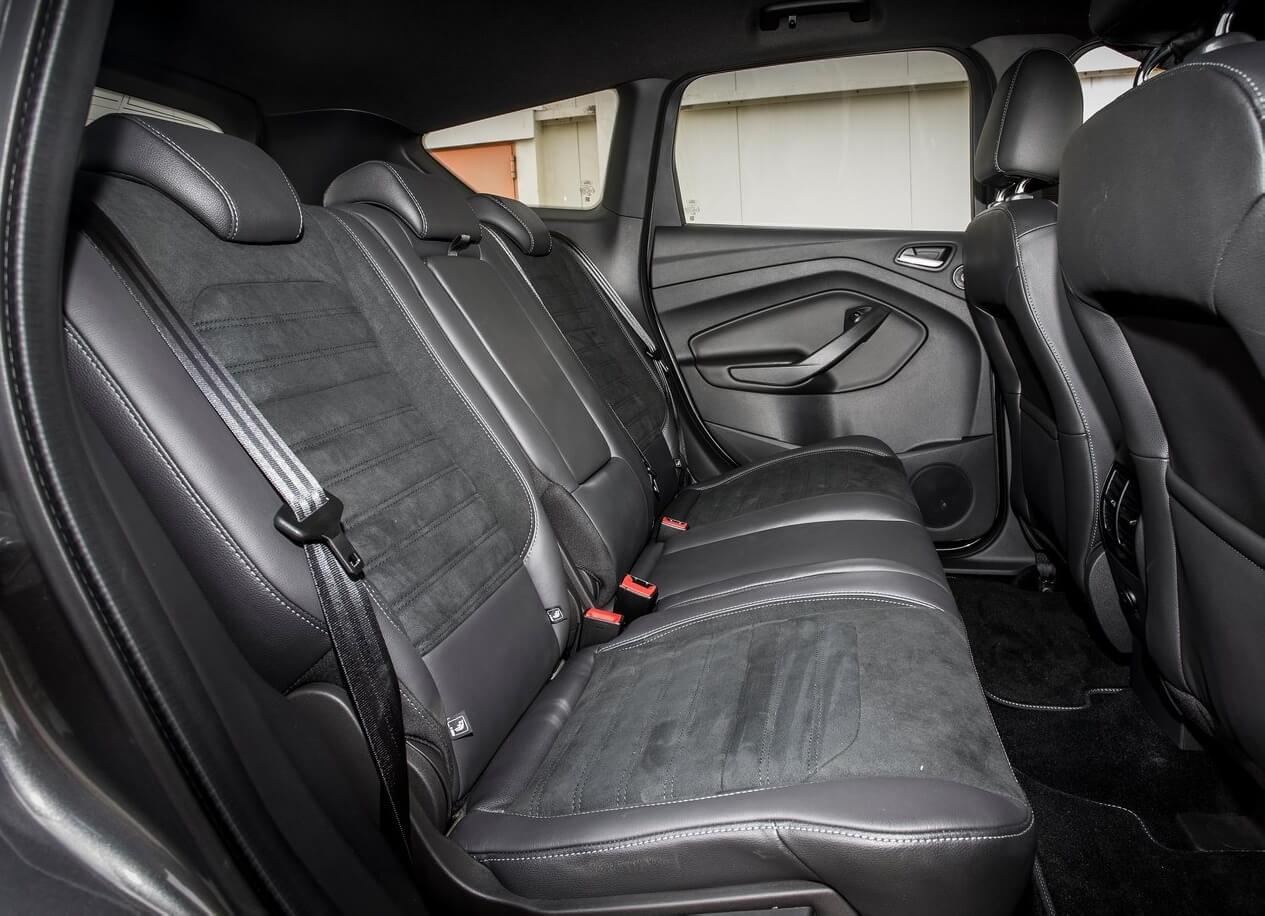
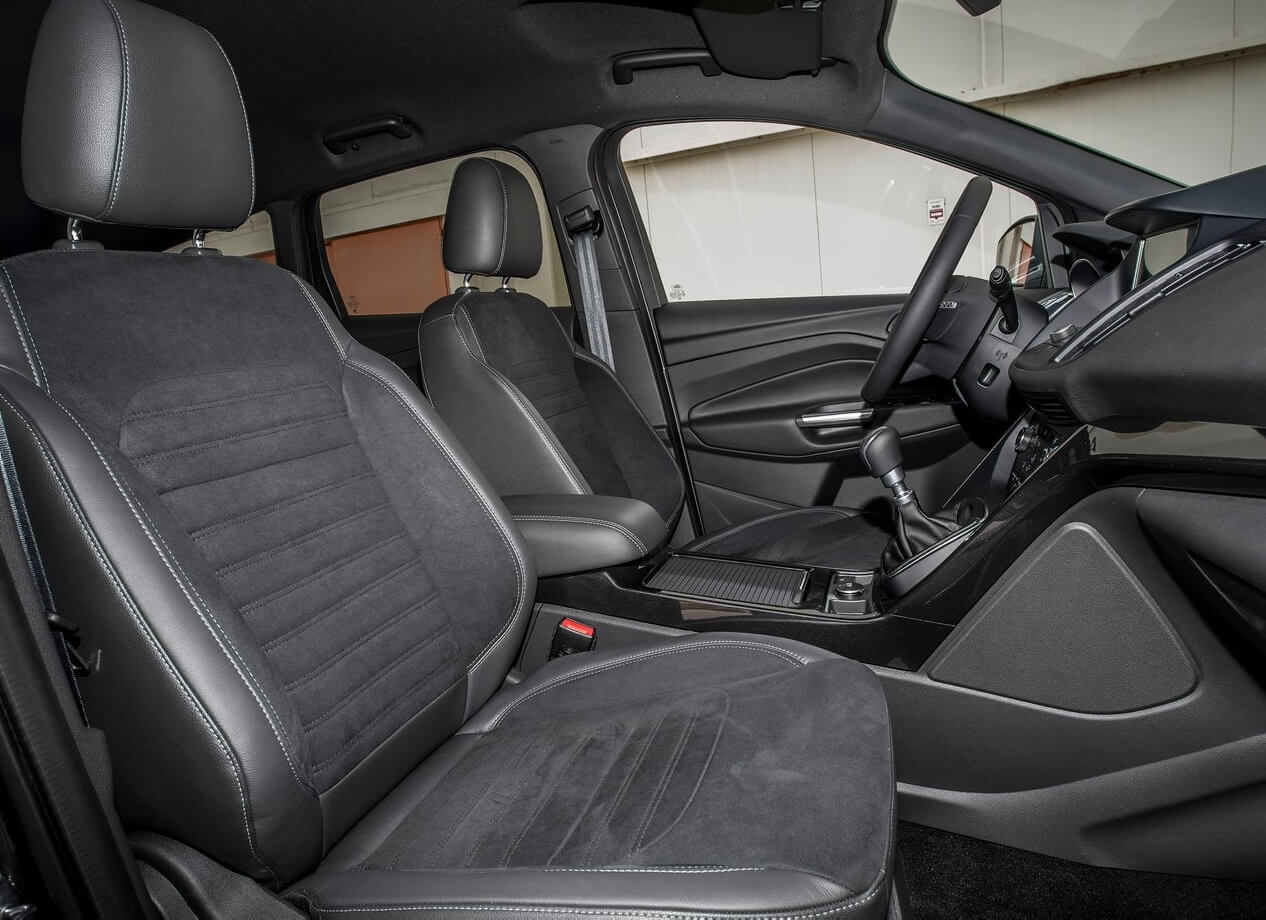
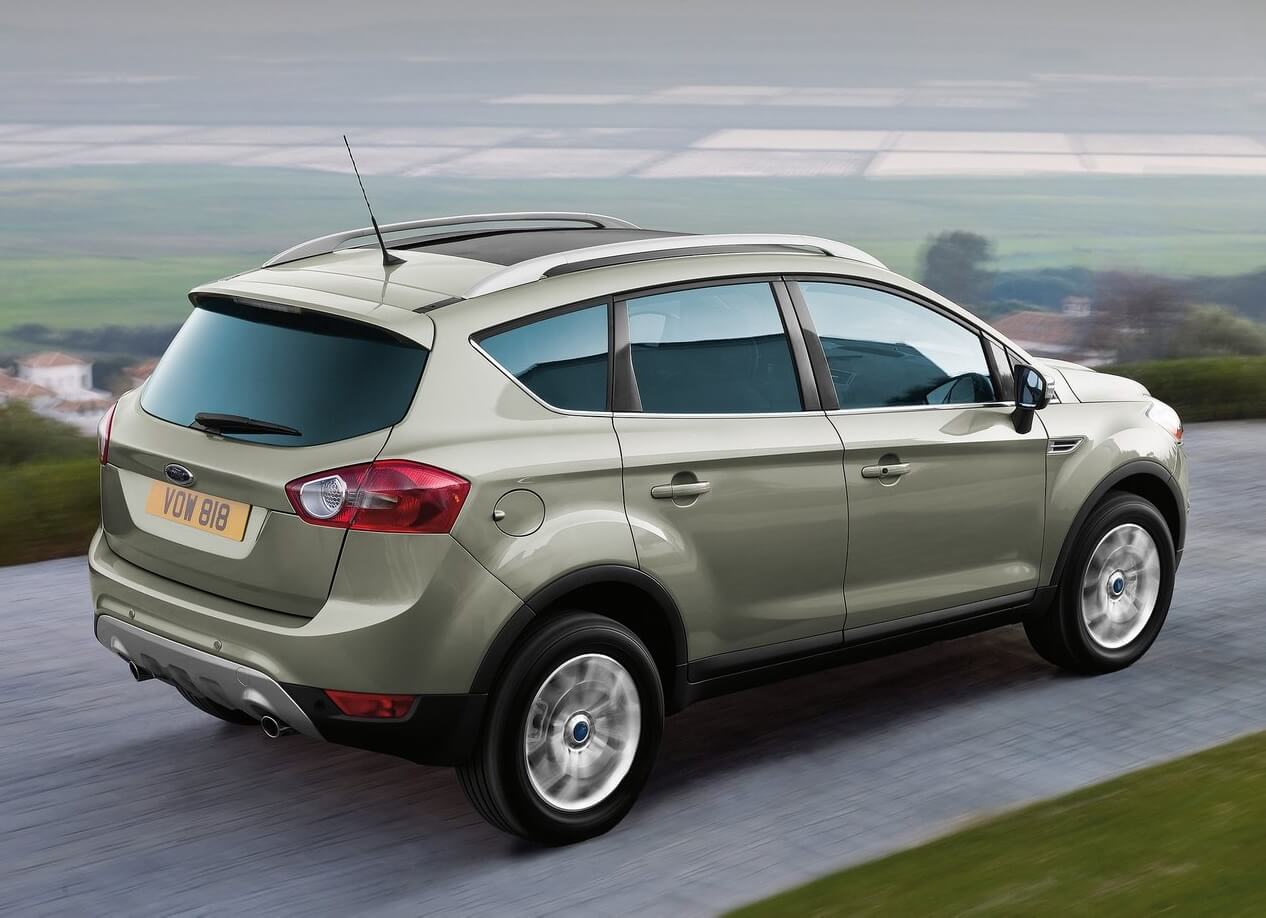
Ford Kuga photos 54






Ford Kuga videos 8

Ford Kuga video 1

Ford Kuga video 2

Ford Kuga video 3

Ford Kuga video 4

Ford Kuga video 5

Ford Kuga video 6

Ford Kuga video 7

Ford Kuga video 8
FAQ
How many generations of the Ford Kuga are there?
There are three: the first from 2008 to 2012, the second from 2012 to 2019 and the third from 2019. The second and third generations are sold in North America as the Ford Escape.
Where is the Ford Kuga built?
The first generation was built in Saarlouis, Germany. European second- and third-generation Kugas come from Ford's Valencia plant in Spain, with other plants in China and Taiwan building versions for those markets.
What is the Ford Kuga Plug-in Hybrid?
It combines a 2.5-litre petrol engine with an electric motor for 165 kW (225 PS) and has a 14.4 kWh battery with about 48 km of electric range. It was Europe's best-selling plug-in hybrid from 2021 to 2023.
How big is the Ford Kuga boot?
The first generation offered about 400 litres, or 1,405 litres with the seats folded. The second generation grew to 456 litres and 1,653 litres with the rear seats folded.
Is the Ford Kuga four-wheel drive?
Many versions are. The first generation used a Haldex clutch sending up to 50% of torque to the rear wheels, and later generations offer intelligent all-wheel drive with selected engines; base models are front-wheel drive.
Data sources
Data checked by an editor against the sources below.
- The text of this article (1cars archive)
- Wikipedia - Ford Kuga
- Co - Ibiza And Kuga Top The List As Seven New Crash Test Results Revealed
- Co - Top Marks For Most In Euro Ncap Safety Test
- Euro NCAP - Best In Class Battle Heats Up In Latest Batch Of Results


