
 Ford Escape
All generations, specs and history
Updated Published Sources (3) Report an error
By Felix Hartmann, Automotive Technology & EV Contributor Reviewed by Oleksandr Hnatiuk

- Built
- 2001–2026
- Generations
- 5
- Top power
- 186 kW (253 PS)
Timeline
Escape generations
Click a generation for its own page
II and Gen 4 overlapped in 2013–2012, so Gen 4 sits on a second lane
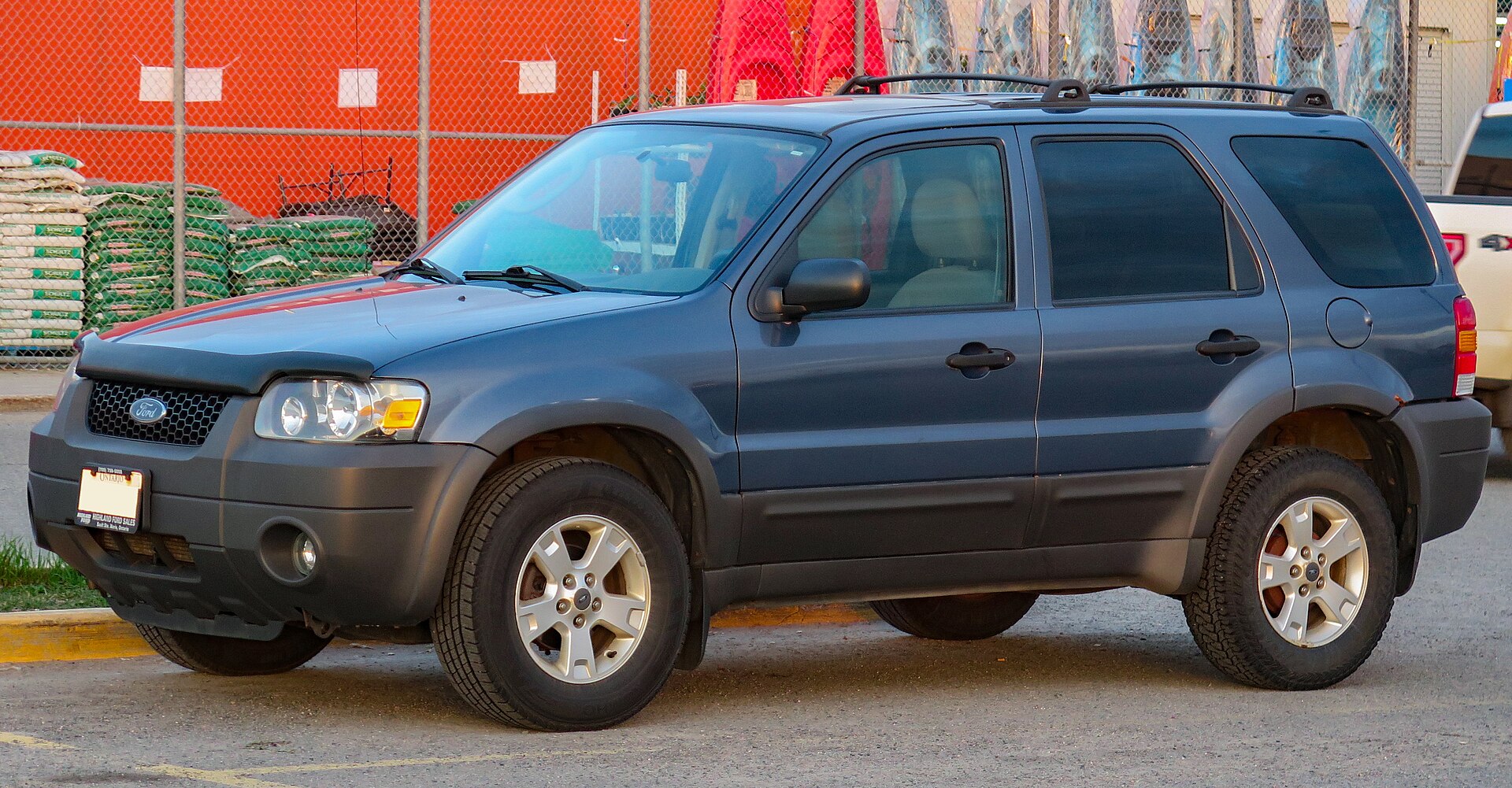
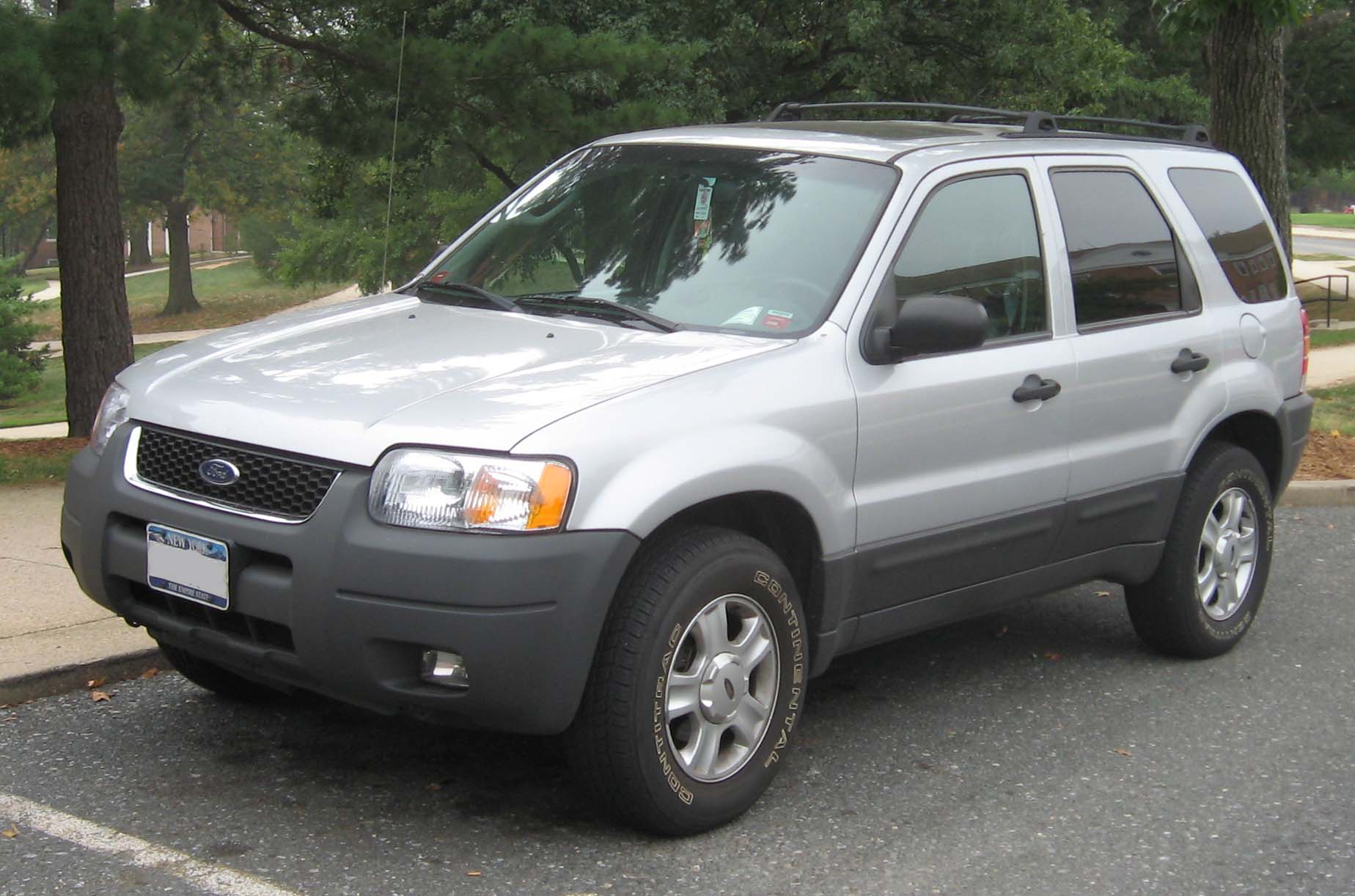
- Escape I 2000–2006 · SUV
- Escape II 2006–2012 · SUV
- Escape III 2012–2019 · SUV
- Escape in 2013 · SUV · 95–186 kW (129–253 PS)
- Escape IV 2019–2025 · SUV
Newest first · 5 generations since 2000
-
2019
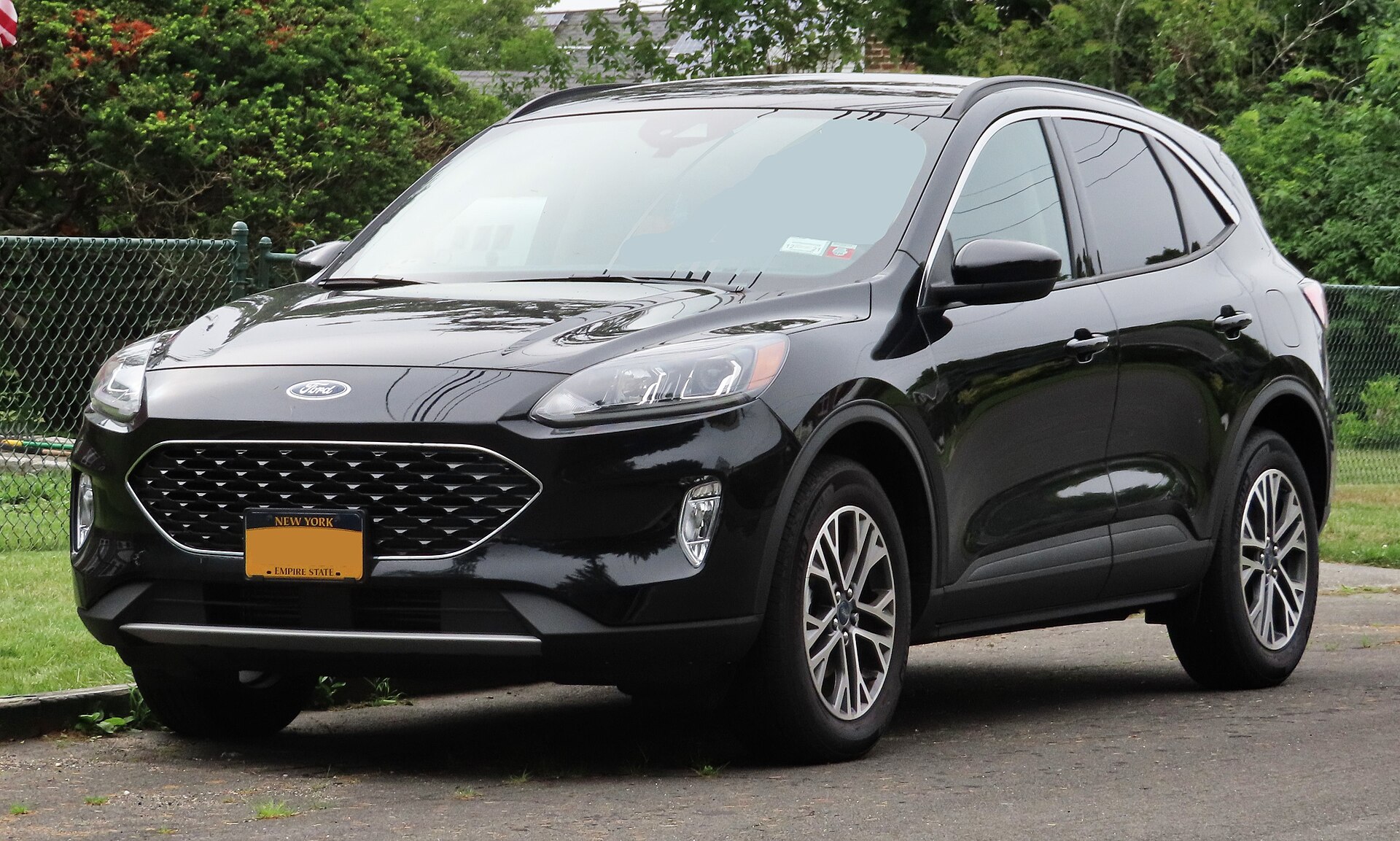
-
2012
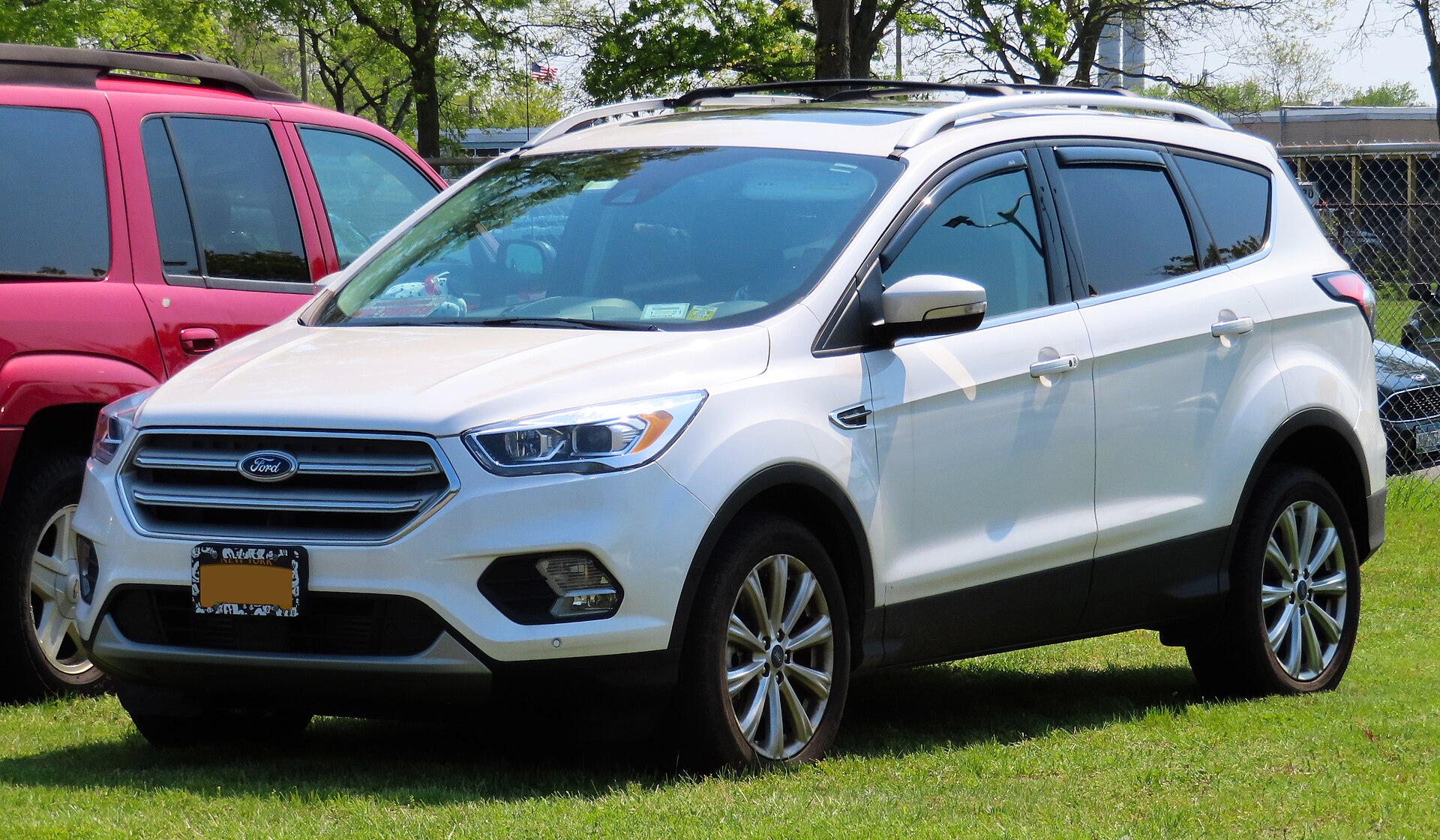
-
2013
-
2006
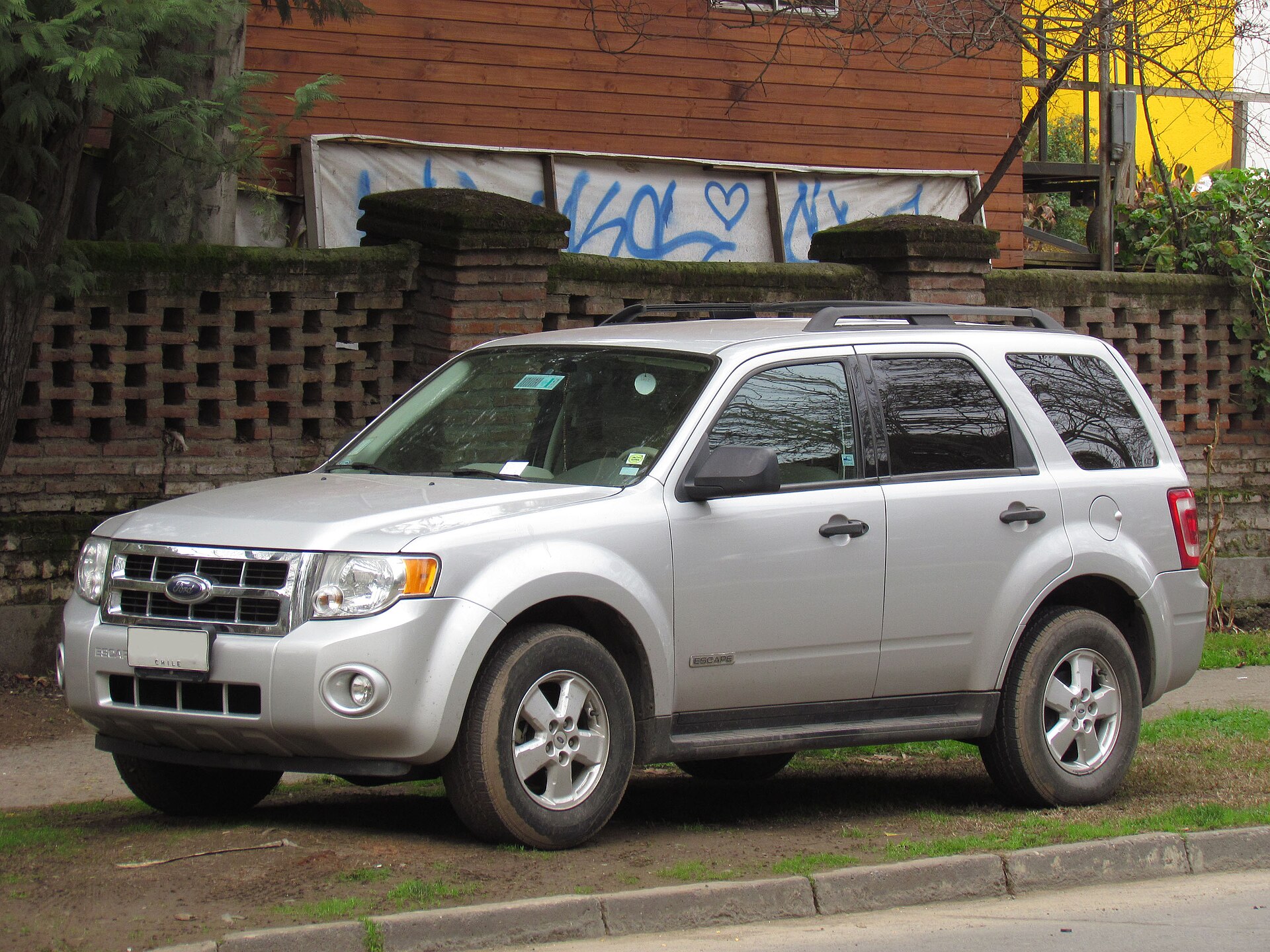
-
2000


All generations by year: Escape IV (2019–2025) · Escape III (2012–2019) · Escape (in 2013) · Escape II (2006–2012) · Escape I (2000–2006)
Which one is mine?
Pick the year of first registration to see which generation it is.
- Escape IV 2019–2025
- Escape III 2012–2019
- Escape II 2006–2012
- Escape I 2000–2006
Which Ford Escape to buy
Our verdict · Felix Hartmann
For most used buyers, the best pick is a 2020–2026 Escape Hybrid. It combines low fuel use with the newest safety equipment and a roomy, flexible cabin. The plug-in hybrid suits drivers who can charge at home and drive short daily distances. Buyers who tow should choose the 2.0 EcoBoost, which comes only with all-wheel drive.
A third-generation 1.5 or 2.0 EcoBoost is a good-value used choice, but check the service record and that all recall work has been done. The first two generations are cheap and simple; the early hybrids need a check of the high-voltage battery. In Europe, the same car is easier to find and service as the Kuga. Other models from the brand are in the Ford catalogue on 1cars.
The Ford Escape is a compact SUV built for North America from April 2000 to December 2025, over four generations. The first two were developed with Mazda and spawned the 2005 Escape Hybrid, the first hybrid SUV sold in the USA. The last two were twins of the European Ford Kuga. Power ranged from 95 kW to 186 kW.
In short
- Generations: 2001–2007, 2008–2012, 2013–2019 and 2020–2026 model years; more than five million sold in the USA.
- Engines: four-cylinder petrol, V6 (until 2012), EcoBoost turbo engines (from 2013), hybrid and plug-in hybrid.
- Europe: generations three and four were sold as the Ford Kuga; the Escape name stayed in North America and some other markets.
- End: Ford stopped production at Louisville in December 2025 to retool the plant for electric vehicles.

Specs by version
| Version | Engine | Power |
|---|---|---|
| Hybrid · 1 version | ||
| Escape · 2.5 126 kW (171 PS) SUV | 2.5 l · 4 cyl · Hybrid 2,500 cc | 126 kW 171 PS169 hp |
| Petrol · 1 version | ||
| Escape · 2.0 93 kW (126 PS) SUV | 2.0 l · 4 cyl · Petrol 2,000 cc | 93 kW 126 PS125 hp |
| Other · 3 versions | ||
| Escape · 2.0 96 kW (131 PS) SUV | 2.0 l 2,000 cc | 96 kW 131 PS129 hp |
| Escape · 147 kW (200 PS) SUV | 6 cyl | 147 kW 200 PS197 hp |
| Escape · 177 kW (241 PS) SUV | 6 cyl | 177 kW 241 PS237 hp |
Verified Manufacturer and type-approval data from our catalog · Sources and methodology
Safety
-
Escape IV · NHTSA 2024
US NCAP (NHTSA)
-
Escape III · NHTSA 2018
US NCAP (NHTSA)
-
Escape II · NHTSA 2011
US NCAP (NHTSA)
Stars from different years and organisations are not directly comparable: test protocols change every few years.
Key facts at a glance

| Fact | Value |
|---|---|
| Segment | Compact SUV (crossover) |
| Production | April 2000 – December 2025 (model years 2001–2026) |
| Plants | Avon Lake (Ohio), Claycomo (Missouri), Hofu (Japan, Mazda); Louisville (Kentucky) from 2008 |
| Related models | Mazda Tribute, Mercury Mariner (generations 1–2); Ford Kuga (generations 3–4) |
| Drive | Front-wheel or all-wheel drive |
| First hybrid | Escape Hybrid, 2005 model year |
| US sales | More than five million over the model's life |
Four generations from 2000 to 2025
| Generation | Model years | Base | Engines |
|---|---|---|---|
| First | 2001–2007 | Ford CD2, co-developed with Mazda | 2.0 and 2.3 I4, 3.0 V6, 2.5 hybrid |
| Second | 2008–2012 | CD2, new body and interior | 2.3/2.5 I4, 3.0 V6, 2.5 hybrid |
| Third | 2013–2019 | Shared with the Ford Kuga | 2.5 I4, 1.5/1.6/2.0 EcoBoost |
| Fourth | 2020–2026 | Shared with the third Ford Kuga | 1.5 and 2.0 EcoBoost, hybrid, plug-in hybrid |
First generation (2001–2007): Mazda partnership and the first hybrid SUV
Development started in 1997, according to the old 1cars text, and the Escape went on sale in 2000 as a 2001 model. Ford held the controlling interest in the joint project with Mazda, which sold its own version as the Tribute. A Mercury Mariner joined in 2005. Production was split between Ford's Ohio and Missouri plants and Mazda's Hofu factory in Japan.
The base engine was a 2.0 Zetec four-cylinder with 95 kW (127 hp), replaced for 2005 by a 2.3 Duratec. The 3.0 Duratec V6 delivered 150 kW (200 hp). The old text notes that the four-cylinder came with a five-speed manual and the V6 with an automatic. The car measured 4,394 mm long at first and 4,442 mm after the 2005 update, and weighed 1,473 kg with front-wheel drive or 1,568 kg with 4WD.
The Escape Hybrid arrived for the 2005 model year as the first hybrid SUV in the USA and Ford's first hybrid car. Its 2.5 Atkinson-cycle engine produced 99 kW (133 hp), and the combined output with the electric motor was 116 kW (155 hp). Ford's aim, as the old text puts it, was V6-like acceleration with much lower fuel use; the electronics chose between petrol, electric or combined drive.
Second generation (2008–2012): new body, more power
The second Escape was shown at the 2006 Los Angeles Auto Show and kept the CD2 underpinnings under new sheet metal and a new cabin. For 2009 Ford fitted a 2.5 Duratec four-cylinder with 128 kW (171 hp) and a stronger 3.0 V6 with 180 kW (240 hp), plus a six-speed automatic. The old text adds that the 2009 update brought better sound insulation and a folding rear seat that enlarged the boot.
Production moved to Louisville, Kentucky. The 2010 front-drive Escape Hybrid was rated by the EPA at 34 mpg in the city and 31 mpg on the highway, or about 6.9 and 7.6 l/100 km by our conversion.
Third generation (2013–2019): the Kuga twin
For 2013 the Escape became a North American version of the Ford Kuga, designed by Ford of Europe. The V6 and the hybrid were dropped. Buyers chose between a 2.5 Duratec with 125 kW (168 hp) and two EcoBoost turbo engines: a 1.6 with 129 kW (173 hp) and a 2.0 with 177 kW (237 hp). From the 2017 model year a 1.5 EcoBoost with 133 kW (179 hp) replaced the 1.6.
This was the most popular Escape. US sales peaked at 308,296 in 2017. The European counterpart is described on our Ford Kuga page.
Fourth generation (2020–2026): hybrid and plug-in hybrid
The last Escape was revealed on 2 April 2019 and reached dealers in the third quarter of that year as a 2020 model. It was more than 90 kg lighter than its predecessor, with a longer body and a wider track. All engines used an eight-speed automatic except the hybrids, which used an eCVT.
Ford Escape key specifications (2020–2026)
| Parameter | Metric | Imperial |
|---|---|---|
| 1.5 EcoBoost three-cylinder | 135 kW, 258 Nm | 181 hp, 190 lb-ft |
| 2.0 EcoBoost four-cylinder (AWD only) | 186 kW, 380 Nm | 250 hp, 280 lb-ft |
| 2.5 hybrid (combined) | 149 kW, 1.1 kWh battery | 200 hp |
| 2.5 plug-in hybrid (combined) | 156 kW, 14.4 kWh battery | 209 hp |
| Plug-in electric range (EPA) | 60 km | 37 miles |
| Kerb weight | 1,496–1,762 kg | 3,299–3,884 lb |
| Maximum cargo space | 1,062 l | 37.5 cu ft |
By our calculation, the 2.0 EcoBoost has almost twice the power of the 2001 base engine (186 kW against 95 kW), while the hybrid adds 54 kW over it with far lower fuel use.

Hybrid, plug-in or petrol: fuel use and costs
The hybrid versions have always been the economical choice. The plug-in hybrid was rated at 100 MPGe and can cover short commutes on electricity alone. The petrol EcoBoost engines are efficient on paper but use noticeably more fuel when towing or driven hard. The V6 models of the first two generations are the thirstiest. Compare fuel bills for different versions with the 1cars fuel cost calculator.

Escape trim levels and the sliding rear seat
US buyers chose from simple base versions up to the well-equipped Titanium, with front- or all-wheel drive on most versions. The fourth generation added sliding rear seats on combustion models, which create the 1,062-litre maximum cargo figure. Adaptive cruise control and other driver assistance became common on higher trims.

Crash-test results: IIHS and ANCAP
The third generation scored "Good" in the IIHS moderate-overlap, side and roof tests, but only "Poor" in the driver-side small-overlap test for 2013–2016, improving to "Acceptable" from 2017. The fourth generation was an IIHS Top Safety Pick for 2020, with "Good" small-overlap results on both sides.

In 2019 ANCAP tested the fourth generation, also sold in Australia as the Escape. Under rules aligned with Euro NCAP it scored 92 % for adult occupants, 89 % for children, 82 % for vulnerable road users and 77 % for safety assist.
Rivals compared: RAV4, CR-V, CX-5 and Tucson
| Model | Hybrid offered | How it differs from the Escape |
|---|---|---|
| Toyota RAV4 | Yes, and plug-in | The best-selling rival, with a long hybrid record |
| Honda CR-V | Yes | Roomier rear seat |
| Mazda CX-5 | Mild hybrid only (third generation) | Sharper handling and a premium cabin |
| Hyundai Tucson | Yes, and plug-in | Longer warranty, bolder styling |
| Ford Bronco Sport | No | Ford's other small SUV, more off-road focused |
The Escape held its own until the end: Ford sold 82,589 in the first half of 2025, compared with 72,438 Bronco Sports. Put any of these SUVs side by side with the 1cars comparison tool.

Ford Escape evolution in numbers
Did you know?
- Our catalog covers 4 generations of the Ford Escape, from 2000 to 2025.
- The longest-running generation is the Escape III (2012–2019): 7 years.
Image credits · Photos from Wikimedia Commons under free licences
- Ford Escape I · Photo: IFCAR / Wikimedia Commons, Public domain
- Ford Escape II · Photo: order_242 from Chile / Wikimedia Commons, CC BY-SA 2.0
- Ford Escape III · Photo: Kevauto / Wikimedia Commons, CC BY-SA 4.0
- Ford Escape · Photo: Elise240SX / Wikimedia Commons, CC BY-SA 4.0
- Ford Escape IV · Photo: Kevauto / Wikimedia Commons, CC BY-SA 4.0
Rivals
Compare with…
Compare Ford Escape with
- Suzuki Grand Vitara quick spec comparison
-
Ended 2015
- Years
- 1998–2015
- Body
- Convertible, SUV
- Fuel
- Petrol, Diesel
- Power
- 64–135 kW (87–184 PS)
2 generations
- FT/GT
- JT

Ford Escape in our rankings
- No. 122 of 1082 · Longest-running car nameplates (25 years · top 12%)
- No. 92 of 411 · Cars with the most generations (5 generations · top 25%)
- No. 64 of 155 · Biggest engines: SUVs and crossovers (2,500 cc · top 45%)
- No. 329 of 627 · Biggest engines: cars (2,500 cc · top 55%)
- No. 588 of 1011 · Most powerful cars (186 kW · top 59%)
- No. 155 of 253 · Most powerful SUVs and crossovers (186 kW · top 62%)
In production longer than 88% of ranked nameplates in the 1CARS catalog (No. 122 of 1082).
Ford Escape photos 12


Ford Escape videos 2

Test drive

Video review
FAQ
What is the fuel consumption of the Ford Escape?
It depends on the generation. The 2010 front-drive Escape Hybrid was rated at 34 mpg city and 31 mpg highway (about 6.9 and 7.6 l/100 km), and the 2020–2026 plug-in hybrid at 100 MPGe with 60 km of electric range.
Is the Ford Escape available with all-wheel drive or as a hybrid?
Yes to both. Most versions offered front- or all-wheel drive, and the 2.0 EcoBoost of the last generation was all-wheel drive only. Hybrids were sold from 2005 to 2012 and again from 2020, plus a plug-in hybrid.
What are the main rivals of the Ford Escape?
The main rivals are the Toyota RAV4, Honda CR-V, Mazda CX-5, Hyundai Tucson and Kia Sportage. Ford's own Bronco Sport is a similar size but more off-road oriented.
Why was the Ford Escape discontinued?
Ford announced in August 2025 that the Escape would end after the 2026 model year. Production at Louisville stopped in December 2025, because the plant was being rebuilt for a new family of electric vehicles.
Is the Ford Escape the same as the Ford Kuga?
From 2013 the two were closely related. The third and fourth Escape generations were North American versions of the Kuga, built at Louisville with engines and trims for that market.
Data sources
Data checked by an editor against the sources below.
- The text of this article (1cars archive)
- Wikipedia - Ford Escape
- NHTSA 5-Star Safety Ratings (US NCAP) — U.S. Government work, public domain


