
 Citroen Berlingo
All generations, specs and history
Updated Published Sources (5) Report an error
By Oleksandr Hnatiuk, Automotive Editor & Used Car Specialist Reviewed by Felix Hartmann

- Built
- 1996–present
- Generations
- 3
- Top power
- 96 kW (131 PS)
- New price
- from about €19,090 (2018)
Timeline
Berlingo generations
Click a generation for its own page · facelift


- Berlingo I 1996–2002 · Minivan / MPV, Van · 51–80 kW (69–109 PS)
- Berlingo B9 2008–2018 · Minivan / MPV, Van · 55–88 kW (75–120 PS) · facelift 2012
- Berlingo K9 Current 2018–now · Minivan / MPV, Van · 74–96 kW (101–131 PS)
Newest first · 3 generations since 1996
-
2018

-
2008

- 2012FL 2012 · facelift
-
1996

All generations by year: Berlingo K9 (2018–now) · Berlingo B9 (2008–2018) · Berlingo I (1996–2002)
Which one is mine?
Pick the year of first registration to see which generation it is.
- K9 2018–present
- B9 2008–2018
- Berlingo I 1996–2002
The Citroën Berlingo is a compact van and leisure MPV launched in July 1996 and built mainly in Vigo, Spain, and Mangualde, Portugal. Sold as a two-seat panel van and as the five- or seven-seat Multispace, it combines van practicality with family-car comfort. It has gone through three generations, always alongside its Peugeot twin, and was offered with electric drive in every generation.
In short
- First generation (1996): based on the ZX/306 floorpan; facelifts in 2002 and 2004; electric version with nickel-cadmium batteries from 1998.
- Second generation (B9, 2008): PSA PF2 platform; 1.6 HDi and BlueHDi diesels; electric Berlingo with i-MiEV technology from 2013.
- Third generation (K9, 2018): M and XL lengths, five or seven seats; shared with Peugeot, Opel, Vauxhall, Toyota and Fiat.
- More than 2.4 million Berlingos had been built by 2011.

Size at a glance
| Dimensions | Citroen Berlingo B9 |
|---|---|
| Length | 4,380 mm172.4 in |
| Width | 1,810 mm71.3 in |
| Height | 1,801 mm70.9 in |
| Wheelbase | 2,728 mm107.4 in |
| Boot | 675 L23.8 cu ft |
Specs by version
Engines
| Version | Engine | Power |
|---|---|---|
| Berlingo I · 4.0 55 kW (75 PS) | 4.0 l · Diesel 4,000 cc | 55 kW 75 PS74 hp |
| Berlingo I · 1.8 66 kW (90 PS) | 1.8 l · Diesel 1,800 cc | 66 kW 90 PS89 hp |
| Berlingo I · 2.0 66 kW (90 PS) | 2.0 l 2,000 cc | 66 kW 90 PS89 hp |
| Berlingo I · 6.0 80 kW (109 PS) | 6.0 l 6,000 cc | 80 kW 109 PS107 hp |
| B9 · 2008–2018 | ||
| B9 · 66 kW (90 PS) | - | 66 kW 90 PS89 hp |
Performance
Show all 1 versions
| Version | 0–100 km/h | Top speed | Fuel consumption |
|---|---|---|---|
| B9 · 2008–2018 | |||
| B9 · 66 kW (90 PS) | 15.5 s 0–62 mph | 177 km/h110 mph | 8.4 l/100 km28.0 mpg US · 33.6 mpg UK |
Dimensions and weight
Show all 1 versions
| Version | Length | Width | Height | Wheelbase | Kerb weight | Boot |
|---|---|---|---|---|---|---|
| B9 · 2008–2018 | ||||||
| B9 · 66 kW (90 PS) | 4,380 mm172.4 in | 1,810 mm71.3 in | 1,801 mm70.9 in | 2,728 mm107.4 in | 1,395 kg3,075 lb | 675 l23.8 cu ft |
Verified Manufacturer and type-approval data from our catalog · Sources and methodology
Citroën Berlingo at a glance
The Berlingo created a new class of practical, affordable vehicles that combine a van's load space with car-like comfort. Its twin, the Peugeot Partner, has shared its body and mechanicals since 1996. Citroën's story is told in the history of Citroën, and the range is in the Citroën catalogue.

| Generation | Code | Years | Platform | Key facts |
|---|---|---|---|---|
| Berlingo I | M49/M59 | 1996–2010s | ZX/306 floorpan | Facelifts 2002 and 2004; up to 800 kg payload |
| Berlingo II | B9 | 2008–2018 | PSA PF2 (C4) | 1.6 HDi/BlueHDi; electric from 2013 |
| Berlingo III | K9 | 2018– | Modular platform | M and XL; ë-Berlingo from 2021 |
First generation (1996–2010s)
The Berlingo was previewed at the 1996 Paris Motor Show with three concepts, and the "Grand Large" concept became the Multispace and Combi. It used the floorpan and mechanicals of the Citroën ZX and Peugeot 306 estate, carried up to 800 kg and had a high driving position with good visibility. The interior plastics are hard and can rattle on poor roads, but build quality was solid. It was revised in September 2002 and again in 2004, and besides Spain and Portugal it was also built in France, Argentina, Morocco, Poland, Kazakhstan and Uruguay.

| Engine | Power |
|---|---|
| 1.4 TU3 petrol | 55 kW (75 PS) |
| 1.6 TU5 petrol | 80 kW (109 PS) |
| 1.8 XU7 petrol | 66 kW (90 PS) |
| 1.9 D diesel | 52 kW (71 PS) |
| 2.0 DW10 HDi diesel | 66 kW (90 PS) |
| 1.6 DV6 HDi diesel | 55–68 kW (75–92 PS) |
| Electric (1998–2005) | 28 kW (38 PS), 180 Nm, nickel-cadmium batteries |
Second generation (B9, 2008–2018)
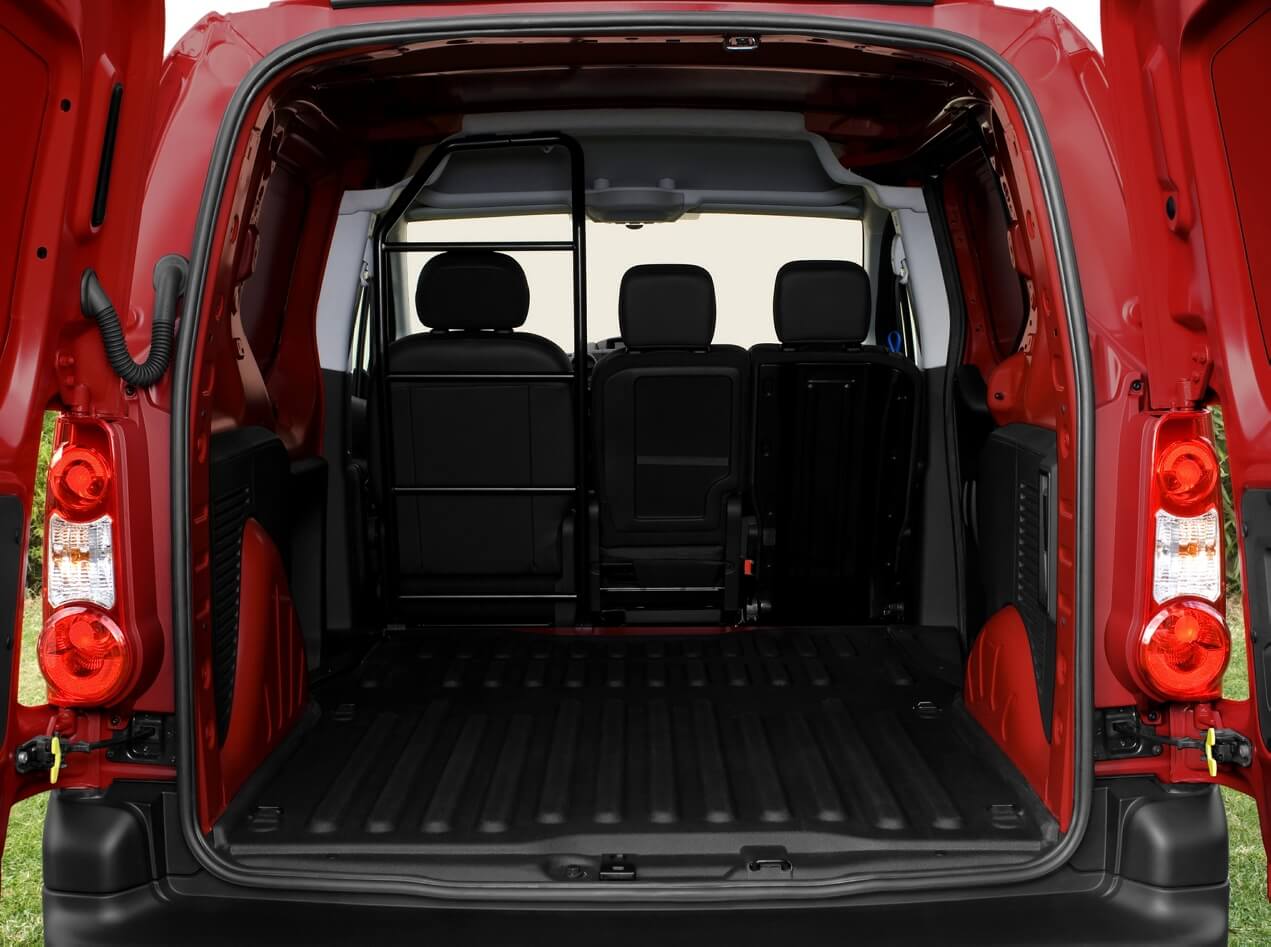
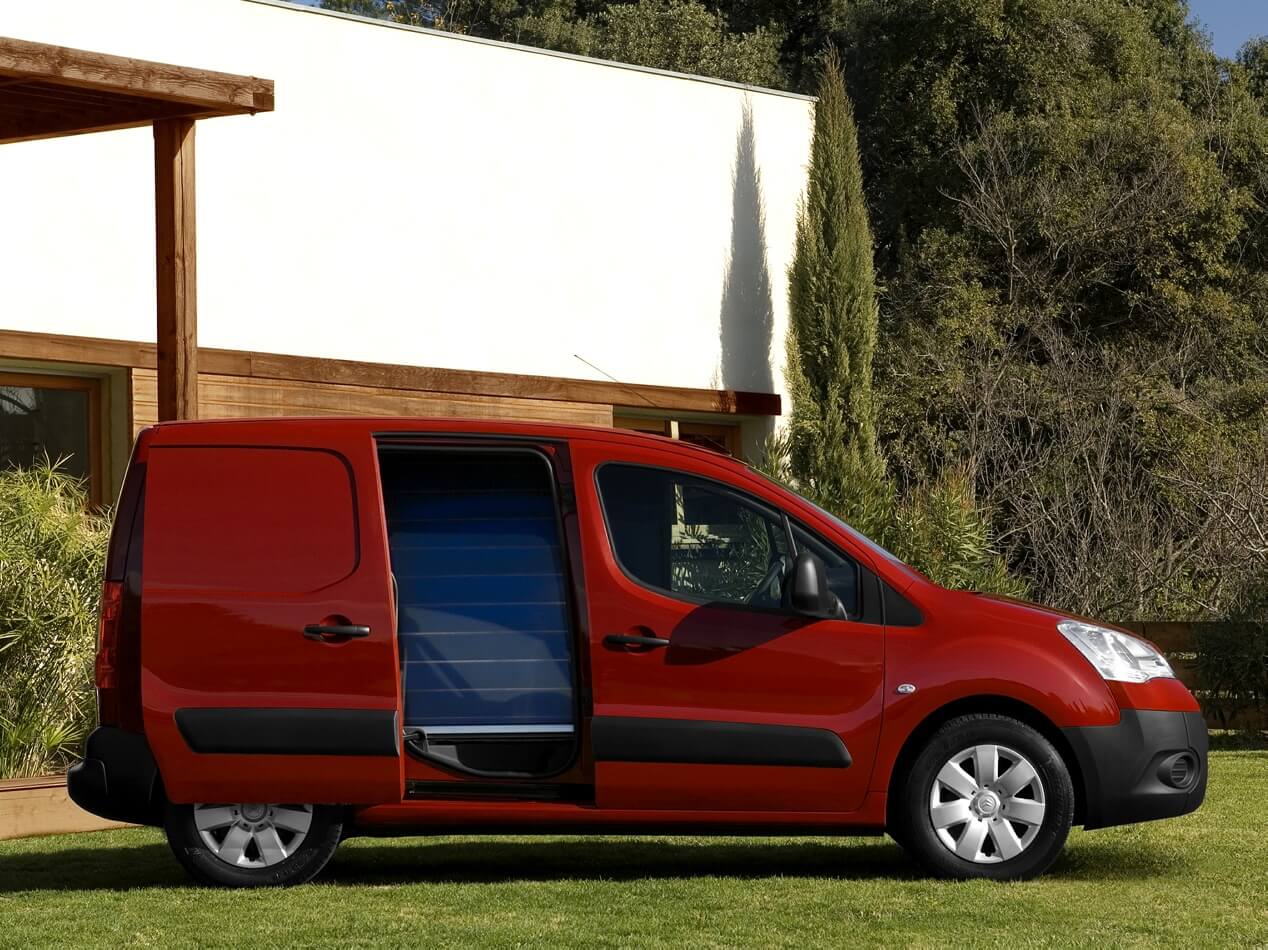
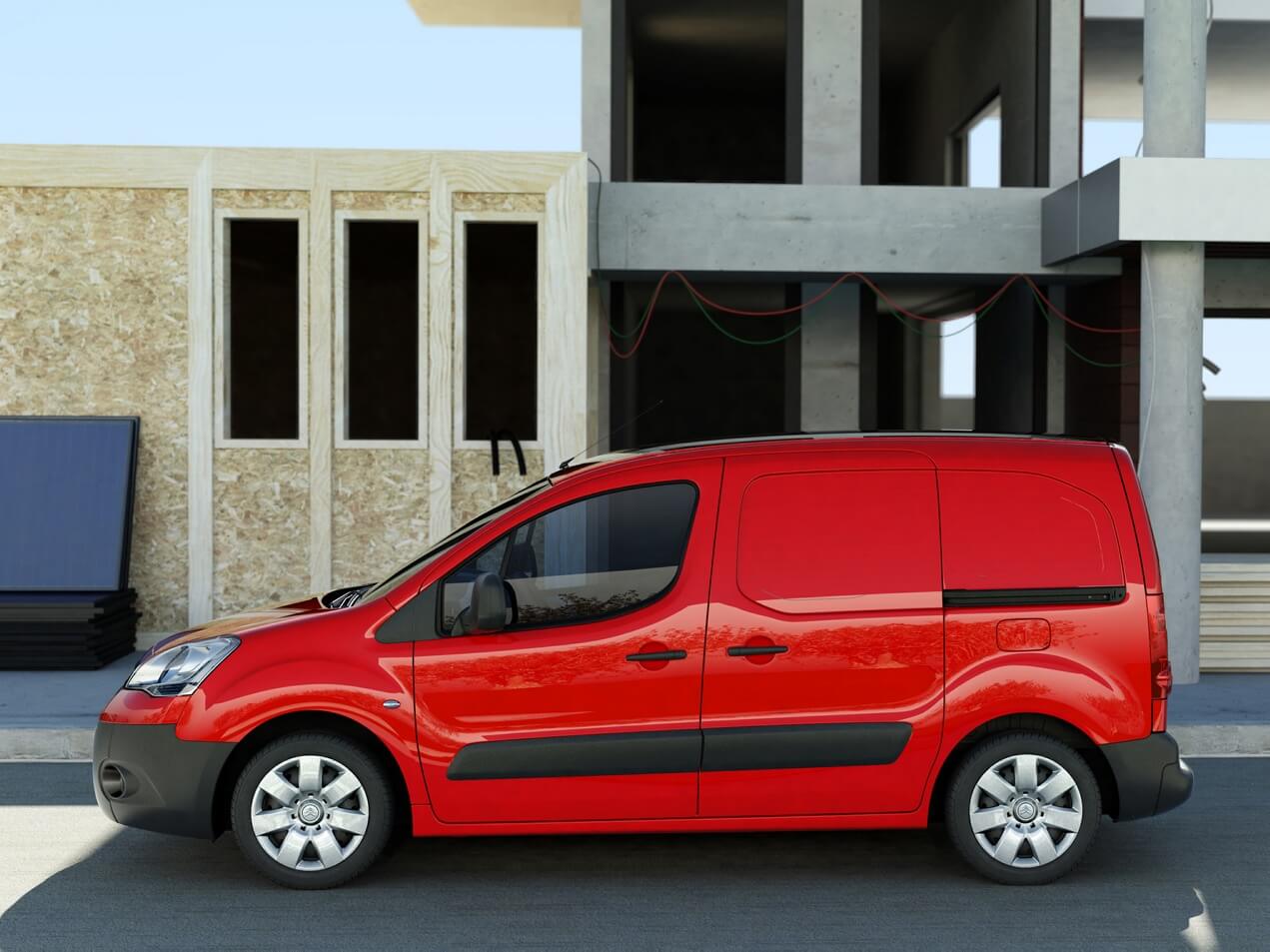
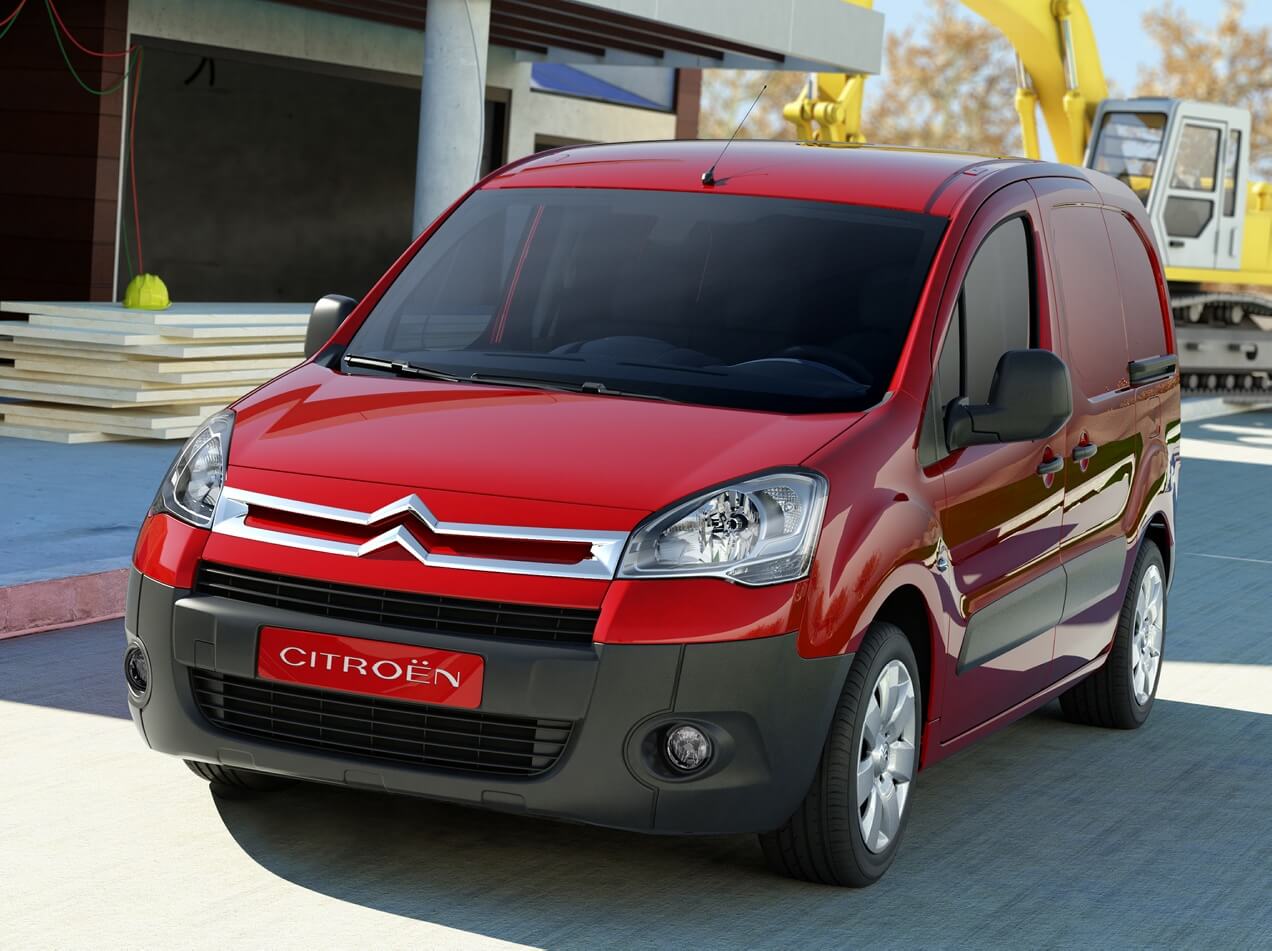
Unveiled in January 2008 and launched in April 2008, the second Berlingo moved to the PSA PF2 platform shared with the Citroën C4. It was larger and more refined, with a bigger glass area, a passenger version 50 mm taller than the van, and the optional Modutop roof system with overhead storage. The Multispace seats five adults, and its boot ranges from 675 litres to about 3,000 litres with the seats removed.

Petrol engines were 1.6 16V units from 66 kW (90 PS) up to about 88 kW (120 PS), with 147–160 Nm. Diesels were the 1.6 HDi with 55–81 kW (75–110 PS) and, later, the 1.6 BlueHDi with 55–88 kW (75–120 PS). A five-speed manual was standard, and diesels could also have a six-speed automated manual. Depending on the version, top speed is 165–177 km/h and 0–100 km/h takes 12–15.5 seconds. From 2013 an electric version used a motor and battery derived from the Mitsubishi i-MiEV, with 49 kW and 200 Nm. In 2011 Citroën built 164,162 Berlingos, and cumulative production reached 2,448,214.
Third generation (K9, 2018 to today)
Design and versions
The third Berlingo was presented online on 15 February 2018 and shown at the Geneva Motor Show alongside its Peugeot sister, the Rifter. For the first time it came in two lengths, M and XL, with five or seven seats, and its styling followed the C3 Aircross and C5 Aircross crossovers. The family group now includes the Peugeot Partner and Rifter, Opel and Vauxhall Combo, Toyota ProAce City and, from 2022, the Fiat Doblò, built in Vigo, Mangualde, Oran (Algeria), Ellesmere Port (UK) and Bursa (Turkey). A facelift was revealed on 23 October 2023.

Interior and practicality
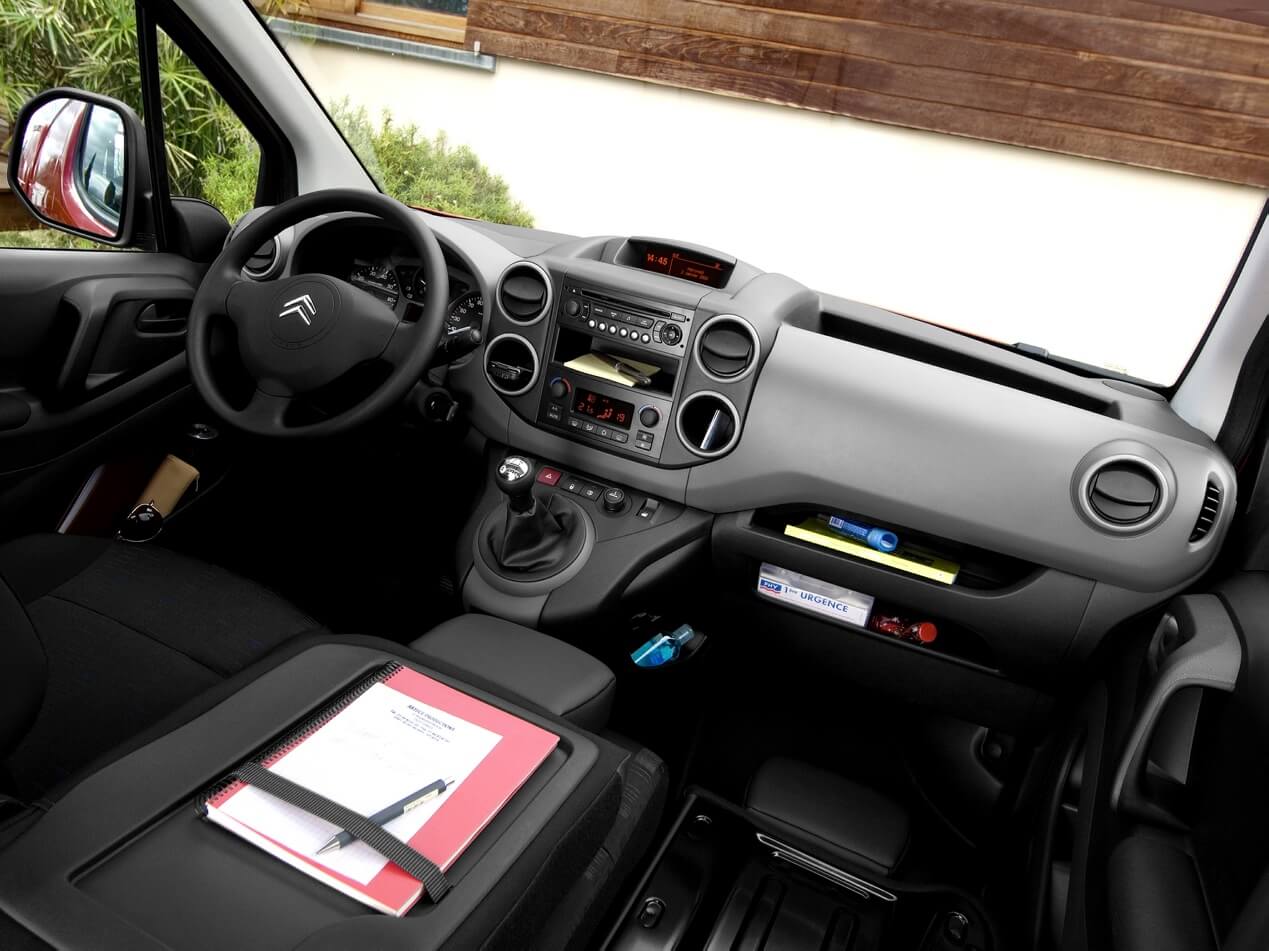
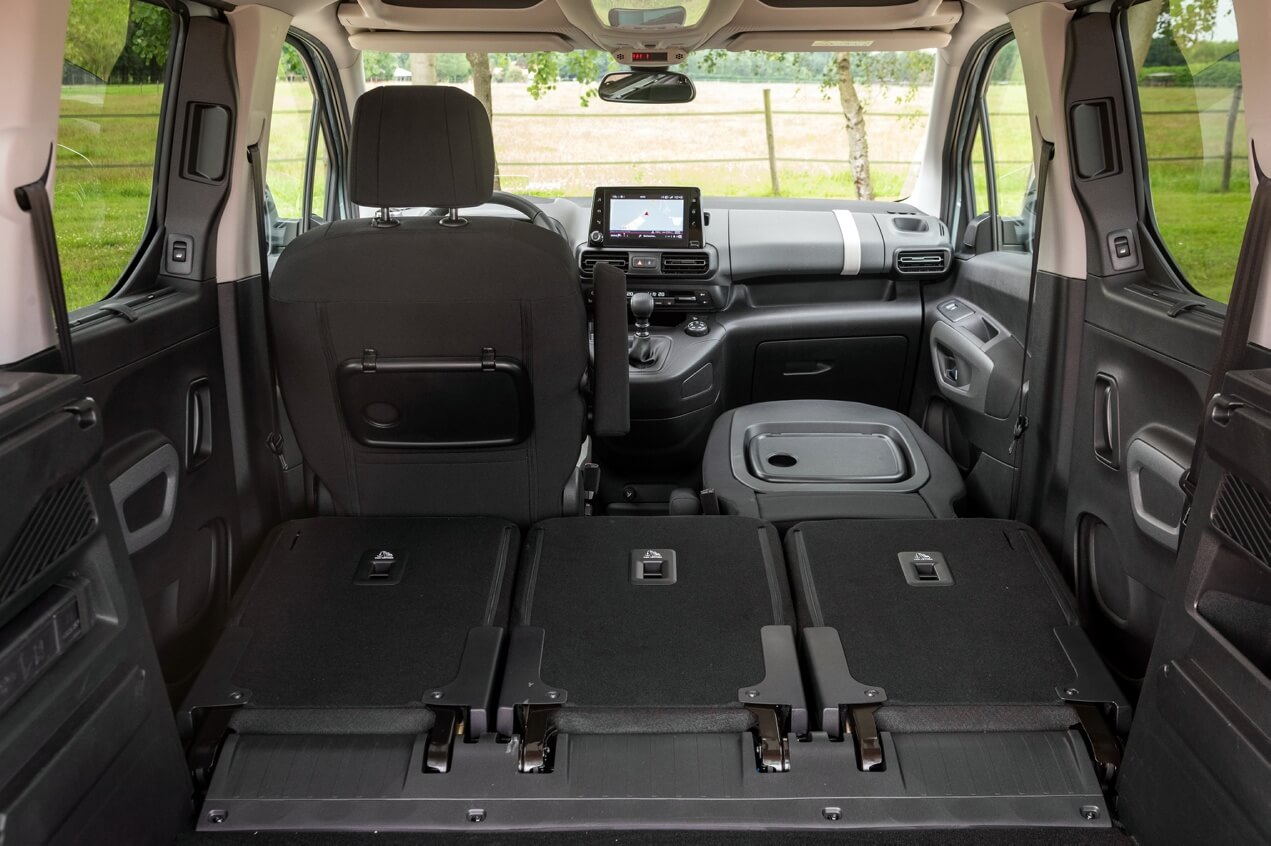
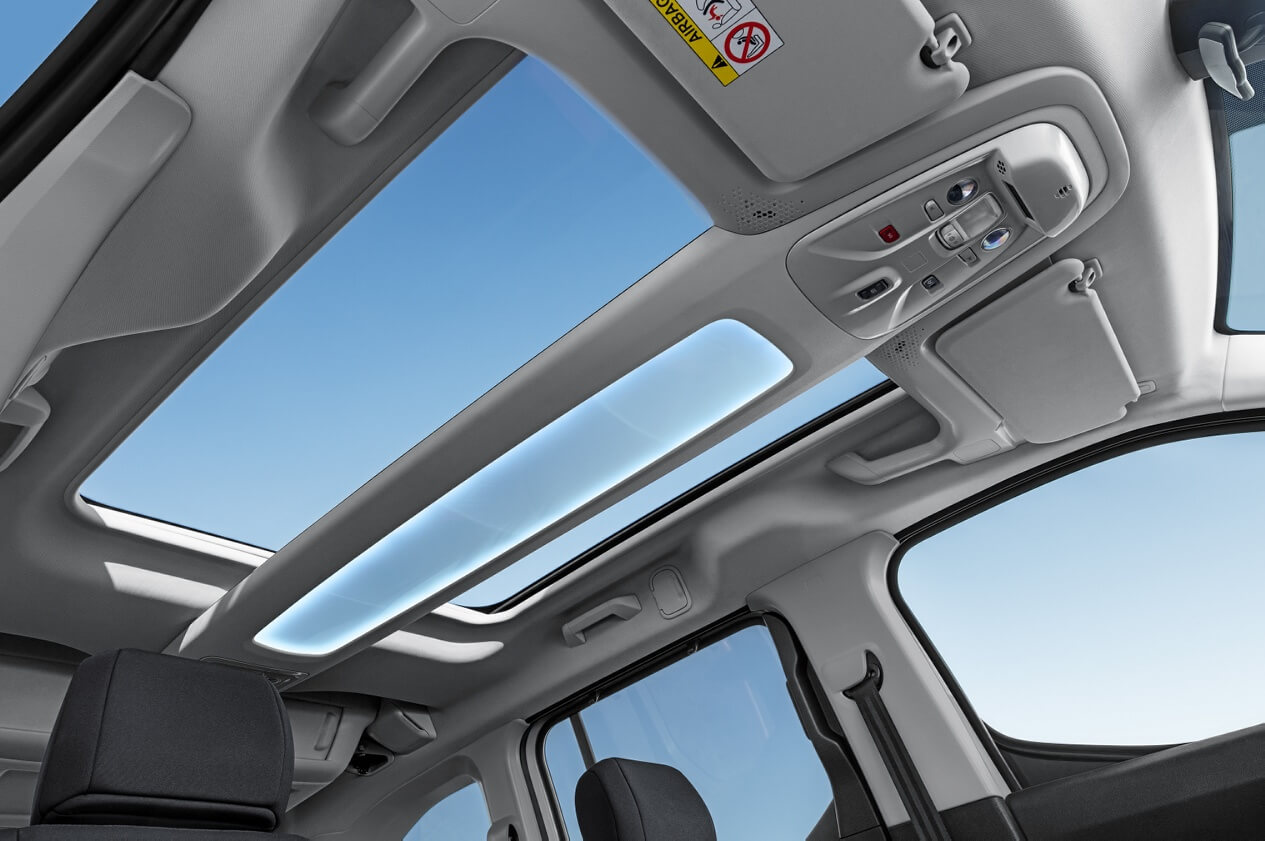
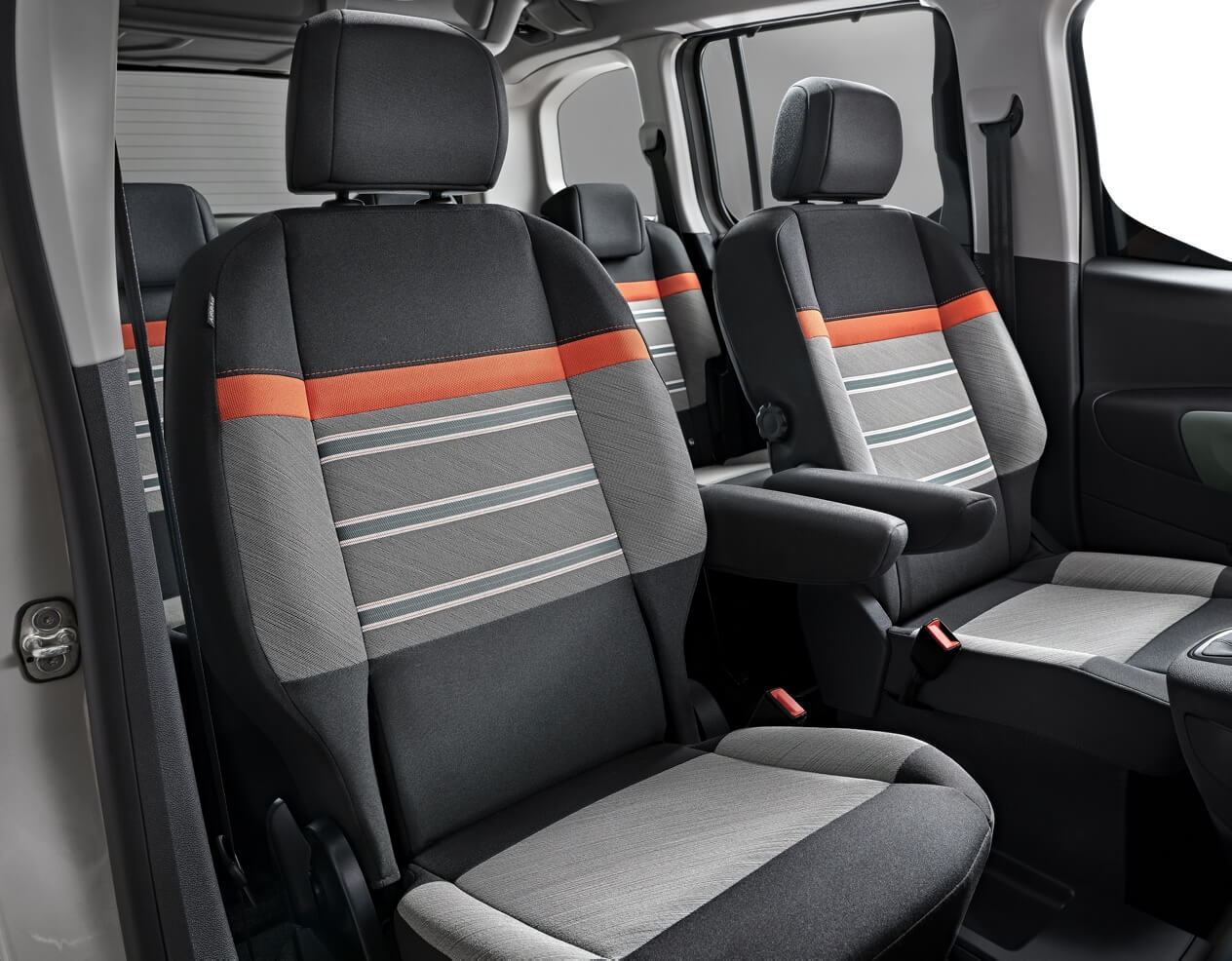
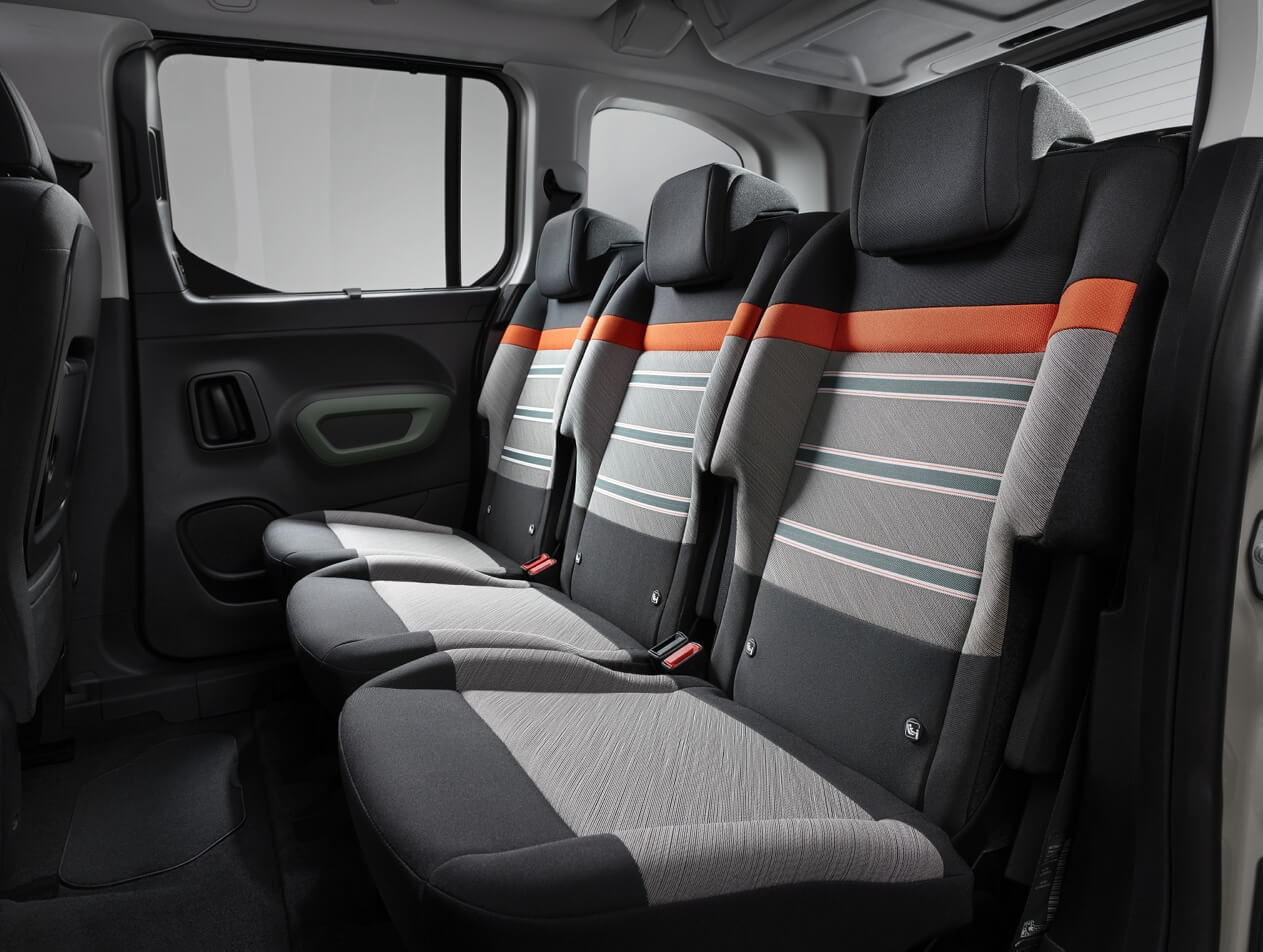
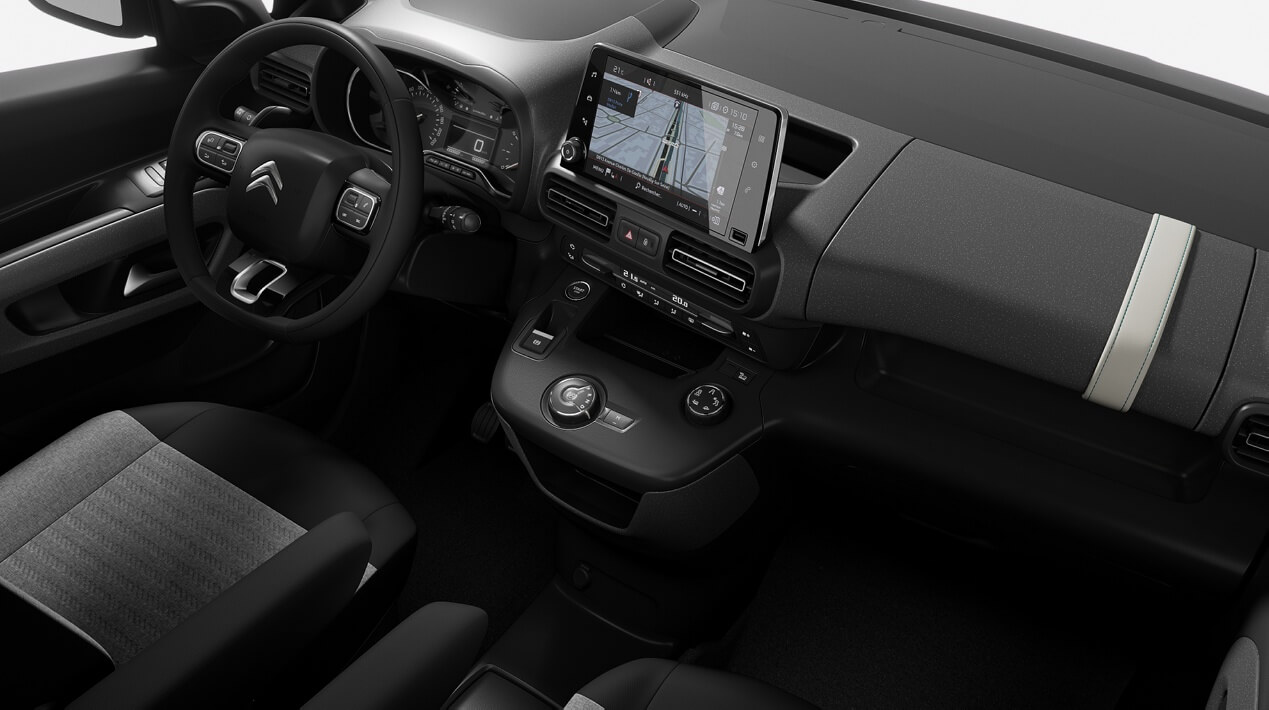
The cabin has 28 storage compartments with 186 litres in total, and the Modutop roof adds up to 92 litres of overhead storage and carries up to 10 kg. The second row has three individual seats of equal width that fold flat into the floor, all with ISOFIX. The boot holds 775 litres in the M and 1,050 litres in the five-seat XL. With the front passenger seat folded the M can carry items up to 2,700 mm long and the XL up to 3,050 mm. An electric parking brake, keyless start and driver aids such as automatic emergency braking and automatic high beam were offered.
Engines
| Engine | Power |
|---|---|
| 1.2 PureTech turbo petrol | 81 kW (110 PS) |
| 1.5 BlueHDi diesel | 74 kW (100 PS) |
| 1.5 BlueHDi diesel | 96 kW (130 PS) |
| ë-Berlingo electric | from January 2021 (van), later MPV |
A mild-hybrid 1.2 turbo was planned for 2025. In ANCAP's 2018 test of the twin Peugeot Partner, the van received five stars, with 90% for adult occupants and 58% for pedestrians.
What owners say
Owners of the second-generation Berlingo praise the three separate rear seats, the comfortable driving position, the sliding doors that make it easy to get in even in tight spaces, the low loading height and large tailgate. Engines that start reliably in cold weather. The ground clearance is adequate for poor roads, and with the seats folded there is enough room to sleep inside. Typical complaints concern average noise insulation, a firm suspension that reminds drivers it is based on a van, a dated centre console and, on some cars, build quality and gearbox issues. The third generation addressed several of these points with better materials, a large colour screen and more driver-assistance systems.

Rivals: how the Berlingo compares
The Berlingo competes with the Volkswagen Caddy, Ford Transit Connect, Renault Kangoo, Renault Dokker and its own group siblings. Its strengths are a huge, flexible interior, many storage spaces and economical engines; its weaknesses are hard plastics in older versions and modest performance with the smallest engines.

Citroen Berlingo evolution in numbers
Did you know?
- The Citroen Berlingo has been around for 30 years: 3 generations in our catalog since 1996.
- The longest-running generation is the Berlingo B9 (2008–2018): 10 years.
Most powerful version, kW
Figures from the 1cars catalog: power is the strongest version of each generation; generations without the figure are left out.
Citroen Berlingo: first vs latest generation
| Spec | Berlingo I | Berlingo K9 | Change |
|---|---|---|---|
| Years | 1996–2002 | 2018–present | 22 years apart |
| Most powerful version | 80 kW (109 PS) | 96 kW (131 PS) | +16 kW (+20%) |
Oldest and newest generation in the 1cars catalog. Power is the strongest version of each; other rows are shown only when both generations have the figure.
Rivals
Compare with…
Compare Citroen Berlingo with
- Fiat Doblo full comparison
-
EV version
In production
- Years
- 2000–present
- Body
- Pickup, Minivan / MPV
- Fuel
- Petrol, Diesel, Electric
- Power
- 48–100 kW (65–136 PS)

Popular comparisons
Citroen Berlingo photos 43






Citroen Berlingo videos 5

Citroen Berlingo video 1

Citroen Berlingo video 2

Citroen Berlingo video 3

Citroen Berlingo video 4

Citroen Berlingo video 5
FAQ
How many generations of the Citroën Berlingo are there?
There are three: the first from 1996, the second (B9) from 2008 and the third (K9) from 2018, facelifted in 2023. Each has been built alongside the Peugeot Partner.
What is the difference between Berlingo M and XL?
The third-generation Berlingo comes in two lengths. The M has five seats and a 775-litre boot, while the longer XL offers five or seven seats and 1,050 litres with five seats in use.
Is there an electric Citroën Berlingo?
Yes. An electric first-generation Berlingo with nickel-cadmium batteries was sold from 1998 to 2005, the second generation had an electric version from 2013, and the ë-Berlingo arrived in 2021.
Where is the Citroën Berlingo built?
Main plants are Vigo in Spain and Mangualde in Portugal. The third generation is also built in Algeria, the UK and Turkey, and earlier generations were assembled in Argentina, Morocco and Poland.
What engines does the Berlingo have?
The current Berlingo uses a 1.2 PureTech petrol with 81 kW (110 PS), 1.5 BlueHDi diesels with 74–96 kW (100–130 PS) and an electric motor in the ë-Berlingo.
Data sources
Data checked by an editor against the sources below.
- The text of this article (1cars archive)
- Wikipedia - Citroën Berlingo
- Euro NCAP - B802bc3f 01df 4711 Be17 891dfe720c6f
- Autobiz - Latest Crash Test Result Revealed
- Carsized - Citroen Berlingo 2015 5 Door Van


