
Kia Sportage vs Volkswagen Tiguan: Europe's SUV duel
Updated Report an error By Sarah Whitmore

Kia · 2021–present
Sportage NQ5
- Power
- 169 kW230 PS
- 0–100 km/h
- 8.0 s
- Top speed
- 193 km/h
- Kerb mass
- 1,649 kg
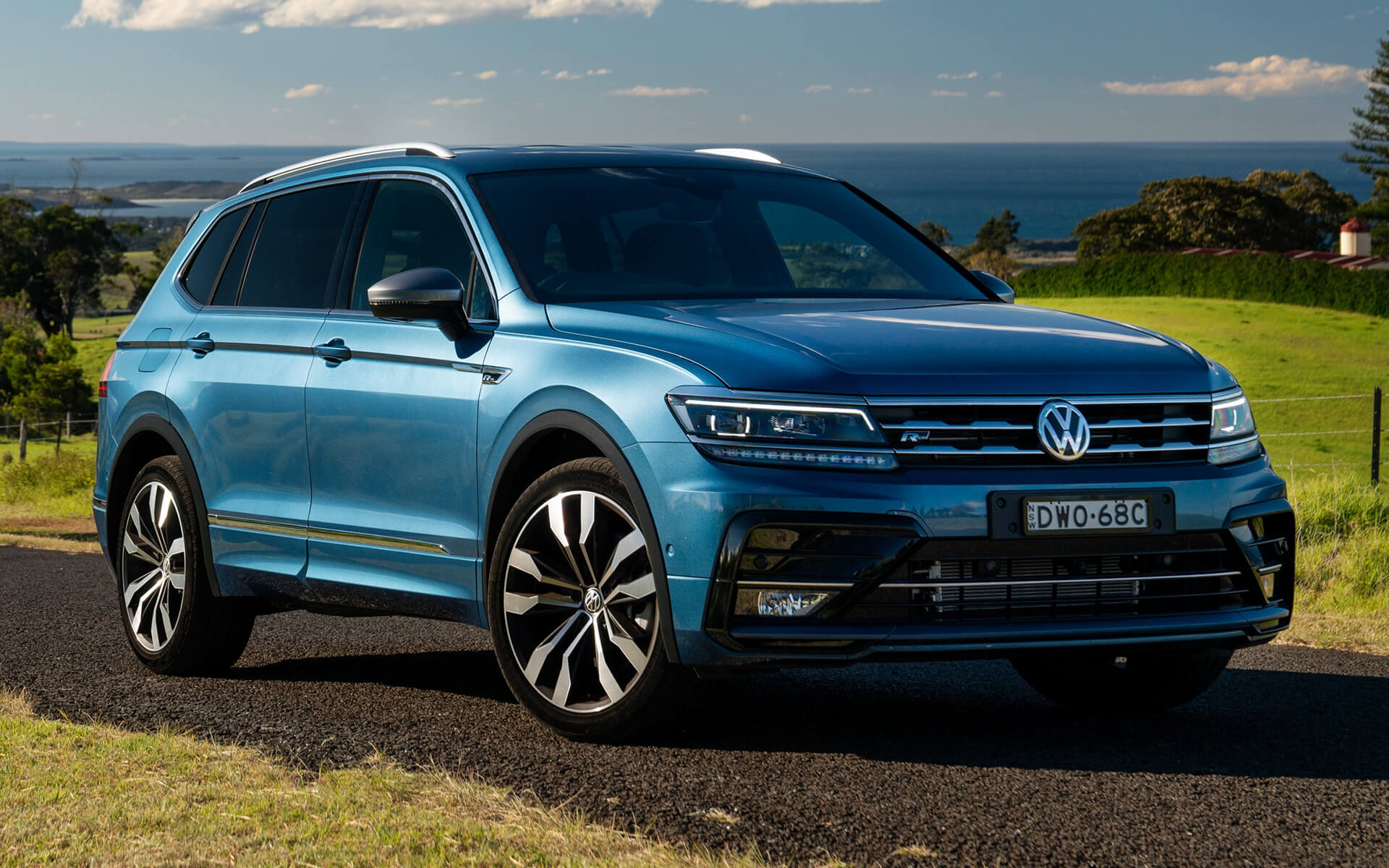
Volkswagen · 2024–present
Tiguan III
- Power
- 110 kW150 PS
- 0–100 km/h
- 9.1 s
- Top speed
- 209 km/h
- Kerb mass
- 1,601 kg
At a glance
Who suits what, worked out from the catalog figures of the versions above.
Categories won: Sportage NQ5 1 Tiguan III 1
- Family Tiguan III Boot: 652 l vs 587 l
- City Too close to call Length: 4,515 mm vs 4,551 mm
- Long trips Too close to call Range: 915 km vs 917 km (estimated)
- Performance Sportage NQ5 Power per tonne: 103 kW/t vs 69 kW/t; 0–100 km/h: 8.0 s vs 9.1 s
- Running costs Too close to call Fuel per year: €1,550 vs €1,580 (estimated)
Verdict Opinion
The Sportage offers the most complete choice of drives on one platform, and its 169 kW full hybrid has no equivalent in the Tiguan range. For drivers without a home charger who still want low fuel use in town, that is the deciding point.
The Tiguan is the better car for plug-in buyers and for those who tow. Its eHybrid has a larger battery and a much longer electric range, the 4MOTION diesel is rated for 2,300 kg, and Euro NCAP gave it far better pedestrian protection.
- Sarah Whitmore
Walk through any European car park and these two SUVs will be among the most common. The Tiguan was the best-selling SUV in Europe in 2019, when Volkswagen built 910,926 of them, and passed six million sales in spring 2020. The Sportage has been catching up fast: Kia's European Sportage sales rose from 140,327 in 2022 to 221,917 in 2024. The current cars are the NQ5 Sportage, unveiled on 8 June 2021 and built in Žilina, and the third-generation Tiguan, presented on 19 September 2023 and built in Wolfsburg.
In short: the Sportage is the one to pick for a self-charging full hybrid; the Tiguan has the better plug-in hybrid and a stronger diesel with all-wheel drive. The full ranges are in our catalogue for the Kia Sportage NQ5 and the Volkswagen Tiguan.
Kia Sportage vs Volkswagen Tiguan: what really differs
Almost the same footprint
For Europe Kia shortened the Sportage by 135 mm and its wheelbase by 75 mm compared with the 4,660 mm, 2,755 mm global model, which works out at about 4,525 mm on 2,680 mm. The Tiguan III has a 2,681 mm wheelbase and a length of 4,551 mm. The difference between them on the road is a matter of centimetres; our size comparison tool shows the outlines side by side.
Hybrid strategies
Kia offers three levels of electrification on one 1.6 T-GDi engine. There is a 48-volt mild hybrid with 110 or 132 kW, a 169 kW (230 PS) full hybrid and a 195 kW (265 PS) plug-in whose battery holds 13.8 kWh. Volkswagen skips the full hybrid. Its entry engines are 1.5 eTSI mild hybrids with 96 and 110 kW. The eHybrid plug-in comes with 150 kW or 200 kW, a 19.7 kWh net battery and up to about 120 km of WLTP electric range. A Tiguan owner who charges every night can therefore cover far more distance on electricity than a Sportage PHEV owner, while a Sportage hybrid driver never needs a cable.
Diesels
Both still sell diesels. The Sportage 1.6 CRDi has 84 or 100 kW. The Tiguan 2.0 TDI starts at 110 kW in our catalogue and reaches 142 kW with 4MOTION all-wheel drive, a version Volkswagen rates for towing up to 2,300 kg.
Gearboxes
A DSG dual-clutch is standard on every Tiguan: seven speeds on most versions, six on the eHybrid. With the facelift for the 2026 model year, revealed in November 2024, the Sportage 1.6 T-GDi switched from a seven-speed dual-clutch to an eight-speed automatic and gained a 12.3-inch touchscreen.
Prices in Germany
When the Tiguan opened for orders in February 2024, Volkswagen listed the 96 kW eTSI from €36,600 and the 150 kW eHybrid from €48,655, including VAT.
Euro NCAP
The Sportage earned five stars in 2022 with 87% for adult occupants, 86% for children and 66% for vulnerable road users. The Tiguan, tested in 2024, scored 83%, 88% and 84% in the same categories, a clear lead in pedestrian protection.
Race Stats side by side
Each figure is a 0–100 score from the catalog numbers, the same as on the 1CARS Race cards. PI is the overall performance index (100–999) and its class D–S.
| Stat | Sportage NQ5 | Tiguan III |
|---|---|---|
| PI | B · 506 | C · 457 |
| Power | 51 | 38 |
| Grip | 39 | 31 |
| Handling | 51 | 53 |
| Top speed | 36 | 42 |
| Launch | 42 | 36 |
Grip and handling are estimates from drive type, weight, height and body (hover a figure to see where it comes from). 1CARS Race
Who wins a race?
Quarter-mile (402 m) drag from a standing start, dry road, no reaction time - the 1CARS Race physics on the catalog figures of these versions.
- 1 Sportage NQ5Sportage NQ5 · 1.6 T-GDI hybrid · 169 kW (230 PS) 15.93 sat 140 km/h
- 2 Tiguan IIITiguan III · 1.5 eTSI 150 · petrol · 110 kW (150 PS) 16.54 sat 133 km/h · +0.61 s
Size and weight
Side view to scale, all cars from the front bumper.
| Sportage NQ5 | Tiguan III | |
|---|---|---|
| Length | 4,515 mm177.8 in † | 4,551 mm179.2 in +36 mm +1.4 in +0.8% |
| Width | 1,865 mm73.4 in † | 1,842 mm72.5 in −23 mm −0.9 in −1.2% |
| Height | 1,650 mm65.0 in † | 1,640 mm64.6 in −10 mm −0.4 in −0.6% |
| Wheelbase | 2,680 mm105.5 in † | 2,681 mm105.6 in +1 mm +0.04 in +0.0% |
| Kerb weight | 1,649 kg3,635 lb | 1,601 kg3,530 lb −48 kg −106 lb −2.9% |
| Boot | 587 l20.7 cu ft | 652 l23.0 cu ft +65 l +2.3 cu ft +11.1% |
| Fuel tank | 54 l14.3 gal US | 55 l14.5 gal US +1 l +0.3 gal US +1.9% |
| Fits a standard garage? | Tight | Yes |
Difference vs Sportage NQ5 (±). Garage check: a standard single garage takes a car up to about 5.0 m (16 ft 5 in) long and 1.9 m (6 ft 3 in) wide (width as listed in the catalog; some makers include the mirrors). Leave about 0.6 m (2 ft) to open the doors. † from another version of this generation.
Full specifications
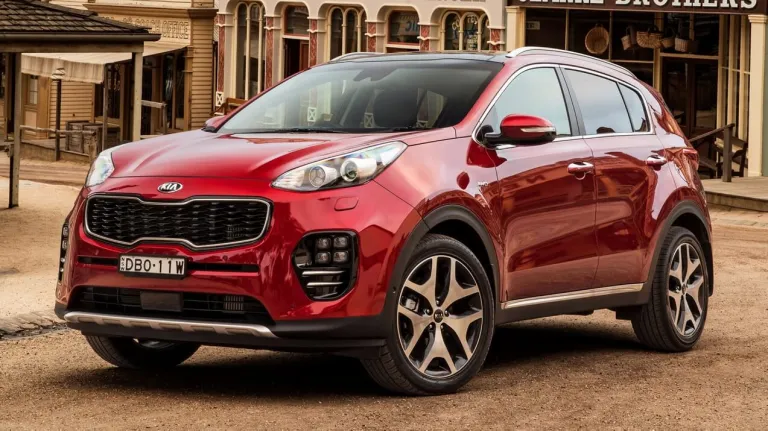
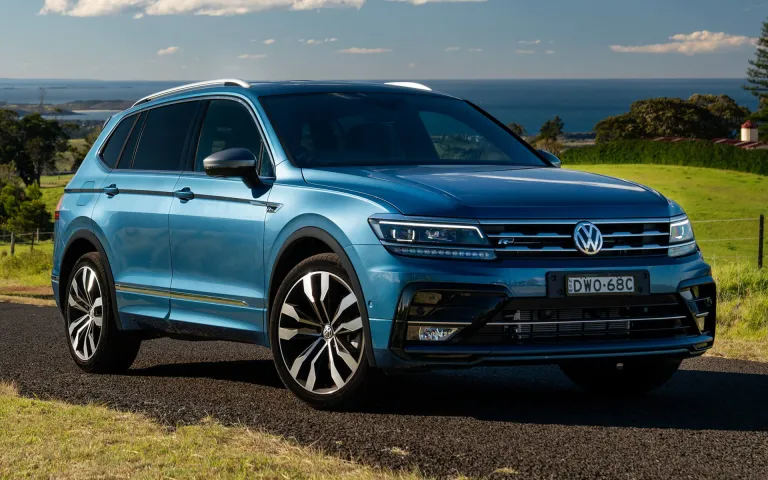
| Kia Sportage | Volkswagen Tiguan | |
|---|---|---|
| General | ||
| Version | Sportage NQ5 · 1.6 T-GDI hybrid · 169 kW (230 PS) | Tiguan III · 1.5 eTSI 150 · petrol · 110 kW (150 PS) |
| Production years | 2021–present | 2024–present |
| Body | SUV | SUV |
| Class | SUV / crossover | No data |
| Country | South Korea | Germany |
| Performance | ||
| Power Why it matters: More power means stronger acceleration and easier overtaking, especially with a full load. | 169 kW (230 PS) 227 hp Better | 110 kW (150 PS) 148 hp |
| Power, all versions | 61–195 kW (83–265 PS) 82–261 hp | 85–235 kW (116–320 PS) 114–315 hp |
| 0–100 km/h Why it matters: A shorter 0–100 km/h time means quicker getaways and safer merging onto fast roads. | 8.0 s Better | 9.1 s |
| Top speed Why it matters: Top speed hints at how relaxed the car is at motorway speeds, even if you never reach it. | 193 km/h 120 mph | 209 km/h 130 mph Better |
| Power per tonne | 103 kW/t 125 hp/ton calculated Better | 69 kW/t 84 hp/ton calculated |
| Engine and transmission | ||
| Fuel | Hybrid | Petrol |
| Engine | 1,600 cc · 4 cyl 1.6 l | 1,500 cc 1.5 l |
| Dimensions and weight | ||
| Length | 4,515 mm 177.8 in † | 4,551 mm 179.2 in |
| Width | 1,865 mm 73.4 in † | 1,842 mm 72.5 in |
| Height | 1,650 mm 65.0 in † | 1,640 mm 64.6 in |
| Wheelbase | 2,680 mm 105.5 in † | 2,681 mm 105.6 in |
| Kerb weight Why it matters: A lighter car is usually more agile and uses less energy. | 1,649 kg 3,635 lb | 1,601 kg 3,530 lb Better |
| Boot Why it matters: A bigger boot fits more luggage, shopping or a pram. | 587 l 20.7 cu ft | 652 l 23.0 cu ft Better |
| Fuel tank Why it matters: A larger tank means more distance between fuel stops. | 54 l 14.3 gal US | 55 l 14.5 gal US |
| Economy and running costs | ||
| Fuel consumption Why it matters: Lower consumption cuts running costs and CO₂ emissions on every trip. | 5.9 l/100 km 39.9 mpg US | 6.0 l/100 km 39.2 mpg US |
| CO₂ | 135 g/km | 136 g/km |
| Fuel cost per year | €1,550/year estimated | €1,580/year estimated |
| Range on a full tank | 915 km 569 mi estimated | 917 km 570 mi estimated |
| Safety | ||
| Euro NCAP | ★★★★★ (2022) | ★★★★★ (2024) |
These cars do not differ in the data we have.
Equal rows hidden (1): Body.
Better marks the stronger figure - only for measurable specs (power, torque, 0–100 km/h, consumption, boot, weight).
Estimated at 15,000 km a year with fuel at €1.75/l petrol. † from another version of this generation.
In plain words
Kia Sportage is quicker: 0–100 km/h in 8.0 s against 9.1 s for Volkswagen Tiguan. Volkswagen Tiguan is 36 mm longer than Kia Sportage (4,551 mm vs 4,515 mm). Volkswagen Tiguan is lighter by 48 kg (1,601 kg vs 1,649 kg). Volkswagen Tiguan has the bigger boot: 652 l against 587 l. At 15,000 km a year, fuel would cost about €1,550 (Kia Sportage), €1,580 (Volkswagen Tiguan) (estimated). Kia Sportage is the older design (from 1993); Volkswagen Tiguan arrived in 2007. On the catalog figures, the Volkswagen Tiguan is the pick for family; the Kia Sportage is the pick for performance.
Which one to choose
Choose the Kia Sportage if you want a self-charging full hybrid, a petrol, hybrid or diesel from one dealer, or a slightly shorter SUV.
Choose the Volkswagen Tiguan if you can charge at home and want up to about 120 km of electric range, need a diesel with all-wheel drive for towing, or put pedestrian safety high on the list.
The Sportage's Korean twin is covered in Hyundai Tucson vs Kia Sportage; the Tiguan's seven-seat relative appears in Škoda Kodiaq vs Volkswagen Tiguan.
Frequently asked questions
Is there a full hybrid Tiguan?
No. The Tiguan III is offered with eTSI mild hybrids and the eHybrid plug-in. The Sportage has a full hybrid with 169 kW (230 PS).
Which plug-in hybrid has more electric range?
The Tiguan eHybrid: up to about 120 km (WLTP) from a 19.7 kWh net battery. The Sportage PHEV uses a 13.8 kWh battery.
Which is bigger?
They are almost the same size. The Tiguan is 4,551 mm long on a 2,681 mm wheelbase; the European Sportage is about 4,525 mm long on 2,680 mm.
Which scored better in Euro NCAP?
The Sportage was better for adult occupants (87% against 83%), the Tiguan for children (88% against 86%) and clearly for pedestrians (84% against 66%).