
Toyota RAV4 vs VW Tiguan: plug-in SUVs compared
Updated Report an error By Oleksandr Hnatiuk

Toyota · 2025–present
RAV4 XA60
- Power
- 197 kW268 PS
- 0–100 km/h
- -
- Top speed
- -
- Kerb mass
- -
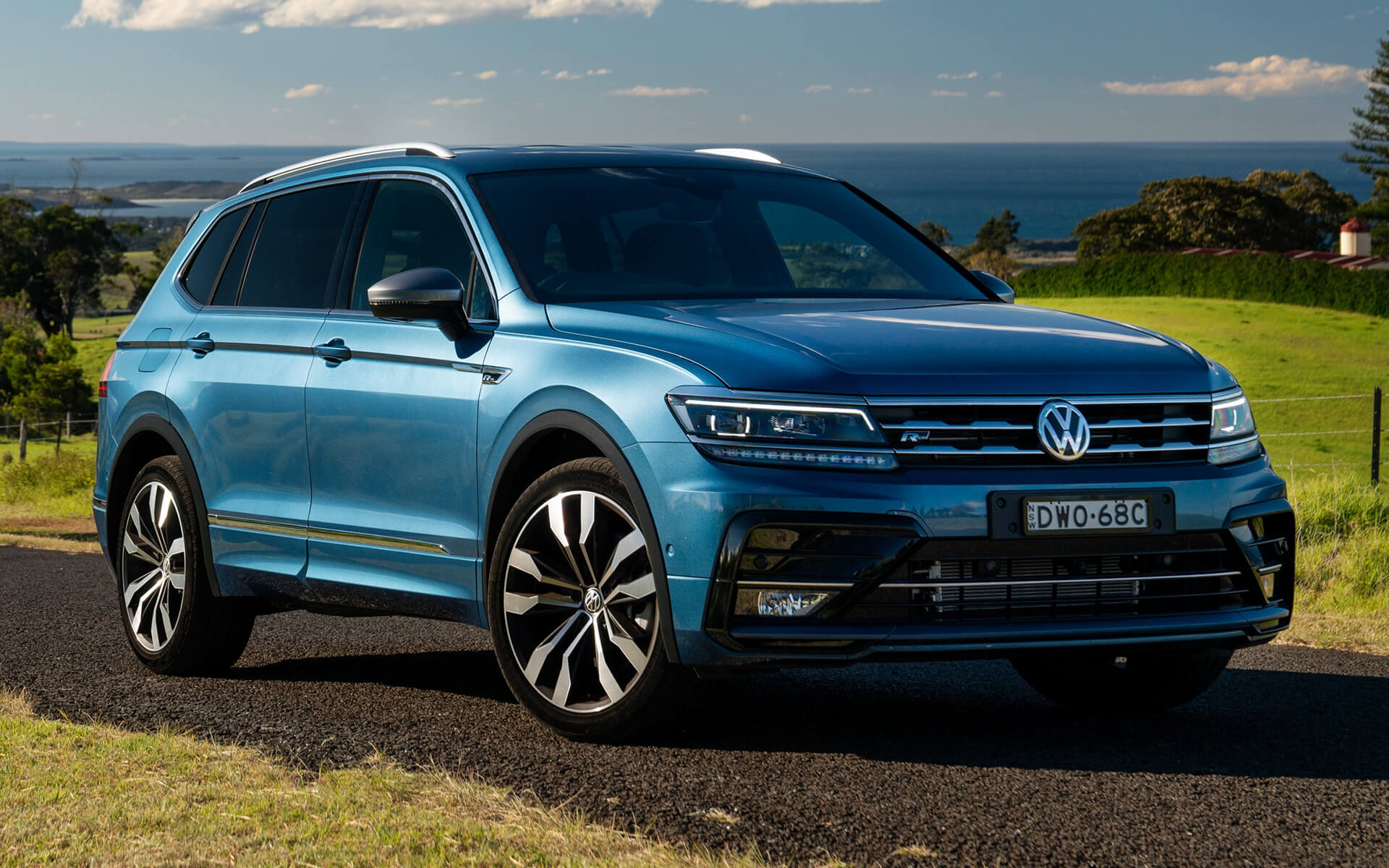
Volkswagen · 2024–present
Tiguan III
- Power
- 200 kW272 PS
- 0–100 km/h
- 7.2 s
- Top speed
- 215 km/h
- Kerb mass
- 1,879 kg
At a glance
Who suits what, worked out from the catalog figures of the versions above.
Categories won: RAV4 XA60 1 Tiguan III 1
- Family RAV4 XA60 Boot: 514 l vs 490 l
- City Tiguan III Width: 1,842 mm vs 1,880 mm
Verdict Opinion
The RAV4 is the purer hybrid. Every version is electrified, and all-wheel drive is available on both the hybrid and the plug-in. Its record as the best-selling SUV of all time, more than 15 million by 2025, says a lot about its long-term appeal.
The Tiguan is the more versatile car. It covers petrol, diesel and plug-in buyers, its eHybrid goes further on electricity, its diesel tows 2,300 kg, and the mild-hybrid eTSI opens the range at a price well below either plug-in.
- Oleksandr Hnatiuk
The RAV4 and the Tiguan are the bestsellers of their brands and two of the most common family SUVs in Europe, yet their makers took opposite routes with the latest generations. Volkswagen presented the third Tiguan on 19 September 2023 and builds it in Wolfsburg on the MQB Evo platform with petrol, diesel, mild-hybrid and plug-in engines. Toyota revealed the sixth RAV4 (XA60) on 20–21 May 2025 and sells it only as a hybrid or plug-in hybrid.
In short: the Toyota RAV4 suits a buyer who wants a hybrid with all-wheel drive. The Volkswagen Tiguan offers more engine types, the longer electric range and a diesel for towing. Our catalogue has the details for the Toyota RAV4 and the Volkswagen Tiguan.
Toyota RAV4 vs Volkswagen Tiguan: key differences
Plug-in hybrids side by side
The two plug-in versions are almost level on power. The front-wheel-drive RAV4 PHEV delivers 197 kW in Europe, and the all-wheel-drive version 224 kW; the PHEV-only GR Sport reaches 100 km/h in 5.8 seconds. The Tiguan eHybrid comes with 150 kW (204 PS) or 200 kW (272 PS); its 85 kW electric motor works with a 1.5-litre TSI. Toyota uses the larger battery, 22.7 kWh against 19.7 kWh net. Volkswagen, however, quotes the longer range: up to about 120 km in the WLTP cycle for the most efficient eHybrid, against 100 km for the European RAV4. The Tiguan charges at up to 11 kW on AC and 50 kW on DC, and Volkswagen claims a combined range of more than 900 km.
Full hybrid against mild hybrid
Below the plug-in models the two ranges diverge. Every non-plug-in RAV4 is a full hybrid with a 2.5-litre engine, rated at 135 kW with front-wheel drive and 140 kW with all-wheel drive in Europe. The Tiguan starts with a 1.5 eTSI 48-volt mild hybrid of 96 kW, followed by a 110 kW version; a DSG gearbox is standard on every Tiguan.
Diesel and towing
The Tiguan still offers a 2.0 TDI with front-wheel drive or 4MOTION all-wheel drive. The 142 kW TDI 4MOTION can tow up to 2,300 kg. Toyota has no diesel in the RAV4.
Size
In European form the Tiguan measures 4,551 mm in length, 1,842 mm in width and 1,640 mm in height, with 2,681 mm between the axles. Toyota kept the length and width of the XA50 for the XA60; the European XA50 Hybrid is 49 mm longer than the Tiguan, with a wheelbase of 2,690 mm. The American Tiguan is a different, longer car based on the Chinese Tayron L.
Prices in Germany
At the 2024 order launch Volkswagen listed the Tiguan eTSI with 96 kW from €36,600. The 150 kW eHybrid started at €48,655 and the 142 kW TDI 4MOTION at €49,055, all including VAT.
Euro NCAP
Euro NCAP tested the Tiguan 2.0 TDI in 2024: 83% for adult occupants, 88% for children, 84% for vulnerable road users and 78% for safety assist.
Size and weight
Side view to scale, all cars from the front bumper.
| RAV4 XA60 | Tiguan III | |
|---|---|---|
| Length | 4,600 mm181.1 in † | 4,551 mm179.2 in −49 mm −1.9 in −1.1% |
| Width | 1,880 mm74.0 in † | 1,842 mm72.5 in −38 mm −1.5 in −2.0% |
| Height | 1,680 mm66.1 in † | 1,640 mm64.6 in −40 mm −1.6 in −2.4% |
| Wheelbase | 2,690 mm105.9 in † | 2,681 mm105.6 in −9 mm −0.4 in −0.3% |
| Boot | 514 l18.2 cu ft † | 490 l17.3 cu ft −24 l −0.8 cu ft −4.7% |
| Fits a standard garage? | Tight | Yes |
Difference vs RAV4 XA60 (±). Garage check: a standard single garage takes a car up to about 5.0 m (16 ft 5 in) long and 1.9 m (6 ft 3 in) wide (width as listed in the catalog; some makers include the mirrors). Leave about 0.6 m (2 ft) to open the doors. † from another version of this generation.
Full specifications
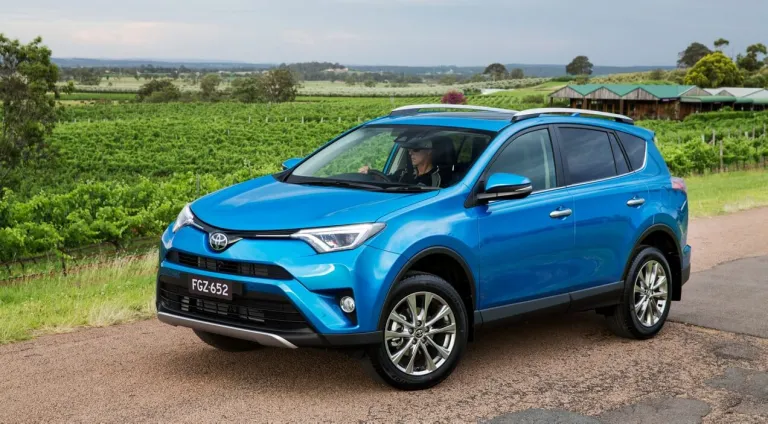
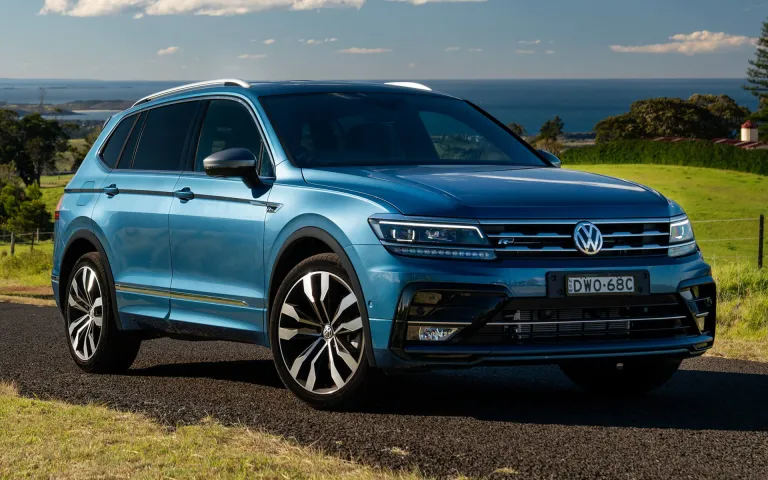
| Toyota RAV4 | Volkswagen Tiguan | |
|---|---|---|
| General | ||
| Version | RAV4 XA60 · 2.5 Plug-in Hybrid FWD · 197 kW (268 PS) | Tiguan III · eHybrid 272 · plug-in hybrid · 200 kW (272 PS) |
| Production years | 2025–present | 2024–present |
| Body | SUV | SUV |
| Class | SUV / crossover | No data |
| Country | Japan | Germany |
| Performance | ||
| Power Why it matters: More power means stronger acceleration and easier overtaking, especially with a full load. | 197 kW (268 PS) 264 hp | 200 kW (272 PS) 268 hp |
| Power, all versions | 91–225 kW (124–306 PS) 122–302 hp | 85–235 kW (116–320 PS) 114–315 hp |
| 0–100 km/h Why it matters: A shorter 0–100 km/h time means quicker getaways and safer merging onto fast roads. | No data | 7.2 s |
| Top speed Why it matters: Top speed hints at how relaxed the car is at motorway speeds, even if you never reach it. | No data | 215 km/h 134 mph |
| Power per tonne | No data | 106 kW/t 129 hp/ton calculated |
| Engine and transmission | ||
| Fuel | Plug-in hybrid | Plug-in hybrid |
| Engine | 4 cyl | 1,500 cc 1.5 l |
| Drive | Front-wheel drive | No data |
| Dimensions and weight | ||
| Length | 4,600 mm 181.1 in † | 4,551 mm 179.2 in |
| Width | 1,880 mm 74.0 in † | 1,842 mm 72.5 in |
| Height | 1,680 mm 66.1 in † | 1,640 mm 64.6 in |
| Wheelbase | 2,690 mm 105.9 in † | 2,681 mm 105.6 in |
| Kerb weight Why it matters: A lighter car is usually more agile and uses less energy. | No data | 1,879 kg 4,142 lb |
| Boot Why it matters: A bigger boot fits more luggage, shopping or a pram. | 514 l 18.2 cu ft † Better | 490 l 17.3 cu ft |
| Fuel tank Why it matters: A larger tank means more distance between fuel stops. | No data | 45 l 11.9 gal US |
| Electric | ||
| Battery Why it matters: A bigger battery usually gives more range, but takes longer to charge fully. | No data | 20 kWh |
| Electric range Why it matters: A longer range means fewer charging stops on long journeys. | No data | 119 km 74 mi |
| Safety | ||
| Euro NCAP | No data | ★★★★★ (2024) |
These cars do not differ in the data we have.
Equal rows hidden (2): Body, Fuel.
Better marks the stronger figure - only for measurable specs (power, torque, 0–100 km/h, consumption, boot, weight).
† from another version of this generation.
In plain words
Volkswagen Tiguan has more power: 200 kW (272 PS) against 197 kW (268 PS) for Toyota RAV4. Toyota RAV4 is 49 mm longer than Volkswagen Tiguan (4,600 mm vs 4,551 mm). Toyota RAV4 has the bigger boot: 514 l against 490 l. Toyota RAV4 is the older design (from 1994); Volkswagen Tiguan arrived in 2007. On the catalog figures, the Toyota RAV4 is the pick for family; the Volkswagen Tiguan is the pick for city. Our catalog has no 0–100 km/h for the Toyota RAV4 yet, so some checks above leave it out.
Which one to choose
Choose the Toyota RAV4 if you want a hybrid or plug-in with all-wheel drive, or a sporty plug-in such as the GR Sport, which reaches 100 km/h in 5.8 seconds.
Choose the Volkswagen Tiguan if you need a diesel or a heavy towing limit, or want the longest electric range from a plug-in. The mild-hybrid eTSI also gives it a lower entry price.
The Tiguan's larger relative from Škoda is compared in Škoda Kodiaq vs Volkswagen Tiguan, and the RAV4 meets Mazda in Mazda CX-5 vs Toyota RAV4.
Frequently asked questions
Which plug-in hybrid goes further on electricity?
Volkswagen quotes up to about 120 km (WLTP) for the Tiguan eHybrid with its 19.7 kWh battery. The European RAV4 PHEV has a 22.7 kWh battery and 100 km of WLTP range.
Which is bigger, the RAV4 or the Tiguan?
They are close. They are close: 4,551 mm for the European Tiguan, against 4,600 mm for the XA50 RAV4 Hybrid, whose length and width the XA60 kept.
Can I buy a diesel RAV4?
No. The sixth-generation RAV4 is offered only as a hybrid or plug-in hybrid, while the Tiguan still has a 2.0 TDI.
How much does the Tiguan cost in Germany?
At the February 2024 order launch: from €36,600 for the 96 kW eTSI, €48,655 for the 150 kW eHybrid and €49,055 for the 142 kW TDI 4MOTION, including VAT.