
 Volkswagen Tiguan
All generations, specs and history
Published Sources (7) Report an error
By Felix Hartmann, Automotive Technology & EV Contributor
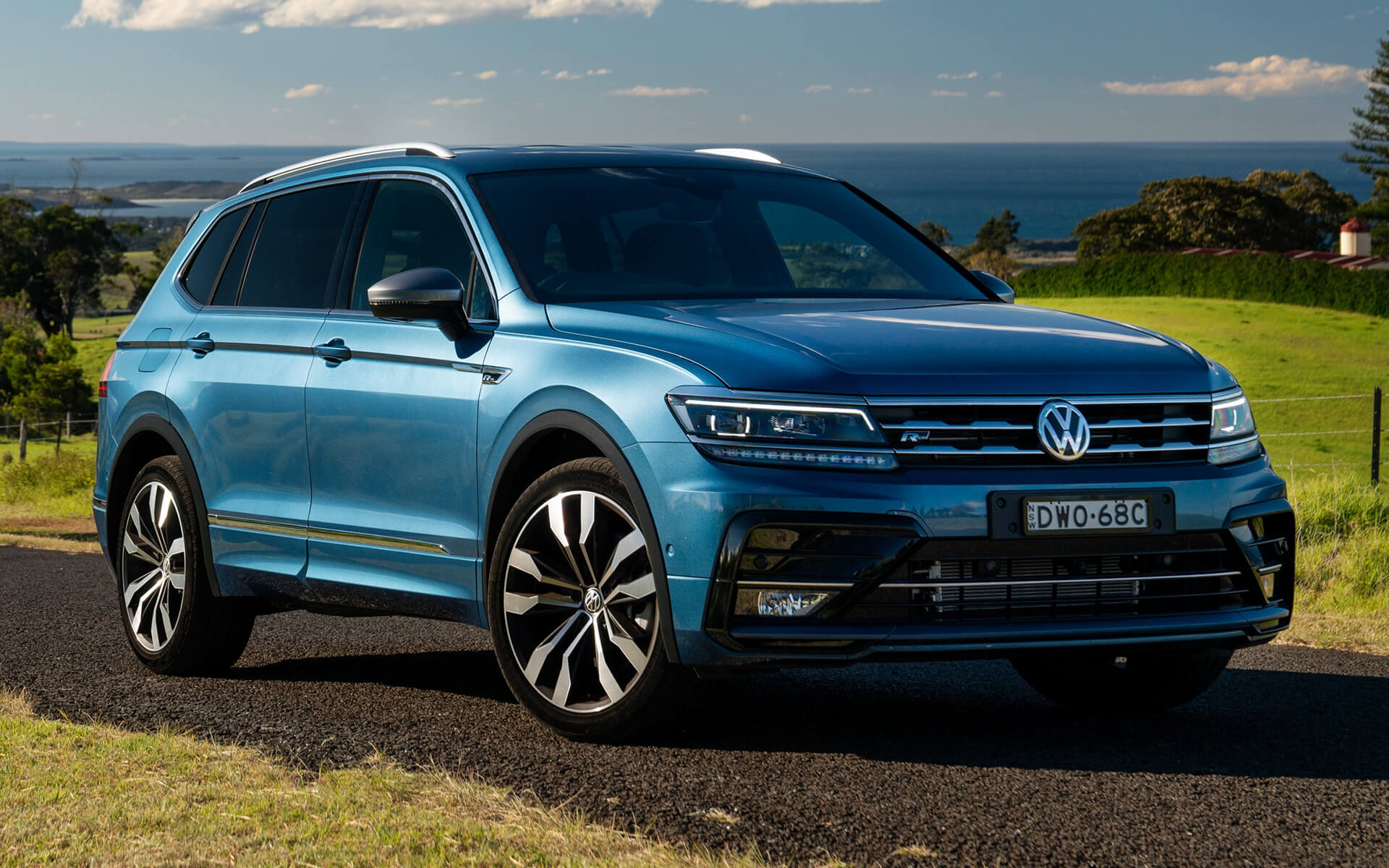
- Built
- 2007–present
- Generations
- 3
- Top power
- 235 kW (320 PS)
- New price
- from about €38,250 (2024)
Timeline
Tiguan generations
Click a generation for its own page


I and AD1 overlapped in 2016–2018, so AD1 sits on a second lane
- Tiguan I 2007–2018 · SUV
- Tiguan AD1 2016–2024 · SUV · 85–235 kW (116–320 PS)
- Tiguan III Current 2024–now · SUV · 96–200 kW (131–272 PS)
Newest first · 3 generations since 2007
-
2024
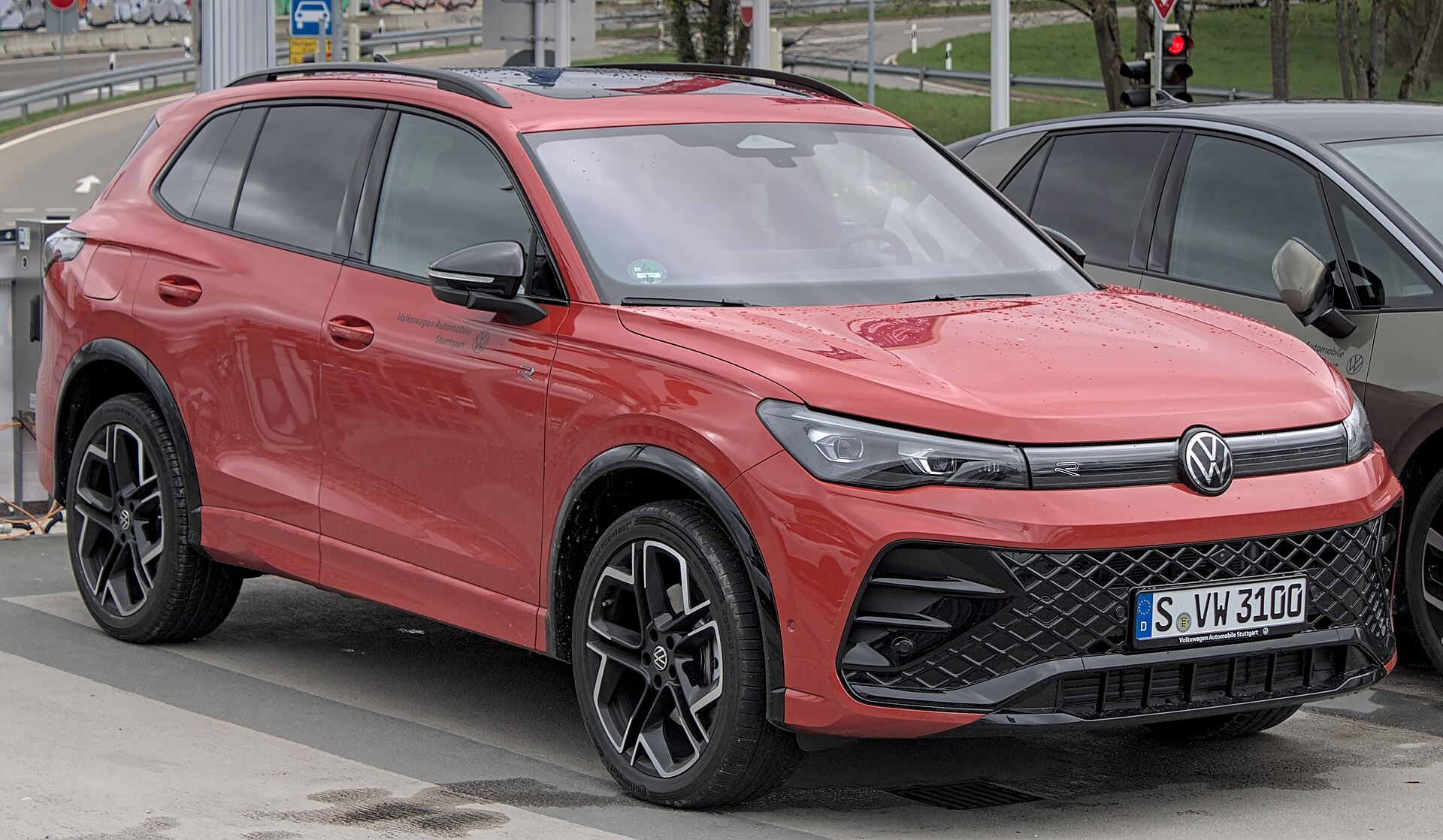
- 2016 AD1 2016–2024 · SUV · 85–235 kW (116–320 PS) I and AD1 overlapped in 2016–2018
-
2007
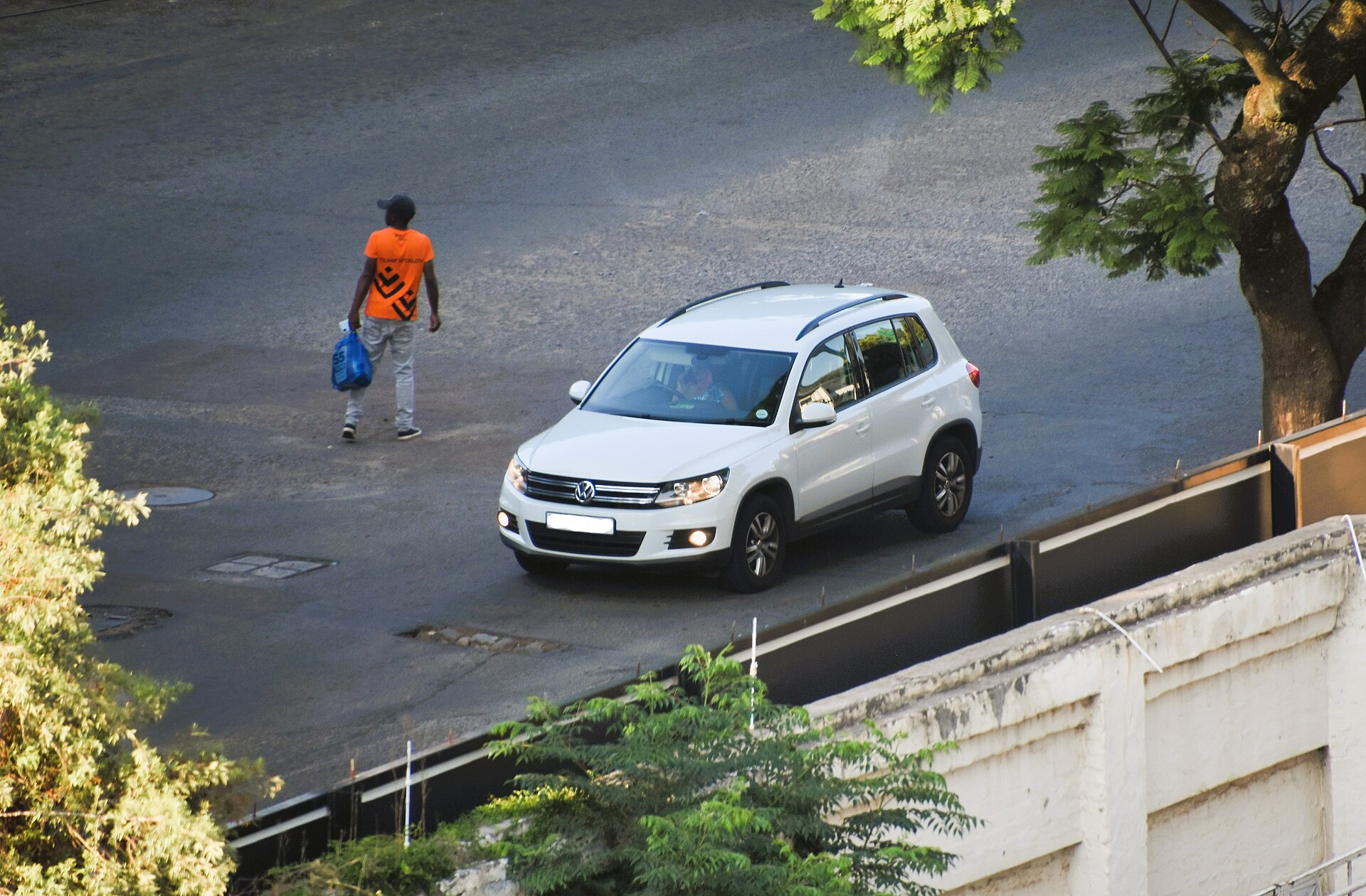
All generations by year: Tiguan III (2024–now) · Tiguan AD1 (2016–2024) · Tiguan I (2007–2018)
Which one is mine?
Pick the year of first registration to see which generation it is.
- Tiguan III 2024–present
- AD1 2016–2024
- Tiguan I 2007–2018
The Volkswagen Tiguan is a compact SUV with front- or four-wheel drive and five or seven seats. It combines grown-up styling, practicality, modern technology and composed road manners. A concept version was first shown at the Los Angeles motor show in autumn 2006. This article covers the first two generations: the first from 2007 and the second, revealed in 2015, which on 2 March 2017 gained a long-wheelbase, seven-seat derivative - the Tiguan Allspace. A third generation was revealed in September 2023.
In short
- First generation (2007–2016) on the PQ35 platform, facelifted in July 2011; second generation (2016–2024) on MQB; third generation from 2024.
- 4Motion all-wheel drive uses a Haldex multi-plate clutch.
- Engines from a 90 kW (122 PS) 1.4 TSI to a 162 kW (220 PS) 2.0 TSI, plus 2.0 TDI diesels.
- The second generation scored five stars in Euro NCAP in 2016 and offers a 615-litre boot.
Size at a glance
Volkswagen Tiguan AD1
The Volkswagen Tiguan III is 65 mm longer and 8 mm taller than the Volkswagen Tiguan AD1.
| Dimensions | Volkswagen Tiguan III | Volkswagen Tiguan AD1 | Difference |
|---|---|---|---|
| Length | 4,551 mm179.2 in | 4,486 mm176.6 in | +65 mm+2.6 in |
| Width | 1,842 mm72.5 in | 1,839 mm72.4 in | +3 mm+0.1 in |
| Height | 1,640 mm64.6 in | 1,632 mm64.3 in | +8 mm+0.3 in |
| Wheelbase | 2,681 mm105.6 in | 2,677 mm105.4 in | +4 mm+0.2 in |
| Boot | 652 L23.0 cu ft | 615 L21.7 cu ft | +37 L+1.3 cu ft |
Running cost
Fuel · Tiguan 1.5 eTSI
about 1,500 EUR fuel a year at 15,000 km
5.8 l/100 km · petrol at 1.75 EUR/l · change mileage, fuel price or version
Known problems
-
High all years
DSG judder and clutch wear (dual-clutch automatics, all engines)
Jerky take-off, shudder when creeping in traffic or reversing uphill, and noisy or delayed changes.
Fix: The garage updates software and adapts the clutches; worn clutch packs or a mechatronic unit are replaced.
Verified Source: What Car? Used Volkswagen Tiguan 2016-2024 reliability -
Medium 2018–2019
Cold-start judder and low torque (1.5 TSI Evo)
Kangaroo-like jerking in first gear and at walking pace after a cold start, mostly on early manual cars.
Fix: Volkswagen software update; a recall covered cars built from 9 October 2018 to 28 May 2019.
Verified Source: Gebrauchtwagenberater: VW Tiguan II AD1 2016-2024 problems and weak points -
Critical 2016–2018
Towbar locking bolt can break (detachable towbar)
No warning before the locking bolt fails; the trailer can come loose while driving.
Fix: Recall work replaces the locking mechanism free of charge.
Verified Source: ADAC Gebrauchtwagen-Info: VW Tiguan II (2016-2024) Diesel -
High 2016–2019
Roof spoiler may detach (cars built May 2016 to June 2019)
Loose or lifting rear roof spoiler, wind noise at the tailgate.
Fix: Dealer recall re-bonds or replaces the spoiler.
Verified Source: What Car? Used Volkswagen Tiguan 2016-2024 reliability -
Medium all years
Haldex pre-charge pump failure (4MOTION models)
Front wheels spin on wet roads because the rear axle no longer drives; sometimes an all-wheel-drive warning.
Fix: The pump is cleaned or replaced and the Haldex oil and filter are renewed.
Verified Source: Gebrauchtwagenberater: VW Tiguan II AD1 2016-2024 problems and weak points -
Medium all years
Panoramic roof leaks and ambient light short circuit
Damp headlining or footwells after rain; on some cars the roof lighting LED module took in water.
Fix: Drains are cleared or seals renewed; a recall replaced the ambient lighting on cars built up to July 2018.
Verified Source: Gebrauchtwagenberater: VW Tiguan II AD1 2016-2024 problems and weak points -
Medium all years
Diesel EGR, DPF and injector problems (2.0 TDI EA288)
Engine warning light, limp mode and frequent particulate filter regenerations on cars used for short trips.
Fix: The garage cleans or replaces the EGR valve, filter or injectors after diagnosis.
Verified Source: Gebrauchtwagenberater: VW Tiguan II AD1 2016-2024 problems and weak points -
Low all years
Brake disc wear and axle mount defects at the TÜV test
Grinding or vibration when braking, clonks over bumps; listed as the most common inspection findings.
Fix: New discs and pads, and replacement of worn axle mounts.
Verified Source: ADAC Gebrauchtwagen-Info: VW Tiguan II (2016-2024) Benziner -
Low all years
Infotainment faults and over-sensitive emergency braking
Frozen or rebooting screen, navigation errors, and the car braking hard for no obvious hazard.
Fix: Dealer software updates; some units need replacement.
Verified Source: Auto Express: Used Volkswagen Tiguan Mk2 review
Specs by version
Engines
| Version | Engine | Power | Gearbox | Drive | Production years |
|---|---|---|---|---|---|
| Plug-in hybrid · 3 versions | |||||
| AD1 · eHybrid | 1.4 l · Plug-in hybrid 1,400 cc | 180 kW 245 PS241 hp | - | - | 2020–2024 |
| Tiguan III · eHybrid | 1.5 l · Plug-in hybrid 1,500 cc | 150 kW 204 PS201 hp | - | - | 2024 |
| Tiguan III · eHybrid 272 | 1.5 l · Plug-in hybrid 1,500 cc | 200 kW 272 PS268 hp | - | - | 2024 |
| Diesel · 5 versions | |||||
| Tiguan I · 2.0 TDI | 2.0 l · Diesel 2,000 cc | 103 kW 140 PS138 hp | - | - | - |
| AD1 · 2.0 TDI | 2.0 l · Diesel 2,000 cc | 110 kW 150 PS148 hp | - | - | - |
| AD1 · 2.0 TDI 4Motion | 2.0 l · Diesel 2,000 cc | 147 kW 200 PS197 hp | - | All-wheel drive | - |
| Tiguan III · 2.0 TDI | 2.0 l · Diesel 2,000 cc | 110 kW 150 PS148 hp | - | - | 2024 |
| Tiguan III · 2.0 TDI 4Motion | 2.0 l · Diesel 2,000 cc | 142 kW 193 PS190 hp | - | All-wheel drive | 2024 |
| Petrol · 7 versions | |||||
| Tiguan I · 1.4 TSI | 1.4 l · Petrol 1,400 cc | 90 kW 122 PS121 hp | - | - | 2007 |
| Tiguan I · 2.0 TSI | 2.0 l · Petrol 2,000 cc | 147 kW 200 PS197 hp | - | - | 2007–2011 |
| Tiguan I · 2.0 TSI 4Motion | 2.0 l · Petrol 2,000 cc | 155 kW 211 PS208 hp | - | - | 2011–2016 |
| AD1 · 1.5 TSI | 1.5 l · Petrol 1,500 cc | 110 kW 150 PS148 hp | - | - | - |
| AD1 · Tiguan R | 2.0 l · Petrol 2,000 cc | 235 kW 320 PS315 hp | 7-sp Dual-clutch | All-wheel drive | 2020–2024 |
| Tiguan III · 1.5 eTSI | 1.5 l · Petrol 1,500 cc | 96 kW 131 PS129 hp | - | - | 2024 |
| Tiguan III · 1.5 eTSI 150 | 1.5 l · Petrol 1,500 cc | 110 kW 150 PS148 hp | - | - | 2024 |
| Other · 8 versions | |||||
| AD1 · 2 L 4 cyl Automatic (S8) · 2023 (EPA) | 2.0 l · 4 cyl 2,000 cc | - | 8-sp Automatic | Front-wheel drive | 2023 |
| AD1 · 2 L 4 cyl Automatic (S8) · 2022 (EPA) | 2.0 l · 4 cyl 2,000 cc | - | 8-sp Automatic | Front-wheel drive | 2022 |
| AD1 · 2 L 4 cyl Automatic (S8) · 2021 (EPA) | 2.0 l · 4 cyl 2,000 cc | - | 8-sp Automatic | Front-wheel drive | 2021 |
| AD1 · 2 L 4 cyl Automatic (S8) · 2020 (EPA) | 2.0 l · 4 cyl 2,000 cc | - | 8-sp Automatic | Front-wheel drive | 2020 |
| AD1 · 2 L 4 cyl Automatic (S8) · 2019 (EPA) | 2.0 l · 4 cyl 2,000 cc | - | 8-sp Automatic | Front-wheel drive | 2019 |
| Tiguan III · 2 L 4 cyl Automatic (S8) · 2026 (EPA) | 2.0 l · 4 cyl 2,000 cc | - | 8-sp Automatic | Front-wheel drive | 2026 |
| Tiguan III · 2 L 4 cyl Automatic (S8) · 2025 (EPA) | 2.0 l · 4 cyl 2,000 cc | - | 8-sp Automatic | Front-wheel drive | 2025 |
| Tiguan III · 2 L 4 cyl Automatic (S8) · 2024 (EPA) | 2.0 l · 4 cyl 2,000 cc | - | 8-sp Automatic | Front-wheel drive | 2024 |
Performance
Show all 22 versions
| Version | 0–100 km/h | Top speed | Fuel consumption | CO₂ |
|---|---|---|---|---|
| Plug-in hybrid · 3 versions | ||||
| AD1 · eHybrid | 7.5 s 0–62 mph | 205 km/h127 mph | - | - |
| Tiguan III · eHybrid | 8.2 s 0–62 mph | 210 km/h130 mph | - | - |
| Tiguan III · eHybrid 272 | 7.2 s 0–62 mph | 215 km/h134 mph | - | - |
| Diesel · 5 versions | ||||
| Tiguan I · 2.0 TDI | 10.2 s 0–62 mph | 190 km/h118 mph | 5.3 l/100 km44.4 mpg US · 53.3 mpg UK | 139 g/km |
| AD1 · 2.0 TDI | 9.3 s 0–62 mph | 204 km/h127 mph | 4.7 l/100 km50.0 mpg US · 60.1 mpg UK | 123 g/km |
| AD1 · 2.0 TDI 4Motion | 7.5 s 0–62 mph | 216 km/h134 mph | 6.3 l/100 km37.3 mpg US · 44.8 mpg UK | 166 g/km |
| Tiguan III · 2.0 TDI | 9.4 s 0–62 mph | 210 km/h130 mph | 5.3 l/100 km44.4 mpg US · 53.3 mpg UK | 139 g/km |
| Tiguan III · 2.0 TDI 4Motion | 7.6 s 0–62 mph | 223 km/h139 mph | 6.1 l/100 km38.6 mpg US · 46.3 mpg UK | 161 g/km |
| Petrol · 6 versions | ||||
| Tiguan I · 1.4 TSI | 10.9 s 0–62 mph | 184 km/h114 mph | 6.5 l/100 km36.2 mpg US · 43.5 mpg UK | 152 g/km |
| Tiguan I · 2.0 TSI | 7.9 s 0–62 mph | 210 km/h130 mph | 8.9 l/100 km26.4 mpg US · 31.7 mpg UK | 213 g/km |
| AD1 · 1.5 TSI | 9.2 s 0–62 mph | 202 km/h126 mph | 7.2 l/100 km32.7 mpg US · 39.2 mpg UK | 164 g/km |
| AD1 · Tiguan R | - | - | 9.6 l/100 km24.5 mpg US · 29.4 mpg UK | 218 g/km |
| Tiguan III · 1.5 eTSI | 10.2 s 0–62 mph | 200 km/h124 mph | 5.8 l/100 km40.6 mpg US · 48.7 mpg UK | 133 g/km |
| Tiguan III · 1.5 eTSI 150 | 9.1 s 0–62 mph | 209 km/h130 mph | 6.0 l/100 km39.2 mpg US · 47.1 mpg UK | 136 g/km |
| Other · 8 versions | ||||
| AD1 · 2 L 4 cyl Automatic (S8) · 2023 (EPA) | - | - | 9.0 l/100 km26.1 mpg US · 31.4 mpg UK | - |
| AD1 · 2 L 4 cyl Automatic (S8) · 2022 (EPA) | - | - | 9.0 l/100 km26.1 mpg US · 31.4 mpg UK | - |
| AD1 · 2 L 4 cyl Automatic (S8) · 2021 (EPA) | - | - | 9.4 l/100 km25.0 mpg US · 30.1 mpg UK | - |
| AD1 · 2 L 4 cyl Automatic (S8) · 2020 (EPA) | - | - | 9.4 l/100 km25.0 mpg US · 30.1 mpg UK | - |
| AD1 · 2 L 4 cyl Automatic (S8) · 2019 (EPA) | - | - | 9.4 l/100 km25.0 mpg US · 30.1 mpg UK | - |
| Tiguan III · 2 L 4 cyl Automatic (S8) · 2026 (EPA) | - | - | 8.4 l/100 km28.0 mpg US · 33.6 mpg UK | - |
| Tiguan III · 2 L 4 cyl Automatic (S8) · 2025 (EPA) | - | - | 8.4 l/100 km28.0 mpg US · 33.6 mpg UK | - |
| Tiguan III · 2 L 4 cyl Automatic (S8) · 2024 (EPA) | - | - | 9.0 l/100 km26.1 mpg US · 31.4 mpg UK | - |
Dimensions and weight
Show all 14 versions
| Version | Length | Width | Height | Wheelbase | Kerb weight | Boot | Fuel tank |
|---|---|---|---|---|---|---|---|
| Plug-in hybrid · 3 versions | |||||||
| AD1 · eHybrid | - | - | - | - | 1,811 kg3,993 lb | - | 45 l11.9 gal US |
| Tiguan III · eHybrid | 4,551 mm179.2 in | 1,842 mm72.5 in | 1,640 mm64.6 in | 2,681 mm105.6 in | 1,866 kg4,114 lb | 490 l17.3 cu ft | 45 l11.9 gal US |
| Tiguan III · eHybrid 272 | 4,551 mm179.2 in | 1,842 mm72.5 in | 1,640 mm64.6 in | 2,681 mm105.6 in | 1,879 kg4,142 lb | 490 l17.3 cu ft | 45 l11.9 gal US |
| Diesel · 5 versions | |||||||
| Tiguan I · 2.0 TDI | - | - | - | - | 1,553 kg3,424 lb | 470 l16.6 cu ft | 64 l16.9 gal US |
| AD1 · 2.0 TDI | - | - | - | - | 1,568 kg3,457 lb | 615 l21.7 cu ft | 58 l15.3 gal US |
| AD1 · 2.0 TDI 4Motion | - | - | - | - | 1,715 kg3,781 lb | 615 l21.7 cu ft | 58 l15.3 gal US |
| Tiguan III · 2.0 TDI | 4,551 mm179.2 in | 1,842 mm72.5 in | 1,640 mm64.6 in | 2,681 mm105.6 in | 1,710 kg3,770 lb | 652 l23.0 cu ft | 55 l14.5 gal US |
| Tiguan III · 2.0 TDI 4Motion | 4,551 mm179.2 in | 1,842 mm72.5 in | 1,640 mm64.6 in | 2,681 mm105.6 in | 1,774 kg3,911 lb | 652 l23.0 cu ft | 58 l15.3 gal US |
| Petrol · 6 versions | |||||||
| Tiguan I · 1.4 TSI | 4,427 mm174.3 in | 1,809 mm71.2 in | 1,686 mm66.4 in | 2,604 mm102.5 in | 1,512 kg3,333 lb | 470 l16.6 cu ft | 64 l16.9 gal US |
| Tiguan I · 2.0 TSI | - | - | - | - | 1,662 kg3,664 lb | 470 l16.6 cu ft | 64 l16.9 gal US |
| AD1 · 1.5 TSI | 4,486 mm176.6 in | 1,839 mm72.4 in | 1,632 mm64.3 in | 2,677 mm105.4 in | 1,490 kg3,285 lb | 615 l21.7 cu ft | 58 l15.3 gal US |
| AD1 · Tiguan R | - | - | - | - | 1,746 kg3,849 lb | - | - |
| Tiguan III · 1.5 eTSI | 4,551 mm179.2 in | 1,842 mm72.5 in | 1,640 mm64.6 in | 2,681 mm105.6 in | 1,599 kg3,525 lb | 652 l23.0 cu ft | 55 l14.5 gal US |
| Tiguan III · 1.5 eTSI 150 | 4,551 mm179.2 in | 1,842 mm72.5 in | 1,640 mm64.6 in | 2,681 mm105.6 in | 1,601 kg3,530 lb | 652 l23.0 cu ft | 55 l14.5 gal US |
Verified Manufacturer and type-approval data from our catalog · Sources and methodology
Safety
-
Tiguan III · NHTSA 2025
US NCAP (NHTSA)
Full NHTSA rating
-
AD1 · NHTSA 2023
US NCAP (NHTSA)
Full NHTSA rating
-
Tiguan I · NHTSA 2015
US NCAP (NHTSA)
Full NHTSA rating
Stars from different years and organisations are not directly comparable: test protocols change every few years.
Volkswagen Tiguan at a glance
The production Tiguan was unveiled at the 2007 Frankfurt motor show. Its spiritual ancestor is the four-wheel-drive Golf Country of the second-generation Volkswagen Golf, and it was styled in Wolfsburg. In 2007 Volkswagen also showed a Tiguan HyMotion powered by hydrogen fuel cells. The Tiguan sits below the Volkswagen Touareg in the range; more models are in our Volkswagen catalogue.
Volkswagen Tiguan generations
First generation (2007–2016)
Buyers welcomed the "little brother" of the Touareg. The July 2011 facelift brought the design in line with Volkswagen's new corporate style - making it look much more like the Touareg - together with a revised interior, new engines and a seven-speed DSG. Two versions were offered: an urban one and an off-road one, which was slightly longer, came only with four-wheel drive and had better off-road angles.
The facelifted car has a raised windscreen above a domed bonnet, a grille with two horizontal chrome bars and twin-lens headlights framed by LED daytime running lights. Large side windows, square wheel arches with 16- to 18-inch wheels and a muscular, square rear end complete the look. Ground clearance is a generous 200 mm.
The cabin is restrained but well thought out, with a leather multifunction steering wheel, a vertical information display between the dials, quality plastics with metal-look trim and upholstery in fabric or a mix of fabric, leather and Alcantara. The front seats suit long journeys but have limited side support. In the back, the centre seat folds into an armrest, and there are fold-out tables, separate air vents and a 12-volt socket. The rectangular boot holds 470 litres, rising to 1,510 litres with the asymmetrically split rear seat folded flat; there is a storage organiser under the floor but no full-size spare.
| Engine (1st gen, facelift) | Power (kW / PS) | Torque | Gearbox | 0–100 km/h | Top speed | Consumption |
|---|---|---|---|---|---|---|
| 1.4 TSI | 90 kW / 122 PS | 200 Nm | 6-speed manual | 10.9 s | 185 km/h | 5.5 l/100 km |
| 1.4 TSI twin-charged | 110 kW / 150 PS | 240 Nm | 6-speed manual or 6-speed DSG | 9.6 s | 192 km/h | 7.1–8.0 l/100 km |
| 2.0 TSI | 125 or 147 kW / 170 or 200 PS | 280 Nm | 6-speed automatic | 8.5–9.9 s | 197–207 km/h | 9.9 l/100 km |
| 2.0 TSI | 154 kW / 210 PS | - | 7-speed DSG | 7.3 s | 213 km/h | 8.6 l/100 km |
| 2.0 TDI | 103 kW / 140 PS | 320 Nm | automatic, 4Motion | 10.7 s | 182 km/h | about 7 l/100 km |
The 4Motion system uses an electro-hydraulic Haldex multi-plate clutch: by default 90% of the torque goes to the front wheels, but up to 100% can be sent to the rear. The front-wheel-drive PQ35 platform has MacPherson struts at the front and a multi-link rear axle. Adaptive DCC damping with three modes was optional; steering is electromechanical with variable assistance, and brakes are discs all round with ABS, EDS and ESP. Standard equipment included heated front seats, front and side airbags, an eight-speaker audio system, dual-zone climate control and electric windows all round.
Second generation (2016–2024)
The second Tiguan was unveiled at the Frankfurt motor show in September 2015 and went on sale in 2016. It adopted the design language of the eighth-generation Passat, a new platform and much improved technology, and it grew in size. A bonnet with four sharp creases, slim rectangular LED headlights, a chrome-trimmed grille that links the lights, and a bumper with three air intakes give it a more aggressive look; the R-Line version is sportier still. Flared wheel arches, plastic cladding, chrome window trim and small roof rails complete the profile. Ground clearance is 200 mm, and wheels range from 17 to 20 inches.
Inside, ergonomics are excellent. Front seats are comfortable, with electric adjustment and memory on some versions, and the leather steering wheel adjusts for height and reach. A digital instrument display imitates analogue dials and can show a full navigation map between them, and a touchscreen infotainment system with navigation sits in the centre console, with push-button start and a driving-mode selector on the tunnel. The rear seat suits three, though the centre place is tighter, and has a fold-down armrest and its own vents. The boot is a highlight: 615 litres, or 1,655 litres with the rear seats folded into a flat floor.
Engines and transmissions (second generation)
| Engine | Power (kW / PS) | Torque | 0–100 km/h | Top speed | Consumption |
|---|---|---|---|---|---|
| 1.4 TSI | 92 kW / 125 PS or 110 kW / 150 PS | 200 / 250 Nm | 9.2–10.5 s | 190–202 km/h | 5.8–6.9 l/100 km |
| 2.0 TSI | 132 kW / 180 PS or 162 kW / 220 PS | 320 / 350 Nm | 6.5–7.7 s | 208–220 km/h | 7.4–7.8 l/100 km |
| 2.0 TDI | 110 kW / 150 PS | 340 Nm | 9.3 s | 200 km/h | 5.7 l/100 km |
All engines meet Euro 6. The 1.4 TSI is paired with a six-speed manual or six-speed DSG and front- or four-wheel drive; the other engines come only with a seven-speed DSG and 4Motion. In normal driving the Haldex clutch sends about 10% of the torque to the rear axle, rising to 50% when needed.
The MQB platform uses MacPherson struts at the front and a four-link rear axle; front-wheel-drive cars have a steel rear subframe and 4Motion cars an aluminium one. Progressive electric steering is standard, disc brakes are fitted all round, and adaptive DCC dampers are optional.
Safety
The second-generation Tiguan was tested by Euro NCAP in 2016 and received the maximum five stars. Standard equipment includes ABS, stability and traction control, driver-fatigue detection, Front Assist and City Emergency Braking. Options include proactive occupant protection, Park Assist with sensors all round, blind-spot monitoring, rear traffic alert, Lane Assist, automatic high beam, a multifunction front camera, adaptive cruise control with traffic-jam function and the Area View surround camera. Passive safety covers front and side airbags, curtain airbags, ISOFIX mounts for two child seats and an active bonnet to protect pedestrians.
Key specifications by generation
| Parameter | 1st generation | 2nd generation |
|---|---|---|
| Years | 2007–2016 | 2016–2024 |
| Platform | PQ35 | MQB |
| Power (kW / PS) | 90–154 kW / 122–210 PS | 92–162 kW / 125–220 PS |
| Boot | 470 / 1,510 l | 615 / 1,655 l |
| Ground clearance | 200 mm | 200 mm |
| Seats | 5 | 5 (7 in the Allspace) |
Strengths and weaknesses
Owners say the Tiguan holds the road very well on the motorway and praise the smooth DSG, strong performance, high ground clearance and all-wheel drive, together with the engines, a comfortable and roomy cabin, attractive styling, good build quality, well-tuned suspension and high safety. Rivals include the Nissan Qashqai, Ford Kuga, Toyota RAV4, Kia Sportage, Hyundai Tucson, Mitsubishi Outlander, Subaru Forester, Nissan X-Trail and Mazda CX-5.
Volkswagen Tiguan evolution in numbers
Did you know?
- The Volkswagen Tiguan has been around for 19 years: 3 generations in our catalog since 2007.
- The longest-running generation is the Tiguan I (2007–2018): 11 years.
- The biggest jump in power came with the Tiguan AD1: up to 235 kW (320 PS), 80 kW more than the Tiguan I.
- The most powerful Volkswagen Tiguan is not the newest: the Tiguan AD1 (2016–2024) offered up to 235 kW (320 PS), the Tiguan III up to 200 kW (272 PS).
Most powerful version, kW
Length, mm
Figures from the 1cars catalog: power is the strongest version of each generation; generations without the figure are left out.
Volkswagen Tiguan: first vs latest generation
| Spec | Tiguan I | Tiguan III | Change |
|---|---|---|---|
| Years | 2007–2018 | 2024–present | 17 years apart |
| Most powerful version | 155 kW (211 PS) | 200 kW (272 PS) | +45 kW (+29%) |
| Length | 4,427 mm | 4,551 mm | +124 mm |
| Width | 1,809 mm | 1,842 mm | +33 mm |
| Wheelbase | 2,604 mm | 2,681 mm | +77 mm |
| Lightest kerb weight | 1,512 kg | 1,599 kg | +87 kg |
| Best 0–100 km/h | 7.9 s | 7.2 s | −0.7 s |
| Top speed | 210 km/h | 223 km/h | +13 km/h |
Oldest and newest generation in the 1cars catalog. Power is the strongest version of each; other rows are shown only when both generations have the figure.
Owning a Volkswagen Tiguan
Common problems, best and worst years, maintenance and running costs - only data checked by our editors, with sources.
Best years
- 2020–2024 - Facelifted cars have ADAC breakdown figures of 5.8 per 1,000 for 2020 down to 3.1 for 2022 and sit outside the 2016-2019 towbar and roof spoiler recall windows. Verified Source: ADAC Gebrauchtwagen-Info: VW Tiguan II (2016-2024) Diesel
Years to avoid
- 2016–2018 - Early cars have the highest ADAC breakdown figures (11.0 per 1,000 for 2016 and 2018 registrations) and the most open recalls; buy only with proof of the recall work. Verified Source: ADAC Gebrauchtwagen-Info: VW Tiguan II (2016-2024) Diesel
Questions and answers
What are the most common Volkswagen Tiguan problems?
DSG judder and clutch wear (dual-clutch automatics, all engines) (all years): Jerky take-off, shudder when creeping in traffic or reversing uphill, and noisy or delayed changes.; Cold-start judder and low torque (1.5 TSI Evo) (2018–2019): Kangaroo-like jerking in first gear and at walking pace after a cold start, mostly on early manual cars.; Towbar locking bolt can break (detachable towbar) (2016–2018): No warning before the locking bolt fails; the trailer can come loose while driving.; Roof spoiler may detach (cars built May 2016 to June 2019) (2016–2019): Loose or lifting rear roof spoiler, wind noise at the tailgate.; Haldex pre-charge pump failure (4MOTION models) (all years): Front wheels spin on wet roads because the rear axle no longer drives; sometimes an all-wheel-drive warning..
What are the best years for the Volkswagen Tiguan?
2020–2024: Facelifted cars have ADAC breakdown figures of 5.8 per 1,000 for 2020 down to 3.1 for 2022 and sit outside the 2016-2019 towbar and roof spoiler recall windows..
Which Volkswagen Tiguan years should you avoid?
2016–2018: Early cars have the highest ADAC breakdown figures (11.0 per 1,000 for 2016 and 2018 registrations) and the most open recalls; buy only with proof of the recal….
Data checked November 12, 2026 Used Volkswagen Tiguan buying guide
Image credits · Photos from Wikimedia Commons under free licences
- Volkswagen Tiguan I · Photo: Charles from Port Chester, New York / Wikimedia Commons, CC BY 2.0
- Volkswagen Tiguan III · Photo: Alexander-93 / Wikimedia Commons, CC BY-SA 4.0
Popular comparisons
Volkswagen Tiguan in our rankings
- No. 14 of 346 · Biggest boot: cars (652 l · top 5%)
- No. 12 of 156 · Biggest boot: SUVs and crossovers (652 l · top 8%)
- No. 14 of 113 · Most economical SUVs and crossovers (4.7 l/100 km · top 13%)
- No. 48 of 332 · Most economical cars (4.7 l/100 km · top 15%)
- No. 228 of 1192 · Longest-running car nameplates (19 years · top 20%)
- No. 33 of 147 · Fastest SUVs and crossovers (223 km/h · top 23%)
Bigger boot than 95% of ranked cars in the 1CARS catalog (No. 14 of 346).
FAQ
How many generations of the Volkswagen Tiguan are there?
Three: the first from 2007 (facelifted in 2011), the second from 2016 (plus the seven-seat Tiguan Allspace shown in March 2017) and the third, revealed in September 2023.
How does 4Motion work on the Tiguan?
A Haldex multi-plate clutch sends torque to the rear axle when needed. In the first generation, up to 100% could go to the rear; in the second, around 10% is sent rearwards in normal driving, rising to 50%.
How big is the Volkswagen Tiguan boot?
The second generation offers 615 litres, or 1,655 litres with the rear seats folded; the first had 470/1,510 litres.
How safe is the Volkswagen Tiguan?
The second generation earned five stars in Euro NCAP's 2016 test.
What is the Tiguan Allspace?
A long-wheelbase version of the second-generation Tiguan, presented on 2 March 2017, which can seat seven people. In Europe its successor is the Volkswagen Tayron.
Data sources
Data checked by an editor against the sources below.
- Wikipedia - Volkswagen Tiguan
- Wikipedia - VW Tiguan II
- Volkswagen newsroom - Now Available To Order Long Range Plug In Hybrid Drives For The Tiguan From 48655 Euro 18182
- Euro NCAP - 2cb4fa23 Ae1b 408e 8b8c 1fd03133637a
- Wikipedia - VW Tiguan I
- EEA CO₂ monitoring (European Environment Agency, CC BY 4.0)
- NHTSA 5-Star Safety Ratings (US NCAP) — U.S. Government work, public domain


