 Volkswagen Up!
Specs, engines and history
Published Report an error
By Felix Hartmann, Automotive Technology & EV Contributor
Which up! to buy - verdict
Our verdict · Felix Hartmann
Inside the group, the up! competed only with its SEAT and Škoda twins; above it sat the Polo. The comparison tool lets you check it against other small cars, and the car finder filters city cars by length and power.
- Cheapest to run: a 44 or 55 kW 1.0 MPI with the five-speed manual, the simplest version.
- Best all-rounder: a post-2016 1.0 TSI with 66 or 75 kW, much quicker than the MPI engines.
- For fun: the up! GTI with 85 kW, 200 Nm and a six-speed manual.
- For city commuting: a 2019–2023 e-up! with the 32.3 kWh battery and about 258 km of range.
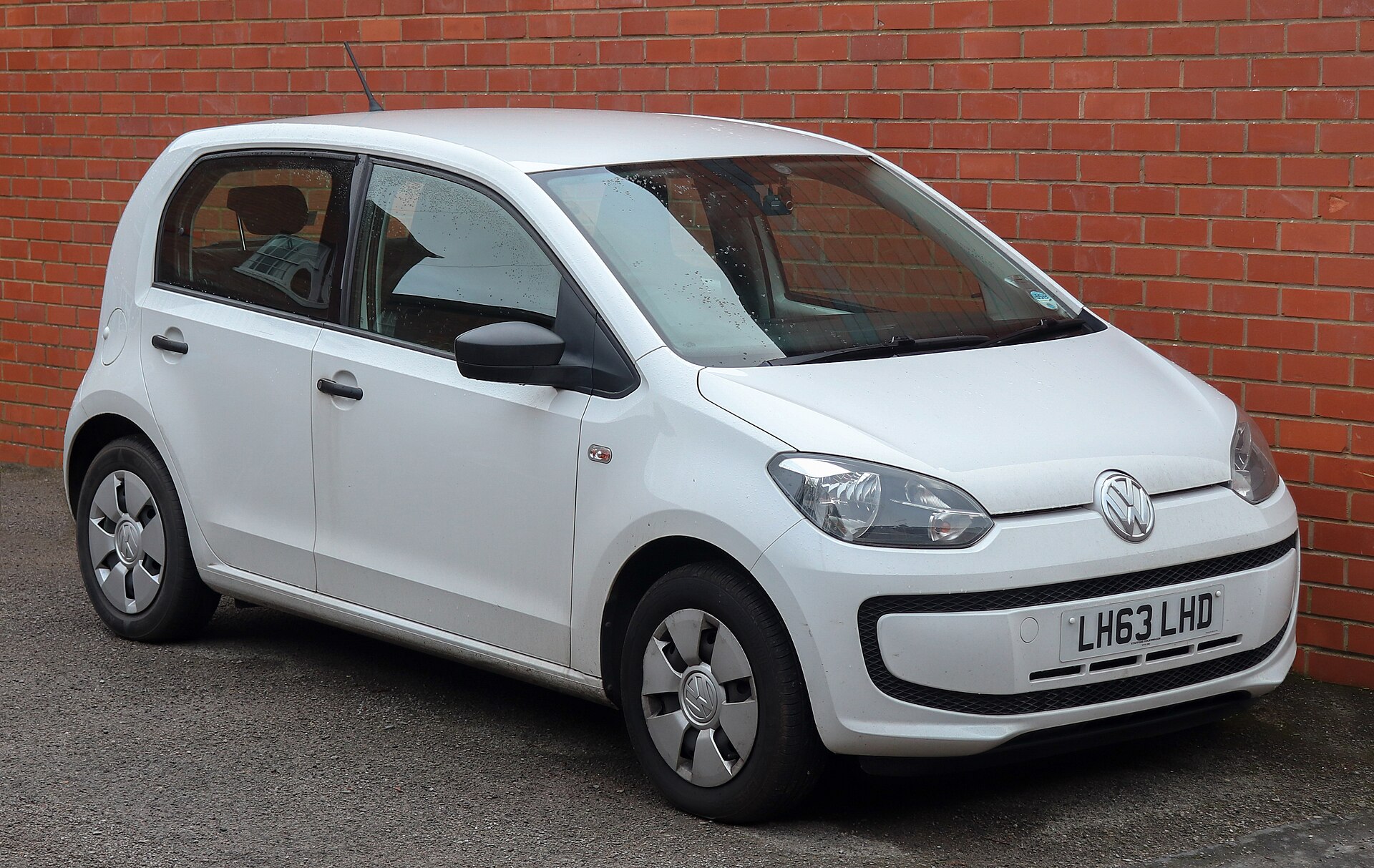
The Volkswagen up! is the city car that Volkswagen built from December 2011 to October 2023. It was developed on the New Small Family (NSF) platform together with two near-identical sister models, the SEAT Mii and the Škoda Citigo, and all three came from the same plant in Bratislava, Slovakia. The up! succeeded the Volkswagen Fox, won World Car of the Year 2012, and later became one of Europe's first affordable electric cars as the e-up!.
In short
- A-segment city car, three- and five-door hatchback, built in Bratislava (2011–2023) and in Taubaté, Brazil (2014–2021).
- Petrol engines were all 1.0-litre three-cylinders, from 44 kW (60 PS) to 85 kW (116 PS) in the 2018 up! GTI.
- The e-up! arrived in 2013 with an 18.7 kWh battery; the 2019 update raised the usable capacity to 32.3 kWh.
- World Car of the Year 2012 and What Car? Car of the Year 2012.
Volkswagen up! at a glance
| Specification | Volkswagen up! |
|---|---|
| Segment | A-segment city car |
| Production | December 2011 – October 2023 (Bratislava); February 2014 – 2021 (Taubaté, Brazil) |
| Platform | Volkswagen Group NSF (New Small Family), front engine, front-wheel drive |
| Body styles | three-door and five-door hatchback |
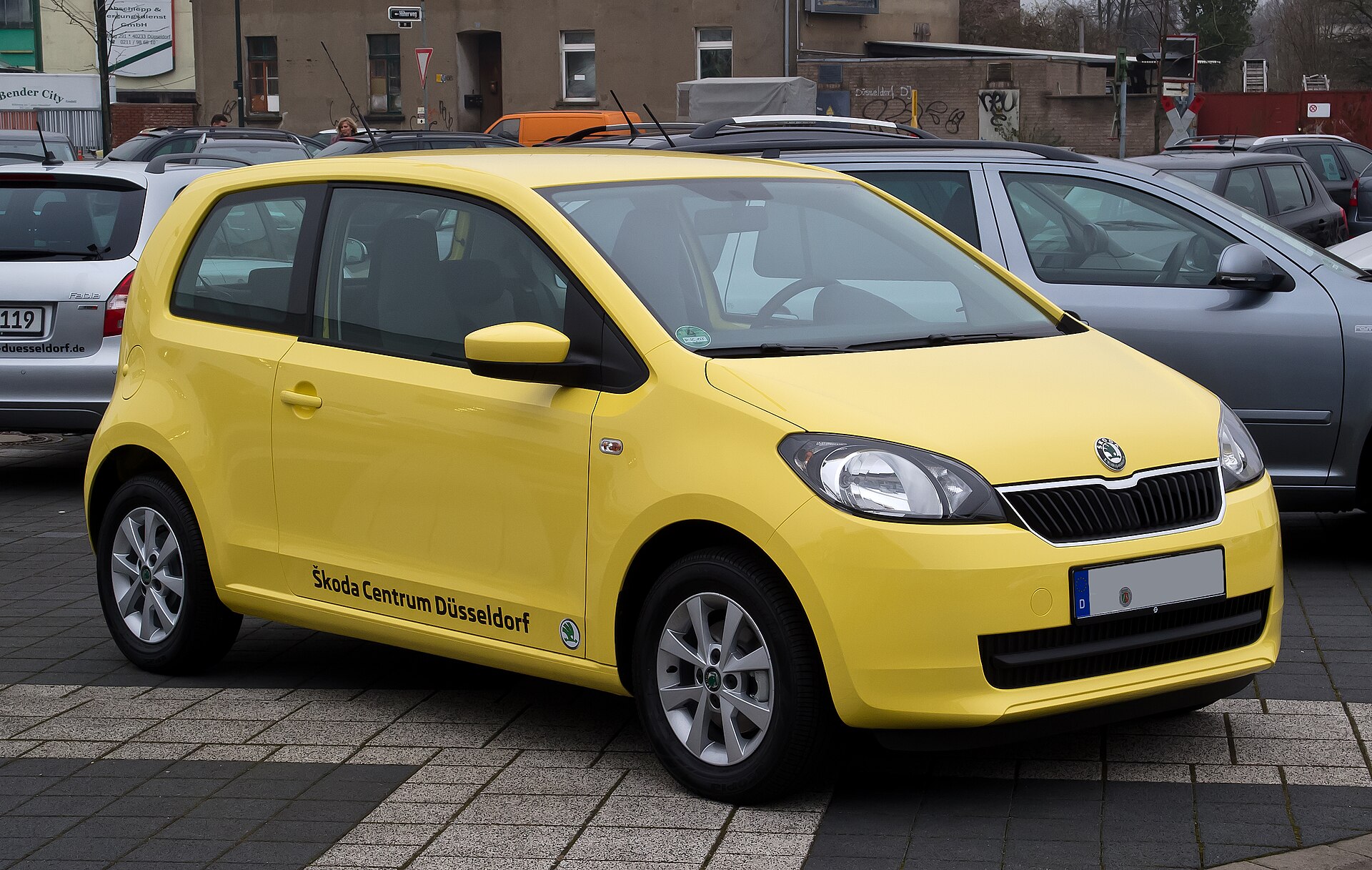
| Sister models | SEAT Mii (to 2021), Škoda Citigo (to 2020) |
| Length / wheelbase | 3,540–3,563 mm / 2,420 mm |
| Kerb weight | 929–997 kg (petrol); 1,139–1,229 kg (e-up!) |
| Power range | 44–85 kW (60–116 PS); e-up! 60 kW |
| Predecessor | Volkswagen Fox, SEAT Arosa |
The up! is part of our Volkswagen catalogue, one size below the Volkswagen Polo. Electric models of all brands are collected in our electric cars section.
From rear-engined concept to front-drive city car
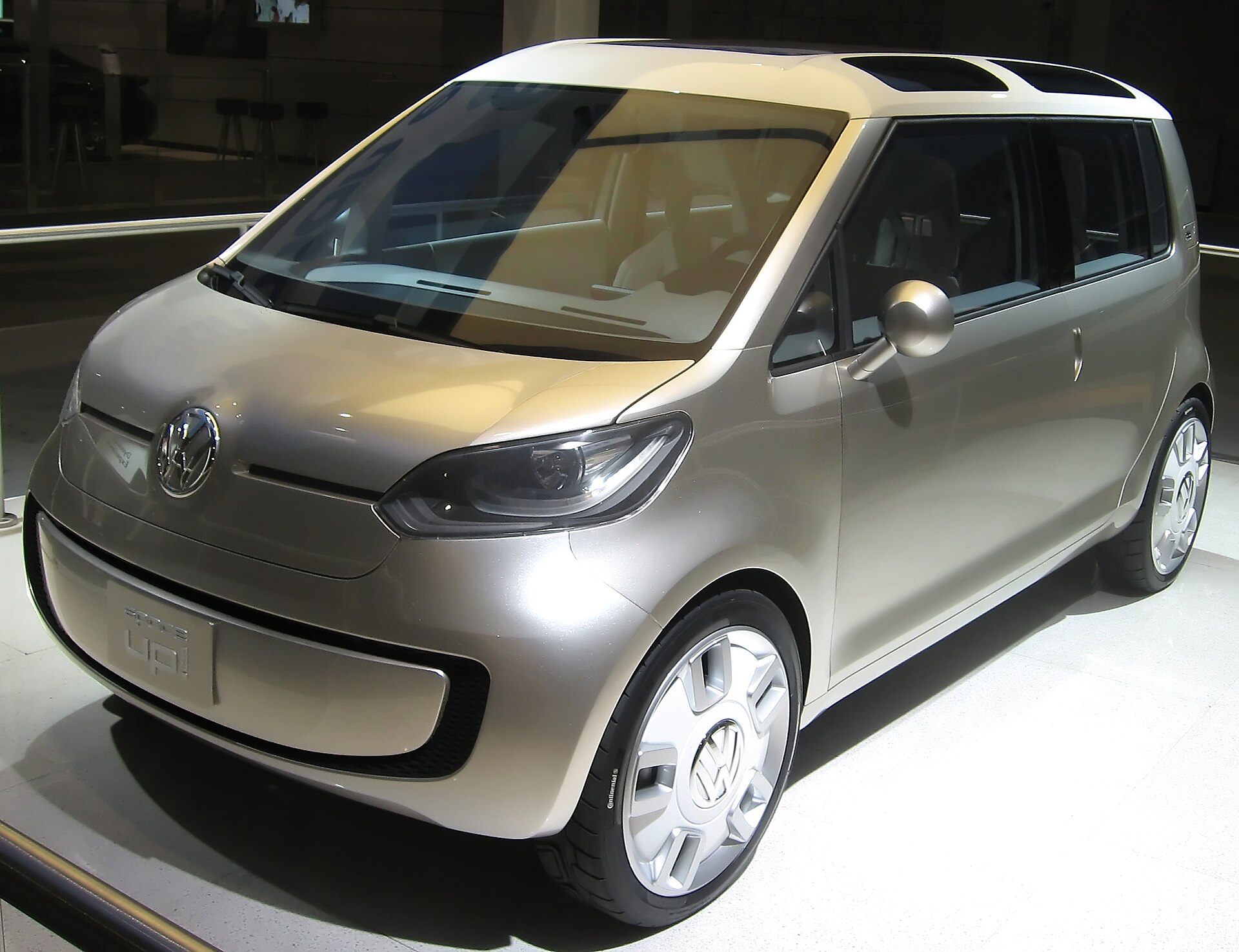
Volkswagen first showed the up! name on a concept at the Frankfurt Motor Show in 2007. That car was a two-door with a rear-mounted engine and rear-wheel drive, about 3.45 m long and 1.63 m wide. More studies followed: the four-door Space up! with butterfly-style doors in Tokyo, the solar-roof Space up! Blue in Los Angeles, the e-up! at Frankfurt in 2009 and the Up Lite hybrid in Los Angeles the same year.
For production, Volkswagen changed to a conventional front engine and front-wheel drive. The exterior was drawn by Marco Antonio Pavone and refined under Walter de'Silva and Klaus Zyciora. The car was first expected to revive the Lupo name, but it kept the concept's name. UK orders opened in October 2011, German sales started on 3 December 2011, and most other European markets received it from April 2012.
The up! was the first car in its class to offer automatic City Emergency Braking, which works below 30 km/h. SEAT called the same system City Safety Assist and Škoda City Safe Drive.
Generations and model history
The up! was never replaced by a second generation. It remained one model for its whole life, with one major update in 2016.
| Generation | Code | Years | Body styles | Engines | Power (kW / hp) |
|---|---|---|---|---|---|
| up! (pre-facelift) | NSF | 2011–2016 | 3-door, 5-door | 1.0 MPI, 1.0 CNG, electric | 44–55 kW (59–74 hp); e-up! 60 kW (80 hp) |
| up! (facelift) | NSF | 2016–2023 | 3-door, 5-door | 1.0 MPI, 1.0 TSI, electric | 44–85 kW (59–114 hp); e-up! 60 kW (80 hp) |
| up! Brazil | NSF, longer body | 2014–2021 | 5-door | 1.0 MPI, 1.0 TSI | not covered here |
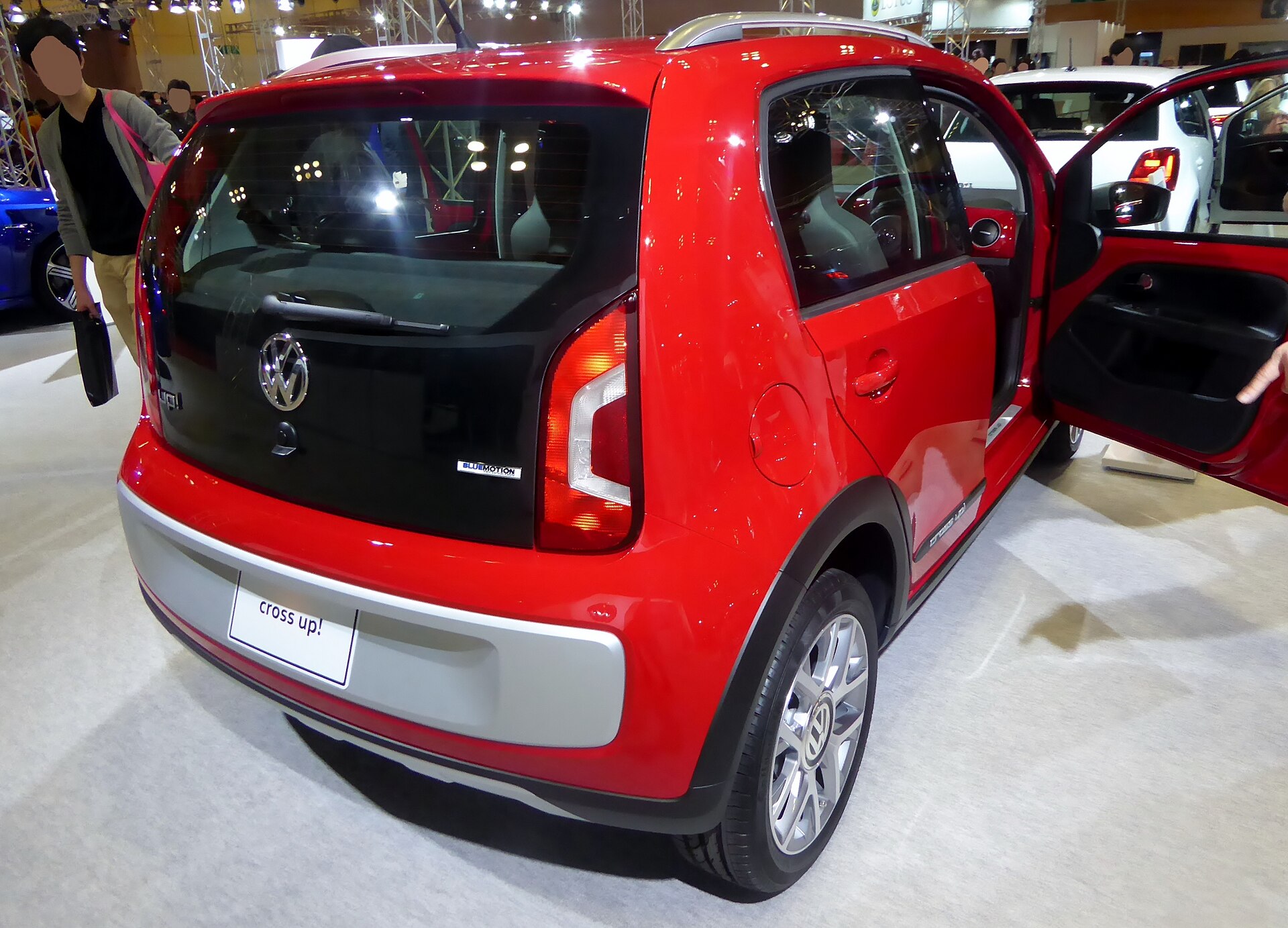
The facelift, shown at the Geneva Motor Show in 2016, brought the turbocharged 1.0 TSI. The cross up! of 2013 added 15 mm of ground clearance, plastic side skirts and wheel-arch flares. In Brazil, Volkswagen do Brasil built a version 65 mm longer, with a 50-litre fuel tank instead of 35 litres, a full-size spare wheel, more luggage space and a different rear end.

Engines, transmissions and performance
| Engine | Power | Torque | 0–100 km/h | Top speed |
|---|---|---|---|---|
| 1.0 MPI 60 | 44 kW (60 PS) | 95 Nm | 14.4 s | 161 km/h |
| 1.0 MPI 75 | 55 kW (75 PS) | 95 Nm | 13.2 s | 171–172 km/h |
| 1.0 CNG (eco up!) | 50 kW (68 PS) | 90 Nm | 16.3 s | 164 km/h |
| 1.0 TSI 90 | 66 kW (90 PS) | 160 Nm | 9.9 s | 185 km/h |
| 1.0 TSI 101 | 75 kW (101 PS) | 164.5 Nm | 9.1 s | 184 km/h |
| 1.0 TSI (up! GTI) | 85 kW (116 PS) | 200 Nm | 8.8 s | 192–196 km/h |
| Electric (e-up!, 2013) | 60 kW (82 PS) | 210 Nm | 12.4 s | 130 km/h |
All petrol engines are 1.0-litre three-cylinders. A five-speed manual was standard, and the 44 and 55 kW versions could be ordered in some markets with the five-speed ASG automated manual. Only the up! GTI had a six-speed manual. The e-up! uses a single fixed ratio. For the up! GTI, the Wikipedia table gives 192 km/h, while its text names 196 km/h.
The up! GTI
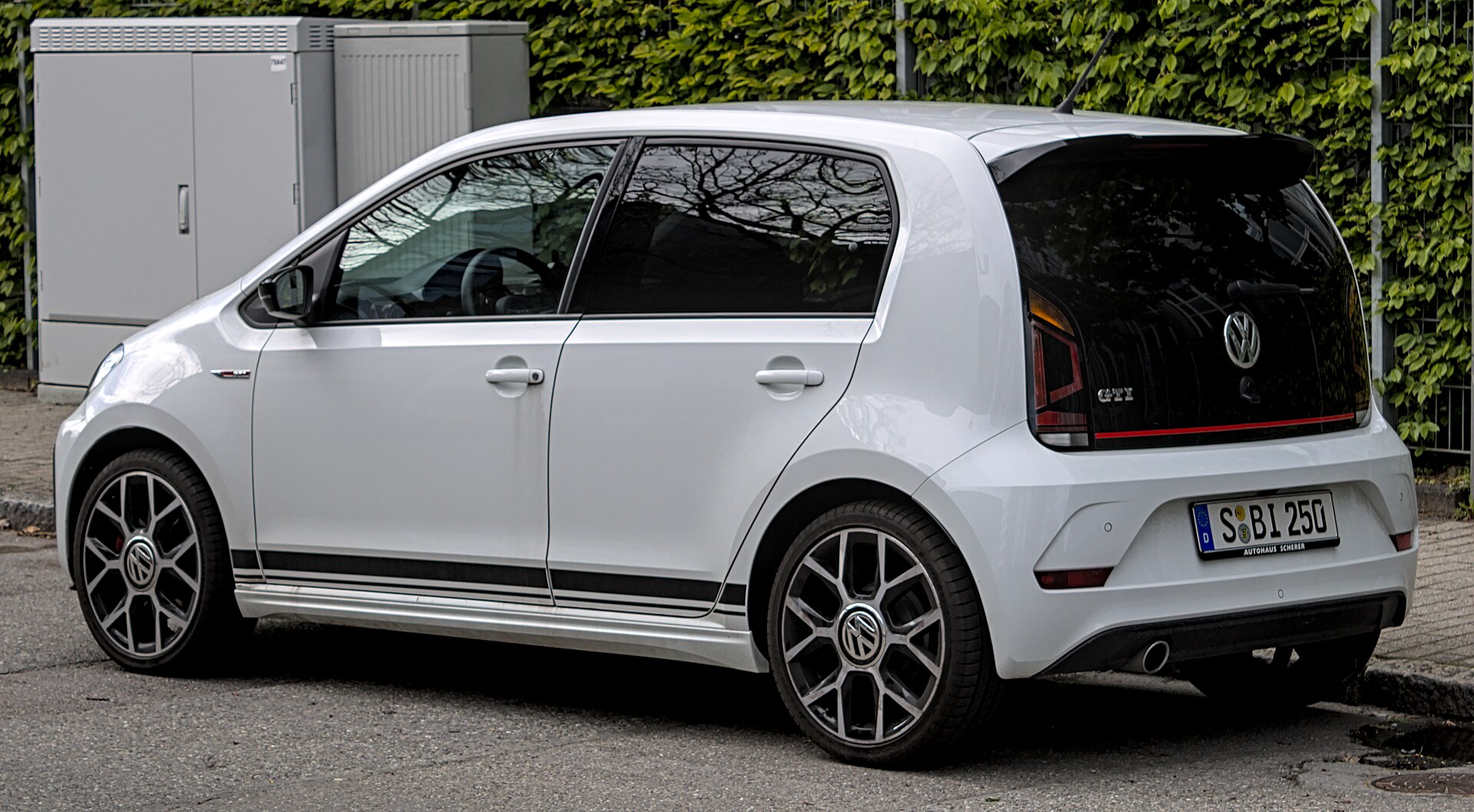
Volkswagen previewed a sporty up! with the GT up! concept and revealed the production up! GTI in December 2016; it went on sale in January 2018. Its turbocharged 1.0 TSI produces 85 kW (116 PS) and 200 Nm, the car weighs 997 kg and reaches 100 km/h in 8.8 seconds. In the Green NCAP test of February 2019 it scored 9.2 out of 10 for clean air and 6.7 for energy efficiency. UK orders were paused in April 2019, resumed in January 2020 and closed in January 2023.


e-up!: the electric version
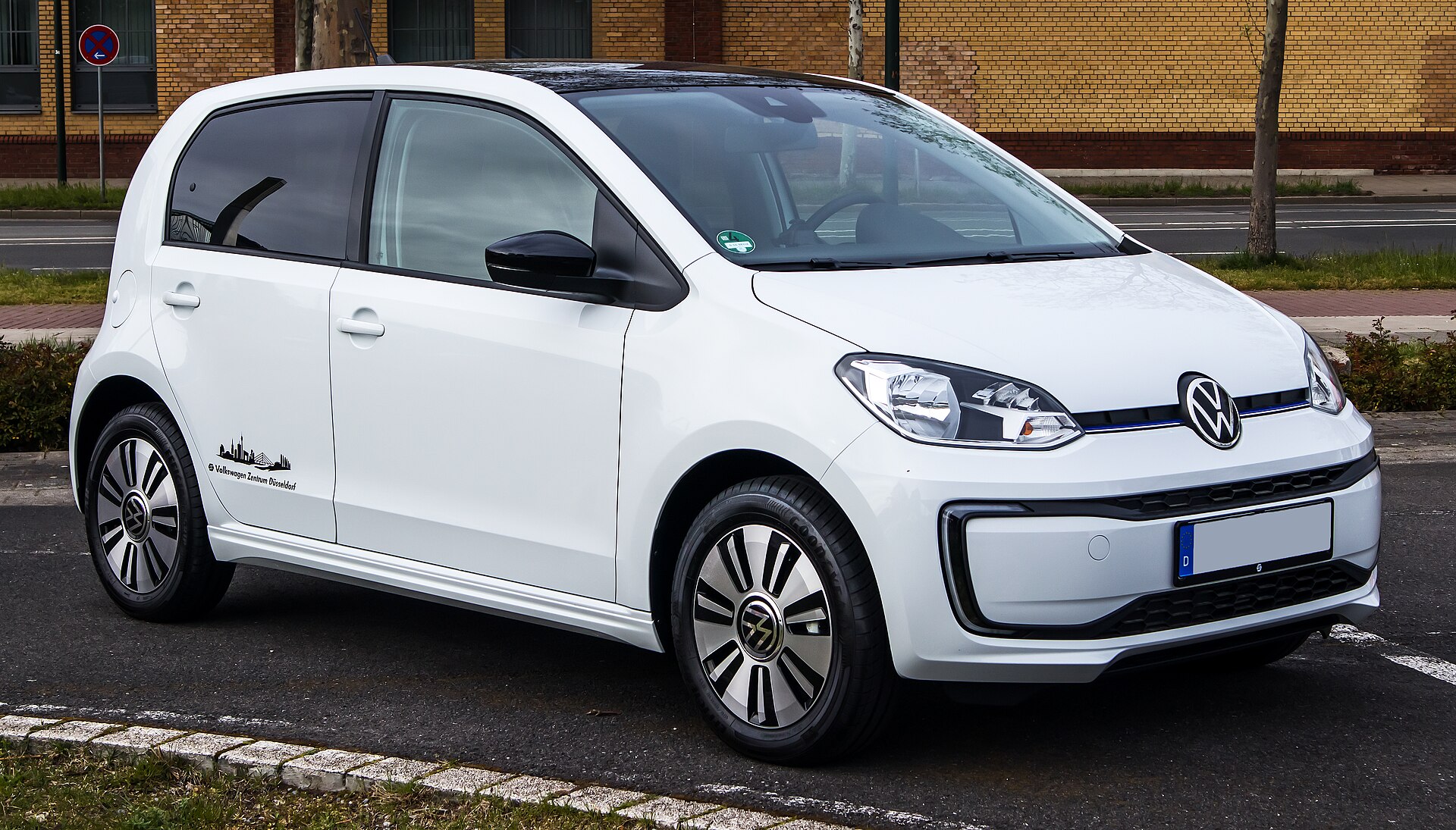
The first e-up! of 2013 had a 60 kW electric motor with 210 Nm and an 18.7 kWh battery, of which 16.8 kWh were usable. It covered 160 km on the old NEDC cycle, charged in about 9 hours at 3.3 kW or to 80% in about 30 minutes at a 40 kW DC charger, and weighed 1,139 kg. The base price was €26,900 at launch in 2013.
Volkswagen announced the updated e-up! on 5 September 2019. Its battery grew to 36.8 kWh gross (32.3 kWh usable), the range to about 258–260 km, and AC charging to 7.1 kW; the base price fell to €21,975 in 2019. By January 2020 about 21,000 e-up! had been sold worldwide. The same drivetrain went into the Škoda Citigo-e iV (2019–2020) and the SEAT Mii Electric (2019–2021).
| Parameter | e-up! (2013) | e-up! (2019) |
|---|---|---|
| Battery, gross / usable | 18.7 / 16.8 kWh | 36.8 / 32.3 kWh |
| Range | 160 km (NEDC) | 258–260 km |
| Consumption | 11.7 kWh/100 km | 14.9 kWh/100 km |
| AC charging | 3.3 kW, about 9 h | 7.1 kW, about 5.5 h |
| Kerb weight | 1,139 kg | 1,229 kg |
| Base price | €26,900 (2013) | €21,975 (2019) |

Dimensions and fuel economy
| Parameter | Metric | Imperial |
|---|---|---|
| Length | 3,540–3,563 mm | 139.4–140.3 in |
| Width | 1,641 mm | 64.6 in |
| Height | 1,478–1,489 mm | 58.2–58.6 in |
| Wheelbase | 2,420 mm | 95.3 in |
| Kerb weight (petrol) | 929–997 kg | 2,048–2,198 lb |
| Fuel tank (Europe / Brazil) | 35 / 50 l | 9.2 / 13.2 US gal |
Official combined consumption was 4.4–4.5 l/100 km (about 52–53 mpg US) for the 44 kW engine and 4.4 l/100 km for the 1.0 TSI 90, with CO2 emissions from 96 g/km (BlueMotion) to 108 g/km. The up! GTI used 5.6–5.7 l/100 km. The eco up! ran on compressed natural gas and used 4.4 m³ of gas per 100 km.
Safety ratings
In 2011 Euro NCAP gave the up! 89% for adult occupant protection, 80% for child occupants, 46% for pedestrians and 86% for safety assist; the identical SEAT Mii was rated five stars. When Euro NCAP retested the trio in 2019 under stricter rules, the standard up!, Mii and Citigo received three stars. Latin NCAP gave the Brazilian up! five stars for adult and four for child protection in 2014.
Sales and the end of production
The up! sold best in its first full years: 130,039 cars in Europe in 2013 and 124,845 in 2014. Sales were still 100,715 in 2017 and fell to 59,578 in 2020. The SEAT and Škoda twins sold in smaller numbers, peaking at 28,608 Mii and 44,851 Citigo in 2013. Škoda withdrew the Citigo in 2020 and SEAT the Mii in 2021, the Brazilian up! ended in 2021, and the last up! left Bratislava in October 2023. The car was never sold in North America, China or India.

Photo gallery


Volkswagen Up! photos 6
FAQ
How many generations of the Volkswagen up! are there?
One. The up! was built from 2011 to 2023 with a facelift in 2016; there was no second generation.
What is the fuel consumption of the up!?
Official combined figures were 4.4–4.7 l/100 km for the 1.0 petrol engines and 5.6–5.7 l/100 km for the up! GTI.
Is the up! available as an electric car?
Yes. The e-up! was sold from 2013; the 2019 version has a 32.3 kWh usable battery and a range of about 258–260 km.
What are the twins of the Volkswagen up!?
The SEAT Mii and the Škoda Citigo, both built in Bratislava with different front and rear styling.