
 Volkswagen Golf
All generations, specs and history
Updated Published Sources (7) Report an error
By Felix Hartmann, Automotive Technology & EV Contributor Reviewed by Oleksandr Hnatiuk

- Built
- 1974–present
- Generations
- 8 · Mk1 to Mk8
- Top power
- 235 kW (320 PS)
- New price
- from about €20,700 (2019)
Timeline
Golf generations
Click a generation for its own page
Mk1 and Mk2 overlapped in 1983–1993, so Mk2 sits on a second lane
- Golf Mk1 1974–1993 · Hatchback, Convertible · 37–81 kW (50–110 PS)
- Golf Mk2 1983–1992 · Hatchback · 82–118 kW (111–160 PS)
- Golf Mk3 1991–2002 · Hatchback, Station wagon · 44–140 kW (60–190 PS)
- Golf Mk4 1997–2010 · Hatchback, Station wagon · 50–175 kW (68–238 PS)
- Golf Mk5 2003–2009 · Hatchback, Station wagon · 55–147 kW (75–200 PS)
- Golf Mk6 2009–2012 · Hatchback · 63–199 kW (86–271 PS)
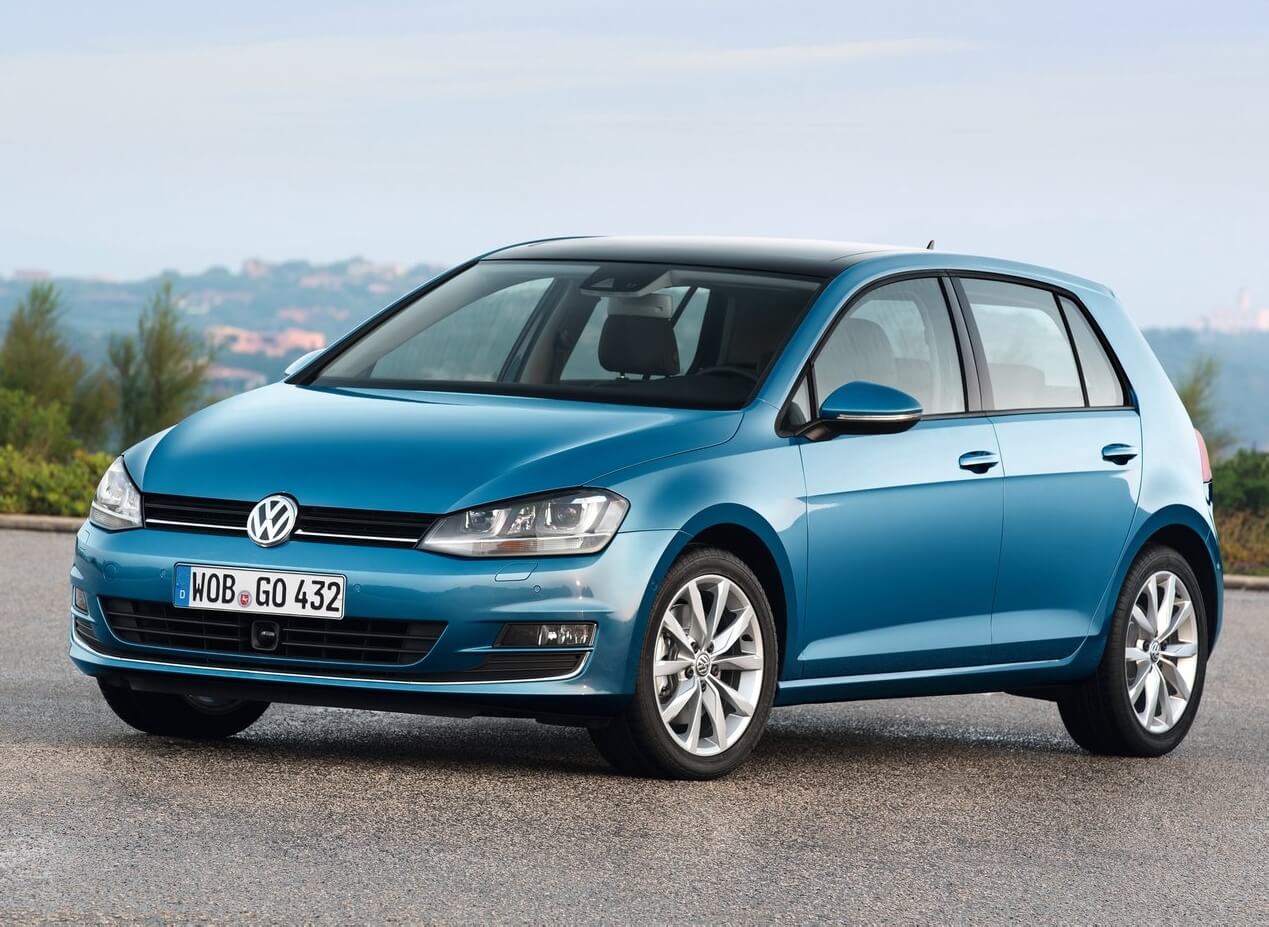
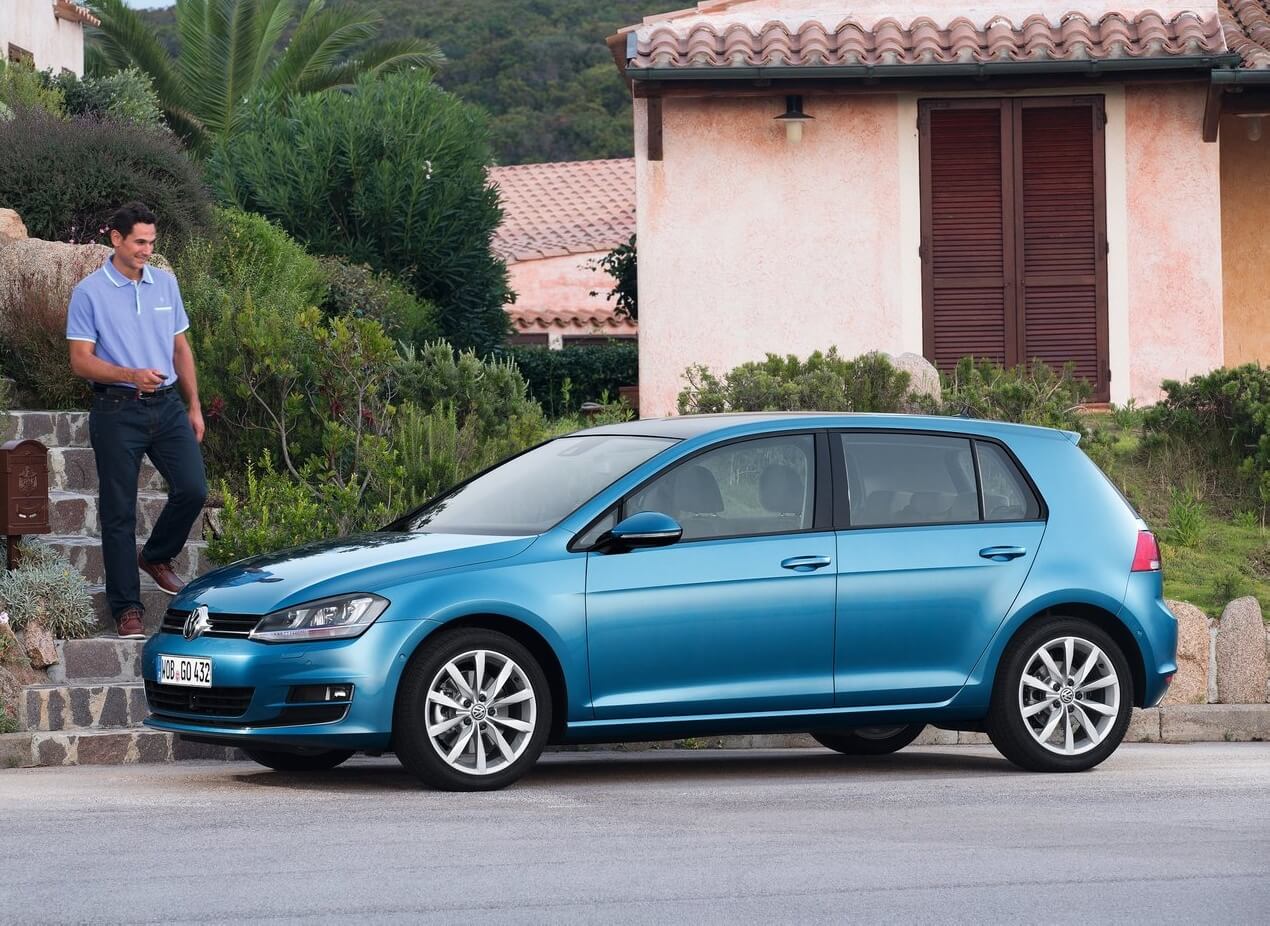
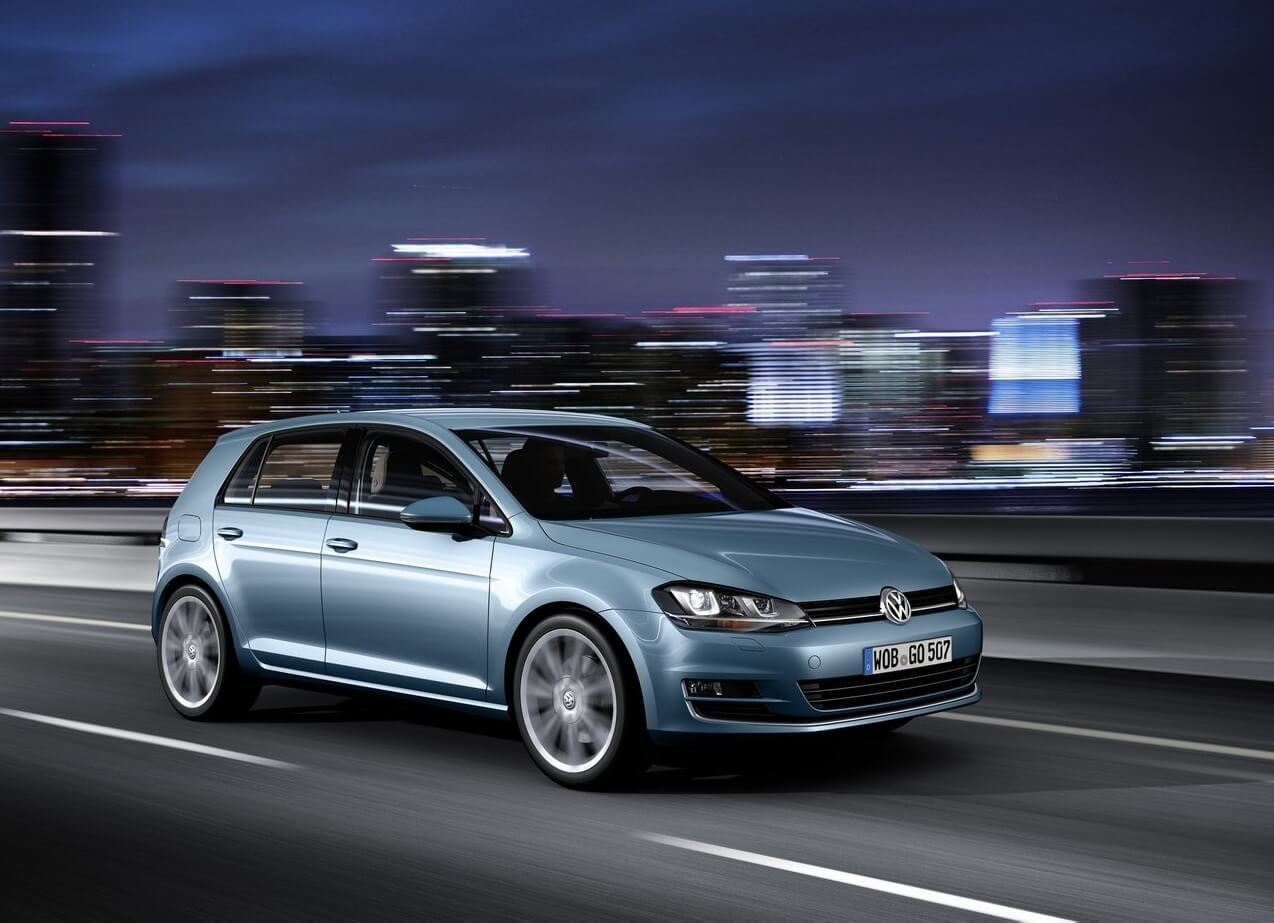
- Golf Mk7 2012–2021 · Hatchback, Station wagon · 63–228 kW (86–310 PS)
- Golf Mk8 Current 2019–now · Hatchback, Station wagon · 66–235 kW (90–320 PS)
Newest first · 8 generations since 1974
-
2019

-
2012

-
2009
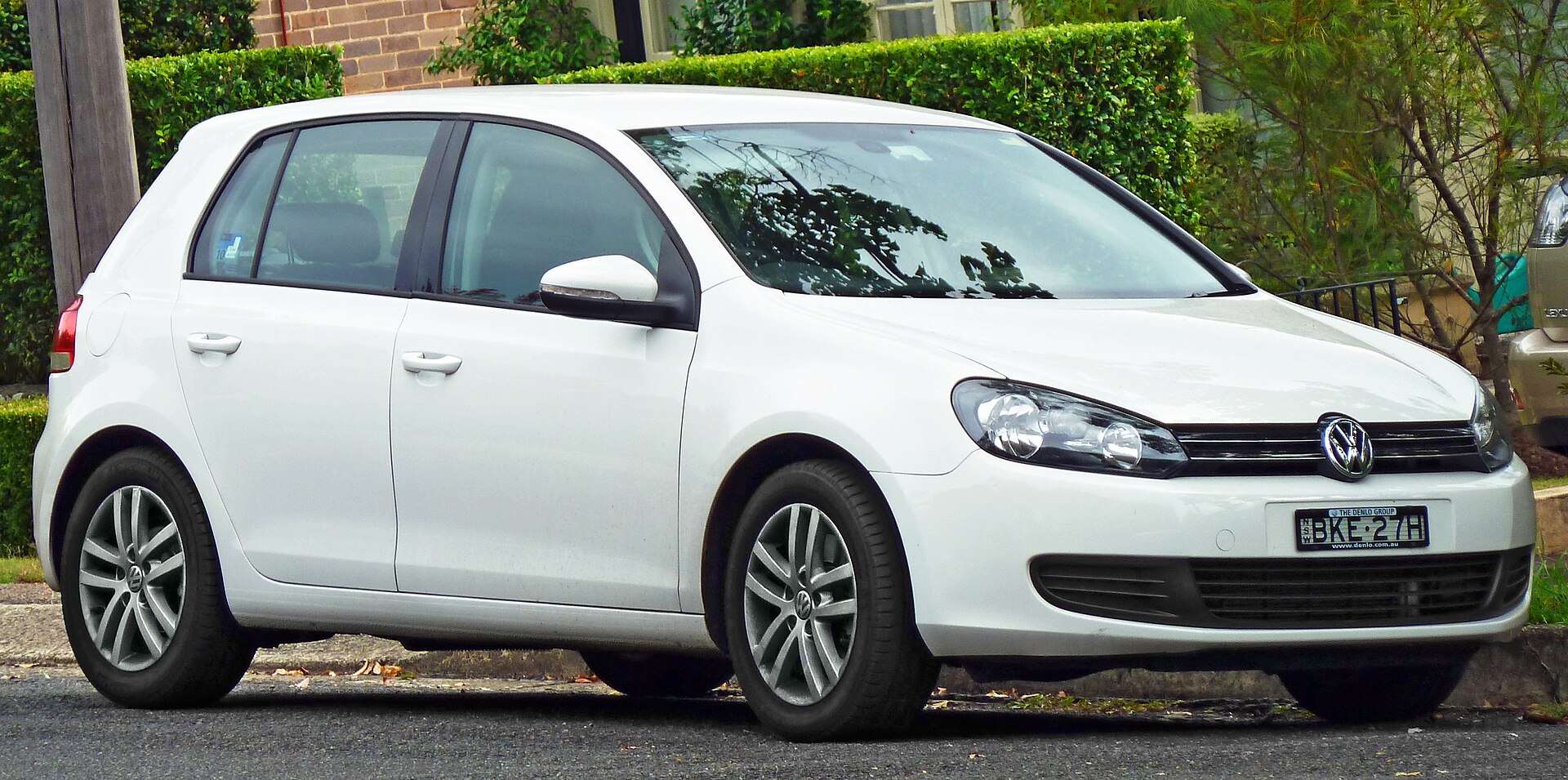
-
2003

-
1997

-
1991

-
1983

-
1974


All generations by year: Golf Mk8 (2019–now) · Golf Mk7 (2012–2021) · Golf Mk6 (2009–2012) · Golf Mk5 (2003–2009) · Golf Mk4 (1997–2010) · Golf Mk3 (1991–2002) · Golf Mk2 (1983–1992) · Golf Mk1 (1974–1993)
Which one is mine?
Pick the year of first registration to see which generation it is.
Check by VINWhich Volkswagen Golf to choose
Our verdict · Felix Hartmann
For everyday use, a Mk7 or Mk7.5 with the 1.4 or 1.5 TSI or the 2.0 TDI offers the best balance of age, quality and safety. The GTI remains the classic choice for drivers who want speed with practicality, and the Golf R adds all-wheel drive. Early Mk1 and Mk2 GTIs are now sought-after classics.
Watch out
- DQ200 7-speed dry-clutch DSG judder and failure (TSI petrols, 1.6 TDI)
- Camshaft adjuster bolts and cam pulley failure (EA211 1.2 and 1.4 TSI)
- Cold-running judder and hesitation (1.5 TSI Evo)
- Leaking fuel injectors (1.0 TSI three-cylinder)
Watch-out points come from our verified ownership data, each with a source.
The Volkswagen Golf is a compact front-wheel-drive hatchback built since 1974 and one of the best-selling cars in history, with more than 37 million sold worldwide. Launched in May 1974 to replace the Beetle, it has gone through eight generations and created the hot hatch with the GTI of 1976.
In short
- Mk1 styled by Giorgetto Giugiaro; sold as the Rabbit in the USA and Canada and the Caribe in Mexico.
- Milestones: GTI (1976), Syncro four-wheel drive (1985), TDI and VR6 (Mk3), R32 (2002), MQB platform (Mk7), plug-in hybrid GTE.
- Mk8 (revealed 24 October 2019): GTI and GTE with 180 kW (245 PS), GTD with 147 kW (200 PS), Golf R with 235 kW (320 PS).
- European Car of the Year 1992 and 2013, World Car of the Year 2009 and 2013.
Size at a glance
Ford Focus IV
The Volkswagen Golf Mk8 is 94 mm shorter and 36 mm narrower than the Ford Focus IV.
| Dimensions | Volkswagen Golf Mk8 | Ford Focus IV | Difference |
|---|---|---|---|
| Length | 4,284 mm168.7 in | 4,378 mm172.4 in | −94 mm−3.7 in |
| Width | 1,789 mm70.4 in | 1,825 mm71.9 in | −36 mm−1.4 in |
| Height | 1,456 mm57.3 in | 1,454 mm57.2 in | +2 mm+0.1 in |
| Wheelbase | 2,636 mm103.8 in | 2,700 mm106.3 in | −64 mm−2.5 in |
| Boot | 381 L13.5 cu ft | 375 L13.2 cu ft | +6 L+0.2 cu ft |
Kia Ceed JD
The Volkswagen Golf Mk8 is 26 mm shorter, 9 mm wider and 14 mm lower than the Kia Ceed JD.
| Dimensions | Volkswagen Golf Mk8 | Kia Ceed JD | Difference |
|---|---|---|---|
| Length | 4,284 mm168.7 in | 4,310 mm169.7 in | −26 mm−1.0 in |
| Width | 1,789 mm70.4 in | 1,780 mm70.1 in | +9 mm+0.4 in |
| Height | 1,456 mm57.3 in | 1,470 mm57.9 in | −14 mm−0.6 in |
| Wheelbase | 2,636 mm103.8 in | 2,650 mm104.3 in | −14 mm−0.6 in |
| Boot | 381 L13.5 cu ft | 380 L13.4 cu ft | +1 L |
Volkswagen Golf Mk7
The Volkswagen Golf Mk8 is 29 mm longer and 21 mm taller than the Volkswagen Golf Mk7.
| Dimensions | Volkswagen Golf Mk8 | Volkswagen Golf Mk7 | Difference |
|---|---|---|---|
| Length | 4,284 mm168.7 in | 4,255 mm167.5 in | +29 mm+1.1 in |
| Width | 1,789 mm70.4 in | 1,791 mm70.5 in | −2 mm−0.1 in |
| Height | 1,456 mm57.3 in | 1,435 mm56.5 in | +21 mm+0.8 in |
| Wheelbase | 2,636 mm103.8 in | 2,631 mm103.6 in | +5 mm+0.2 in |
| Boot | 381 L13.5 cu ft | 380 L13.4 cu ft | +1 L |
Running cost
Fuel · Golf Mk8 1.5 TSI
about 1,450 EUR fuel a year at 15,000 km
5.5 l/100 km · petrol at 1.75 EUR/l · change mileage, fuel price or version
Known problems
-
High all years
DQ200 7-speed dry-clutch DSG judder and failure (TSI petrols, 1.6 TDI)
Jerky take-off, shudder when creeping in traffic, harsh or delayed shifts, and in bad cases a gearbox warning and limp mode.
Fix: The garage updates software and adapts the clutches; worn clutch packs or a failed mechatronic unit are replaced.
Verified Source: What Car? Used Volkswagen Golf 2013-2020 reliability review -
Critical 2013–2015
Camshaft adjuster bolts and cam pulley failure (EA211 1.2 and 1.4 TSI)
Usually no warning before the cam pulley breaks; loose adjuster bolts can also leak oil onto the road.
Fix: Dealer recall 15H2 checks and replaces the affected parts free of charge.
Verified Source: EU Safety Gate (Rapex) alert A12/1253/19, VW Golf 2013-2015, via car-recalls.eu -
Medium 2017–2019
Cold-running judder and hesitation (1.5 TSI Evo)
Kangaroo-like judder in first and second gear while the engine is cold, hesitation below about 30 km/h and stalling at junctions.
Fix: Volkswagen software update released in early 2020; check the dealer has loaded it.
Verified Source: Honest John: Volkswagen announces fix for 1.5 TSI engine hesitation issues (March 2020) -
Medium 2018–2020
Leaking fuel injectors (1.0 TSI three-cylinder)
Injectors do not close fully, so fuel drips into the cylinder when the car is parked; emissions readings can be wrong.
Fix: Recall replaces the injection units, about three hours of workshop time.
Verified Source: auto motor und sport: Rueckruf VW, Seat, Skoda, TSI-Modelle mit fehlerhafter Einspritzung (KBA) -
High all years
Rear wheel carrier and wheel bearing housing recalls (all engines)
No symptom in normal driving; the weak part can crack and affect stability.
Fix: Dealer replaces the wheel carriers or bearing housings under recall.
Verified Source: ADAC Gebrauchtwagen-Info: VW Golf VII Diesel (2012-2020) -
Medium all years
Water in the footwells (door speaker bracket, rear door seals)
Damp carpets, misted windows and a musty smell, most often in the passenger footwell.
Fix: Replace the cracked speaker mounting bracket or door seals and dry the carpet and insulation.
Verified Source: Haynes: Volkswagen Golf Mk7 common problems -
Medium all years
High oil consumption (GTI 2.0 TSI)
Oil level drops noticeably between services; a low level can damage the engine and timing chain.
Fix: Check consumption over a set distance and inspect for leaks before any engine work.
Verified Source: What Car? Used Volkswagen Golf 2013-2020 reliability review -
Low 2012–2016
Milky xenon headlamp lenses (cars built June 2012 to May 2016)
Cloudy inner lens or clear cover, weaker light and possible test failure.
Fix: Headlamp unit replacement; goodwill under VW bulletins only with full service history.
Verified Source: Gebrauchtwagenberater: VW Golf 7 (AU) 2012-2021 Probleme und Schwachstellen -
Low all years
Worn springs, dampers and brake parts at the TÜV test
Knocking over bumps, leaking dampers or worn discs noted at the roadworthiness test.
Fix: Replace springs or dampers in axle pairs and renew worn discs and pads.
Verified Source: ADAC Gebrauchtwagen-Info: VW Golf VII Diesel (2012-2020)
Specs by version
Engines
| Version | Engine | Power | Torque | Drive |
|---|---|---|---|---|
| Plug-in hybrid · 2 versions | ||||
| Mk8 · 1.4 TSI eHybrid | 1.4 l · Plug-in hybrid 1,400 cc | 150 kW 204 PS201 hp | 350 Nm258 lb-ft | - |
| Mk8 · GTE 1.4 TSI plug-in hybrid | 1.4 l · Plug-in hybrid 1,400 cc | 180 kW 245 PS241 hp | 400 Nm295 lb-ft | - |
| Diesel · 13 versions | ||||
| Mk1 · 1.5 37 kW (50 PS) | 1.5 l · Diesel 1,500 cc | 37 kW 50 PS50 hp | 80 Nm59 lb-ft | Front-wheel drive |
| Mk3 · 1.9 AAZ 55 kW (75 PS) | 1.9 l · 4 cyl · Diesel AAZ | 55 kW 75 PS74 hp | 150 Nm111 lb-ft | - |
| Mk5 · 1.9 77 kW (105 PS) | 1.9 l · Diesel 1,900 cc | 77 kW 105 PS103 hp | - | - |
| Mk5 · 2.0 103 kW (140 PS) | 2.0 l · Diesel 2,000 cc | 103 kW 140 PS138 hp | - | - |
| Mk6 · 66 kW (90 PS) | Diesel | 66 kW 90 PS89 hp | - | Front-wheel drive |
| Mk6 · 77 kW (105 PS) | Diesel | 77 kW 105 PS103 hp | - | Front-wheel drive |
| Mk6 · 81 kW (110 PS) | Diesel | 81 kW 110 PS109 hp | - | Front-wheel drive |
| Mk6 · 103 kW (140 PS) | Diesel | 103 kW 140 PS138 hp | - | Front-wheel drive |
| Mk6 · 2.0 125 kW (170 PS) | 2.0 l · Diesel 2,000 cc | 125 kW 170 PS168 hp | - | Front-wheel drive |
| Mk7 · 1.6 TDI | 1.6 l · Diesel 1,598 cc | 77 kW 105 PS103 hp | 250 Nm184 lb-ft | Front-wheel drive |
| Mk7 · 1.6 TDI | 1.6 l · Diesel 1,598 cc | 85 kW 116 PS114 hp | 250 Nm184 lb-ft | Front-wheel drive |
| Mk7 · 2.0 TDI | 2.0 l · Diesel 1,968 cc | 110 kW 150 PS148 hp | 340 Nm251 lb-ft | Front-wheel drive |
| Mk8 · 2.0 TDI | 2.0 l · Diesel 2,000 cc | 110 kW 150 PS148 hp | 360 Nm266 lb-ft | - |
| Petrol · 21 versions | ||||
| Mk3 · 1.4 44 kW (60 PS) | 1.4 l · 4 cyl · Petrol 1,400 cc | 44 kW 60 PS59 hp | - | - |
| Mk3 · 2.9 ABV 140 kW (190 PS) | 2.9 l · 6 cyl · Petrol ABV | 140 kW 190 PS188 hp | 245 Nm181 lb-ft | - |
| Mk5 · 1.6 75 kW (102 PS) | 1.6 l · Petrol 1,600 cc | 75 kW 102 PS101 hp | - | - |
| Mk5 · 1.6 85 kW (116 PS) | 1.6 l · Petrol 1,600 cc | 85 kW 116 PS114 hp | - | - |
| Mk5 · 90 kW (122 PS) | Petrol | 90 kW 122 PS121 hp | - | - |
| Mk5 · 103 kW (140 PS) | Petrol | 103 kW 140 PS138 hp | - | - |
| Mk5 · 125 kW (170 PS) | Petrol | 125 kW 170 PS168 hp | - | - |
| Mk6 · 63 kW (86 PS) | Petrol | 63 kW 86 PS84 hp | - | Front-wheel drive |
| Mk6 · 77 kW (105 PS) | Petrol | 77 kW 105 PS103 hp | - | Front-wheel drive |
| Mk6 · 90 kW (122 PS) | Petrol | 90 kW 122 PS121 hp | - | Front-wheel drive |
| Mk6 · 118 kW (160 PS) | Petrol | 118 kW 160 PS158 hp | - | Front-wheel drive |
| Mk7 · 1.2 TSI | 1.2 l · Petrol 1,197 cc | 63 kW 86 PS84 hp | 160 Nm118 lb-ft | Front-wheel drive |
| Mk7 · 1.2 TSI | 1.2 l · Petrol 1,197 cc | 77 kW 105 PS103 hp | 175 Nm129 lb-ft | Front-wheel drive |
| Mk7 · 1.0 TSI | 1.0 l · Petrol 999 cc | 85 kW 116 PS114 hp | 200 Nm148 lb-ft | Front-wheel drive |
| Mk7 · 1.4 TSI | 1.4 l · Petrol 1,390 cc | 92 kW 125 PS123 hp | 200 Nm148 lb-ft | Front-wheel drive |
| Mk7 · 1.5 TSI evo | 1.5 l · Petrol 1,498 cc | 110 kW 150 PS148 hp | 250 Nm184 lb-ft | Front-wheel drive |
| Mk8 · 1.0 TSI | 1.0 l · Petrol 1,000 cc | 81 kW 110 PS109 hp | 200 Nm148 lb-ft | - |
| Mk8 · 1.5 TSI | 1.5 l · Petrol 1,500 cc | 110 kW 150 PS148 hp | 250 Nm184 lb-ft | - |
| Mk8 · GTI 2.0 TSI | 2.0 l · Petrol 2,000 cc | 180 kW 245 PS241 hp | 370 Nm273 lb-ft | Front-wheel drive |
| Mk8 · GTI Clubsport 2.0 TSI | 2.0 l · Petrol 2,000 cc | 221 kW 300 PS296 hp | 400 Nm295 lb-ft | Front-wheel drive |
| Mk8 · R 2.0 TSI DSG | 2.0 l · Petrol 2,000 cc | 235 kW 320 PS315 hp | 420 Nm310 lb-ft | - |
| Other · 4 versions | ||||
| Mk1 · 1.1 37 kW (50 PS) | 1.1 l 1,100 cc | 37 kW 50 PS50 hp | 77 Nm57 lb-ft | Front-wheel drive |
| Mk2 · 1.8 118 kW (160 PS) | 1.8 l 1,800 cc | 118 kW 160 PS158 hp | - | All-wheel drive |
| Mk4 · 3.2 175 kW (238 PS) | 3.2 l 3,200 cc | 175 kW 238 PS235 hp | - | All-wheel drive |
| Mk5 · 1.4 55 kW (75 PS) | 1.4 l 1,400 cc | 55 kW 75 PS74 hp | - | - |
Performance
Show all 31 versions
| Version | 0–100 km/h | Top speed | Fuel consumption | CO₂ |
|---|---|---|---|---|
| Plug-in hybrid · 2 versions | ||||
| Mk8 · 1.4 TSI eHybrid | 7.4 s 0–62 mph | 220 km/h137 mph | - | - |
| Mk8 · GTE 1.4 TSI plug-in hybrid | 6.7 s 0–62 mph | 225 km/h140 mph | - | - |
| Diesel · 10 versions | ||||
| Mk1 · 1.5 37 kW (50 PS) | 19.0 s 0–62 mph | 141 km/h88 mph | - | - |
| Mk3 · 1.9 AAZ 55 kW (75 PS) | 15.1 s 0–62 mph | 165 km/h103 mph | - | - |
| Mk5 · 1.9 77 kW (105 PS) | 11.3 s 0–62 mph | 187 km/h116 mph | 5.0 l/100 km47.0 mpg US · 56.5 mpg UK | 132 g/km |
| Mk6 · 77 kW (105 PS) | 11.3 s 0–62 mph | 189 km/h117 mph | 4.5 l/100 km52.3 mpg US · 62.8 mpg UK | 119 g/km |
| Mk6 · 81 kW (110 PS) | 10.7 s 0–62 mph | 190 km/h118 mph | 4.5 l/100 km52.3 mpg US · 62.8 mpg UK | 119 g/km |
| Mk6 · 103 kW (140 PS) | 9.3 s 0–62 mph | 209 km/h130 mph | 4.8 l/100 km49.0 mpg US · 58.9 mpg UK | 126 g/km |
| Mk7 · 1.6 TDI | 10.7 s 0–62 mph | 192 km/h119 mph | 3.8 l/100 km61.9 mpg US · 74.3 mpg UK | 99 g/km |
| Mk7 · 1.6 TDI | 10.2 s 0–62 mph | 198 km/h123 mph | 4.1 l/100 km57.4 mpg US · 68.9 mpg UK | 106 g/km |
| Mk7 · 2.0 TDI | 8.6 s 0–62 mph | 216 km/h134 mph | 4.1 l/100 km57.4 mpg US · 68.9 mpg UK | 106 g/km |
| Mk8 · 2.0 TDI | 8.8 s 0–62 mph | 223 km/h139 mph | 4.3 l/100 km54.7 mpg US · 65.7 mpg UK | 112 g/km |
| Petrol · 18 versions | ||||
| Mk3 · 2.9 ABV 140 kW (190 PS) | 6.7 s 0–62 mph | 250 km/h155 mph | - | - |
| Mk5 · 1.6 75 kW (102 PS) | 11.4 s 0–62 mph | 184 km/h114 mph | 7.4 l/100 km31.8 mpg US · 38.2 mpg UK | 176 g/km |
| Mk5 · 1.6 85 kW (116 PS) | 10.8 s 0–62 mph | 192 km/h119 mph | 6.7 l/100 km35.1 mpg US · 42.2 mpg UK | 159 g/km |
| Mk5 · 90 kW (122 PS) | 9.4 s 0–62 mph | 197 km/h122 mph | 6.3 l/100 km37.3 mpg US · 44.8 mpg UK | 149 g/km |
| Mk5 · 103 kW (140 PS) | 8.8 s 0–62 mph | 205 km/h127 mph | 7.1 l/100 km33.1 mpg US · 39.8 mpg UK | 169 g/km |
| Mk5 · 125 kW (170 PS) | 7.9 s 0–62 mph | 220 km/h137 mph | 7.3 l/100 km32.2 mpg US · 38.7 mpg UK | 174 g/km |
| Mk6 · 90 kW (122 PS) | 9.5 s 0–62 mph | 200 km/h124 mph | 6.2 l/100 km37.9 mpg US · 45.6 mpg UK | 144 g/km |
| Mk6 · 118 kW (160 PS) | 8.0 s 0–62 mph | 220 km/h137 mph | 6.3 l/100 km37.3 mpg US · 44.8 mpg UK | 145 g/km |
| Mk7 · 1.2 TSI | 11.9 s 0–62 mph | 179 km/h111 mph | 4.9 l/100 km48.0 mpg US · 57.6 mpg UK | 113 g/km |
| Mk7 · 1.2 TSI | 10.2 s 0–62 mph | 192 km/h119 mph | 4.9 l/100 km48.0 mpg US · 57.6 mpg UK | 114 g/km |
| Mk7 · 1.0 TSI | 9.7 s 0–62 mph | 204 km/h127 mph | 5.6 l/100 km42.0 mpg US · 50.4 mpg UK | 126 g/km |
| Mk7 · 1.4 TSI | 9.1 s 0–62 mph | 204 km/h127 mph | 5.2 l/100 km45.2 mpg US · 54.3 mpg UK | 120 g/km |
| Mk7 · 1.5 TSI evo | 8.1 s 0–62 mph | 216 km/h134 mph | 5.0 l/100 km47.0 mpg US · 56.5 mpg UK | 114 g/km |
| Mk8 · 1.0 TSI | 10.2 s 0–62 mph | 202 km/h126 mph | 5.3 l/100 km44.4 mpg US · 53.3 mpg UK | 121 g/km |
| Mk8 · 1.5 TSI | 8.5 s 0–62 mph | 224 km/h139 mph | 5.5 l/100 km42.8 mpg US · 51.4 mpg UK | 125 g/km |
| Mk8 · GTI 2.0 TSI | 6.3 s 0–62 mph | 250 km/h155 mph | - | - |
| Mk8 · GTI Clubsport 2.0 TSI | 5.6 s 0–62 mph | 250 km/h155 mph | 7.4 l/100 km31.8 mpg US · 38.2 mpg UK | 169 g/km |
| Mk8 · R 2.0 TSI DSG | 4.7 s 0–62 mph | 250 km/h155 mph | 8.2 l/100 km28.7 mpg US · 34.4 mpg UK | 187 g/km |
| Other · 1 version | ||||
| Mk1 · 1.1 37 kW (50 PS) | 17.0 s 0–62 mph | - | - | - |
Dimensions and weight
Show all 36 versions
| Version | Length | Width | Height | Wheelbase | Kerb weight | Boot | Fuel tank |
|---|---|---|---|---|---|---|---|
| Plug-in hybrid · 2 versions | |||||||
| Mk8 · 1.4 TSI eHybrid | 4,284 mm168.7 in | 1,789 mm70.4 in | 1,456 mm57.3 in | 2,636 mm103.8 in | 1,590 kg3,505 lb | 273 l9.6 cu ft | 40 l10.6 gal US |
| Mk8 · GTE 1.4 TSI plug-in hybrid | 4,284 mm168.7 in | 1,789 mm70.4 in | 1,456 mm57.3 in | 2,636 mm103.8 in | - | - | - |
| Diesel · 10 versions | |||||||
| Mk1 · 1.5 37 kW (50 PS) | 3,705 mm145.9 in | 1,610 mm63.4 in | 1,395 mm54.9 in | 2,400 mm94.5 in | 750 kg1,653 lb | 320 l11.3 cu ft | - |
| Mk3 · 1.9 AAZ 55 kW (75 PS) | 4,074 mm160.4 in | 1,694 mm66.7 in | - | - | - | - | - |
| Mk5 · 1.9 77 kW (105 PS) | - | - | - | - | 1,326 kg2,923 lb | 350 l12.4 cu ft | 55 l14.5 gal US |
| Mk6 · 77 kW (105 PS) | - | - | - | - | 1,314 kg2,897 lb | 350 l12.4 cu ft | 55 l14.5 gal US |
| Mk6 · 81 kW (110 PS) | - | - | - | - | 1,341 kg2,956 lb | 350 l12.4 cu ft | 55 l14.5 gal US |
| Mk6 · 103 kW (140 PS) | - | - | - | - | 1,374 kg3,029 lb | 350 l12.4 cu ft | 55 l14.5 gal US |
| Mk7 · 1.6 TDI | - | - | - | - | 1,295 kg2,855 lb | 380 l13.4 cu ft | 50 l13.2 gal US |
| Mk7 · 1.6 TDI | - | - | - | - | 1,301 kg2,868 lb | 380 l13.4 cu ft | 50 l13.2 gal US |
| Mk7 · 2.0 TDI | - | - | - | - | 1,354 kg2,985 lb | 380 l13.4 cu ft | 50 l13.2 gal US |
| Mk8 · 2.0 TDI | 4,284 mm168.7 in | 1,789 mm70.4 in | 1,456 mm57.3 in | 2,636 mm103.8 in | 1,428 kg3,148 lb | 381 l13.5 cu ft | 50 l13.2 gal US |
| Petrol · 20 versions | |||||||
| Mk3 · 1.4 44 kW (60 PS) | 4,074 mm160.4 in | 1,694 mm66.7 in | 1,422 mm56.0 in | 2,471 mm97.3 in | - | - | - |
| Mk3 · 2.9 ABV 140 kW (190 PS) | 4,074 mm160.4 in | 1,694 mm66.7 in | - | - | - | - | - |
| Mk5 · 1.6 75 kW (102 PS) | - | - | - | - | 1,248 kg2,751 lb | 350 l12.4 cu ft | 55 l14.5 gal US |
| Mk5 · 1.6 85 kW (116 PS) | - | - | - | - | 1,259 kg2,776 lb | 350 l12.4 cu ft | 55 l14.5 gal US |
| Mk5 · 90 kW (122 PS) | - | - | - | - | 1,280 kg2,822 lb | 350 l12.4 cu ft | 55 l14.5 gal US |
| Mk5 · 103 kW (140 PS) | - | - | - | - | 1,340 kg2,954 lb | 350 l12.4 cu ft | 55 l14.5 gal US |
| Mk5 · 125 kW (170 PS) | - | - | - | - | 1,346 kg2,967 lb | 350 l12.4 cu ft | 55 l14.5 gal US |
| Mk6 · 63 kW (86 PS) | 4,199 mm165.3 in | 1,779 mm70.0 in | 1,479 mm58.2 in | 2,578 mm101.5 in | - | - | - |
| Mk6 · 90 kW (122 PS) | - | - | - | - | 1,290 kg2,844 lb | 350 l12.4 cu ft | 55 l14.5 gal US |
| Mk6 · 118 kW (160 PS) | - | - | - | - | 1,346 kg2,967 lb | 350 l12.4 cu ft | 55 l14.5 gal US |
| Mk7 · 1.2 TSI | 4,255 mm167.5 in | 1,791 mm70.5 in | 1,435 mm56.5 in | 2,631 mm103.6 in | 1,205 kg2,657 lb | 380 l13.4 cu ft | 50 l13.2 gal US |
| Mk7 · 1.2 TSI | - | - | - | - | 1,210 kg2,668 lb | 380 l13.4 cu ft | 50 l13.2 gal US |
| Mk7 · 1.0 TSI | - | - | - | - | 1,225 kg2,701 lb | 380 l13.4 cu ft | 50 l13.2 gal US |
| Mk7 · 1.4 TSI | - | - | - | - | 1,225 kg2,701 lb | 380 l13.4 cu ft | 50 l13.2 gal US |
| Mk7 · 1.5 TSI evo | - | - | - | - | 1,294 kg2,853 lb | 380 l13.4 cu ft | 50 l13.2 gal US |
| Mk8 · 1.0 TSI | 4,284 mm168.7 in | 1,789 mm70.4 in | 1,456 mm57.3 in | 2,636 mm103.8 in | 1,264 kg2,787 lb | 381 l13.5 cu ft | 45 l11.9 gal US |
| Mk8 · 1.5 TSI | 4,284 mm168.7 in | 1,789 mm70.4 in | 1,456 mm57.3 in | 2,636 mm103.8 in | 1,331 kg2,934 lb | 381 l13.5 cu ft | 50 l13.2 gal US |
| Mk8 · GTI 2.0 TSI | 4,284 mm168.7 in | 1,789 mm70.4 in | 1,456 mm57.3 in | 2,636 mm103.8 in | - | - | - |
| Mk8 · GTI Clubsport 2.0 TSI | 4,284 mm168.7 in | 1,789 mm70.4 in | 1,456 mm57.3 in | 2,636 mm103.8 in | 1,459 kg3,217 lb | - | - |
| Mk8 · R 2.0 TSI DSG | 4,284 mm168.7 in | 1,789 mm70.4 in | 1,456 mm57.3 in | 2,636 mm103.8 in | 1,567 kg3,455 lb | - | - |
| Other · 4 versions | |||||||
| Mk1 · 1.1 37 kW (50 PS) | 3,705 mm145.9 in | 1,610 mm63.4 in | 1,395 mm54.9 in | 2,400 mm94.5 in | - | - | - |
| Mk2 · 1.8 118 kW (160 PS) | 4,053 mm159.6 in | 1,700 mm66.9 in | 1,415 mm55.7 in | 2,475 mm97.4 in | 865 kg1,907 lb | 345 l12.2 cu ft | - |
| Mk4 · 3.2 175 kW (238 PS) | 4,149 mm163.3 in | 1,735 mm68.3 in | 1,444 mm56.9 in | 2,511 mm98.9 in | 1,113 kg2,454 lb | 330 l11.7 cu ft | - |
| Mk5 · 1.4 55 kW (75 PS) | 4,204 mm165.5 in | 1,759 mm69.3 in | 1,465 mm57.7 in | 2,578 mm101.5 in | - | - | - |
Verified Manufacturer and type-approval data from our catalog · Sources and methodology
Safety
-
Mk8 · Euro NCAP 2025
Full Euro NCAP result
-
Mk7 · Euro NCAP 2012
Older protocol · Full Euro NCAP result
Stars from different years and organisations are not directly comparable: test protocols change every few years.
Volkswagen Golf at a glance
The Golf is built mainly in Wolfsburg, Germany, and has been offered as a three- and five-door hatchback, a Variant estate, a cabriolet and, under other names such as Jetta, Vento and Bora, a saloon. The brand's story is told in the unusual history of Volkswagen, and the range, from the Volkswagen Polo to the Volkswagen Passat, is in the Volkswagen catalogue.

| Generation | Years | Key facts | Performance version |
|---|---|---|---|
| Golf Mk1 | 1974–1983 (Cabriolet to 1993) | Giugiaro design, about 6.7 million built | GTI 1.6, 81 kW (110 PS) |
| Golf Mk2 | 1983–1992 | Larger, Syncro 4WD, G60 | G60, 118 kW (160 PS) |
| Golf Mk3 | 1991–1997 (Cabriolet to 1999) | First TDI and VR6; ECOTY 1992 | VR6 2.8 |
| Golf Mk4 | 1997–2006 in Europe | Higher quality, Bora saloon | R32, 3.2 VR6, 4WD |
| Golf Mk5 | 2003–2009 | Multi-link rear suspension, FSI, TSI | GTI 2.0 TFSI, 147 kW (200 PS) |
| Golf Mk6 | 2008–2012 | Walter de'Silva design; WCOTY 2009 | Golf R, 199 kW (270 PS) |
| Golf Mk7 | 2012–2019 | MQB platform, about 100 kg lighter; ECOTY and WCOTY 2013 | Golf R, 221 kW (300 PS) |
| Golf Mk8 | 2019– | Mild and plug-in hybrids, five doors only | Golf R, 235 kW (320 PS) |
Golf Mk1 (1974–1983)
The first Golf was presented in May 1974. Its angular body, designed by Giorgetto Giugiaro, combined front-wheel drive, a transverse engine and a hatchback, then still unusual in Volkswagen's range. Engines started with a 1.1-litre petrol unit with 37 kW (50 PS), and a 1.5-litre diesel followed in September 1976. The GTI of June 1976 had a fuel-injected 1.6-litre engine with 81 kW (110 PS) and a top speed of about 180 km/h, the price of a small car and the pace of a sports coupé. The Jetta saloon arrived in 1979 and the Karmann-built Cabriolet in 1980; the hatchback ended in 1983, while the Cabriolet continued until 1993. In South Africa a local version, the Citi Golf, was built until 2009.

Golf Mk2 (1983–1992)
The second Golf, launched in September 1983, was about 300 mm longer and 55 mm wider, with drag reduced from Cd 0.42 to 0.34. It offered ABS, power steering and a trip computer. The GTI used a 1.8-litre eight-valve engine, and from 1985 a 16-valve version reached more than 220 km/h. The first four-wheel-drive Golf, the Syncro, appeared in 1985, the supercharged G60 with 118 kW (160 PS) in 1989, and the raised Golf Country, built with Steyr-Daimler-Puch, followed around 1990.

Golf Mk3 (1991–1997)
Launched in August 1991, the third Golf introduced the first TDI diesel and the narrow-angle VR6 engine with 2.8 litres and 128 kW (174 PS), and later a 2.9-litre version. Safety improved with front airbags, side-impact bars in the doors and a deformable steering column. The Variant estate arrived in September 1993, and the Vento saloon in 1992. The Mk3 was European Car of the Year 1992 and about 4.8 million were built.

Golf Mk4 (1997–2006)
The fourth Golf of August 1997 raised interior quality to near-premium level and was Europe's best-selling car in 2001. Trims included Trendline, Comfortline, Highline and GTI, and standard equipment included front and side airbags, ABS and disc brakes on all four wheels. Engines ranged from 50 to 132 kW (68–180 PS) in regular versions, and the GTI was offered with the 1.8T and 2.8 VR6. The 2002 R32 had a 3.2-litre VR6 with 177 kW (241 PS), four-wheel drive and the DSG dual-clutch gearbox. European production ended with the 2006 model year, but the Mk4 continued in Brazil, China and Mexico.

Golf Mk5 (2003–2009)
Presented at the Frankfurt Motor Show in autumn 2003, the fifth Golf shared its platform with the second Audi A3 and the Touran. It gained a multi-link rear suspension and a body 80% stiffer, and grew to 4,204 mm long, 1,759 mm wide and 1,483 mm high, with more rear legroom and a 350-litre boot. The GTI returned to form with a 2.0 turbo FSI engine of 147 kW (200 PS), the R32 had 184 kW (250 PS), and the 1.4 TSI was added later. In North America the Mk5 was sold as the Rabbit again.

Golf Mk6 (2008–2012)
Shown at the Paris Motor Show in October 2008, the sixth Golf was a deep update of the Mk5 with new styling by Walter de'Silva, daytime running lights in all headlights, much better sound insulation and an interior with parts from the Passat CC. Common-rail TDI diesels replaced the older unit-injector engines, TSI petrol engines spread across the range, and 4MOTION four-wheel drive used a fourth-generation Haldex clutch. The GTI had 155 kW (211 PS) and the Golf R 199 kW (270 PS) in Europe. The Mk6 was World Car of the Year 2009.

Golf Mk7 (2012–2019)
Platform, design and interior
Unveiled at the Paris Motor Show in September 2012, the seventh Golf was the first built on the MQB modular platform, with a body that is about 80% high-strength steel and a weight about 100 kg lower than the Mk6. It has a sharper front with optional LED headlights, a 6.5- to 9-inch infotainment screen and, on top versions, a 12.3-inch digital instrument display. Lower-powered versions have a torsion-beam rear axle, more powerful ones a multi-link suspension. It won European Car of the Year and World Car of the Year 2013. The Mk7.5 facelift of November 2016 brought new bumpers and lights, the 1.5 TSI evo engine and a seven-speed DSG.

Golf Mk7 engines and performance
| Version | Engine | Power | 0–100 km/h |
|---|---|---|---|
| 1.6 MPI | 1.6 petrol | 81 kW (110 PS) | about 10 s |
| 1.4 TSI | 1.4 turbo petrol | 92 kW (125 PS) | about 9 s |
| 1.4 TSI | 1.4 turbo petrol | 110 kW (150 PS), 250 Nm | 8.2 s |
| GTI | 2.0 TSI | 162 kW (220 PS), 169 kW (230 PS) with Performance pack | – |
| GTE | 1.4 TSI + 75 kW electric motor, 8.8 kWh battery | 150 kW (204 PS) system | – |
| Golf R | 2.0 TSI, 4MOTION | 221 kW (300 PS) | – |
Mk7 safety
In its 2012 Euro NCAP test the Mk7 received five stars, with 94% for adult occupants, 65% for pedestrian protection and 71% for safety assist. It has up to nine airbags and a multi-collision brake that slows the car automatically after a first impact. In the USA, the IIHS rated it "good" in the small-overlap, moderate-overlap, side, roof-strength and head-restraint tests.
Golf Mk8 (2019 to today)
Revealed in Wolfsburg on 24 October 2019, the eighth Golf uses an updated MQB platform and is offered only with five doors, as the three-door was dropped because of low demand. It introduced 48-volt mild-hybrid eTSI versions and a plug-in hybrid with an 81 kW motor, 180 kW system output, a 13 kWh battery and about 60 km of WLTP electric range. The GTI and GTE have 180 kW (245 PS), the GTD 147 kW (200 PS) and the Golf R 235 kW (320 PS). The battery-electric e-Golf (2014–2020) was replaced by the separate ID.3. The Mk8.5 facelift of January 2024 brought new lights and bumpers and replaced the touch-sensitive steering-wheel controls with physical buttons.

Rivals: how the Volkswagen Golf compares
The Golf competes with the Ford Focus, Opel Astra, Peugeot 308, Toyota Corolla, Honda Civic, Hyundai i30, Skoda Octavia and Audi A3. Its strengths are build quality, refinement, a wide choice of engines from frugal diesels to the Golf R, and strong residual values; its weaknesses are a modest boot compared with the Octavia, prices above many rivals and the cost of options.

Volkswagen Golf evolution in numbers
Did you know?
- The Volkswagen Golf has been around for 52 years: 8 generations in our catalog since 1974.
- The biggest jump in power came with the Golf Mk6: up to 199 kW (271 PS), 52 kW more than the Golf Mk5.
Most powerful version, kW
Length, mm
Figures from the 1cars catalog: power is the strongest version of each generation; generations without the figure are left out.
Volkswagen Golf: first vs latest generation
| Spec | Golf Mk1 | Golf Mk8 | Change |
|---|---|---|---|
| Years | 1974–1993 | 2019–present | 45 years apart |
| Most powerful version | 81 kW (110 PS) | 235 kW (320 PS) | +154 kW (+190%) |
| Length | 3,705 mm | 4,284 mm | +579 mm |
| Width | 1,610 mm | 1,789 mm | +179 mm |
| Wheelbase | 2,400 mm | 2,636 mm | +236 mm |
| Lightest kerb weight | 750 kg | 1,264 kg | +514 kg |
| Best 0–100 km/h | 17.0 s | 4.7 s | −12.3 s |
| Top speed | 141 km/h | 250 km/h | +109 km/h |
Oldest and newest generation in the 1cars catalog. Power is the strongest version of each; other rows are shown only when both generations have the figure.
Owning a Volkswagen Golf
Common problems, best and worst years, maintenance and running costs - only data checked by our editors, with sources.
Best years
- 2017–2019 - Facelift cars get the 1.0 TSI 85 kW and 1.5 TSI Evo engines and sit outside the December 2013 to March 2015 camshaft adjuster recall window. Verified Source: Volkswagen Newsroom: Golf 7 engine versions
Years to avoid
- 2013–2015 - TSI petrols built from December 2013 to March 2015 are covered by recall 15H2 for cam pulley and adjuster bolt failure; buy only with proof it was done. Verified Source: EU Safety Gate (Rapex) alert A12/1253/19, VW Golf 2013-2015, via car-recalls.eu
Questions and answers
What are the most common Volkswagen Golf problems?
DQ200 7-speed dry-clutch DSG judder and failure (TSI petrols, 1.6 TDI) (all years): Jerky take-off, shudder when creeping in traffic, harsh or delayed shifts, and in bad cases a gearbox warning and limp mode.; Camshaft adjuster bolts and cam pulley failure (EA211 1.2 and 1.4 TSI) (2013–2015): Usually no warning before the cam pulley breaks; loose adjuster bolts can also leak oil onto the road.; Cold-running judder and hesitation (1.5 TSI Evo) (2017–2019): Kangaroo-like judder in first and second gear while the engine is cold, hesitation below about 30 km/h and stalling at junctions.; Leaking fuel injectors (1.0 TSI three-cylinder) (2018–2020): Injectors do not close fully, so fuel drips into the cylinder when the car is parked; emissions readings can be wrong.; Rear wheel carrier and wheel bearing housing recalls (all engines) (all years): No symptom in normal driving; the weak part can crack and affect stability..
What are the best years for the Volkswagen Golf?
2017–2019: Facelift cars get the 1.0 TSI 85 kW and 1.5 TSI Evo engines and sit outside the December 2013 to March 2015 camshaft adjuster recall window..
Which Volkswagen Golf years should you avoid?
2013–2015: TSI petrols built from December 2013 to March 2015 are covered by recall 15H2 for cam pulley and adjuster bolt failure; buy only with proof it was done..
Data checked November 5, 2026 Used Volkswagen Golf buying guide Euro NCAP ratings of other cars
Image credits · Photos from Wikimedia Commons under free licences
- Volkswagen Golf Mk6 · Photo: OSX / Wikimedia Commons, Public domain
Rivals
Compare with…
Compare Volkswagen Golf with
- Ford Focus full comparison
- Lada VAZ-2109 quick spec comparison
- Kia Ceed quick spec comparison
-
EV version
Ended 2025
- Years
- 1998–2025
- Body
- Sedan, Hatchback
- Fuel
- Petrol, Diesel, Electric
- Power
- 63–257 kW (86–349 PS)
4 generations
- I
- II
- C346
- IV
-
Ended 2004
- Years
- 1987–2004
- Body
- Hatchback
- Fuel
- Petrol
- Power
- 40–53 kW (54–72 PS)
-
Ended 2025
- Years
- 2006–2025
- Body
- Hatchback, Station wagon
- Fuel
- Petrol, Diesel
- Power
- 66–150 kW (90–204 PS)
3 generations
- I
- JD
- III


Popular comparisons
- Ford Focus vs Volkswagen Golf
- Ford Focus C346 vs Volkswagen Golf Mk7
- Audi A3 vs Volkswagen Golf
- Honda Civic vs Volkswagen Golf
- Ford Escort vs Volkswagen Golf
- Mini Cooper S vs Volkswagen Golf
- Skoda Octavia vs Volkswagen Golf
- Size: Audi A3 8Y vs Volkswagen Golf Mk8
- Size: Ford Focus C346 vs Volkswagen Golf Mk7
- Size: Ford Focus IV vs Volkswagen Golf Mk8
Volkswagen Golf in our rankings
- No. 5 of 90 · Lightest hatchbacks (865 kg)
- No. 7 of 90 · Power-to-weight: hatchbacks (152 kW/t)
- No. 9 of 87 · Quickest hatchbacks, 0–100 (4.7 s)
- No. 10 of 23 · Quickest cars of the 1990s, 0–100 (6.7 s)
- No. 10 of 467 · Lightest cars (750 kg)
- No. 15 of 1194 · Longest-running car nameplates (52 years · top 2%)
In production longer than 98% of ranked nameplates in the 1CARS catalog (No. 15 of 1194).
Volkswagen Golf photos 45






Volkswagen Golf videos 4

Volkswagen Golf video 1

Volkswagen Golf video 2

Volkswagen Golf video 3

Volkswagen Golf video 4
FAQ
How many generations of the Volkswagen Golf are there?
There are eight: Mk1 (1974), Mk2 (1983), Mk3 (1991), Mk4 (1997), Mk5 (2003), Mk6 (2008), Mk7 (2012) and Mk8 (2019). The Mk7 and Mk8 also received mid-life updates known as Mk7.5 and Mk8.5.
How many Volkswagen Golfs have been sold?
More than 37 million Golfs have been sold worldwide since 1974, making it Volkswagen's best-selling model and one of the best-selling cars ever built, alongside the Toyota Corolla. In 2001 it was Europe's best-selling car.
When did the Golf GTI first appear?
The GTI was introduced in June 1976 with a fuel-injected 1.6-litre engine of 81 kW (110 PS). The current Mk8 GTI has a 2.0-litre turbo engine with 180 kW (245 PS).
What is the most powerful Volkswagen Golf?
In the regular range, the Mk8 Golf R with 235 kW (320 PS) and four-wheel drive. Special editions such as the Mk7 GTI Clubsport S held the front-wheel-drive Nürburgring lap record.
Who designed the first Volkswagen Golf?
The Mk1 Golf was styled by the Italian designer Giorgetto Giugiaro. The sixth generation was designed under Walter de'Silva, Volkswagen Group's design chief at the time.
Data sources
Data checked by an editor against the sources below.
- The text of this article (1cars archive)
- Wikipedia - Volkswagen Golf Mk8
- Wikipedia - Volkswagen Golf
- Wikipedia - Volkswagen Golf Mk3
- Am-online
- Wikipedia - Volkswagen Golf Mk6
- EEA CO₂ monitoring (European Environment Agency, CC BY 4.0)


