 Nissan X-Trail T30 (2000–2007)
Specs, engines, safety and known problems
Published Sources (5) Report an error
By Sarah Whitmore, Senior Automotive Writer Reviewed by Felix Hartmann

- Power
- 84–206 kW (114–280 PS)
- Euro NCAP
- 4 stars · 2002
- Boot
- 410 l
- Fuel, 2.2 dCi diesel
- ~2,300 EUR a year
Model timeline
Where the T30 sits in the X-Trail story
Successor X-Trail T31 (2007–2013)


T32 and T33 overlapped in 2020–2022, so T33 sits on a second lane
Newest first · 4 generations since 2000
-
2020
-
2013
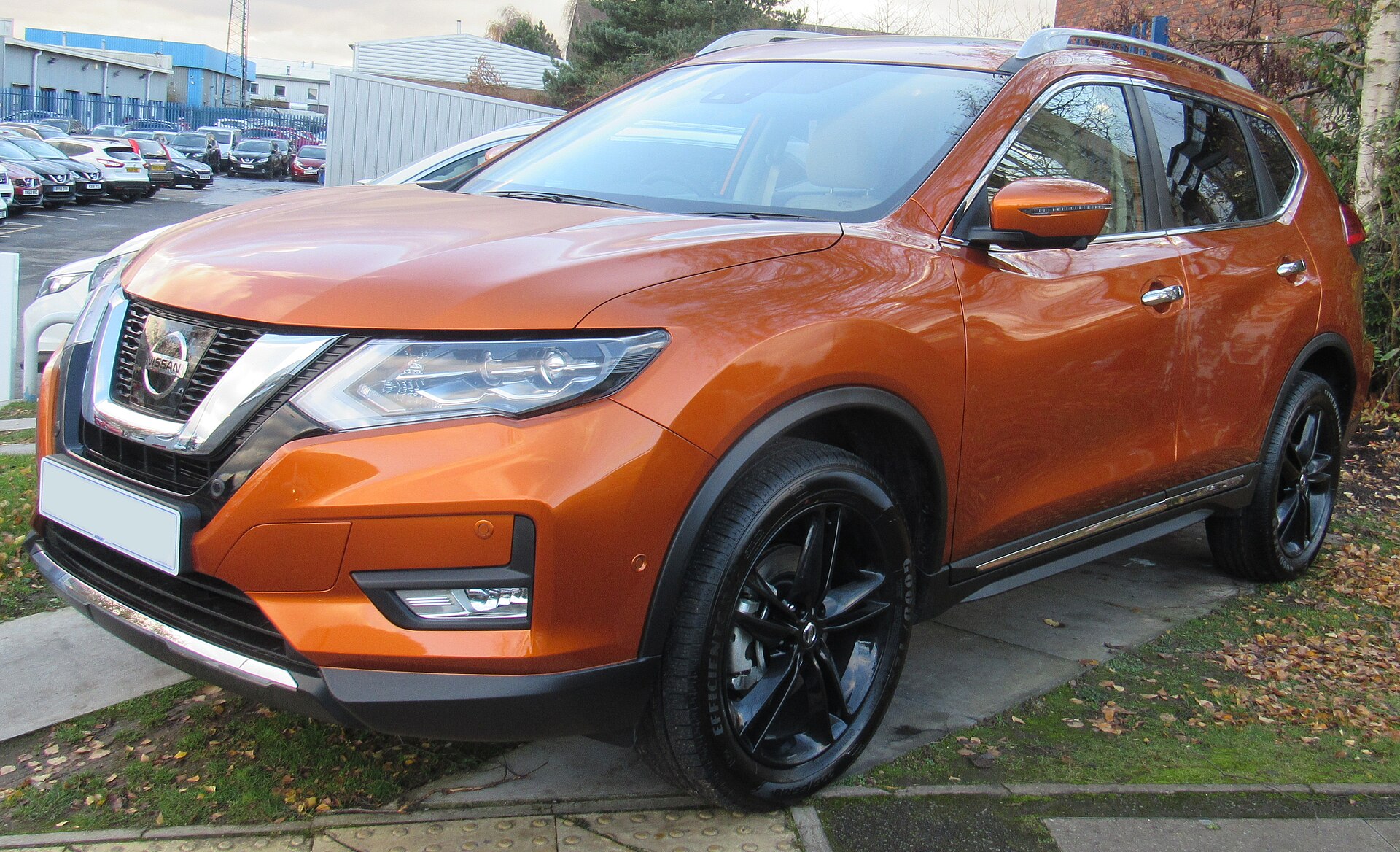
-
2007
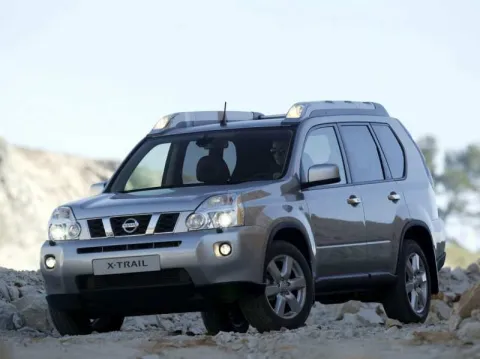 T31 2007–2013 · SUV · 104–127 kW (141–173 PS)
-
2000
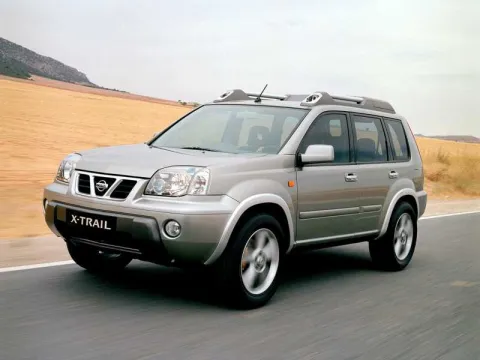 T30 You are here 2000–2007 · SUV · 84–206 kW (114–280 PS)
All generations by year: X-Trail T33 (2020–now) · X-Trail T32 (2013–2022) · X-Trail T31 (2007–2013) · X-Trail T30 (2000–2007)
The Nissan X-Trail T30 is the original X-Trail, a five-seat compact SUV shown at the Paris Motor Show in September 2000 and sold in Japan from November that year. British buyers got it in October 2001, and it stayed in production until the T31 took over in 2007. Most European cars are 2.2 diesels with selectable four-wheel drive.
In short
- Production ran from October 2000 to 2007; European cars came from Japan and shared the Primera and Almera's FF-S platform.
- European engines: 2.0 petrol with 103 kW (140 PS), 2.5 petrol with 121 kW (165 PS), and a 2.2 diesel rising from 84 kW (114 PS) to 100 kW (136 PS) at the 2003 facelift.
- ALL MODE 4x4 let the driver pick 2WD, AUTO or LOCK, which fixed the split at 57:43.
- Euro NCAP tested a 2.0 in 2002; the result is usually quoted as four stars, with two stars for pedestrians.
Running cost
Fuel · X-Trail T30 2.2 dCi diesel
about 2,300 EUR fuel a year at 15,000 km
9.2 l/100 km · diesel at 1.65 EUR/l · change mileage, fuel price or version
X-Trail T30 specs by version
Engines
| Version | Engine | Power | Torque | Gearbox |
|---|---|---|---|---|
| Diesel · 2 versions | ||||
| 2.2 diesel | Diesel | 84 kW 114 PS113 hp | — | 6-sp Manual |
| 2.2 dCi diesel | Diesel | 100 kW 136 PS134 hp | 314 Nm232 lb-ft | 6-sp Manual |
| Petrol · 2 versions | ||||
| 2.0 petrol | Petrol | 103 kW 140 PS138 hp | 192 Nm142 lb-ft | 5-sp Automatic |
| 2.5 petrol | Petrol | 121 kW 165 PS162 hp | 230 Nm170 lb-ft | 5-sp Automatic |
| Other · 1 version | ||||
| 2.0 turbo petrol (Japan, GT) | — | 206 kW 280 PS276 hp | — | 4-sp Automatic |
Performance
Show all 1 versions
| Version | Fuel consumption |
|---|---|
| 2.2 dCi diesel | 9.2 l/100 km25.6 mpg US · 30.7 mpg UK |
Dimensions and weight
Show all 5 versions
| Version | Length | Width | Wheelbase | Boot |
|---|---|---|---|---|
| Diesel · 2 versions | ||||
| 2.2 diesel | 4,510 mm177.6 in | 1,765 mm69.5 in | 2,625 mm103.3 in | 410 l14.5 cu ft |
| 2.2 dCi diesel | 4,510 mm177.6 in | 1,765 mm69.5 in | 2,625 mm103.3 in | 410 l14.5 cu ft |
| Petrol · 2 versions | ||||
| 2.0 petrol | 4,510 mm177.6 in | 1,765 mm69.5 in | 2,625 mm103.3 in | 410 l14.5 cu ft |
| 2.5 petrol | 4,510 mm177.6 in | 1,765 mm69.5 in | 2,625 mm103.3 in | 410 l14.5 cu ft |
| Other · 1 version | ||||
| 2.0 turbo petrol (Japan, GT) | 4,510 mm177.6 in | 1,765 mm69.5 in | 2,625 mm103.3 in | 410 l14.5 cu ft |
Verified Manufacturer and type-approval data from our catalog · Sources and methodology
Safety
-
Euro NCAP 2002
Older protocol · Full Euro NCAP result
Stars from different years and organisations are not directly comparable: test protocols change every few years.
How the T30 started Nissan's crossover line
Nissan built the first X-Trail as a "4WD for four that's comfortable and fun", aimed at buyers in their twenties and thirties who did outdoor sports. UK reviewers put it in the same size class as the Honda CR-V and Land Rover Freelander, but said it drove more like a hatchback.
Production began in October 2000 at Nissan Motor Kyushu, and European cars were imported from Japan. Underneath sat a unibody built on the FF-S platform, so the X-Trail was a car-based design rather than a body-on-frame vehicle like the Nissan Patrol. Being the first X-Trail, it has no earlier version to measure against; our guide to every X-Trail generation follows the line from here to the T33.
Demand built quickly in Europe: published sales data shows 9,019 European registrations in 2001 and a peak of 57,770 in 2004. The T30 was also sold in Australia, Mexico from 2003 and Canada for the 2005 and 2006 model years, but never in the United States.
ALL MODE 4x4: how the first system worked
ALL MODE 4x4 made its debut on this car. It is an electronically controlled system for a front-wheel-drive layout: in normal driving the front wheels do the work to save fuel, and torque goes to the rear axle through a multi-plate clutch when grip runs out.
A dashboard switch offers three settings:
- 2WD: front-wheel drive only, for dry roads and motorway use.
- AUTO: the system decides when to add rear drive, based on wheel slip and driving conditions.
- LOCK: a fixed 57:43 torque distribution for snow, mud or a slippery slipway. German sources note that it releases automatically at about 40 km/h (25 mph).
There were no mechanical differential locks, although cars with ESP+ could brake a spinning wheel. Front-wheel-drive versions of the 2.0 petrol and the diesel were also sold, and UK sources date them to 2005.
T30 engines: QR petrol, YD22 diesel and the Japanese GT
European T30s had two petrol engines and one diesel family. Figures below are for European cars unless marked otherwise, with kW first and the metric PS output the sources give.
| Engine | Code | Power | Torque | Gearbox | Notes |
|---|---|---|---|---|---|
| 2.0 petrol | QR20DE | 103 kW (140 PS) at 6,000 rpm | 192 Nm (142 lb-ft) at 4,000 rpm | 5-speed manual or 4-speed automatic | 0–100 km/h in 11.3 s (4x4 manual) |
| 2.5 petrol | QR25DE | 121 kW (165 PS) at 6,000 rpm | 230 Nm (170 lb-ft) at 4,000 rpm | 5-speed manual or 4-speed automatic | UK launch early 2003; 191 km/h (119 mph) |
| 2.2 diesel | YD22DDTi | 84 kW (114 PS) | not stated in sources | 6-speed manual | 2001–2003 |
| 2.2 dCi diesel | YD22ETi | 100 kW (136 PS) at 4,000 rpm | 314 Nm (232 lb-ft) at 2,000 rpm | 6-speed manual | from the 2003 facelift |
| 2.0 turbo petrol (Japan, GT) | SR20VET | 206 kW (280 PS) | not stated in sources | 4-speed automatic | Japan only, from February 2001 |
The facelifted diesel gained common-rail injection with a variable-geometry turbo, worth 22 PS. Published data for the 136 PS 4x4 lists 203 g/km of CO2 and 9.2 L/100 km (25.6 mpg US) in town. The petrols are noticeably thirstier: the 2.0 4x4 manual is rated at 9.3 L/100 km (25.3 mpg US) combined and 222 g/km, the 2.5 at 9.4 L/100 km (25.0 mpg US) and 226 g/km.
Outputs varied by market: Australian 2.5 cars were rated at 132 kW (177 hp) at launch. The GT is the oddity: Nissan calls its SR20VET the first engine to combine variable valve lift and timing with a turbocharger.
The 2003 facelift and UK trim levels
The mid-life update arrived in Japan on 9 June 2003 and in Europe towards the end of that year. Visible changes were modest: a redesigned grille, reshaped bumpers front and rear and an updated interior. The main technical change was the 136 PS diesel.
Practicality was the T30's selling point from the start. Nissan highlights washable luggage boards and water-repellent seats, and the 2003 update added a steering wheel that tilted up to 45 degrees, so a driver could change into ski or snowboard boots without leaving the seat.
UK specifications changed several times:
- 2001–2003: S, Sport and SE+. Even the S had air conditioning, an electric sunroof and four airbags; SE+ brought leather. The 2.5 introduced the SVE.
- Late 2003 onwards: SE, Sport, T-Spec and SVE.
- 2005–2007: SE, Columbia and Aventura, plus the Fat Face limited edition, based on the Sport, of which 1,998 were built.
Nissan also built a hydrogen fuel-cell X-Trail FCV, unveiled at Frankfurt in September 2003 and leased to businesses rather than sold to the public.
T30 size, boot and towing figures
The table covers a facelifted European car. Weight and towing limits change with the engine.
| Parameter | Metric | Imperial |
|---|---|---|
| Length | 4,455 mm | 175.4 in |
| Width | 1,765 mm | 69.5 in |
| Height | 1,675 mm | 65.9 in |
| Wheelbase | 2,625 mm | 103.3 in |
| Front and rear track | 1,530 mm | 60.2 in |
| Boot, rear seats up / folded | 410 / 1,841 L | 14.5 / 65.0 cu ft |
| Fuel tank | 60 L | 15.9 US gal |
| Kerb weight, 2.0 4x4 / 2.2 dCi 4x4 | 1,430 / 1,525 kg | 3,153 / 3,362 lb |
| Braked towing, 2.0 / 2.5 and 2.2 dCi | 1,500 / 2,000 kg | 3,307 / 4,409 lb |
| Unbraked towing | 750 kg | 1,653 lb |
| Turning circle | 11.0 m | 36.1 ft |
| Tyres | 215/70 R15 or 215/65 R16 | – |
The 4,455 mm length fits the 175 mm growth that German sources quote for the T31, which measured about 4.63 m. Suspension is independent, with MacPherson struts in front and a multi-link rear.
Euro NCAP 2002 result for the first X-Trail
Euro NCAP tested a left-hand-drive X-Trail 2.0 in 2002. The rating is usually quoted as four stars for occupant protection, with 26 points for adults; pedestrian protection earned 10 points, or two stars out of four. The published result applies to upgraded cars from a specific chassis number onwards.
The crash report gives a mixed picture:
- Frontal impact: the body shell held up well, but the brake and clutch pedals moved back far enough to risk injuring the driver, and chest loads from the restraints were fairly high.
- Side impact: good for a tall car in the barrier test. In the pole test, the head and chest airbag did not cushion the driver enough, and a struck-side rear door partly unlatched.
- Children: a three-year-old in a forward-facing ISOFIX seat was well protected, while an 18-month-old in a rear-facing seat was not fully protected in the frontal test.
Treat the result as a 2002 benchmark only; it says nothing about the T31's later test.
Weak points on a 20-year-old X-Trail
UK buying advice is consistent: on a car this old, maintenance history matters more than the badge. The petrol engines are described as the less troublesome choice.
- 2.2 diesel turbo: CarGurus UK says the 2.2 diesels are prone to turbo failure.
- Timing chain: the same guide links the diesel with timing-chain problems; a parts specialist lists the chain, water pump and turbo as typical big jobs between about 150,000 and 200,000 km (93,000–124,000 miles).
- Fuel use: the same parts specialist quotes 9.5–10.5 L/100 km in real driving for the QR20DE, above the official figure.
These are patterns from buying guides and parts data; no large owner survey covers the first X-Trail.
Picking a good T30 today
Choose the engine to suit the mileage, then buy on condition.
- Low annual mileage: a 2.0 or 2.5 petrol avoids the diesel's turbo and chain risks; the 2.5 is quicker and tows 2,000 kg (4,409 lb).
- Towing or long trips: a post-2003 2.2 dCi with documented turbo or chain work, or receipts showing they have been checked.
- Rough tracks and snow: confirm it is a 4x4 and try all three ALL MODE settings on the test drive.
- Kit: a post-facelift car has the updated interior and the tilting steering wheel of the 2003 update; leather was an SE+ feature at launch.
For alternatives of the same era, browse Japanese SUVs and other all-wheel-drive models, or read how Nissan grew into a major SUV maker.
Image credits · Photos from Wikimedia Commons under free licences
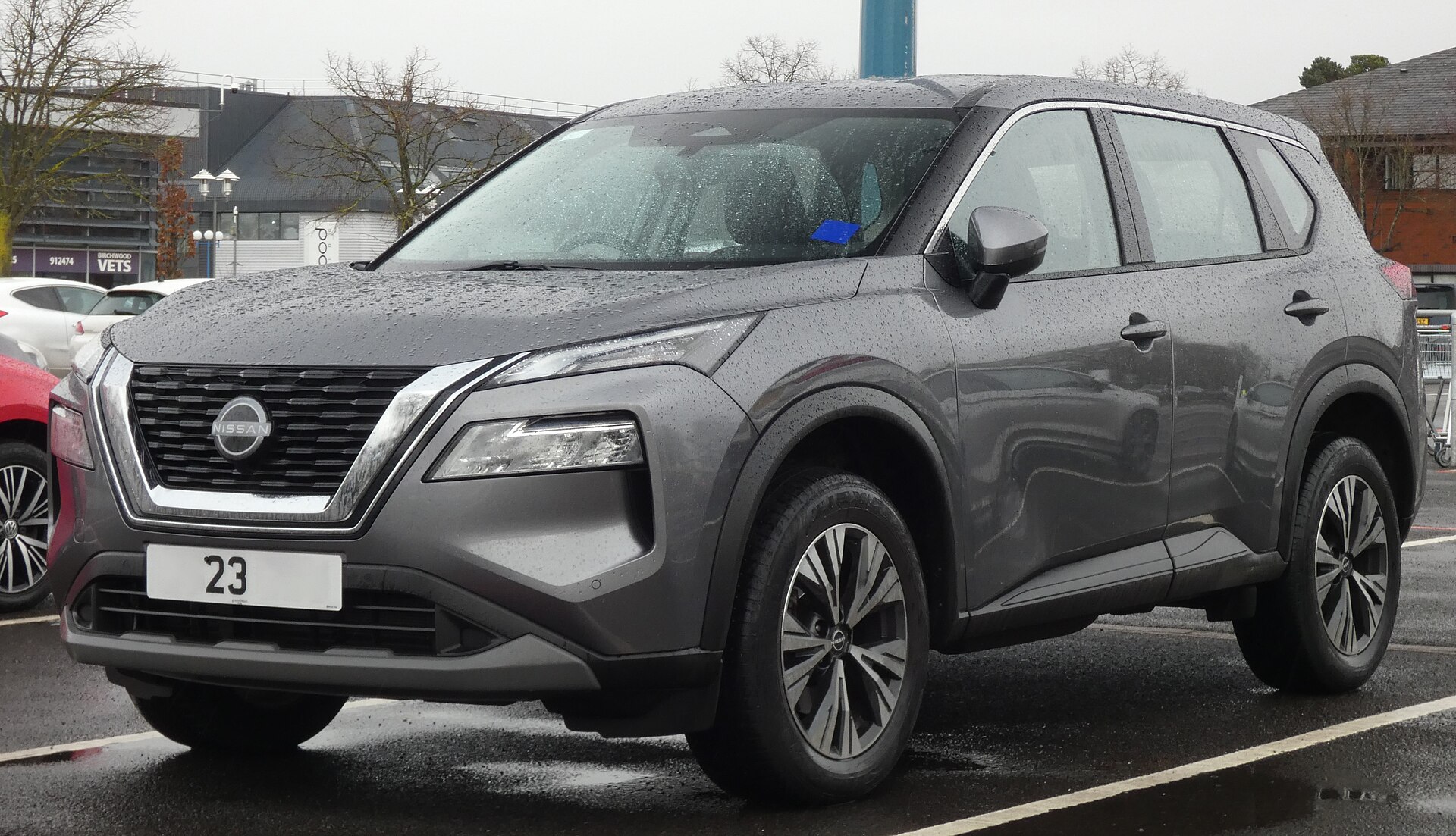
- Nissan X-Trail T30 · Photo: Vauxford / Wikimedia Commons, CC BY-SA 4.0
- Nissan X-Trail T31 · Photo: Hatsukari715 / Wikimedia Commons, Public domain
- Nissan X-Trail T32 · Photo: Vauxford / Wikimedia Commons, CC BY-SA 4.0
- Nissan X-Trail T33 · Photo: Harvey Bold / Wikimedia Commons, CC BY 4.0
T30 rivals
-
In production
- Years
- 1994–present
- Body
- Convertible, SUV
- Fuel
- Petrol, Diesel, Hybrid
- Power
- 91–145 kW (124–197 PS)
6 generations
- XA10
- XA20
- XA30
- XA40
- XA50
- XA60
-
In production
- Years
- 1995–present
- Body
- SUV
- Fuel
- Petrol, Diesel, Hybrid
- Power
- 88–140 kW (120–190 PS)
6 generations
- I
- II
- III
- IV
- CR-V
- VI
-
In production
- Years
- 2001–present
- Body
- SUV
- Fuel
- Petrol, Diesel, Plug-in hybrid
- Power
- 100–225 kW (136–306 PS)
-
In production
- Years
- 1993–present
- Body
- Convertible, SUV
- Fuel
- Petrol, Diesel, Hybrid
- Power
- 61–195 kW (83–265 PS)


FAQ
When was the first Nissan X-Trail made?
Production of the T30 started in October 2000, with Japanese sales from November 2000 and UK sales from October 2001. Nissan dates the generation from 2000 to 2007, when the T31 replaced it.
Is the X-Trail T30 four-wheel drive?
Most are. ALL MODE 4x4 offers 2WD, AUTO and LOCK settings, with LOCK fixing the split at 57:43. Front-wheel-drive 2.0 petrol and diesel versions were also sold later in the run.
Which T30 engine is best?
Buying guides say the petrols cause less trouble. The 2.2 dCi with 100 kW (136 PS) is the most economical and tows 2,000 kg, but check for turbo and timing-chain wear.
How big is the boot in the first X-Trail?
The boot holds 410 L (14.5 cu ft) with the rear seats up and 1,841 L (65.0 cu ft) with them folded, according to published spec data.
What was the X-Trail GT?
It was a Japan-only version from February 2001 powered by the turbocharged SR20VET, which produced 206 kW (280 PS) and drove all four wheels through a four-speed automatic.
Data sources
Data checked by an editor against the sources below.
- 1cars archive: Nissan X-Trail Generations (T30 to T33): Specs, Safety, Buying
- The text of this article (1cars archive)
- Wikipedia — Nissan X Trail
- Motor1 — Nissan X Trail 2022 Vorstellung
- Euro NCAP — Nissan X Trail 2002