The History of Nissan: From the DAT Car to the Renault Alliance
Nissan is a Japanese carmaker based in Yokohama, formed in December 1933 from the business that built the DAT car in 1914. It sold its cars as Datsuns until the mid-1980s, joined Renault in an alliance in 1999 and launched the mass-market Leaf electric car in 2010. In 2024 Nissan sold 3,348,687 vehicles worldwide.

Key takeaways
- Roots: Kwaishinsha Motor Car Works (1911), the DAT car (1914) and the Datsun name (1933); Nissan Motor was formed in 1933–1934 by Yoshisuke Aikawa's Nihon Sangyo group.
- Growth: an Austin licence (1952–1959), the Prince merger of 1966 that brought the Skyline, and the Datsun 510 and 240Z that made the brand famous abroad.
- Alliance: Renault bought 36.8% in March 1999; Carlos Ghosn's revival plan followed, until his arrest in November 2018.
- Today: global sales fell from a peak of 5,816,278 in 2017; CEO Ivan Espinosa announced plant closures and about 20,000 job cuts in 2025.

Nissan at a glance

| Fact | Value |
|---|---|
| Founded | 26 December 1933 (Jidosha-Seizo); Nissan Motor Co., Ltd. from 1934 |
| Founder | Yoshisuke Aikawa (Nihon Sangyo holding) |
| Headquarters | Yokohama, Japan |
| Brands | Nissan, Infiniti, Nismo (with Autech); Datsun discontinued in 2022 |
| Alliance | Renault–Nissan–Mitsubishi; 15% cross-shareholding with Renault since 2023 |
| Global sales | 3,348,687 (2024); peak 5,816,278 (2017) |
| Employees | about 120,000 (2026) |
Origins: DAT, Datsun and Nihon Sangyo
The story begins on 1 July 1911, when Masujiro Hashimoto founded the Kwaishinsha Motor Car Works in the Azabu-Hiroo district of Tokyo. In 1914 it built its first car, the DAT, named after the initials of its backers Den, Aoyama and Takeuchi. The small Type 11 of 1931 was called the "Datson", the "son of DAT"; in 1933 the name changed to Datsun, because "son" can also mean "loss" in Japanese.

Yoshisuke Aikawa had founded the holding company Nihon Sangyo in 1928, and its abbreviation, "Ni-San", became the company name. In 1933 the car business became Jidosha-Seizo and moved to Yokohama, and in 1934 it was renamed Nissan Motor Co., Ltd. The Yokohama plant was completed in 1935, the year Nissan began series production and its first exports.
From the Austin licence to the alliance
1930s–1950s: war, recovery and Austin
In 1937 the company moved its headquarters to Manchukuo and became part of Manchuria Heavy Industries; in 1944 it was renamed Nissan Heavy Industries. After the war the company rebuilt its car business with help from abroad. In 1952 it signed a licence agreement with the British Austin Motor Company, and from 1953 to 1959 it built 20,855 Austins, mainly the A40 and A50. The experience helped it design its own engines and production methods.

1958–1970s: Datsun goes global
Nissan entered the US market in 1958, showing the Datsun Bluebird at the Los Angeles Auto Show, and set up its American sales company, Nissan Motor Corporation, in 1960. In 1966 it merged with the Prince Motor Company, which brought the Skyline and Gloria into the range; the Nissan Skyline later became one of Japan's best-known performance cars.
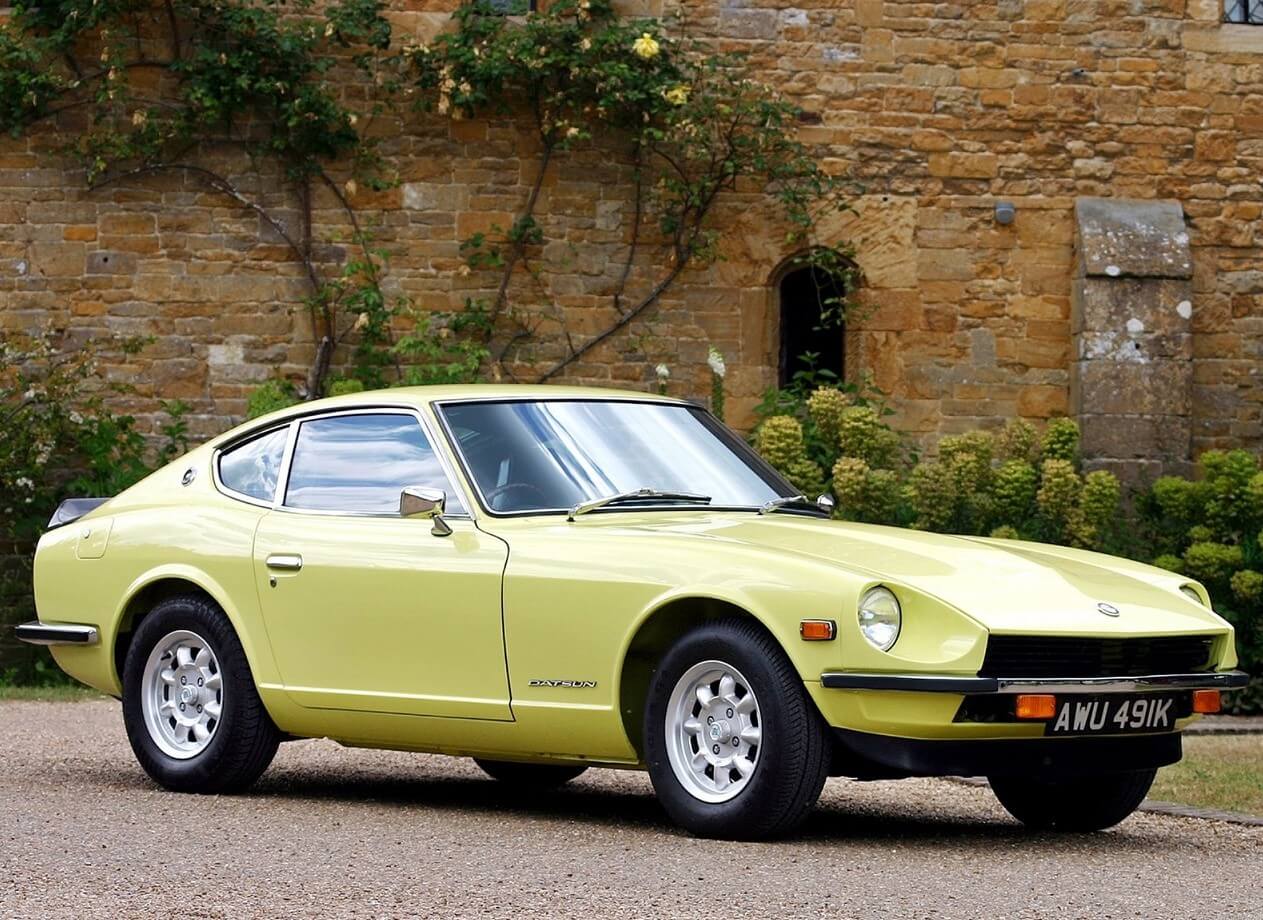
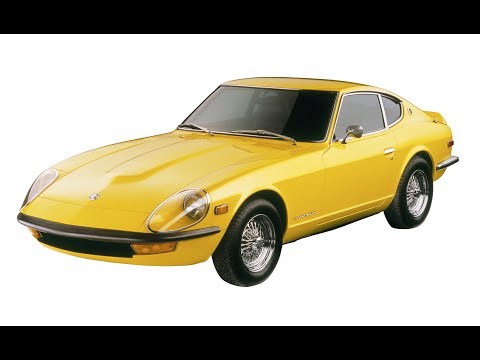
The Datsun 510 of 1967, with its new L-series overhead-cam engine, and the Datsun 240Z sports car of 1969, which used a six-cylinder version of the same engine family, turned the company into a major international carmaker. After the 1973 oil crisis, demand for economical small cars helped the company expand production abroad.
1980s–1990s: Datsun becomes Nissan
In the early 1980s the company decided to sell all its cars under one name. Datsun remained in use in most export markets until 1983, the Nissan badge was phased in during 1984, and the Datsun name was dropped in 1985. It broke ground on its plant in Smyrna, Tennessee, in 1980 and opened its British plant in Sunderland in 1986. In 1984 it founded Nismo as its motorsport division, and in 1989 it launched the luxury brand Infiniti in North America; its story is in the history of Infiniti.
By the late 1990s, however, the company was deep in debt.
1999–2018: the Renault alliance and the Ghosn years
On 27 March 1999 Nissan and Renault signed an alliance under which Renault bought 36.8% of Nissan. Carlos Ghosn, sent from Renault, launched the Nissan Revival Plan and became chief executive in June 2001. In 2001 Nissan took 15% of Renault, while Renault raised its stake in Nissan to 43.4%.
The period produced several landmark models: the Nissan Qashqai of 2006, which helped create the European compact crossover class, the X-Trail, the GT-R and the Leaf of 2010, one of the first mass-produced electric cars. Leaf sales reached 100,000 by January 2014 and 500,000 by December 2020. In May 2016 it bought a controlling stake in Mitsubishi Motors, holding 34% from October 2016.
Ghosn was arrested in Japan in November 2018 and removed as chairman on 19 November 2018, a crisis that strained the alliance.
2019 to today: rebalancing and restructuring
In 2023 Renault transferred about 30% of its Nissan shares to a French trust, cutting its voting stake to 15%, equal to Nissan's holding in Renault; the move was completed in November 2023. The Mitsubishi stake was reduced to 24% in November 2024. On 23 December 2024 Nissan and Honda announced talks on a merger, but they ended the talks in February 2025.
Ivan Espinosa became chief executive on 1 April 2025. He announced that seven factories would close by 2027, reducing the total from 17 to 10, with about 20,000 jobs cut. The plan also cut the number of models from 56 to 45 from April 2026 and aimed to shorten development time from 55 to 26 months.
Cars that built the company

| Model | Years | Why it matters |
|---|---|---|
| DAT | 1914 | The company's first car |
| Datsun 510 (Bluebird) | 1967–1973 | Overhead-cam L-series engine, global success |
| Datsun 240Z | 1969– | Affordable sports car that made Nissan famous worldwide |
| Skyline GT-R | 1969– | Performance icon inherited from Prince |
| Patrol | 1951– | Long-running off-roader |
| Qashqai | 2006– | Defined the European compact crossover |
| Leaf | 2010– | One of the first mass-market electric cars |
Motorsport and engineering
Nismo, short for Nissan Motorsport International, was founded in 1984. Its cars have raced in Super GT, the FIA World Endurance Championship and the British Touring Car Championship. Nismo is now also a performance sub-brand for road cars, such as the 370Z Nismo, and it merged with the coachbuilder Autech.

Nissan compared with its Japanese rivals
Among Japanese carmakers, the company has long been second or third behind Toyota, competing with Honda. Compared with its 2017 peak of 5,816,278 sales, sales of 3,348,687 vehicles in 2024 were about 42% lower, while the brand remained a leader in early electric cars through the Leaf. Nissan models can be set against their rivals in the 1cars comparison tool, and the current range is in the Nissan catalogue.
Factories and production today
The main plants are in Japan, the United States, Mexico, the United Kingdom and China, with further assembly in other countries. Sunderland in north-east England became one of Europe's largest car factories and builds the Qashqai and the Leaf, while Smyrna in Tennessee and the Mexican plants serve North America. Global output has fallen with sales since 2017, which is why the 2025 plan reduces the number of plants from 17 to 10 by 2027 and shortens development cycles so that new models reach showrooms faster.

Which model to choose today
For European family buyers, the Qashqai and X-Trail are the core of the range, both offered with the e-Power series-hybrid system in which the petrol engine only drives a generator. The Leaf remains the brand's electric reference, while the Patrol is the full-size off-roader for markets that need it. Smaller crossovers such as the Kicks cover emerging markets. On the used market, Nismo versions and the older Z cars are the enthusiast choice.

Global sales since the 2017 peak
| Year | Global sales |
|---|---|
| 2017 | 5,816,278 (peak) |
| 2023 | 3,374,271 |
| 2024 | 3,348,687 |
FAQ
Who owns Nissan today?
It is a publicly listed Japanese company. Renault has held a 15% voting stake since the 2023 rebalancing, matching Nissan's 15% stake in Renault, and the two remain alliance partners together with Mitsubishi Motors.
When was Nissan founded and by whom?
Nissan traces its roots to Kwaishinsha, founded by Masujiro Hashimoto in 1911. Nissan Motor itself was formed in December 1933 and named in 1934 by Yoshisuke Aikawa's holding company Nihon Sangyo, whose abbreviation gave the company its name.
Why did Datsun become Nissan?
The company wanted one global brand. Export cars wore the Datsun badge until 1983, the Nissan name was phased in during 1984, and Datsun was dropped in 1985. Nissan revived Datsun for emerging markets in 2013, but sales ended in 2022.
Where are Nissan cars made?
Cars are built in Japan and in plants abroad, including Smyrna in the United States, Sunderland in England and factories in Mexico and China. Under the 2025 recovery plan, the number of plants is to fall from 17 to 10 by 2027.
What is the most famous Nissan model?
The Datsun 240Z, the Skyline GT-R and the GT-R supercar are the best-known performance models. In everyday terms, the Qashqai and the Leaf electric car have had the biggest influence on the market.
Photos (5)


Videos 2
Video 1
Video 2