
 Nissan X-Trail
All generations, specs and history
Updated Published Sources (10) Report an error
By Felix Hartmann, Automotive Technology & EV Contributor Reviewed by Oleksandr Hnatiuk

- Built
- 2000–present
- Generations
- 4 · T30 to T33
- Top power
- 206 kW (280 PS)
- Euro NCAP
- 5 stars · T33
Timeline
X-Trail generations
Click a generation for its own page


T32 and T33 overlapped in 2020–2022, so T33 sits on a second lane
- X-Trail T30 2000–2007 · SUV · 84–206 kW (114–280 PS)
- X-Trail T31 2007–2013 · SUV · 104–127 kW (141–173 PS)
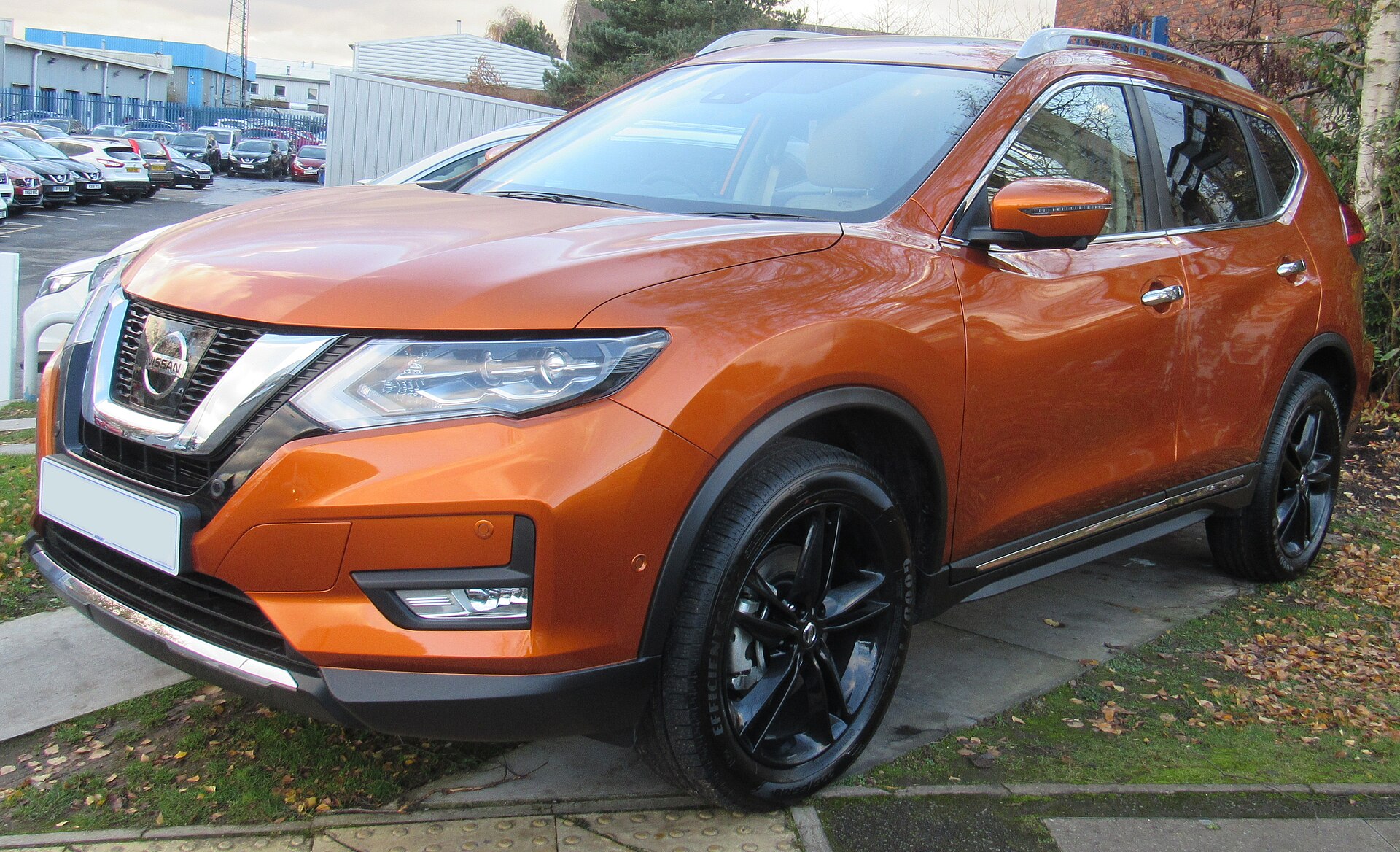
- X-Trail T32 2013–2022 · SUV · 96–130 kW (131–177 PS)
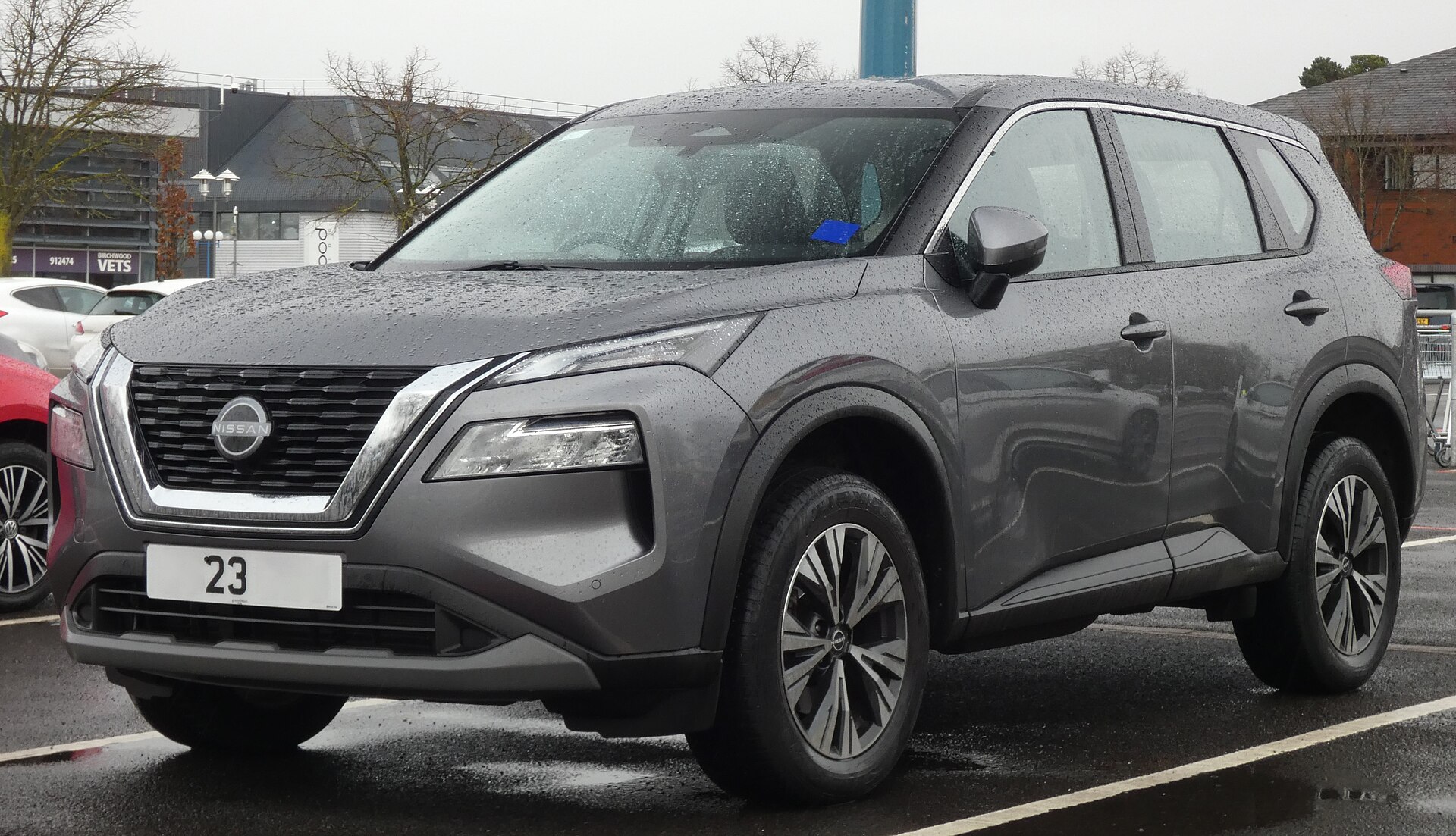
- X-Trail T33 Current 2020–now · SUV · 120–157 kW (163–213 PS)
Newest first · 4 generations since 2000
-
2020
-
2013
-
2007
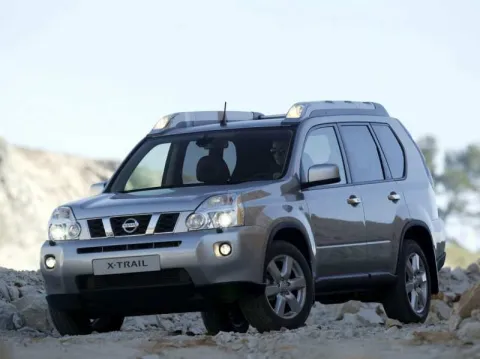 T31 2007–2013 · SUV · 104–127 kW (141–173 PS)
-
2000
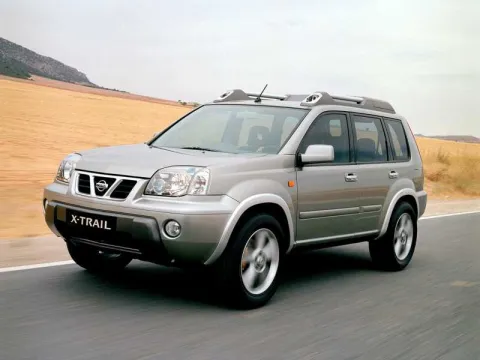 T30 2000–2007 · SUV · 84–206 kW (114–280 PS)
All generations by year: X-Trail T33 (2020–now) · X-Trail T32 (2013–2022) · X-Trail T31 (2007–2013) · X-Trail T30 (2000–2007)
Which one is mine?
Pick the year of first registration to see which generation it is.
Check by VINWhich X-Trail generation to choose
Our verdict · Felix Hartmann
The right generation depends on the job.
- Seven seats: T32 or T33, with a third row best suited to children.
- All-wheel drive: every generation has had a 4x4 version, from ALL MODE 4x4 on the T30 to e-4ORCE on the T33; the T33 mild hybrid is front-wheel drive only.
- Low running costs: the T32 1.6 dCi has the best official figures, but its DPF needs regular longer runs.
- Latest safety: the T33 with its 2022 five-star rating, or a later T32 with ProPILOT.
The Nissan X-Trail is a compact five-door SUV that Nissan has built in four generations since November 2000: T30, T31, T32 and the current T33. The first three were sold in Europe with petrol and dCi diesel engines. The T33 dropped diesel and uses a 1.5 VC-Turbo mild hybrid or e-POWER, with optional e-4ORCE all-wheel drive.
In short
- Nissan dates the generations as T30 2000–2007, T31 2007–2013, T32 2013–2022 and T33 from 2020 (Europe from 2022).
- Seven seats are offered on the T32 and T33; earlier cars have five.
- European T33 outputs: 120 kW (163 PS) mild hybrid, 150 kW (204 PS) e-POWER, 157 kW (213 PS) e-POWER e-4ORCE.
- Euro NCAP gave the T33 five stars in 2022, with 91% for adult occupant protection.
Size at a glance
Toyota RAV4 XA50
The Nissan X-Trail T33 is 80 mm longer, 15 mm narrower and 35 mm taller than the Toyota RAV4 XA50.
| Dimensions | Nissan X-Trail T33 | Toyota RAV4 XA50 | Difference |
|---|---|---|---|
| Length | 4,680 mm184.3 in | 4,600 mm181.1 in | +80 mm+3.1 in |
| Width | 1,840 mm72.4 in | 1,855 mm73.0 in | −15 mm−0.6 in |
| Height | 1,720 mm67.7 in | 1,685 mm66.3 in | +35 mm+1.4 in |
| Wheelbase | 2,705 mm106.5 in | 2,690 mm105.9 in | +15 mm+0.6 in |
| Boot | 560 L19.8 cu ft | 580 L20.5 cu ft | −20 L−0.7 cu ft |
Mitsubishi Outlander GN
The Nissan X-Trail T33 is 29 mm shorter, 57 mm narrower and 25 mm lower than the Mitsubishi Outlander GN.
| Dimensions | Nissan X-Trail T33 | Mitsubishi Outlander GN | Difference |
|---|---|---|---|
| Length | 4,680 mm184.3 in | 4,709 mm185.4 in | −29 mm−1.1 in |
| Width | 1,840 mm72.4 in | 1,897 mm74.7 in | −57 mm−2.2 in |
| Height | 1,720 mm67.7 in | 1,745 mm68.7 in | −25 mm−1.0 in |
| Wheelbase | 2,705 mm106.5 in | 2,705 mm106.5 in | Same |
| Boot | 560 L19.8 cu ft | - | - |
Nissan X-Trail T32
The Nissan X-Trail T33 is 40 mm longer, 20 mm wider and 10 mm taller than the Nissan X-Trail T32.
| Dimensions | Nissan X-Trail T33 | Nissan X-Trail T32 | Difference |
|---|---|---|---|
| Length | 4,680 mm184.3 in | 4,640 mm182.7 in | +40 mm+1.6 in |
| Width | 1,840 mm72.4 in | 1,820 mm71.7 in | +20 mm+0.8 in |
| Height | 1,720 mm67.7 in | 1,710 mm67.3 in | +10 mm+0.4 in |
| Wheelbase | 2,705 mm106.5 in | 2,705 mm106.5 in | Same |
| Boot | 560 L19.8 cu ft | 550 L19.4 cu ft | +10 L+0.4 cu ft |
Running cost
Fuel · X-Trail T33 e-POWER
about 1,650 EUR fuel a year at 15,000 km
6.3 l/100 km · petrol at 1.75 EUR/l · change mileage, fuel price or version
Specs by version
Engines
| Version | Engine | Power | Torque | Gearbox | Drive | Production years |
|---|---|---|---|---|---|---|
| Hybrid · 2 versions | ||||||
| T33 · e-POWER | 1.5 l · Hybrid 1,500 cc | 150 kW 204 PS201 hp | 330 Nm243 lb-ft | 1-sp Single-speed | Front-wheel drive | 2022 |
| T33 · e-POWER e-4ORCE | 1.5 l · Hybrid 1,500 cc | 157 kW 213 PS211 hp | 330 Nm243 lb-ft | 1-sp Single-speed | All-wheel drive | 2022 |
| Diesel · 7 versions | ||||||
| T30 · 2.2 diesel | Diesel | 84 kW 114 PS113 hp | - | 6-sp Manual | - | - |
| T30 · 2.2 dCi diesel | Diesel | 100 kW 136 PS134 hp | 314 Nm232 lb-ft | 6-sp Manual | Four-wheel drive (4×4) | - |
| T31 · 2.0 dCi diesel | 2.0 l · Diesel M9R | 110 kW 150 PS148 hp | 320 Nm236 lb-ft | 6-sp Automatic | - | - |
| T32 · 1.6 dCi 96 kW (130 PS) 2WD | 1.6 l · 4 cyl · Diesel R9M | 96 kW 131 PS129 hp | 320 Nm236 lb-ft | 6-sp Manual | Front-wheel drive | 2014–2017 |
| T32 · 1.6 dCi 96 kW (130 PS) 4x4i | 1.6 l · 4 cyl · Diesel R9M | 96 kW 131 PS129 hp | 320 Nm236 lb-ft | 6-sp Manual | All-wheel drive | 2014–2017 |
| T32 · 1.7 dCi 110 kW (150 PS) 4x4i Xtronic | 1.7 l · 4 cyl · Diesel R9N | 110 kW 150 PS148 hp | 340 Nm251 lb-ft | 6-sp CVT | All-wheel drive | 2019–2020 |
| T32 · 2.0 dCi 130 kW (177 PS) 4x4i Xtronic | 2.0 l · 4 cyl · Diesel M9R | 130 kW 177 PS174 hp | 380 Nm280 lb-ft | 6-sp CVT | All-wheel drive | 2016–2018 |
| Petrol · 7 versions | ||||||
| T30 · 2.0 petrol | Petrol | 103 kW 140 PS138 hp | 192 Nm142 lb-ft | 5-sp Automatic | - | - |
| T30 · 2.5 petrol | Petrol | 121 kW 165 PS162 hp | 230 Nm170 lb-ft | 5-sp Automatic | - | - |
| T31 · 2.0 petrol | 2.0 l · Petrol MR20DE | 104 kW 141 PS139 hp | 196 Nm145 lb-ft | 6-sp CVT | - | - |
| T32 · 1.3 DIG-T 116 kW (158 PS) DCT | 1.3 l · 4 cyl · Petrol HR13 | 116 kW 158 PS156 hp | 270 Nm199 lb-ft | 7-sp Dual-clutch | Front-wheel drive | 2021–2022 |
| T32 · 1.3 DIG-T 117 kW (160 PS) DCT | 1.3 l · 4 cyl · Petrol HR13 | 117 kW 159 PS157 hp | 270 Nm199 lb-ft | 7-sp Dual-clutch | Front-wheel drive | 2019–2020 |
| T32 · 1.6 DIG-T 120 kW (163 PS) | 1.6 l · 4 cyl · Petrol MR16 | 120 kW 163 PS161 hp | 240 Nm177 lb-ft | 6-sp Manual | Front-wheel drive | 2015–2018 |
| T33 · 1.5 VC-Turbo mild hybrid | 1.5 l · Petrol 1,500 cc | 120 kW 163 PS161 hp | 300 Nm221 lb-ft | - | Front-wheel drive | 2022 |
| Other · 4 versions | ||||||
| T30 · 2.0 turbo petrol (Japan, GT) | - | 206 kW 280 PS276 hp | - | 4-sp Automatic | - | - |
| T31 · 2.5 petrol | 2.5 l QR25DE | 124 kW 169 PS166 hp | 233 Nm172 lb-ft | 6-sp CVT | - | - |
| T31 · 2.0 dCi diesel | 2.0 l 1,995 cc | 127 kW 173 PS170 hp | - | 6-sp Manual | - | - |
| T32 · 1.3 DIG-T petrol | - | 118 kW 160 PS158 hp | - | Dual-clutch | Four-wheel drive (4×4) | - |
Performance
Show all 12 versions
| Version | 0–100 km/h | Top speed | Fuel consumption | CO₂ |
|---|---|---|---|---|
| Hybrid · 2 versions | ||||
| T33 · e-POWER | 8.0 s 0–62 mph | 170 km/h106 mph | 6.3 l/100 km37.3 mpg US · 44.8 mpg UK | 143 g/km |
| T33 · e-POWER e-4ORCE | 7.0 s 0–62 mph | 180 km/h112 mph | 6.3 l/100 km37.3 mpg US · 44.8 mpg UK | 143 g/km |
| Diesel · 5 versions | ||||
| T30 · 2.2 dCi diesel | - | - | 9.2 l/100 km25.6 mpg US · 30.7 mpg UK | - |
| T32 · 1.6 dCi 96 kW (130 PS) 2WD | 10.5 s 0–62 mph | 188 km/h117 mph | 4.9 l/100 km48.0 mpg US · 57.6 mpg UK | 129 g/km |
| T32 · 1.6 dCi 96 kW (130 PS) 4x4i | 11.0 s 0–62 mph | 186 km/h116 mph | 5.3 l/100 km44.4 mpg US · 53.3 mpg UK | 139 g/km |
| T32 · 1.7 dCi 110 kW (150 PS) 4x4i Xtronic | 12.7 s 0–62 mph | 190 km/h118 mph | 6.0 l/100 km39.2 mpg US · 47.1 mpg UK | 159 g/km |
| T32 · 2.0 dCi 130 kW (177 PS) 4x4i Xtronic | 10.0 s 0–62 mph | 196 km/h122 mph | 6.0 l/100 km39.2 mpg US · 47.1 mpg UK | 158 g/km |
| Petrol · 4 versions | ||||
| T32 · 1.3 DIG-T 116 kW (158 PS) DCT | 11.5 s 0–62 mph | 198 km/h123 mph | 6.4 l/100 km36.8 mpg US · 44.1 mpg UK | 145 g/km |
| T32 · 1.3 DIG-T 117 kW (160 PS) DCT | 11.5 s 0–62 mph | 198 km/h123 mph | 6.3 l/100 km37.3 mpg US · 44.8 mpg UK | 145 g/km |
| T32 · 1.6 DIG-T 120 kW (163 PS) | 9.7 s 0–62 mph | 200 km/h124 mph | 6.2 l/100 km37.9 mpg US · 45.6 mpg UK | 145 g/km |
| T33 · 1.5 VC-Turbo mild hybrid | 9.6 s 0–62 mph | 200 km/h124 mph | 7.1 l/100 km33.1 mpg US · 39.8 mpg UK | 160 g/km |
| Other · 1 version | ||||
| T31 · 2.0 dCi diesel | - | - | 7.4 l/100 km31.8 mpg US · 38.2 mpg UK | - |
Dimensions and weight
Show all 20 versions
| Version | Length | Width | Height | Wheelbase | Kerb weight | Boot | Fuel tank |
|---|---|---|---|---|---|---|---|
| Hybrid · 2 versions | |||||||
| T33 · e-POWER | 4,680 mm184.3 in | 1,840 mm72.4 in | 1,720 mm67.7 in | 2,705 mm106.5 in | 1,664 kg3,668 lb | 560 l19.8 cu ft | - |
| T33 · e-POWER e-4ORCE | - | - | - | - | 1,924 kg4,242 lb | 560 l19.8 cu ft | - |
| Diesel · 7 versions | |||||||
| T30 · 2.2 diesel | 4,510 mm177.6 in | 1,765 mm69.5 in | - | 2,625 mm103.3 in | - | 410 l14.5 cu ft | - |
| T30 · 2.2 dCi diesel | 4,510 mm177.6 in | 1,765 mm69.5 in | - | 2,625 mm103.3 in | - | 410 l14.5 cu ft | - |
| T31 · 2.0 dCi diesel | 4,636 mm182.5 in | 1,790 mm70.5 in | 1,700 mm66.9 in | - | - | - | - |
| T32 · 1.6 dCi 96 kW (130 PS) 2WD | 4,640 mm182.7 in | 1,820 mm71.7 in | 1,710 mm67.3 in | 2,705 mm106.5 in | 1,580 kg3,483 lb | 550 l19.4 cu ft | 60 l15.9 gal US |
| T32 · 1.6 dCi 96 kW (130 PS) 4x4i | 4,640 mm182.7 in | 1,820 mm71.7 in | 1,710 mm67.3 in | 2,705 mm106.5 in | 1,655 kg3,649 lb | 550 l19.4 cu ft | 60 l15.9 gal US |
| T32 · 1.7 dCi 110 kW (150 PS) 4x4i Xtronic | 4,690 mm184.6 in | 1,820 mm71.7 in | 1,700 mm66.9 in | 2,705 mm106.5 in | 1,775 kg3,913 lb | 550 l19.4 cu ft | 60 l15.9 gal US |
| T32 · 2.0 dCi 130 kW (177 PS) 4x4i Xtronic | 4,640 mm182.7 in | 1,820 mm71.7 in | 1,710 mm67.3 in | 2,705 mm106.5 in | 1,665 kg3,671 lb | 550 l19.4 cu ft | 60 l15.9 gal US |
| Petrol · 7 versions | |||||||
| T30 · 2.0 petrol | 4,510 mm177.6 in | 1,765 mm69.5 in | - | 2,625 mm103.3 in | - | 410 l14.5 cu ft | - |
| T30 · 2.5 petrol | 4,510 mm177.6 in | 1,765 mm69.5 in | - | 2,625 mm103.3 in | - | 410 l14.5 cu ft | - |
| T31 · 2.0 petrol | 4,636 mm182.5 in | 1,790 mm70.5 in | 1,700 mm66.9 in | - | - | - | - |
| T32 · 1.3 DIG-T 116 kW (158 PS) DCT | 4,690 mm184.6 in | 1,820 mm71.7 in | 1,710 mm67.3 in | 2,705 mm106.5 in | 1,557 kg3,433 lb | 565 l20.0 cu ft | 60 l15.9 gal US |
| T32 · 1.3 DIG-T 117 kW (160 PS) DCT | 4,690 mm184.6 in | 1,820 mm71.7 in | 1,710 mm67.3 in | 2,705 mm106.5 in | 1,560 kg3,439 lb | 550 l19.4 cu ft | 60 l15.9 gal US |
| T32 · 1.6 DIG-T 120 kW (163 PS) | 4,640 mm182.7 in | 1,820 mm71.7 in | 1,710 mm67.3 in | 2,705 mm106.5 in | 1,505 kg3,318 lb | 550 l19.4 cu ft | 60 l15.9 gal US |
| T33 · 1.5 VC-Turbo mild hybrid | - | - | - | - | 1,671 kg3,684 lb | - | - |
| Other · 4 versions | |||||||
| T30 · 2.0 turbo petrol (Japan, GT) | 4,510 mm177.6 in | 1,765 mm69.5 in | - | 2,625 mm103.3 in | - | 410 l14.5 cu ft | - |
| T31 · 2.5 petrol | 4,636 mm182.5 in | 1,790 mm70.5 in | 1,700 mm66.9 in | - | - | - | - |
| T31 · 2.0 dCi diesel | 4,636 mm182.5 in | 1,790 mm70.5 in | 1,700 mm66.9 in | - | - | - | - |
| T32 · 1.3 DIG-T petrol | - | - | - | - | - | 135 l4.8 cu ft | - |
Verified Manufacturer and type-approval data from our catalog · Sources and methodology
Safety
-
T33 · Euro NCAP 2021
-
T30 · Euro NCAP 2002
Older protocol · Full Euro NCAP result
Stars from different years and organisations are not directly comparable: test protocols change every few years.
At a glance: segment, names and where it is built
The X-Trail is Nissan's compact SUV, positioned above the Qashqai and well below the much larger Nissan Patrol. In some markets the line-up also includes the smaller Nissan Kicks, which sits under the Qashqai.

Since the T32, the same car has been sold in North America as the Nissan Rogue; the T31 was not offered in the US or Canada. Counting both names, Nissan reported more than 8.1 million X-Trail and Rogue sales by June 2025, and the T33 is sold in 95 countries.
European cars come from Japan: in 2019 Nissan Europe confirmed that the X-Trail for Europe would be built at its Kyushu plant. The model's quarter-century is a recent chapter in the history of Nissan, and the full Nissan range shows its place among the brand's other models.
Four generations at a glance
Nissan counts four X-Trail generations, identified by the chassis codes T30, T31, T32 and T33. Some spec databases list nine or more "generations", but they treat facelifts and a van version as separate entries.
| Generation | Code | Years | Body styles | Engines (Europe) | Power (kW / PS) |
|---|---|---|---|---|---|
| 1st | T30 | 2000–2007 | 5-door SUV, 5 seats | 2.0 and 2.5 petrol; 2.2 diesel | diesel 84 / 114, from 2003 100 / 136 |
| 2nd | T31 | 2007–2013 | 5-door SUV, 5 seats | 2.0 and 2.5 petrol; 2.0 dCi | 2.0 dCi from 110 / 150 |
| 3rd | T32 | 2013–2022 | 5-door SUV, 5 or 7 seats | 1.6 dCi, 1.6 DIG-T, later 2.0 dCi, 1.7 dCi, 1.3 DIG-T | 1.6 dCi 96 / 130; 1.6 DIG-T 120 / 163 |
| 4th | T33 | 2020–present | 5-door SUV, 5 or 7 seats | 1.5 VC-Turbo mild hybrid; e-POWER; e-POWER e-4ORCE | 120 / 163; 150 / 204; 157 / 213 |
T30 (2000–2007)
The first X-Trail went on sale in Japan in November 2000, using the FF-S platform of the Primera and Almera. The T30 introduced Nissan's ALL MODE 4x4 system with AUTO, 2WD and LOCK settings; LOCK fixed the torque split at 57:43. In Europe the main engine was the 2.2 diesel, upgraded from 84 kW (114 PS) to the 2.2 dCi with 100 kW (136 PS) at the June 2003 facelift. Japan also had an X-Trail GT with the SR20VET 2.0 turbo, rated at 206 kW (280 PS).
T31 (2007–2013)
The second generation moved to the larger C platform and to ALL MODE 4x4-i, which added yaw control, hill-descent control and hill-start assist. Its key European engine was the 2.0 dCi (M9R), developed jointly with Renault, from 110 kW (150 PS), alongside MR20DE and QR25DE petrol units.
T32 (2013–2022)
The T32 moved the model towards a road-focused crossover. It sits on the CMF-C/D platform shared with the Qashqai, gained an optional third row and reached European showrooms in July 2014. Launch engines were the 1.6 dCi with 96 kW (130 PS) and the 1.6 DIG-T with 120 kW (163 PS), with a CVT (Xtronic) or 6-speed manual. A facelift came in 2017, and ProPILOT driver assistance arrived with a later update. The T32 hybrid was a Japan-led model, not sold in Europe.
T33 (2020–present)
The fourth generation appeared first as the 2020 Rogue in North America, was revealed as the X-Trail in China on 19 April 2021, went on sale in Japan in 2022 and made its European debut in September 2022. Diesel was dropped. A facelift for Japan followed in August 2025.
Engines, transmissions and performance
Every European T33 is petrol-based and electrified, with three drivetrains: a 1.5 VC-Turbo three-cylinder mild hybrid, e-POWER with front-wheel drive, and e-POWER e-4ORCE with all-wheel drive.

e-POWER is often mistaken for a conventional hybrid. It is not. Its 1.5 VC-Turbo petrol engine works only as a generator, and the wheels are driven by electric motors, so the engine has no mechanical link to the road. e-4ORCE adds a second motor, giving dual-motor electric all-wheel drive. The mild hybrid is the simpler option: 120 kW (163 PS) and 300 Nm (221 lb-ft) through a CVT, with front-wheel drive only.
Performance figures usually quoted for the T33 are 0–100 km/h in 8.0 seconds for the e-POWER, with 330 Nm (243 lb-ft), and 7.0 seconds for the e-4ORCE, which has 525 Nm (387 lb-ft) in total. Older diesels are slower: the T32 1.6 dCi CVT is listed at 11.4 seconds and the T30 2.2 dCi 4x4 at 11.5 seconds.
Dimensions, interior and boot capacity
The X-Trail has grown from about 4.46 m on the T30 to roughly 4.64–4.68 m on the last two generations, and the T32 and T33 share a 2,705 mm (106.5 in) wheelbase. The T31 length differs between sources, so that row is approximate.

| Generation | Length | Wheelbase | Boot, 5 seats |
|---|---|---|---|
| T30 | 4,455 mm (175.4 in) | 2,625 mm (103.3 in) | 410 L (14.5 cu ft) |
| T31 | about 4,630 mm (182.3 in) | 2,630 mm (103.5 in) | sources differ |
| T32 | 4,640 mm (182.7 in) | 2,705 mm (106.5 in) | 550 L (19.4 cu ft) |
| T33 | 4,680 mm (184.3 in) | 2,705 mm (106.5 in) | 575 L (20.3 cu ft); 560 L also quoted |
With the rear seats folded, the five-seat T32 offers up to 1,982 L (70.0 cu ft). The seven-seat T32 leaves only 135 L (4.8 cu ft) behind the third row, so the extra seats suit occasional use.
T33 key specifications (e-POWER e-4ORCE)
| Parameter | Metric | Imperial |
|---|---|---|
| System output | 157 kW (213 PS) | - |
| Combined torque | 525 Nm | 387 lb-ft |
| Top speed | 180 km/h | 112 mph |
| WLTP combined fuel consumption | 6.2 L/100 km | 37.9 mpg US |
| Fuel tank | 55 L | 14.5 US gal |
| Kerb weight | 1,908 kg | 4,206 lb |
| Braked towing capacity | 1,800 kg | 3,968 lb |
| Turning circle | 11 m | 36.1 ft |
Fuel economy by generation
The T33 e-POWER e-4ORCE is listed at 6.2 L/100 km (37.9 mpg US) on the WLTP combined cycle, and e-POWER versions start from 132 g/km of CO2. Older X-Trails were rated on the NEDC cycle, whose figures are lower than WLTP, so the two are not directly comparable.

Typical NEDC-era combined figures:
- T30 2.2 dCi 4x4: 7.6 L/100 km (30.9 mpg US).
- T31 2.0 dCi 4x4 automatic: 8.1 L/100 km (29.0 mpg US).
- T32 1.6 dCi CVT: 5.1–5.3 L/100 km (44.4–46.1 mpg US).
Safety ratings: Euro NCAP by generation
Euro NCAP has tested every X-Trail generation, rising from four stars for the T30 and T31 to five stars for the T32 in 2014 and the T33 in 2022. Protocols tighten over time, so stars only make sense with the test year.

| Generation | Test year | Stars | Notes |
|---|---|---|---|
| T30 | 2002 | 4 (as usually quoted) | Pedestrian protection two stars out of four |
| T31 | 2007 | 4 | Child occupant 43 points, the highest Euro NCAP had recorded at the time |
| T32 | 2014 | 5 | Usually quoted as adult 86%, child 83%, pedestrian 75%, safety assist 75% |
| T33 | 2022 | 5 | Adult 91%, child 90%, vulnerable road users 70%, safety assist 95% |
For the T32, Euro NCAP awarded five stars in 2014, and Nissan noted maximum points in the bumper and leg-impact tests. The T33 result, published in November 2022, applies to the e-POWER version.
Reliability and known issues by generation
No large independent survey ranks the four generations, so the practical guide is the pattern of faults reported by UK buying guides and parts specialists.

- T30: the 2.2 diesel is linked with turbo failures and timing-chain problems.
- T31: diesel particulate filter (DPF) clogging, typically on cars used for short journeys.
- T32: DPF clogging again, plus warped brake discs, clutch failures and camshaft sensor faults; the CVT draws more criticism for how it drives than for breakdowns.
- T33: too new for long-term data; e-POWER is more complex than a plain petrol engine, which could raise repair costs later.
Rivals
The X-Trail is most often compared with the Toyota RAV4, Mitsubishi Outlander, Honda CR-V, Hyundai Tucson, Mazda CX-5, Subaru Forester and Škoda Kodiaq. Buyers also weigh it against Nissan's smaller Qashqai, which shares its underpinnings. In that company, the T33's main talking point is e-POWER, in which the petrol engine does not drive the wheels at all.

Nissan X-Trail evolution in numbers
Did you know?
- The Nissan X-Trail has been around for 26 years: 4 generations in our catalog since 2000.
- The longest-running generation is the X-Trail T32 (2013–2022): 9 years.
- The biggest jump in power came with the X-Trail T33: up to 157 kW (213 PS), 27 kW more than the X-Trail T32.
- The most powerful Nissan X-Trail is not the newest: the X-Trail T30 (2000–2007) offered up to 206 kW (280 PS), the X-Trail T33 up to 157 kW (213 PS).
Most powerful version, kW
Length, mm
Figures from the 1cars catalog: power is the strongest version of each generation; generations without the figure are left out.
Nissan X-Trail: first vs latest generation
| Spec | X-Trail T30 | X-Trail T33 | Change |
|---|---|---|---|
| Years | 2000–2007 | 2020–present | 20 years apart |
| Most powerful version | 206 kW (280 PS) | 157 kW (213 PS) | −49 kW (−24%) |
| Length | 4,510 mm | 4,680 mm | +170 mm |
| Width | 1,765 mm | 1,840 mm | +75 mm |
| Wheelbase | 2,625 mm | 2,705 mm | +80 mm |
Oldest and newest generation in the 1cars catalog. Power is the strongest version of each; other rows are shown only when both generations have the figure.
Image credits · Photos from Wikimedia Commons under free licences
- Nissan X-Trail T30 · Photo: Vauxford / Wikimedia Commons, CC BY-SA 4.0
- Nissan X-Trail T31 · Photo: Hatsukari715 / Wikimedia Commons, Public domain
- Nissan X-Trail T32 · Photo: Vauxford / Wikimedia Commons, CC BY-SA 4.0
- Nissan X-Trail T33 · Photo: Harvey Bold / Wikimedia Commons, CC BY 4.0
Rivals
Compare with…
Compare Nissan X-Trail with
- Toyota RAV4 full comparison
- Honda CR-V quick spec comparison
- Mitsubishi Outlander quick spec comparison
-
In production
- Years
- 1994–present
- Body
- Convertible, SUV
- Fuel
- Petrol, Diesel, Hybrid
- Power
- 91–145 kW (124–197 PS)
6 generations
- XA10
- XA20
- XA30
- XA40
- XA50
- XA60
-
In production
- Years
- 1995–present
- Body
- SUV
- Fuel
- Petrol, Diesel, Hybrid
- Power
- 88–140 kW (120–190 PS)
6 generations
- I
- II
- III
- IV
- CR-V
- VI
-
In production
- Years
- 2001–present
- Body
- SUV
- Fuel
- Petrol, Diesel, Plug-in hybrid
- Power
- 100–225 kW (136–306 PS)
-
In production
- Years
- 1993–present
- Body
- Convertible, SUV
- Fuel
- Petrol, Diesel, Hybrid
- Power
- 61–195 kW (83–265 PS)


Nissan X-Trail in our rankings
- No. 115 of 1082 · Longest-running car nameplates (26 years · top 11%)
- No. 46 of 321 · Biggest boot: cars (565 l · top 15%)
- No. 20 of 101 · Most economical SUVs and crossovers (4.9 l/100 km · top 20%)
- No. 56 of 297 · Most economical cars (4.9 l/100 km · top 20%)
- No. 79 of 379 · Oldest car models still on sale (26 years · top 22%)
- No. 36 of 140 · Biggest boot: SUVs and crossovers (565 l · top 26%)
In production longer than 89% of ranked nameplates in the 1CARS catalog (No. 115 of 1082).
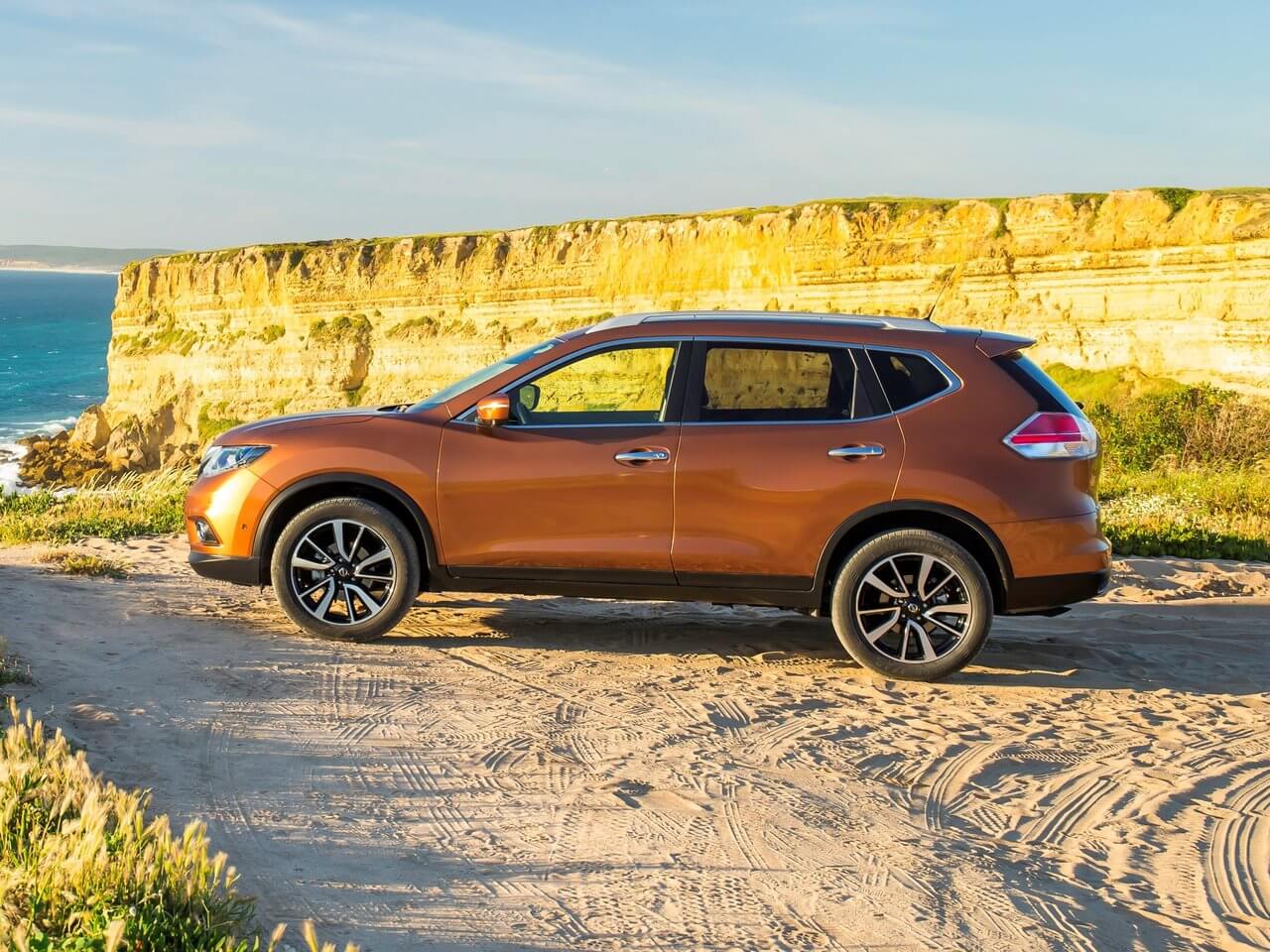
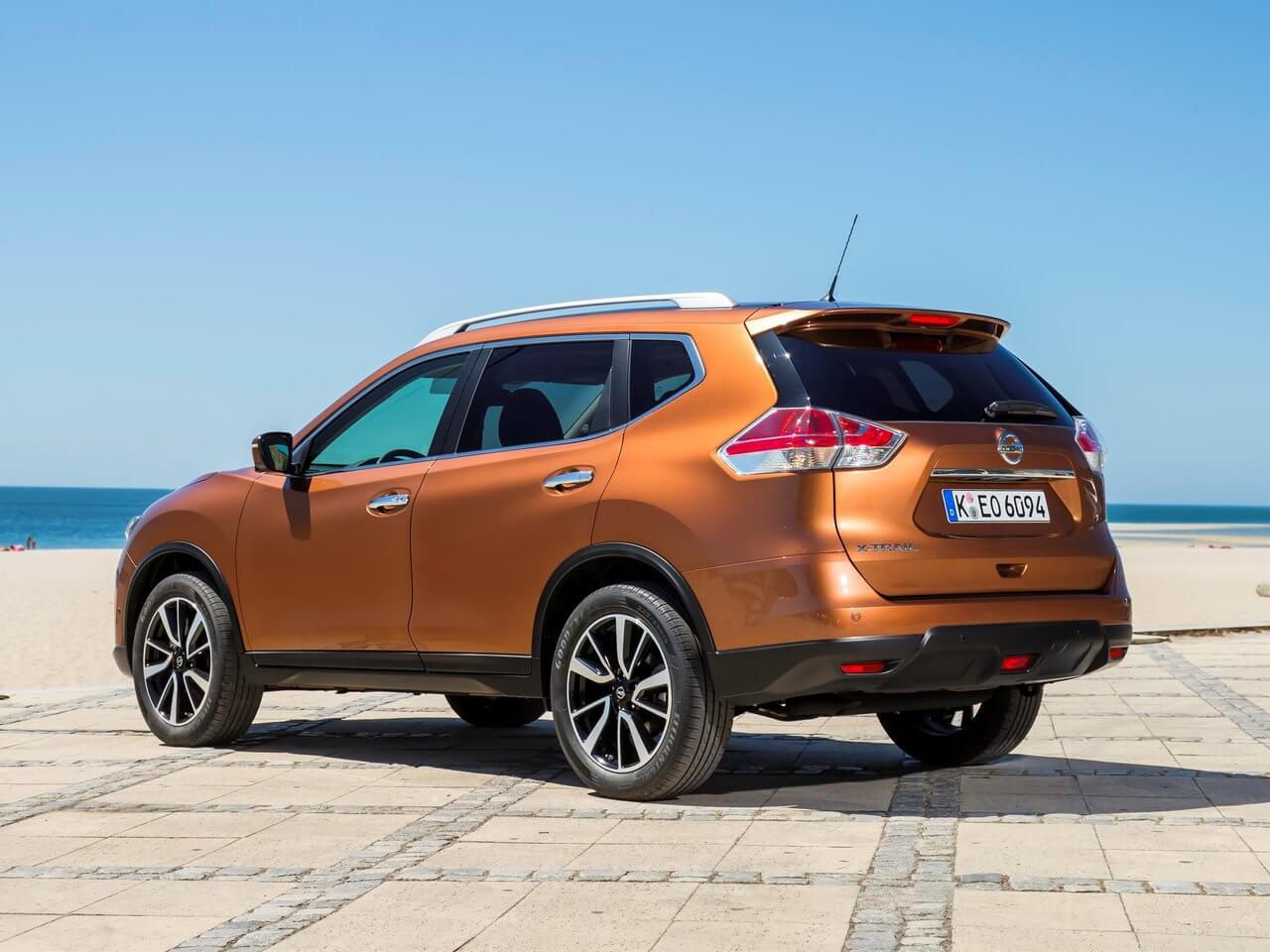
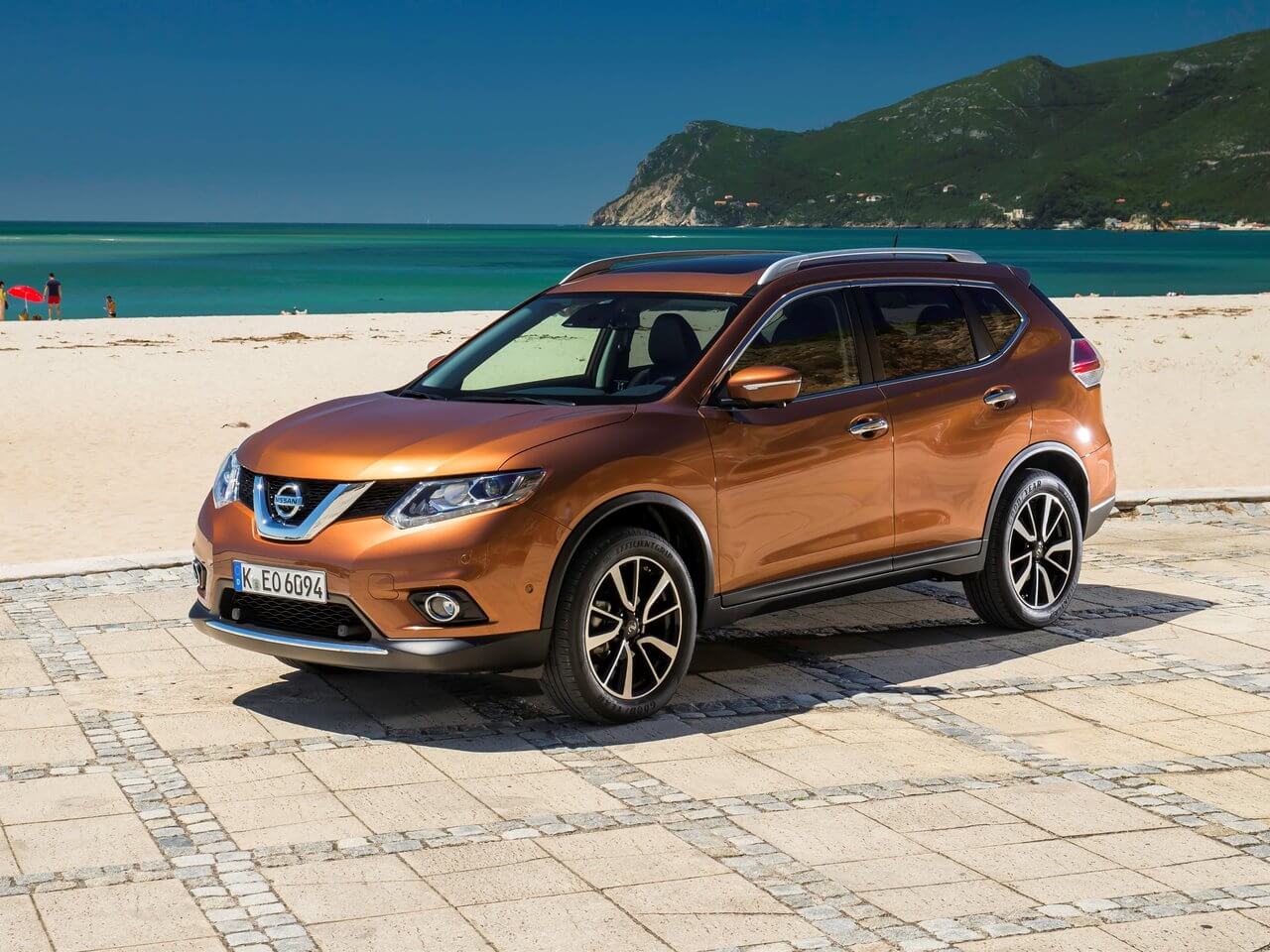
Nissan X-Trail photos 41




Nissan X-Trail videos 7

Nissan X-Trail video 1

Nissan X-Trail video 2

Nissan X-Trail video 3

Nissan X-Trail video 4

Nissan X-Trail video 5

Nissan X-Trail video 6

Nissan X-Trail video 7
FAQ
How many generations of the Nissan X-Trail are there?
There are four: T30 (2000–2007), T31 (2007–2013), T32 (2013–2022) and T33 (from 2020, in Europe from 2022). Databases that show more "generations" count facelifts and van versions separately.
Which X-Trail generation is the most reliable?
No large independent survey ranks them. UK buying guides link the T30 2.2 diesel with turbo and timing-chain faults, and T31 and T32 diesels with DPF clogging. The T33 is too new for long-term data.
What is the fuel consumption of the X-Trail?
The T33 e-POWER e-4ORCE is listed at 6.2 L/100 km (37.9 mpg US) on WLTP. Older generations were rated on NEDC, from about 5.1 L/100 km for the T32 1.6 dCi to 8.1 L/100 km for the T31 2.0 dCi automatic.
Is the X-Trail available with all-wheel drive or as a hybrid?
Yes. All four generations had a 4x4 version, and the T33 offers e-4ORCE dual-motor all-wheel drive. In Europe the T33 comes as a 1.5 VC-Turbo mild hybrid or with e-POWER, where the petrol engine only generates electricity.
Is the Nissan X-Trail a 7-seater?
The T32 and T33 are available with seven seats; the T30 and T31 have five. In the seven-seat T32, boot space behind the third row is only 135 L (4.8 cu ft).
What are the main rivals of the X-Trail?
The usual comparisons are the Toyota RAV4, Mitsubishi Outlander, Honda CR-V, Hyundai Tucson, Mazda CX-5, Subaru Forester and Škoda Kodiaq. Within Nissan's range, buyers also look at the smaller Qashqai.
Data sources
Data checked by an editor against the sources below.
- The text of this article (1cars archive)
- 1cars archive: First-Generation Nissan X-Trail (T30): History and Buying Guide
- 1cars archive: Second-Generation Nissan X-Trail (T31): Engines, Safety, Buying
- 1cars archive: Third-Generation Nissan X-Trail (T32): Seven Seats, Engines, Faults
- 1cars archive: Fourth-Generation Nissan X-Trail (T33): e-POWER Explained
- Wikipedia - Nissan X Trail
- Motor1 - Nissan X Trail 2022 Vorstellung
- Euro NCAP - Nissan X Trail 2002
- Co
- ADAC


