 Kia Carens
All generations, specs and history
Published Sources (1) Report an error
By Sarah Whitmore, Senior Automotive Writer
- Built
- 1999–present
- Generations
- 4 · RS to KY
Timeline
Carens generations
Click a generation for its own page


- Carens I (RS) 1999–2006 · Minivan / MPV
- Carens II (UN) 2006–2013 · Minivan / MPV
- Carens III (RP) 2013–2019 · Minivan / MPV
- Carens IV (KY) Current 2022–now · Minivan / MPV
Newest first · 4 generations since 1999
-
2022
-
2013
-
2006
-
1999
All generations by year: Carens IV (KY) (2022–now) · Carens III (RP) (2013–2019) · Carens II (UN) (2006–2013) · Carens I (RS) (1999–2006)
Which one is mine?
Pick the year of first registration to see which generation it is.
Check by VINThe Kia Carens is a compact family people carrier from Kia, sold in North America as the Rondo - a musical form. It is available with five or seven seats, and the name is said to combine "car" and "renaissance". The first Carens arrived in May 1999 and was facelifted in 2002; the second generation was shown in 2006; the third was unveiled at the Paris motor show in autumn 2012 and facelifted in 2016. Since 2022 the name has been used for an Indian-market three-row crossover.
In short
- First generation RS (1999–2006), second UN (2006–2013), third RP (2013–2019) and fourth KY (2022 onwards, India-focused).
- Third generation: 1.6 GDI with 99 kW (135 PS), 2.0 GDI with 122 kW (166 PS) and 1.7 CRDi diesels with 85–104 kW (115–141 PS).
- Five or seven seats, with up to 1,650 litres of luggage space and a flat floor.
- Red Dot design award winner in 2013.
Kia Carens at a glance
The Carens is a front-wheel-drive monocoque MPV with a transverse engine. More Kia models are listed in our Kia catalogue.
Earlier generations
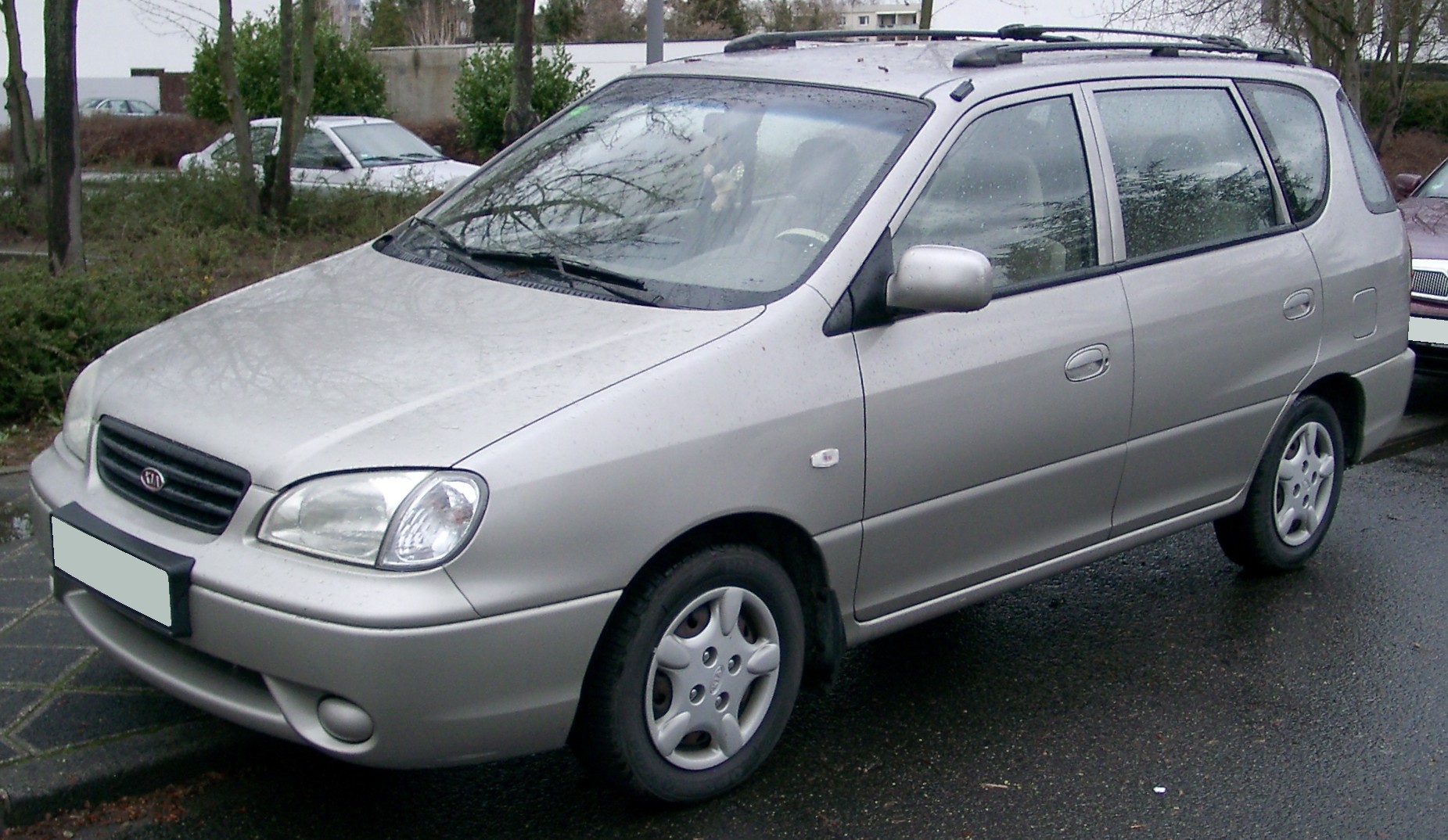
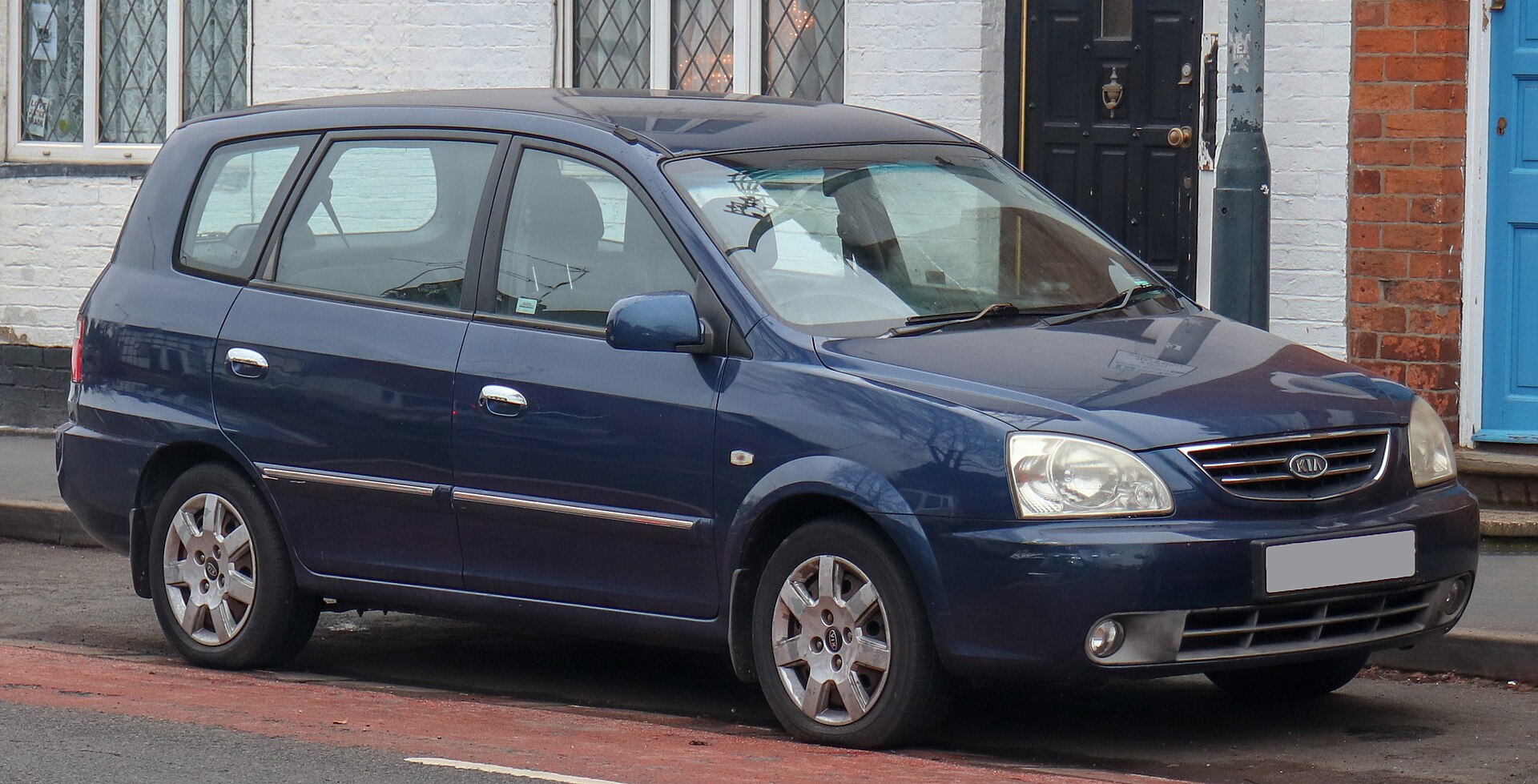
The first Carens (RS), launched in May 1999, was based on the Kia Sephia platform and used a four-speed gearbox; a 2002 facelift made it more attractive and modern. The second generation (UN), shown at the 2006 Los Angeles motor show, had a well-thought-out cabin and strong engines; in North America it was sold as the Rondo with a 2.4-litre four-cylinder with 130 kW (175 hp) or a 2.7-litre V6 with 143 kW (192 hp), and it offered five or seven seats.
Third generation: RP (2013–2019)
Exterior
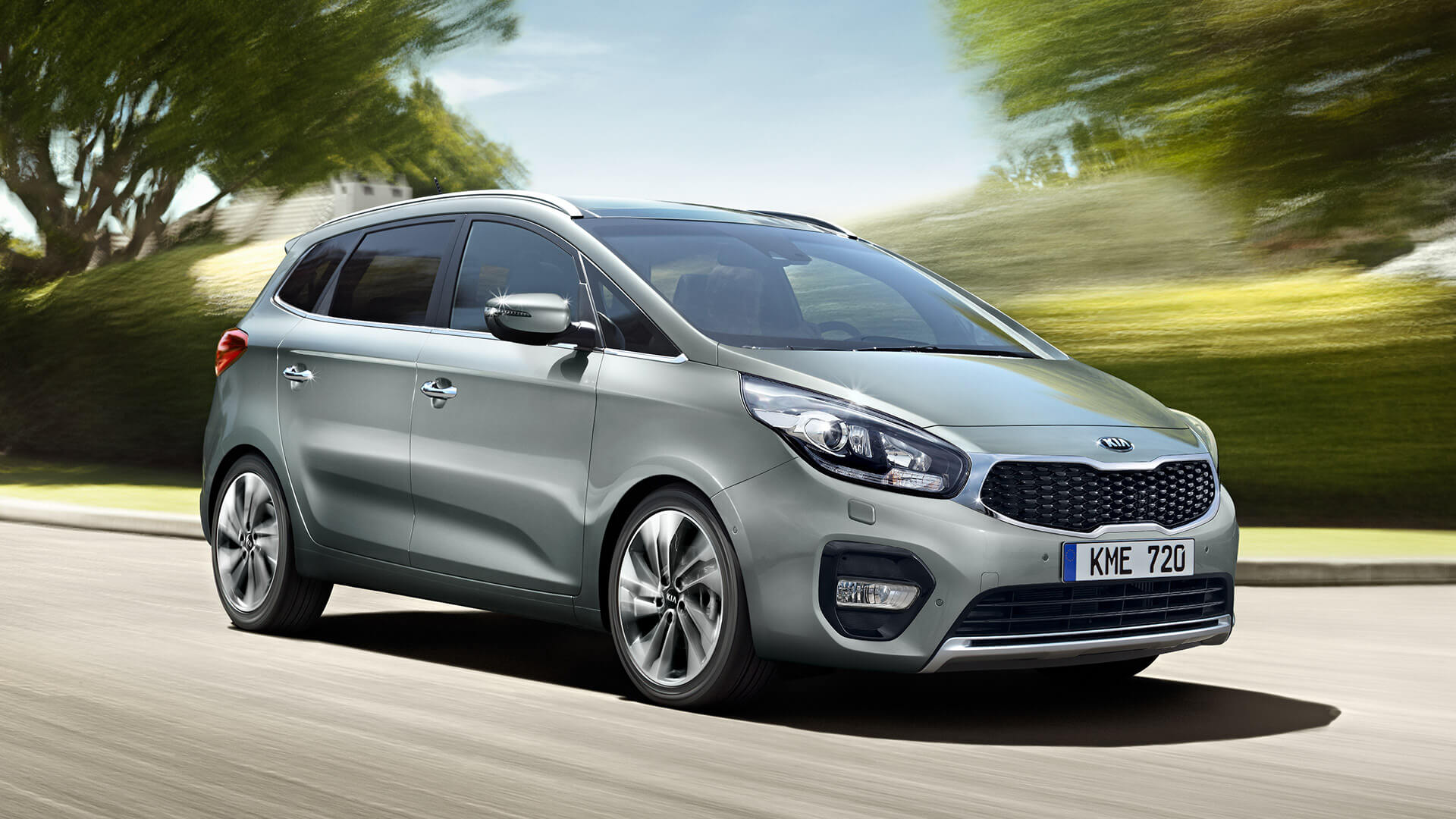
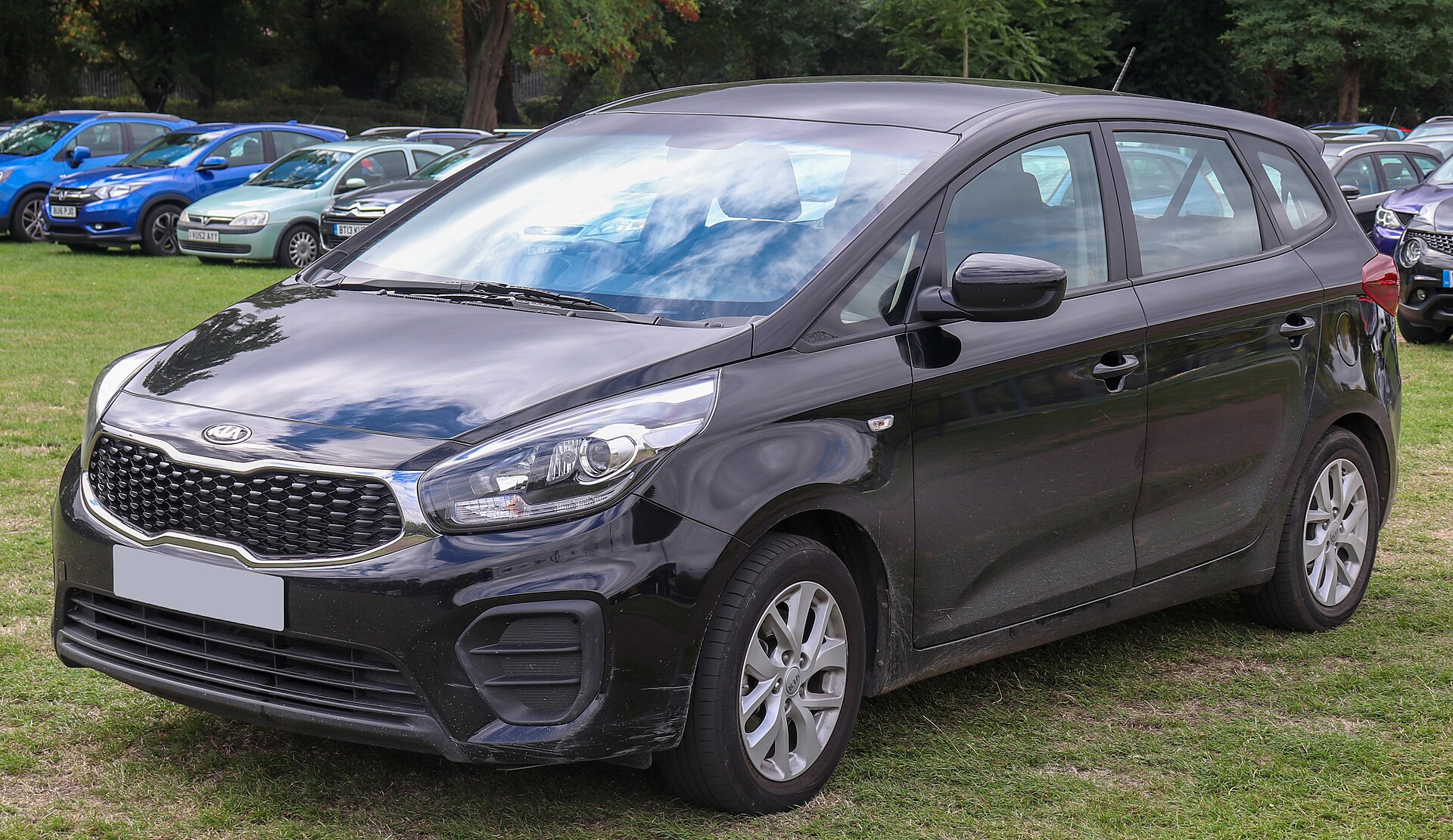
Rivals were improving fast, so Kia set out to build a more innovative, attractive and practical car. The third Carens is not flashy, but it has a clear style. A huge, steeply raked windscreen gives a good view of the road, followed by a short bonnet with slight ridges at the sides, halogen headlights and Kia's oval "tiger nose" grille with fine mesh and a chrome surround. The lower bumper has a second mesh intake and, after the facelift, horizontal fog lamps instead of vertical ones. The side has little decoration beyond gentle surfacing and flared arches; the facelift brought mirrors with indicators, new door handles and new wheel designs. Wheels range from 16 to 18 inches, and ground clearance is 150 mm. The sloping roof and rounded rear lights give it a sleek look. At the rear, a long spoiler with a brake light, an oval rear window, teardrop-shaped LED tail lights joined by a chrome strip and a plastic lower bumper with fog lamps complete the design; the exhaust is hidden.
Interior
The cabin carries Kia family traits. A three-spoke multifunction steering wheel with an unusual button layout faces clear instruments with a large trip-computer screen, and the instrument panel and door cards have carbon-effect trim. A 7-inch screen with two knobs and side buttons sits in the centre, between vertical air vents, above a large climate panel. The console flows into a tunnel with a large gear lever, a row of buttons, the electric parking brake button and a covered storage compartment. The seats have sporty shapes and noticeable side support. Materials are budget-oriented but well finished, and build quality is good. Five seats are standard; an optional third row adds two seats suitable for children and teenagers. With seven seats in use the boot holds just 103 litres; the five-seater offers 492 litres, rising to 1,650 litres with a flat floor when both rear rows are folded.
Engines and transmissions
| Engine | Fuel | Power (kW / PS) | Torque |
|---|---|---|---|
| 1.6 GDI I4 | Petrol | 99 kW / 135 PS | 165 Nm |
| 2.0 GDI I4 | Petrol | 122 kW / 166 PS | 205 Nm |
| 1.7 CRDi I4 | Diesel | 85 kW / 115 PS | 260 Nm |
| 1.7 CRDi I4 | Diesel | 100 kW / 136 PS, later 104 kW / 141 PS | 330 Nm |
The petrol engines are naturally aspirated with direct injection and 16 valves; the diesels use common-rail injection and turbocharging. Combined consumption is 6.4–7.9 l/100 km for the petrol engines and 4.7–6.1 l/100 km for the diesels. A six-speed manual is standard, with a six-speed automatic optional and a seven-speed dual-clutch gearbox added after the 2016 facelift. All versions drive the front wheels. 0–100 km/h takes 9.7–12.6 seconds, and top speed is 181–203 km/h.
Chassis and safety
The third Carens uses a lengthened Kia cee'd platform with coil springs, gas dampers and anti-roll bars at both ends: MacPherson struts at the front and an H-shaped torsion beam at the rear. Rack-and-pinion steering has electric assistance, and all four brakes are discs (300 mm ventilated at the front, 284 mm at the rear). Equipment includes daytime running lights, mirrors with indicators, ABS, EBD and brake assist, adaptive headlights, lane departure warning, blind-spot monitoring, front and side airbags and cruise control. Higher versions add 18-inch wheels, a panoramic roof, heated and ventilated seats, a heated steering wheel and dual-zone climate control.
Fourth generation: KY (2022 onwards)
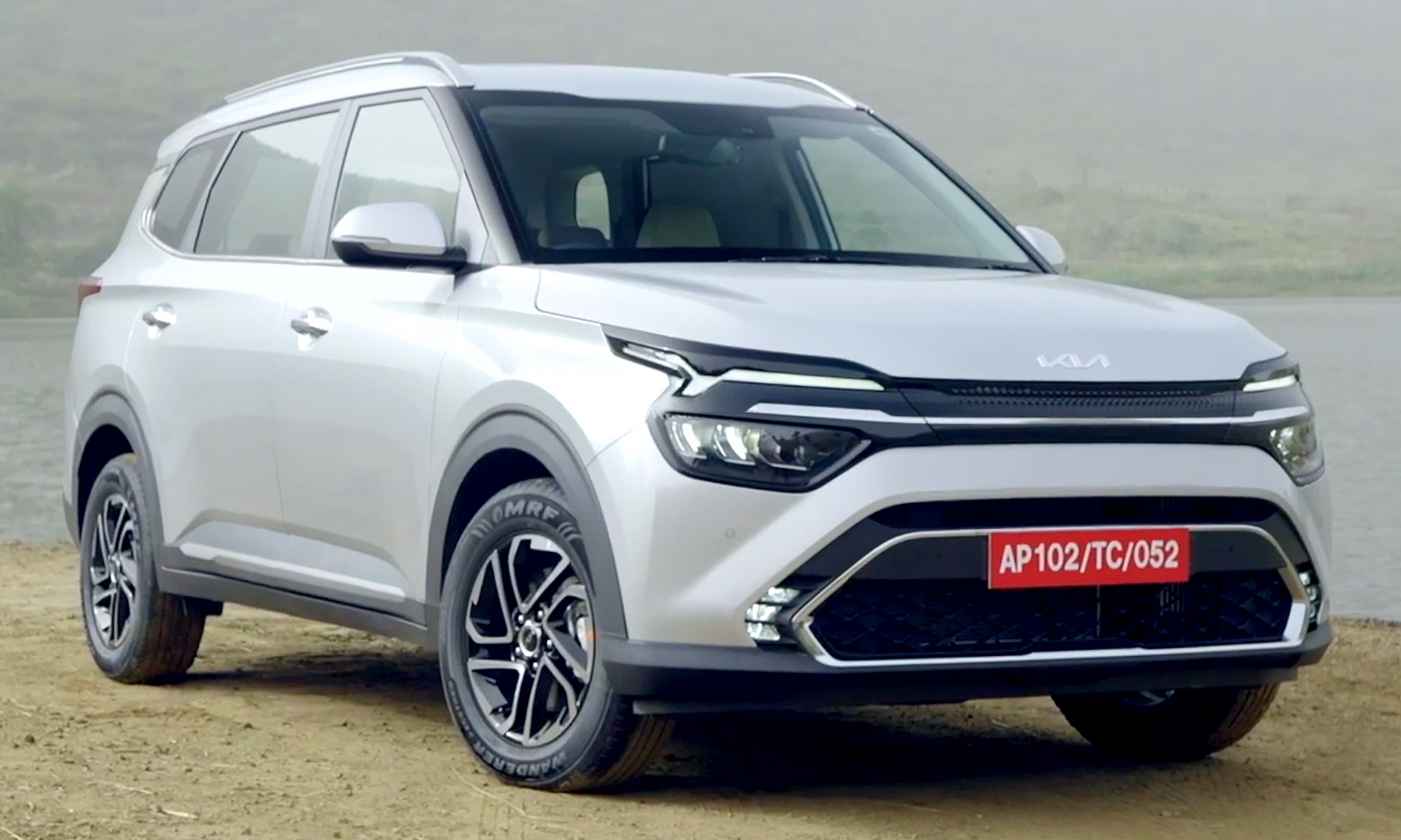
The fourth Carens was revealed in India on 16 December 2021 and launched there on 15 February 2022. It is a six- or seven-seat compact crossover on a stretched Seltos/Creta platform, built in Anantapur, India, as well as in Vietnam and Bangladesh. Engines include a 1.5 petrol with 85 kW (115 PS), a 1.4 turbo petrol with 103 kW (140 PS) and a 1.5 diesel with 85 kW (115 PS). A more premium Carens Clavis followed in May 2025, and the electric Clavis EV, Kia's first India-built EV with 42 or 51.4 kWh batteries and 124 kW (169 PS), was launched on 15 July 2025.
Key specifications by generation
| Parameter | RS | UN | RP | KY |
|---|---|---|---|---|
| Years | 1999–2006 | 2006–2013 | 2013–2019 | 2022 onwards |
| Body | MPV | MPV | MPV | Crossover |
| Seats | - | 5 or 7 | 5 or 7 | 6 or 7 |
| Boot (5 seats) | - | - | 492 l | - |
Strengths and weaknesses
Owners praise the Carens's good suspension, comfortable and practical interior, reliability, smooth and confident ride, large boot and affordable parts. Drawbacks include mediocre sound insulation and headlight performance, an impractical third row and limited ground clearance. It suits families well. Rivals of the third generation included the Volkswagen Touran, Opel Zafira Tourer, Citroën C4 Picasso, Ford C-Max, Renault Scénic and Toyota Verso.
Image credits · Photos from Wikimedia Commons under free licences
- Kia Carens I (RS) · Photo: Vauxford / Wikimedia Commons, CC BY-SA 4.0
- Kia Carens II (UN) · Photo: Rudolf Stricker / Wikimedia Commons, CC BY-SA 3.0
- Kia Carens III (RP) · Photo: Vauxford / Wikimedia Commons, CC BY-SA 4.0
- Kia Carens IV (KY) · Photo: Kannada DriveSpark / Wikimedia Commons, CC BY 3.0
Kia Carens in our rankings
- No. 91 of 912 · Longest-running car nameplates (27 years · top 11%)
- No. 64 of 305 · Oldest car models still on sale (27 years · top 22%)
- No. 119 of 345 · Cars with the most generations (4 generations · top 41%)
In production longer than 89% of ranked nameplates in the 1CARS catalog (No. 91 of 912).
FAQ
What is the Kia Carens called in North America?
The Kia Rondo.
Does the Kia Carens have seven seats?
Yes, a third row with two seats is optional; it suits children and teenagers.
What engines does the third-generation Kia Carens have?
1.6 GDI and 2.0 GDI petrol engines with 99 and 122 kW (135 and 166 PS), and 1.7 CRDi diesels with 85–104 kW (115–141 PS).
How big is the Kia Carens boot?
492 litres with five seats, 103 litres with seven and up to 1,650 litres with the rear seats folded.
Data sources
Data checked by an editor against the sources below.