 Toyota Verso
Specs, engines and history
Published Sources (1) Report an error
By Sarah Whitmore, Senior Automotive Writer
Verdict
Our verdict · Sarah Whitmore
The facelifted Verso is clearly better than the earlier car in appearance, interior, equipment and technical details. Its cabin is not the most modern and the central instruments are a matter of taste, but if you need a compact, agile, quick and safe MPV, the Verso is a strong choice, with good build quality and materials, economical yet capable engines, a fair price on the used market and the option of a third row. Giving Toyota's European specialists a free hand paid off.
The Toyota Verso is a compact MPV with five or seven seats, developed by Toyota Motor Europe. It was revealed at the Geneva motor show in March 2009 as the successor to the Toyota Corolla Verso. Only one generation was built, but in September 2012 Toyota showed a substantially updated Verso at the Paris motor show. European production in Turkey ended in 2018.
In short
- One generation, 2009–2018, built in Turkey (and in China as the E'Z); facelifted in 2012 with 470 new parts.
- Petrol 1.6 and 1.8 Valvematic engines with 97 and 108 kW (132 and 147 PS); diesels from 1.6 to 2.2 litres with up to 130 kW (177 PS).
- Six-speed manual or Multidrive S CVT, front-wheel drive only.
- Five or seven seats, three individual sliding seats in the second row and up to 1,696 litres of cargo space.
Toyota Verso at a glance
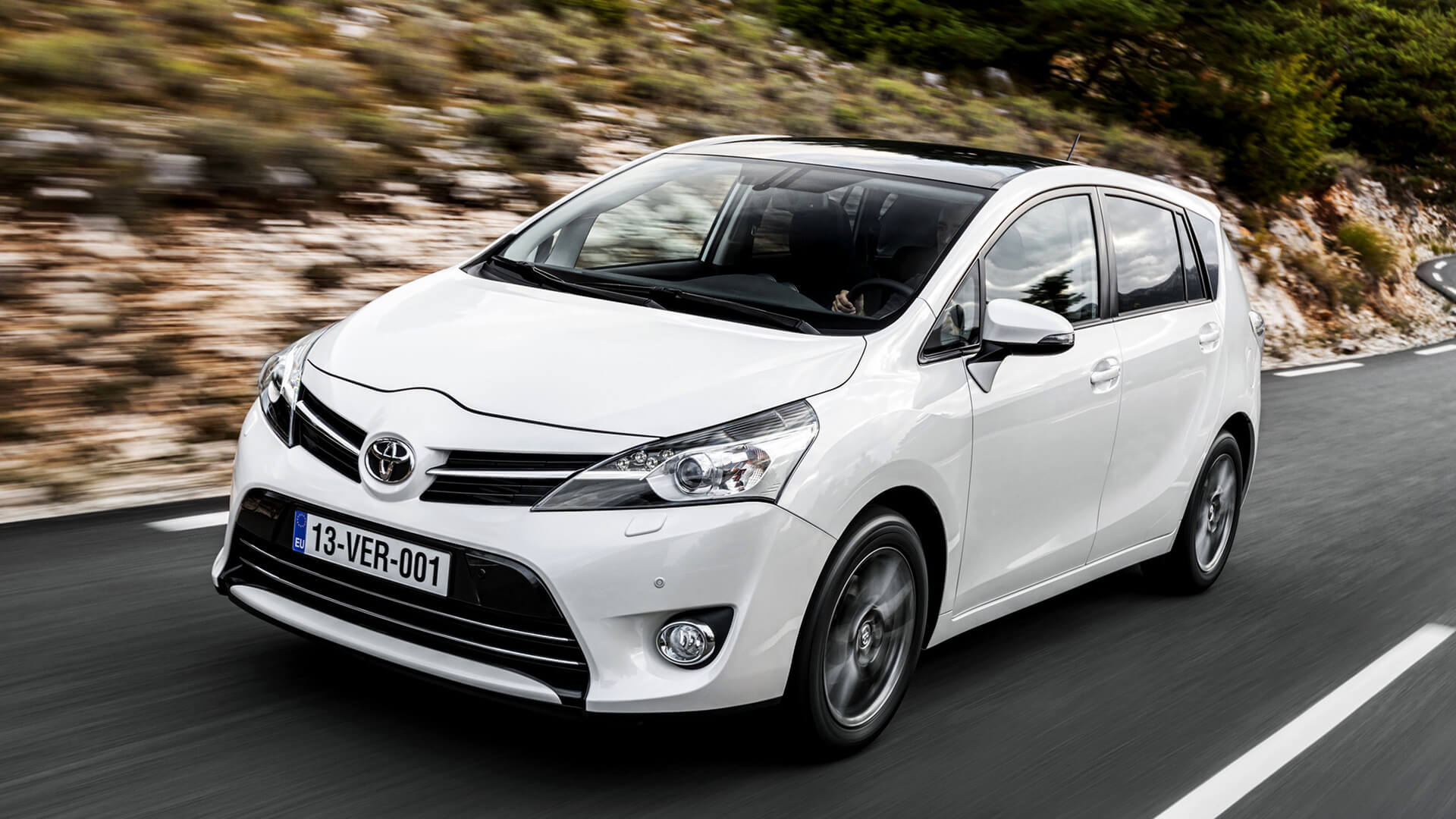
The first Verso's exterior was designed in continental Europe under close Japanese supervision. For the facelift, Toyota gave its European designers a freer hand: the work was led by the Toyota Motor Europe centre in Belgium, with the ED² design studio in Nice taking part. The result was a better-looking exterior, a slightly revised interior and 470 new parts in total. More Toyota models are listed in our Toyota catalogue, and the company's story is told in Toyota's history: from weaving looms to cars.
| Item | Detail |
|---|---|
| Debut | Geneva motor show, March 2009 |
| Facelift | Paris motor show, September 2012 |
| Production | 2009–2018, Arifiye (Turkey); China 2011–2017 |
| Predecessor | Toyota Corolla Verso |
| Seats | 5 or 7 |
| Drive | Front-wheel drive |
Exterior
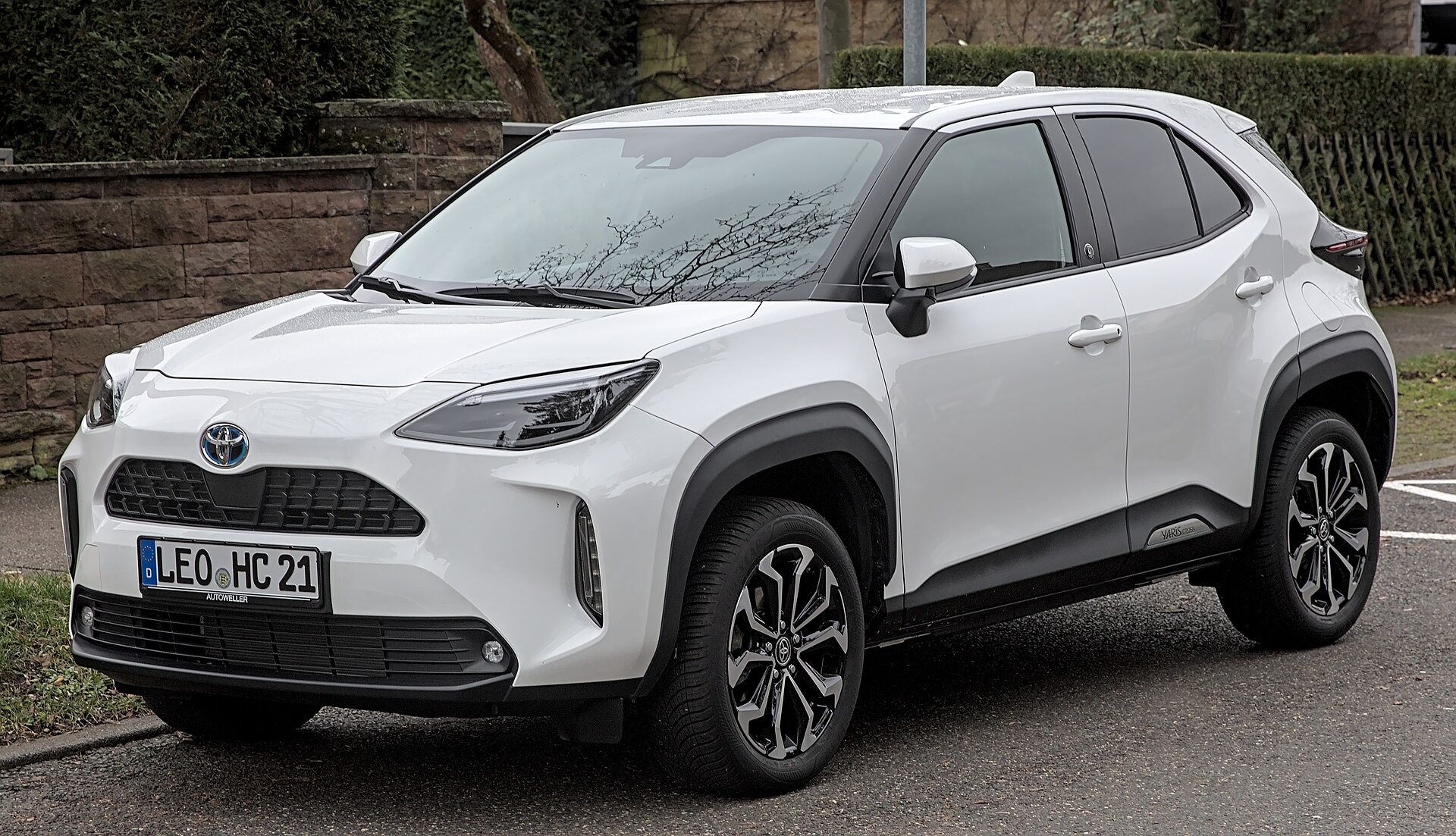
The facelifted Verso changed noticeably. It became more modern, even slightly sporty, adopting Toyota's corporate face, shared with the Auris of the same period. The grille narrows towards the centre, and the headlights have LED elements, with xenon as an option. The bumper has a large trapezoidal lower intake, chrome bars and round fog lamps, and its lower lip sits very close to the road.
In profile the roof slopes down towards the rear, the door openings are large, the window line is high, and a crease starting at the side of the front bumper runs in a wave through the front wheel arch and along the bottom of the doors before rising sharply into the flared rear wing. The car looks harmonious. Ground clearance is an average 145 or 155 mm, depending on the version. The facelift made the Verso 20 mm longer, yet it remained one of the most compact seven-seaters on sale. The redesigned mirrors with indicators stand on stalks, and the car rides on 16- or 17-inch alloy wheels with new designs.
At the rear, a large bumper continues the bulge of the rear wings, and the neat tail lights wrap around onto the sides. The compact tailgate has a stylish spoiler, the bumper a diffuser-style insert, and the brake lights changed colour. Eleven paint colours were offered, including a new pearl white and two shades of blue.
Interior
The Verso is available with five or seven seats. Materials include pleasant plastics, fabric and leather. The cabin became much quieter after the facelift thanks to additional insulation mats between the passenger compartment and the engine bay. Matt silver decorative inserts look good against the dark surfaces, and build quality is beyond criticism. The front seats are comfortable and heated, though side support is not pronounced.
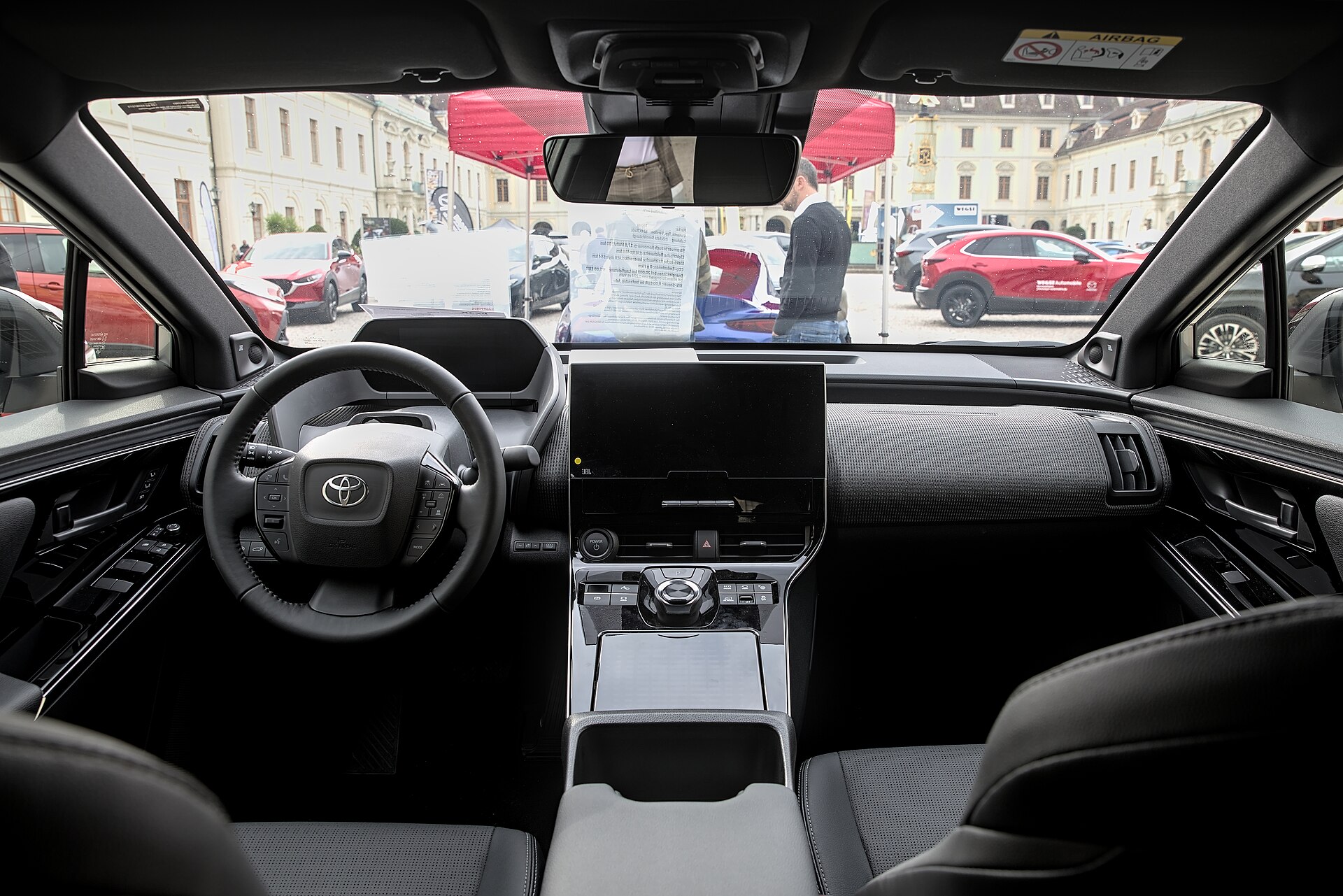
The driver has a three-spoke steering wheel — a little plain, but trimmed in fine Nappa leather on more expensive versions — and an original dashboard with Optitron instruments in two dials placed in the centre, together with a 2.5-inch trip-computer display. The central instrument layout is unusual and will not suit everyone.
As before, there are plenty of storage spaces. The upper part of the split glovebox is cooled, which is useful on long trips, and the front seatbacks have fold-down tables with cupholders. The centre console, with metal-look inserts, carries a 6.1-inch LCD infotainment screen supporting CD, MP3, AUX, USB and Bluetooth, as well as navigation and a rear camera, with cruise control available. Below it are the climate controls, and a raised section at the bottom of the console holds the gear lever. All controls are logically placed, so even a first-time driver needs little time to get used to them. Smart Entry and Push Start keyless entry and start are available, and a leather-trimmed armrest sits between the front seats. The facelifted Verso can also be ordered with a Skyview panoramic glass roof measuring 2,340 × 1,280 mm.
The second row has three individual seats that slide by 195 mm, which makes the seven-seat Verso very practical; all three passengers have plenty of legroom and headroom. The third row is best suited to children. With seven seats in use, the boot holds a modest 155 litres; with the third row folded, 440 litres. The second and third rows fold into a flat floor that takes items 1,575 mm long and 1,430 mm wide, and the cargo volume then reaches 1,696 litres.
Engines and transmissions
The engines were refined for the facelift to be more economical and cleaner.
| Engine | Fuel | Power (kW / PS) | Torque | Notes |
|---|---|---|---|---|
| 1.6 Valvematic | Petrol | 97 kW / 132 PS | 160 Nm | 6-speed manual |
| 1.8 Valvematic | Petrol | 108 kW / 147 PS | 180 Nm | Manual or Multidrive S; 6.8 l/100 km, 0–100 km/h 10.4–11.1 s |
| 1.6 D-4D | Diesel | — | — | Added later in production |
| 2.0 D-4D | Diesel | 93 kW / 126 PS | 310 Nm | 6-speed manual |
| 2.2 D-4D | Diesel | 110 kW / 150 PS | — | Automatic |
| 2.2 D-4D D-CAT | Diesel | 130 kW / 177 PS | 400 Nm | 0–100 km/h 8.7 s, 210 km/h |
The petrol engines are 16-valve four-cylinders with multi-point injection and Valvematic variable valve lift, a further development of Dual VVT-i variable valve timing. The 1.8 uses about 6.8 l/100 km on average. The diesels are turbocharged 16-valve four-cylinders; the most powerful 2.2 D-CAT version uses around 5.8–6.0 l/100 km on the combined cycle.
The entry-level petrol and diesel engines are paired with a six-speed manual gearbox, while the more powerful petrol version is also available with the Multidrive S CVT. Both transmissions are clearly tuned for fuel economy. All versions are front-wheel drive.
Chassis
The updated Verso received a revised, more comfortable suspension: MacPherson struts with an anti-roll bar at the front and a torsion beam at the rear. The electric power steering was retuned for better response and feedback, and additional spot welds increased body rigidity. All four wheels have disc brakes, ventilated at the front.
Safety
In the 2010 Euro NCAP test the Verso received the maximum five stars, with 89% for adult occupant protection, 75% for child occupants, 69% for pedestrians and 86% for safety assist — results that made it one of the safest MPVs of that year. Depending on the version, equipment includes front, side and curtain airbags, ABS, traction control, stability control, electronic brakeforce distribution, front and rear parking sensors, light and rain sensors, cruise control, a rear camera with dynamic guidelines and hill-start assist.
Entry-level versions typically have stability control, front and side airbags, electric heated mirrors, air conditioning, a four-speaker audio system, front electric windows and heated front seats. Higher trims add roof rails, keyless entry, xenon headlights, automatic climate control and 17-inch alloy wheels.
What owners say
Owners like the Verso's pleasant looks, decent space and the third row of seats, which is relatively rare in this size of car. It is reliable and compact for what it offers, which helps in town, and its strong engines have a reasonable appetite. Equipment and safety are also praised. On the downside, the boot shrinks drastically when the third row is in use, the cabin design looks dated today, and some owners criticise the CVT, the modest ground clearance and the noise insulation of the wheel arches. Overall, it is a good family car that stands out for value for money.
Rivals
The Verso competed with the Citroën C4 Picasso, Opel Zafira Tourer, Chevrolet Orlando, Volkswagen Touran and Mazda5.
Toyota Verso in our rankings
In production longer than 51% of ranked nameplates in the 1CARS catalog (No. 415 of 912).
FAQ
When was the Toyota Verso built?
From 2009 to 2018; it was revealed in Geneva in March 2009 and facelifted in 2012.
How many seats does the Toyota Verso have?
Five or seven, with three individual sliding seats in the second row.
What engines does the Toyota Verso have?
1.6 and 1.8 Valvematic petrol engines with 97 and 108 kW (132 and 147 PS) and diesels from 1.6 to 2.2 litres, the most powerful with 130 kW (177 PS).
How big is the Toyota Verso boot?
155 litres with seven seats in use, 440 litres as a five-seater and up to 1,696 litres with both rear rows folded.
Data sources
Data checked by an editor against the sources below.