 Toyota Yaris
Specs, engines and history
Published Sources (1) Report an error
By Felix Hartmann, Automotive Technology & EV Contributor
Which Yaris to buy
Our verdict · Felix Hartmann
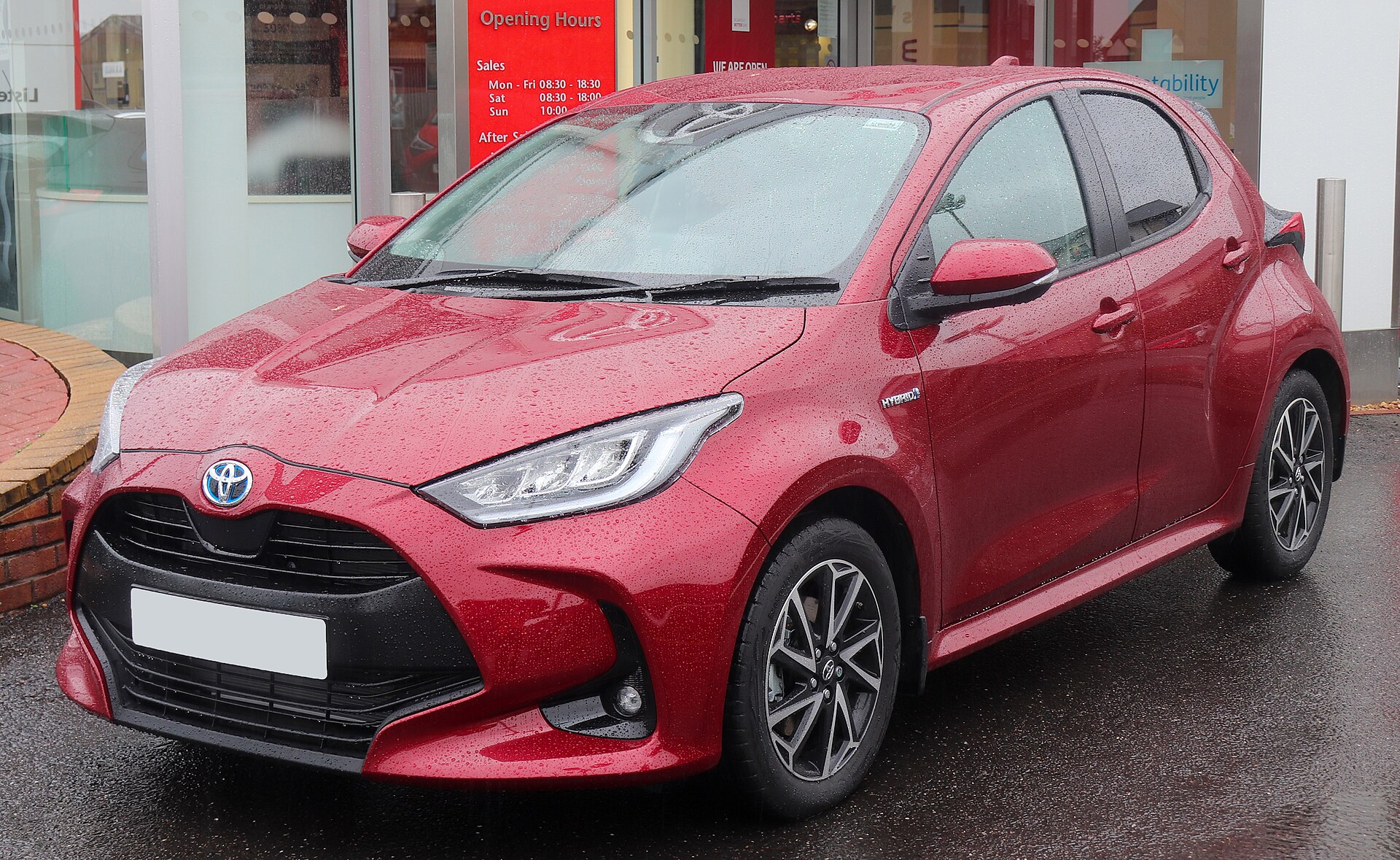
For low running costs, the Yaris Hybrid of the third generation and the fourth-generation car are the obvious choices. The XP210 adds a five-star Euro NCAP result from 2020 and, as the Hybrid 130, more power. A first- or second-generation car is a simple used buy; the 1.3 and 1.33 petrol engines offer noticeably more power than the first-generation 1.0 with 50 kW. Enthusiasts will look at the GR Yaris, which is a rally-bred car rather than a sporty supermini, and at the rare XP130 GRMN.
The Toyota Yaris is Toyota's supermini, built since January 1999 and sold in Europe as the brand's smallest five-seat hatchback. It won European Car of the Year twice, in 2000 and 2021, and since 2012 has been offered as a full hybrid. Four main generations have been built, most of the European cars at Onnaing in northern France, and the fourth generation also spawned the four-wheel-drive GR Yaris.
In short
- Four hatchback generations: XP10 (1999–2005), XP90 (2005–2011), XP130 (2011–2020) and XP210 (since 2020).
- In Japan the first three were sold as the Vitz; North America and Australia knew the first car as the Echo.
- European Car of the Year 2000 and 2021; 8.71 million sold worldwide by March 2020.
- Outputs range from 50 kW (68 PS) for the first 1.0-litre to 224 kW (305 PS) for the 2024 GR Yaris in Japan.
Toyota Yaris at a glance
| Specification | Toyota Yaris |
|---|---|
| Production | since late 1998 (sales from January 1999) |
| Main plants | Japan (Kanegasaki and others); Onnaing, France, since 2001; Kolín, Czech Republic, since 2021 |
| Segment | supermini (B segment) |
| Body | three- and five-door hatchback; sedans in some markets |
| Drive | front-wheel drive; four-wheel drive in Japan; GR-Four all-wheel drive on the GR Yaris |
| Engines | 1.0 three- and four-cylinder, 1.3, 1.33, 1.5, 1.8 petrol; 1.4 D-4D diesel; 1.5 full hybrid |
| Name | coined in 1997 by the Düsseldorf naming agency Nomen; English Wikipedia links it to Charis, one of the Greek Graces |
| Related | Toyota Vitz (Japan), Yaris Verso, Yaris Cross, Mazda2 Hybrid |
The Yaris is listed in our Toyota catalogue. Its twin sold in Japan has its own page, Toyota Vitz - the Japanese name of the Yaris, and the smaller city car is covered in Toyota Aygo.
Yaris generations from 1999 to today
| Generation | Code | Years (Europe) | Body styles | Engines | Power (kW) |
|---|---|---|---|---|---|
| First | XP10 | 1999–2005 | 3- and 5-door hatchback; Platz/Echo sedan | 1.0, 1.3, 1.5 petrol, 1.4 D-4D | 50–79 |
| Second | XP90 | 2005–2011 | 3- and 5-door hatchback; Belta sedan | 1.0 three-cylinder, 1.3, 1.33, 1.8, 1.4 D-4D | up to 97 |
| Third | XP130 | 2011–2020 | 3- and 5-door hatchback | 1.0, 1.33, 1.5, 1.4 D-4D, 1.5 hybrid; GRMN 1.8 supercharged | up to 156 |
| Fourth | XP210 | since 2020 | 5-door hatchback; GR Yaris 3-door | 1.0, 1.5 petrol, 1.5 hybrid; GR Yaris 1.6 turbo | 51–224 |
Beside these, Toyota sold Yaris-badged cars that are not part of this line: the XP150 hatchback and sedan for Asia and Latin America from 2013, the Mazda2-based Yaris iA and Yaris sedan in the United States (2016–2020) and the Daihatsu-developed Yaris ATIV sedan of 2022.
First generation XP10 (1999–2005)
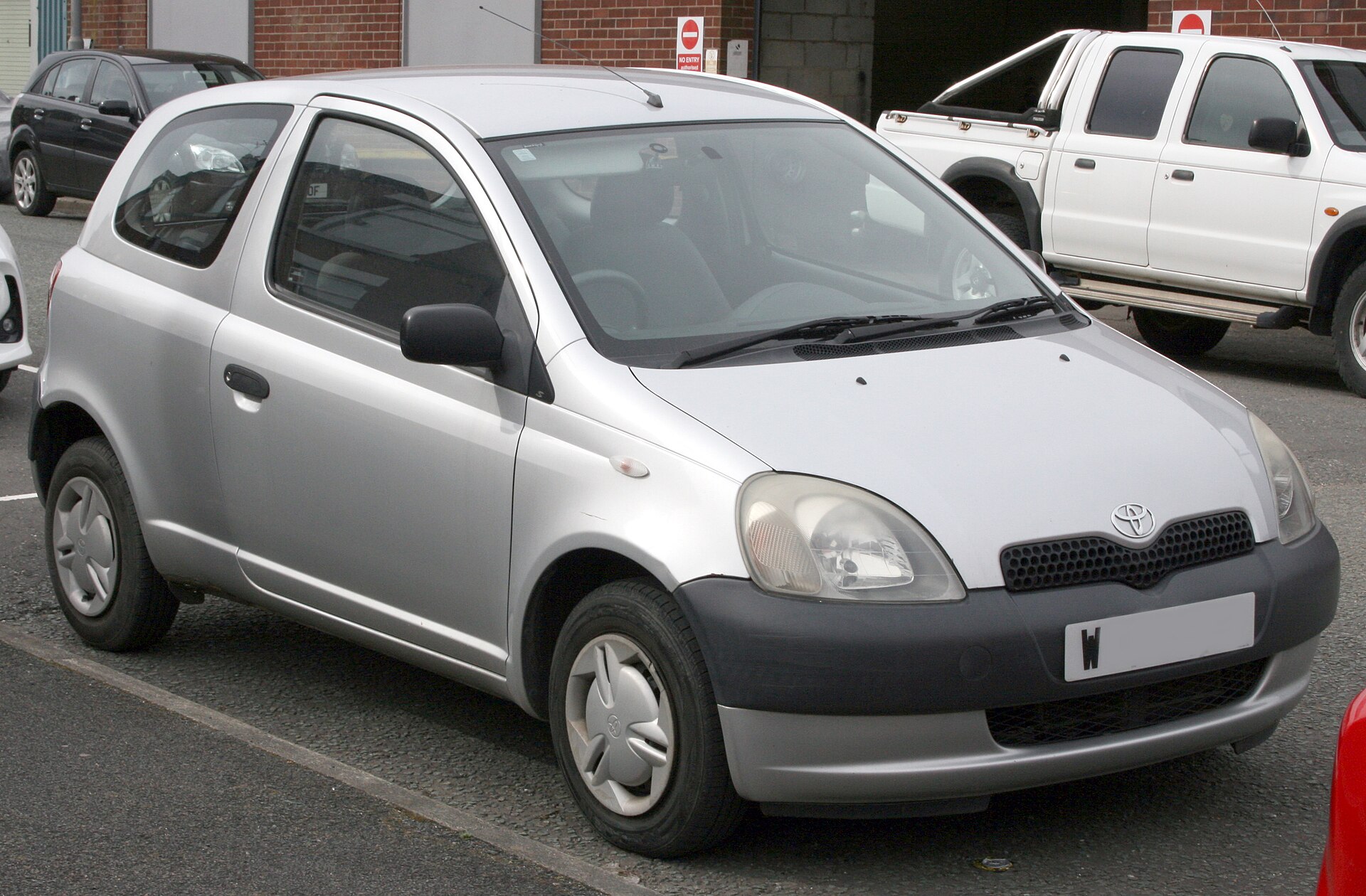
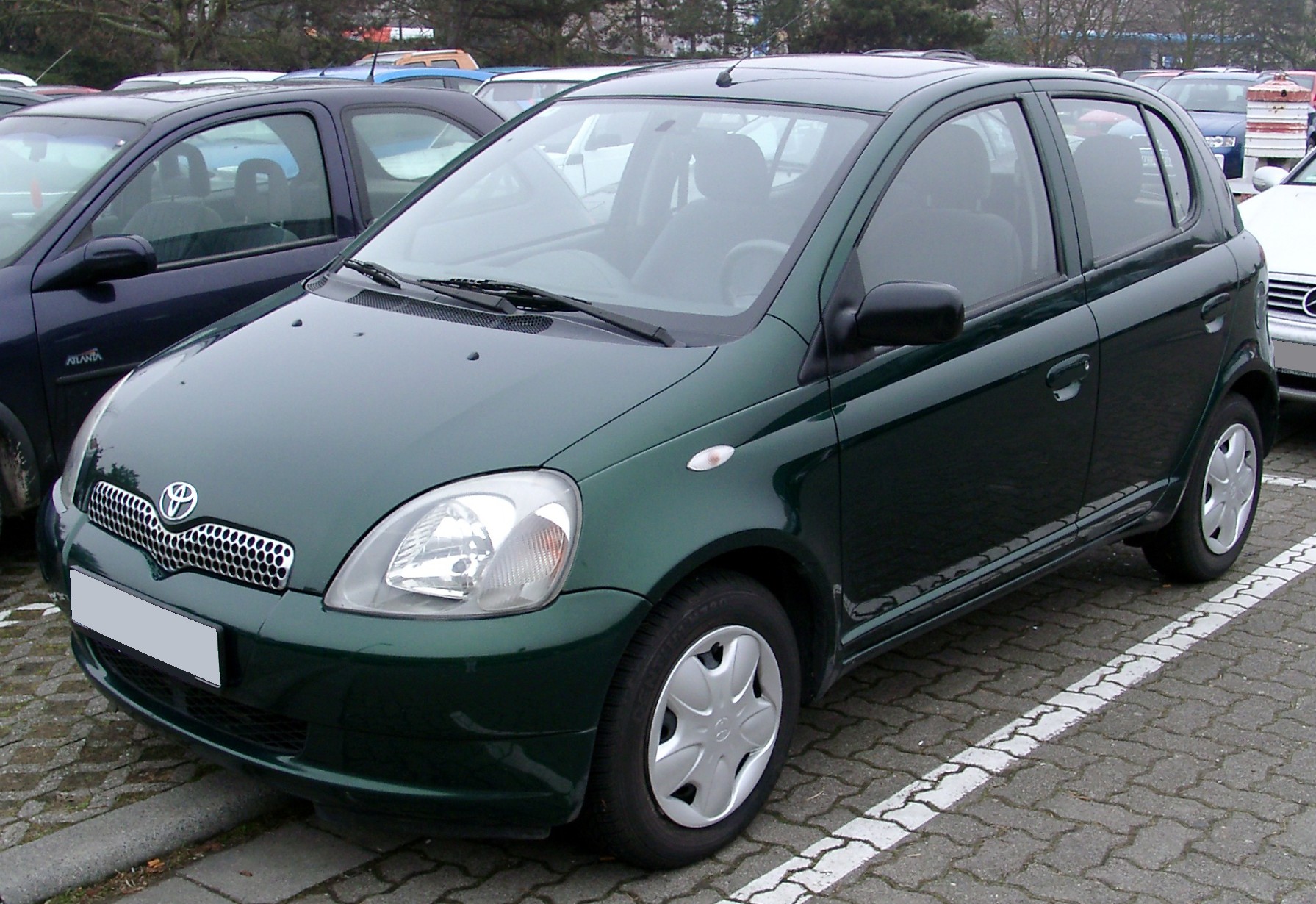
The first Yaris was styled by Sotiris Kovos at Toyota's ED2 design studio in Europe and unveiled at the 1998 Paris Motor Show. The Vitz went on sale in Japan on 13 January 1999, and the Yaris reached Europe about two months later. It was voted Car of the Year Japan and European Car of the Year 2000.
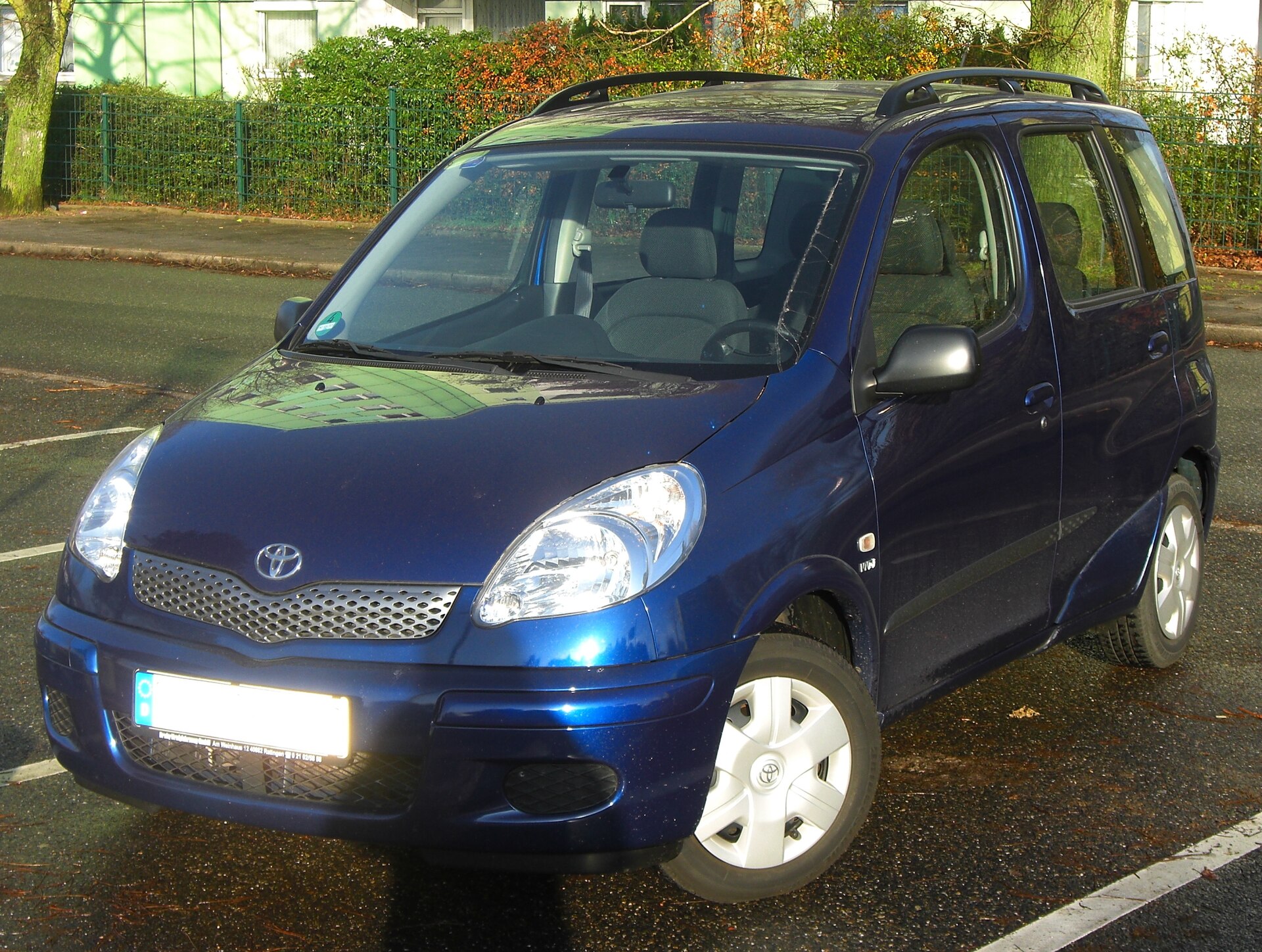
From 31 January 2001 Toyota also built the Yaris at its Onnaing plant near Valenciennes in France. Engines were a 1.0-litre four-cylinder with 50 kW (68 PS), a 1.3 with 64 kW (87 PS) and, from 2001 in the sporty Yaris T Sport, a 1.5 with 79 kW (107 PS). A 1.4 D-4D turbodiesel of about 55 kW (75 PS) completed the range. The Yaris Verso, a tall mini-MPV on the same running gear, was sold from late 1999. A facelift in 2003 brought new bumpers and teardrop-shaped headlamps. Euro NCAP gave the dual-airbag car four stars for adult occupants in 2000.

Second generation XP90 (2005–2011)
The second Yaris went on sale in Japan in February 2005 and was built in France from November 2005 to May 2011. It grew to 3,750 mm in length (3,785 mm after the update) and replaced the base four-cylinder with the 1.0-litre three-cylinder also used in the Aygo. The 1.4 D-4D diesel was uprated to 66 kW (90 PS).
For Europe the Yaris TS used a 1.8-litre 2ZR-FE engine with 97 kW (130 hp) and 173 Nm. A 1.33-litre engine with Stop & Start arrived in early 2009, together with a minor facelift that changed the bumpers, lights and climate controls. Euro NCAP tested the five-door in 2005 and gave it 35 points for adult occupants, 34 for children and 18 for pedestrians.

Third generation XP130 (2011–2020) and the first Yaris Hybrid
The third generation was launched in Japan on 22 December 2010. Production at Onnaing began in June 2011 and sales in Europe that September. From May 2013 to 2019 the plant in France also built the Yaris for the United States and Canada.
The key addition was the Yaris Hybrid, shown at the Geneva Motor Show in March 2012 and on sale from June 2012. It combined a 1.5-litre petrol engine of 55 kW with a 45 kW electric motor and a 0.9 kWh nickel-metal hydride battery for a system output of 74 kW (100 PS). It sold 23,692 units in 2012.
Facelifts followed in 2014 and 2017, and the European range later added a 1.5-litre 2NR-FKE petrol engine. The fastest version was the Yaris GRMN of September 2017: a supercharged 1.8-litre with 156 kW (212 PS) and 250 Nm, about 6.3 seconds from 0 to 100 km/h and a limited 230 km/h. Only 400 were built for Europe and 150 for Japan. Euro NCAP's test of the 2011 car gave 89% for adult occupants, 81% for children, 60% for pedestrians and 86% for safety assistance.
Fourth generation XP210 and the GR Yaris
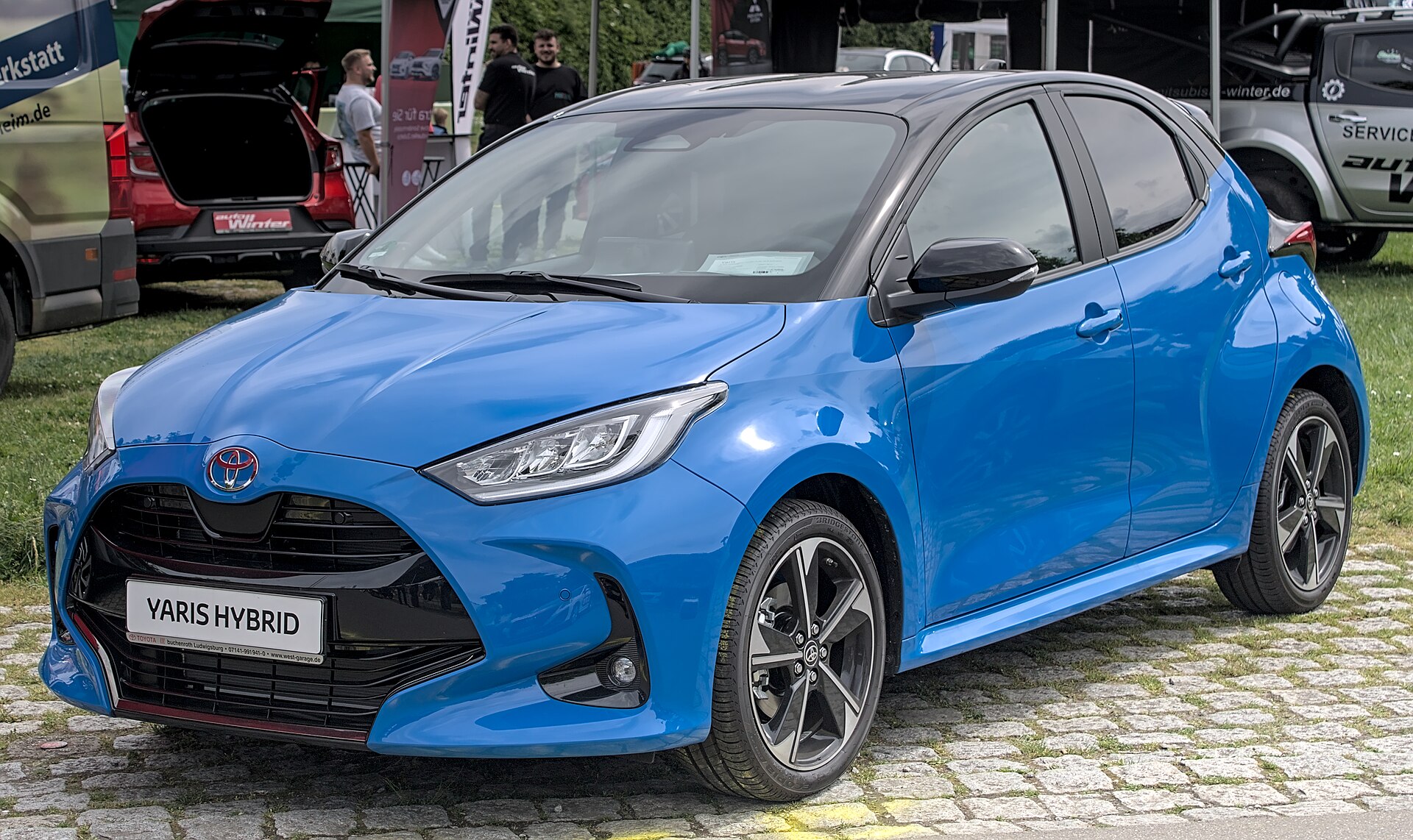
The current Yaris was revealed on 16 October 2019 in Amsterdam and Japan at the same time. It is the first Yaris on Toyota's TNGA GA-B platform, is 3,940 mm long and went on sale in Japan on 10 February 2020. European production began at Onnaing on 6 July 2020, and the Kolín plant in the Czech Republic added the car in November 2021. It became European Car of the Year 2021.
The hybrid is now the core of the range. The 1.5-litre three-cylinder M15A-FXE system produced 85 kW (116 PS) at launch and 96 kW (131 PS) as the Hybrid 130 from May 2023. Petrol versions use a 1.0 three-cylinder with 53 kW (72 PS) in Europe or a 1.5 with 88–92 kW. Euro NCAP awarded five stars in 2020 (86% adult occupant, 81% child occupant, 78% vulnerable road users, 85% safety assist). Since 2022 the car is also sold in Europe as the Mazda2 Hybrid.
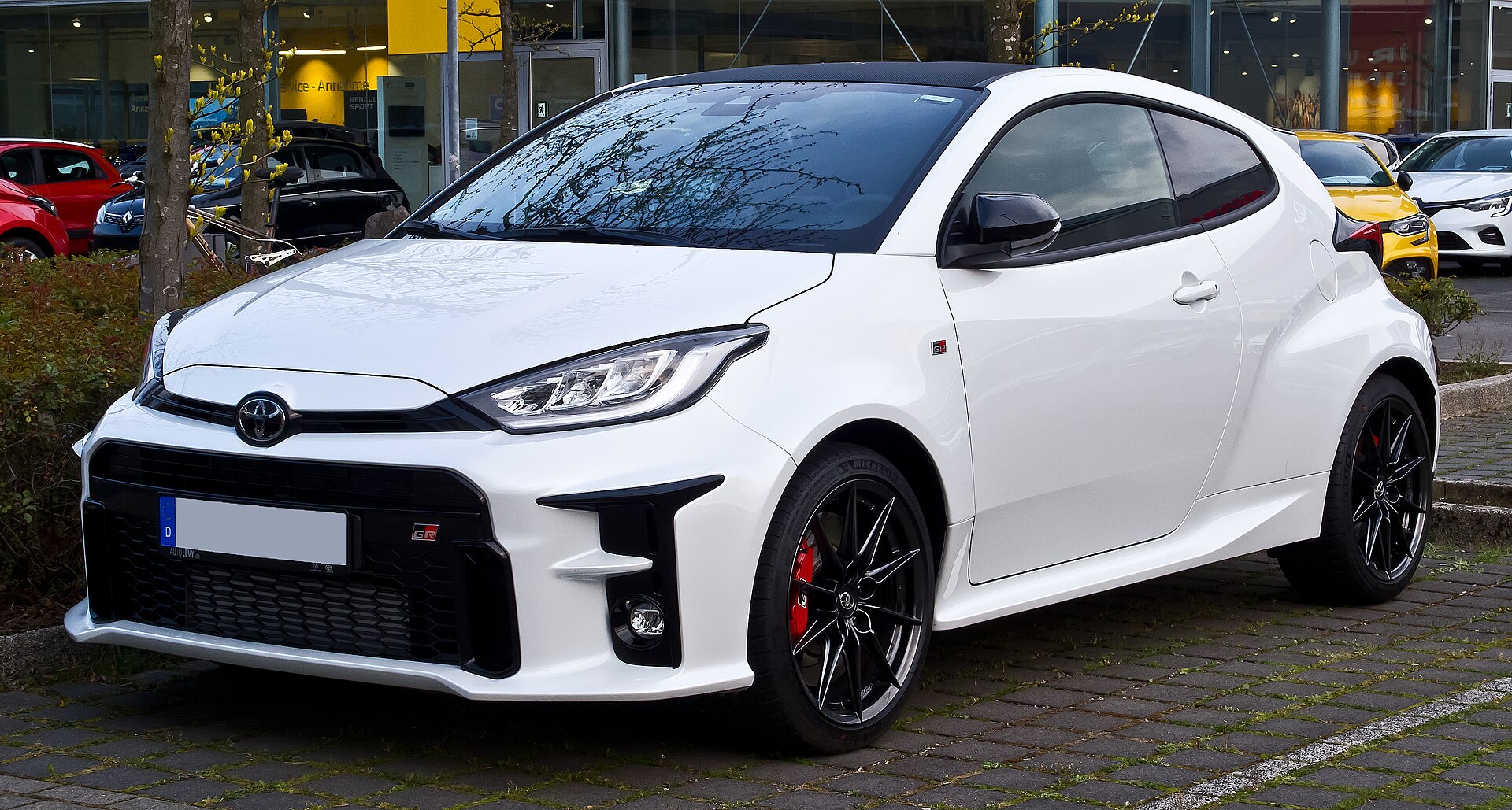
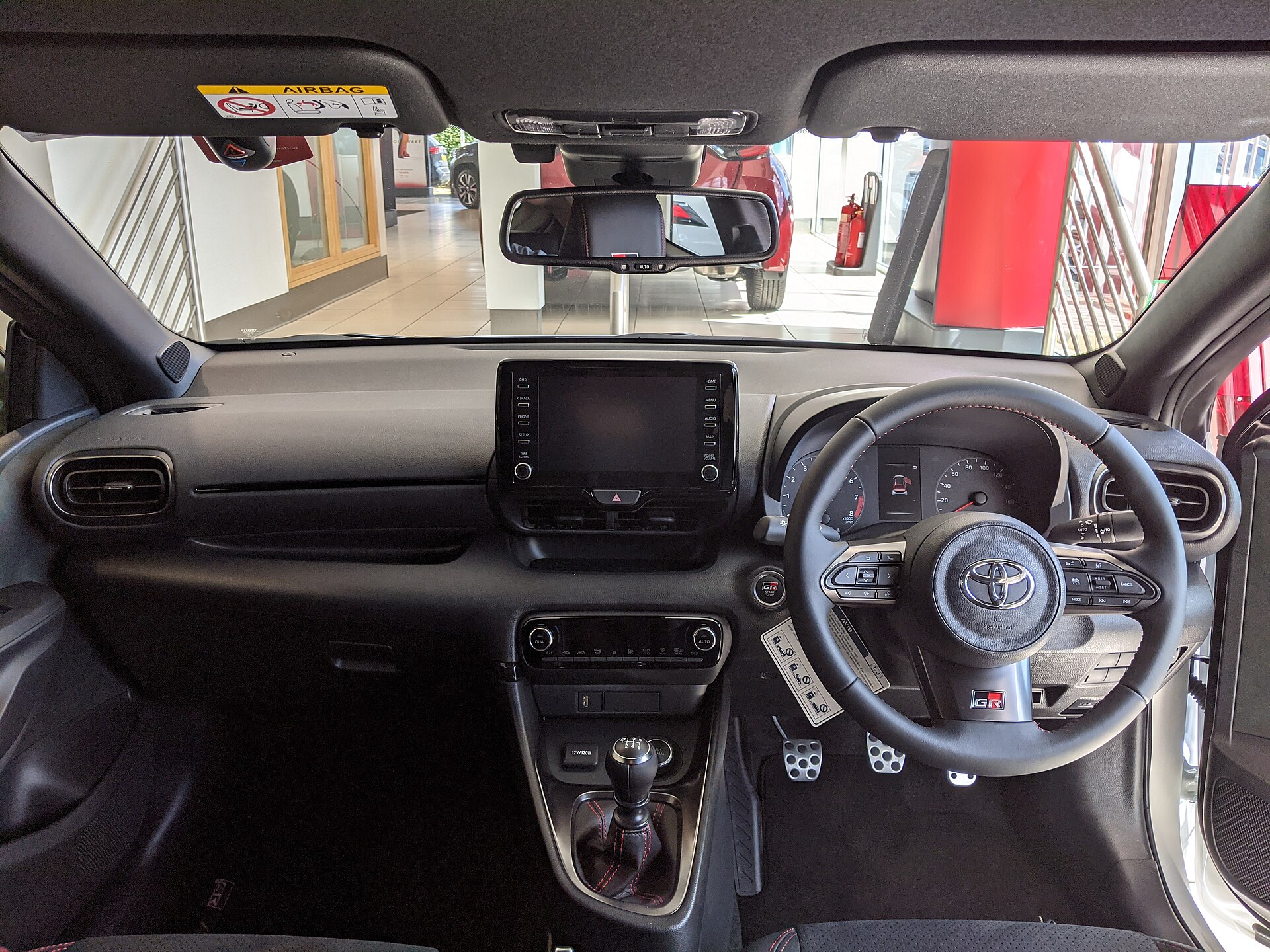
The GR Yaris was developed by Toyota Gazoo Racing as a road car to support Toyota's World Rally Championship programme. It was shown at the Tokyo Auto Salon in January 2020 and has been built since September 2020 on a dedicated line, the GR Factory, at Toyota's Motomachi plant. It has its own three-door body with an aluminium bonnet, doors and tailgate and a carbon-fibre-reinforced plastic roof. Its 1,618 cc three-cylinder turbo G16E-GTS engine produced 192–200 kW (261–272 PS) and 360–370 Nm at launch. The 2024 update raised this to 224 kW (305 PS) and 400 Nm in Japan, and added an eight-speed automatic to the six-speed manual. The GR-Four system drives all four wheels, and the international car weighs about 1,280 kg.


Engines and performance
| Engine | Generation | Power | Torque |
|---|---|---|---|
| 1.0 1SZ-FE I4 | XP10 | 50 kW (68 PS) | - |
| 1.5 1NZ-FE I4 (T Sport) | XP10 | 79 kW (107 PS) | - |
| 1.4 D-4D diesel | XP90 | 66 kW (90 PS) | - |
| 1.8 2ZR-FE (TS) | XP90 | 97 kW (130 hp) | 173 Nm |
| 1.5 hybrid (Yaris Hybrid) | XP130 | 74 kW (100 PS) system | - |
| 1.8 supercharged (GRMN) | XP130 | 156 kW (212 PS) | 250 Nm |
| 1.0 1KR-FE I3 (Europe) | XP210 | 53 kW (72 PS) | 93 Nm |
| 1.5 hybrid (Hybrid 130) | XP210 | 96 kW (131 PS) system | - |
| 1.6 G16E-GTS turbo (GR Yaris) | XP210 | 192–224 kW (261–305 PS) | 360–400 Nm |
Fuel figures depend on the test cycle and market, so they are best compared model by model in our car comparison tool, for example a Yaris Hybrid against a Volkswagen Polo or Renault Clio.
Sales and production
Toyota had sold 8.71 million Yaris worldwide by March 2020. In Europe four million had been sold by August 2020, about 500,000 of them hybrids, and Onnaing built its 2.5-millionth Yaris in April 2014. In Germany alone 614,867 new Yaris were registered between 1999 and the end of 2024; the best year was 2009, with 42,638 cars, helped by the government scrappage bonus.
Photo gallery


Toyota Yaris in our rankings
In production longer than 39% of ranked nameplates in the 1CARS catalog (No. 607 of 1082).
Toyota Yaris photos 6
FAQ
How many generations of the Toyota Yaris are there?
Four in Europe: XP10 (1999–2005), XP90 (2005–2011), XP130 (2011–2020) and XP210 (since 2020). Other markets also had Yaris-badged sedans built on different platforms.
Is the Toyota Yaris available as a hybrid or with all-wheel drive?
The Yaris Hybrid has been offered since June 2012, and the fourth generation is mainly sold as a hybrid. All-wheel drive is available in Japan and on the GR Yaris with its GR-Four system.
Where is the Toyota Yaris built?
For Europe at Onnaing in France since 2001 and at Kolín in the Czech Republic since 2021; for Japan at Kanegasaki and other plants. The GR Yaris comes from Toyota's Motomachi plant.
What is the difference between the Yaris and the Vitz?
Vitz was the name used in Japan for the first three generations; the cars were technically the same. Since February 2020 the car is called Yaris in Japan too.
How powerful is the GR Yaris?
At launch 192–200 kW (261–272 PS) depending on market; the 2024 update in Japan reached 224 kW (305 PS) and 400 Nm from the 1.6-litre three-cylinder turbo.
Data sources
Data checked by an editor against the sources below.