 Toyota Avalon
All generations, specs and history
Published Sources (1) Report an error
By Felix Hartmann, Automotive Technology & EV Contributor
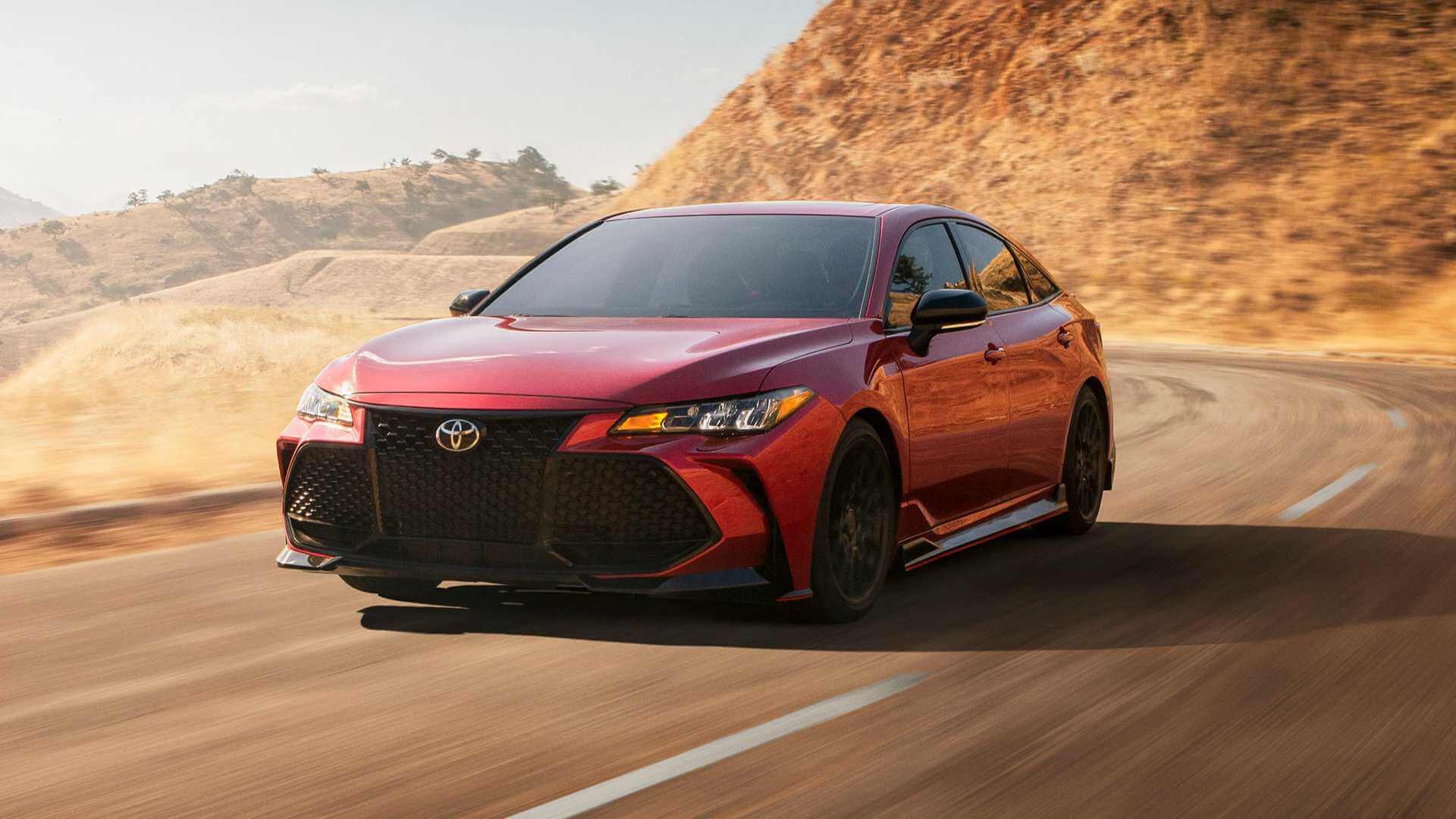
- Built
- 1994–present
- Generations
- 5 · MCX10 to XX50
Timeline
Avalon generations
Click a generation for its own page


- Avalon MCX10 1994–1999 · Sedan
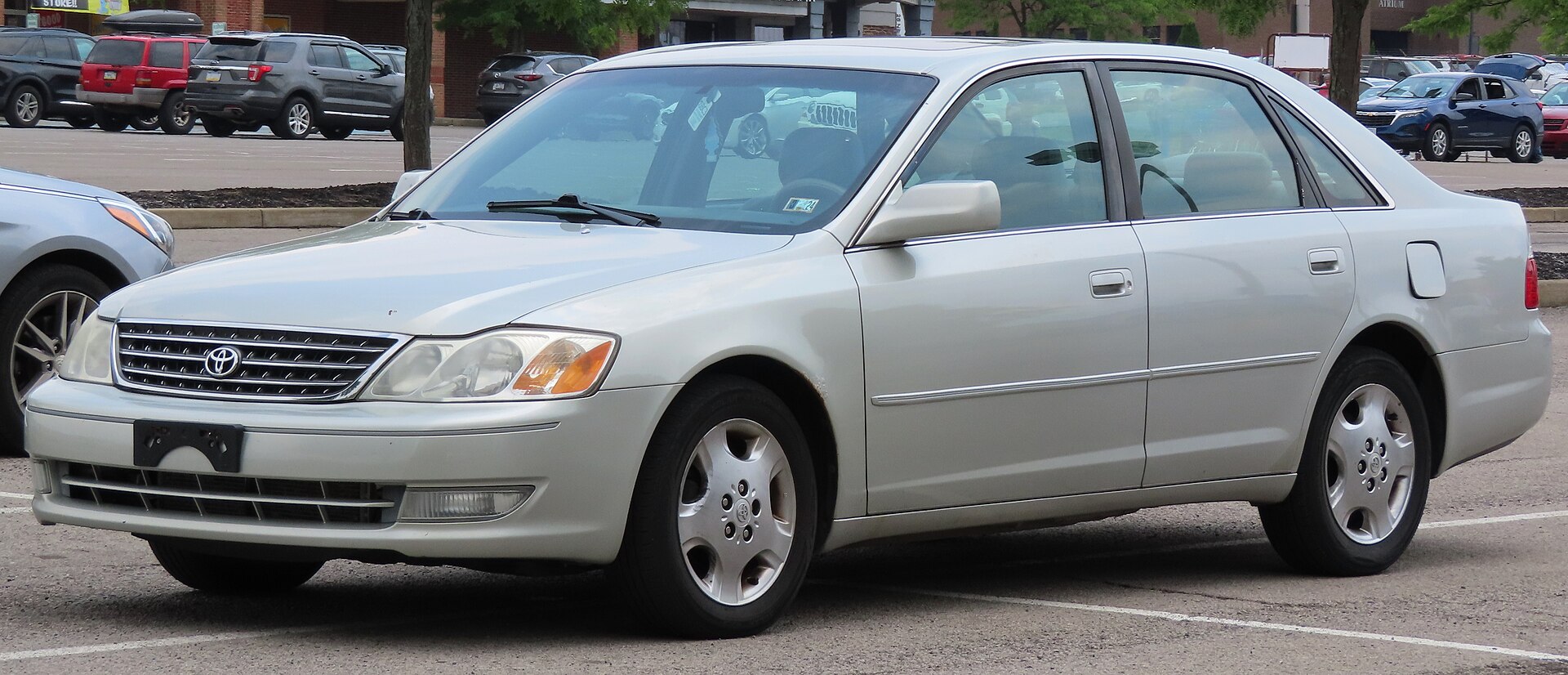
- Avalon MCX20 2000–2004 · Sedan
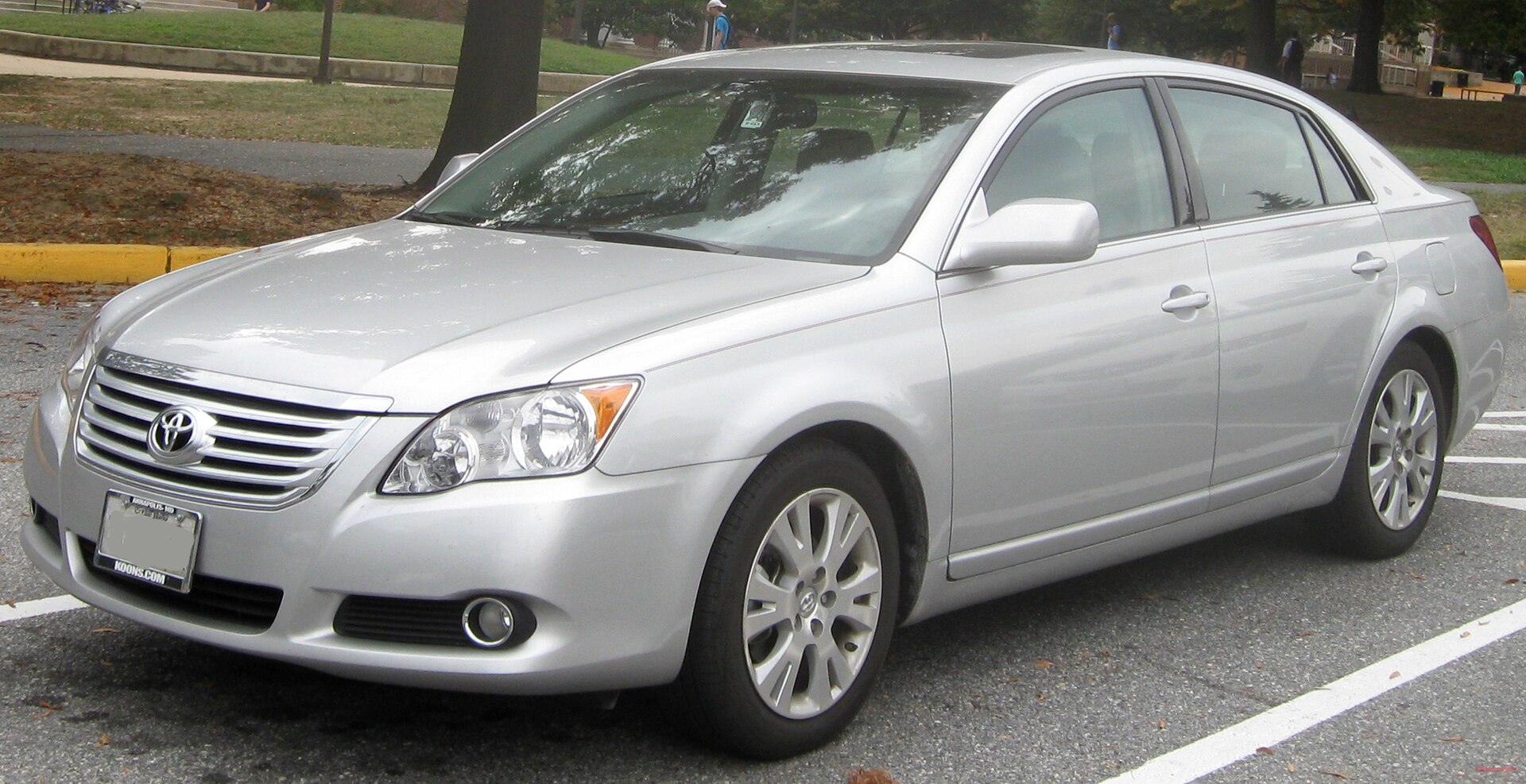
- Avalon GSX30 2005–2012 · Sedan
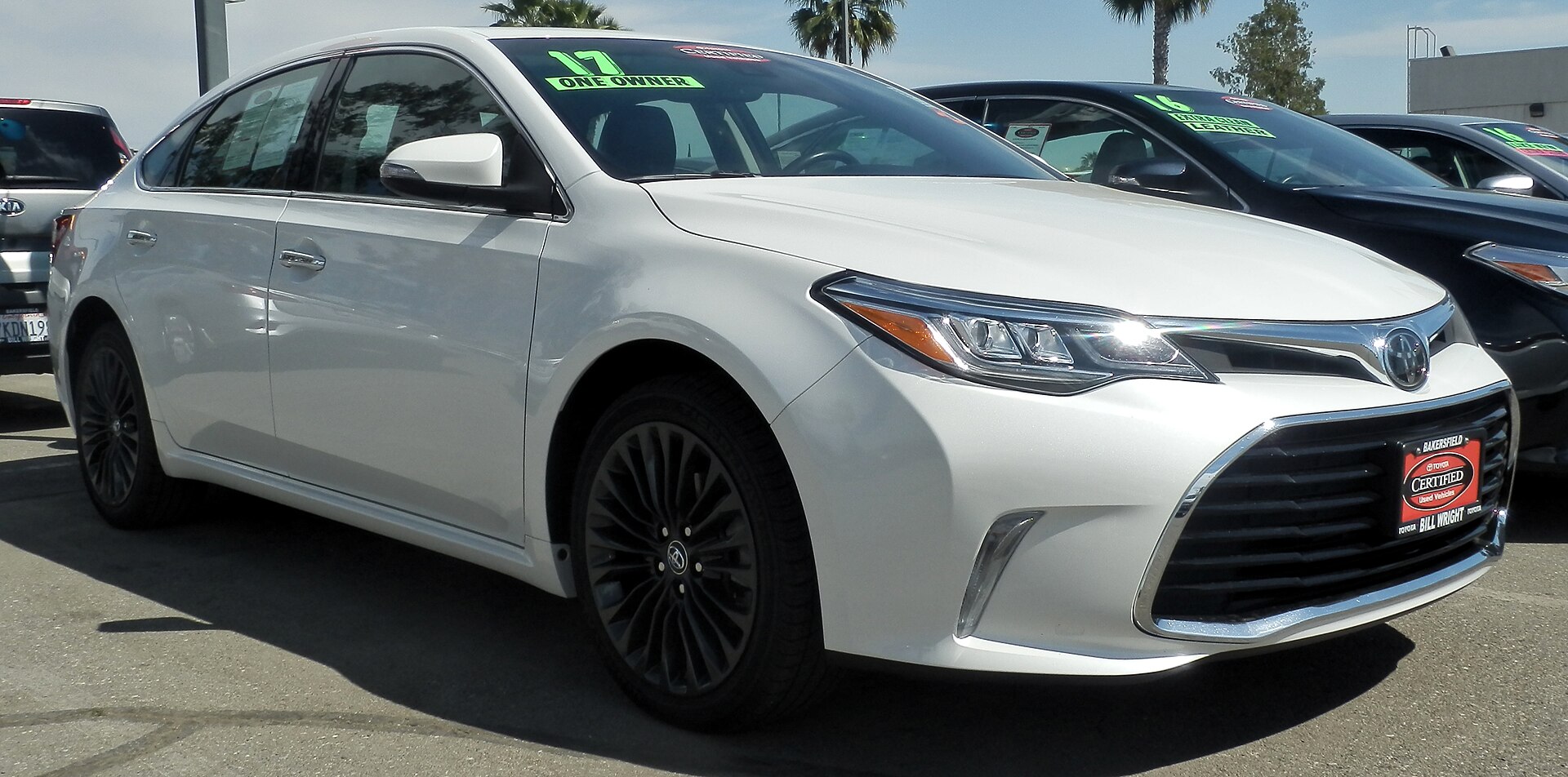
- Avalon XX40 2012–2018 · Sedan
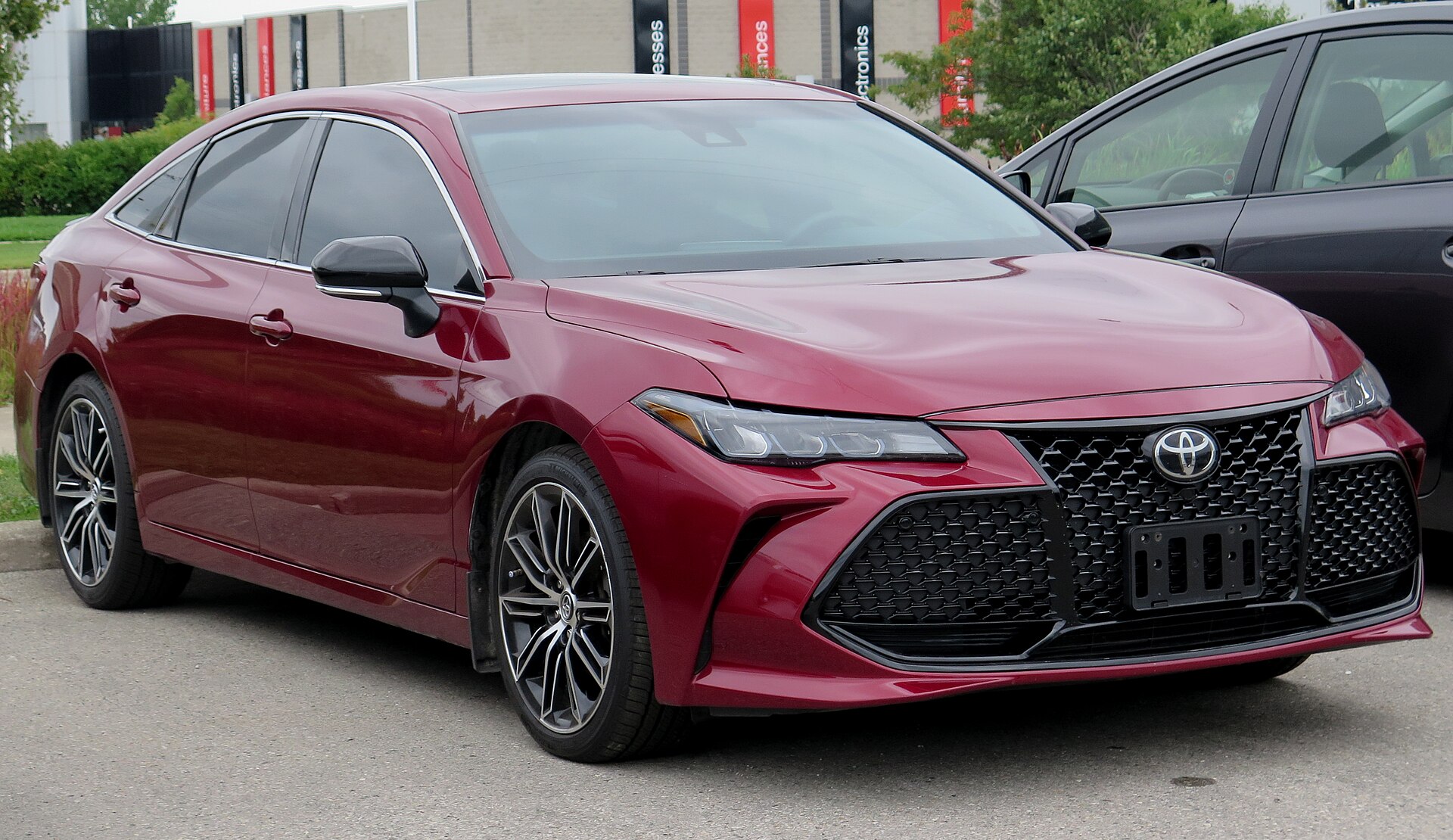
- Avalon XX50 Current 2018–now · Sedan
Newest first · 5 generations since 1994
-
2018
-
2012
-
2005
-
2000
-
1994
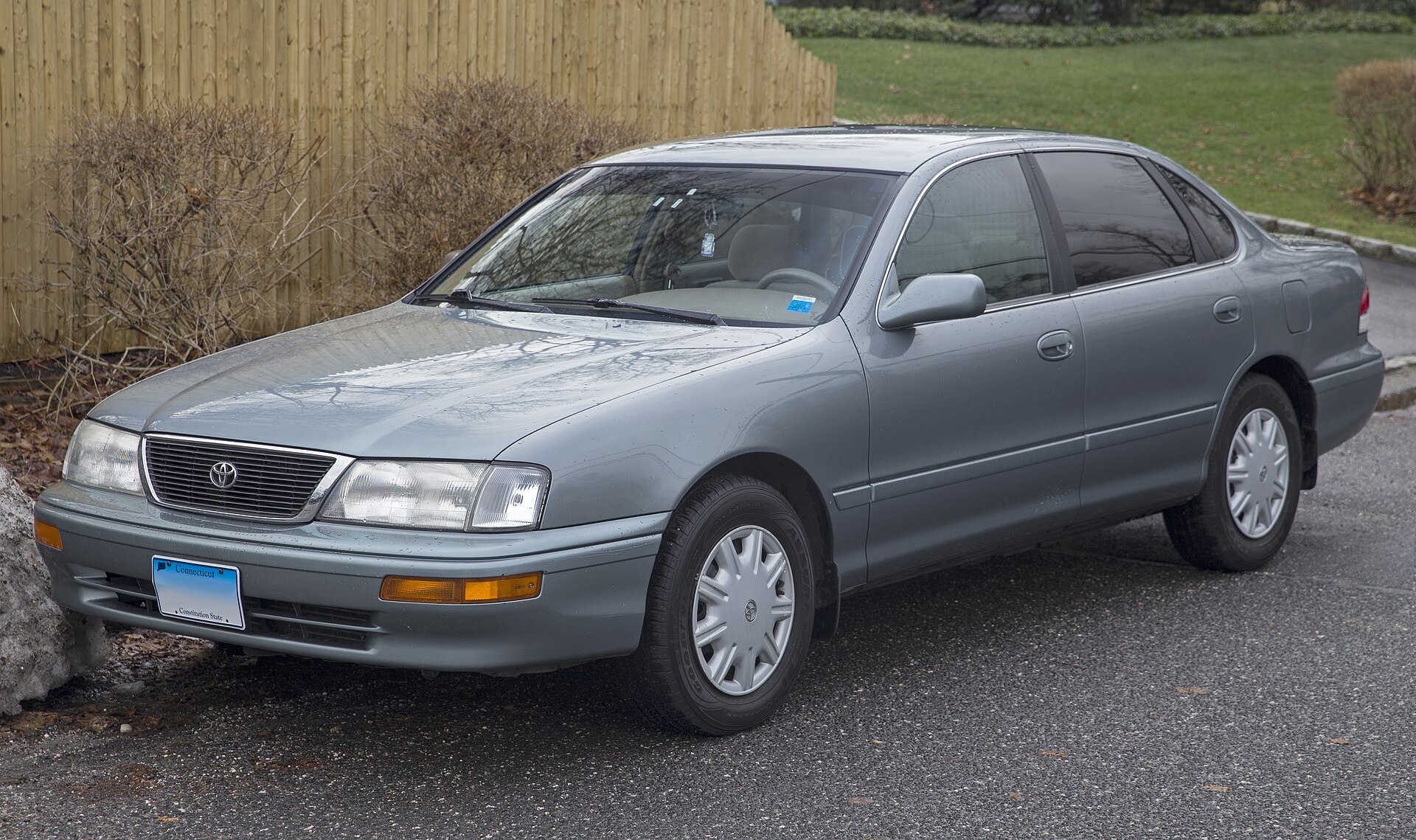
All generations by year: Avalon XX50 (2018–now) · Avalon XX40 (2012–2018) · Avalon GSX30 (2005–2012) · Avalon MCX20 (2000–2004) · Avalon MCX10 (1994–1999)
Which one is mine?
Pick the year of first registration to see which generation it is.
- XX50 2018–present
- XX40 2012–2018
- GSX30 2005–2012
- MCX20 2000–2004
- MCX10 1994–1999
The Toyota Avalon is a front-wheel-drive full-size sedan - an E-segment car by European standards - and for decades it was the flagship of Toyota's passenger-car range in North America. The model was first shown at the Chicago motor show in February 1994 as the replacement for the rear-wheel-drive Toyota Cressida. Its name comes from Avalon, the legendary island of Arthurian myth where King Arthur was taken after his last battle.
In short
- Five generations since 1994; the fifth (GSX50) debuted at the Detroit motor show in January 2018.
- The fifth generation uses the TNGA platform and was offered with a 224 kW (305 PS) 3.5 V6 or a 160 kW (218 PS) 2.5 hybrid.
- US production in Kentucky ended after the 2022 model year; the Avalon continues to be built in China by FAW Toyota.
- Ten airbags, adaptive LED lights and the Toyota Safety Sense package are standard.
Toyota Avalon at a glance
The Avalon was built for decades at Toyota's plant in Georgetown, Kentucky. The first generation was sold from the 1995 model year, followed by new generations in 1999, 2004 and late 2012. The fifth and latest generation was unveiled at the North American International Auto Show in Detroit in January 2018, bringing an imposing exterior, a distinctive and pleasant interior, a new platform, a hybrid version and an extended list of technology. Toyota added a sporty TRD version for the 2020 model year and all-wheel drive for 2021, then announced in 2021 that US production would end after the 2022 model year. The fifth generation lives on in China, where it is built by FAW Toyota. More models are in our Toyota catalogue; the related Toyota Camry shares its platform.
Generations
| Generation | US model years | Notes |
|---|---|---|
| First | 1995–1999 | Shown in Chicago in February 1994; replaced the Cressida |
| Second | 2000–2004 | - |
| Third | 2005–2012 | V6 with five- and later six-speed automatics |
| Fourth (GSX40) | 2013–2018 | First Avalon Hybrid |
| Fifth (GSX50) | 2019–2022 (US), continuing in China | TNGA platform, TRD and AWD versions |
Exterior of the fifth generation
The fifth Avalon looks completely different from its predecessor. The front clearly echoes the latest Lexus models, with an enormous open grille that is narrower at the top and spreads across almost the entire lower front. Depending on the version, it has horizontal slats or a black mesh. The badge at the top is outlined in blue on hybrid versions, and below it are a compact camera and parking sensors, with radar sensors for the safety systems lower down.
The adaptive LED headlights each have two LED modules and an LED daytime running-light strip, with LED fog lights placed unusually below the headlights and an amber LED indicator in the corner. Aerodynamic "fangs" at the bumper corners, a chrome grille surround and a reshaped bonnet with a wide chrome strip and two curved creases give the car a more expensive and attractive look. The windscreen is heated across its whole area, and the wipers are hidden under the bonnet edge to help aerodynamics.
In profile, crisp and flowing lines are combined, the wheel arches are flattened, and chrome mouldings are available on the lower doors. The large door-mounted mirrors are gloss black below and body-coloured above; even the base version has heating, electric adjustment, power folding, indicator repeaters and memory, and they can also carry surround-view cameras and blind-spot sensors. The steeply raked rear window and roofline make the sedan look almost like a liftback. Wheels range from 17 inches as standard to 18 or 19 inches, and ground clearance is 135 mm. Badges on the front wings identify hybrid, sporty and standard versions.
At the rear, a light strip runs between the dynamic LED tail lights, with large chrome lettering spelling out the name. The boot lid resembles that of the latest Camry, and some versions have a slim or wide spoiler in body colour or gloss black. The sporty rear bumper has a black diffuser, LED fog lights in gloss-black surrounds and two or four chrome exhaust tips.
Interior and practicality
The cabin uses high-quality materials, though the single, understated colour scheme and modest chrome make this less obvious; leather or Alcantara add interest. Active noise cancellation is fitted. The driver has a three-spoke leather steering wheel with many controls for phone, audio and cruise control, round analogue dials with variable-colour illumination and a 7-inch trip-computer screen between them, plus a large 10-inch head-up display.
The seats are stylish and comfortable over long distances, with heating, ventilation and many electric adjustments, and the front ones have good lateral support. A 14-speaker JBL audio system is optional. The centre stack is dominated by a 9-inch Entune 3.0 touchscreen with Apple CarPlay - the Avalon was among the first Toyotas to offer it - and Amazon Alexa voice control, with the climate controls below.
A large tunnel rises from the dashboard with a tray for mobile devices, a compact gear selector, cupholders, the parking-brake switch and a drive-mode controller, followed by a two-level armrest with USB ports, a 12-volt socket and a household-style power outlet. There is plenty of room front and rear, three passengers fit easily in the back, and rear passengers have their own climate controls. The boot holds 456 litres and can be extended by folding the rear seat.
Engines and transmissions (fifth generation)
| Version | Engine | Power (kW / PS) | Torque | Gearbox |
|---|---|---|---|---|
| Avalon V6 | 3.5 2GR-FKS V6 | 224 kW / 305 PS | 362 Nm | 8-speed automatic |
| Avalon Hybrid | 2.5 four-cylinder + electric motor (THS II) | 160 kW / 218 PS combined | - | CVT |
| China only | 2.0 M20A-FKS four-cylinder | 130 kW / 177 PS | - | - |
The 3.5-litre naturally aspirated V6 has 24 valves and dual variable valve timing, and uses about 11 l/100 km in town. The hybrid combines a 2.5-litre direct-injection four-cylinder with an electric motor running at up to 650 volts and a nickel-metal hydride traction battery; its claimed combined consumption is about 6 l/100 km. Drive modes are Eco, Normal and Sport. All US versions were front-wheel drive until all-wheel drive arrived for the 2021 model year.
Chassis
The Avalon uses the TNGA front-wheel-drive modular platform, with a transverse engine, extensive use of high-strength steel, a stiffer body and a lower centre of gravity, all of which benefit handling and stability. Suspension is independent, with MacPherson struts at the front, a multi-link rear and anti-roll bars at both ends. Adaptive dampers with solenoid valves are available. The sporty Avalon TRD uses the same platform with new springs and dampers and stiffer anti-roll bars. Steering is rack-and-pinion with variable electric assistance, and all four brakes are discs, ventilated at the front, with ABS, EBD and other aids.
Safety and equipment
The Avalon uses proven rather than experimental systems. Equipment includes ten airbags, including a front centre airbag, a surround-view camera, adaptive cruise control, blind-spot monitoring, lane-keeping and lane-departure assistance, automatic emergency braking with pedestrian detection, traffic-sign recognition, parking sensors and a parking assistant, light and rain sensors, remote functions and an immobiliser. Depending on the market, base versions have ten airbags, the 9-inch infotainment system, a reversing camera, dual-zone climate control, heated and electrically adjustable front seats, LED headlights, an eight-speaker audio system and the Toyota Safety Sense P package.
Strengths and weaknesses
Owners of earlier Avalons praise the pleasant styling, high reliability, comfort, smooth engine, reasonable consumption and spacious cabin; the car rides softly yet is lively enough, and equipment is generous. Some complain about low ground clearance and body issues, and some find the interiors of German rivals more interesting. The fifth generation is more modern and better equipped, but its partly analogue instruments look a little dated. In North America its rivals were the Nissan Maxima, Chrysler 300, Kia Cadenza and Hyundai Azera, with the related Lexus ES above it.
Toyota Avalon evolution in numbers
Did you know?
- The Toyota Avalon has been around for 32 years: 5 generations in our catalog since 1994.
- The longest-running generation is the Avalon XX50 (2018–present): 8 years and counting.
Image credits · Photos from Wikimedia Commons under free licences
- Toyota Avalon MCX10 · Photo: Mr.choppers / Wikimedia Commons, CC BY-SA 3.0
- Toyota Avalon MCX20 · Photo: MercurySable99 / Wikimedia Commons, CC BY-SA 4.0
- Toyota Avalon GSX30 · Photo: IFCAR / Wikimedia Commons, Public domain
- Toyota Avalon XX40 · Photo: Alexander Migl / Wikimedia Commons, CC BY-SA 4.0
- Toyota Avalon XX50 · Photo: Elise240SX / Wikimedia Commons, CC BY-SA 4.0
Toyota Avalon in our rankings
- No. 58 of 912 · Longest-running car nameplates (32 years · top 7%)
- No. 46 of 305 · Oldest car models still on sale (32 years · top 16%)
- No. 73 of 345 · Cars with the most generations (5 generations · top 25%)
In production longer than 93% of ranked nameplates in the 1CARS catalog (No. 58 of 912).
FAQ
How many generations of the Toyota Avalon are there?
Five. The first was shown in February 1994 and the fifth debuted in Detroit in January 2018.
Is the Toyota Avalon still made?
US production ended after the 2022 model year. The fifth generation continues to be built in China by FAW Toyota.
What engines does the fifth-generation Avalon have?
A 3.5-litre V6 with 224 kW (305 PS) and 362 Nm, and a 2.5-litre hybrid with 160 kW (218 PS) combined; a 2.0-litre engine is offered in China.
How big is the Toyota Avalon boot?
The fifth generation's boot holds 456 litres, and the rear seat folds for longer items.
Where does the name Avalon come from?
From the mythical island of Avalon in the legends of King Arthur.
Data sources
Data checked by an editor against the sources below.