 Toyota Alphard
All generations, specs and history
Published Sources (1) Report an error
By Felix Hartmann, Automotive Technology & EV Contributor
- Built
- 2002–present
- Generations
- 4
Timeline
Alphard generations
Click a generation for its own page


- Alphard I 2002–2008 · Minivan / MPV
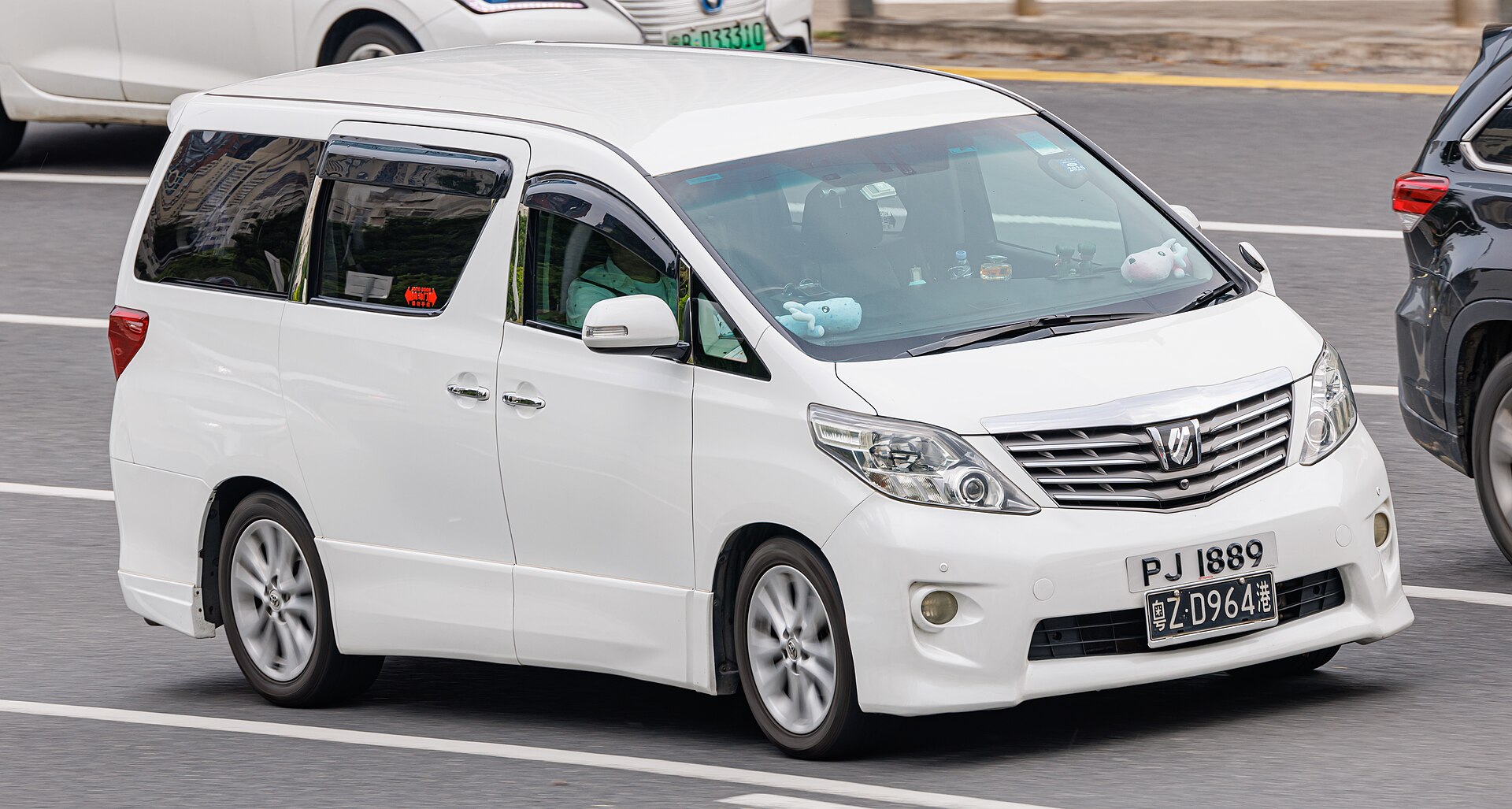
- Alphard AH20 2008–2015 · Minivan / MPV
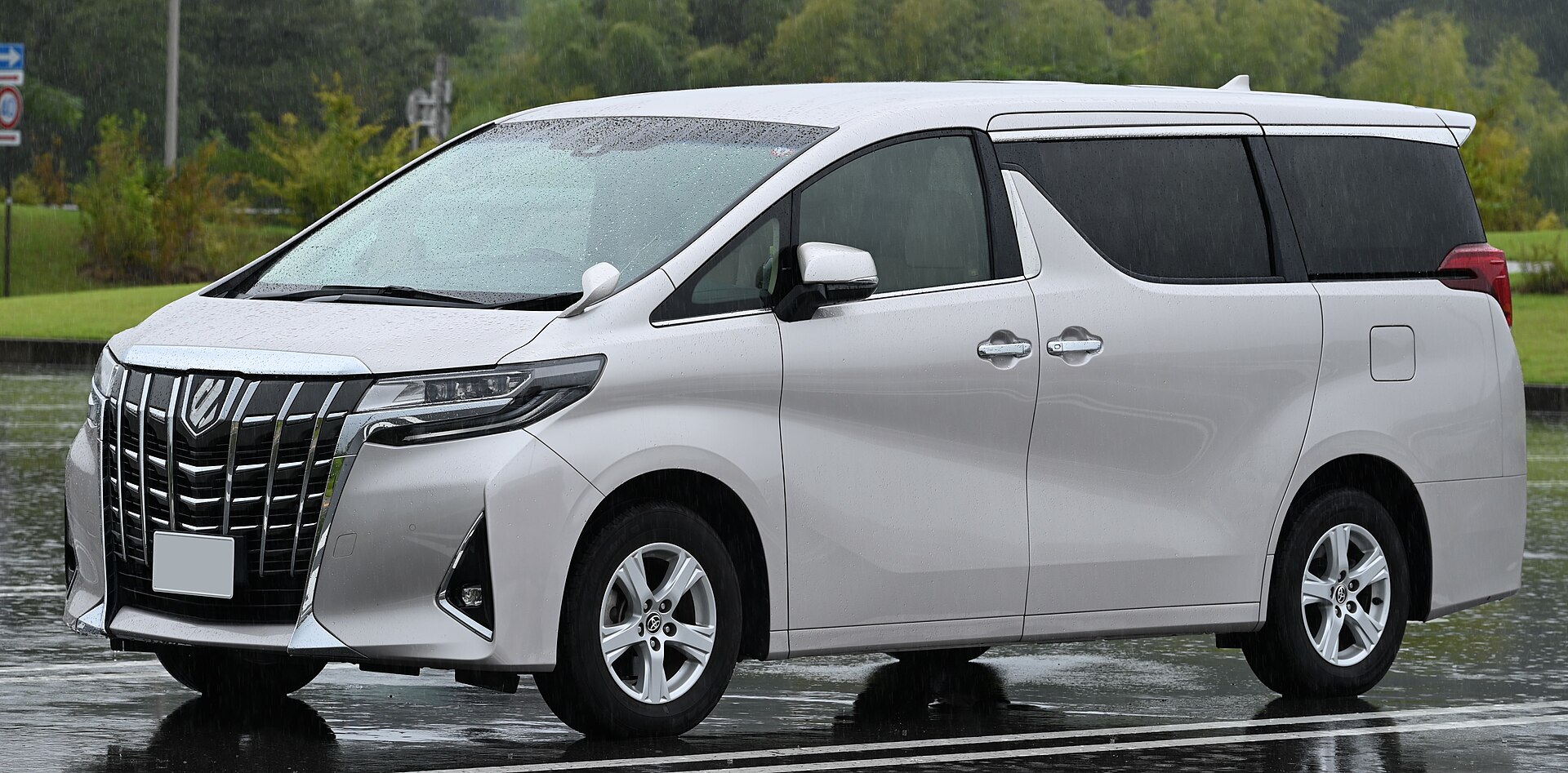
- Alphard AH30 2015–2022 · Minivan / MPV
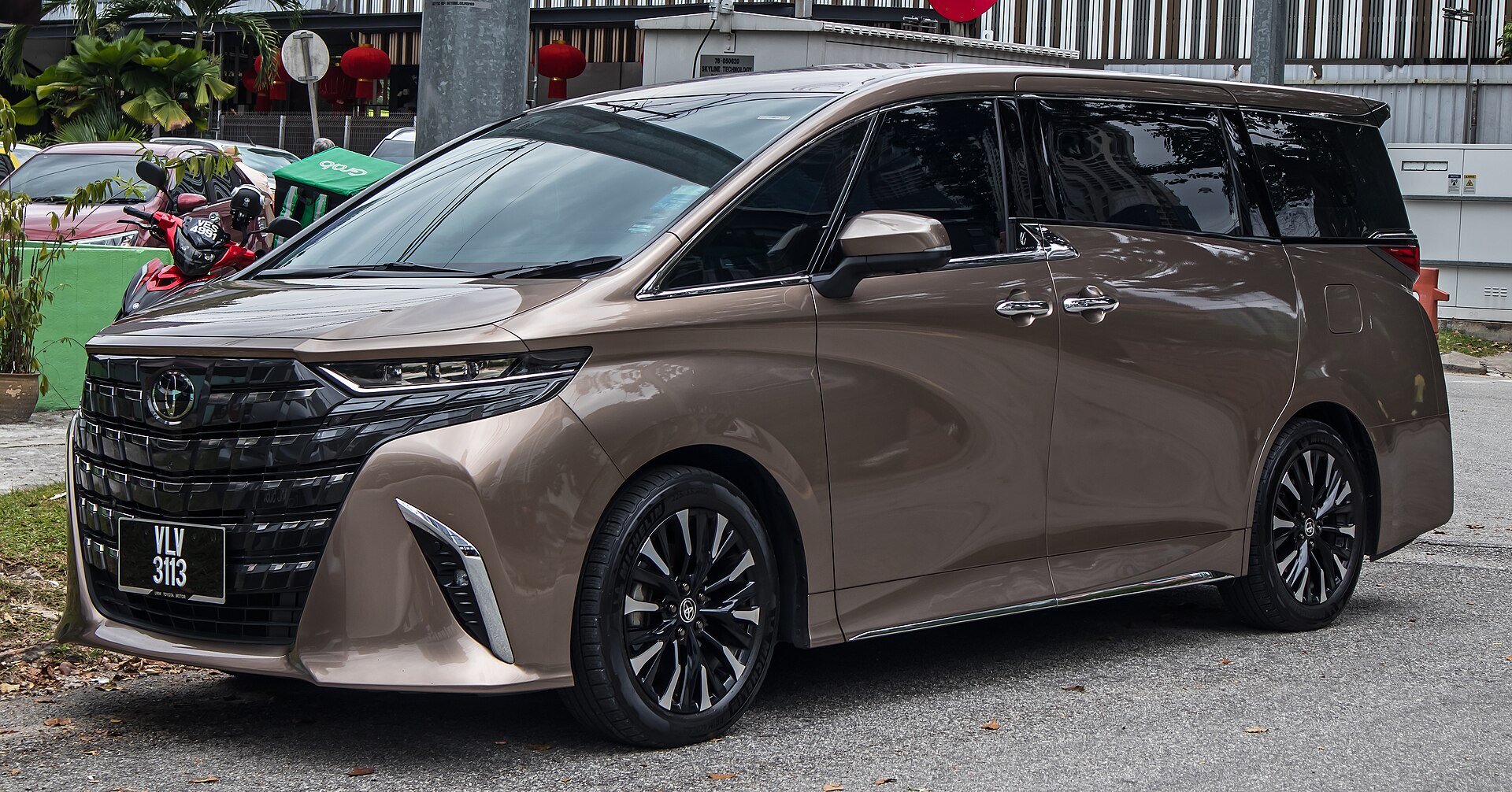
- Alphard AH40 Current 2023–now · Minivan / MPV
Newest first · 4 generations since 2002
-
2023
-
2015
-
2008
-
2002
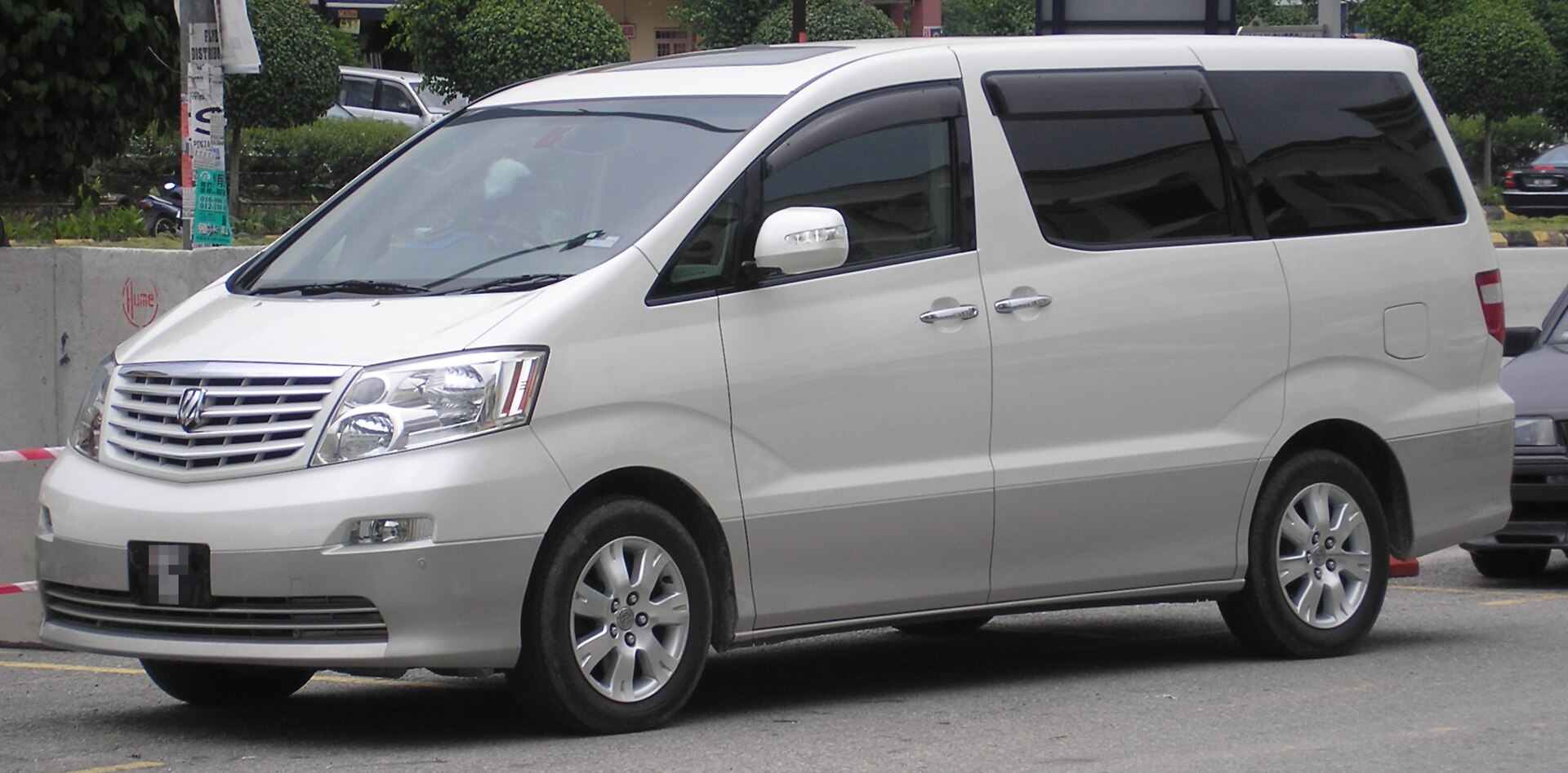
All generations by year: Alphard AH40 (2023–now) · Alphard AH30 (2015–2022) · Alphard AH20 (2008–2015) · Alphard I (2002–2008)
Which one is mine?
Pick the year of first registration to see which generation it is.
Check by VINThe Toyota Alphard is a five-door luxury minivan built by Toyota Motor Corporation since 2002. This article covers the first three generations; a fourth was revealed in June 2023. It takes its name from Alphard, the brightest star in the constellation Hydra. Although it was developed mainly for the Japanese market, it is also sold in several other countries, particularly in Asia, and many cars reach buyers through Japanese auctions. With its unconventional design, lavish and practical cabin and modern technology, it targets well-off families and companies that need executive transport.
In short
- Generations covered: 2002, 2008 and 2015 (facelifted in December 2017); the fourth arrived in June 2023.
- It replaced the MasterAce and competes with the Honda Elysion and Nissan Elgrand.
- Engines range from a 2.4-litre four-cylinder to a 3.5-litre V6 with 221 kW (300 PS); hybrids have been offered since 2005.
- The second row of the latest generation has two business-class seats with massage, leg rests, tables, heating and ventilation.
Toyota Alphard at a glance
The Alphard is a front-wheel-drive-based minivan with powered sliding side doors and, depending on version, all-wheel drive. Seating is for six or seven, with numerous ways to configure the cabin. Other Toyota models are in our Toyota catalogue, and the company's story is told in Toyota history: from weaving machines to cars.
Toyota Alphard generations
First generation (2002–2008)
The first Alphard, based on the second-generation Toyota Estima platform, was updated in 2005, when a hybrid version also appeared. Its styling followed the Japanese minivans of its time, with large headlights and a substantial chrome grille. The sliding side doors had power operation and soft-close, and it was the first Toyota with a power tailgate. Ground clearance is 168 mm.
The cabin was richly equipped for its time, with leather and Alcantara trim and wide possibilities for rearranging the seats. Equipment included individual reading lights, sun blinds, two sunroofs, climate control, a nine-speaker audio system, navigation, a rear entertainment system (with a 9-inch screen from 2003), a rear camera and full-length curtain airbags.
Three engines were offered: a 2.4-litre four-cylinder with 118 kW (160 PS) and 221 Nm and a four-speed automatic; a 3.0-litre V6 with 162 kW (220 PS) and 304 Nm, paired with a five-speed automatic and available with all-wheel drive; and a hybrid combining a 2.4-litre petrol engine (96 kW / 130 PS, 190 Nm) with two electric motors — one for the front wheels and one for the rear — and a CVT. The suspension used MacPherson struts at the front and a torsion beam at the rear; brakes were discs all round, and steering had hydraulic assistance.
Second generation (2008–2015)
The second Alphard, updated in 2011, has a distinctive, imposing look with large swept-back headlights, a prominent chrome grille, a short bonnet and large tail lights. Ground clearance is 168 mm, kerb weight 2,105 kg and gross weight 2,570 kg.
The cabin is restrained, without traditional Asian motifs, and the build quality is genuinely premium: Japanese panel fit, thoughtful ergonomics, soft plastics, wood-effect inserts and leather. A 7-inch screen sits in the centre of the dashboard. The front seats are soft and widely adjustable; the second row has two separate VIP seats with leg rests, armrests and reclining backrests, while the third row is tighter and harder to reach. With all seats in use there is little luggage space; folding the third row gives 452 litres, and folding the second row as well gives about 1,900 litres, although intrusions on each side break up the floor. Both left- and right-hand-drive versions were built.
| Engine (2nd generation) | Power (kW / PS) | Torque | Gearbox | Drive |
|---|---|---|---|---|
| 3.5 V6, 24 valves, variable valve timing | 202 kW / 275 PS | 340 Nm | 6-speed automatic | Front |
| 2.4 four-cylinder, DOHC 16 valves | 123 kW / 167 PS | 224 Nm | 4-speed automatic | Front or automatic AWD |
The V6 reaches 100 km/h in 8.3 seconds and a top speed of 200 km/h, using 10.9 l/100 km combined (14.7 urban, 8.7 extra-urban). The body uses a high proportion of high-strength steel; suspension is MacPherson at the front and a torsion beam at the rear, with anti-roll bars at both ends, disc brakes all round (ventilated at the front) and hydraulically assisted rack-and-pinion steering. Standard equipment included front and side airbags, ESP, ABS, three-zone climate control, parking assistance, an entertainment system, a rear camera, a power tailgate, push-button start, heated electric front seats, bi-xenon headlights and premium audio.
Third generation (2015–2023)
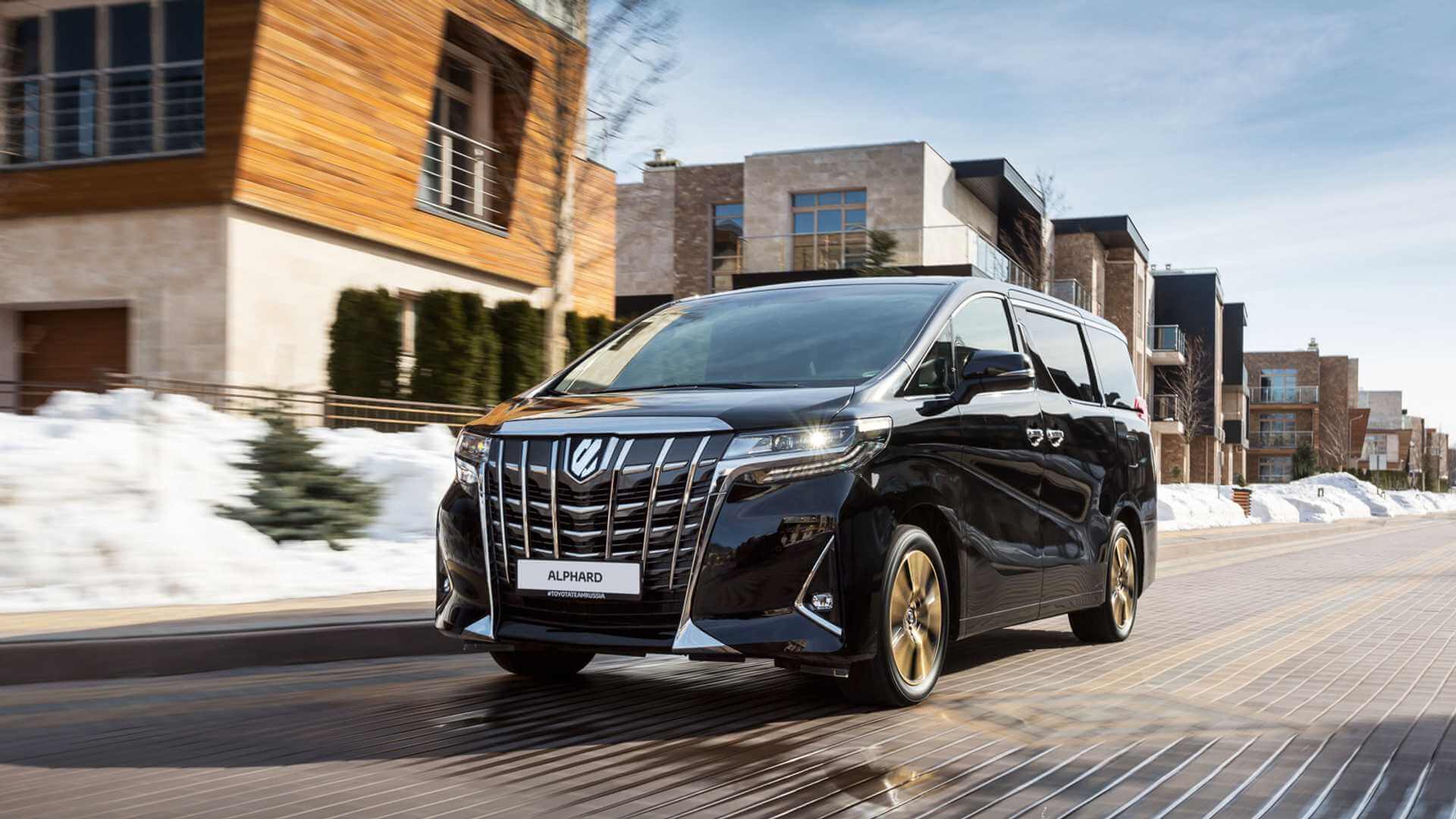
The third Alphard was revealed at the end of January 2015 and facelifted in December 2017; the updated car went on sale in Japan in January 2018 with new trim options and a new petrol engine. Its design is unlike any other family vehicle. A huge gloss-black grille with vertical chrome bars fills the full height of the bumper, flanked by narrow LED headlights with a chrome divider and two LED daytime-running-light strips, and LED fog lamps with L-shaped surrounds. The windscreen can be partly or fully heated.
The sides have four windows each for excellent visibility. The mirrors are heated, electrically adjustable and folding, with LED indicators, and they tilt down automatically when reversing to show the area near the wheels. The sliding doors open and close by themselves with a pull on the handle or from the key, although the door openings are narrow. Ground clearance is 160 mm. The large tailgate opens from a cabin button, the key fob or hands-free, and LED tail lights wrap around onto the body.
Inside there is leather upholstery, wood-effect trim and a 9-inch touchscreen. The three-zone climate control includes Nanoe air ionisation, and there are USB and 12-volt sockets and wireless charging. A 4.2-inch display sits between analogue dials. A digital rear-view mirror shows the rear camera image, though owners say it is not always convenient and the camera lens must be kept clean. The front seats have six-way electric adjustment. The second row has two business-class seats with massage, leg rests, fold-out tables, electric adjustment and zoned heating and cooling, plus a 9-inch Blu-ray entertainment system. The third row is meant for three but suits two; it folds 60/40, and there are nine possible seating configurations in total. With the third row folded, luggage space is about 1,900 litres.
Engines and transmissions (third generation)
| Engine | Power (kW / PS) | Torque | Gearbox | Drive |
|---|---|---|---|---|
| 3.5 V6 2GR-FKS, direct injection, dual variable valve timing | 221 kW / 300 PS | 361 Nm | 8-speed automatic | Front |
| 2.5 four-cylinder 2AR-FE | 134 kW / 182 PS | 235 Nm | CVT | Front or 4x4 |
| 2.5 hybrid (Atkinson cycle) | 145 kW / 197 PS system | 206 Nm (petrol engine) | CVT | All-wheel drive |
The V6 uses about 9.4 l/100 km combined and tops out at 200 km/h. In the hybrid, the 2.5-litre Atkinson-cycle engine (112 kW / 152 PS) works with a front electric motor of 105 kW (143 PS) and 270 Nm and a second, 50 kW (68 PS) motor with 139 Nm that drives the rear wheels; a nickel-metal-hydride battery stores the energy. Suspension is independent, with MacPherson struts at the front and a multi-link rear; steering has electromechanical assistance.
Safety
The third-generation Alphard offers ABS, EBD, brake assist, traction and stability control and hill-start assist; front and side airbags, curtain airbags for all three rows and a driver's knee airbag; remote central locking, start/stop, an electric parking brake, smart-key entry, rain and light sensors, a parking assistant, blind-spot monitoring, front and rear parking sensors, cruise control, sun blinds, colour-selectable LED ceiling lighting and a rear camera. Higher trims add premium leather, 18-inch alloy wheels and ventilated second-row seats.
Key specifications by generation
| Parameter | 1st | 2nd | 3rd |
|---|---|---|---|
| Years | 2002–2008 | 2008–2015 | 2015–2023 |
| Most powerful engine | 3.0 V6, 162 kW / 220 PS | 3.5 V6, 202 kW / 275 PS | 3.5 V6, 221 kW / 300 PS |
| Hybrid | from 2005 | — | 145 kW / 197 PS |
| Ground clearance | 168 mm | 168 mm | 160 mm |
| Max luggage | — | about 1,900 l | about 1,900 l |
Strengths and weaknesses
Owners describe the Alphard as well built and reliable, suitable for families and for corporate use. They praise its looks, strong engines, spacious cabin, good performance and materials that rival European premium brands, as well as a soft suspension that makes long journeys pleasant and a high level of safety and driver assistance. The drawbacks are modest ground clearance and a high price. Rivals include the Volkswagen Multivan, Kia Carnival, Mitsubishi Delica D:5, Mercedes-Benz V-Class and Nissan Elgrand.
Image credits · Photos from Wikimedia Commons under free licences
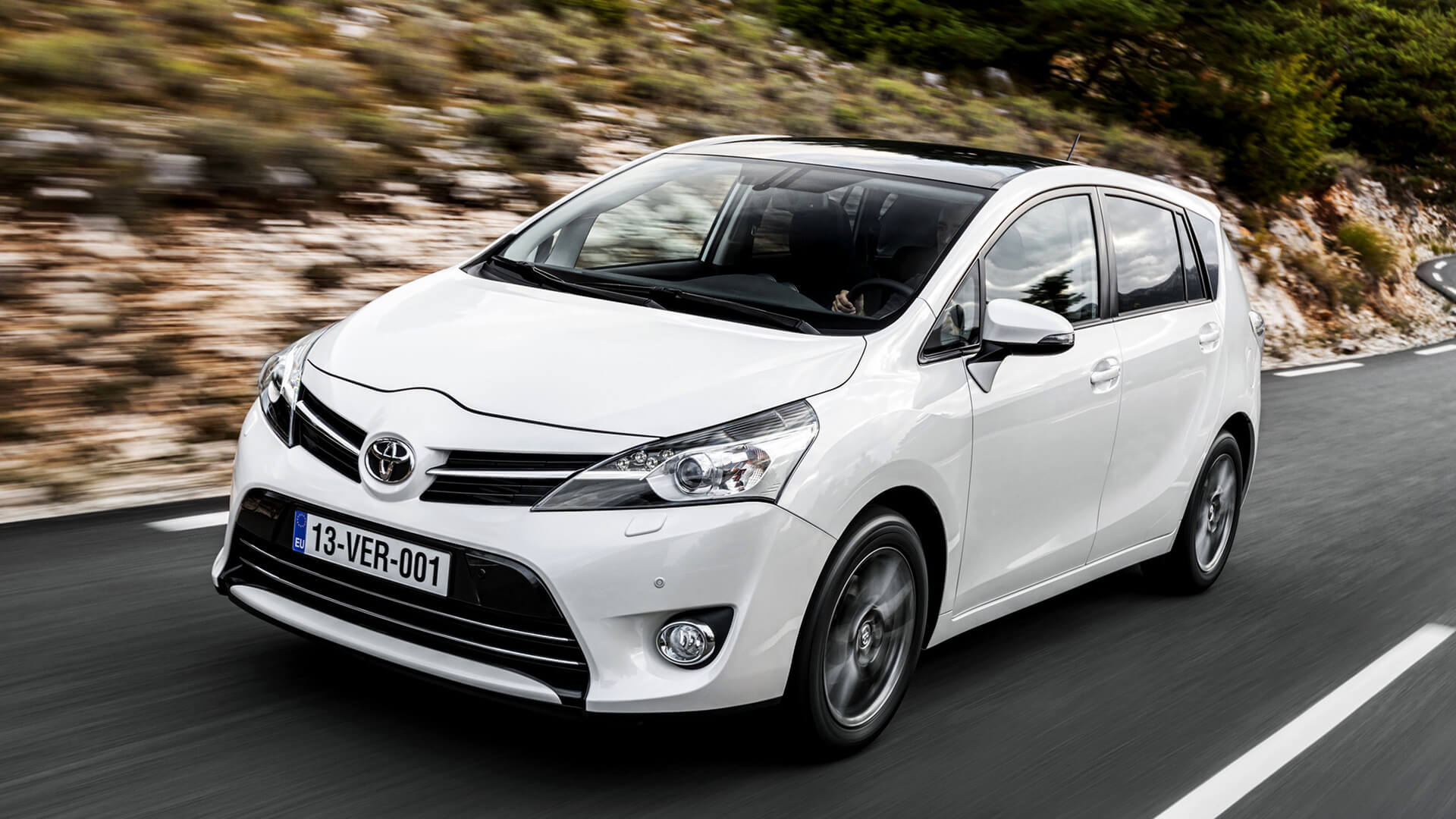
- Toyota Alphard I · Photo: User:Two hundred percent / Wikimedia Commons, CC BY-SA 3.0
- Toyota Alphard AH20 · Photo: Dinkun Chen / Wikimedia Commons, CC BY-SA 4.0
- Toyota Alphard AH30 · Photo: TTTNIS / Wikimedia Commons, CC0
- Toyota Alphard AH40 · Photo: © M 93 / Wikimedia Commons, CC BY-SA 3.0 de
Toyota Alphard in our rankings
- No. 124 of 912 · Longest-running car nameplates (24 years · top 14%)
- No. 84 of 305 · Oldest car models still on sale (24 years · top 28%)
- No. 130 of 345 · Cars with the most generations (4 generations · top 41%)
In production longer than 86% of ranked nameplates in the 1CARS catalog (No. 124 of 912).
FAQ
Where does the name Alphard come from?
From Alphard, the brightest star in the constellation Hydra.
How many generations of the Toyota Alphard are there?
Four: 2002, 2008, 2015 (facelifted in December 2017) and 2023.
Is there a hybrid Toyota Alphard?
Yes. A hybrid has been offered since the 2005 update; the third-generation hybrid has a system output of 145 kW (197 PS) and electric drive to the rear wheels.
What engines does the third-generation Alphard have?
A 3.5-litre V6 with 221 kW (300 PS), a 2.5-litre four-cylinder with 134 kW (182 PS) and a 2.5-litre hybrid, depending on the market.
What did the Toyota Alphard replace?
It replaced the Toyota MasterAce.
Data sources
Data checked by an editor against the sources below.