 Toyota Avensis
All generations, specs and history
Published Sources (1) Report an error
By Sarah Whitmore, Senior Automotive Writer
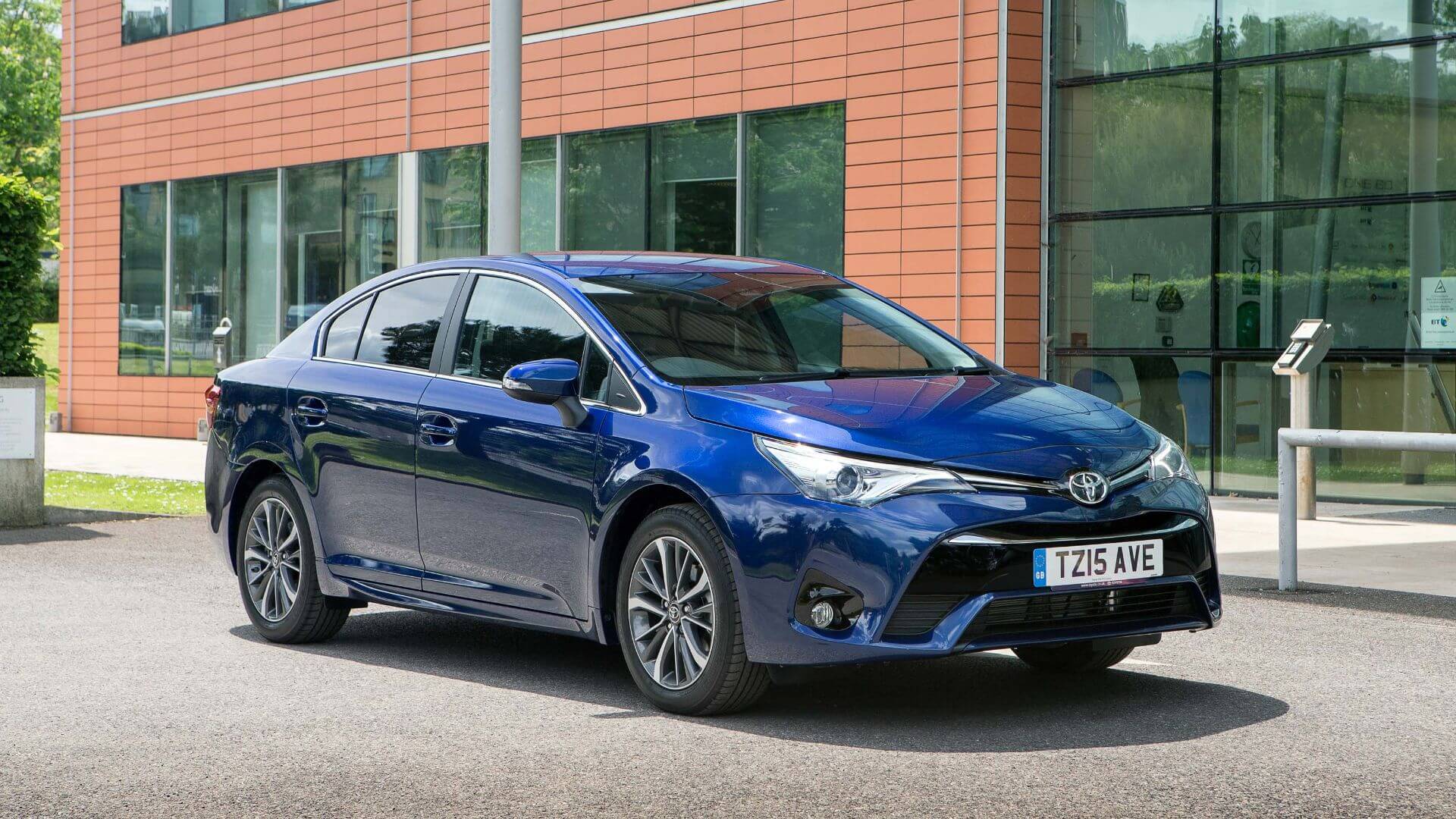
- Built
- 1997–2018
- Generations
- 3
Timeline
Avensis generations
Click a generation for its own page


- Avensis I 1997–2003 · Sedan, Liftback
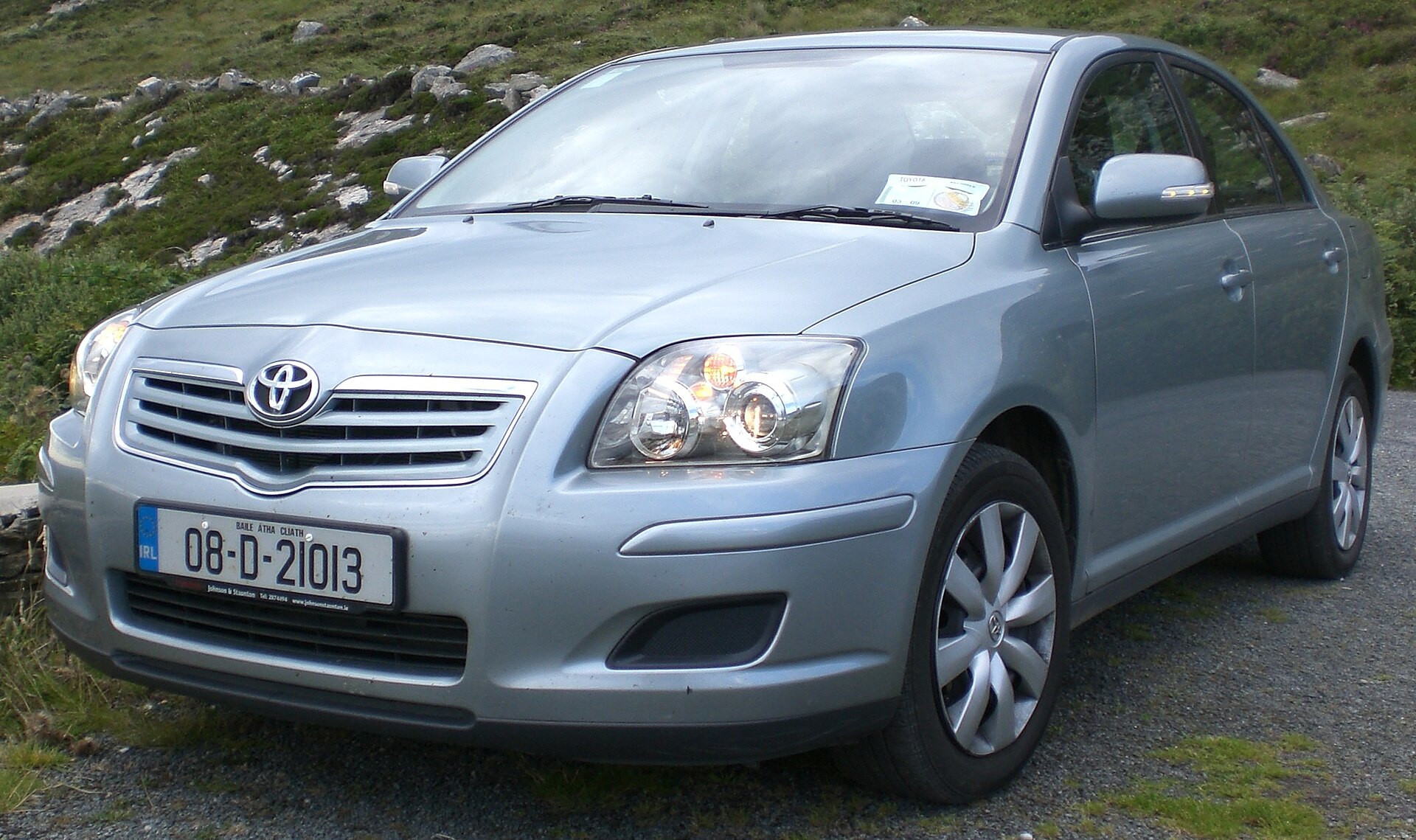
- Avensis T250 2003–2008 · Sedan, Liftback
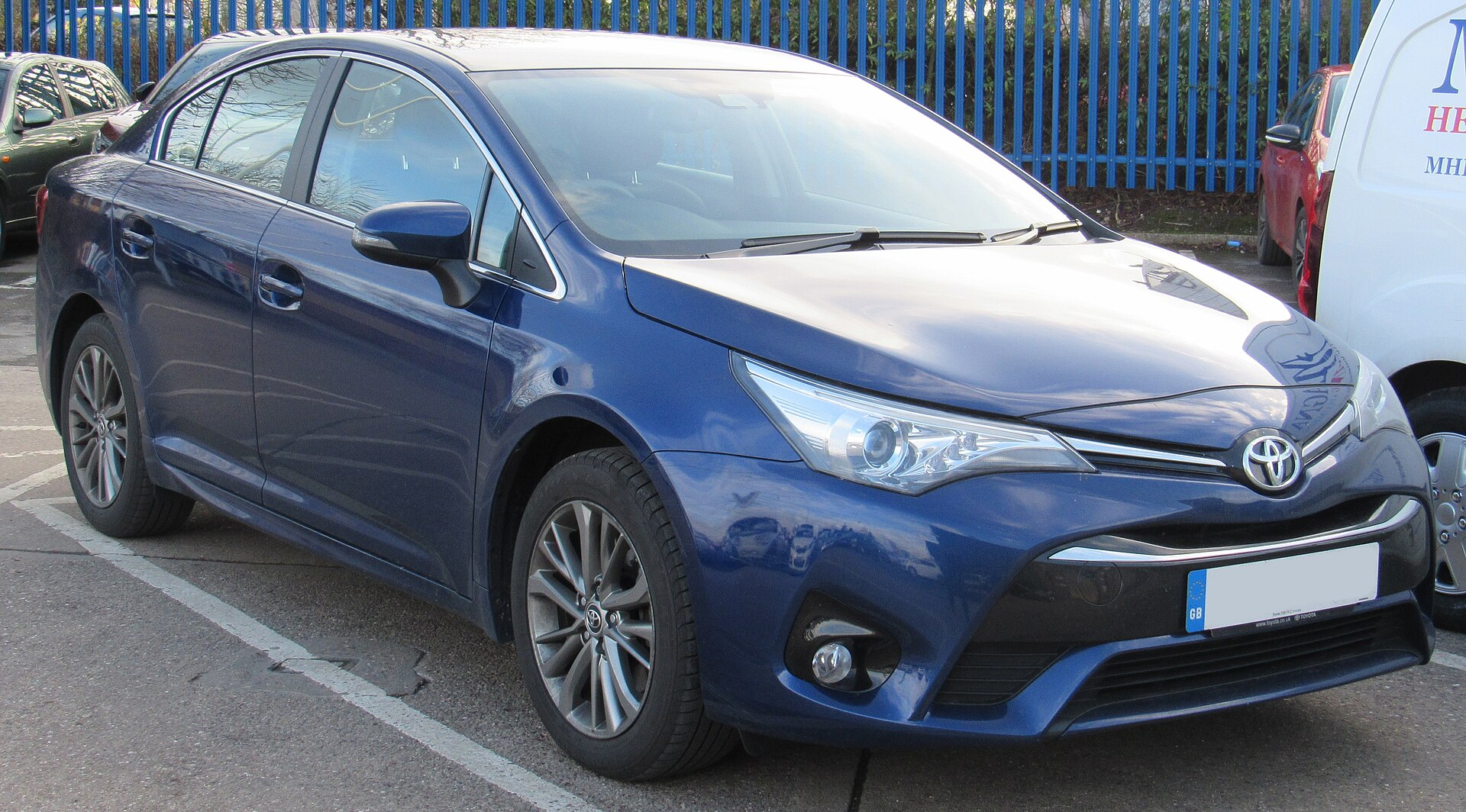
- Avensis T270 2009–2018 · Sedan, Station wagon
Newest first · 3 generations since 1997
-
2009
-
2003
-
1997
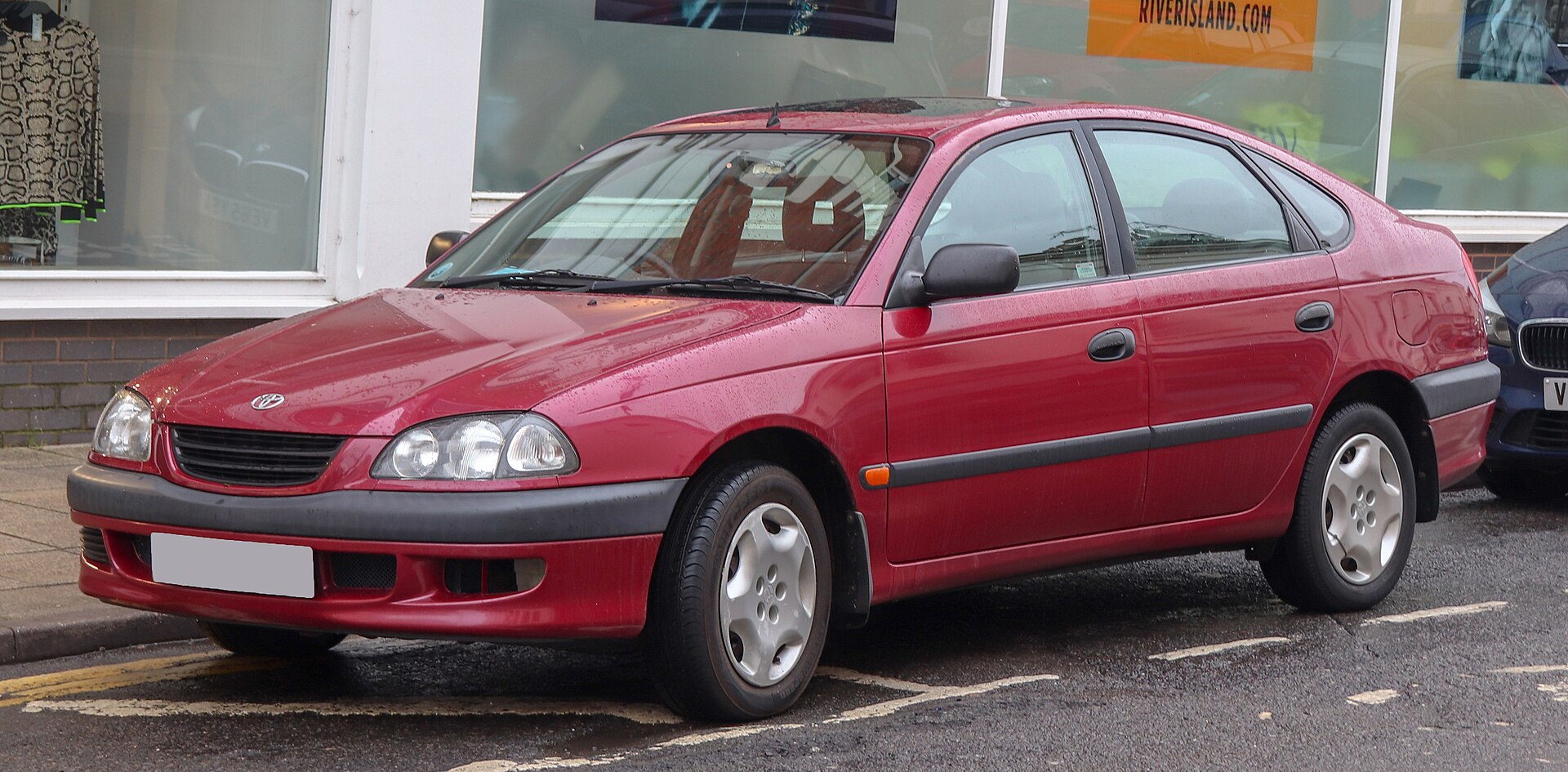
All generations by year: Avensis T270 (2009–2018) · Avensis T250 (2003–2008) · Avensis I (1997–2003)
Which one is mine?
Pick the year of first registration to see which generation it is.
- T270 2009–2018
- T250 2003–2008
- Avensis I 1997–2003
The Toyota Avensis is a front-wheel-drive family car in the large D segment, offered as a four-door saloon and a five-door estate. It was created specifically for Europe and built at Toyota's Burnaston plant in the United Kingdom. The Avensis was known for pleasant styling, strong safety and good standard equipment, and three generations were produced between 1997 and 2018.
In short
- Three generations: 1997–2003, 2003–2008 and the third (T270), unveiled at the 2008 Paris motor show and built from 2009 to 2018.
- The T270 was facelifted twice: in 2011 and, more extensively, at the Geneva motor show in March 2015.
- After 2015 the range consisted of 1.6, 1.8 and 2.0 petrol engines from 97 to 112 kW (132–152 PS) and 1.6 and 2.0 D-4D diesels of 82 and 105 kW (112 and 143 PS).
- The third generation earned the maximum five stars from Euro NCAP.
Toyota Avensis at a glance
The Avensis replaced the ageing Toyota Carina E. Its name comes from the French verb avancer, "to advance", signalling a step forward from its predecessor. The first generation arrived in 1997, the second followed in 2003 and stayed in production until 2008, and the third was unveiled at the Paris motor show in autumn 2008. A first facelift was shown at Frankfurt in September 2011, and a second, deeper update was unveiled at the Geneva motor show in spring 2015. In that form the Avensis stayed in production until 2018, when Toyota ended the model. This article focuses on the facelifted third generation, whose styling was closely related to the contemporary Toyota Corolla, although the dimensions and specifications differ. More models are in our Toyota catalogue.
Generations
| Generation | Years | Body styles | Notes |
|---|---|---|---|
| First (T220) | 1997–2003 | Saloon, hatchback, estate | Successor to the Carina E |
| Second (T250) | 2003–2008 | Saloon, hatchback, estate | Built in the UK |
| Third (T270) | 2009–2018 | Saloon, estate | Facelifted in 2011 and 2015 |
Exterior of the facelifted third generation
The 2015 update gave the Avensis a much closer family resemblance to the Corolla, and the front end has nothing in common with the second generation. The headlights combine LED and halogen technology: LED daytime running lights along the top and LED indicators towards the centre, with halogen main beams on most versions and full LED headlights on more expensive ones. The small upper grille carries the Toyota badge with two chrome strips spreading out from it; its slots are more decorative than functional. Every version has a black grille with chrome inserts. The body-coloured bumper contains the real cooling intake in its centre, with side openings that mainly help aerodynamics, and LED fog lights. The bonnet was only lightly reshaped, with a raised centre section that follows the grille.
From the side, the third-generation shape is largely unchanged. The door mirrors still sit on the door panels and now have more compact indicator repeaters, the trim around the door handles is more expressive, and the front and rear wings were reshaped to match the new lights. The estate gets a crisp horizontal line around the rear pillar. Standard alloy wheels are 16 inches, with 17- and 18-inch wheels on more expensive versions, and ground clearance is a modest 140 mm.
At the rear, saloon and estate look alike except for the boot lid. LED tail lights are split between the body and the lid but appear as one unit. Horizontal chrome lines run out from the badge, and the upper part of the lid houses the reversing camera, number-plate lights and boot handle, topped by a small spoiler lip.
Interior and practicality
The facelift brought a higher-quality, more modern cabin. The front seats have leather upholstery, eight-way electric adjustment, heating and good lateral support. The thick four-spoke leather steering wheel carries 18 buttons for audio and cruise control and adjusts for height and reach. The instrument cluster has two deep chrome-ringed dials — rev counter with oil temperature, and speedometer with fuel level — with a 4.2-inch colour TFT trip computer between them.
The dashboard has an unusual angled centre section with slim chrome-trimmed vents and the hazard switch between them. An 8-inch touchscreen infotainment system sits slightly recessed in the console, with two rotary controllers, and below it are the dual-zone climate controls, charging sockets and a 12-volt outlet. The tunnel holds the seat-heating controls, the gear selector for the CVT or manual gearbox, a sport-mode button, a covered cupholder and a front armrest with a large storage box that can work as a cool box. Build quality and materials are good.
The rear bench is also leather-trimmed, with child-seat anchorages, a fold-down armrest and two cupholders. Space is adequate front and rear; three can sit in the back, but two are more comfortable. The saloon's boot holds 509 litres and has a ski hatch, but the seats do not fold — only the estate offers that — and there is only a space-saver spare under the floor.
Engines and transmissions (2015 facelift)
| Engine | Power (kW / PS) | Torque | 0–100 km/h | Top speed | Consumption |
|---|---|---|---|---|---|
| 1.6 petrol | 97 kW / 132 PS | 160 Nm | 10.4 s | 200 km/h | 6.1 l/100 km |
| 1.8 petrol | 108 kW / 147 PS | 180 Nm | 9.4–10.4 s | 200 km/h | 5.9–6.0 l/100 km |
| 2.0 petrol | 112 kW / 152 PS | 196 Nm | 10.0 s | 205 km/h | 6.1 l/100 km |
| 1.6 D-4D diesel | 82 kW / 112 PS | 270 Nm | — | — | 4.1–4.5 l/100 km |
| 2.0 D-4D diesel | 105 kW / 143 PS | 320 Nm | — | — | 4.1–4.5 l/100 km |
The 2015 update brought lightly revised petrol engines and a completely new diesel line-up. Before it, the third generation used a 2.0 D-4D with 93 kW (126 PS) and 310 Nm, and a 2.2 D-4D with 110–130 kW (150–177 PS) and 340–400 Nm; these were replaced by the new turbodiesels of 1.6 and 2.0 litres.
The base 1.6 comes only with a six-speed manual. The 1.8 and 2.0 petrol engines can be had with either the six-speed manual or a Multidrive S CVT, and the diesels come only with the manual gearbox.
Chassis and brakes
The third generation uses Toyota's MC platform, with MacPherson struts at the front and a double-wishbone rear suspension with trailing arms. The facelift brought softer dampers and springs but stiffer anti-roll bars. Electric power steering makes the car easy to drive. Brakes are strong for the class: 320 mm ventilated discs at the front and 290 mm discs at the rear.
Safety and equipment
Even the base car has seven airbags: front airbags, a driver's knee airbag and four further airbags around the cabin for side protection. Standard equipment includes a pre-collision system, ABS with brake assist, cruise control, stability control, lane-departure warning, tyre-pressure monitoring, an immobiliser and hill assistance, plus light and rain sensors and a pedestrian-recognition system that warns the driver at night. The SmartKey keyless system can also start or stop the engine remotely. The third-generation Avensis received five stars, the maximum, from Euro NCAP.
More expensive versions add adaptive cruise control, a reversing camera, parking assistance, trailer-stability assistance, adaptive headlights and blind-spot monitoring. Depending on the market, base versions already had front and side airbags, a multifunction steering wheel, automatic climate control, an infotainment system, electric windows and mirrors, and 17-inch wheels, with options such as 18-inch wheels and a panoramic roof.
Strengths and weaknesses
The Avensis stands out for its pleasant styling, low fuel consumption, generous equipment, high safety and solid build quality. It is a calm, comfortable car rather than a sporty one, and it lagged behind several rivals in other respects — something reflected in its sales and the decision to end production. Its competitors included the Ford Mondeo, Mazda 6, Volkswagen Passat, Audi A4, Renault Latitude, Chevrolet Malibu and Hyundai i40.
Toyota Avensis evolution in numbers
Did you know?
- The Toyota Avensis ran for 21 years, from 1997 to 2018, over 3 generations in our catalog.
- The longest-running generation is the Avensis T270 (2009–2018): 9 years.
Image credits · Photos from Wikimedia Commons under free licences
- Toyota Avensis I · Photo: Vauxford / Wikimedia Commons, CC BY-SA 4.0
- Toyota Avensis T250 · Photo: Wouter82 / Wikimedia Commons, CC BY-SA 4.0
- Toyota Avensis T270 · Photo: Vauxford / Wikimedia Commons, CC BY-SA 4.0
Toyota Avensis in our rankings
- No. 149 of 912 · Longest-running car nameplates (21 years · top 18%)
- No. 168 of 345 · Cars with the most generations (3 generations · top 68%)
In production longer than 82% of ranked nameplates in the 1CARS catalog (No. 149 of 912).
FAQ
How many generations of the Toyota Avensis are there?
Three: 1997–2003, 2003–2008 and 2009–2018. The third generation was facelifted in 2011 and 2015.
When did Toyota stop making the Avensis?
Production ended in 2018; the UK plant stopped building it in August 2018.
Where was the Toyota Avensis built?
At Toyota's Burnaston plant in Derbyshire, United Kingdom.
How big is the Toyota Avensis boot?
The facelifted saloon has 509 litres. Only the estate has folding rear seats; the saloon has a ski hatch.
How safe is the Toyota Avensis?
The third generation earned the maximum five stars from Euro NCAP, and every version has seven airbags as standard.
Data sources
Data checked by an editor against the sources below.