
 Toyota Camry
All generations, specs and history
Updated Published Sources (7) Report an error
By Felix Hartmann, Automotive Technology & EV Contributor

- Built
- 1982–present
- Generations
- 9 · V10 to XV80
- Top power
- 224 kW (305 PS)
Timeline
Camry generations
Click a generation for its own page
XV70 and XV80 overlapped in 2023–2024, so XV80 sits on a second lane
- Camry V10 1982–1986 · Sedan, Liftback
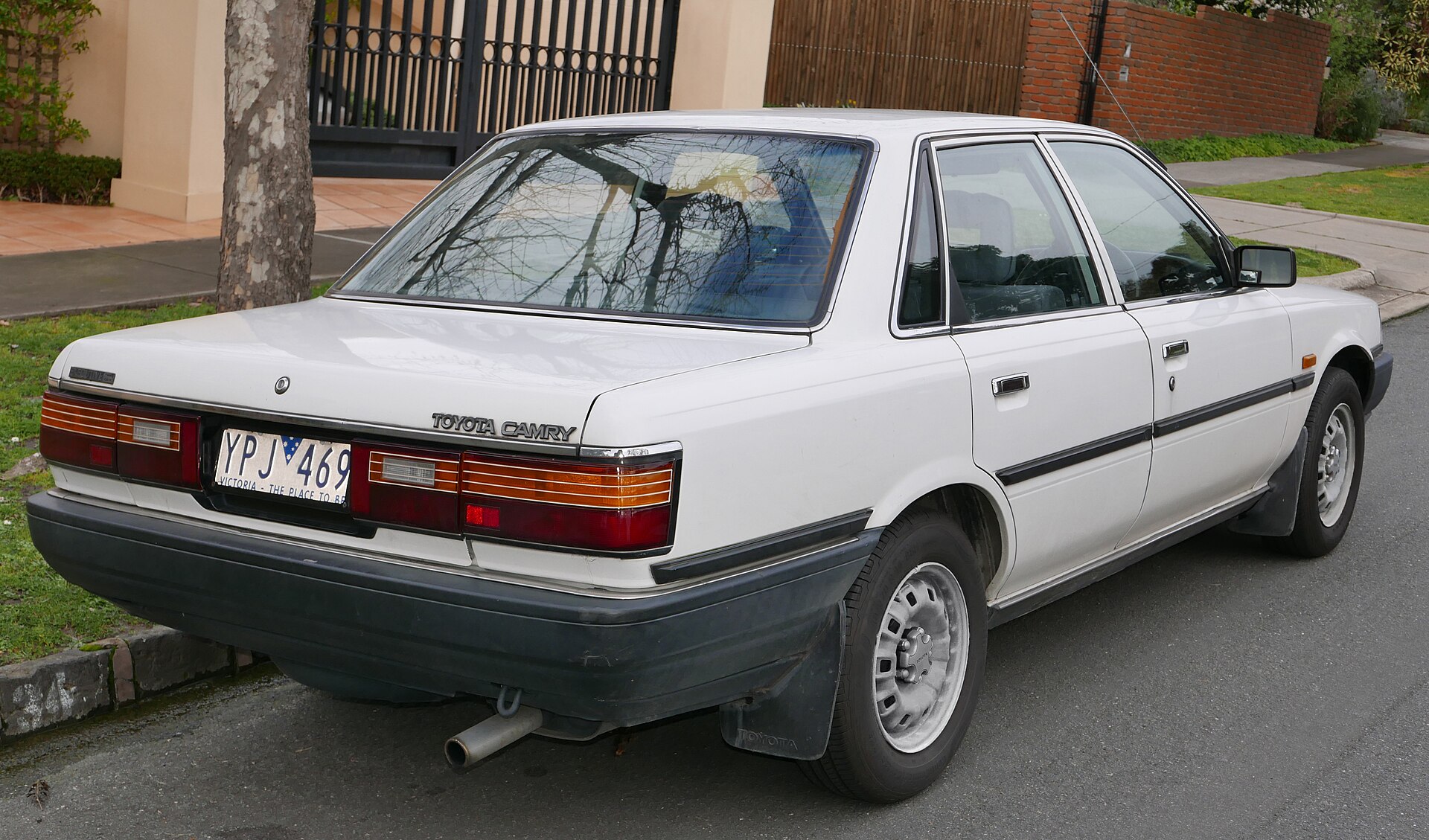
- Camry V20 1986–1991 · Sedan, Station wagon
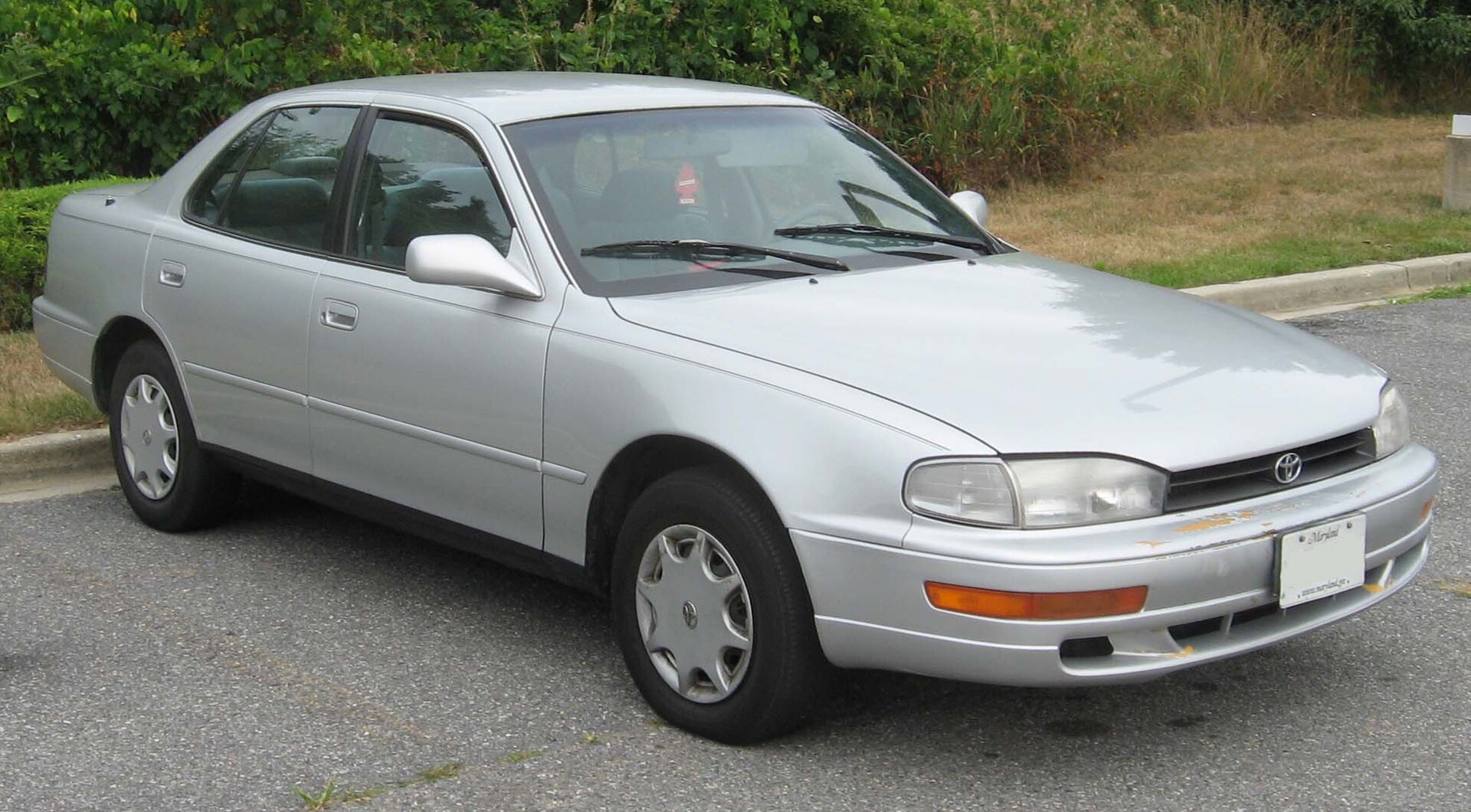
- Camry XV10 1991–1996 · Sedan, Station wagon
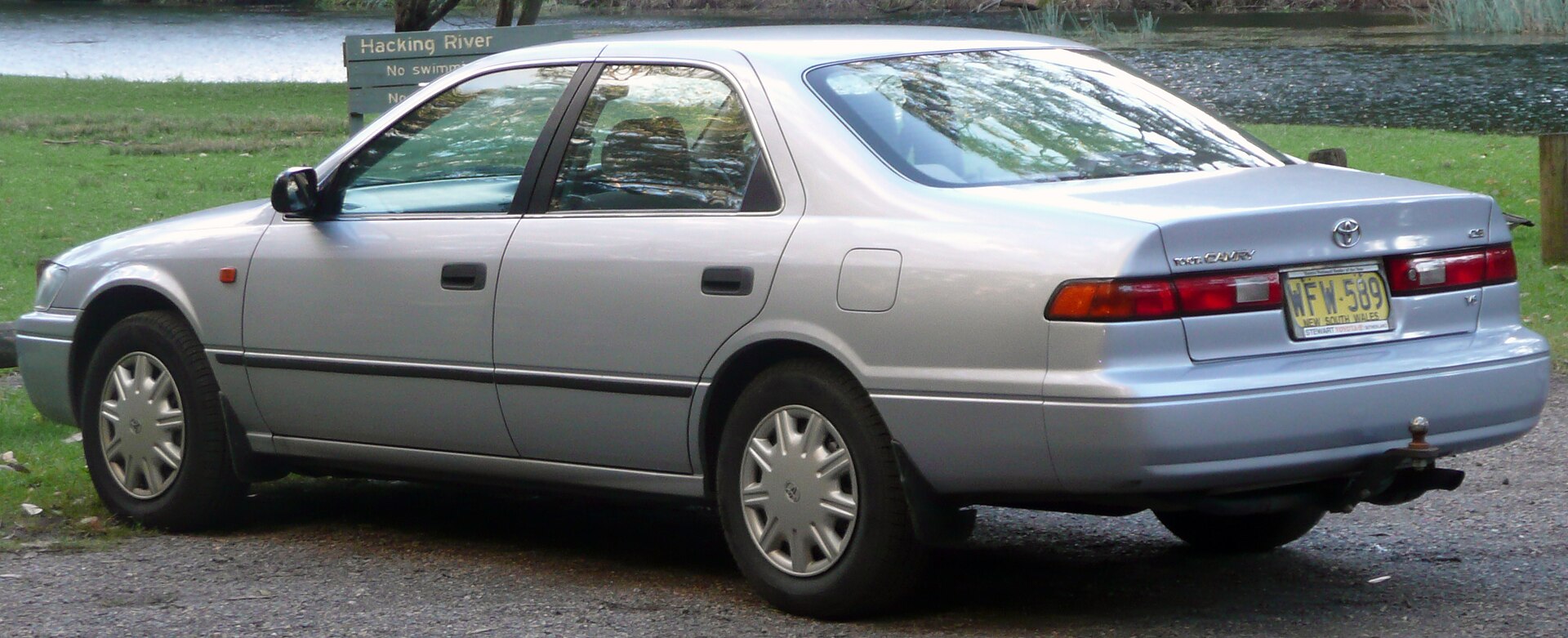
- Camry XV20 1996–2001 · Sedan, Station wagon
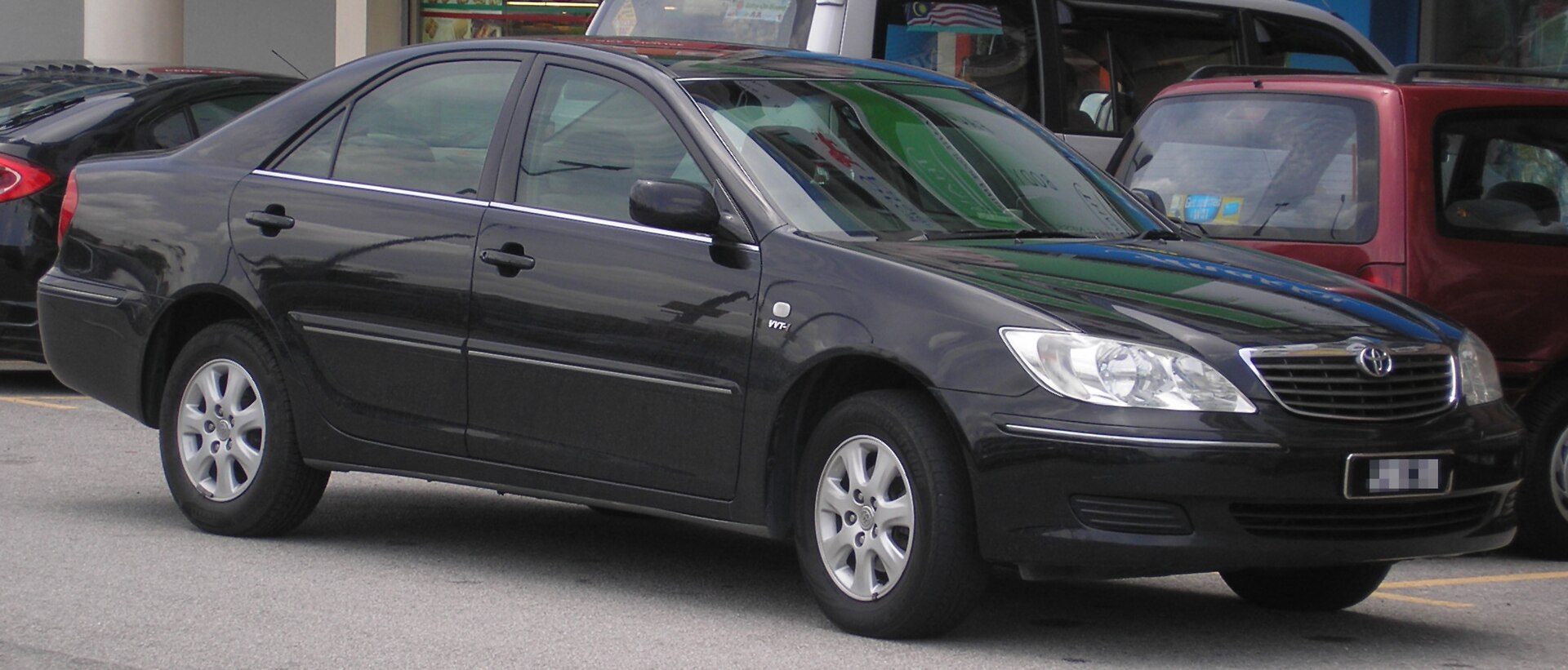
- Camry XV30 2001–2006 · Sedan
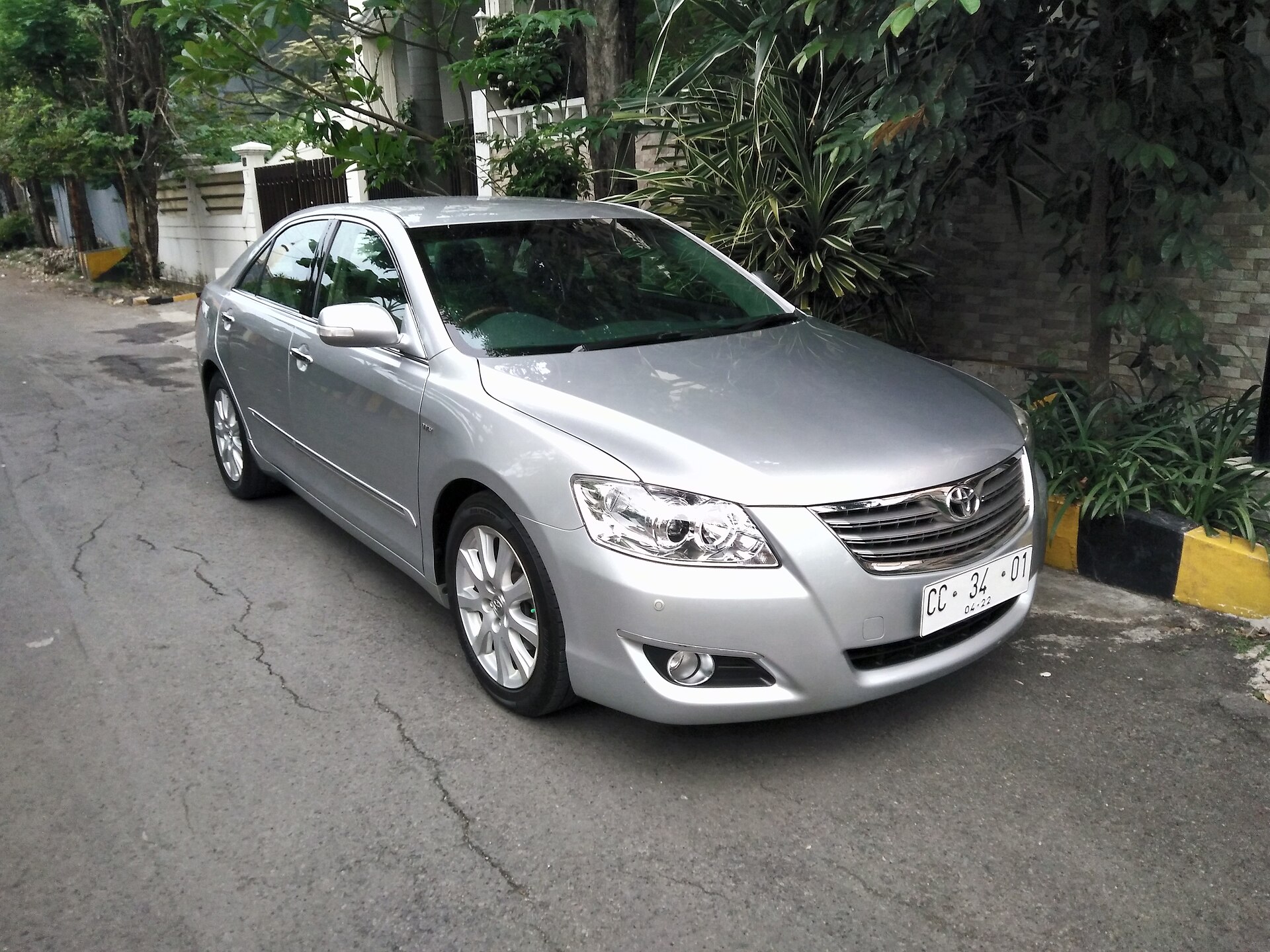
- Camry XV40 2006–2011 · Sedan
- Camry XV50 2011–2017 · Sedan · 107–200 kW (145–272 PS)
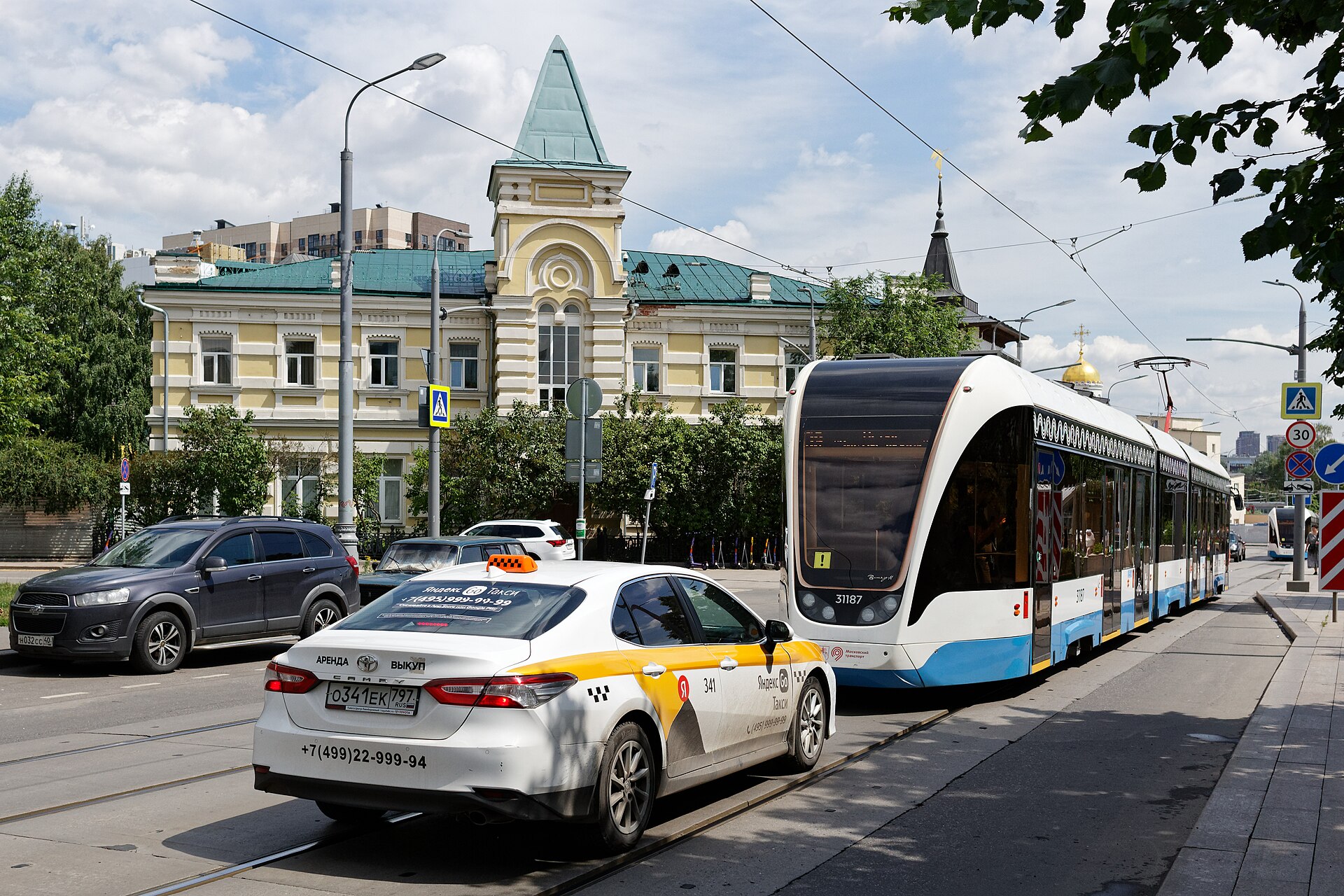
- Camry XV70 2017–2024 · Sedan
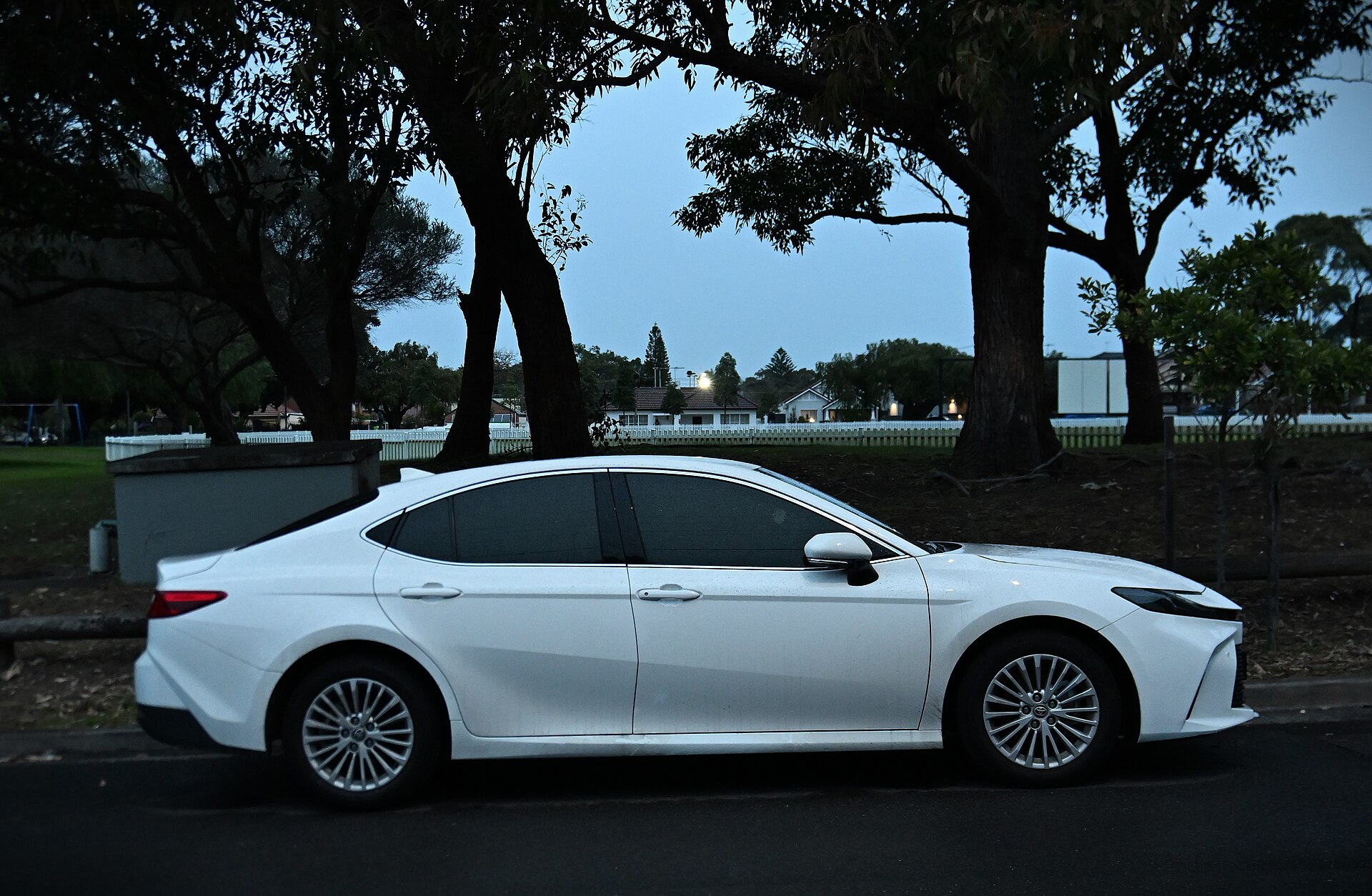
- Camry XV80 Current 2023–now · Sedan
Newest first · 9 generations since 1982
-
2023
-
2017
-
2011

-
2006
-
2001
-
1996
-
1991
-
1986
- 1982 V10 1982–1986 · Sedan, Liftback


All generations by year: Camry XV80 (2023–now) · Camry XV70 (2017–2024) · Camry XV50 (2011–2017) · Camry XV40 (2006–2011) · Camry XV30 (2001–2006) · Camry XV20 (1996–2001) · Camry XV10 (1991–1996) · Camry V20 (1986–1991) · Camry V10 (1982–1986)
Which one is mine?
Pick the year of first registration to see which generation it is.
Check by VINWhich Camry XV50 to buy
Our verdict · Felix Hartmann
The 2.5-litre 2AR-FE is the best balance of performance and economy, and the hybrid is the most efficient choice for town driving. The V6 offers strong performance but uses more fuel. Facelifted cars from the 2015 model year have the more modern design. Check the service history and, on hybrids, the condition of the battery.
The Toyota Camry XV50 is the seventh-generation Camry, a mid-size four-door saloon introduced on 23 August 2011. It was built in Japan, the United States, Australia and several Asian countries until 2017 in most markets, with the last cars made in Taiwan in August 2020. Engines range from 2.0-litre four-cylinder units to a 3.5-litre V6 with 200 kW, plus a 2.5-litre hybrid with 149 kW of system power.
In short
- Launch: 23 August 2011; production to 2017 in most markets (Taiwan until August 2020).
- Engines: 2.0 1AZ-FE and 6AR-FSE, 2.5 2AR-FE with 133 kW, 3.5 2GR-FE V6 with 200 kW and the 2.5 hybrid with 149 kW.
- Facelift: shown at the New York show in April 2014 for the 2015 model year.
- ANCAP 2011: 15.27/16 in the frontal offset test and 16/16 in the side impact for petrol models.

Size at a glance
Kia Optima
The Toyota Camry XV80 is 40 mm longer, 20 mm narrower and 10 mm lower than the Kia Optima.
| Dimensions | Toyota Camry XV80 | Kia Optima | Difference |
|---|---|---|---|
| Length | 4,885 mm192.3 in | 4,845 mm190.7 in | +40 mm+1.6 in |
| Width | 1,840 mm72.4 in | 1,860 mm73.2 in | −20 mm−0.8 in |
| Height | 1,445 mm56.9 in | 1,455 mm57.3 in | −10 mm−0.4 in |
| Wheelbase | 2,825 mm111.2 in | 2,805 mm110.4 in | +20 mm+0.8 in |
| Boot | - | 505 L17.8 cu ft | - |
Ford Mondeo CD391
The Toyota Camry XV80 is 13 mm longer and 33 mm lower than the Ford Mondeo CD391.
| Dimensions | Toyota Camry XV80 | Ford Mondeo CD391 | Difference |
|---|---|---|---|
| Length | 4,885 mm192.3 in | 4,872 mm191.8 in | +13 mm+0.5 in |
| Width | 1,840 mm72.4 in | - | - |
| Height | 1,445 mm56.9 in | 1,478 mm58.2 in | −33 mm−1.3 in |
| Wheelbase | 2,825 mm111.2 in | 2,850 mm112.2 in | −25 mm−1.0 in |
| Boot | - | 429 L15.2 cu ft | - |
Toyota Camry XV70
The Toyota Camry XV80 is 5 mm longer than the Toyota Camry XV70.
| Dimensions | Toyota Camry XV80 | Toyota Camry XV70 | Difference |
|---|---|---|---|
| Length | 4,885 mm192.3 in | 4,880 mm192.1 in | +5 mm+0.2 in |
| Width | 1,840 mm72.4 in | 1,840 mm72.4 in | Same |
| Height | 1,445 mm56.9 in | 1,445 mm56.9 in | Same |
| Wheelbase | 2,825 mm111.2 in | 2,820 mm111.0 in | +5 mm+0.2 in |
Specs by version
Engines
| Version | Engine | Power | Gearbox | Drive | Production years |
|---|---|---|---|---|---|
| Hybrid · 3 versions | |||||
| XV70 · 2.5 Hybrid | 2.5 l · 4 cyl · Hybrid 2,487 cc | 155 kW 211 PS208 hp | CVT | Front-wheel drive | 2017 |
| XV80 · 2.5 Hybrid FWD | 2.5 l · 4 cyl · Hybrid 2,487 cc | 168 kW 228 PS225 hp | CVT | Front-wheel drive | 2024 |
| XV80 · 2.5 Hybrid AWD | 2.5 l · 4 cyl · Hybrid 2,487 cc | 173 kW 235 PS232 hp | CVT | All-wheel drive | 2024 |
| Petrol · 1 version | |||||
| XV70 · 3.5 V6 | 3.5 l · 6 cyl · Petrol 3,456 cc | 224 kW 305 PS300 hp | Automatic | Front-wheel drive | 2017 |
| Other · 9 versions | |||||
| XV50 · 110 kW (150 PS) Sedan | - | 110 kW 150 PS148 hp | - | - | - |
| XV70 · 2.5 L 4 cyl Automatic (S8) · 2020 (EPA) | 2.5 l · 4 cyl 2,500 cc | - | 8-sp Automatic | Front-wheel drive | 2020 |
| XV70 · 2.5 L 4 cyl Automatic (S8) · 2019 (EPA) | 2.5 l · 4 cyl 2,500 cc | - | 8-sp Automatic | Front-wheel drive | 2019 |
| XV70 · 3.5 L 6 cyl Automatic (S8) · 2022 (EPA) | 3.5 l · 6 cyl 3,500 cc | - | 8-sp Automatic | Front-wheel drive | 2022 |
| XV70 · 3.5 L 6 cyl Automatic (S8) · 2021 (EPA) | 3.5 l · 6 cyl 3,500 cc | - | 8-sp Automatic | Front-wheel drive | 2021 |
| XV70 · 3.5 L 6 cyl Automatic (S8) · 2020 (EPA) | 3.5 l · 6 cyl 3,500 cc | - | 8-sp Automatic | Front-wheel drive | 2020 |
| XV70 · 3.5 L 6 cyl Automatic (S8) · 2019 (EPA) | 3.5 l · 6 cyl 3,500 cc | - | 8-sp Automatic | Front-wheel drive | 2019 |
| XV80 · 3.5 L 6 cyl Automatic (S8) · 2024 (EPA) | 3.5 l · 6 cyl 3,500 cc | - | 8-sp Automatic | Front-wheel drive | 2024 |
| XV80 · 3.5 L 6 cyl Automatic (S8) · 2023 (EPA) | 3.5 l · 6 cyl 3,500 cc | - | 8-sp Automatic | Front-wheel drive | 2023 |
Performance
Show all 9 versions
| Version | Fuel consumption |
|---|---|
| XV50 · 2011–2017 | |
| XV50 · 110 kW (150 PS) Sedan | 7.2 l/100 km32.7 mpg US · 39.2 mpg UK |
| XV70 · 2017–2024 | |
| XV70 · 2.5 L 4 cyl Automatic (S8) · 2020 (EPA) | 6.9 l/100 km34.1 mpg US · 40.9 mpg UK |
| XV70 · 2.5 L 4 cyl Automatic (S8) · 2019 (EPA) | 6.9 l/100 km34.1 mpg US · 40.9 mpg UK |
| XV70 · 3.5 L 6 cyl Automatic (S8) · 2022 (EPA) | 9.0 l/100 km26.1 mpg US · 31.4 mpg UK |
| XV70 · 3.5 L 6 cyl Automatic (S8) · 2021 (EPA) | 9.0 l/100 km26.1 mpg US · 31.4 mpg UK |
| XV70 · 3.5 L 6 cyl Automatic (S8) · 2020 (EPA) | 9.0 l/100 km26.1 mpg US · 31.4 mpg UK |
| XV70 · 3.5 L 6 cyl Automatic (S8) · 2019 (EPA) | 9.0 l/100 km26.1 mpg US · 31.4 mpg UK |
| XV80 · 2023–present | |
| XV80 · 3.5 L 6 cyl Automatic (S8) · 2024 (EPA) | 9.0 l/100 km26.1 mpg US · 31.4 mpg UK |
| XV80 · 3.5 L 6 cyl Automatic (S8) · 2023 (EPA) | 9.0 l/100 km26.1 mpg US · 31.4 mpg UK |
Dimensions and weight
Show all 5 versions
| Version | Length | Width | Height | Wheelbase |
|---|---|---|---|---|
| Hybrid · 3 versions | ||||
| XV70 · 2.5 Hybrid | 4,880 mm192.1 in | 1,840 mm72.4 in | 1,445 mm56.9 in | 2,820 mm111.0 in |
| XV80 · 2.5 Hybrid FWD | 4,885 mm192.3 in | 1,840 mm72.4 in | 1,445 mm56.9 in | 2,825 mm111.2 in |
| XV80 · 2.5 Hybrid AWD | - | 1,840 mm72.4 in | 1,445 mm56.9 in | 2,825 mm111.2 in |
| Petrol · 1 version | ||||
| XV70 · 3.5 V6 | - | 1,840 mm72.4 in | 1,445 mm56.9 in | 2,820 mm111.0 in |
| Other · 1 version | ||||
| XV50 · 110 kW (150 PS) Sedan | 4,865 mm191.5 in | 1,820 mm71.7 in | 1,470 mm57.9 in | 2,775 mm109.3 in |
Verified Manufacturer and type-approval data from our catalog · Sources and methodology
Safety
-
XV70 · NHTSA 2022
US NCAP (NHTSA)
-
XV50 · NHTSA 2016
US NCAP (NHTSA)
Stars from different years and organisations are not directly comparable: test protocols change every few years.
Camry XV50 at a glance
The XV50 continued the Camry's role as Toyota's mainstream mid-size saloon, focused on comfort, space and reliability. In Australia and the Gulf states, a more upmarket version was sold as the Toyota Aurion, launched in Australia in April 2012 and built until August 2017. The prestige version was also offered in Eastern Europe. The brand's story is told in the history of Toyota, and its models, from the Corolla to the Prius, are in the Toyota catalogue.

| Fact | Value |
|---|---|
| Maker | Toyota, Japan |
| Generation | Seventh (XV50) |
| Introduced | 23 August 2011 |
| Production | 2011–2017 in most markets; to August 2020 in Taiwan |
| Plants | Japan, USA, Australia, China, India, Malaysia, Taiwan, Thailand, Vietnam and others |
| Body | 4-door saloon |
| Drive | Front-wheel drive |
| Twin | Toyota Aurion (Australia, Gulf states) |
Design and interior
The XV50 rides on a 2,775 mm wheelbase. According to the old 1cars text, the cabin uses soft-touch materials, offers heated windscreen-wiper zones and blue instrument lighting, and seats three adults comfortably in the rear. The same source praises the noise insulation, build quality and the large boot. The 2014 facelift revised both the exterior and the interior.

Petrol, V6 and hybrid engines
| Engine | Type | Power | Notes |
|---|---|---|---|
| 1AZ-FE | 2.0 petrol | 145 hp | Some markets |
| 6AR-FSE | 2.0 petrol, direct injection | 165 hp | Later 2.0 engine |
| 2AR-FE | 2.5 petrol | 133 kW (177–181 hp) | Main engine |
| 2GR-FE | 3.5 V6 petrol | 200 kW (268 hp) | Top engine |
| 2AR-FXE hybrid | 2.5 petrol + electric | 149 kW (200 hp) system | eCVT |
The petrol engines use six-speed automatic gearboxes (four-speed in some markets), and the hybrid uses an electronically controlled CVT. According to the old 1cars text, the 2.0 accelerates to 100 km/h in 10.4 seconds and uses 7.2 litres per 100 km, the 2.5 takes 9.0 seconds and about 7.8 litres, and the V6 reaches 100 km/h in 7.1 seconds.
| Version | 0–100 km/h | Top speed | Combined fuel use |
|---|---|---|---|
| 2.0 automatic | 10.4 s | 202 km/h (126 mph) | 7.2 l/100 km (32.7 mpg US) |
| 2.5 automatic | 9.0 s | – | 7.8 l/100 km (30.2 mpg US) |
| 3.5 V6 automatic | 7.1 s | – | – |
Figures from the old 1cars text for the versions it describes.
Camry XV50 size and weight

| Parameter | Metric | Imperial |
|---|---|---|
| Length | 4,820–4,865 mm | 189.8–191.5 in |
| Width | 1,820 mm | 71.7 in |
| Height | 1,470 mm | 57.9 in |
| Wheelbase | 2,775 mm | 109.3 in |
| Kerb weight | 1,447–1,551 kg | 3,190–3,419 lb |
Production around the world
| Market / plant | End of XV50 production |
|---|---|
| Japan (Aichi) | 2017 |
| United States (Kentucky, Indiana) | 2017 |
| Australia (Altona) | October 2017 |
| Taiwan (Zhongli) | August 2020 |
| Other plants: China, India, Malaysia, Thailand, Vietnam | Varied by market |
The XV50 was assembled on several continents to serve local markets, which explains why production ended at different times in different regions.

ANCAP crash-test results
| Test | Result |
|---|---|
| ANCAP 2011, petrol | Frontal offset 15.27/16, side 16/16, pole 2/2, belt reminders 3/3, pedestrian "Marginal" |
| ANCAP 2011, hybrid | Frontal offset 14.37/16, side 14.85/16, pole 2/2 |
| ANCAP 2013, all versions | Frontal offset 14.37/16, side 14.85/16, pole 2/2, belt reminders 3/3 |
According to the old 1cars text, even the basic Camry XV50 has ABS with brake-force distribution, stability control and eight airbags, including front, side and curtain airbags.

The 2014 facelift
The major facelift was revealed at the New York International Auto Show in April 2014 and went into production for the 2015 model year. Australian production of the facelifted car started on 28 April 2015, and the Gulf states launched it in June 2015 as a 2016 model. The old 1cars text also mentions a new 2.0-litre engine with lower fuel consumption around this time.

Camry and Aurion
The Aurion was the prestige version of the XV50 for Australia and the Gulf states, launched in Australia in April 2012. As the prestige model it had its own styling and was built from February 2012 until August 2017, replacing the earlier Aurion of the XV40 generation.

XV50 production timeline

| Date | Event |
|---|---|
| 23 August 2011 | Camry XV50 introduced |
| February 2012 | Aurion (XV50) production begins |
| April 2014 | Facelift revealed at the New York International Auto Show |
| 28 April 2015 | Facelifted Camry enters production in Australia |
| June 2015 | Facelift launched in the Gulf states as a 2016 model |
| 2017 | Production ends in Japan, the US and Australia (October) |
| August 2020 | Last XV50 built in Taiwan |
Rivals: how the Camry XV50 compares
The XV50 competed with mid-size saloons such as the Honda Accord, the Kia Optima and the Ford Mondeo. Its strengths are a spacious, quiet cabin, a wide engine range including a hybrid, high build quality and good crash-test results. Its weaknesses are the lack of an estate or all-wheel-drive version and the higher fuel use of the V6.

Toyota Camry evolution in numbers
Did you know?
- The Toyota Camry has been around for 44 years: 9 generations in our catalog since 1982.
- The longest-running generation is the Camry XV70 (2017–2024): 7 years.
- The biggest jump in power came with the Camry XV70: up to 224 kW (305 PS), 24 kW more than the Camry XV50.
- The most powerful Toyota Camry is not the newest: the Camry XV70 (2017–2024) offered up to 224 kW (305 PS), the Camry XV80 up to 173 kW (235 PS).
Most powerful version, kW
Length, mm
Figures from the 1cars catalog: power is the strongest version of each generation; generations without the figure are left out.
Image credits · Photos from Wikimedia Commons under free licences
- Toyota Camry V20 · Photo: OSX / Wikimedia Commons, Public domain
- Toyota Camry XV10 · Photo: IFCAR / Wikimedia Commons, Public domain
- Toyota Camry XV20 · Photo: OSX / Wikimedia Commons, Public domain
- Toyota Camry XV30 · Photo: User:Two hundred percent. / Wikimedia Commons, CC BY-SA 3.0
- Toyota Camry XV40 · Photo: Alex Neman / Wikimedia Commons, CC BY-SA 4.0
- Toyota Camry XV70 · Photo: Retired electrician / Wikimedia Commons, CC0
- Toyota Camry XV80 · Photo: Sardaka / Wikimedia Commons, CC0
Rivals
Compare with…
Compare Toyota Camry with
- Volkswagen Passat quick spec comparison
- Kia Optima quick spec comparison
- Ford Mondeo quick spec comparison
-
In production
- Years
- 1973–present
- Body
- Sedan, Hatchback
- Fuel
- Petrol, Diesel, Plug-in hybrid
- Power
- 81–206 kW (110–280 PS)
7 generations
- B2
- B3
- B4
- B7
- B8
- B9
- +1 earlier
-
Ended 2020
- Years
- 2015–2020
- Body
- Sedan, Station wagon
- Fuel
- Petrol, Diesel, Hybrid
- Power
- 100–180 kW (136–245 PS)
-
In production
- Years
- 1992–present
- Body
- Sedan, Liftback
- Fuel
- Petrol, Diesel, Hybrid
- Power
- 84–177 kW (114–241 PS)
6 generations
- Mk1
- Mk2
- CD132
- CD345
- CD391
- VI
-
In production
- Years
- 1976–present
- Body
- Sedan, Hatchback
- Fuel
- Petrol, Diesel, Hybrid
- Power
- 50–207 kW (68–281 PS)
11 generations
- VI
- VII
- VIII
- IX
- CV
- XI
- +5 earlier


Toyota Camry in our rankings
- No. 9 of 411 · Cars with the most generations (9 generations)
- No. 28 of 1082 · Longest-running car nameplates (44 years · top 3%)
- No. 23 of 379 · Oldest car models still on sale (44 years · top 7%)
- No. 100 of 531 · Longest cars (4,885 mm · top 19%)
- No. 91 of 321 · Biggest boot: cars (506 l · top 29%)
- No. 38 of 130 · Most powerful Japanese cars (224 kW · top 30%)
More generations than 97% of ranked nameplates in the 1CARS catalog (No. 9 of 411).
Toyota Camry photos 16


Toyota Camry videos 2

Toyota Camry video 1

Toyota Camry video 2
FAQ
What engines does the Toyota Camry XV50 have?
It was offered with 2.0-litre petrol engines, the 2.5-litre 2AR-FE with 133 kW, the 3.5-litre 2GR-FE V6 with 200 kW and a 2.5-litre hybrid with 149 kW of combined system power.
When was the Camry XV50 produced?
The XV50 was introduced on 23 August 2011 and built until 2017 in Japan, the US and Australia. Production in Taiwan continued until August 2020, after which the XV70 replaced it.
Is there a Toyota Camry XV50 hybrid?
Yes. The 2.5-litre 2AR-FXE hybrid produces 149 kW (200 hp) of combined system power and uses an electronically controlled CVT. It is the most economical XV50.
How big is the Camry XV50?
It is 4,820–4,865 mm long depending on the market, 1,820 mm wide and 1,470 mm high, with a 2,775 mm wheelbase and a kerb weight of 1,447–1,551 kg.
What is the Toyota Aurion?
The Aurion is the upmarket version of the XV50 sold in Australia and the Gulf states. It was launched in Australia in April 2012 and built until August 2017.
How fast is the Toyota Camry XV50?
According to the old 1cars text, the 2.0 reaches 100 km/h in 10.4 seconds and 202 km/h, the 2.5 needs 9.0 seconds, and the 3.5 V6 accelerates to 100 km/h in 7.1 seconds.
Data sources
Data checked by an editor against the sources below.
- The text of this article (1cars archive)
- Wikipedia - Toyota Camry
- Wikipedia - Toyota Camry (XV50)
- Wikipedia - Toyota Camry (XV70)
- Wikipedia - Toyota Camry (XV80)
- US EPA fueleconomy.gov - 44343.shtml
- NHTSA 5-Star Safety Ratings (US NCAP) — U.S. Government work, public domain


