 Toyota Aygo
All generations, specs and history
Published Sources (6) Report an error
By Felix Hartmann, Automotive Technology & EV Contributor
- Built
- 2005–present
- Generations
- 3
- Top power
- 85 kW (116 PS)
Timeline
Aygo generations
Click a generation for its own page


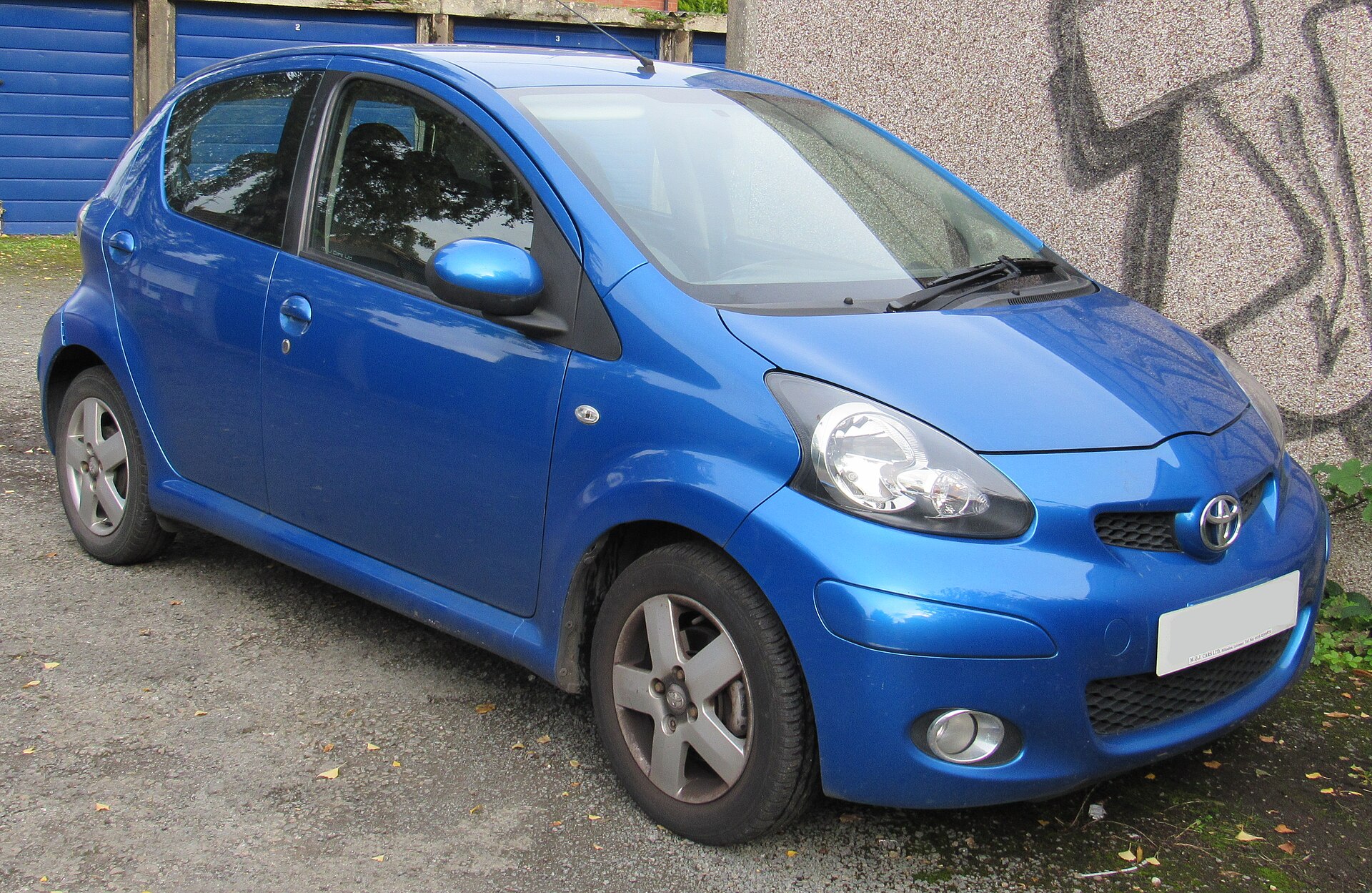
- Aygo I 2005–2014 · Hatchback · 41–51 kW (56–69 PS)
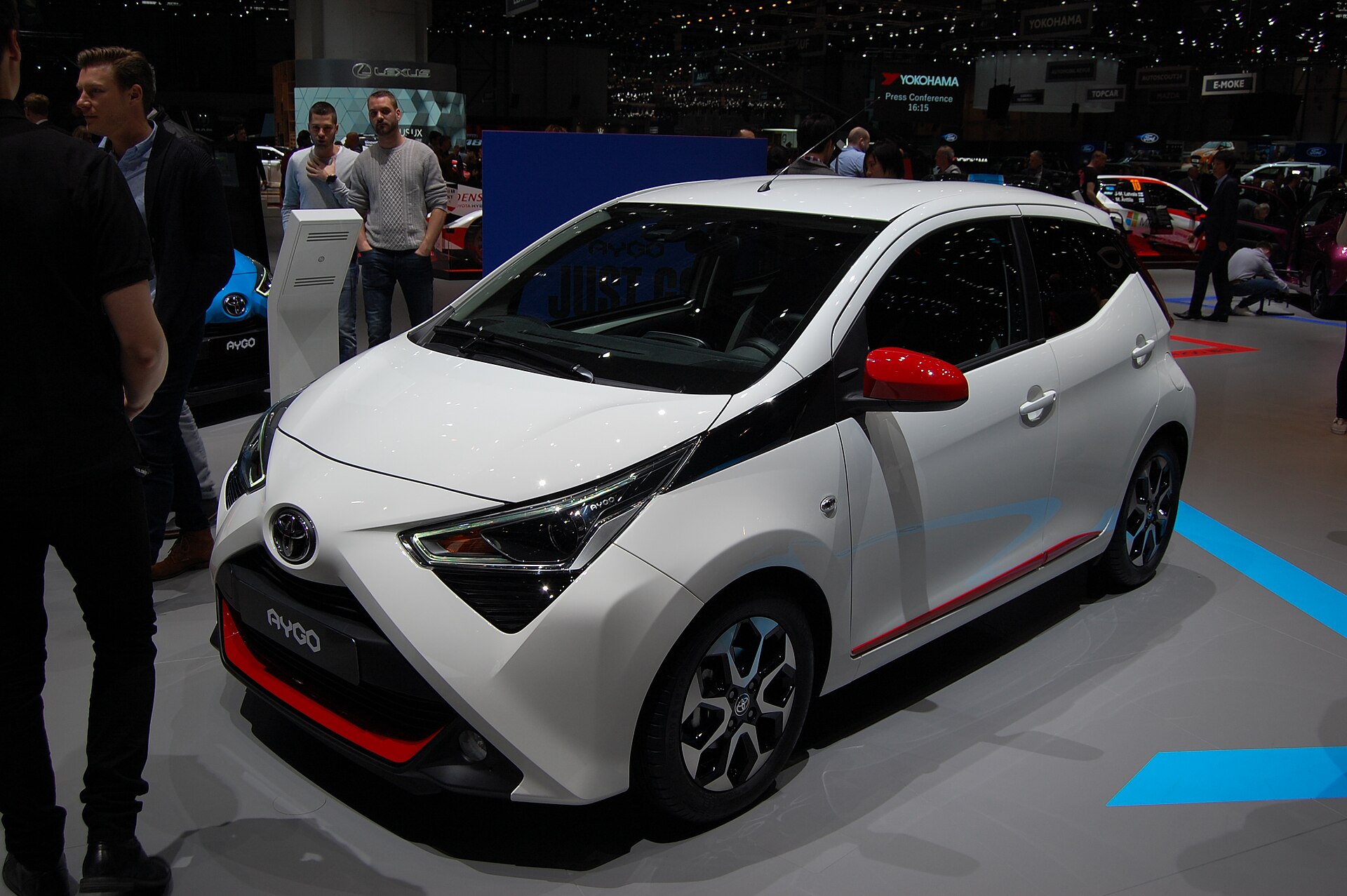
- Aygo II 2014–2022 · Hatchback · 51–53 kW (69–72 PS)
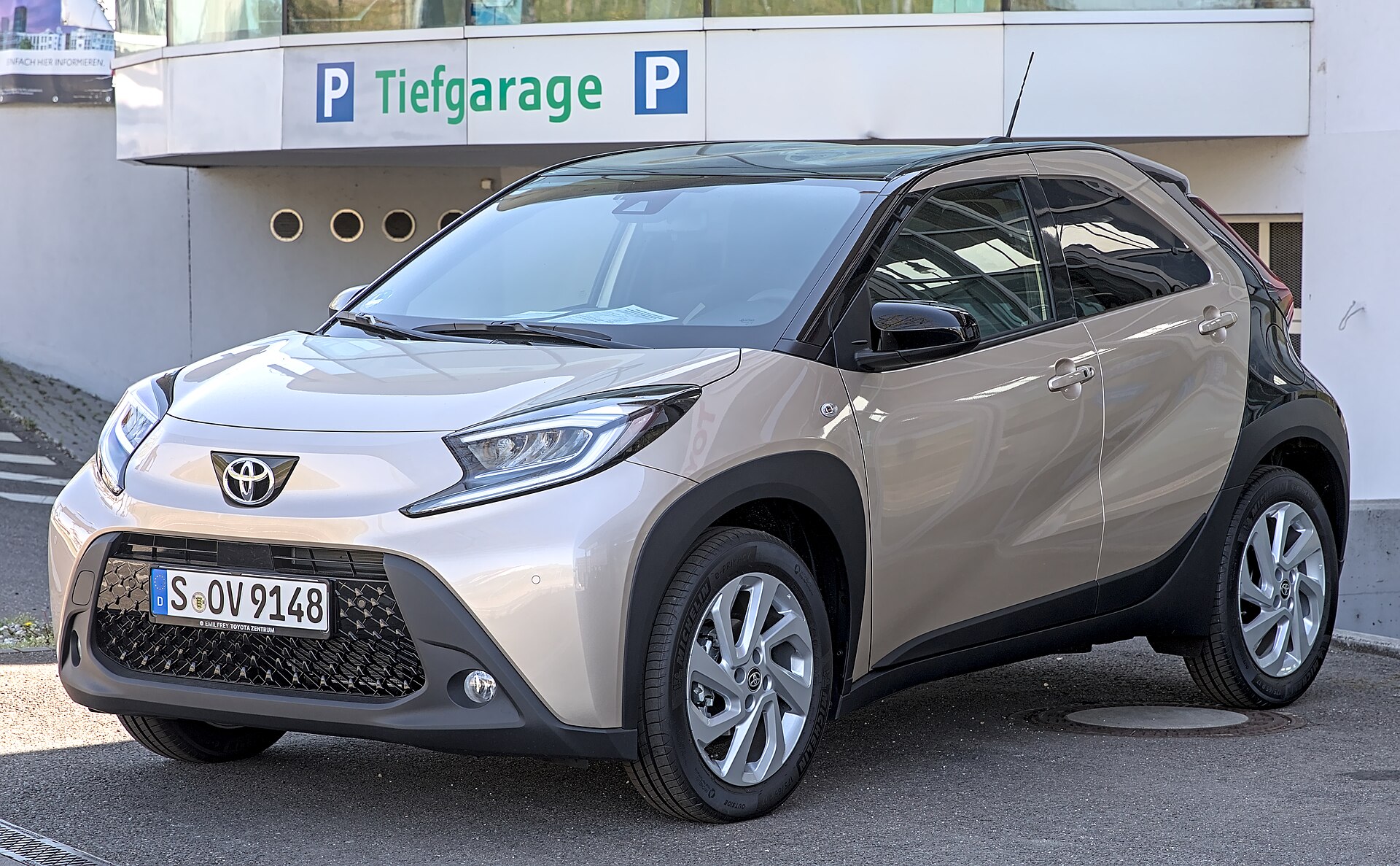
- Aygo AB70 Current 2022–now · Crossover · 53–85 kW (72–116 PS)
Newest first · 3 generations since 2005
-
2022
-
2014
-
2005
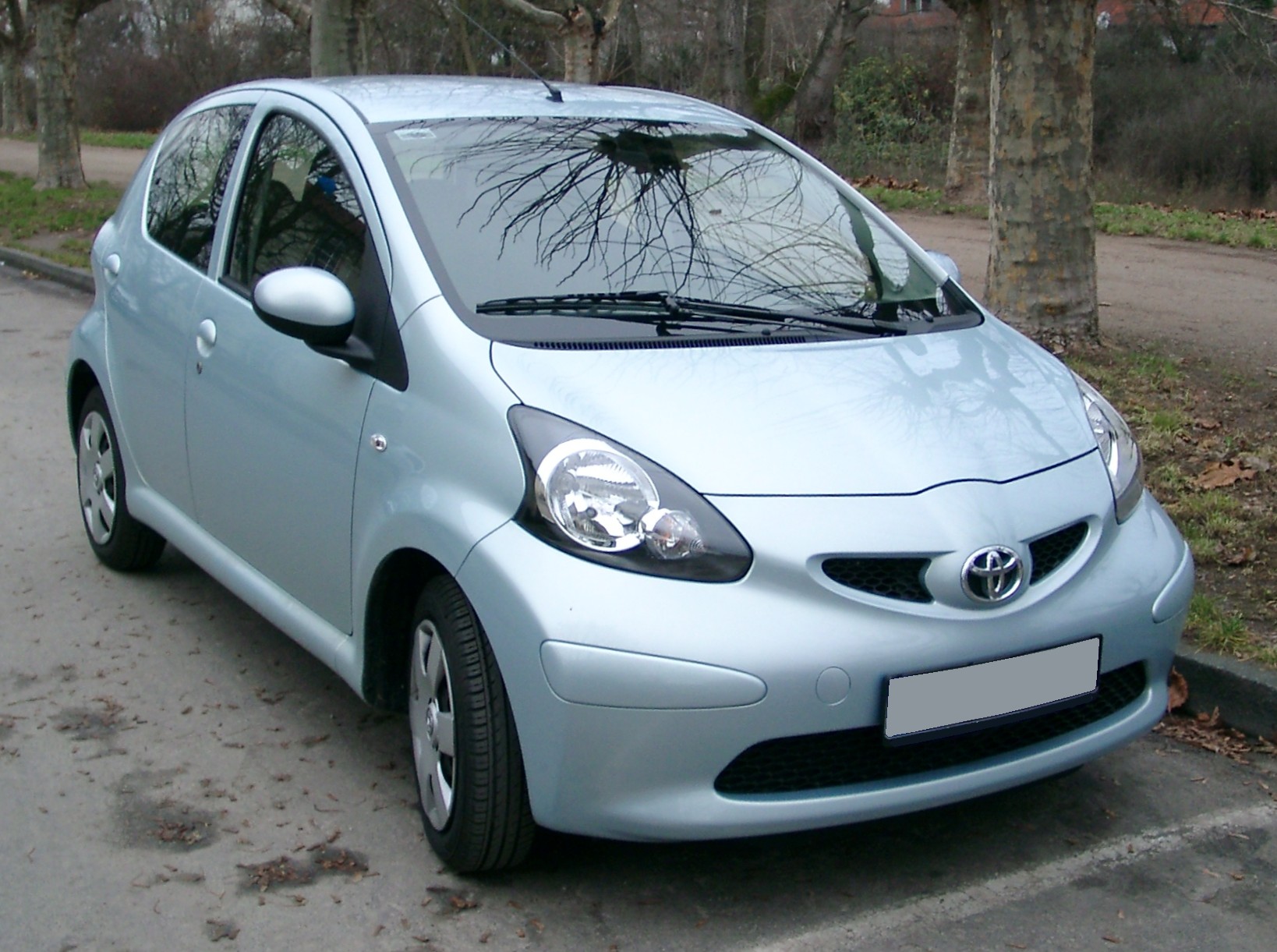
All generations by year: Aygo AB70 (2022–now) · Aygo II (2014–2022) · Aygo I (2005–2014)
Which one is mine?
Pick the year of first registration to see which generation it is.
Check by VINWhich Aygo to choose
Our verdict · Felix Hartmann
- For the lowest budget: a second-generation car from 2018 on, with the 53 kW engine and six airbags.
- For an older car with no frills: a first-generation 1.0 checked for the 2010 pedal recall.
- For more space and safety technology: the 2022–2025 Aygo X 1.0, which has a 231-litre boot.
- For low fuel use and better performance: the Aygo X Hybrid from 2025, if the higher price fits.
- For a direct comparison of sizes and outputs: see our comparison tool.
- For other city cars: compare the Kia Picanto and the Fiat Panda.
Other Toyotas are in our Toyota catalogue. For the background of the brand, read Toyota: from Koromo to the world's largest carmaker.
The Toyota Aygo is a small city car that Toyota has built for Europe since 2005 at Kolín in the Czech Republic. The first two generations were twins of the Citroën C1 and the Peugeot 107/108, made in a joint plant with PSA. Since 2022 the line has continued as the Aygo X, a crossover-styled car that Toyota builds alone and has offered only as a hybrid since 2025.
In short
- First generation 2005–2014, second 2014–2022: 1.0-litre three-cylinder with 51–53 kW (69–72 PS); a 1.4 diesel until 2007.
- Aygo X (2022): 3,700 mm long on a shortened GA-B platform, 53 kW 1.0 petrol, Euro NCAP four stars.
- Since the 2025 facelift: 1.5-litre full hybrid with 85 kW (116 PS) and 0–62 mph in 9.2 s.
- Over 1.4 million Aygos were sold in Europe from 2005 to 2022.
Size at a glance
Toyota Aygo II
The Toyota Aygo AB70 is 245 mm longer, 125 mm wider and 65 mm taller than the Toyota Aygo II.
| Dimensions | Toyota Aygo AB70 | Toyota Aygo II | Difference |
|---|---|---|---|
| Length | 3,700 mm145.7 in | 3,455 mm136.0 in | +245 mm+9.6 in |
| Width | 1,740 mm68.5 in | 1,615 mm63.6 in | +125 mm+4.9 in |
| Height | 1,525 mm60.0 in | 1,460 mm57.5 in | +65 mm+2.6 in |
| Wheelbase | 2,430 mm95.7 in | - | - |
| Boot | 231 L8.2 cu ft | - | - |
Running cost
Fuel · Aygo AB70 1.0 VVT-i
about 1,250 EUR fuel a year at 15,000 km
4.8 l/100 km · petrol at 1.75 EUR/l · change mileage, fuel price or version
Specs by version
Engines
| Version | Engine | Power | Torque | Gearbox | Drive | Production years |
|---|---|---|---|---|---|---|
| Hybrid · 1 version | ||||||
| AB70 · 1.5 Hybrid | 1.5 l · 3 cyl · Hybrid M15A-FXE | 85 kW 116 PS114 hp | - | CVT | Front-wheel drive | 2025 |
| Diesel · 1 version | ||||||
| Aygo I · 1.4 D-4D | 1.4 l · 4 cyl · Diesel 1,398 cc | 41 kW 56 PS55 hp | 130 Nm96 lb-ft | - | Front-wheel drive | 2005–2007 |
| Petrol · 5 versions | ||||||
| Aygo I · 1.0 VVT-i | 1.0 l · 3 cyl · Petrol 998 cc | 51 kW 69 PS68 hp | 93 Nm69 lb-ft | - | Front-wheel drive | 2005–2014 |
| Aygo II · 1.0 VVT-i | 1.0 l · 3 cyl · Petrol 1KR-FE | 51 kW 69 PS68 hp | 95 Nm70 lb-ft | 5-sp Manual | Front-wheel drive | 2014–2018 |
| Aygo II · 1.0 VVT-i | 1.0 l · 3 cyl · Petrol 1KR-B52 | 53 kW 72 PS71 hp | 93 Nm69 lb-ft | - | Front-wheel drive | 2019–2022 |
| AB70 · 1.0 VVT-i | 1.0 l · 3 cyl · Petrol 1KR-B52 | 53 kW 72 PS71 hp | 93 Nm69 lb-ft | 5-sp Manual | Front-wheel drive | 2022–2025 |
| AB70 · 1.0 VVT-i CVT | 1.0 l · 3 cyl · Petrol 1KR-B52 | 53 kW 72 PS71 hp | 93 Nm69 lb-ft | CVT | Front-wheel drive | 2022–2025 |
Performance
Show all 6 versions
| Version | 0–100 km/h | Top speed | Fuel consumption | CO₂ |
|---|---|---|---|---|
| Diesel · 1 version | ||||
| Aygo I · 1.4 D-4D | 14.8 s 0–62 mph | 154 km/h96 mph | 4.0 l/100 km58.8 mpg US · 70.6 mpg UK | 109 g/km |
| Petrol · 5 versions | ||||
| Aygo I · 1.0 VVT-i | 12.3 s 0–62 mph | 158 km/h98 mph | 4.3 l/100 km54.7 mpg US · 65.7 mpg UK | - |
| Aygo II · 1.0 VVT-i | 13.0 s 0–62 mph | 160 km/h99 mph | 4.1 l/100 km57.4 mpg US · 68.9 mpg UK | 90 g/km |
| Aygo II · 1.0 VVT-i | 12.6 s 0–62 mph | - | 3.8 l/100 km61.9 mpg US · 74.3 mpg UK | 86 g/km |
| AB70 · 1.0 VVT-i | 14.9 s 0–62 mph | 158 km/h98 mph | 4.8 l/100 km49.0 mpg US · 58.9 mpg UK | 109 g/km |
| AB70 · 1.0 VVT-i CVT | - | - | 4.8 l/100 km49.0 mpg US · 58.9 mpg UK | 109 g/km |
Dimensions and weight
Show all 6 versions
| Version | Length | Width | Height | Wheelbase | Kerb weight | Boot |
|---|---|---|---|---|---|---|
| Hybrid · 1 version | ||||||
| AB70 · 1.5 Hybrid | 3,700 mm145.7 in | 1,740 mm68.5 in | 1,525 mm60.0 in | 2,430 mm95.7 in | - | 231 l8.2 cu ft |
| Diesel · 1 version | ||||||
| Aygo I · 1.4 D-4D | 3,415 mm134.4 in | 1,615 mm63.6 in | 1,465 mm57.7 in | 2,340 mm92.1 in | 880 kg1,940 lb | 130 l4.6 cu ft |
| Petrol · 4 versions | ||||||
| Aygo II · 1.0 VVT-i | 3,455 mm136.0 in | 1,615 mm63.6 in | 1,460 mm57.5 in | - | 840 kg1,852 lb | - |
| Aygo II · 1.0 VVT-i | - | - | - | - | 926 kg2,041 lb | - |
| AB70 · 1.0 VVT-i | 3,700 mm145.7 in | 1,740 mm68.5 in | 1,525 mm60.0 in | 2,430 mm95.7 in | 1,024 kg2,258 lb | 231 l8.2 cu ft |
| AB70 · 1.0 VVT-i CVT | 3,700 mm145.7 in | 1,740 mm68.5 in | 1,525 mm60.0 in | 2,430 mm95.7 in | 1,024 kg2,258 lb | 231 l8.2 cu ft |
Verified Manufacturer and type-approval data from our catalog · Sources and methodology
Toyota Aygo at a glance
| Parameter | Value |
|---|---|
| Production | since February 2005 (Aygo X since March 2022) |
| Plant | Kolín, Czech Republic (TPCA, now TMMCZ) |
| Class | A-segment city car; crossover-styled city car since 2022 |
| Bodies | three- and five-door hatchback (to 2022); five-door Aygo X |
| Engines | 1.0 three-cylinder petrol; 1.4 diesel (2005–2007); 1.5 hybrid (since 2025) |
| Power | 41–85 kW (56–116 PS) |
| Gearboxes | 5-speed manual, automatic, CVT, e-CVT (hybrid) |
| Drive | front wheels |
| Twins | Citroën C1, Peugeot 107 and 108 (until 2022) |
The Kolín joint venture
Toyota and PSA Peugeot Citroën agreed on 12 July 2001 to develop a small car together under the project name B-Zero. They built a shared plant in Kolín, planned for 300,000 cars a year, 100,000 for each brand. The Aygo name comes from "i-go".
The joint venture ended with the second generation. When PSA, later part of Stellantis, left the project, the Kolín plant became Toyota Motor Manufacturing Czech Republic. The Aygo X therefore has no Peugeot or Citroën counterpart.
First generation (2005–2014)
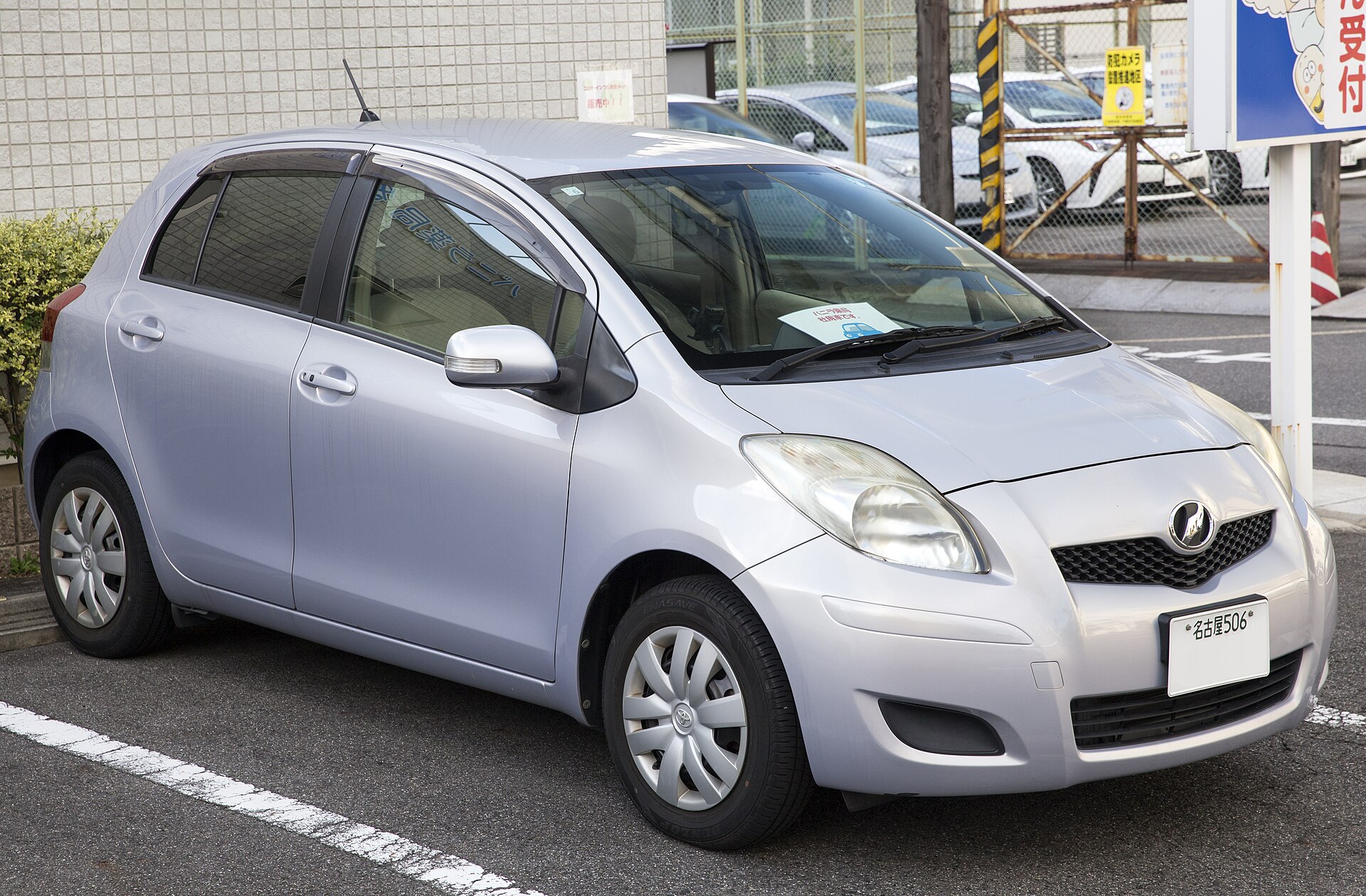
The Aygo made its debut at Geneva in March 2005 and reached showrooms that July. It was offered with three or five doors and two engines:
| Engine | Power | Torque | 0–100 km/h | Top speed | CO2 |
|---|---|---|---|---|---|
| 1.0 VVT-i, 998 cc, three-cylinder | 51 kW (69 PS) | 93 Nm | 12.3 s | 158 km/h | 99–109 g/km |
| 1.4 D-4D diesel, 1,398 cc (2005–2007) | 41 kW (56 PS) | 130 Nm | 14.8 s | 154 km/h | 109 g/km |
Some sources give 50 kW (68 PS) for the petrol and 40 kW (54 PS) for the diesel. Two facelifts followed, around 2010 and 2012: the first brought new bumpers and clear rear lamps, the second an angular bumper with daytime running lights.
In January 2010 the Aygo, C1 and 107 built between February 2005 and August 2009 were recalled because the accelerator pedal could stick. In the ADAC breakdown statistics of May 2010 the three twins topped their class for cars aged one to four years.
Toyota also showed how far the small body could be pushed. The one-off Aygo Crazy of 2008 had a mid-mounted 1.8-litre turbo engine with 147 kW and 240 Nm, weighed 1,050 kg and reached 100 km/h in 5.75 s. Toyota said it cost £100,000 to build in 2008.
Second generation (2014–2022)
The new Aygo appeared at the Geneva show in March 2014 under the slogan "go fun yourself", and production started on 27 May 2014. It sat on an updated version of the old platform. A 2015 x-wave test car with a fabric folding roof was 3,455 mm long, weighed 840 kg and cost £12,390 in Britain in 2015 (about €17,100).
| Engine | Power | Torque | 0–100 km/h | Top speed | CO2 |
|---|---|---|---|---|---|
| 1.0 VVT-i 1KR-FE (2014–2018) | 51 kW (69 PS) | 95 Nm | 13.0 s | 160 km/h | 90 g/km |
| 1.0 VVT-i 1KR-B52 (2019–2022) | 53 kW (72 PS) | 93 Nm | 12.6 s | – | 86 g/km |
The facelift, shown in Geneva in March 2018, brought new bumpers, new lights and the 53 kW engine. Standard equipment on the second generation included six airbags, stability control and hill-start assist; a 7-inch touchscreen and a rear-view camera were available. Trim names followed the "x" theme, from x-play to the x-claim, of which 350 were built with an electric sliding roof.

Aygo X (2022): crossover and hybrid
The Aygo X Prologue concept appeared on 17 March 2021 and the production car on 5 November 2021. Built since March 2022, it uses a shortened version of the GA-B platform of the Yaris. Designer Noriyuki Nakamura gave it chunky crossover styling; two-tone paint and a peel-back fabric roof are offered.
| Parameter | Aygo X 1.0 (2022–2025) | Aygo X Hybrid (since 2025) |
|---|---|---|
| Engine | 998 cc three-cylinder 1KR-B52 | 1,490 cc three-cylinder M15A-FXE hybrid |
| Power | 53 kW (72 PS) | 85 kW (116 PS) system |
| Torque | 93 Nm | – |
| Gearbox | 5-speed manual or CVT | e-CVT |
| 0–100 km/h / 0–62 mph | 14.9 s (0–100 km/h) | 9.2 s (0–62 mph) |
| Length / wheelbase | 3,700 / 2,430 mm | about 76 mm longer front overhang |
| Kerb weight | 940–1,015 kg | – |
| Boot | 231 l | – |
The 2025 facelift, unveiled on 2 June 2025, replaced the 1.0 with a 1.5-litre full hybrid. It also brought rear disc brakes, a 7-inch digital instrument panel, an electronic parking brake and a driver-attention camera. A GR Sport trim joined the range. Reviewers welcomed the economy and safety equipment but criticised the noisy engine under hard acceleration and the higher price. What Car? still named the Aygo X its Small Car of the Year for 2026.

Safety
| Car | Euro NCAP year | Adult | Child | Pedestrian / VRU | Safety assist |
|---|---|---|---|---|---|
| Aygo 1.0 (first generation) | 2012 | 68 % | 73 % | 53 % | 71 % |
| Aygo 1.0 x-play (second generation) | 2014 | 80 % | 80 % | 62 % | 56 % |
| Aygo X 1.0 (four stars) | 2022 | 78 % | 78 % | 74 % | 81 % |
| Aygo X Hybrid | 2025 | 73 % | 72 % | 83 % | 68 % |
Sales and prices
| Period | European sales |
|---|---|
| Aygo, best year (2009) | 103,252 |
| Aygo, 2005–2022 total | 1,423,407 |
| Aygo X, 2022 | 74,427 |
| Aygo X, 2025 | 98,838 |
The Aygo X sells almost as well as the old car did in its best years. In Germany the basic 1.0 cost €15,890 in March 2023. In Britain the hybrid started at £21,595 in January 2026 (about €24,900), roughly £5,000 more than the 1.0 had cost in 2025.
Toyota Aygo evolution in numbers
Did you know?
- The Toyota Aygo has been around for 21 years: 3 generations in our catalog since 2005.
- The longest-running generation is the Aygo I (2005–2014): 9 years.
- The biggest jump in power came with the Aygo AB70: up to 85 kW (116 PS), 32 kW more than the Aygo II.
Most powerful version, kW
Length, mm
Figures from the 1cars catalog: power is the strongest version of each generation; generations without the figure are left out.
Toyota Aygo: first vs latest generation
| Spec | Aygo I | Aygo AB70 | Change |
|---|---|---|---|
| Years | 2005–2014 | 2022–present | 17 years apart |
| Most powerful version | 51 kW (69 PS) | 85 kW (116 PS) | +34 kW (+67%) |
| Length | 3,415 mm | 3,700 mm | +285 mm |
| Width | 1,615 mm | 1,740 mm | +125 mm |
| Wheelbase | 2,340 mm | 2,430 mm | +90 mm |
| Lightest kerb weight | 880 kg | 1,024 kg | +144 kg |
| Best 0–100 km/h | 12.3 s | 14.9 s | +2.6 s |
| Top speed | 158 km/h | 158 km/h | same |
Oldest and newest generation in the 1cars catalog. Power is the strongest version of each; other rows are shown only when both generations have the figure.
Image credits · Photos from Wikimedia Commons under free licences
- Toyota Aygo I · Photo: Rudolf Stricker / Wikimedia Commons, CC BY-SA 3.0
- Toyota Aygo AB70 · Photo: Alexander Migl / Wikimedia Commons, CC BY-SA 4.0
Toyota Aygo in our rankings
- No. 1 of 67 · Smallest hatchbacks (3,415 mm)
- No. 2 of 146 · Smallest SUVs and crossovers (3,700 mm)
- No. 2 of 99 · Lightest SUVs and crossovers (1,024 kg)
- No. 2 of 53 · Lightest hatchbacks (840 kg)
- No. 3 of 420 · Smallest cars (3,415 mm)
- No. 8 of 304 · Lightest cars (840 kg)
Shorter than 99% of ranked cars in the 1CARS catalog (No. 3 of 420).
FAQ
Is the Toyota Aygo the same as the Citroën C1 and Peugeot 107/108?
The first two generations were. All three were built at Kolín and shared engines and structure. The Aygo X is a Toyota-only car.
What engine does the Toyota Aygo have?
A 1.0-litre three-cylinder petrol with 51–53 kW (69–72 PS); early cars also had a 1.4 diesel. The Aygo X has used a 1.5 hybrid with 85 kW since 2025.
Is the Aygo X a new Aygo?
Yes. It is counted as the third generation of the Aygo, with crossover styling and a shortened GA-B platform shared with the Yaris.
How big is the Aygo X boot?
231 litres, or 189 litres with the optional JBL sound system.
Where is the Toyota Aygo built?
In Kolín, Czech Republic, in the former TPCA plant that is now Toyota Motor Manufacturing Czech Republic.
Data sources
Data checked by an editor against the sources below.
- Wikipedia - Toyota Aygo
- Co
- Euro NCAP - B802bc3f 01df 4711 Be17 891dfe720c6f
- Wikipedia - Toyota Aygo X
- Euro NCAP - Mercedes Star Shines Bright As Euro Ncap S Final Results Deliver Safer Options For Every Buyer
- EEA CO₂ monitoring (European Environment Agency, CC BY 4.0)