Toyota: From Koromo to the World's Largest Carmaker
Toyota Motor Corporation is a Japanese carmaker based in Toyota City, Aichi, founded by Kiichiro Toyoda on 28 August 1937. It grew from a small truck and car maker into the world's largest by volume, building about 10 million vehicles a year under the Toyota, Lexus and Daihatsu brands. Its best-known models include the Corolla, Land Cruiser, Hilux, Camry and Prius.
Key takeaways
- The car company was spun off from the Toyoda loom business in 1937; the Crown (1955) and Corolla (1966) made it a mass-market maker.
- Toyota built abroad from 1962, in the United States from 1984 (NUMMI, with General Motors) and in Europe from 1992.
- It launched Lexus in 1989, the Prius hybrid in December 1997 and the Mirai fuel-cell car in 2014.
- In 2012 it became the first carmaker to build more than 10 million vehicles in a year; cumulative production passed 300 million in September 2023.

Toyota at a glance
| Fact | Value |
|---|---|
| Founded | 28 August 1937 (founding day celebrated on 3 November) |
| Founder | Kiichiro Toyoda |
| Headquarters | Toyota City, Aichi Prefecture, Japan |
| Leadership (2026) | Akio Toyoda, chairman; Kenta Kon, president and CEO since April 2026 |
| Brands | Toyota, Lexus, Daihatsu, GR (Gazoo Racing); Century spun off in October 2025 |
| Group companies and stakes | Hino (subsidiary), Subaru (about 20%), Mazda (5.1%), Suzuki (4.9%) |
| Employees | about 384,000 (2025) |
| Output | about 10 million vehicles a year |
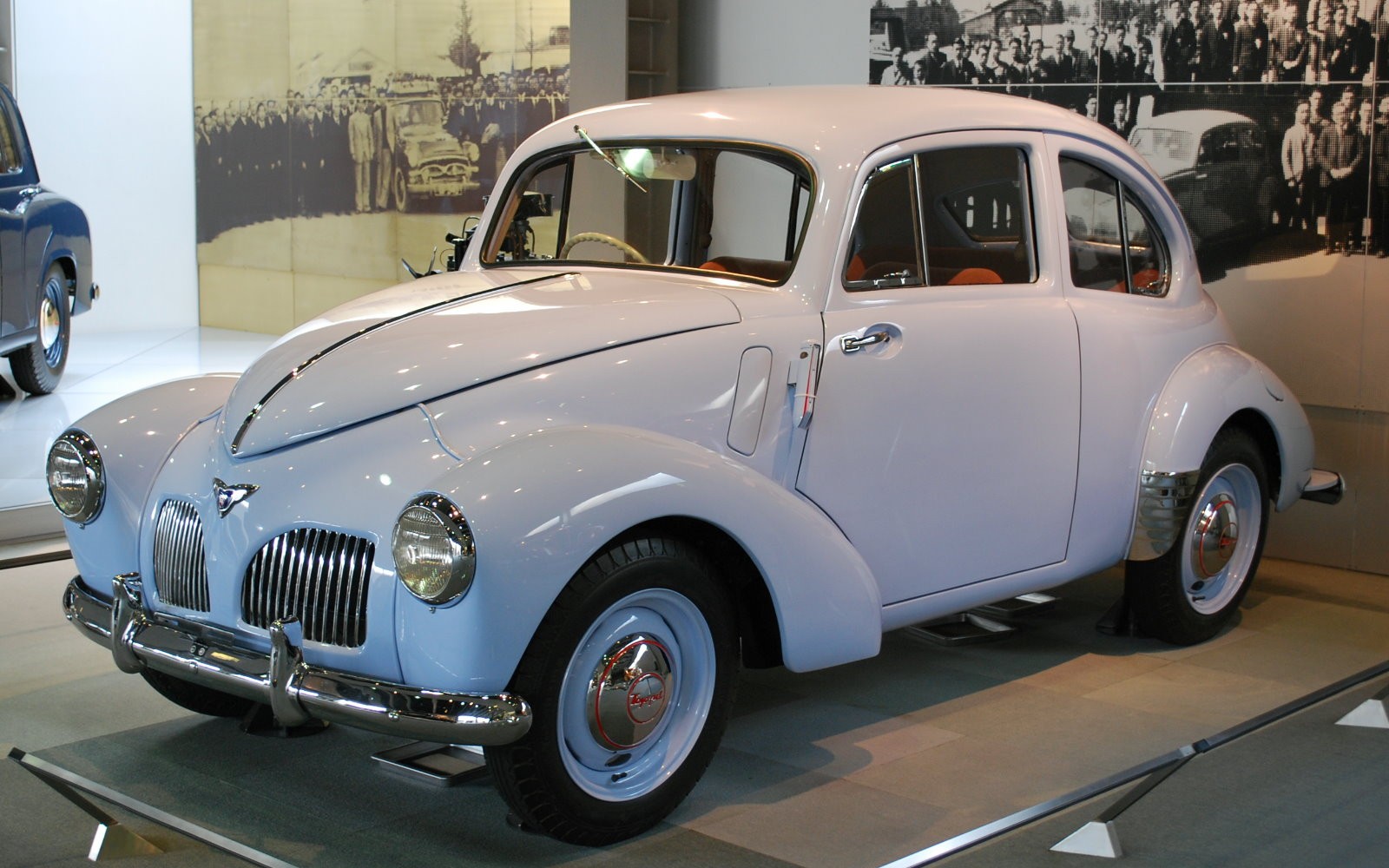
How a loom company became a carmaker, from Sakichi Toyoda's automatic loom to the first AA saloon, is told separately in How Toyota began: from looms to cars. This page follows the company from its founding as a carmaker to today.
The founding years and the Crown (1937–1959)
The company was founded on 28 August 1937, and the Koromo plant opened on 3 November 1938. The war years were spent on trucks, and the company almost went bankrupt in 1949–1950. To get bank loans it split off its sales operation as Toyota Motor Sales in 1950; the two companies merged again into Toyota Motor Corporation in 1982.

The Crown of 1955 was the first big passenger car success at home, and in 1957 it became the first Japanese car exported to the United States. The early Crown was underpowered for American roads, but the Land Cruiser, which had reached Latin America in 1953, sold well. The Motomachi plant, the first factory built just for cars, opened in 1959.
Corolla, Hilux and the export boom (1960s–1970s)
The 1960s turned the company into a mass producer. The first plant outside Japan opened in Brazil in 1962, and Danish, Norwegian and Swedish sales began in 1963. The Corolla of 1966 was the decisive model: a compact, well-equipped car that became, over the following decades, the best-selling car nameplate in the world. The Corolla is still the top seller, with about 1.66 million sold in fiscal 2025, roughly one in six of the group's vehicles by our calculation. The Hilux pickup followed in 1968, and the Celica coupé in 1970. By the end of the 1960s it had exported its millionth vehicle.

Two shocks in the United States shaped the next steps. The 1964 "chicken tax", a 25% US tariff on imported light trucks, pushed Japanese makers to build pickups locally. The 1973 oil crisis then made small, economical cars popular, and sales grew quickly as American buyers looked for fuel-efficient and reliable cars.
Building abroad: NUMMI, US and European plants
To avoid trade friction, the company began building cars in its export markets:
- 1984: NUMMI, a joint venture with General Motors in Fremont, California; the first US-built Toyota, a white Corolla, came off the line on 7 October 1986;
- 1988: its own plant in Georgetown, Kentucky, which became its largest outside Japan, building the Camry;
- 1992: Burnaston in England, the first European car plant;
- 2001: Valenciennes in France, building the Yaris;
- 2005: Kolín in the Czech Republic, first a joint venture with PSA for the Aygo and its Citroën and Peugeot twins.

Later North American plants followed for the RAV4 in Woodstock, Ontario, and the Highlander in Princeton, Indiana. The full-size T100 pickup and its successor, the Tundra, took the brand into the core of the American truck market.
| Year | Event |
|---|---|
| 1937 | Toyota Motor Co. founded (28 August) |
| 1955 | Crown |
| 1957 | First exports to the United States |
| 1966 | Corolla |
| 1968 | Hilux |
| 1982 | Toyota Motor Co. and Toyota Motor Sales merge |
| 1984 | NUMMI joint venture with GM |
| 1989 | Lexus brand and LS 400 |
| 1992 | First European car plant (Burnaston, UK) |
| 1997 | Prius hybrid (December) |
| 2002 | Formula One team (to 2009) |
| 2012 | First carmaker to build over 10 million vehicles in a year |
| 2014 | Mirai fuel-cell car |
| 2018–2022 | Five consecutive Le Mans 24 Hours wins |
| 2023 | Cumulative production passes 300 million (September) |
Lexus, Prius and Toyota's engineering firsts
In 1989 the company launched Lexus with the LS 400 saloon, a luxury car built to compete with Mercedes-Benz and BMW in the United States. The brand's own story is told in the history of Lexus. In December 1997 it put the first mass-produced hybrid car, the Prius, on sale in Japan, with exports from August 2000. Hybrid drive later spread to almost every model line, from the Yaris to the RAV4 and Camry.

The company also pushed hydrogen. The Mirai fuel-cell saloon was unveiled in November 2014 and went on sale in Japan that December. Its first battery-electric model in the bZ range, the bZ4X, was revealed in April 2021 and went on sale in mid-2022. It is developing solid-state batteries with Panasonic and building Woven City, a test town for new mobility on a 175-acre site at the foot of Mount Fuji, under construction since February 2021.
On the sporting side, the 2000GT of 1967, the Celica and the Supra built the brand's performance image. The Toyota Supra appears in the 1cars list of the best sports cars as the "best Japanese icon".
Motorsport and records
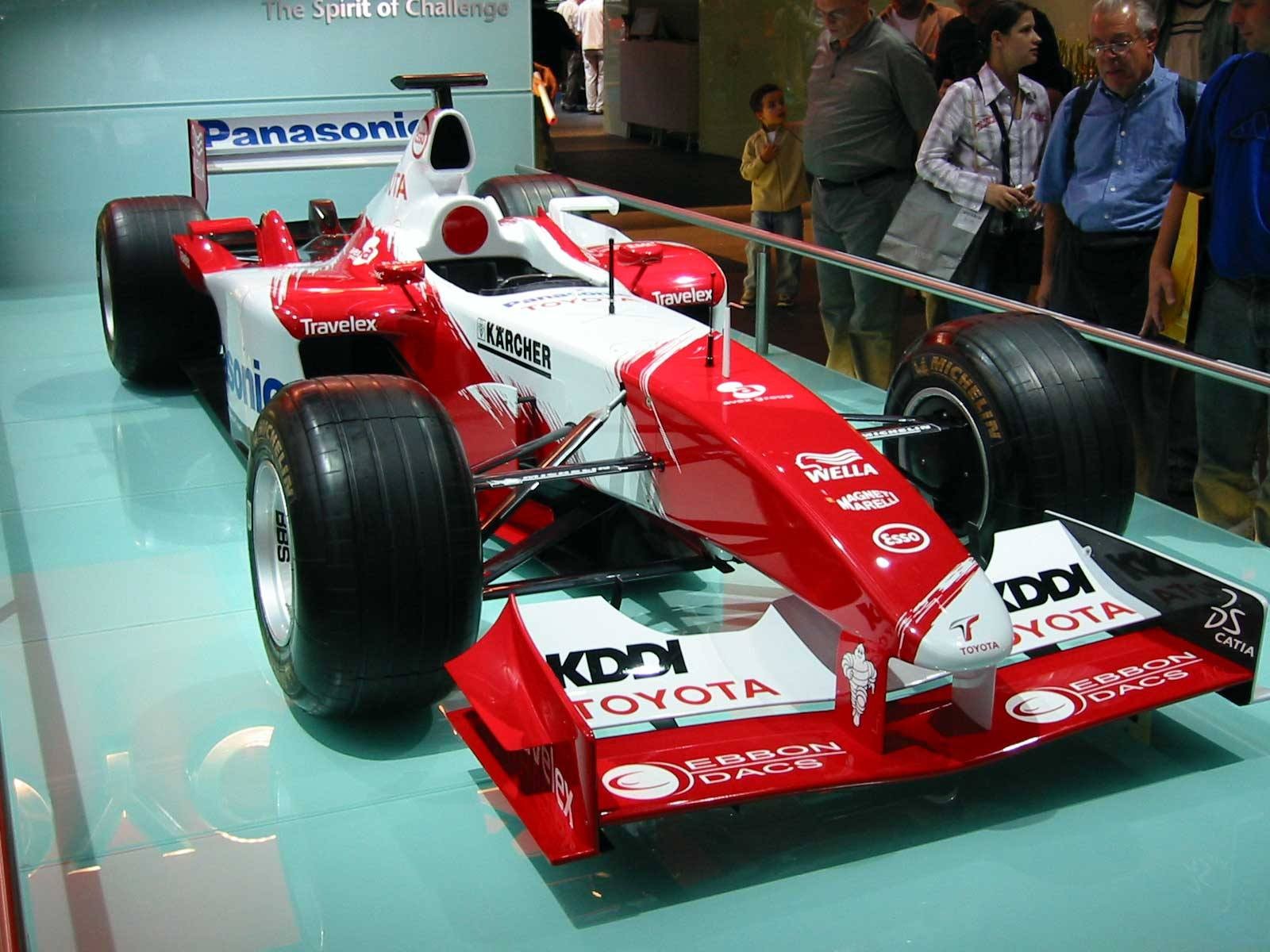
The company entered Formula One in 2002 with its own team and stayed until 2009, without winning a race. Endurance racing brought greater success: the Toyota hybrid prototypes won the Le Mans 24 Hours five times in a row, from 2018 to 2022. Toyota Gazoo Racing also competes in the World Rally Championship, and the GR badge now marks Toyota's sports models.
Crises: recalls and the 2011 disasters
From 2009 to 2011 the company recalled about 9 million vehicles over unintended acceleration linked to floor mats and sticking accelerator pedals. In January 2010 it suspended US sales of eight models, and it later agreed to a criminal penalty and a separate class-action settlement in the United States. The 2011 earthquake and tsunami in Japan and severe flooding in Thailand that autumn disrupted its suppliers and cut production for months. The company afterwards mapped its supplier network in more detail to make the chain more resilient.

Toyota today: the world's largest carmaker
The group has been the world's best-selling carmaker in most recent years, producing about 10 million vehicles annually. Its top sellers in fiscal 2025 were the Corolla (about 1.66 million), the RAV4 (about 1.05 million), the Yaris, the Camry and the Hilux. The group includes Daihatsu (wholly owned since August 2016) and Hino, and holds stakes in Subaru, Mazda and Suzuki, which cooperate with it on hybrids and electric cars.

Leadership has changed in recent years. Akio Toyoda, the founder's grandson, became chairman in April 2023; Koji Sato was president from 2023 to 2026, and Kenta Kon has been president and CEO since April 2026. The Century, the top limousine, was spun off as a separate brand in October 2025.
| Measure | Figure |
|---|---|
| Vehicles built per year | about 10 million |
| First year over 10 million | 2012 |
| Cumulative production | over 300 million (September 2023) |
| Employees | about 384,000 (2025) |
| Best-selling model (FY2025) | Corolla, about 1.66 million |
| Le Mans wins | five, 2018–2022 |
You can compare any Toyota with its rivals in the 1cars comparison tool, and every Toyota model in the catalogue is on the Toyota brand page.
FAQ
Who owns Toyota today?
Toyota Motor Corporation is a listed company with many institutional shareholders, including Toyota group companies. Akio Toyoda, grandson of founder Kiichiro Toyoda, is chairman, and Kenta Kon has been president and CEO since April 2026.
When was Toyota founded and by whom?
Kiichiro Toyoda founded Toyota Motor Co., Ltd. on 28 August 1937 as a spin-off of his father Sakichi's loom company. Toyota marks 3 November, the day the Koromo plant opened in 1938, as its founding day.
Where are Toyota cars made?
In Japan, mainly around Toyota City in Aichi, and in plants across the world, including the United States, Canada, Mexico, Brazil, the UK, France, the Czech Republic, Turkey, Thailand, China and India. Europe's plants build the Yaris, Aygo X, C-HR and Corolla.
What does the Toyota logo mean?
The three-oval logo, used since October 1989, combines two inner ovals that form a stylised "T" with an outer oval for the world around it. The name itself was changed from Toyoda in 1936 because, written in katakana, it takes eight strokes, a lucky number in Japan.
What is the best-selling Toyota model?
The Corolla. Launched in 1966, it is the best-selling car nameplate in history and was still Toyota's top model in fiscal 2025, with about 1.66 million sold, ahead of the RAV4, Yaris, Camry and Hilux.
Photos (2)


Videos 2

Video 1

Video 2