 Opel Astra K (2015–2021)
Specs, engines, safety and known problems
Published Sources (6) Report an error
By Felix Hartmann, Automotive Technology & EV Contributor Reviewed by Oleksandr Hnatiuk

- Power
- 66–147 kW (90–200 PS)
- Boot
- 370 l
- Fuel, 1.4 (4-cyl, 1,399 cm³)
- ~1,450 EUR a year
- Generation
- 5 of 6
Model timeline
Where the K sits in the Astra story
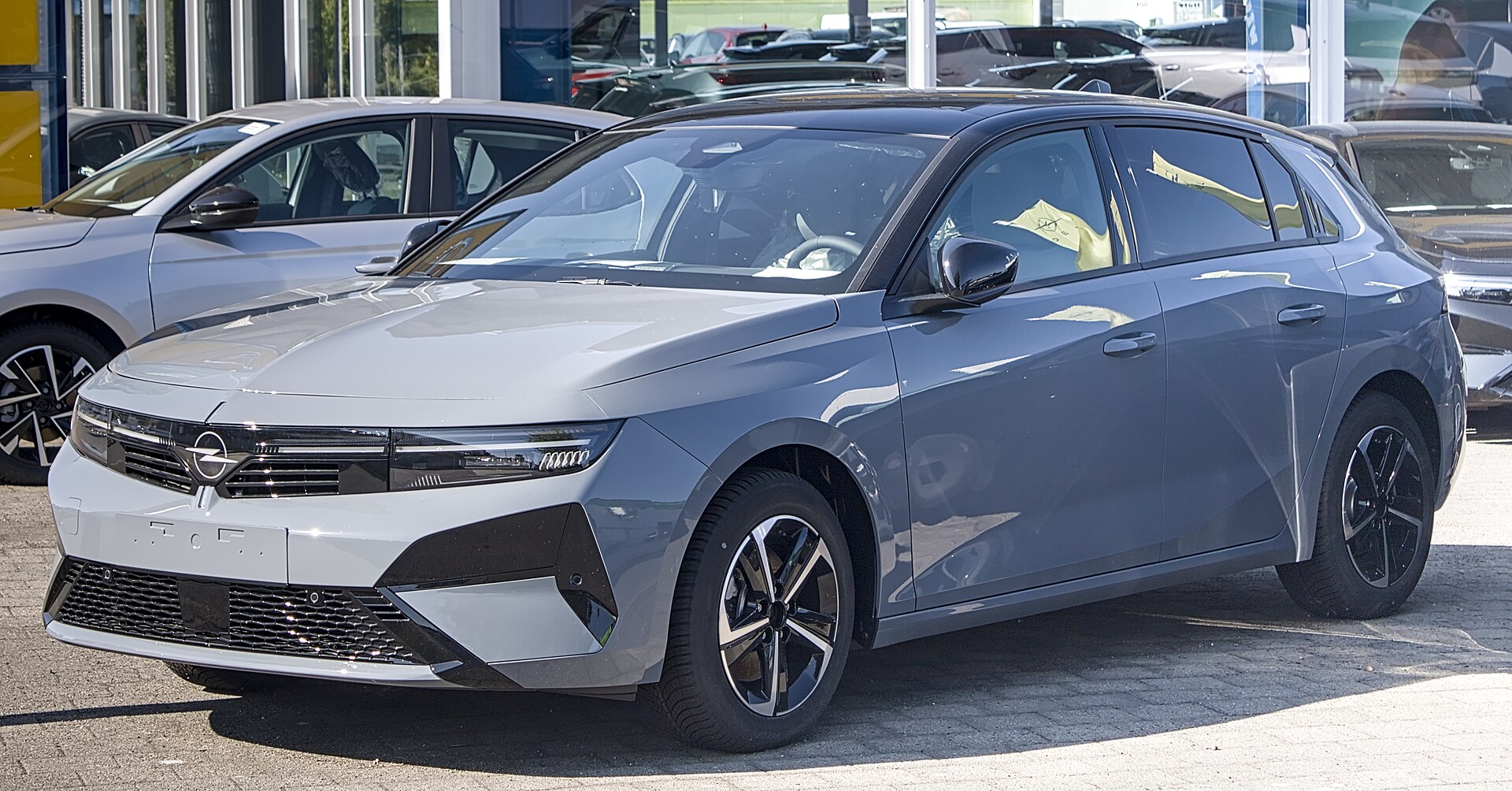
Predecessor Astra J (2009–2015) Successor Astra L (2021–present)


H and J overlapped in 2009–2010, so J sits on a second lane
Newest first · 6 generations since 1991
-
2021
-
2015
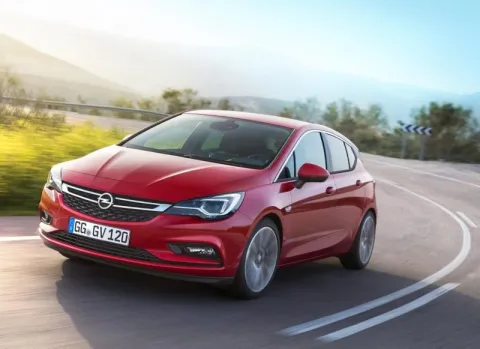 K You are here 2015–2021 · Hatchback, Station wagon · 66–147 kW (90–200 PS)
-
2009
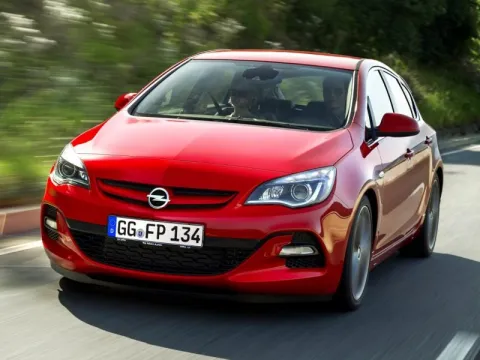 J 2009–2015 · Sedan, Hatchback · 64–206 kW (87–280 PS)
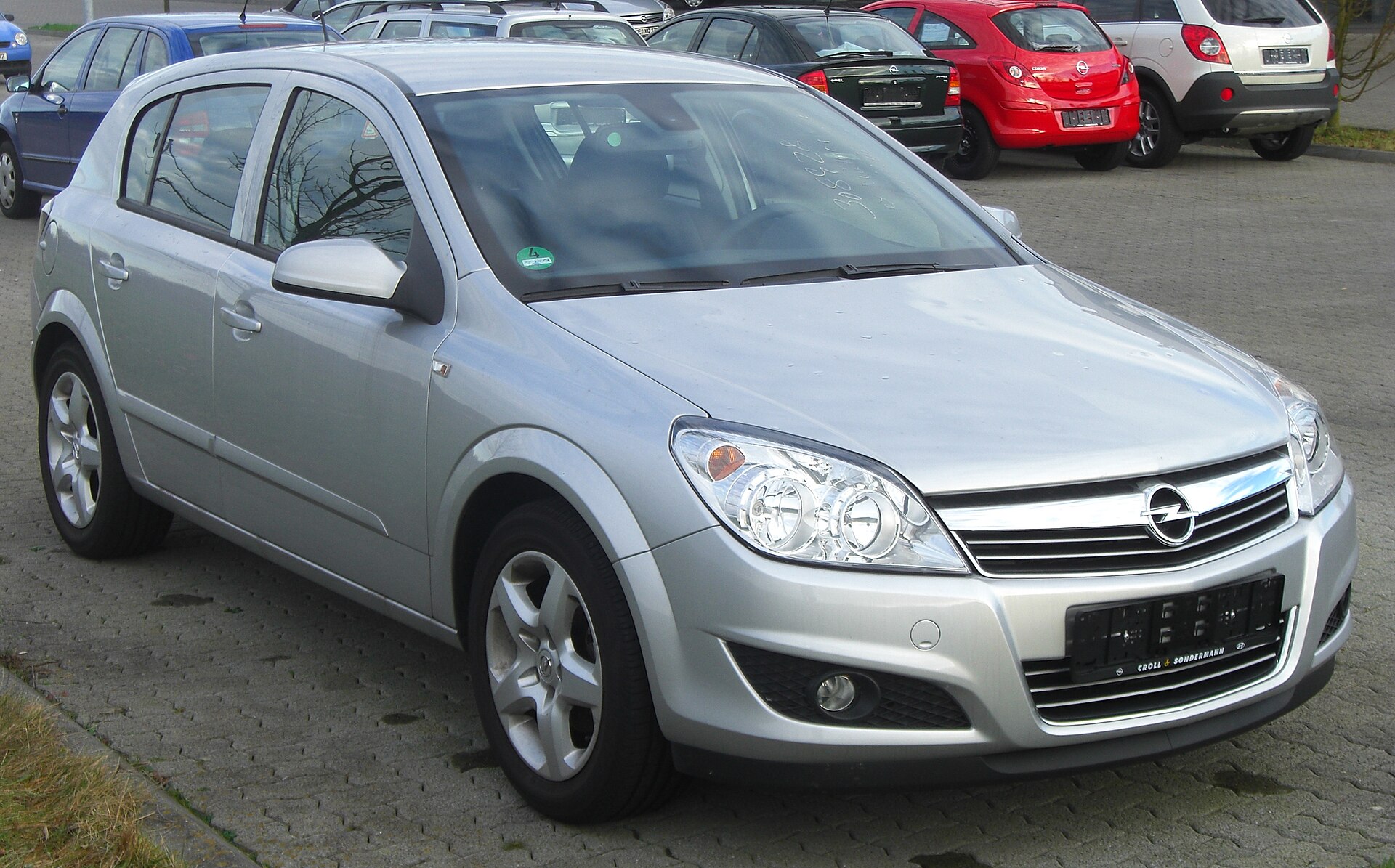
H and J overlapped in 2009–2010
-
2004
-
1998
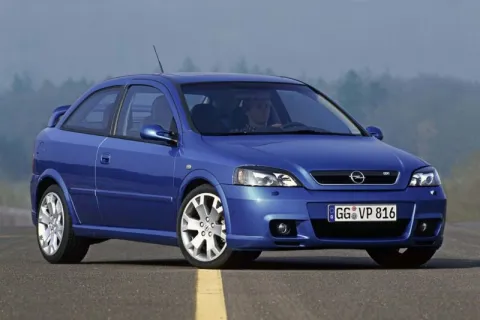 G 1998–2004 · Sedan, Hatchback · 48–147 kW (65–200 PS)
-
1991
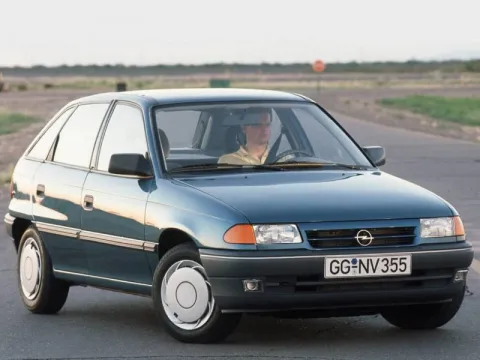 F 1991–1998 · Sedan, Hatchback · 42–110 kW (57–150 PS)
All generations by year: Astra L (2021–now) · Astra K (2015–2021) · Astra J (2009–2015) · Astra H (2004–2010) · Astra G (1998–2004) · Astra F (1991–1998)
Which Astra K to buy
Our verdict · Felix Hartmann
- Best all-rounder: a 1.4 Turbo with 92 kW (125 PS) or 110 kW (150 PS), recommended by ADAC and easy to find.
- Lowest running costs: the 1.4 CNG, if natural gas stations are on your routes.
- Newest technology: a post-July 2019 facelift car with the 1.2 Turbo or 1.5 diesel and the improved aerodynamics; ADAC's lowest breakdown figure is for 2021 registrations.
- Performance: the 1.6 Turbo with 147 kW (200 PS), rare and usually priced higher.
Whichever you choose, check for oil leaks, confirm that recall work has been done and test the headlight adjustment. Rivals of the same years include the Kia Ceed.
The Opel Astra K is the fifth Astra generation, built from July 2015 to December 2021 in the UK and Poland. It was the last Astra developed before Opel passed to PSA and is best known for a body that shed up to 200 kg against its predecessor. It won European Car of the Year 2016 and is now a common used compact.
In short
- First shown on 1 June 2015, premiered at the Frankfurt show that September; the hatchback reached German showrooms in October 2015 and the Sports Tourer in March 2016.
- Between 120 and 200 kg lighter than the Astra J, depending on version, with a shorter body but more interior space.
- Engines from a 66 kW (90 PS) 1.0 Turbo to a 147 kW (200 PS) 1.6 Turbo, plus 1.6 and 1.5 diesels and a 1.4 CNG version.
- Five Euro NCAP stars in 2015; ADAC rates its breakdown record average to good.
Size at a glance
Peugeot 308 II
The Opel Astra K is 117 mm longer, 5 mm wider and 28 mm taller than the Peugeot 308 II.
| Dimensions | Opel Astra K | Peugeot 308 II | Difference |
|---|---|---|---|
| Length | 4,370 mm172.0 in | 4,253 mm167.4 in | +117 mm+4.6 in |
| Width | 1,809 mm71.2 in | 1,804 mm71.0 in | +5 mm+0.2 in |
| Height | 1,485 mm58.5 in | 1,457 mm57.4 in | +28 mm+1.1 in |
| Wheelbase | 2,662 mm104.8 in | 2,620 mm103.1 in | +42 mm+1.7 in |
| Boot | 370 L13.1 cu ft | 470 L16.6 cu ft | −100 L−3.5 cu ft |
Ford Focus IV
The Opel Astra K is 8 mm shorter, 16 mm narrower and 31 mm taller than the Ford Focus IV.
| Dimensions | Opel Astra K | Ford Focus IV | Difference |
|---|---|---|---|
| Length | 4,370 mm172.0 in | 4,378 mm172.4 in | −8 mm−0.3 in |
| Width | 1,809 mm71.2 in | 1,825 mm71.9 in | −16 mm−0.6 in |
| Height | 1,485 mm58.5 in | 1,454 mm57.2 in | +31 mm+1.2 in |
| Wheelbase | 2,662 mm104.8 in | 2,700 mm106.3 in | −38 mm−1.5 in |
| Boot | 370 L13.1 cu ft | 375 L13.2 cu ft | −5 L−0.2 cu ft |
Opel Astra J
The Opel Astra K is 49 mm shorter, 5 mm narrower and 25 mm lower than the Opel Astra J.
| Dimensions | Opel Astra K | Opel Astra J | Difference |
|---|---|---|---|
| Length | 4,370 mm172.0 in | 4,419 mm174.0 in | −49 mm−1.9 in |
| Width | 1,809 mm71.2 in | 1,814 mm71.4 in | −5 mm−0.2 in |
| Height | 1,485 mm58.5 in | 1,510 mm59.4 in | −25 mm−1.0 in |
| Wheelbase | 2,662 mm104.8 in | 2,685 mm105.7 in | −23 mm−0.9 in |
| Boot | 370 L13.1 cu ft | 370 L13.1 cu ft | Same |
Running cost
Fuel · Astra K 1.4 (4-cyl, 1,399 cm³)
about 1,450 EUR fuel a year at 15,000 km
5.5 l/100 km · petrol at 1.75 EUR/l · change mileage, fuel price or version
Astra K specs by version
Engines
| Version | Engine | Power | Torque | Drive |
|---|---|---|---|---|
| 1.0 Turbo | 1.0 l · 3 cyl · Petrol 1,000 cc | 66 kW 90 PS89 hp | — | — |
| 1.4 (4-cyl, 1,399 cm³) | Petrol | 74 kW 101 PS99 hp | 130 Nm96 lb-ft | Front-wheel drive |
| 1.4 Turbo CNG | — | 81 kW 110 PS109 hp | 200 Nm148 lb-ft | Front-wheel drive |
| 1.6 Turbo (4-cyl, 1,598 cm³) | 1.6 l · Petrol 1,598 cc | 147 kW 200 PS197 hp | 300 Nm221 lb-ft | Front-wheel drive |
Performance
Show all 2 versions
| Version | 0–100 km/h | Top speed | Fuel consumption | CO₂ |
|---|---|---|---|---|
| 1.0 Turbo | 12.2 s 0–62 mph | 188 km/h117 mph | 5.6 l/100 km42.0 mpg US · 50.4 mpg UK | 127 g/km |
| 1.4 (4-cyl, 1,399 cm³) | 13.4 s 0–62 mph | 185 km/h115 mph | 5.5 l/100 km42.8 mpg US · 51.4 mpg UK | 128 g/km |
Dimensions and weight
Show all 3 versions
| Version | Length | Width | Height | Wheelbase | Kerb weight | Boot | Fuel tank |
|---|---|---|---|---|---|---|---|
| 1.0 Turbo | 4,370 mm172.0 in | 1,809 mm71.2 in | 1,485 mm58.5 in | 2,662 mm104.8 in | 1,280 kg2,822 lb | 370 l13.1 cu ft | 48 l12.7 gal US |
| 1.4 (4-cyl, 1,399 cm³) | — | — | — | — | 1,244 kg2,743 lb | 370 l13.1 cu ft | 48 l12.7 gal US |
| 1.6 Turbo (4-cyl, 1,598 cm³) | — | — | — | — | 1,350 kg2,976 lb | 370 l13.1 cu ft | 48 l12.7 gal US |
Verified Manufacturer and type-approval data from our catalog · Sources and methodology
How the Astra K moved on from the Astra J
The Astra J was heavy, and German testers said so. ADAC lists high weight and a small boot among its weaknesses. Opel's answer with the K was a new structure rather than a facelift. According to Opel's figures, the bare bodyshell dropped from 357 kg to 280 kg, and chassis changes saved another 50 kg. The total saving was between 120 and 200 kg, depending on engine and body. German Wikipedia quotes about 135 kg for a Sports Tourer 1.4 Turbo.
The car also got shorter. ADAC gives 4,370 mm for the K hatchback against 4,419 mm for the J, yet Opel claimed more interior space thanks to better packaging. The engine line-up moved to smaller turbocharged petrol units, including a three-cylinder 1.0 litre, and new 1.6 CDTI diesels.
Technology was the other headline. Options included IntelliLux matrix LED headlights with adaptive high beam, the OnStar connected-services system and touchscreen infotainment with Android Auto and Apple CarPlay. The news story from June 2015 on how Opel reinvented the Astra captures the launch, and the Opel Astra generations overview puts the K in context with the five other Astras.
Body, chassis and the 2019 facelift
The K came as a five-door hatchback and a five-door Sports Tourer estate only; the saloon and three-door GTC of the previous generation continued alongside it until 2018 rather than being replaced. Production was split between Opel's plants in the UK and Poland. The last car left the Polish line on 30 November 2021 and the last British one on 13 December 2021.
The chassis uses MacPherson struts at the front and a torsion beam at the rear, with a Watt's linkage added on the most powerful versions to improve stability. All Astra Ks are front-wheel drive. Optional AGR-certified ergonomic front seats carried on from earlier Opels.
Opel presented the facelift on 3 July 2019. The visual changes were small: a revised grille and new rear lights. The bigger news was underneath, with new three-cylinder 1.2 Turbo petrol and 1.5 diesel engines meeting Euro 6d, a nine-speed automatic and a CVT. German sources say the drag coefficient improved from 0.272 to 0.26 for the hatchback and 0.25 for the Sports Tourer. OnStar was replaced by Opel Connect and switched off at the end of 2020.
Astra K engines before and after 2019
The table combines ADAC's data and English Wikipedia. Outputs are in kW first with the PS figure the sources use.
| Engine | Years | Power | Torque | Notes |
|---|---|---|---|---|
| 1.0 Turbo (3-cyl, 999 cm³) | pre-facelift | 66 kW (90 PS), 77 kW (105 PS) | 170 Nm (125 lb-ft) | 90 PS version from June 2018; Easytronic option |
| 1.4 (4-cyl, 1,399 cm³) | 2015–2018 | 74 kW (100 PS) | 130 Nm (96 lb-ft) | non-turbo base engine |
| 1.4 Turbo (4-cyl, 1,399 cm³) | pre-facelift | 92 kW (125 PS), 110 kW (150 PS) | 245 Nm (181 lb-ft) | CVT on some later cars |
| 1.4 Turbo CNG | from 2017 | 81 kW (110 PS) | 200 Nm (148 lb-ft) | natural gas and petrol |
| 1.6 Turbo (4-cyl, 1,598 cm³) | pre-facelift | 147 kW (200 PS) | 300 Nm (221 lb-ft) on overboost | 0–100 km/h in 7.0 s, 235 km/h (146 mph) |
| 1.2 Turbo (3-cyl, 1,199 cm³) | 2019–2021 | 81 kW (110 PS), 96 kW (130 PS), 107 kW (145 PS) | 195–225 Nm (144–166 lb-ft) | facelift engine |
| 1.6 CDTI diesel | pre-facelift | 70 kW (95 PS), 81 kW (110 PS), 100 kW (136 PS) | 280–320 Nm (207–236 lb-ft) | 6-speed automatic available |
| 1.6 CDTI BiTurbo diesel | pre-facelift | 118 kW (160 PS); later 110 kW (150 PS) | 350 Nm (258 lb-ft) for 160 PS | 160 PS dropped June 2018 |
| 1.5 Diesel (3-cyl, 1,496 cm³) | 2019–2021 | 77 kW (105 PS), 90 kW (122 PS) | 260–300 Nm (192–221 lb-ft) | 9-speed automatic option |
ADAC recommends the 1.4 Turbo with 125 or 150 PS as smooth, strong and widely available, and the 1.4 CNG for drivers with high annual mileage. It calls the 1.0 Turbo with 105 PS economical and sufficient, describes the 1.2 Turbo as a good balance with weaker refinement, and finds the non-turbo 1.4 sluggish. In 2017 Opel renamed its CDTI diesels simply "Diesel".
Astra K dimensions and capacities
Values are from ADAC's used-car data and the Euro NCAP datasheet unless stated.
| Parameter | Metric | Imperial |
|---|---|---|
| Length (hatchback / Sports Tourer) | 4,370 / 4,702 mm | 172.0 / 185.1 in |
| Width without / with mirrors | 1,809 / 2,042 mm | 71.2 / 80.4 in |
| Height (hatchback) | 1,485 mm | 58.5 in |
| Height (Sports Tourer) | 1,510 mm (Opel quotes 1,499 mm) | 59.4 in (59.0 in) |
| Boot, hatchback | 370 L | 13.1 cu ft |
| Boot, Sports Tourer | 540 L, up to 1,630 L folded | 19.1 cu ft, up to 57.6 cu ft |
| Kerb weight (1.4 tested by Euro NCAP) | 1,240 kg | 2,734 lb |
| Fuel tank | 48 L | 10.6 UK gal |
ADAC lists the hatchback's boot among the car's weak points, so the Sports Tourer is the better family choice. Its rival set includes the Skoda Octavia estate, which offers more load space, and other station wagons.
Euro NCAP 2015 and standard safety kit
Euro NCAP tested a left-hand-drive Astra 1.4 Enjoy five-door in December 2015 and awarded five stars.
- Adult occupant: 86 % (32.9 points).
- Child occupant: 84 % (41.2 points).
- Pedestrian protection: 83 % (30 points), a large step up from the 46 % the Astra J scored in 2009 under an older protocol.
- Safety assist: 75 % (9.8 points).
ADAC notes that front, large side and curtain airbags, belt tensioners with force limiters front and rear, a belt warning and ESP were standard. At launch, forward collision warning, emergency braking and lane assistance were optional, and ADAC argued that city emergency braking should have been standard.
Reliability, inspections and recalls
ADAC's breakdown statistics rate the K average to good. The index falls from 22.2 breakdowns per 1,000 cars for 2015 registrations to 14.3 for 2016 and 9.9 for 2021. Recurring causes were flat starter batteries on 2015 cars and charge-pressure control or turbocharger faults on 2020 and 2021 cars.
The TÜV picture is weaker. ADAC calls the results slightly below average, with oil-soaked drivetrain parts and defective steering joints as the main reasons for failing. Auto Bild's TÜV Report 2026 analysis adds misadjusted dipped beams and faulty front lights, brake disc wear that is clearly above average at the first inspection, and more emissions-test failures than the J. Owners also report infotainment display failures and jerky 1.4 Turbo engines.
ADAC lists two German recalls: in December 2016, 575 cars for a passenger airbag control unit that might not trigger correctly, and in January 2020, 2,325 vehicles (including other models) for faulty welds on front seat backrest cross members.
Did you know?
- The Astra K is generation 5 of 6 of the Opel Astra in our catalog.
- The Astra K offers up to 147 kW (200 PS) — 59 kW less than the Astra J (2009–2015) (−29%).
- At up to 4,370 mm long, it is 49 mm shorter than the Astra J (2009–2015).
- Its lightest version weighs 1,244 kg, 129 kg less than in the Astra J (2009–2015).
Image credits · Photos from Wikimedia Commons under free licences
- Opel Astra F · Photo: Mr.choppers / Wikimedia Commons, CC BY-SA 3.0
- Opel Astra G · Photo: The original uploader was Topfklao at German Wikipedia. / Wikimedia Commons, Attribution
- Opel Astra H · Photo: No machine-readable author provided. M 93 assumed (based on copyright claims). / Wikimedia Commons, CC BY-SA 3.0
- Opel Astra J · Photo: Acgskup / Wikimedia Commons, CC BY 4.0
- Opel Astra K · Photo: Danny Galvez from Pinoso, España / Wikimedia Commons, CC BY-SA 2.0
- Opel Astra L · Photo: Alexander Migl / Wikimedia Commons, CC BY-SA 4.0
K rivals
-
Ended 2021
- Years
- 2013–2021
- Body
- Hatchback
- Fuel
- Petrol, Diesel
- Power
- 60–199 kW (82–271 PS)
-
EV version
Ended 2025
- Years
- 1998–2025
- Body
- Sedan, Hatchback
- Fuel
- Petrol, Diesel, Electric
- Power
- 63–257 kW (86–349 PS)
4 generations
- I
- II
- C346
- IV
-
Ended 2004
- Years
- 1987–2004
- Body
- Hatchback
- Fuel
- Petrol
- Power
- 40–53 kW (54–72 PS)


FAQ
What years was the Opel Astra K made?
Production ran from July 2015 to December 2021 in the UK and Poland. German sales of the hatchback began in October 2015 and of the Sports Tourer in March 2016; the Astra L took over in 2022.
Did the Astra K win European Car of the Year?
Yes. The Opel and Vauxhall Astra won European Car of the Year 2016 with 312 points, ahead of the Volvo XC90 with 294. It also won Germany's Goldenes Lenkrad in the compact class in November 2015.
How much lighter is the Astra K than the Astra J?
Between 120 and 200 kg, depending on version. Opel cut the bodyshell weight from 357 kg to 280 kg and saved another 50 kg in the chassis.
Is the Opel Astra K reliable?
ADAC rates its breakdown record average to good, with 2021 cars best and 2015 cars worst. TÜV results are slightly below average, mainly because of oil leaks and steering joints.
Which engine is best in the Astra K?
ADAC recommends the 1.4 Turbo with 125 or 150 PS as the best compromise, and the 1.4 CNG for high-mileage drivers. The non-turbo 1.4 with 100 PS is described as sluggish.
Data sources
Data checked by an editor against the sources below.
- The text of this article (1cars archive)
- Wikipedia — Opel Astra
- Wikipedia — Opel Astra K
- Co — Five Stars Awarded To 11 Cars In Latest Euro Ncap Tests
- ADAC
- EEA CO₂ monitoring (European Environment Agency, CC BY 4.0)