 Opel Antara
Specs, engines and history
Updated Published Sources (2) Report an error
By Oleksandr Hnatiuk, Automotive Editor & Used Car Specialist

- Built
- 2006–2015
- Top power
- 183 kW (249 PS)
Which Opel Antara to buy
Our verdict · Oleksandr Hnatiuk
The facelifted 2.2 CDTi with 120 or 135 kW is the best all-rounder, combining reasonable consumption with enough power for towing. The 2.4 petrol is simpler but thirsty, and the V6 is rare. When buying used, check the service history, the AWD coupling and its fluid, the automatic gearbox's shift quality, the diesel particulate filter and injectors, and the electric parking brake.
The Opel Antara is a five-seat mid-size SUV sold from November 2006 to March 2015, Opel's mid-size SUV of that period. It was previewed by the three-door Antara GTC concept at the 2005 Frankfurt Motor Show and built mainly by GM Korea in Bupyeong on the GM Theta platform shared with the seven-seat Chevrolet Captiva.
In short
- Sold as the Vauxhall Antara in the UK, Holden Captiva 5 in Australia and, in related forms, as the Saturn Vue and Chevrolet Captiva Sport.
- Engines: 2.4 petrol (103–123 kW), 3.2 V6 (167 kW), 2.0 CDTi (110 kW), 2.2 CDTi (120–135 kW) and, after the facelift, a 3.0 V6.
- Drive: front-wheel drive or on-demand AWD with a multi-plate clutch.
- Size: 4,575–4,596 mm long on a 2,707 mm wheelbase, 200 mm ground clearance; replaced indirectly by the Grandland X in 2017.

Size at a glance
SsangYong Kyron
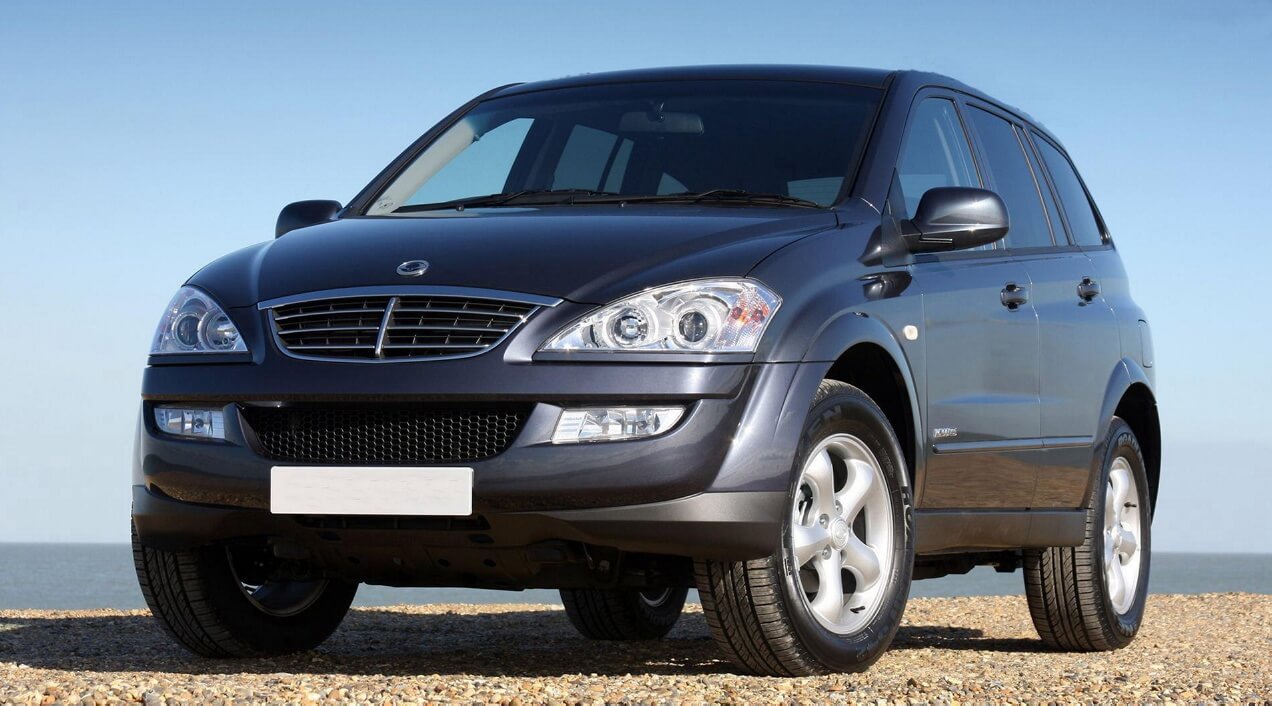
The Opel Antara is 64 mm shorter, 30 mm narrower and 6 mm taller than the SsangYong Kyron.
| Dimensions | Opel Antara | SsangYong Kyron | Difference |
|---|---|---|---|
| Length | 4,596 mm180.9 in | 4,660 mm183.5 in | −64 mm−2.5 in |
| Width | 1,850 mm72.8 in | 1,880 mm74.0 in | −30 mm−1.2 in |
| Height | 1,761 mm69.3 in | 1,755 mm69.1 in | +6 mm+0.2 in |
| Wheelbase | 2,707 mm106.6 in | 2,740 mm107.9 in | −33 mm−1.3 in |
| Boot | 420 L14.8 cu ft | 620 L21.9 cu ft | −200 L−7.1 cu ft |
Specs by version
Engines
Dimensions and weight
Verified Manufacturer and type-approval data from our catalog · Sources and methodology
Opel's Theta-platform SUV
GM developed the Theta platform for a family of SUVs, and the Antara was Opel's version, positioned as a sportier five-seater next to the seven-seat Chevrolet Captiva. It sat above the later Opel Mokka and, after a gap, was succeeded in spirit by the Grandland X in September 2017. Opel's range is in the Opel catalogue, and one of its most important earlier cars, the Kadett, is covered in the Opel Kadett story.

| Fact | Value |
|---|---|
| Production | 2006–2015 (sales November 2006 – March 2015) |
| Main plant | Bupyeong, South Korea (GM Korea); also Mexico |
| Platform | GM Theta, shared with the Chevrolet Captiva |
| Body | 5-door SUV, 5 seats |
| Drive | FWD or AWD |
| Other names | Vauxhall Antara, Holden Captiva 5, Saturn Vue, GMC Terrain (Middle East) |
Design and the 2010 facelift
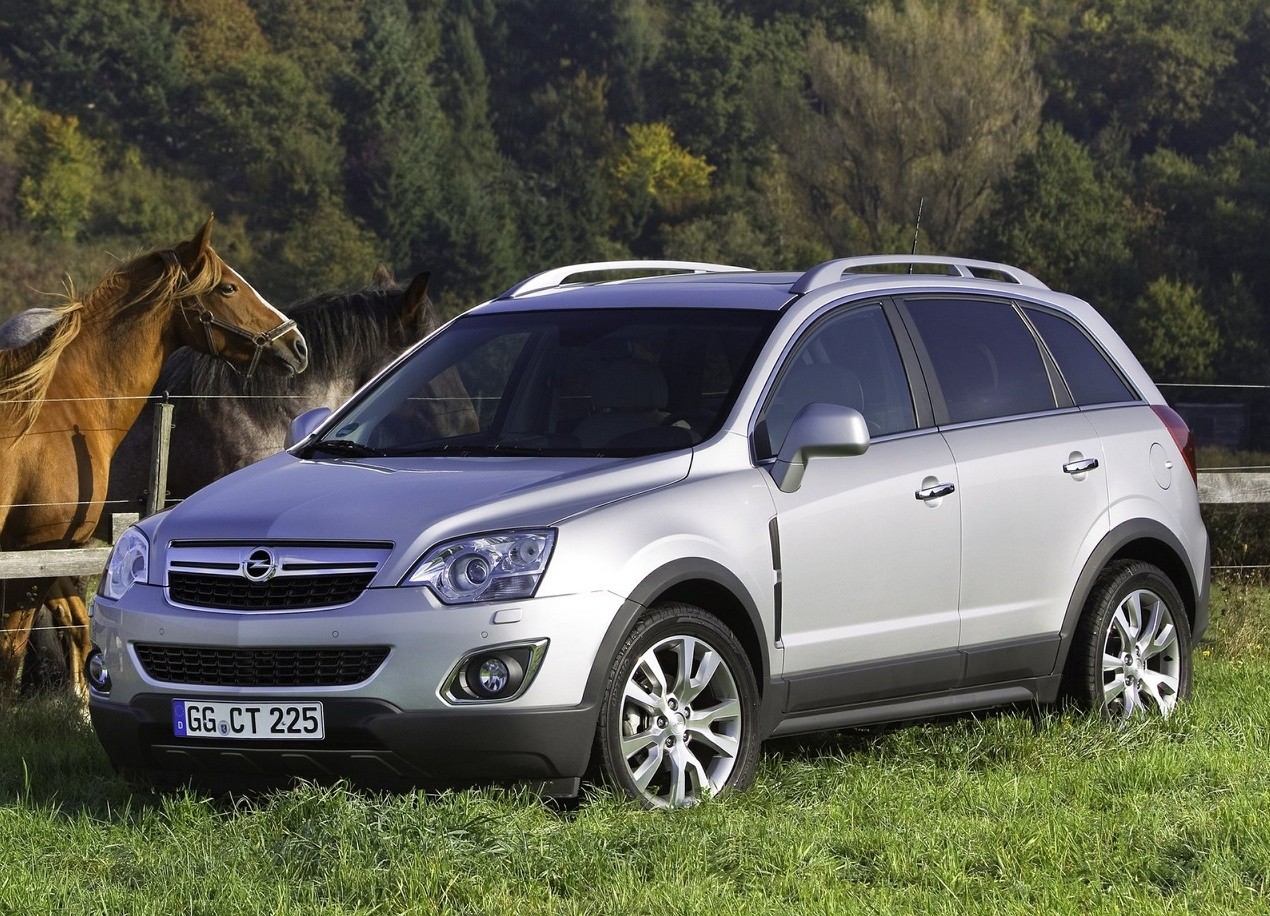
The Antara has a muscular body with pronounced wheel arches, high window line, roof rails and air vents behind the front wheels. Opel announced the facelift in November 2010. It brought a revised front end with a new grille with chrome bars, new headlights and fog lamps, new rear lights and bumper, a new Opel badge, LED indicators in the mirrors and 17- or 18-inch alloy wheels. Inside, a new centre console, an electric parking brake and hill-start assistance became standard, and the 2.2 CDTi replaced the 2.0 diesel to meet Euro 5.

Antara petrol and CDTi engines
| Engine | Years | Power | Gearbox |
|---|---|---|---|
| 2.4 petrol (Family II) | 2006–2010 | 103 kW (140 PS) | – |
| 2.4 petrol (Ecotec) | 2010–2015 | 123 kW (167 PS) | 6-speed manual |
| 3.2 V6 petrol | 2006–2010 | 167 kW (227 PS) | automatic |
| 3.0 V6 petrol | 2010–2015 | 183 kW (249 PS) in Europe | 6-speed automatic |
| 2.0 CDTi diesel | 2006–2010 | 110 kW (150 PS) | – |
| 2.2 CDTi diesel | 2010–2015 | 120 kW (163 PS) | 6-speed manual |
| 2.2 CDTi diesel | 2010–2015 | 135 kW (184 PS) | 6-speed automatic |
According to factory data, the facelifted 2.4 petrol reaches 100 km/h in 10.3–11 seconds and 175–185 km/h, using about 9.1–9.3 L/100 km. The 3.0 V6 takes 8.6 seconds and reaches 198 km/h with about 10.9 L/100 km, while the 2.2 diesels take 9.9–10.1 seconds, reach 188–191 km/h and use about 6.6–7.8 L/100 km.

All-wheel drive and chassis
On AWD versions, an electronically controlled multi-plate clutch normally sends the torque to the front wheels and can split it up to 50:50 between the axles when they slip. Ground clearance is about 200 mm, enough for gravel roads and snow, but the Antara is not a true off-roader.

The Antara has MacPherson struts at the front and a multi-link rear axle. Steering is rack and pinion with hydraulic assistance, and the brakes are discs with ventilated fronts, ABS and electronic brakeforce distribution.
Antara size and luggage space
| Parameter | Metric | Imperial |
|---|---|---|
| Length | 4,575–4,596 mm | 180.1–181.0 in |
| Width | 1,850 mm | 72.8 in |
| Height | 1,704–1,761 mm | 67.1–69.3 in |
| Wheelbase | 2,707 mm | 106.6 in |
| Ground clearance | about 200 mm | about 7.9 in |
| Kerb weight | 1,750–1,996 kg | 3,858–4,400 lb |
| Boot (seats up / folded) | about 420 / 1,420 L | about 14.8 / 50.1 cu ft |
Cabin, Enjoy and Cosmo versions
The facelifted cabin has a sporty multifunction steering wheel, soft-touch plastics, better fit and finish and improved sound insulation. Removing the handbrake lever freed space for storage between the front seats. The driver's seat adjusts in all directions, and rear passengers have good knee room. The load floor is flat when the seats are folded.
Typical versions were Enjoy and Cosmo. The Enjoy with the 2.4 petrol had front, side and curtain airbags, ABS, stability control, climate control, electric windows front and rear, heated front seats, an MP3 audio system and 17-inch wheels. The Cosmo added xenon headlights with washers, 18-inch alloys, a heated windscreen, cruise control and a trip computer, and top versions offered leather upholstery and a touchscreen navigation system.
Safety structure and systems
Opel's safety package included ABS, ESP stability control, cornering brake control, active rollover protection and descent control. The body uses high-strength steel for 37% of its weight, with a reinforced cabin frame, strengthened front doors, side members at the rear and a fuel tank ahead of the rear axle. Crash boxes at the front and rear absorb low-speed impacts and reduce repair costs. Front and side airbags, curtain airbags, belt pretensioners and ISOFIX mounts are standard. In the US, the related 2008 Saturn Vue was an IIHS Top Safety Pick.

Rivals: how the Antara compares
The Antara competed with the Kia Sportage, Ford Kuga, Volkswagen Tiguan, Hyundai ix35/Santa Fe, Nissan X-Trail and Toyota RAV4. It offered a comfortable ride, roomy cabin and strong diesel engines, but it was heavy, and the petrol versions were thirsty.

Rivals
Compare with…
Compare Opel Antara with
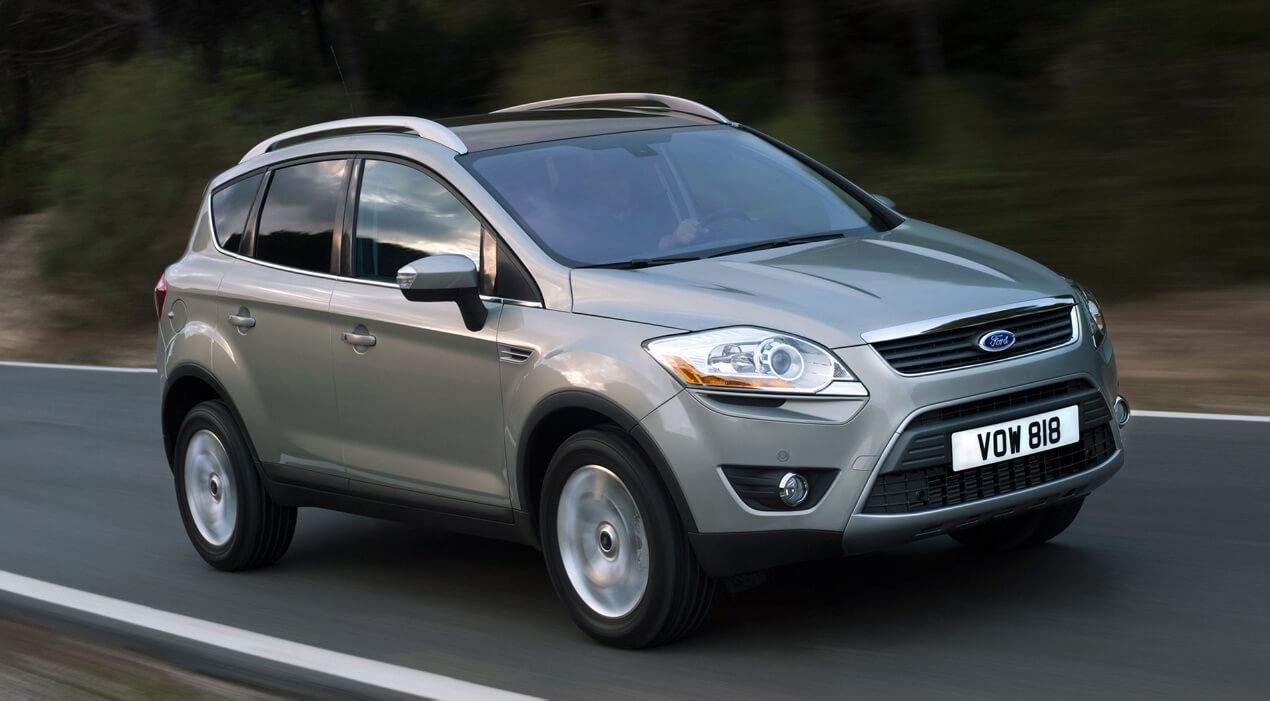
- Ford Kuga quick spec comparison
- SsangYong Kyron quick spec comparison
- Suzuki Grand Vitara quick spec comparison
-
In production
- Years
- 2008–present
- Body
- SUV
- Fuel
- Petrol, Diesel, Hybrid
- Power
- 88–178 kW (120–242 PS)
3 generations
- I
- II
- III
-
Ended 2011
- Years
- 2005–2011
- Body
- SUV
- Fuel
- Petrol, Diesel
- Power
- 104–110 kW (141–150 PS)
-
Ended 2015
- Years
- 1998–2015
- Body
- Convertible, SUV
- Fuel
- Petrol, Diesel
- Power
- 64–135 kW (87–184 PS)
2 generations
- FT/GT
- JT

Popular comparisons
Opel Antara in our rankings
- No. 49 of 125 · Biggest engines: SUVs and crossovers (3,000 cc · top 40%)
- No. 410 of 912 · Longest-running car nameplates (9 years · top 49%)
- No. 73 of 146 · Smallest SUVs and crossovers (4,596 mm · top 50%)
- No. 210 of 420 · Longest cars (4,596 mm · top 50%)
- No. 276 of 557 · Biggest engines: cars (3,000 cc · top 51%)
- No. 207 of 403 · Widest cars (1,850 mm · top 52%)
Bigger engine than 60% of ranked SUVs and crossovers in the 1CARS catalog (No. 49 of 125).
Opel Antara photos 22




Opel Antara videos 3

Opel Antara video 1

Opel Antara video 2

Opel Antara video 3
FAQ
When was the Opel Antara produced?
The Antara was sold from November 2006 to March 2015. It was previewed by the Antara GTC concept at the 2005 Frankfurt Motor Show and facelifted in late 2010.
Is the Opel Antara the same as the Chevrolet Captiva?
They share the GM Theta platform, engines and much of the running gear, but the Antara is a five-seater with its own body and interior, while the Captiva is offered with seven seats.
What engines does the Opel Antara have?
Petrol engines are a 2.4 four-cylinder with 103–123 kW and V6 engines with up to 183 kW. Diesels are a 2.0 CDTi with 110 kW and, from 2010, a 2.2 CDTi with 120 or 135 kW.
Is the Opel Antara four-wheel drive?
AWD versions have an electronically controlled clutch that normally drives the front wheels and can send up to half of the torque to the rear. Front-wheel-drive versions were also sold.
What replaced the Opel Antara?
Production ended in March 2015 without a direct successor. Opel's next SUV of a similar size, the Grandland X, arrived in September 2017, built on a platform from PSA.
Data sources
Data checked by an editor against the sources below.
- The text of this article (1cars archive)
- Wikipedia - Opel Antara