 Opel Astra L (2021–present)
Specs, engines, safety and known problems
Published Sources (6) Report an error
By Felix Hartmann, Automotive Technology & EV Contributor Reviewed by Oleksandr Hnatiuk
- Power
- 81–165 kW (110–224 PS)
- Euro NCAP
- 4 stars · 2022
- Boot
- 352–422 l
- Fuel, 1.5 Diesel
- ~1,200 EUR a year
Model timeline
Where the L sits in the Astra story
Predecessor Astra K (2015–2021)


H and J overlapped in 2009–2010, so J sits on a second lane
Newest first · 6 generations since 1991
-
2021
-
2015
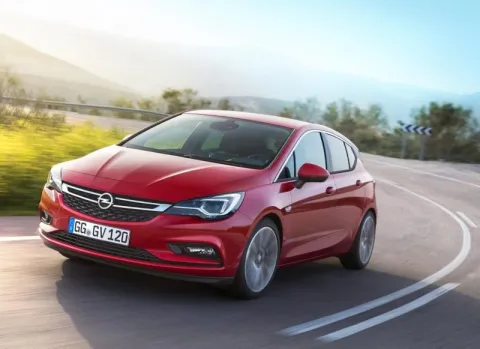 K 2015–2021 · Hatchback, Station wagon · 66–147 kW (90–200 PS)
-
2009
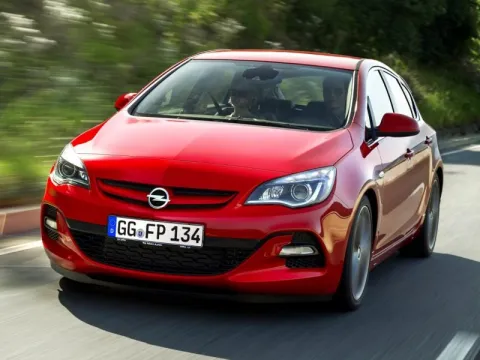 J 2009–2015 · Sedan, Hatchback · 64–206 kW (87–280 PS)
H and J overlapped in 2009–2010
-
2004
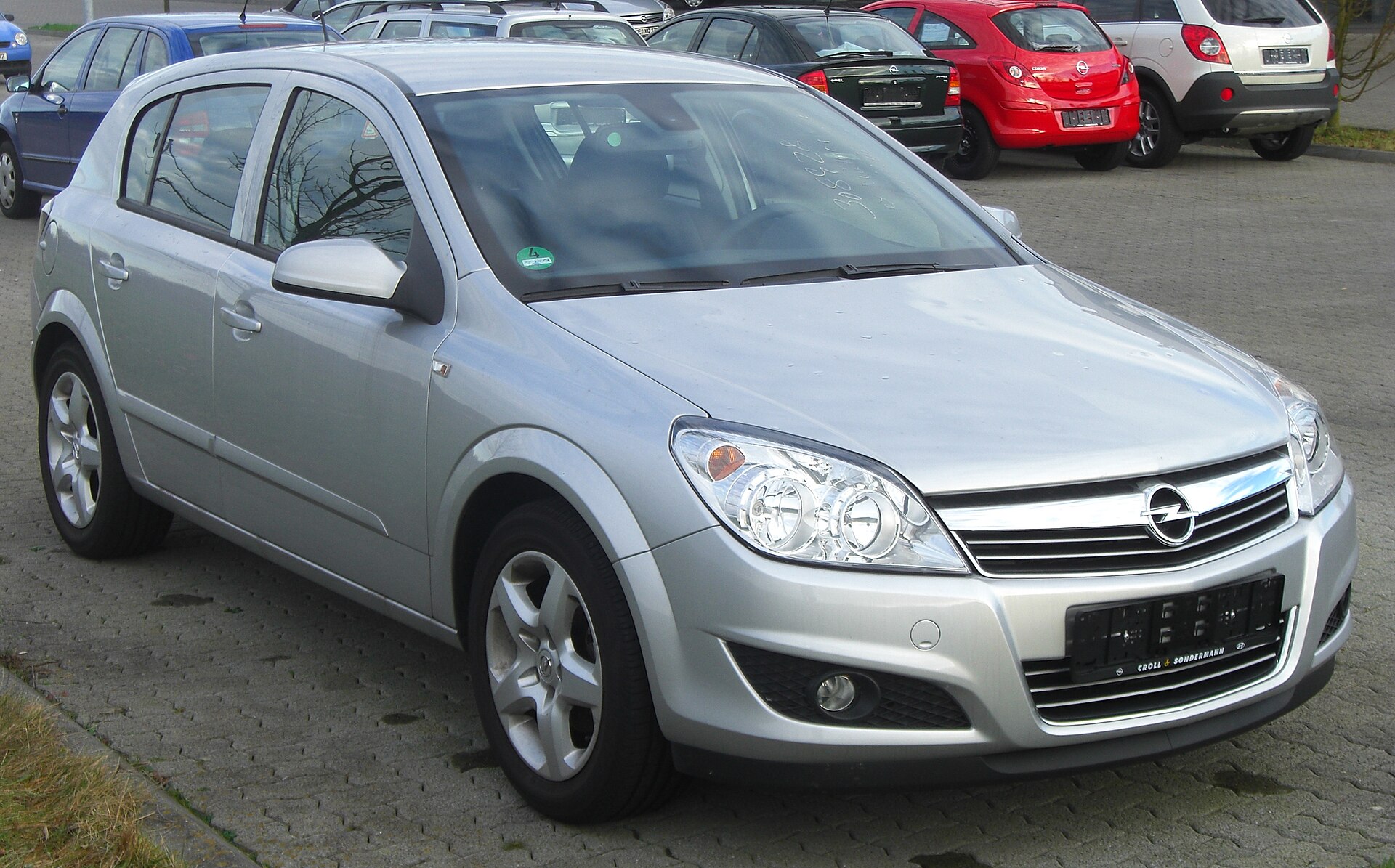
-
1998
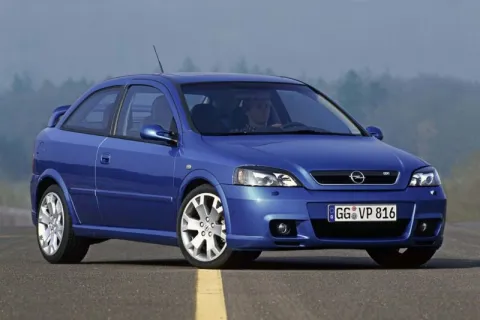 G 1998–2004 · Sedan, Hatchback · 48–147 kW (65–200 PS)
-
1991
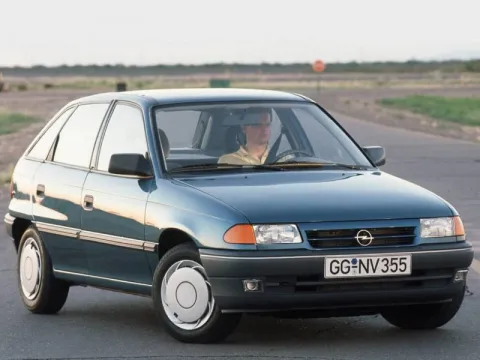 F 1991–1998 · Sedan, Hatchback · 42–110 kW (57–150 PS)
All generations by year: Astra L (2021–now) · Astra K (2015–2021) · Astra J (2009–2015) · Astra H (2004–2010) · Astra G (1998–2004) · Astra F (1991–1998)
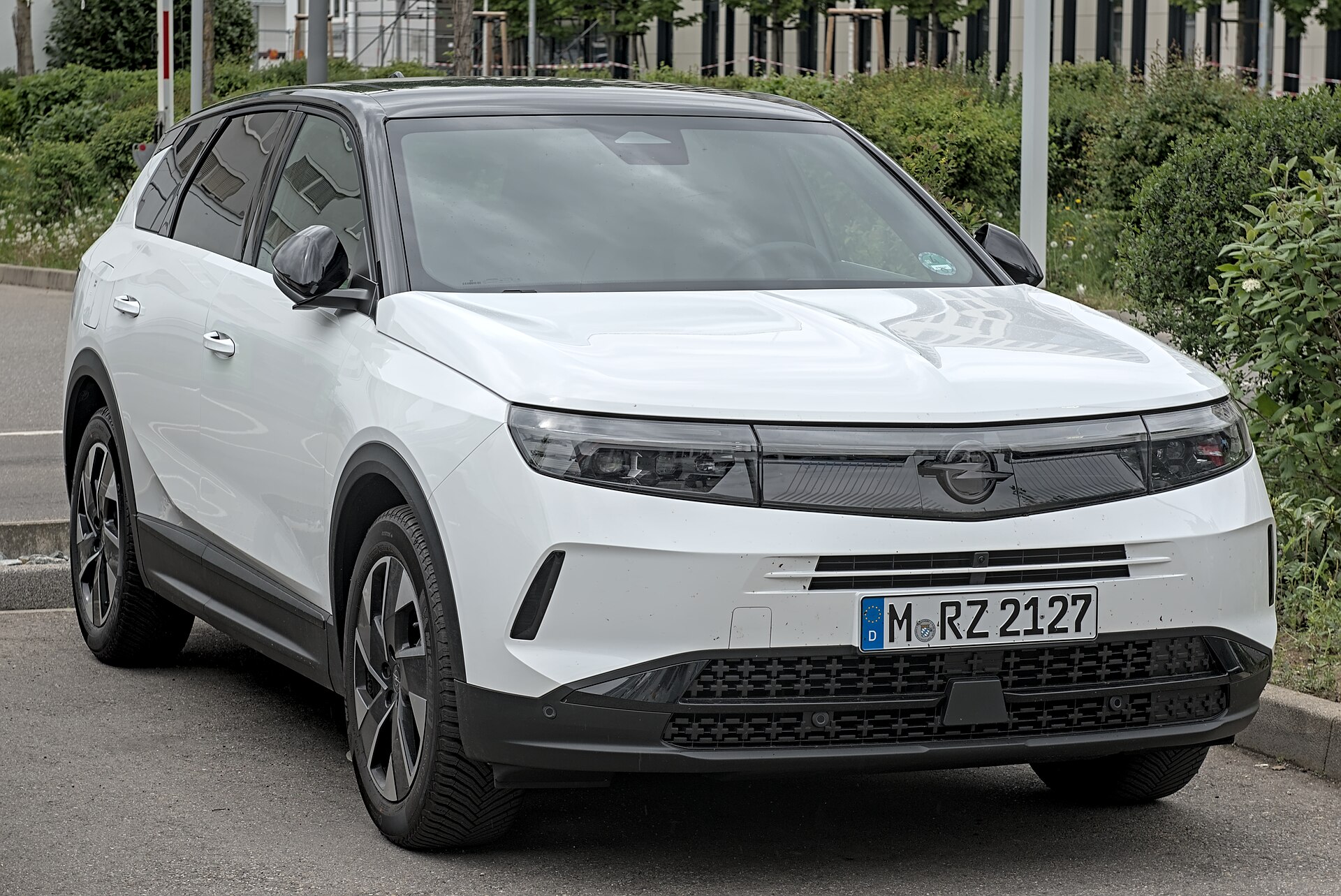
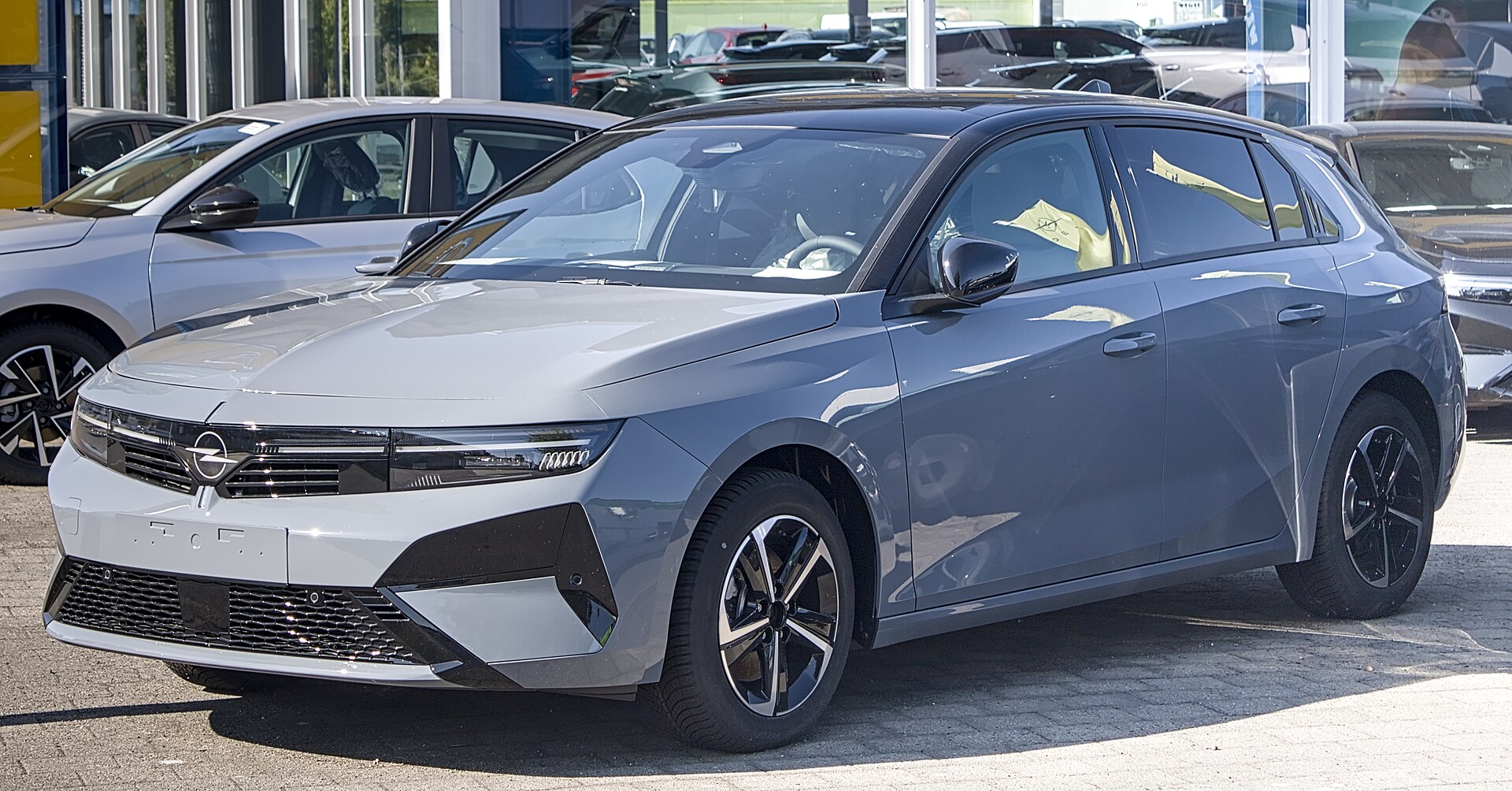
The Opel Astra L is the sixth Astra and the first one engineered by PSA rather than General Motors. Revealed in July 2021 and built in Germany from January 2022, it is a five-door hatchback or Sports Tourer estate on the EMP2 platform. It is the first Astra offered with plug-in hybrid, mild hybrid and battery-electric drive alongside petrol and diesel.
In short
- Hatchback revealed on 13 July 2021, German market launch in May 2022; Sports Tourer, GSe and Astra Electric followed by mid-2023.
- Powertrains: 1.2 Turbo petrol with 81 or 96 kW (110 or 130 PS), 1.5 diesel with 96 kW (130 PS), plug-in hybrids from 133 kW (180 PS) and a 115 kW (156 PS) Electric.
- The GSe is the sporty plug-in hybrid with 165 kW (225 PS) and 360 Nm (266 lb-ft).
- Euro NCAP gave the L four stars in 2022; a facelift with Intelli-Lux HD lights was shown in January 2026.
Size at a glance
Peugeot 308 II
The Opel Astra L is 121 mm longer, 56 mm wider and 16 mm lower than the Peugeot 308 II.
| Dimensions | Opel Astra L | Peugeot 308 II | Difference |
|---|---|---|---|
| Length | 4,374 mm172.2 in | 4,253 mm167.4 in | +121 mm+4.8 in |
| Width | 1,860 mm73.2 in | 1,804 mm71.0 in | +56 mm+2.2 in |
| Height | 1,441 mm56.7 in | 1,457 mm57.4 in | −16 mm−0.6 in |
| Wheelbase | 2,675 mm105.3 in | 2,620 mm103.1 in | +55 mm+2.2 in |
| Boot | 422 L14.9 cu ft | 470 L16.6 cu ft | −48 L−1.7 cu ft |
Ford Focus IV
The Opel Astra L is 35 mm wider and 13 mm lower than the Ford Focus IV.
| Dimensions | Opel Astra L | Ford Focus IV | Difference |
|---|---|---|---|
| Length | 4,374 mm172.2 in | 4,378 mm172.4 in | −4 mm−0.2 in |
| Width | 1,860 mm73.2 in | 1,825 mm71.9 in | +35 mm+1.4 in |
| Height | 1,441 mm56.7 in | 1,454 mm57.2 in | −13 mm−0.5 in |
| Wheelbase | 2,675 mm105.3 in | 2,700 mm106.3 in | −25 mm−1.0 in |
| Boot | 422 L14.9 cu ft | 375 L13.2 cu ft | +47 L+1.7 cu ft |
Opel Astra K
The Opel Astra L is 51 mm wider and 44 mm lower than the Opel Astra K.
| Dimensions | Opel Astra L | Opel Astra K | Difference |
|---|---|---|---|
| Length | 4,374 mm172.2 in | 4,370 mm172.0 in | +4 mm+0.2 in |
| Width | 1,860 mm73.2 in | 1,809 mm71.2 in | +51 mm+2.0 in |
| Height | 1,441 mm56.7 in | 1,485 mm58.5 in | −44 mm−1.7 in |
| Wheelbase | 2,675 mm105.3 in | 2,662 mm104.8 in | +13 mm+0.5 in |
| Boot | 422 L14.9 cu ft | 370 L13.1 cu ft | +52 L+1.8 cu ft |
Running cost
Fuel · Astra L 1.5 Diesel
about 1,200 EUR fuel a year at 15,000 km
4.8 l/100 km · diesel at 1.65 EUR/l · change mileage, fuel price or version
Astra L specs by version
Engines
| Version | Engine | Power | Torque | Gearbox |
|---|---|---|---|---|
| Plug-in hybrid · 3 versions | ||||
| 1.6 Plug-in Hybrid | 1.6 l · 4 cyl · Plug-in hybrid 1,598 cc | 133 kW 181 PS178 hp | — | — |
| 144 kW (196 PS) | Plug-in hybrid | 144 kW 196 PS193 hp | — | Dual-clutch |
| GSe 1.6 Plug-in Hybrid | 1.6 l · 4 cyl · Plug-in hybrid 1,598 cc | 165 kW 224 PS221 hp | 360 Nm266 lb-ft | 8-sp Automatic |
| Electric · 1 version | ||||
| Astra Electric | Electric | 115 kW 156 PS154 hp | — | — |
| Diesel · 1 version | ||||
| 1.5 Diesel | 1.5 l · Diesel 1,499 cc | 96 kW 131 PS129 hp | 300 Nm221 lb-ft | 6-sp Automatic |
| Petrol · 2 versions | ||||
| 1.2 Turbo | 1.2 l · Petrol 1,199 cc | 81 kW 110 PS109 hp | 205 Nm151 lb-ft | 6-sp Manual |
| 1.2 Turbo | 1.2 l · Petrol 1,199 cc | 96 kW 131 PS129 hp | 230 Nm170 lb-ft | 6-sp Automatic |
Performance
Show all 5 versions
| Version | 0–100 km/h | Top speed | Fuel consumption | Range | CO₂ |
|---|---|---|---|---|---|
| Plug-in hybrid · 1 version | |||||
| 1.6 Plug-in Hybrid | 7.6 s 0–62 mph | 225 km/h140 mph | 1.3 l/100 km180.9 mpg US · 217.3 mpg UK | 60 km37 mi | 30 g/km |
| Electric · 1 version | |||||
| Astra Electric | — | — | 15.2 kWh/100 km24.5 kWh/100 mi | 415 km258 mi | — |
| Diesel · 1 version | |||||
| 1.5 Diesel | 10.6 s 0–62 mph | 209 km/h130 mph | 4.8 l/100 km49.0 mpg US · 58.9 mpg UK | — | 127 g/km |
| Petrol · 2 versions | |||||
| 1.2 Turbo | 10.5 s 0–62 mph | 199 km/h124 mph | 5.4 l/100 km43.6 mpg US · 52.3 mpg UK | — | 123 g/km |
| 1.2 Turbo | 9.7 s 0–62 mph | 210 km/h130 mph | 5.6 l/100 km42.0 mpg US · 50.4 mpg UK | — | 125 g/km |
Dimensions and weight
Show all 5 versions
| Version | Kerb weight | Boot | Fuel tank | Battery |
|---|---|---|---|---|
| Plug-in hybrid · 1 version | ||||
| 1.6 Plug-in Hybrid | 1,678 kg3,699 lb | 352 l12.4 cu ft | 42 l11.1 gal US | 12 kWh |
| Electric · 1 version | ||||
| Astra Electric | 1,332 kg2,937 lb | 422 l14.9 cu ft | — | 54 kWh |
| Diesel · 1 version | ||||
| 1.5 Diesel | 1,438 kg3,170 lb | 422 l14.9 cu ft | 52 l13.7 gal US | — |
| Petrol · 2 versions | ||||
| 1.2 Turbo | 1,332 kg2,937 lb | 422 l14.9 cu ft | 52 l13.7 gal US | — |
| 1.2 Turbo | 1,371 kg3,023 lb | 422 l14.9 cu ft | 52 l13.7 gal US | — |
Verified Manufacturer and type-approval data from our catalog · Sources and methodology
Safety
-
Euro NCAP 2022
Stars from different years and organisations are not directly comparable: test protocols change every few years.
From Astra K to Astra L: a new owner, a new platform
The previous Astra K was a General Motors design built in the UK and Poland. By the time its successor was ready, Opel belonged to PSA, and the L arrived ten months after PSA and FCA merged to form Stellantis. The result is a car that shares its hardware with the Peugeot 308 and DS 4 rather than with any GM model.
That change shows in three places. The wheelbase grew by 55 mm (2.2 in) to 2,675 mm (105.3 in), which helps rear legroom. The three-cylinder 1.2 Turbo and the 1.5 diesel came from the PSA parts bin. Most importantly, the EMP2 platform was ready for electrification, so the L could be sold as a plug-in hybrid from launch and as a fully electric car from 2023. Production also moved: series production started in January 2022 at Opel's German home plant, the same factory that builds the DS 4.
There is no saloon and no three-door this time. The range is the five-door hatchback and the Sports Tourer, each also available as a GSe and as an Electric. For the earlier generations and the full timeline back to 1991, see the Opel Astra overview of all generations.
Vizor face, chassis and Intelli-Lux lighting
The front uses Opel's "Vizor" design: a single black panel that runs between the headlights and holds the badge, the grille and the sensors. It first appeared on the GT X Experimental concept of 2018 and reached production on the Mokka before the Astra adopted it.
The suspension is conventional for the class, with MacPherson struts at the front and a compound-link rear axle. All versions drive the front wheels.
Headlights have long been an Astra selling point, and the L continues that with adaptive Intelli-Lux LED units. The January 2026 facelift replaced them with Intelli-Lux HD, which Motor1 describes as a glare-free system with more than 50,000 individual elements. The facelift also brought a light bar split by an illuminated badge, more comfortable standard seats with a central recess to reduce tailbone pressure, seat covers made entirely from recycled material and a vehicle-to-load function on the Electric.
Petrol, diesel, plug-in hybrid and Astra Electric
At launch Opel offered two petrol engines, one diesel and two plug-in hybrids. A 48-volt mild hybrid followed in February 2024 and the Astra Electric in June 2023. The table lists the main European outputs, with kW first and the metric PS figure that Opel and ADAC quote.
| Version | Engine | Power | Torque | Gearbox |
|---|---|---|---|---|
| 1.2 Turbo | 1,199 cm³ 3-cyl petrol | 81 kW (110 PS) | 205 Nm (151 lb-ft) | 6-speed manual |
| 1.2 Turbo | 1,199 cm³ 3-cyl petrol | 96 kW (130 PS) | 230 Nm (170 lb-ft) | 6-speed manual or 8-speed automatic |
| 1.2 Hybrid (48 V, from 2024) | 1.2 petrol + electric motor | 100 kW (136 PS) or 107 kW (145 PS) | not published in our sources | 6-speed dual-clutch |
| 1.5 Diesel | 1,499 cm³ 4-cyl diesel | 96 kW (130 PS) | 300 Nm (221 lb-ft) | 6-speed manual or 8-speed automatic |
| Plug-in Hybrid | 1.6 Turbo + electric motor | 133 kW (180 PS) system | 360 Nm (266 lb-ft) | 8-speed automatic |
| GSe | 1.6 Turbo + electric motor | 165 kW (225 PS) system | 360 Nm (266 lb-ft) | 8-speed automatic |
| Electric | front electric motor | 115 kW (156 PS) | 270 Nm (199 lb-ft) | single-speed |
The plug-in hybrid used a 12.3 kWh battery until 2025 and a 17.2 kWh pack after that, according to English Wikipedia. ADAC's catalogue also lists a 144 kW (196 PS) plug-in hybrid with a dual-clutch gearbox among later cars, so check which version a used example is.
The Astra Electric has a 54 kWh battery, of which about 51 kWh is usable, built from CATL cells and mounted under the floor. It charges at 11 kW on three-phase AC and at about 100 kW on a DC fast charger. WLTP range for the pre-facelift car is quoted at about 415 km (258 miles), and EV Database gives a kerb weight of 1,736 kg (3,827 lb). For the 2026 facelift, launch reports quote 55.4 kWh usable and up to 454 km (282 miles) WLTP, a gain of 34 km (21 miles). Opel's earlier electric car, the Ampera-e, was a separate model with no Astra connection.
Astra L dimensions and boot space
Figures are for the hatchback unless stated. Electrified versions lose boot space because the battery sits under the load floor.
| Parameter | Metric | Imperial |
|---|---|---|
| Length (hatchback) | 4,374 mm | 172.2 in |
| Length (Sports Tourer) | 4,640 mm | 182.7 in |
| Width without / with mirrors | 1,860 / 2,062 mm | 73.2 / 81.2 in |
| Height | 1,441 mm | 56.7 in |
| Wheelbase (hatchback / Sports Tourer) | 2,675 / 2,730 mm | 105.3 / 107.5 in |
| Boot, petrol and diesel hatchback | 422–1,339 L | 14.9–47.3 cu ft |
| Boot, hybrid and Electric hatchback | 352–1,268 L | 12.4–44.8 cu ft |
| Boot, petrol and diesel Sports Tourer | 597–1,634 L | 21.1–57.7 cu ft |
| Boot, hybrid and Electric Sports Tourer | 516–1,553 L | 18.2–54.8 cu ft |
| Kerb weight (1.2 tested by Euro NCAP) | 1,330 kg | 2,932 lb |
| Kerb weight (Electric, EV Database) | 1,736 kg | 3,827 lb |
If you carry bulky loads, the Sports Tourer is the version to choose: even as a plug-in hybrid it beats the petrol hatchback for space. Other estate cars are listed in our catalogue.
Euro NCAP 2022: why four stars
Euro NCAP tested a left-hand-drive Astra 1.2 Edition in spring 2022 and published four stars in May 2022. The rating covers all Astra L versions, including the plug-in hybrids.
- Adult occupant, 80 %: the cabin stayed stable in the offset test and knee and femur protection was good, but chest protection was marginal in both frontal tests. Side and pole impacts earned maximum points.
- Far-side protection: marginal, and there is no centre airbag between the front occupants.
- Child occupant, 82 %: child seat installation scored 12 out of 12.
- Vulnerable road users, 67 %: autonomous emergency braking for cyclists was good, but pedestrian AEB (4.1 of 9 points) and car-to-car AEB (2.6 of 6) were marginal.
- Safety assist, 66 %: lane support scored 3.5 of 4 and speed assistance 2.5 of 3.
Four stars under the 2022 protocol is not a weak result in absolute terms, but it trails the five stars the Astra K earned in 2015 under easier rules. The two ratings cannot be compared directly.
Choosing an Astra L: version by version
No large reliability survey covers the L yet, and the TÜV Report does not include it, so the choice is mostly about use.
- Low annual mileage, simple ownership: the 1.2 Turbo with 96 kW (130 PS) and the eight-speed automatic. ADAC's catalogue lists the entry 1.2 Turbo with 81 kW at €22,465 for cars built between February and May 2022.
- Long motorway trips: the 1.5 diesel, which offers the most torque of the combustion engines.
- Short commutes with home charging: the plug-in hybrid. ADAC lists the Edition automatic with 133 kW at €35,800 for the same early-2022 build window. Later cars with the larger battery should cover more distance on electricity.
- Driving enthusiasts: the GSe, presented in September 2022 and in showrooms from January 2023, adds the most power of any Astra L.
- Electric only: the Astra Electric; a post-2026 facelift car has the bigger usable battery and longer WLTP range.
The L competes with the Ford Focus and the Kia Ceed, and with its technical twin, the Peugeot 308. Browse other hybrid cars for more plug-in options.
Did you know?
- The Astra L is generation 6 of 6 of the Opel Astra in our catalog.
- The Astra L offers up to 165 kW (224 PS) — 18 kW more than the Astra K (2015–2021) (+12%).
- Its lightest version weighs 1,332 kg, 88 kg more than in the Astra K (2015–2021).
Image credits · Photos from Wikimedia Commons under free licences
- Opel Astra F · Photo: Mr.choppers / Wikimedia Commons, CC BY-SA 3.0
- Opel Astra G · Photo: The original uploader was Topfklao at German Wikipedia. / Wikimedia Commons, Attribution
- Opel Astra H · Photo: No machine-readable author provided. M 93 assumed (based on copyright claims). / Wikimedia Commons, CC BY-SA 3.0
- Opel Astra J · Photo: Acgskup / Wikimedia Commons, CC BY 4.0
- Opel Astra K · Photo: Danny Galvez from Pinoso, España / Wikimedia Commons, CC BY-SA 2.0
- Opel Astra L · Photo: Alexander Migl / Wikimedia Commons, CC BY-SA 4.0
L rivals
-
Ended 2021
- Years
- 2013–2021
- Body
- Hatchback
- Fuel
- Petrol, Diesel
- Power
- 60–199 kW (82–271 PS)
-
EV version
Ended 2025
- Years
- 1998–2025
- Body
- Sedan, Hatchback
- Fuel
- Petrol, Diesel, Electric
- Power
- 63–257 kW (86–349 PS)
4 generations
- I
- II
- C346
- IV
-
Ended 2004
- Years
- 1987–2004
- Body
- Hatchback
- Fuel
- Petrol
- Power
- 40–53 kW (54–72 PS)


FAQ
When did the Opel Astra L come out?
The hatchback was revealed on 13 July 2021 and production began in Germany in January 2022. The German market launch was in May 2022; the Sports Tourer followed in October 2022 and the Astra Electric in June 2023.
Is the Astra L the same as the Peugeot 308?
They share the EMP2 platform and many powertrains, and the DS 4 is built in the same plant. Styling, interior and tuning are Opel's own.
How much power does the Astra GSe have?
The GSe is a plug-in hybrid with a system output of 165 kW (225 PS) and 360 Nm (266 lb-ft), sent through an eight-speed automatic to the front wheels.
What is the range of the Opel Astra Electric?
About 415 km (258 miles) WLTP for the 54 kWh car sold from 2023. The 2026 facelift raises usable capacity to 55.4 kWh and the quoted WLTP range to 454 km (282 miles).
Why did the Astra L get four Euro NCAP stars?
Euro NCAP marked down marginal chest protection in frontal tests, marginal far-side protection without a centre airbag, and marginal results in pedestrian and car-to-car emergency braking tests.
Data sources
Data checked by an editor against the sources below.
- The text of this article (1cars archive)
- Wikipedia — Opel Astra
- Wikipedia — Opel Astra L
- Euro NCAP — 2022 Opel Vauxhall Astra Datasheet
- ADAC
- EEA CO₂ monitoring (European Environment Agency, CC BY 4.0)