
 Opel Rekord
All generations, specs and history
Published Sources (5) Report an error
By Oleksandr Hnatiuk, Automotive Editor & Used Car Specialist
- Built
- 1953–1986
- Generations
- 3 · C to E
- Top power
- 81 kW (110 PS)
Timeline
Rekord generations
Click a generation for its own page
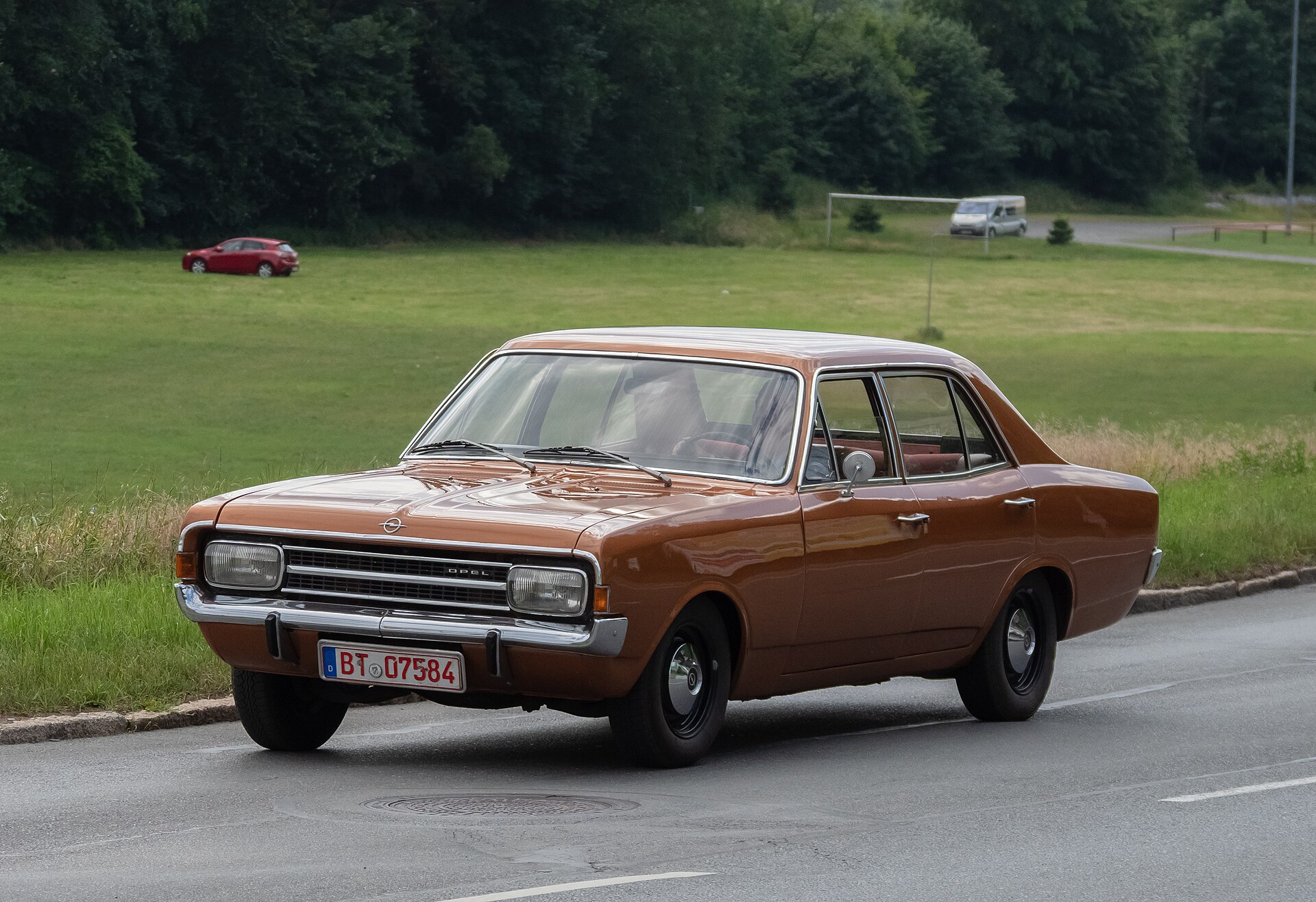
- Rekord C 1966–1971 · Sedan, Station wagon · 43–78 kW (58–106 PS)
- Rekord D 1971–1977 · Sedan, Station wagon · 44–74 kW (60–101 PS)
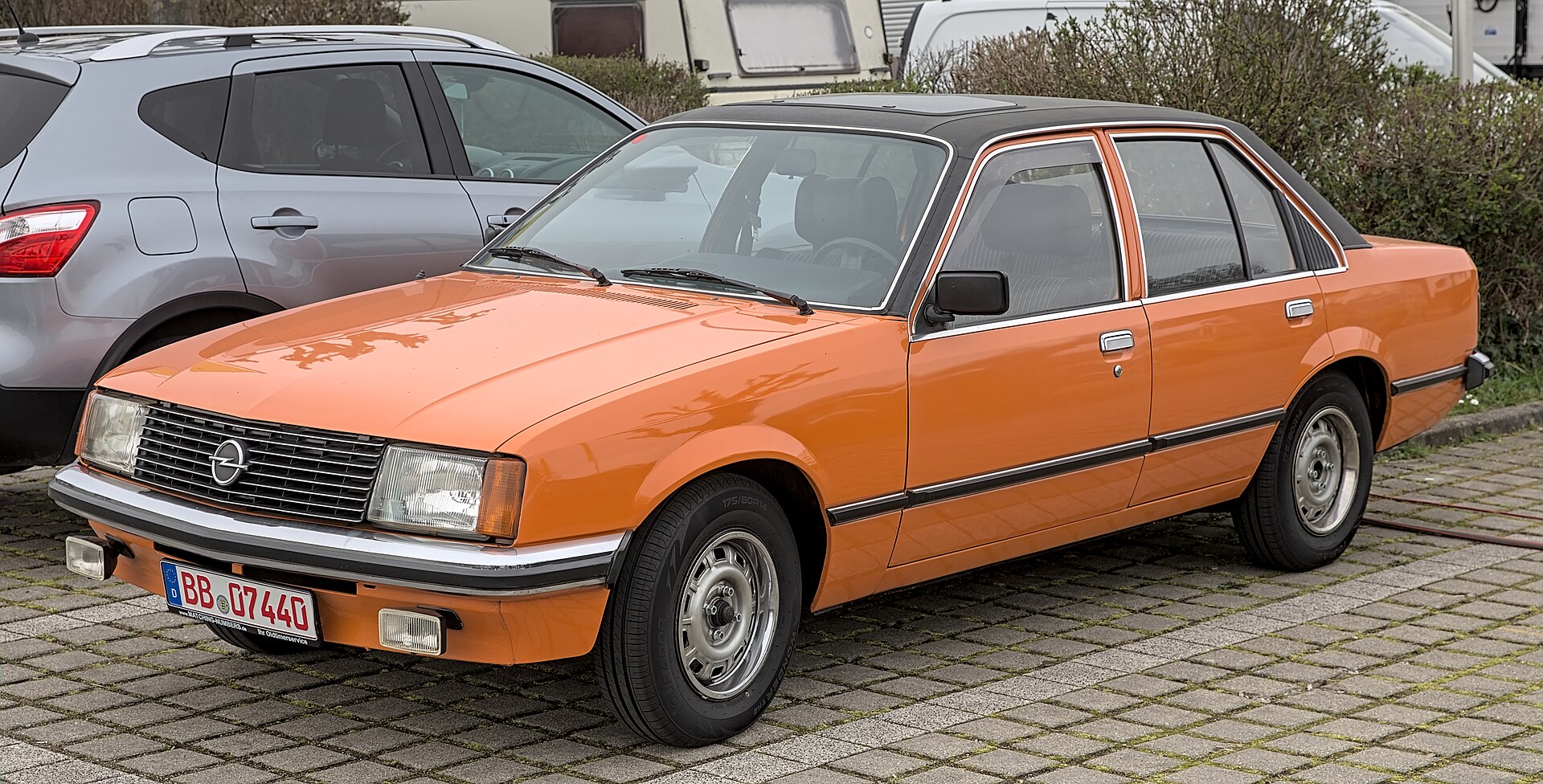
- Rekord E 1977–1986 · Sedan, Station wagon · 44–81 kW (60–110 PS)
Newest first · 3 generations since 1966
-
1977
-
1971
-
1966
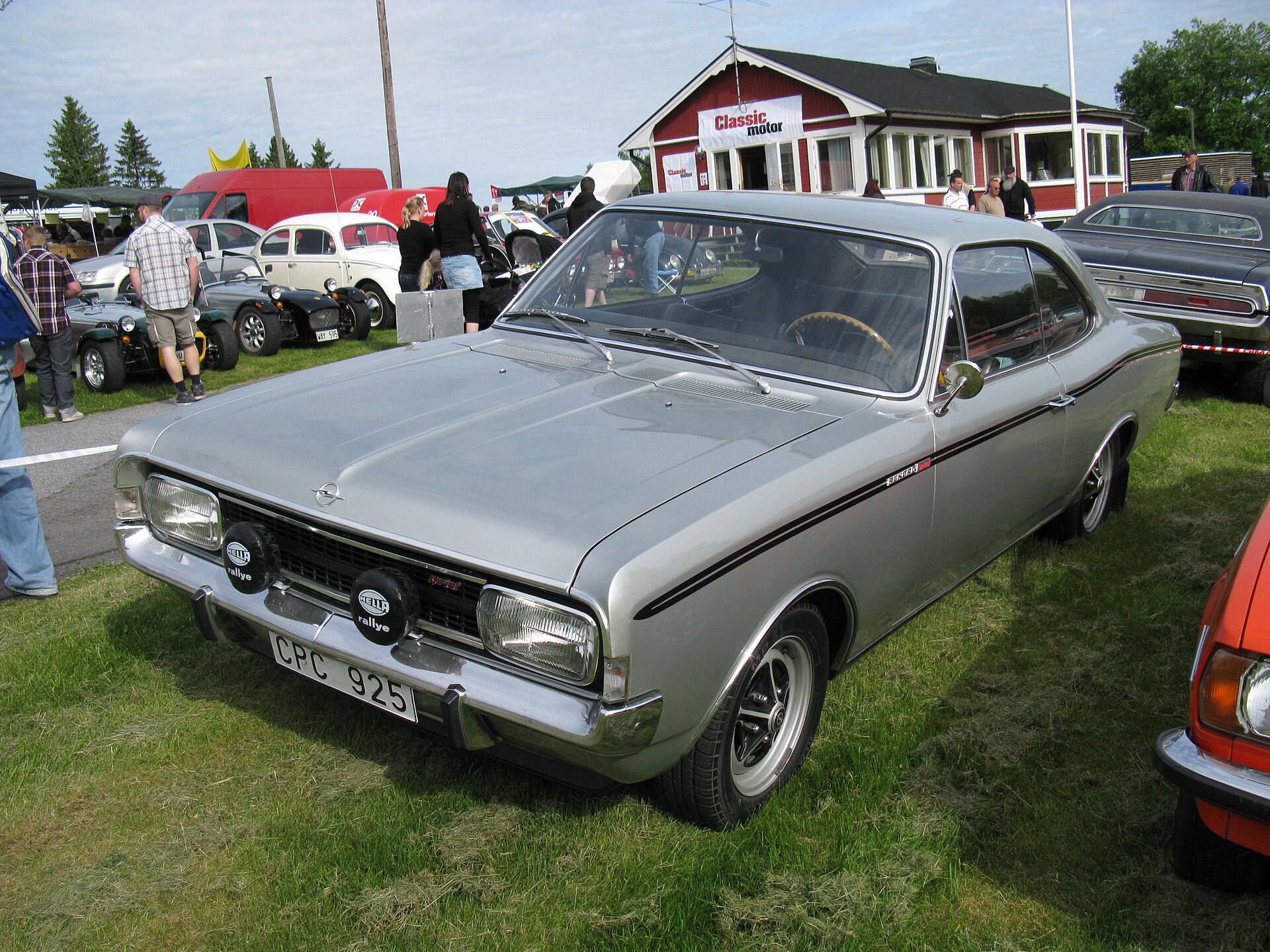


All generations by year: Rekord E (1977–1986) · Rekord D (1971–1977) · Rekord C (1966–1971)
Which one is mine?
Pick the year of first registration to see which generation it is.
Check by VINThe Opel Rekord is Opel's rear-wheel-drive mid-size car, built from 1953 to 1986 in eight generations from the Olympia Rekord to the Rekord E. It came as a saloon, estate, coupé and van with four-cylinder petrol and diesel engines, plus a six in the 1960s. Close to ten million were sold, and three generations, the C, D and E, each passed one million.
In short
- Eight generations: Olympia Rekord (1953), P1 (1957), P2 (1960), A (1963), B (1965), C (1966), D (1971) and E (1977), replaced by the Omega in 1986.
- The Rekord C sold 1,276,681 cars, the most of any Rekord generation.
- The Rekord D brought the first diesel Rekord in 1972; the Rekord E 2.0 E the first fuel-injected one in 1977.
- The Rekord E was the basis of the Vauxhall Carlton and of the first Holden Commodore.
Size at a glance
| Dimensions | Opel Rekord E |
|---|---|
| Length | 4,593 mm180.8 in |
| Width | 1,726 mm68.0 in |
| Height | 1,420 mm55.9 in |
| Wheelbase | 2,668 mm105.0 in |
Specs by version
Engines
| Version | Engine | Power | Drive | Production years |
|---|---|---|---|---|
| Diesel · 2 versions | ||||
| 2100 D | 2.1 l · 4 cyl · Diesel 2,068 cc | 44 kW 60 PS59 hp | Rear-wheel drive | 1972–1977 |
| E · 2.3 TD | 2.3 l · 4 cyl · Diesel 2,260 cc | 63 kW 86 PS84 hp | Rear-wheel drive | 1984–1986 |
| Petrol · 4 versions | ||||
| C · 1700 | 1.7 l · 4 cyl · Petrol 1,698 cc | 49 kW 67 PS66 hp | Rear-wheel drive | 1966–1971 |
| C · Sprint 1900 H | 1.9 l · 4 cyl · Petrol 1,897 cc | 78 kW 106 PS105 hp | Rear-wheel drive | 1967–1971 |
| D · 2000 S | 2.0 l · 4 cyl · Petrol 1,979 cc | 74 kW 101 PS99 hp | Rear-wheel drive | 1975–1977 |
| 2.0 E | 2.0 l · 4 cyl · Petrol 1,979 cc | 81 kW 110 PS109 hp | Rear-wheel drive | 1977–1984 |
Performance
Show all 2 versions
| Version | 0–100 km/h | Top speed |
|---|---|---|
| C · 1966–1971 | ||
| C · Sprint 1900 H | 12.0 s 0–62 mph | 175 km/h109 mph |
| 2.0 E | 12.0 s 0–62 mph | 181 km/h112 mph |
Dimensions and weight
Verified Manufacturer and type-approval data from our catalog · Sources and methodology
Opel Rekord at a glance
| Item | Opel Rekord |
|---|---|
| Years | March 1953 to 1986 (Germany) |
| Production | close to 10 million in total; C 1,276,681, D 1,128,196, E about 1.4 million |
| Plants | Rüsselsheim; also Antwerp, Biel and GM plants in South Africa, South Korea and elsewhere |
| Body styles | two- and four-door saloon, three- and five-door Caravan estate, coupé, van |
| Layout | front engine, rear-wheel drive |
| Engines | 1.5 to 2.2-litre fours (CIH from 1965), 2.6-litre six (Rekord A), 2.1 to 2.3-litre diesels |
| Power | 40 kW (55 PS) to 81 kW (110 PS) for the A-E fours; 74 kW (100 PS) for the Rekord A six |
| Kerb weight | 1,025 to 1,240 kg (Rekord C); 1,120 kg (Rekord E 2.0 E) |
| Top speed | 175 km/h (Rekord C Sprint); 181 km/h (Rekord E 2.0 E) |
| 0-100 km/h | about 12 s (Rekord C Sprint and Rekord E 2.0 E) |
| Price new | DM 6,830 (Rekord A, 1963); DM 6,980 (Rekord C, 1966); about DM 17,810 (Rekord E 2.0 E, 1977) |
From Olympia Rekord to Rekord B, 1953-1966
Opel launched the Olympia Rekord in March 1953 as a two-door version of its post-war Olympia, with a 1,488 cc engine of 29 kW (40 PS) and styling influenced by General Motors in Detroit. The P1 of 1957 added a wraparound windscreen, and the P2 of August 1960 a new body without it, selling 787,684 cars. Our history of Opel puts these years in the context of the company as a whole.
The Rekord A of spring 1963 dropped the P code. Its wheelbase grew by almost 10 cm to 2,639 mm, torsional stiffness rose by about 30%, and front disc brakes became part of the range. Prices started at DM 6,830, and 887,304 were built in two years, more than 200,000 of them Caravan estates. From 1964 the Rekord 6 used a 2.6-litre six with 74 kW (100 PS) and passed 170 km/h. The Rekord B of autumn 1965 lasted only a year and sold 296,771 cars, but it introduced the camshaft-in-head (CIH) four-cylinders that Opel used until 1986.

Rekord C: the coke-bottle Opel
The Rekord C arrived in August 1966 with a curved line over the rear doors that earned it the "coke-bottle" nickname. Technical director Hans Mersheimer had set its proportions in 1963. A live rear axle located by four trailing links and coil springs replaced the leaf springs of the first Rekords, and the front disc brakes worked with dual-circuit hydraulics. The range ran from a two-door saloon to a five-door Caravan and, from 1967, a pillarless coupé; Karl Deutsch converted a few into cabriolets for DM 4,000 over the coupé price.
The sporty version was the Rekord Sprint of 1967 with a 1.9-litre engine, twin carburettors and 78 kW (106 PS), priced at DM 9,775. It reached 175 km/h and 100 km/h in about 12 seconds. The C also became Opel's first mid-size car to pass one million, and in September 1971 a Rekord C estate was the ten-millionth Opel. In Brazil the body lived on as the Chevrolet Opala from 1968. Its six-cylinder role passed to the Commodore A, which used the same body.

Rekord D and E: diesel, injection and a global platform
The Rekord D, styled under Chuck Jordan, went into production at Rüsselsheim in December 1971 and sold from early 1972. In September 1972 it gained a 2,068 cc diesel with 44 kW (60 PS), the first diesel Rekord and, according to the Dutch magazine Auto Motor Klassiek, Opel's first diesel passenger car. The petrol range ran from the 1.7 to the 2.0 S of September 1975 with 74 kW (100 PS). The one-millionth Rekord D was built on 7 September 1976, and production stopped in July 1977 at 1,128,196 cars. Vauxhall's Victor FE shared its floor pressings.
The Rekord E of August 1977 had a longer, smoother body with a drag coefficient of 0.42. The 2.0 E with Bosch L-Jetronic was the first fuel-injected Rekord, with 81 kW (110 PS), 181 km/h and a price of about DM 17,810. The September 1982 facelift, known as E2, cut the drag coefficient to 0.36, dropped the two-door saloon and added a five-speed Getrag gearbox. In 1984 a 2.3-litre turbodiesel with 63 kW (86 PS) became Opel's first turbocharged engine, and from 1985 a 1.8-litre injection engine with a catalytic converter was offered. The E1 alone sold 962,218 cars before the Omega took over in 1986.
| Generation | Years | Production | Main engines | Power |
|---|---|---|---|---|
| Rekord A | 1963-1965 | 887,304 | 1.5 and 1.7 four; 2.6 six | 40-74 kW (55-100 PS) |
| Rekord B | 1965-1966 | 296,771 | 1.5, 1.7, 1.9 CIH four | to 66 kW (90 PS) |
| Rekord C | 1966-1971 | 1,276,681 | 1.5 to 1.9 CIH four; 2.2 six | 43-78 kW (58-106 PS) |
| Rekord D | 1971-1977 | 1,128,196 | 1.7 to 2.0 four; 2.1 diesel | 44-74 kW (60-100 PS) |
| Rekord E | 1977-1986 | about 1.4 million | 1.7 to 2.2 four; 2.3 diesel and turbodiesel | 44-81 kW (60-110 PS) |

Vauxhall Carlton, Holden Commodore and other relatives
The Rekord E carried GM's plans beyond Germany. In Britain it was built at Rüsselsheim and sold as the Vauxhall Carlton; from 1982 it differed from the Opel only in badges, and our Vauxhall history follows the brand's move onto Opel designs. In Australia the 1978 Holden VB Commodore combined the Rekord E body with the nose of the Opel Senator and Holden's own six and V8 engines, as described in our history of Holden. South African versions ran until 1994, and Korea built the car as the Daewoo Royale until 1993.
Opel Rekord today: what to check when buying
Rust is the main reason the earlier Rekords are rare. Classic & Sports Car reports that most German Rekord and Commodore coupés of the late 1960s were lost to corrosion during the 1980s, and survivors often come from dry climates such as southern France. Sills, floors and wheel arches deserve more attention than the engine. The CIH four-cylinders are simple, though Classic & Sports Car notes that the Sprint's twin carburettors are not easy to set up.
Parts supply is better than the survival rate suggests. Opel Classic Parts lists body panels, trim, seals and mechanical parts for every Rekord from the P1 to the E2. Prices remain low: at Bilweb Auctions in Stockholm in April 2026 a 1972 Rekord D coupé with the 71 kW (97 PS) 1.9-litre engine and automatic gearbox passed its reserve at SEK 55,000, about EUR 5,000 in April 2026. Opel's smaller family car of the period is covered in our Opel Kadett history, and more Opel models are in the Opel catalogue.
Opel Rekord evolution in numbers
Did you know?
- The Opel Rekord was built from 1953 to 1986 (33 years); our catalog covers 3 generations from 1966.
- The longest-running generation is the Rekord E (1977–1986): 9 years.
Most powerful version, kW
Figures from the 1cars catalog: power is the strongest version of each generation; generations without the figure are left out.
Opel Rekord: first vs latest generation
| Spec | Rekord C | Rekord E | Change |
|---|---|---|---|
| Years | 1966–1971 | 1977–1986 | 11 years apart |
| Most powerful version | 78 kW (106 PS) | 81 kW (110 PS) | +3 kW (+4%) |
| Best 0–100 km/h | 12.0 s | 12.0 s | same |
| Top speed | 175 km/h | 181 km/h | +6 km/h |
Oldest and newest generation in the 1cars catalog. Power is the strongest version of each; other rows are shown only when both generations have the figure.
Opel Rekord in our rankings
- No. 55 of 411 · Lightest cars (1,120 kg · top 14%)
- No. 14 of 70 · Lightest sedans (1,120 kg · top 20%)
- No. 36 of 110 · Smallest sedans (4,593 mm · top 33%)
- No. 13 of 28 · Fastest cars of the 1960s (175 km/h · top 47%)
- No. 271 of 547 · Longest cars (4,593 mm · top 50%)
- No. 297 of 547 · Smallest cars (4,593 mm · top 55%)
Lighter than 86% of ranked cars in the 1CARS catalog (No. 55 of 411).
FAQ
How many Opel Rekords were built?
Close to ten million were sold between 1953 and 1986 across eight generations. The Rekord C was the most successful with 1,276,681 cars, followed by the Rekord E with about 1.4 million and the Rekord D with 1,128,196.
Which Opel Rekord had a diesel engine?
The Rekord D was the first, with a 2,068 cc diesel of 44 kW (60 PS) from September 1972. The Rekord E later used a 2.3-litre diesel and, from 1984, a 63 kW (86 PS) turbodiesel.
What replaced the Opel Rekord?
The Opel Omega replaced the Rekord E in 1986. The Rekord name ended in Germany at that point, though versions of the Rekord E were built in South Africa until 1994.
What is the difference between the Rekord E1 and E2?
The E2 is the September 1982 facelift with new front and rear ends, a drag coefficient of 0.36 instead of 0.42 and a five-speed gearbox option. The two-door saloon was dropped, and new 1.8 and 2.2-litre engines followed.
Data sources
Data checked by an editor against the sources below.
- Wikipedia - Opel Rekord
- Wikipedia - Opel Rekord Series C
- Wikipedia - Opel Rekord Series D
- Wikipedia - Opel Rekord E
- ADAC


