
 Opel Commodore
All generations, specs and history
Published Sources (5) Report an error
By Oleksandr Hnatiuk, Automotive Editor & Used Car Specialist
- Built
- 1967–1982
- Generations
- 3 · A to C
- Top power
- 118 kW (160 PS)
Timeline
Commodore generations
Click a generation for its own page
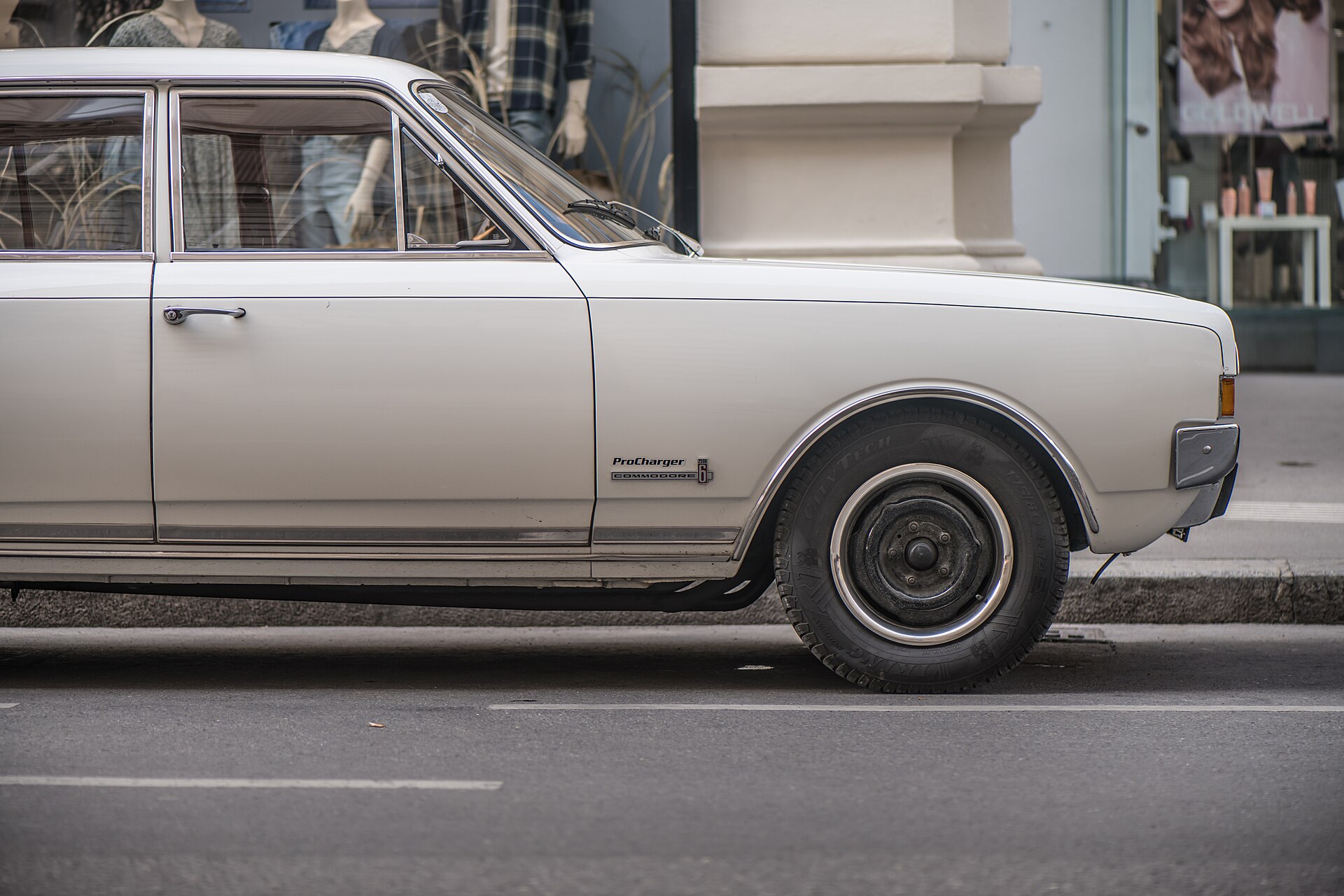
- Commodore A 1967–1971 · Sedan, Coupe · 70–110 kW (95–150 PS)
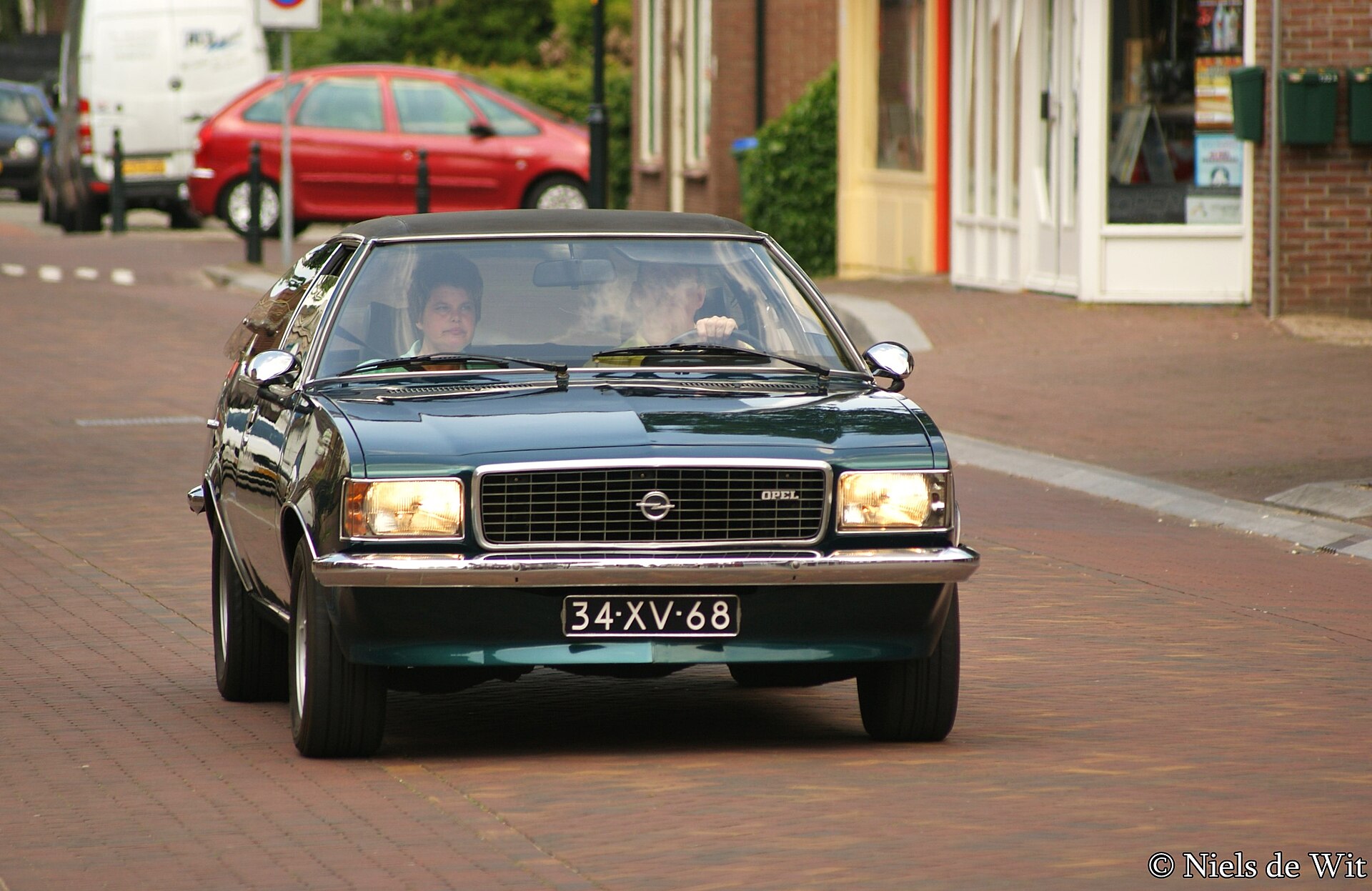
- Commodore B 1972–1977 · Sedan, Coupe · 85–118 kW (116–160 PS)
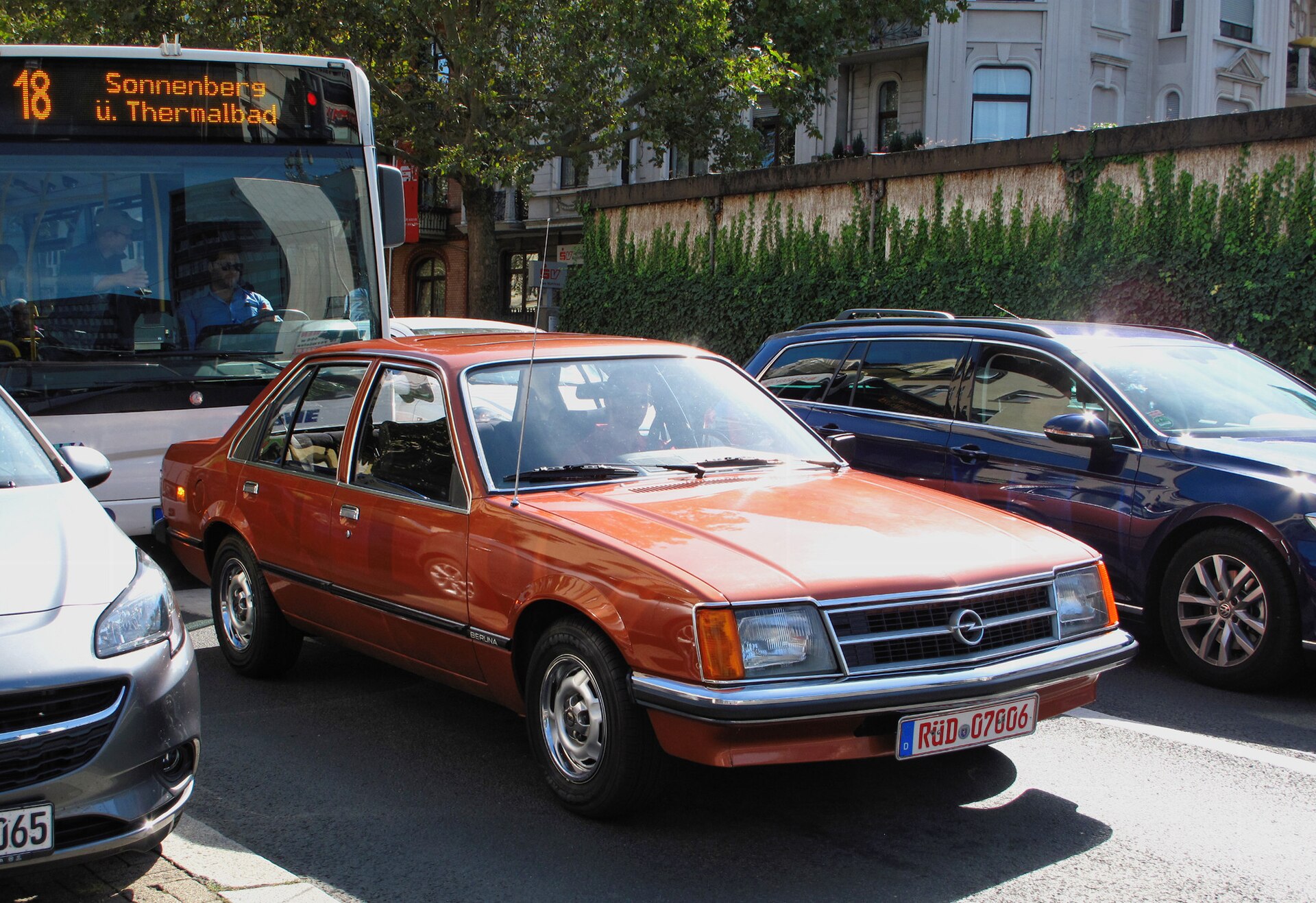
- Commodore C 1978–1982 · Sedan, Station wagon · 85–96 kW (116–131 PS)
Newest first · 3 generations since 1967
-
1978
-
1972
- 1967 A 1967–1971 · Sedan, Coupe · 70–110 kW (95–150 PS)


All generations by year: Commodore C (1978–1982) · Commodore B (1972–1977) · Commodore A (1967–1971)
Which one is mine?
Pick the year of first registration to see which generation it is.
Check by VINThe Opel Commodore is the six-cylinder sister of the Opel Rekord, built by Opel from 1967 to 1982 in three generations, A, B and C. It used the Rekord body with 2.2 to 2.8-litre straight sixes and more equipment. The fuel-injected GS/E versions of 1970-1977 reached 192 to 200 km/h and became Opel's sporting flagships of the decade.
In short
- Three generations: Commodore A (1967-1971, 156,330 built), B (1972-1977, 140,827) and C (1978-1982, 82,820).
- Bodies: two- and four-door saloon, pillarless coupé (A and B) and the Voyage estate (C, 1981-1982).
- Power from 70 kW (95 PS) in the 2200 to 118 kW (160 PS) in the 2.8 GS/E.
- The name later passed to Holden, whose 1978 VB Commodore used the Rekord E body.
Size at a glance
Opel Commodore A
The Opel Commodore B is 33 mm longer, 26 mm narrower and 30 mm lower than the Opel Commodore A.
| Dimensions | Opel Commodore B | Opel Commodore A | Difference |
|---|---|---|---|
| Length | 4,607 mm181.4 in | 4,574 mm180.1 in | +33 mm+1.3 in |
| Width | 1,728 mm68.0 in | 1,754 mm69.1 in | −26 mm−1.0 in |
| Height | 1,415 mm55.7 in | 1,445 mm56.9 in | −30 mm−1.2 in |
| Wheelbase | 2,668 mm105.0 in | 2,668 mm105.0 in | Same |
Specs by version
Engines
| Version | Engine | Power | Torque | Gearbox | Drive | Production years |
|---|---|---|---|---|---|---|
| A · 1967–1971 | ||||||
| A · 2500 S | 2.5 l · 6 cyl · Petrol 2,461 cc | 85 kW 116 PS114 hp | 173 Nm128 lb-ft | - | Rear-wheel drive | 1967–1971 |
| A · GS/E 2500 | 2.5 l · 6 cyl · Petrol 2,461 cc | 110 kW 150 PS148 hp | 196 Nm145 lb-ft | 4-sp Manual | Rear-wheel drive | 1970–1971 |
| B · 1972–1977 | ||||||
| B · 2.5 S | 2.5 l · 6 cyl · Petrol 2,490 cc | 85 kW 116 PS114 hp | 174 Nm128 lb-ft | - | Rear-wheel drive | 1972–1977 |
| B · GS/E 2.8 (155 PS) | 2.8 l · 6 cyl · Petrol 2,784 cc | 114 kW 155 PS153 hp | 217 Nm160 lb-ft | 4-sp Manual | Rear-wheel drive | 1975–1977 |
| C · 1978–1982 | ||||||
| C · 2.5 E | 2.5 l · 6 cyl · Petrol 2,461 cc | 96 kW 131 PS129 hp | 185 Nm136 lb-ft | - | Rear-wheel drive | 1978–1982 |
Performance
Show all 2 versions
| Version | 0–100 km/h | Top speed |
|---|---|---|
| A · 1967–1971 | ||
| A · GS/E 2500 | 9.3 s 0–62 mph | 192 km/h119 mph |
| B · 1972–1977 | ||
| B · GS/E 2.8 (155 PS) | 9.5 s 0–62 mph | 195 km/h121 mph |
Dimensions and weight
Show all 2 versions
| Version | Length | Width | Height | Wheelbase | Kerb weight | Fuel tank |
|---|---|---|---|---|---|---|
| A · 1967–1971 | ||||||
| A · GS/E 2500 | 4,574 mm180.1 in | 1,754 mm69.1 in | 1,445 mm56.9 in | 2,668 mm105.0 in | 1,185 kg2,612 lb | 70 l18.5 gal US |
| B · 1972–1977 | ||||||
| B · GS/E 2.8 (155 PS) | 4,607 mm181.4 in | 1,728 mm68.0 in | 1,415 mm55.7 in | 2,668 mm105.0 in | 1,265 kg2,789 lb | 70 l18.5 gal US |
Verified Manufacturer and type-approval data from our catalog · Sources and methodology
Opel Commodore at a glance
| Item | Opel Commodore |
|---|---|
| Years | January 1967 to August 1982 (Europe) |
| Production | about 380,000: A 156,330 (156,467 in another count), B 140,827, C 82,820 |
| Plant | Rüsselsheim, Germany (sole plant for the Commodore C) |
| Body styles | two- and four-door saloon; two-door coupé (A, B); five-door Voyage estate (C) |
| Platform | Opel Rekord C, D and E |
| Layout | front engine, rear-wheel drive; wheelbase 2,668 mm |
| Engines | CIH straight six: 2,239 cc, 2,461/2,490 cc, 2,784 cc |
| Power | 70 kW (95 PS) to 118 kW (160 PS) |
| Kerb weight | 1,185 kg (A GS/E coupé) to 1,265 kg (B GS/E saloon), ADAC data |
| Top speed | 192 km/h (A GS/E) to 200 km/h (B GS/E coupé) |
| 0-100 km/h | 9.3 s (A GS/E), 9.5 s (B GS/E 114 kW (155 PS)), ADAC data |
| Price new | about DM 13,100 for an A GS/E coupé (1970); from DM 13,955 for a Commodore B (1973) |
A six-cylinder Rekord for a new class
Opel presented the Commodore in the first quarter of 1967 and placed it between the Rekord L and the large Kapitän. It took over the role of the Rekord 6 and shared the body of the Rekord C, but came with 14-inch wheels in place of 13-inch ones and an optional vinyl roof. Opel itself called it the more luxurious and more powerful mid-size car. The Rekord family, including its coke-bottle C generation, is listed in our Opel catalogue.
Buyers could choose a two-door or four-door saloon or a pillarless coupé, and the coupé took almost half of the A's sales with 70,333 cars against 72,597 four-door and 13,537 two-door saloons.
GS, GS/E and GS 2.8: the sporting Commodore A
The launch engines were a 2.2-litre six with 70 kW (95 PS), dropped for the 1969 model year, and a 2.5-litre with 85 kW (115 PS), later 88 kW (120 PS). From September 1967 the GS used twin carburettors for 96 kW (130 PS). In March 1970 the GS/E introduced Bosch D-Jetronic electronic fuel injection and 110 kW (150 PS); in ADAC data the GS/E coupé weighed 1,185 kg, reached 192 km/h and needed 9.3 seconds to 100 km/h. It cost about DM 13,100, and zwischengas notes that no other car offered 110 kW (150 PS) for so little money at the time. The GS 2.8 of April 1970 offered 107 kW (145 PS) with carburettors.
Steinmetz in Rüsselsheim prepared GS/E coupés for Group II rallies. The GS 3000 version had a 2,990 cc engine with three twin-choke Weber carburettors, up to 221 kW (300 PS) and 1,070 kg, and was quoted at 0-100 km/h in 5.3 seconds.
| Generation | Engine | Displacement | Power | Years |
|---|---|---|---|---|
| A 2200 | carburettor | 2,239 cc | 70 kW (95 PS) | 1967-1968 |
| A 2500 S | carburettor | 2,461 cc | 85-88 kW (115-120 PS) | 1967-1971 |
| A GS | twin carburettors | 2,461 cc | 96 kW (130 PS) | 1967-1971 |
| A GS/E | D-Jetronic injection | 2,461 cc | 110 kW (150 PS) | 1970-1971 |
| A GS 2.8 | twin carburettors | 2,784 cc | 107 kW (145 PS) | 1970-1971 |
| B 2.5 S / GS 2.5 | carburettor | 2,490 cc | 85 / 96 kW (115 / 130 PS) | 1972-1977 |
| B GS 2.8 | twin carburettors | 2,784 cc | 103-104 kW (140-142 PS) | 1972-1977 |
| B GS/E 2.8 | D-Jetronic injection | 2,784 cc | 114-118 kW (155-160 PS) | 1972-1977 |
| C 2.5 S | carburettor | 2,461 cc | 85 kW (115 PS) | 1978-1982 |
| C 2.5 E | L-Jetronic injection | 2,461 cc | 96 kW (130 PS) | 1978-1982 |
Commodore B: the GS/E coupé and the rally stripes
The Commodore B was shown at the Geneva Motor Show in March 1972, on the new Rekord D body, with the GS/E following a few months later. Its 2.8-litre six, related to the engines of the Admiral and Diplomat, produced 118 kW (160 PS) with fuel injection. Opel's data gave 9.3 seconds to 100 km/h, specialist magazines measured about 8.5 seconds, and the GS/E coupé reached 200 km/h. From 1974 emission rules cut the outputs to 95 to 114 kW (129 to 155 PS), and the 2.5-litre fell away for a time. Power steering became standard on the GS/E in August 1975. A 1973 advertisement listed the Commodore B from DM 13,955, and in its last seasons the GS/E saloon cost about DM 21,450.
Motorsport kept the image alive. Walter Röhrl and Jochen Berger won a class in the 1973 Monte Carlo Rally in an Irmscher-prepared GS/E, and Steinmetz built a GS/E with a 6.0-litre V8 of 375 kW (510 PS) for the 1974 Interserie, without lasting success. Opel built 140,827 Commodore B cars to July 1977, including 42,279 coupés.
Commodore C: Senator nose and Voyage estate
The Commodore C was shown in August 1977 and went into series production in October 1978, using the Rekord E body with a front end in the style of the larger Senator. There was no coupé, because the Monza had taken over that role. The 2.5-litre six came with a carburettor and 85 kW (115 PS) or Bosch L-Jetronic injection and 96 kW (130 PS), and the car cost DM 270 more than a Rekord 2.0 E Luxus. The two-door saloon ended in June 1981, and the Voyage estate of April 1981 sold only 3,440 cars in 16 months. Production stopped in August 1982 at 82,820 cars, and Britain knew the car as the Vauxhall Viceroy, one of the Opel-based models described in our Vauxhall history.
The Commodore name moved on. Holden used it from 1978 for its VB Commodore, which combined the Rekord E body with the Senator nose, as told in our history of Holden. In South Africa a Commodore C2 with a 3.0-litre engine was built into the mid-1980s, while in Europe the Omega of 1986 is usually listed as its successor.

Opel Commodore today: what to check when buying
Rust has thinned the population sharply. Classic & Sports Car reports that experts believe most German Rekord and Commodore coupés of the A generation were lost to rust in the 1980s, so surviving coupés often come from drier export markets. Sills, floors and wheel arches decide the price of any survivor. The same writers found the steering heavy on cars without the optional power assistance. The D-Jetronic injection of the A and B GS/E needs a specialist, and a car advertised as a GS/E should be checked against its engine and chassis records.
The 2.8-litre six is related to the engines of the Admiral and Diplomat, which widens the pool of mechanical parts. Market evidence is thin and dated. A 1976 Commodore B GS/E coupé offered on the Kickdown auction platform in Leipzig in April 2023 carried an estimate of EUR 21,000, and its seller quoted a 2021 Classic Data valuation of EUR 15,000 in condition 3+. More German cars of the period are collected in our classic cars section, and Opel's own story is in our Opel brand history.
Photo gallery

Opel Commodore evolution in numbers
Did you know?
- The Opel Commodore ran for 15 years, from 1967 to 1982, over 3 generations in our catalog.
- The longest-running generation is the Commodore B (1972–1977): 5 years.
- The most powerful Opel Commodore is not the newest: the Commodore B (1972–1977) offered up to 118 kW (160 PS), the Commodore C up to 96 kW (131 PS).
Most powerful version, kW
Figures from the 1cars catalog: power is the strongest version of each generation; generations without the figure are left out.
Opel Commodore: first vs latest generation
| Spec | Commodore A | Commodore C | Change |
|---|---|---|---|
| Years | 1967–1971 | 1978–1982 | 11 years apart |
| Most powerful version | 110 kW (150 PS) | 96 kW (131 PS) | −14 kW (−13%) |
Oldest and newest generation in the 1cars catalog. Power is the strongest version of each; other rows are shown only when both generations have the figure.
Opel Commodore in our rankings
- No. 10 of 25 · Quickest cars of the 1970s, 0–100 (9.3 s)
- No. 17 of 97 · Lightest coupes (1,185 kg · top 18%)
- No. 87 of 418 · Lightest cars (1,185 kg · top 21%)
- No. 296 of 1142 · Longest-running car nameplates (15 years · top 28%)
- No. 40 of 117 · Smallest sedans (4,574 mm · top 35%)
- No. 26 of 74 · Lightest sedans (1,265 kg · top 36%)
Lighter than 82% of ranked coupes in the 1CARS catalog (No. 17 of 97).
FAQ
What is the difference between the Opel Rekord and the Commodore?
The Commodore uses the Rekord body with six-cylinder engines of 2.2 to 2.8 litres, larger wheels and more equipment. The Rekord used four-cylinder engines from the Rekord C onwards, apart from the early 2.2-litre six of 1966-1968.
How fast is the Opel Commodore GS/E?
The Commodore A GS/E with 110 kW (150 PS) reached 192 km/h, according to ADAC data. The Commodore B GS/E coupé with 118 kW (160 PS) reached 200 km/h, and Opel quoted 9.3 seconds from 0 to 100 km/h.
How many Opel Commodores were built?
About 380,000 across three generations: 156,330 Commodore A, 140,827 Commodore B including 42,279 coupés, and 82,820 Commodore C including 3,440 Voyage estates. Production ran from 1967 to August 1982, and Holden had already taken the Commodore name to Australia in 1978.
Is the Holden Commodore related to the Opel Commodore?
Yes. Holden's first Commodore, the VB of 1978, used the body of the Opel Rekord E with the front end of the Opel Senator, the same recipe as the Commodore C, and took over the Commodore name.
Data sources
Data checked by an editor against the sources below.
- Wikipedia - Opel Commodore
- Wikipedia - Opel Commodore A
- Wikipedia - Opel Commodore B
- Wikipedia - Opel Commodore C
- ADAC


