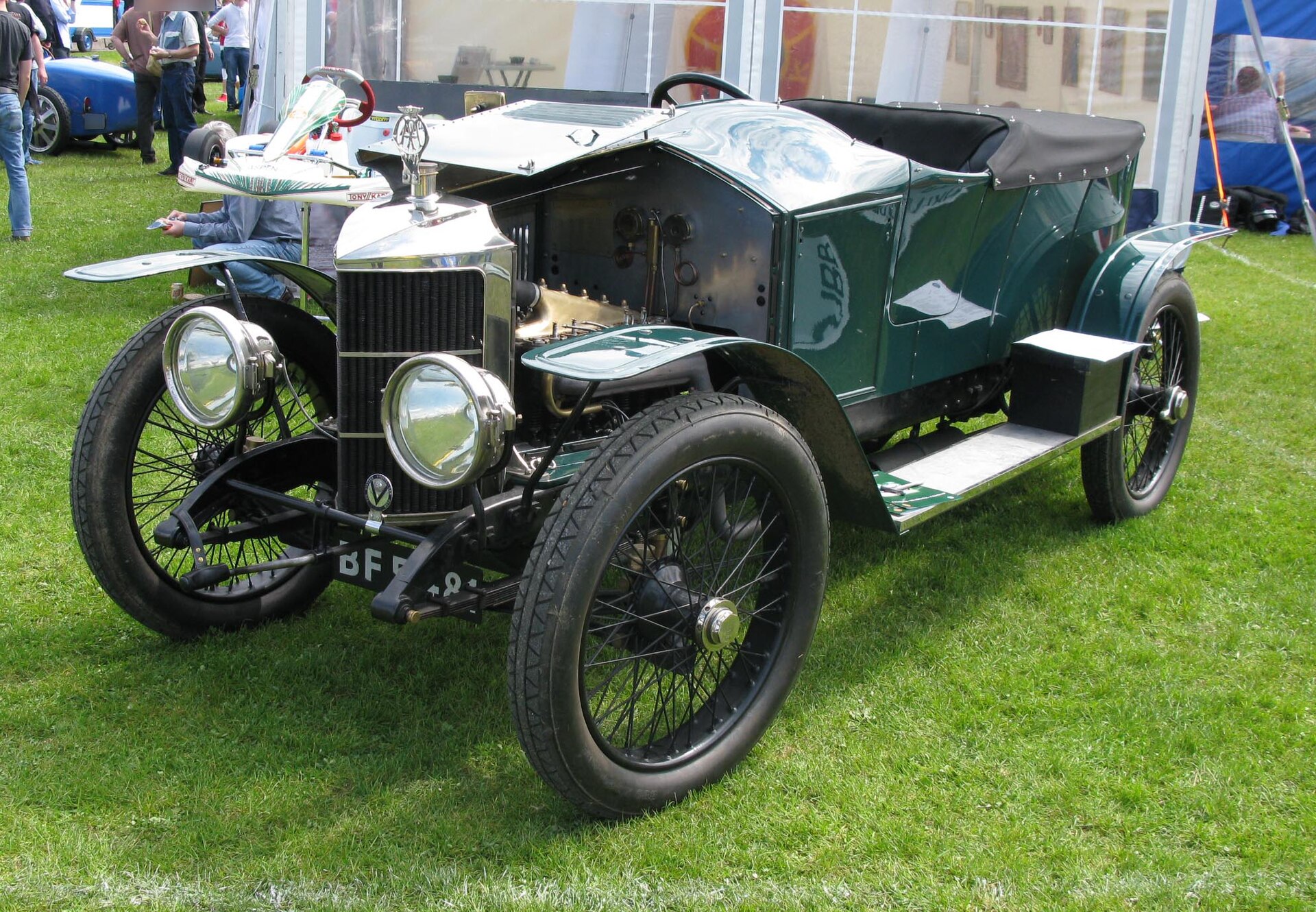
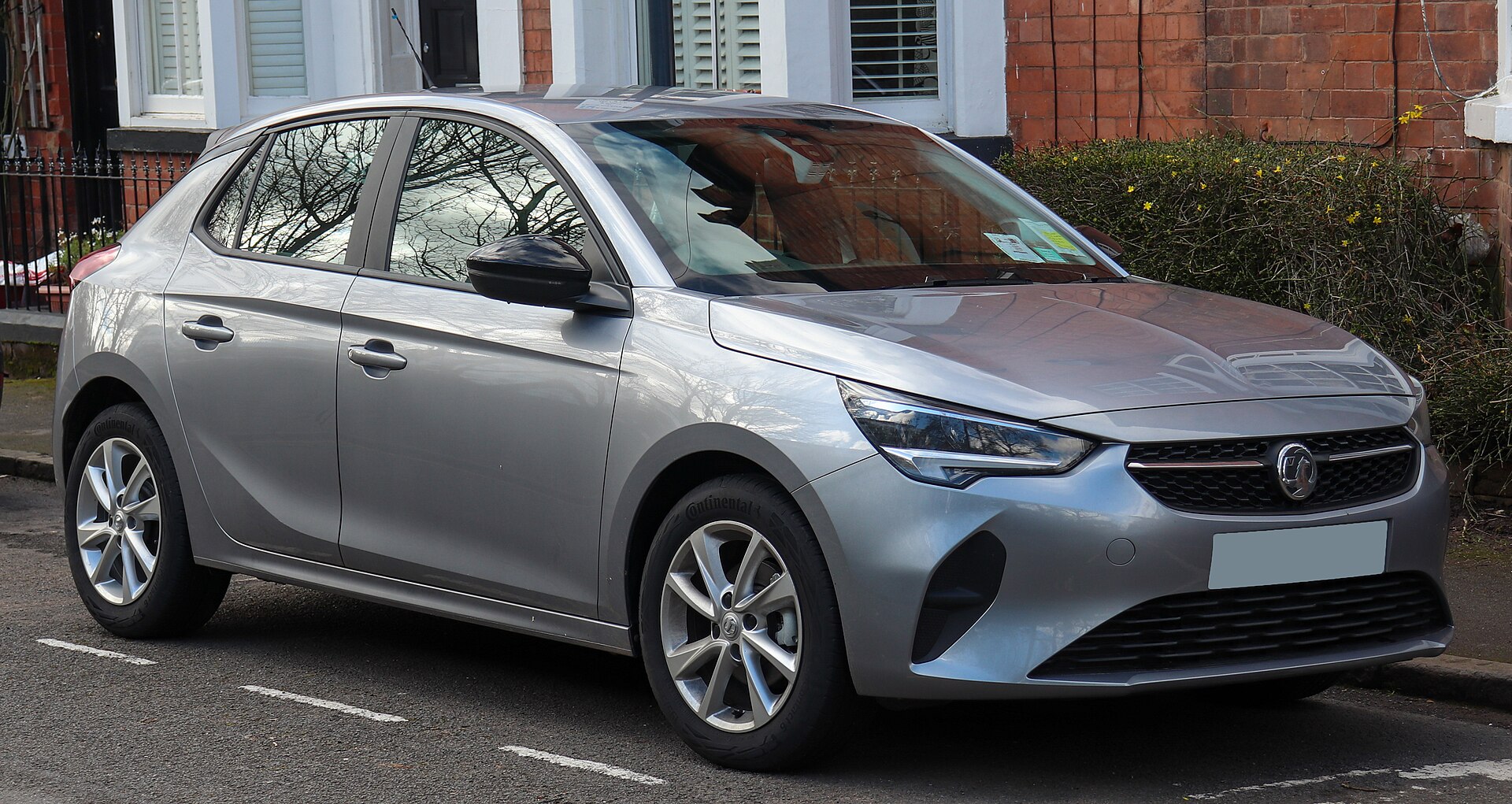
Vauxhall — From a London Iron Works to Stellantis
Vauxhall is one of the oldest car brands in Britain. The company began in 1857 as a pump and marine-engine works in Vauxhall, south London, made its first car in 1903 and has belonged to a bigger group for almost all of its car-making life: General Motors from 1925 to 2017, then PSA and, since 2021, Stellantis. Today its cars are close relatives of the Opel and Peugeot ranges, sold in the United Kingdom under the griffin badge.
Key takeaways
- Founded in 1857 by Scottish marine engineer Alexander Wilson; renamed Vauxhall Iron Works in 1863, Vauxhall Motors in 1907.
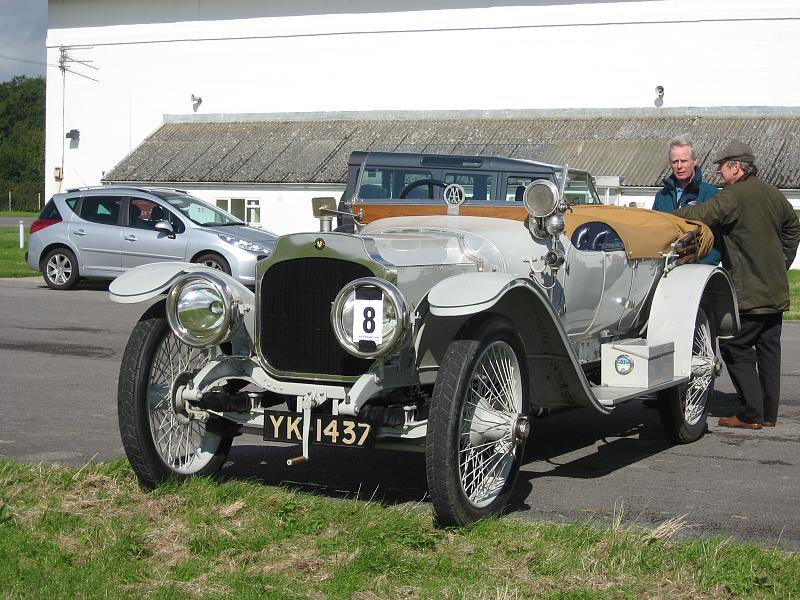
- The 30-98 of 1913–1927 is often called one of the first true British sports cars.
- General Motors bought the company on 16 November 1925 and set up Bedford, its commercial-vehicle arm, in 1931.
- PSA agreed to buy Vauxhall and Opel in March 2017 for €2.2 billion; Stellantis has owned the brand since January 2021.
Vauxhall at a glance
| Fact | Value |
|---|---|
| Founded | 1857, London (as Alex Wilson and Company) |
| Founder | Alexander Wilson, marine engineer |
| First car | 1903, a 5-horsepower single-cylinder model |
| Main car plants | Luton (from 1905), Ellesmere Port (cars from 1964) |
| Owners | Independent to 1925, General Motors 1925–2017, PSA 2017–2021, Stellantis since 2021 |
| Sister brand | Opel (shared engineering since the 1970s) |
| Commercial arm | Bedford (1931–around 1990) |
| Best-known models | 30-98, Victor, Viva, Cavalier, Astra, Corsa |
Origins: Alexander Wilson and the Vauxhall Iron Works
The name comes from the district of Vauxhall on the south bank of the Thames. There, on Wandsworth Road, the Scottish marine engineer Alexander Wilson set up Alex Wilson and Company in 1857. The firm made pumps and engines for ships, a long way from motor cars. In 1863 Andrew Betts Brown bought the business and renamed it Vauxhall Iron Works; it then built travelling cranes as well.
The first car arrived in 1903. It was a small 5-horsepower machine with a single cylinder, tiller steering, two forward speeds and no reverse gear. A year later it gained a steering wheel and a reverse gear. Space in London soon ran out, and in 1905 most production moved to Luton, north of London. The company name changed to Vauxhall Motors in 1907, and Luton remained its home for the next 120 years.
The Pomeroy years: Prince Henry and the 30-98
The engineer who shaped early Vauxhall was Laurence Pomeroy. He joined in 1906, aged 22, as an assistant draughtsman. When managing director Percy Kidner needed an engine for the 1908 RAC and Scottish Reliability Trial, Pomeroy designed it, and its success made him chief designer in place of F. W. Hodges. That engine led to the Y-Type and then the A-Type, built from 1908 to 1914.
Two cars were entered in the 1910 Prince Henry Trials. Replicas sold to customers as the C-type became known simply as the Vauxhall Prince Henry, and they gave the brand a sporting name before the First World War.
The next step was the 30-98. The first E-type cars appeared in 1913, and a 30-98 set a hill-climb record at Shelsley Walsh on 7 June 1913 in the hands of Joseph Higginson. Its 4,525 cc side-valve engine, derived from the Prince Henry unit, produced 67 kW (90 bhp) at 3,000 rpm. After Pomeroy left for the United States in 1919, C. E. King, chief engineer from 1920, developed the overhead-valve OE-type of 1922. It had 4,224 cc and 84 kW (112 bhp), later about 89 kW (120 bhp), and Vauxhall guaranteed that a stripped competition car would reach 100 mph (160 km/h). About 274 E-types and 313 OE-types were built up to 1927. Automobile Quarterly later called the 30-98 "the first and perhaps the best British sports car".
General Motors takes over (1925–1945)
Fine engineering did not make Vauxhall rich. By the mid-1920s the firm built only about seventeen cars a week and was in financial trouble. General Motors bought it on 16 November 1925. The American group would later also own Opel in Germany, and the two brands' paths have been linked ever since.
Under GM, Vauxhall moved from expensive hand-built cars to volume models. The Cadet followed in late 1930, and in April 1931 a separate commercial-vehicle brand, Bedford, was created; the first Bedford truck of 1931 was based on a Chevrolet design. The Light Six of 1933 sold about 26,000 units in just over a year. The 10-4 of 1937, advertised as "The £1 Million Motor Car", passed 50,000 units before civilian production stopped in May 1940.
During the Second World War Luton built the Churchill tank: more than 5,600 left Vauxhall's lines and partner sites, along with roughly 250,000 lorries. Bedford built its MW, OY and QL lorries in tens of thousands, and a new plant at Dunstable opened in 1942. An air raid on Luton in August 1940 killed 39 employees.
Victor, Viva and the post-war boom
After 1945 Vauxhall became one of Britain's big volume makers. The Wyvern and Velox of 1948 were followed by the E-type range, and by 1953 Luton was building about 110,000 E-types a year.
The Victor of 1957 was the model of the decade. Its styling borrowed from the 1955 Chevrolet Bel Air, and the first F-series sold about 390,745 units. For a time it was Britain's most exported car, sold in North America through Pontiac dealers, the only Vauxhall-branded car ever offered in the United States. Later Victors added firsts for mass-produced British cars: the FD of 1967 brought belt-driven overhead-camshaft four-cylinder engines and a bonded-in windscreen.
The small Viva arrived in 1963, and the HC Viva of 1970 became Vauxhall's best-selling car of that decade. A second plant opened at Ellesmere Port in 1962, first making parts and from 1964 complete cars. The FE Victor of 1972 was the last Vauxhall designed independently of Opel.

Opel engineering: Cavalier, Astra, Nova and Corsa
From the mid-1970s GM merged the work of its two European brands. The Chevette of 1975 was based on the Opel Kadett, and the Cavalier of the same year on the Opel Ascona B. Luton began building the Cavalier in August 1977. The second-generation, front-wheel-drive Cavalier sold 807,624 units in Britain between 1981 and 1988 and was the country's second best-selling car in 1984 and 1985. Across three generations more than 1.8 million Cavaliers were sold in Britain before the Vectra replaced it in 1995.
From 1980 most Vauxhalls were practically identical to Opels, engineered in Rüsselsheim, and the two marketing operations in Britain merged in 1981. The Astra of 1980 was a Kadett with a Vauxhall badge; the Astra Mk2 was European Car of the Year in 1984. The small Nova of 1983 became the Vauxhall Corsa in 1993, and in 2002 the Corsa was Britain's second most popular new car. The Carlton, based on the Opel Rekord, produced one memorable spin-off: the Lotus Carlton, described at the time as the fastest four-door production car. From 1994 Vauxhalls carried a "V" grille to look different from their Opel twins. The Insignia replaced the Vectra in 2008 and was named European Car of the Year, and the Mokka small SUV followed in 2012.
Bedford ended earlier. The heavy-truck business was sold to AWD in 1987, the Luton van plant became a joint venture with Isuzu (IBC Vehicles) in 1986, and the Bedford name disappeared from vans around 1990.

From PSA to Stellantis: Vauxhall today
General Motors left Europe in 2017. On 6 March 2017 PSA agreed to buy Vauxhall and Opel for €2.2 billion, and in September the British company changed its name from General Motors UK Limited back to Vauxhall Motors Limited. When PSA merged with Fiat Chrysler on 16 January 2021, Vauxhall became part of Stellantis, alongside Opel and the other former PSA and Fiat Chrysler brands.
The range of the 2020s shares its platforms with those brands: the Corsa, Astra, Mokka and Grandland cars and the Combo, Vivaro and Movano vans. Production in Britain has changed. Stellantis announced in November 2024 that it would close the Luton van plant, and the factory shut on 28 March 2025. In the same month it said that all of its electric van production would move to Ellesmere Port. For the full model list see the Vauxhall catalogue; for the shared technical background see Opel models. Current rivals of the Astra and Corsa are compared in the best family hatchbacks.

Vauxhall timeline
| Year | Event |
|---|---|
| 1857 | Alexander Wilson founds Alex Wilson and Company in Vauxhall, London |
| 1863 | Renamed Vauxhall Iron Works under Andrew Betts Brown |
| 1903 | First car, a 5-horsepower single-cylinder model |
| 1905 | Most production moves to Luton |
| 1907 | Company becomes Vauxhall Motors |
| 1913 | 30-98 E-type introduced |
| 1925 | General Motors buys Vauxhall (16 November) |
| 1931 | Bedford commercial vehicles launched |
| 1957 | Victor F-series launched |
| 1964 | First cars built at Ellesmere Port |
| 1975 | Cavalier and Chevette, both Opel-based |
| 1984 | Astra Mk2 is European Car of the Year |
| 2017 | PSA buys Vauxhall and Opel |
| 2021 | Vauxhall becomes part of Stellantis |
| 2025 | Luton van plant closes |
Landmark Vauxhall models
| Model | Years | Why it matters |
|---|---|---|
| Prince Henry (C-type) | 1911–1915 | First Vauxhall with a sporting reputation |
| 30-98 | 1913–1927 | Celebrated early British sports car, 100 mph guaranteed for competition cars |
| 10-4 | 1937–1940 | Volume car of the GM era, over 50,000 built |
| Victor | 1957–1976 | Britain's most exported car for a time |
| Viva HC | 1970–1979 | Vauxhall's best-selling car of the 1970s |
| Cavalier | 1975–1995 | More than 1.8 million sold in Britain |
| Astra | 1980–present | European Car of the Year 1984 (Mk2) |
| Corsa | 1993–present | Successor of the Nova, a long-running British best-seller |
FAQ
Who owns Vauxhall today?
Stellantis. PSA bought Vauxhall and Opel from General Motors in 2017, and PSA merged with Fiat Chrysler to form Stellantis in January 2021.
When was Vauxhall founded and by whom?
In 1857, by the Scottish marine engineer Alexander Wilson, in the Vauxhall district of London. The first Vauxhall car followed in 1903.
Are Vauxhall and Opel the same cars?
Since about 1980 almost all Vauxhall cars have been Opel designs sold with Vauxhall badges in the United Kingdom. Under Stellantis both brands also share platforms with Peugeot and Citroën.
Where are Vauxhalls made?
Vauxhall's cars share Opel and Stellantis platforms and are built in group plants. In Britain, Stellantis has chosen Ellesmere Port for its electric vans; the Luton van plant closed in March 2025.
What is the most famous Vauxhall?
Among enthusiasts it is the 30-98 of 1913–1927. In sales terms, the Cavalier, Astra and Corsa were the brand's biggest sellers in Britain.
Sources
- Wikipedia — Vauxhall Motors (accessed 24 Oct 2026)
- Wikipedia — Vauxhall 30-98 (accessed 24 Oct 2026)
- Wikipedia — Vauxhall Victor (accessed 24 Oct 2026)
- Wikipedia — Vauxhall Cavalier (accessed 24 Oct 2026)
- Wikipedia — Bedford Vehicles (accessed 24 Oct 2026)
Found a mistake? Report an error