
 Renault ZOE
Specs, engines and history
Updated Published Sources (4) Report an error
By Felix Hartmann, Automotive Technology & EV Contributor Reviewed by Oleksandr Hnatiuk

- Built
- 2012–2024
- Top power
- 100 kW (136 PS)
- New price
- from about €21,700 (2013)
- Used price today
- about €8,500–15,500 (AutoScout24, Nov 2026)
Our verdict: which Zoe to buy and who it suits
Our verdict · Felix Hartmann
The Zoe competed with the Nissan Leaf, the BMW i3, the VW e-Golf and later the Peugeot e-208. Its strengths were range for the price and an efficient drivetrain; its weaknesses, an ageing design and the 2021 safety result.
The Zoe suits drivers who mostly cover town and suburban distances and can charge at home or work. As a used car, a Z.E. 50 with the R135 motor and CCS socket is the best all-round choice. A Z.E. 40 suits town drivers who charge at home, and the 22 kWh car only very short daily trips. Its successor, the Renault 5 E-Tech, is the newer alternative. Other electric cars are compared in our electric cars section, and all Renault models are in the Renault catalogue.
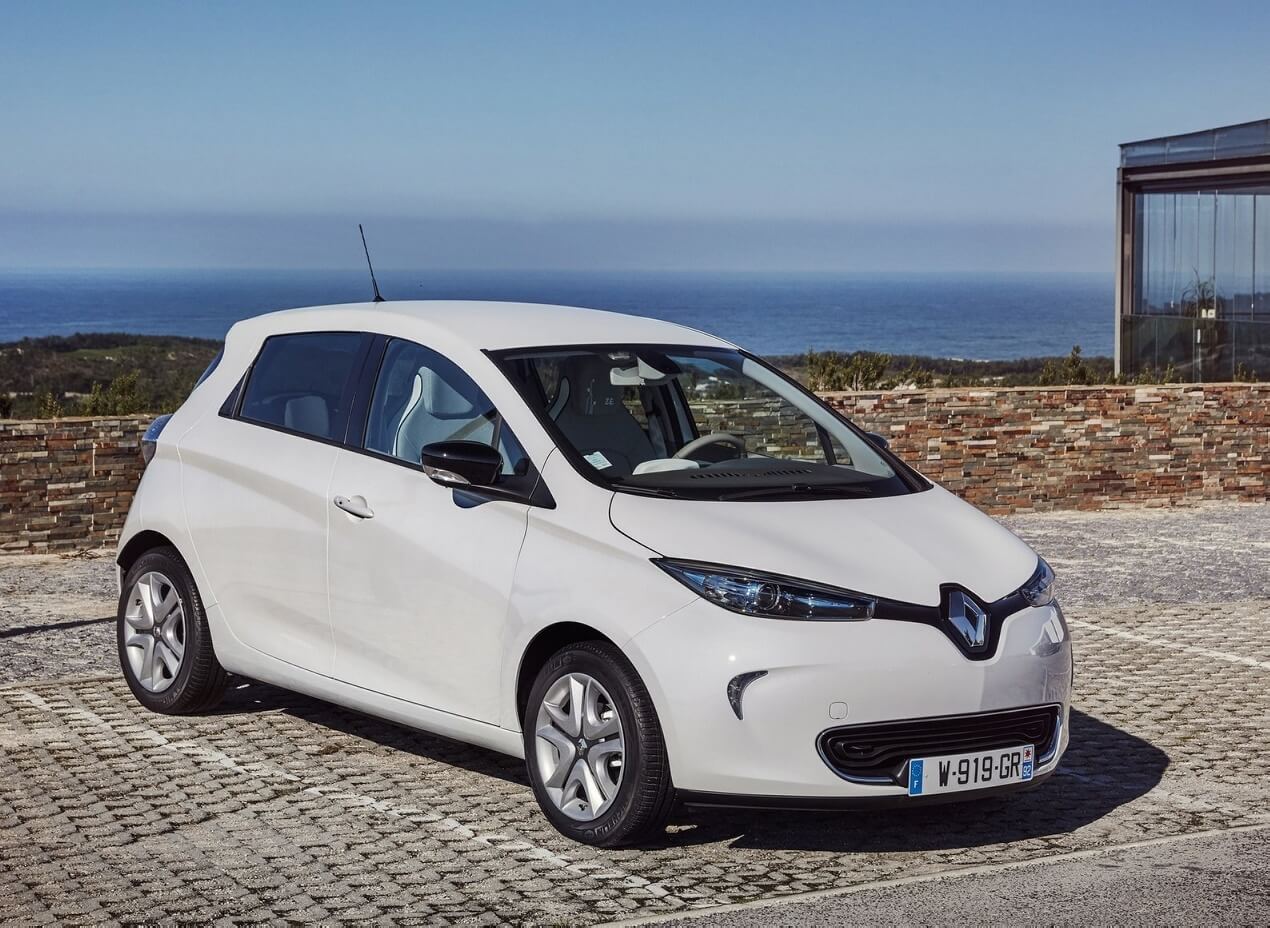
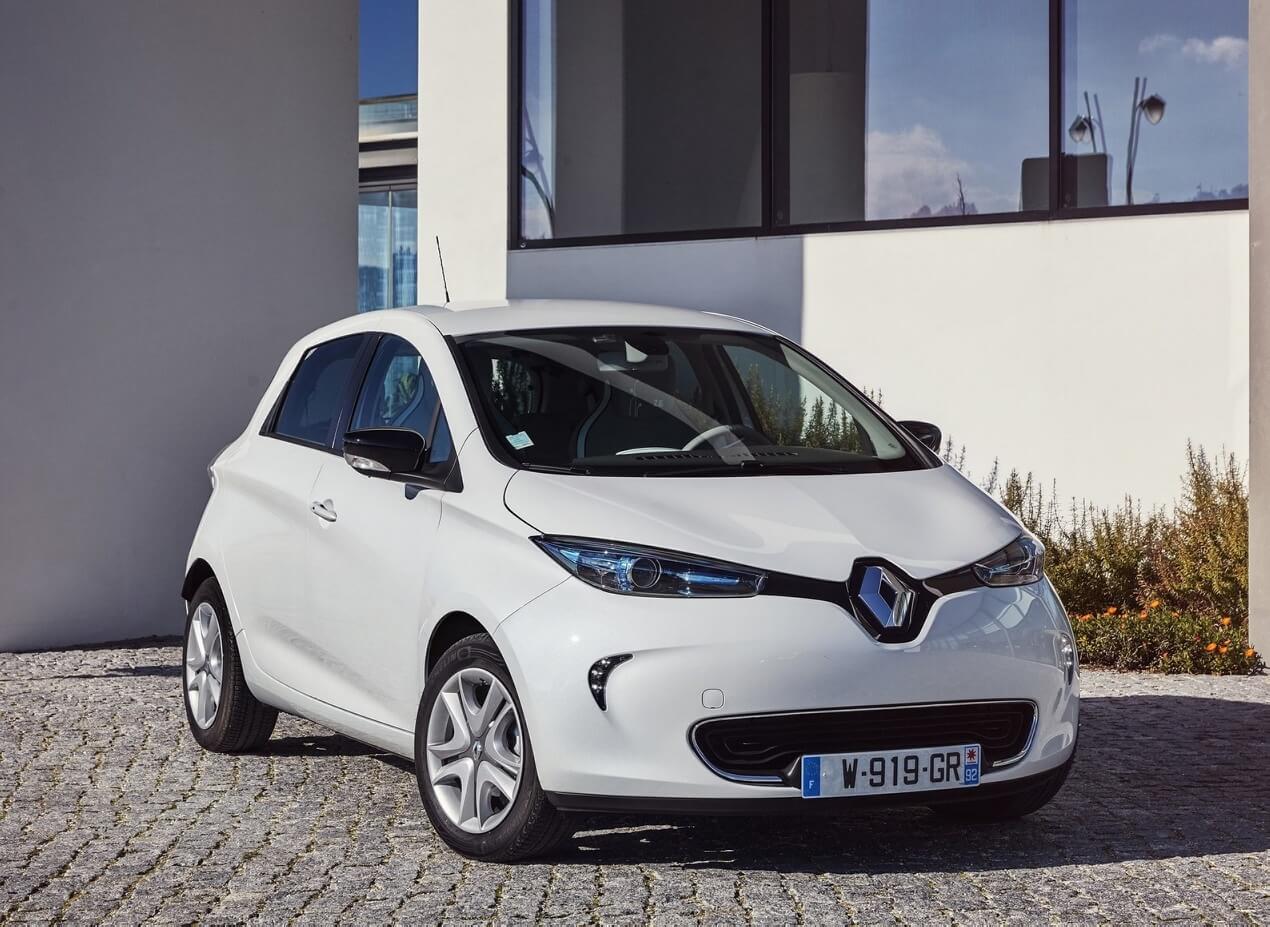
The Renault Zoe is a five-door electric supermini that Renault built at Flins, France, from 2012 to March 2024, when the Renault 5 E-Tech replaced it. Over its life the battery grew from 22 to 52 kWh and the WLTP range reached 395 km, while motor output rose from 65 to 100 kW. With 426,706 cars built, it was one of Europe's best-selling electric cars of the 2010s.
In short
- Three battery generations: 22 kWh (2012), 41 kWh "Z.E. 40" (2016) and 52 kWh "Z.E. 50" (2019).
- Motors: 65 kW at launch, then 80 kW (R110) and 100 kW (R135); front-wheel drive throughout.
- Charging: up to 43 kW AC on early cars with the Chameleon charger; 50 kW DC as an option from 2019.
- Safety: five Euro NCAP stars in 2013, zero stars in the stricter 2021 test.
Size at a glance
| Dimensions | Renault ZOE |
|---|---|
| Length | 4,084 mm160.8 in |
| Width | 1,730 mm68.1 in |
| Height | 1,562 mm61.5 in |
| Wheelbase | 2,588 mm101.9 in |
Specs by version
Engines
| Version | Engine | Power | Torque | Gearbox | Drive | Production years |
|---|---|---|---|---|---|---|
| Zoe 22 kWh (65 kW) | Electric | 65 kW 88 PS87 hp | 220 Nm162 lb-ft | Single-speed | Front-wheel drive | 2012–2019 |
| Zoe R110 (80 kW) | Electric | 80 kW 109 PS107 hp | 225 Nm166 lb-ft | Single-speed | Front-wheel drive | 2018 |
| Zoe R135 Z.E. 50 (100 kW) | Electric | 100 kW 136 PS134 hp | 245 Nm181 lb-ft | Single-speed | Front-wheel drive | 2019–2024 |
Performance
Show all 3 versions
| Version | Fuel consumption | Range |
|---|---|---|
| Zoe 22 kWh (65 kW) | 17.0 kWh/100 km27.4 kWh/100 mi | 210 km130 mi |
| Zoe R110 (80 kW) | 17.5 kWh/100 km28.2 kWh/100 mi | 300 km186 mi |
| Zoe R135 Z.E. 50 (100 kW) | 17.8 kWh/100 km28.6 kWh/100 mi | 395 km245 mi |
Dimensions and weight
Show all 3 versions
| Version | Length | Width | Height | Wheelbase | Kerb weight | Battery |
|---|---|---|---|---|---|---|
| Zoe 22 kWh (65 kW) | - | - | - | - | 1,548 kg3,413 lb | 22 kWh |
| Zoe R110 (80 kW) | 4,084 mm160.8 in | 1,730 mm68.1 in | 1,562 mm61.5 in | 2,588 mm101.9 in | 1,577 kg3,477 lb | 41 kWh |
| Zoe R135 Z.E. 50 (100 kW) | 4,084 mm160.8 in | 1,730 mm68.1 in | 1,562 mm61.5 in | 2,588 mm101.9 in | 1,615 kg3,560 lb | 52 kWh |
Verified Manufacturer and type-approval data from our catalog · Sources and methodology
Renault Zoe versions at a glance

| Version | Years | Battery (usable) | Motor | Range |
|---|---|---|---|---|
| Zoe 22 kWh (Q210 / Q90) | 2012–2019 | 22 kWh | 65 kW, 220 Nm | 210 km NEDC |
| Zoe 22 kWh (R240) | 2015–2019 | 22 kWh | 65 kW, 220 Nm | 240 km NEDC |
| Zoe Z.E. 40 (R90 / Q90 / R110) | 2016–2019 | 41 kWh | 65–80 kW | 400 km NEDC, 300 km WLTP |
| Zoe Z.E. 50 (R110 / R135) | 2019–2024 | 52 kWh | 80–100 kW | up to 395 km WLTP |
| Dimension | Figure |
|---|---|
| Length / width / height | 4,084 / 1,730 / 1,562 mm |
| Wheelbase | 2,588 mm |
| Kerb weight | 1,468 kg |
| Body | five-door hatchback, five seats |
From the Zoe concept to Flins
Renault first used the Zoe name on a concept in 2009. The Zoe Z.E. Concept at the Frankfurt Motor Show had a 71 kW motor and an estimated 160 km of range. A year later, the Zoe Preview at the Paris Motor Show came much closer to production, with a 66 kW motor and a suggested price from €15,000.

The production Zoe was shown at the Geneva Motor Show in March 2012. Assembly started at Renault's Flins plant near Paris at about 170 cars a day, and the first 48 cars reached French customers in December 2012. UK deliveries followed in March 2013. From the start, the Zoe was designed as a small, affordable electric hatchback for European towns rather than a converted petrol model. Renault's broader story is told in our history of Renault.
Batteries and range: 22, 41 and 52 kWh
The first Zoe had a 22 kWh usable battery (25.92 kWh gross) weighing about 275–280 kg. Its NEDC range was 210 km, raised to 240 km in June 2015 with the more efficient R240 motor.

The Z.E. 40, unveiled at the Paris Motor Show in October 2016, nearly doubled capacity to 41 kWh usable, while the pack weighed only about 25 kg more at 305 kg. NEDC range jumped to 400 km, or about 300 km on the newer WLTP cycle. That version has its own page on our site: Renault Zoe Z.E. 40.
The final Z.E. 50, announced in mid-2019 and delivered from late that year, holds 52 kWh usable and weighs 326 kg. It is rated at up to 395 km WLTP. By our calculation, that is 88 % more official range than the first car's 210 km, although the two figures come from different test cycles. Using the usable capacity, the Z.E. 50 needs about 13 kWh per 100 km on the WLTP cycle, an efficient figure for a car of this size.
Motors and performance
Renault used several motors during the Zoe's life. The first was supplied by Continental; Renault's own designs followed.

| Motor | Introduced | Power | Torque | Notes |
|---|---|---|---|---|
| Q210 (later Q90) | 2012 | 65 kW (88 PS) | 220 Nm | Continental motor, fast AC charging |
| R240 (later R90) | June 2015 | 65 kW (88 PS) | 220 Nm | Renault motor, more range, 22 kW AC max |
| R110 | February 2018 | 80 kW (109 PS) | 225 Nm | first Renault motor certified under WLTP |
| R135 | 2019 | 100 kW (136 PS) | 245 Nm | with the Z.E. 50 battery |
With 1,468 kg and the R135 motor, the Zoe carries about 14.7 kg per kW by our calculation, enough for brisk town driving and relaxed motorway cruising. In 2017 Renault also showed the Zoe e-Sport concept with two motors, 340 kW and 640 Nm, but it never went into production.
Charging: Chameleon AC and CCS
Early Zoes used Renault's Chameleon charger, which accepts AC power up to 43 kW through a Type 2 socket. It made the first Zoe one of the quickest-charging small electric cars on public AC posts, with times from about 30 minutes to nine hours depending on the power available. The R240 motor of 2015 gave up 43 kW AC charging in favour of better range, and was limited to 22 kW AC.

The Z.E. 50 of 2019 added an optional 50 kW DC socket using the CCS2 standard, alongside 22 kW AC charging. For used buyers this is the key difference: a Z.E. 50 with the CCS option can use motorway rapid chargers, while most earlier Zoes depend on AC posts. The cost of charging compared with petrol can be worked out with our cost of ownership calculator.
Battery leasing and prices in France
Renault sold most early Zoes without the battery, which customers rented each month. At the 2012 launch in France the car cost €20,700 before a €6,300 government bonus, plus a battery rental from €79 a month for 36 months and 12,500 km a year. The Z.E. 40 started at €23,600 before incentives, without the battery, with rental at €69 a month for up to 7,500 km a year or €119 for unlimited mileage.

Battery leasing lowered the purchase price and protected owners against battery wear: in the UK, the lease included a free replacement if capacity fell below 80 %. On the used market, though, it adds a step. Buyers should check whether a car comes with an owned battery or a lease contract that must be taken over.
Euro NCAP: from five stars to zero
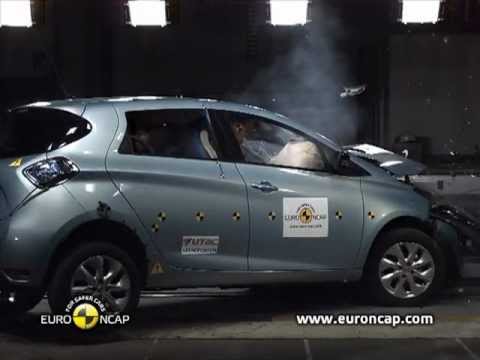
The Zoe's safety ratings show how much the tests changed. In 2013 Euro NCAP gave it five stars, with 89 % for adult occupants, 80 % for children, 66 % for pedestrians and 85 % for safety assist. In 2021, retested under a much stricter protocol, it received zero stars, only the third car in the programme's history to do so.

| Euro NCAP | 2013 | 2021 |
|---|---|---|
| Stars | 5 | 0 |
| Adult occupant | 89 % | 43 % |
| Child occupant | 80 % | 52 % |
| Vulnerable road users | 66 % | 41 % |
| Safety assist | 85 % | 14 % |
By our calculation, the safety assist score fell by 71 percentage points, the largest drop of the four areas. It reflects the Zoe's lack of modern driver assistance systems, which the newer protocol rewards heavily, while the design itself dated back to 2012.
Zoe sales records and the end of production
The Zoe was Europe's best-selling all-electric car in 2015 and 2016, and in 2020 the best-selling plug-in car in Europe with 99,261 units. Worldwide sales rose from 11,323 in 2014 to 102,868 in 2020, by our calculation more than double the 48,269 of 2019, helped by the arrival of the Z.E. 50. France passed 100,000 registrations by June 2020. Renault renamed the car Zoe E-Tech Electric in 2021, and production ended on 30 March 2024 with 426,706 cars built.

Renault ZOE in our rankings
- No. 83 of 563 · Smallest cars (4,084 mm · top 15%)
- No. 17 of 80 · Heaviest hatchbacks (1,615 kg · top 22%)
- No. 388 of 1146 · Longest-running car nameplates (12 years · top 36%)
- No. 202 of 422 · Heaviest cars (1,615 kg · top 48%)
- No. 47 of 99 · Smallest hatchbacks (4,084 mm · top 49%)
- No. 52 of 96 · Most torque: hatchbacks (245 Nm · top 55%)
Shorter than 85% of ranked cars in the 1CARS catalog (No. 83 of 563).
Renault ZOE photos 26






Renault ZOE videos 4

Renault ZOE video 1

Renault ZOE video 2
Renault ZOE video 3
Test drive
FAQ
Why was the Renault Zoe discontinued?
Production ended on 30 March 2024 after more than eleven years and 426,706 cars. Renault replaced it with the Renault 5 E-Tech, a new electric car built on a dedicated electric platform rather than an update of the Zoe.
What is the range of a Renault Zoe?
It depends on the battery. The first 22 kWh cars managed 210–240 km on the old NEDC cycle, the Z.E. 40 about 300 km WLTP, and the 52 kWh Z.E. 50 up to 395 km WLTP.
Can a Renault Zoe use rapid chargers?
Only the Z.E. 50 from late 2019 could be ordered with a 50 kW CCS socket for DC rapid charging. Earlier cars charge on AC only, but those with the Chameleon charger accept up to 43 kW on suitable posts.
Why did the Renault Zoe get zero stars?
In the stricter 2021 Euro NCAP test, the Zoe scored only 43 % for adult protection and 14 % for safety assist. The car lacked the modern driver aids the new protocol rewards, and its basic design was then nine years old.
Do I need to rent the battery of a used Zoe?
Not always. Many early Zoes were sold with a monthly battery lease, while others, especially later cars, include an owned battery. Check the documents, because a lease contract has to be transferred to the new owner.
Data sources
Data checked by an editor against the sources below.
- The text of this article (1cars archive)
- Wikipedia - Renault Zoe
- Euro NCAP - Renault Laguna S Legacy Ruined As Zoe And Spring Debase Electric Car Safety
- EEA CO₂ monitoring (European Environment Agency, CC BY 4.0)


