
 Renault Kaptur
Specs, engines and history
Updated Published Sources (3) Report an error
By Oleksandr Hnatiuk, Automotive Editor & Used Car Specialist Reviewed by Felix Hartmann

- Built
- 2016–2023
- Top power
- 110 kW (150 PS)
The Renault Kaptur is the Captur Global Access, a crossover built from 2016 on the Dacia Duster's B0 platform. The European Captur uses the Clio's base instead. It is longer, sits higher and offered all-wheel drive, with petrol engines of 84 to 110 kW (114 to 150 hp). Brazil and India sold the same Kaptur as the Captur.
In short
- What it is: a B0/Global Access crossover that looks like a Captur but shares its engineering with the Duster.
- Engines: 1.6 and 2.0 petrol units, then a 1.3 turbo from 2020; flex-fuel and diesel versions in Brazil and India.
- Drive: front-wheel drive or, with the larger engines, all-wheel drive with a multi-plate clutch.
- Sales: 15,160 in 2016, a peak of 78,907 in 2018, then decline; production ended between 2020 (India) and 2023 (Brazil).

Specs by version
Engines
Dimensions and weight
Show all 2 versions
| Version | Boot |
|---|---|
| 1.6 84 kW (114 PS) Hatchback | 387 l13.7 cu ft |
| 2.0 105 kW (143 PS) Hatchback | 387 l13.7 cu ft |
Verified Manufacturer and type-approval data from our catalog · Sources and methodology
The Kaptur at a glance

| Fact | Detail |
|---|---|
| Internal name | Renault Captur Global Access (Captur GA) |
| Other names | Captur (Brazil, India), Grand Captur (Uruguay) |
| Platform | B0 (Duster family); B0+ from the 2020 update |
| Years | 2016–2023 (by market) |
| Body | five-door crossover, two-tone paint available |
| Engines | 1.3 turbo, 1.5, 1.6 and 2.0 petrol; 1.5 diesel (India) |
| Power | 84–110 kW (114–150 hp) for the Kaptur-badged car |
| Drive | front-wheel drive or AWD |
| Ground clearance | 205 mm (Renault data quoted in the old version of this page) |
Kaptur or Captur: two different cars
The name causes confusion. Renault showed the original Captur at the Geneva Motor Show in March 2013; it was built in Valladolid, Spain, on the B platform of the Clio. For emerging markets Renault developed a second car with almost the same styling but a different base: the Duster's B0 platform, which Renault calls Global Access.

Compared with the Clio-based Captur, the Global Access car has a longer wheelbase, more ground clearance and the option of all-wheel drive. The B0 base was also cheaper to build and gave more cabin space. Where it was badged "Kaptur", the spelling with K was chosen to make the name easier to pronounce in the local language. If you want the original platform car, see our page on the Renault Duster, which supplied most of the Kaptur's engineering.
Markets and production
| Market | Name | Production | Years |
|---|---|---|---|
| Launch market | Kaptur | local plant, from April 2016 | 2016–2022 |
| Brazil | Captur | Curitiba region (São José dos Pinhais) | 2017–2023 |
| Uruguay | Grand Captur | imported from Brazil | from November 2017 |
| India | Captur | Chennai, plant shared with Nissan | 2017–2020 |
| Kazakhstan | Kaptur | assembled in Kostanay | 2021–2022 |
India was the shortest story. Production and pre-orders started in September 2017 at the Chennai plant, with the car placed above the Duster against the Hyundai Creta. The Indian Captur was dropped in 2020 after fewer than 7,000 units in four years. Brazil kept the car longest: a facelift with the 1.3 turbo went on sale in July 2021, and production ended in late 2023 because of component shortages.

Renault Kaptur engines and gearboxes
The Kaptur-badged car began with two naturally aspirated petrol engines from the Renault–Nissan alliance. A May 2020 update moved the car to the B0+ platform, with electric power steering, and replaced the 2.0-litre with a 1.3-litre turbo.

| Engine | Power | Torque | Gearbox | Drive |
|---|---|---|---|---|
| 1.6 petrol (2016–2022) | 84 kW (114 hp) | 156 Nm | manual or CVT | front |
| 2.0 petrol (2016–2020) | 105 kW (143 hp) | 195 Nm | 6-speed manual, 4-speed automatic | all-wheel |
| 1.3 turbo petrol (2020–2022) | 110 kW (150 hp) | not confirmed | not confirmed | not confirmed |
Other markets used other engines. The Brazilian Captur ran on petrol or ethanol: the 1.6 gave 118–120 hp, the 2.0 143 hp on petrol, and the later 1.3 TCe 160–167 hp. Brazilian Captur gearboxes were a five-speed manual, a CVT or a four-speed automatic. The Indian car had a 1.5-litre petrol of 106 hp and a 1.5 diesel of 110 hp and 240 Nm, which was dropped in April 2020.
By our calculation the Kaptur's 1.3 turbo gave about 5 % more power than the 2.0 it replaced (110 against 105 kW) from 35 % less displacement. You can compare outputs in hp, PS and kW with the power converter.
All-wheel drive and running gear
The all-wheel-drive system is the Duster's: a multi-plate clutch at the rear axle sends torque backwards when the front wheels slip. Front suspension uses MacPherson struts. Front-wheel-drive cars have a torsion-beam rear axle, while all-wheel-drive cars get a multi-link rear suspension, as the old version of this page explained. The Kaptur's steering was hydraulically assisted until the 2020 update brought electric assistance.

The old text gave 205 mm of ground clearance and approach and departure angles of 31° and 20°, figures typical of the Duster family. With large plastic wheel-arch guards and lower door cladding, the Kaptur was meant for poor roads and snow rather than serious off-roading.
Body, cabin and equipment
Outwardly the Renault Kaptur follows the Captur's style: C-shaped LED daytime running lights, a strong front bumper, large wheel-arch guards and the option of a contrasting roof colour. Full-LED headlamps were offered on higher Kaptur versions, and wheels were 16 or 17 inches.

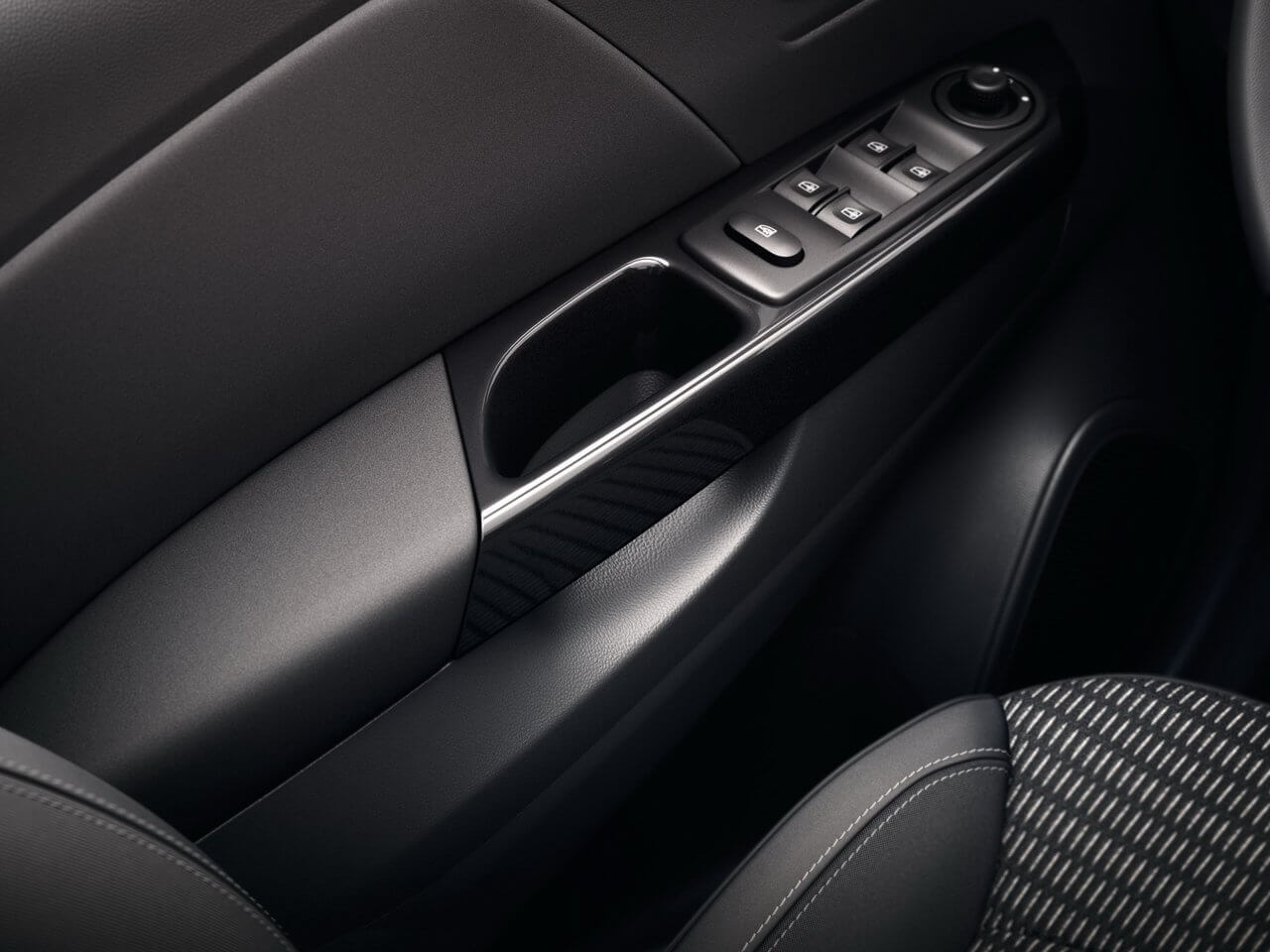
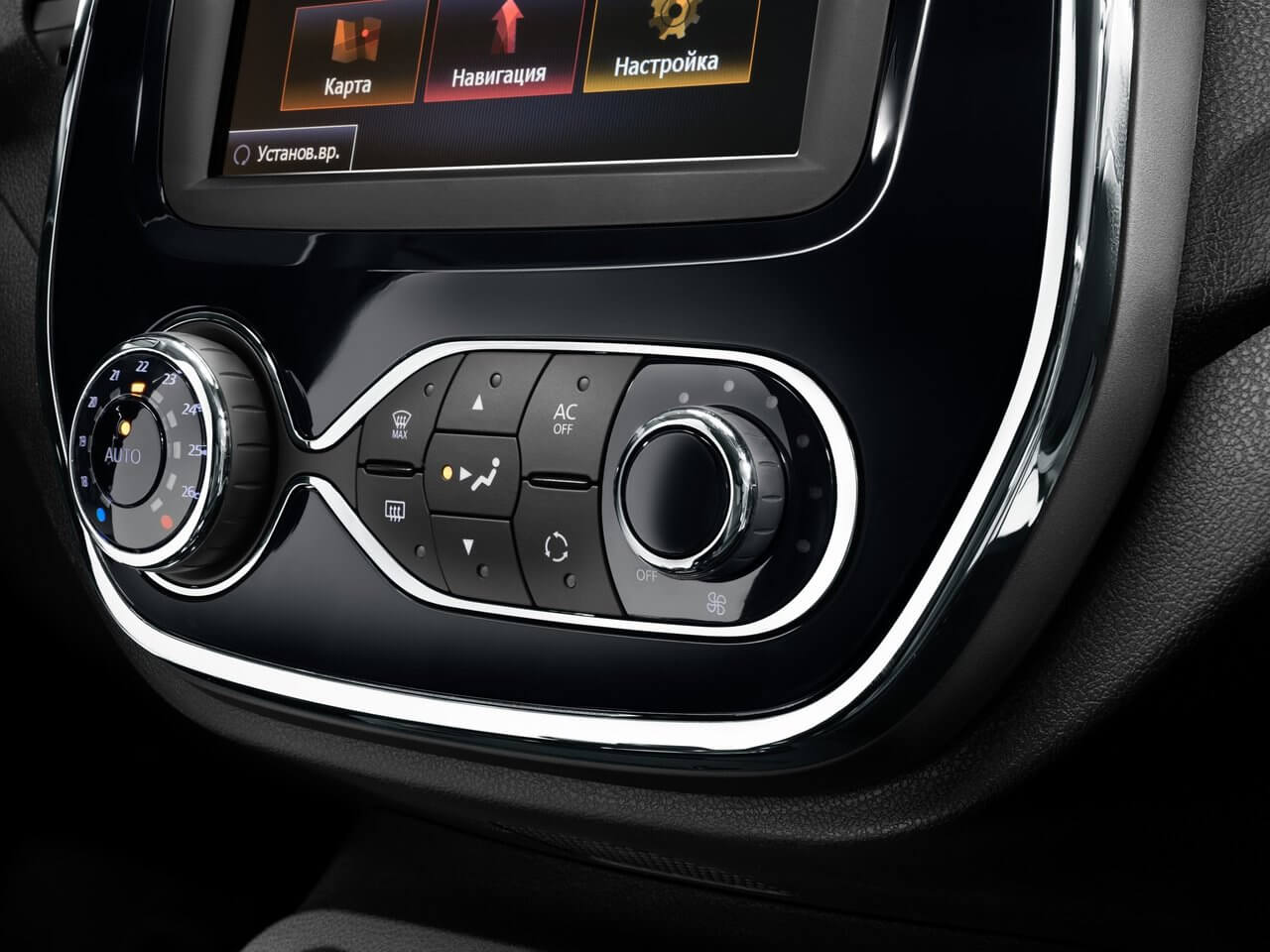
Inside, the Indian version had a dual-tone cabin and a 7-inch touchscreen with Media Nav navigation and Bluetooth, and the Kaptur used the same system. The boot holds 387 litres and up to about 1,200 litres with the 60/40 rear seat folded, according to the old data sheet; the rear seat backs do not fold completely flat. A full-size spare wheel sits under the floor, and rear headroom is limited for tall passengers because of the sloping roof.
| Parameter | Value | Note |
|---|---|---|
| Ground clearance | 205 mm (8.1 in) | old data sheet |
| Approach / departure angle | 31° / 20° | old data sheet |
| Boot | 387–1,200 l (13.7–42.4 cu ft) | old data sheet |
| Wheels | 16 or 17 in | by version |
Safety
Latin NCAP tested the Brazilian Captur with four airbags and the 2.0 engine in 2017. The Captur earned four stars for adult occupant protection (30.27 of 34 points) and three stars for child occupants (33.68 of 49 points). By our calculation that is 89 % of the adult maximum but only 69 % for children.

Kaptur standard equipment depended on the market but included electronic stability control, hill-start assist, emergency brake assist and, on higher versions, a rear-view camera and parking sensors. Cornering lights built into the fog lamps were also offered on the Kaptur.
Sales of the Captur Global Access
| Year | Worldwide sales |
|---|---|
| 2016 | 15,160 |
| 2017 | 62,147 |
| 2018 | 78,907 |
| 2019 | 69,812 |
| 2020 | 40,393 |
| 2021 | 33,811 |
The six years add up to about 300,000 Captur Global Access cars by our count. After the 2018 peak, sales fell every year: India dropped the model in 2020, the Kaptur-badged version ended in 2022, and Brazil followed in 2023.

Should you buy a used Kaptur?
A used Renault Kaptur or Global Access Captur makes sense for someone who wants Duster toughness with a more stylish body. Choose the all-wheel-drive version if you drive on snow or unpaved roads, and the 1.3 turbo for the best mix of power and economy. Check the condition of the CVT on front-wheel-drive cars and the rear differential and clutch on all-wheel-drive ones, and remember that parts are shared with the Duster, which helps. Rivals worth comparing are the Nissan Kicks, built on related engineering in India, and the Hyundai Creta. Use the comparison tool to set the Kaptur against them. Renault's later coupé-crossover is described on our Renault Arkana page, and every Renault is listed on the Renault catalogue page.


Rivals
Compare with…
Compare Renault Kaptur with
- Chevrolet Tracker quick spec comparison
- Lada XRay quick spec comparison
- Opel Mokka quick spec comparison
-
Ended 2019
- Years
- 2012–2019
- Body
- SUV
- Fuel
- Petrol, Diesel
- Power
- 81–112 kW (110–152 PS)


Renault Kaptur in our rankings
- No. 24 of 100 · Biggest engines: hatchbacks (2,000 cc · top 28%)
- No. 20 of 71 · Biggest boot: hatchbacks (387 l · top 29%)
- No. 76 of 149 · Most powerful hatchbacks (105 kW · top 52%)
- No. 41 of 80 · Most powerful French cars (110 kW · top 52%)
- No. 672 of 1145 · Longest-running car nameplates (7 years · top 61%)
- No. 62 of 96 · Most torque: hatchbacks (195 Nm · top 65%)
Bigger engine than 72% of ranked hatchbacks in the 1CARS catalog (No. 24 of 100).
Renault Kaptur photos 37



FAQ
Is the Renault Kaptur the same as the Renault Captur?
No. The European Captur is based on the Clio's B platform and was built in Spain. The Kaptur, also sold as the Captur in Brazil and India, uses the Dacia Duster's B0 platform, with a longer wheelbase, more ground clearance and optional all-wheel drive.
What engines does the Renault Kaptur have?
Under the Kaptur badge there were three petrol units: the 1.6 (84 kW), the 2.0 (105 kW) and, after the 2020 update, a turbocharged 1.3 of 110 kW. Brazil had flex-fuel versions and India a 1.5 petrol and diesel.
Does the Renault Kaptur have all-wheel drive?
Yes, as an option. The all-wheel-drive system is borrowed from the Duster and uses a multi-plate clutch to drive the rear axle; it came with the 2.0 engine, while the 1.6 was front-wheel drive.
Is the Renault Kaptur still made?
No. Production of the Kaptur-badged car ended in 2022, India stopped making its Captur version in 2020, and the Brazilian Captur, the last of the family, was discontinued in late 2023.
How safe is the Renault Kaptur?
The related Brazilian Captur scored four stars for adults and three stars for children in the 2017 Latin NCAP test, with 30.27 of 34 and 33.68 of 49 points. The rating applies to the Captur version with four airbags.
Data sources
Data checked by an editor against the sources below.
- The text of this article (1cars archive)
- Wikipedia - Renault Captur
- Wikipedia - Renault Kaptur


