Renault: The History of France's Biggest Carmaker
Renault is a French carmaker founded by the brothers Louis, Marcel and Fernand Renault, whose first car was sold on 24 December 1898 and whose company was formed on 25 February 1899. Nationalised in 1945 and privatised in 1996, it built people's cars such as the 4CV, Renault 4 and Renault 5, created the Renault–Nissan Alliance in 1999 and sold 2,264,815 vehicles in 2024.

Key takeaways
- Founded at Boulogne-Billancourt near Paris; France's largest carmaker by 1908, with 3,575 cars built that year.
- Nationalised on 16 January 1945 as the Régie Nationale des Usines Renault; privatised in 1996.
- Landmarks: 4CV (1946), Renault 4 (1961), Renault 5 (1972), Espace (1984), Clio (1990), Zoe (2012), electric Renault 5 (2024).
- Group brands today: Renault, Dacia, Alpine and the Mobilize mobility services; partner of Nissan and Mitsubishi.

At a glance

| Fact | Value |
|---|---|
| Founded | 25 February 1899, Société Renault Frères |
| Founders | Louis, Marcel and Fernand Renault |
| Headquarters | Boulogne-Billancourt, France |
| Logo | Diamond badge since 1925 |
| Ownership history | Family firm, state-owned 1945–1996, listed company since 1996 |
| Group brands | Renault, Dacia, Alpine, Mobilize |
| Alliance | Nissan (since 1999), Mitsubishi |
| Sales 2024 | 2,264,815 vehicles |
| Revenue 2025 | €57.92 billion |
The Renault brothers and the first cars (1898–1914)
Louis Renault built his first car, the Voiturette 1CV, in a shed at the family home in Boulogne-Billancourt, and sold it on 24 December 1898 to a friend of his father after a test ride. On 25 February 1899 he and his brothers Marcel and Fernand founded Société Renault Frères. The same year Louis patented a direct-drive gearbox that did without a drive belt, a design that soon spread through the industry.

The brothers used motor racing to promote their cars. Marcel Renault was killed in the Paris–Madrid race of 1903, the year the company began building its own engines. In 1905 a large order for AG1 taxis brought mass-production methods to the factory, and the firm's taxis soon became common in Paris and London. In 1906 Ferenc Szisz won the first Grand Prix in a Renault AK, and by 1908 the company had become the largest carmaker in France with 3,575 cars. After Fernand retired and died in 1909, Louis ran the business alone.
War, the Taxis de la Marne and the interwar years (1914–1939)
During the First World War, the company's taxis carried troops to the front in 1914, earning the name "Taxis de la Marne". The company also built ammunition, military vehicles and aircraft engines. After the war the firm diversified into tractors, with the Type GP of 1919, and into buses and trucks; in 1931 it introduced diesel engines for its commercial vehicles.
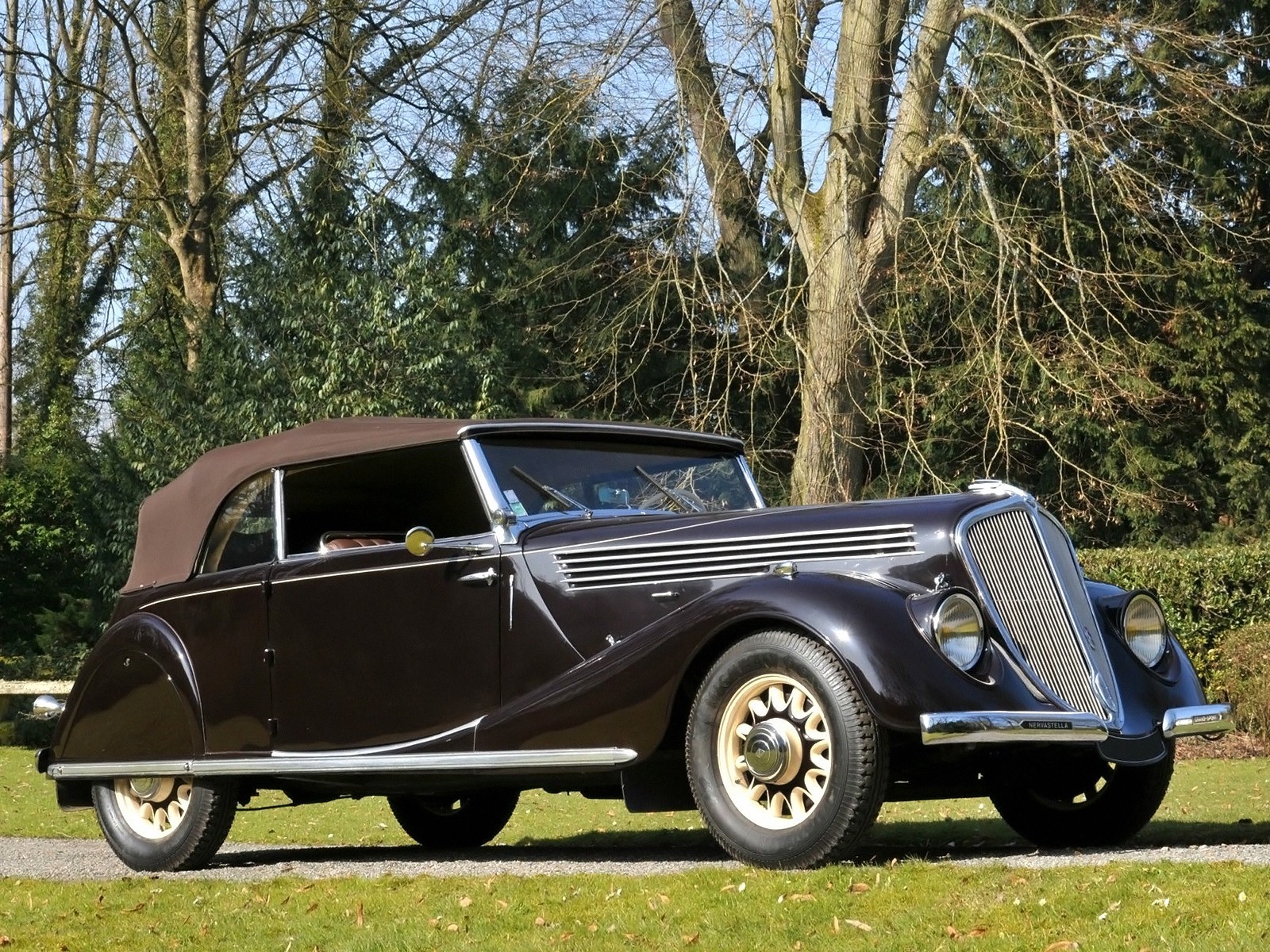
The range grew from small cars to large luxury models, and exports went widely, especially to Britain and its colonies. In 1925 the company adopted the diamond-shaped badge that still appears on every Renault. Labour disputes in 1936–1938 led to more than 2,000 job losses.
Occupation, nationalisation and the 4CV (1940–1960)
During the occupation of France from 1940 to 1944 the factories were placed under outside control. The Île Seguin plant at Billancourt was heavily damaged in a bombing raid on 3 March 1942. Production restarted in September 1944, soon after the liberation of Paris. Louis Renault died in Fresnes prison on 24 October 1944 while awaiting trial, and on 1 January 1945 the company was expropriated by the provisional government. On 16 January 1945 it became a state company, the Régie Nationale des Usines Renault.

The car that rebuilt the company was the rear-engined 4CV, developed secretly during the war and launched in 1946. It stayed in production until 1961. The large Frégate saloon followed from 1951 to 1960, and in the late 1950s the Dauphine became a strong seller, including in the United States.
R4, R5 and the people's cars (1961–1978)
In 1961 the company launched the Renault 4, the first series-production car with a hatchback, which stayed in production for more than three decades. It passed eight million units. The Renault 8 of 1963 was the first series car with disc brakes on all four wheels. The Renault 16 of 1966 brought the hatchback to the family-car class, and the Renault 12 followed in October 1969.
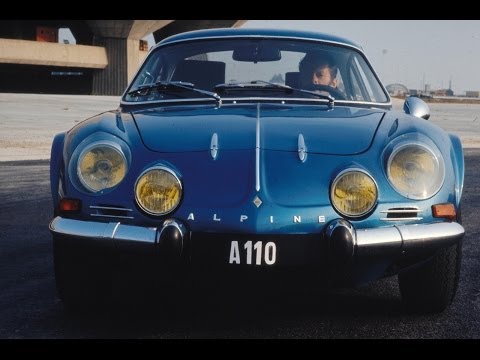
In 1970 the company built 1,055,803 cars, its first year above one million; by our count it took 72 years from the first Voiturette to reach that annual volume. The Renault 5 of January 1972 became the defining small car of the decade. In 1973 it took control of Alpine, the sports-car maker from Dieppe whose story is told in the history of Alpine. Between 1974 and 1978 it bought Berliet and merged it with Saviem to form Renault Véhicules Industriels. Its engineers also left a mark outside the car world: Pierre Bézier's mathematical curves for body design, developed at Renault, became a foundation of computer graphics.
Turbos, AMC and the Espace (1977–1989)
The company brought turbocharging to Formula One in 1977 at Silverstone and then to its road cars; by 1980 turbo engines were spread across much of its range. In 1979 it bought 22.5% of American Motors Corporation, and in 1980 it took a controlling 47.5% stake. The Renault Alliance, built in the US, won Motor Trend's Car of the Year award in 1983, and the Renault 9, launched in 1981, was voted European Car of the Year.

The 1984 Espace, Europe's first multi-purpose vehicle, opened a new market segment, but the same year Renault made one of the largest losses in its history. Chairman Georges Besse began a recovery programme and was murdered by the terrorist group Action Directe in November 1986. In 1987 it sold AMC to Chrysler and concentrated on Europe.
Clio, privatisation and the Nissan alliance (1990–2008)
The Clio of May 1990 was an immediate success and was voted European Car of the Year in 1991. The Twingo followed in 1992, and the Mégane Scénic compact MPV won the same award in 1997. A planned merger with Volvo was rejected by Volvo shareholders in 1993, and in 1996 the state sold control and the company was privatised.

On 27 March 1999 Renault and Nissan formed their alliance: Renault took a 36.8% stake in Nissan, which later took a 15% non-voting stake in Renault. The same year the group bought 51% of Romania's Dacia, the start of the budget brand told in the history of Dacia; in 2000 it took control of Samsung's car business in South Korea. The Logan, designed for low cost, and the Renault Duster later became global best-sellers. In motorsport, the company bought the Benetton team in 2000 and won the Formula One constructors' and drivers' titles in 2005 and 2006 with Fernando Alonso.
Electric cars, Ghosn and restructuring (2010–2026)
The group was an early mover in electric cars: the Zoe of 2012 became one of Europe's best-selling EVs, and the Kangoo van was also offered with an electric drive. Today's battery-electric models from all brands are listed in the 1cars electric cars section. In November 2018 alliance chairman Carlos Ghosn was arrested in Japan, and Jean-Dominique Senard became Renault's chairman in January 2019. Luca de Meo took over as chief executive in July 2020 and launched a restructuring plan that, in January 2021, split the business into brand units for Renault, Dacia, Alpine and Mobilize.

Further changes followed. In November 2022 the group announced Ampere for electric cars and Horse, a powertrain business created with Geely; the Nissan shareholding was rebalanced in 2023, with the cross-holdings reduced. The electric Renault 5 E-Tech, revived in retro style, arrived in 2024 and was named Car of the Year 2025, followed by the Renault 4 E-Tech and a new electric Twingo. De Meo resigned in June 2025 and was succeeded by François Provost. In 2025 the group reported revenue of €57.92 billion but a net loss of €10.93 billion.
Timeline, 1898–2024

| Year | Event |
|---|---|
| 1898 | First car sold on 24 December |
| 1899 | Société Renault Frères founded; direct-drive gearbox patent |
| 1906 | Szisz wins the first Grand Prix |
| 1914 | Taxis de la Marne |
| 1925 | Diamond badge introduced |
| 1945 | Nationalisation on 16 January |
| 1946 | 4CV |
| 1961 | Renault 4 |
| 1972 | Renault 5 |
| 1979–1987 | Stake in AMC |
| 1984 | Espace |
| 1990 | Clio (European Car of the Year 1991) |
| 1996 | Privatisation |
| 1999 | Alliance with Nissan; Dacia acquired |
| 2005–2006 | Formula One world titles |
| 2012 | Zoe |
| 2021 | Brand units Renault, Dacia, Alpine, Mobilize |
| 2024 | Electric Renault 5 E-Tech |
Landmark models

| Model | Years | Why it matters |
|---|---|---|
| Voiturette 1CV | 1898 | First Renault car |
| 4CV | 1946–1961 | Post-war people's car |
| Renault 4 | 1961–1990s | First series-production hatchback, over eight million |
| Renault 5 | 1972– | Small-car icon of the 1970s, revived as an EV |
| Espace | 1984– | Europe's first MPV |
| Clio | 1990– | Best-seller, Car of the Year 1991 |
| Mégane R.S. | 2004– | Hot hatch with Nürburgring records |
| Zoe | 2012–2024 | Early mass-market electric car |
Which model to choose: verdict
For classic buyers, the Renault 4 and Renault 5 are affordable, simple and easy to keep on the road, while the Alpine-badged and Renault Sport models are the enthusiast's choice. For everyday use today, the Clio and Captur cover most needs, and the 1cars comparison tool helps to set them against rivals. The Scénic and Espace suit families, and the electric Renault 5 is the brand's strongest current car. The Renault range on 1cars is in the Renault catalogue, and the partner brand is covered in the history of Nissan.
FAQ
Who founded Renault?
The brothers Louis, Marcel and Fernand Renault founded Société Renault Frères on 25 February 1899 at Boulogne-Billancourt. Louis had sold the first car, the Voiturette 1CV, on 24 December 1898.
Is Renault owned by the French state?
Renault was state-owned from 1945 until its privatisation in 1996. The state of France remains a major shareholder, but Renault is a listed company. It works in an alliance with Nissan and Mitsubishi.
What was the first Renault car?
The Voiturette 1CV of 1898, built by Louis Renault. It used his direct-drive gearbox, patented in 1899, which transmitted power without a belt and soon spread across the industry.
Which brands belong to Renault Group?
Renault, Dacia, Alpine and Mobilize. Renault also owns Renault Korea, the former Samsung car business, and holds a stake in Nissan through the Renault–Nissan–Mitsubishi Alliance.
Has Renault won Formula One titles?
Yes. The Renault team won the constructors' and drivers' championships in 2005 and 2006 with Fernando Alonso, and Renault engines powered many other title-winning cars, including Williams and Red Bull.
What is Renault's best-selling car?
Historically the Renault 4, with more than eight million built, is among the most produced. In recent decades the Clio has been one of Europe's best-selling cars and the brand's core model.
Photos (4)


Videos 2

Video 1
Video 2