
 Renault Lodgy
Specs, engines and history
Updated Published Sources (3) Report an error
By Oleksandr Hnatiuk, Automotive Editor & Used Car Specialist Reviewed by Felix Hartmann

- Built
- 2012–2024
- Top power
- 96 kW (131 PS)
Our verdict: who the Lodgy suits
Our verdict · Oleksandr Hnatiuk
The Lodgy suits large families on a tight budget who need seven seats and a big boot and value low running costs over comfort. The 1.5 dCi 110 is the best all-round engine, while the 1.3 TCe 130 petrol from 2019 is the quickest and quietest. Avoid early versions without stability control and check that the car has a full set of airbags. More people-carriers are listed in our minivans section, and other models of the brand in the Dacia catalogue.
The Renault Lodgy is a compact MPV with five or seven seats, developed by Dacia and unveiled at the 2012 Geneva Motor Show. It was built in Tangier, Morocco, from 2012 to 2024 and in Chennai, India, from 2015 to 2020. Most European buyers knew it as the Dacia Lodgy, and the Dacia Jogger replaced it there in 2022.
In short
- Body: 4,498 mm long with a 2,810 mm wheelbase; five or seven seats in three rows.
- Engines: 1.6 petrol (63 kW), 1.2 and 1.3 turbo petrols (85–96 kW) and 1.5 dCi diesels (66–81 kW); front-wheel drive only.
- Safety: three Euro NCAP stars in 2012, the lowest result of any car tested that year.
- Strengths: price, space and low running costs; weaknesses: basic safety and dated equipment.

Size at a glance
| Dimensions | Renault Lodgy |
|---|---|
| Length | 4,498 mm177.1 in |
| Width | 1,751 mm68.9 in |
| Height | 1,680 mm66.1 in |
| Wheelbase | 2,810 mm110.6 in |
| Boot | 827 L29.2 cu ft |
Running cost
Fuel · Lodgy 1.2 TCe 115
about 1,600 EUR fuel a year at 15,000 km
6.0 l/100 km · petrol at 1.75 EUR/l · change mileage, fuel price or version
Specs by version
Engines
| Version | Engine | Power | Torque | Drive |
|---|---|---|---|---|
| Diesel · 2 versions | ||||
| 1.5 dCi 90 | 1.5 l · 4 cyl · Diesel K9K 612 | 66 kW 90 PS89 hp | 200 Nm148 lb-ft | Front-wheel drive |
| 1.5 dCi 110 | 1.5 l · 4 cyl · Diesel K9K 846 | 81 kW 110 PS109 hp | 240 Nm177 lb-ft | Front-wheel drive |
| Petrol · 4 versions | ||||
| 1.6 55 kW (75 PS) Minivan / MPV | 1.6 l · Petrol 1,600 cc | 55 kW 75 PS74 hp | - | Front-wheel drive |
| 1.6 85 | 1.6 l · 4 cyl · Petrol K7M 812 | 63 kW 86 PS84 hp | 134 Nm99 lb-ft | Front-wheel drive |
| 1.2 TCe 115 | 1.2 l · 4 cyl · Petrol H5Ft 402 | 85 kW 116 PS114 hp | 190 Nm140 lb-ft | Front-wheel drive |
| 1.3 TCe 130 | 1.3 l · 4 cyl · Petrol H5H 470 | 96 kW 131 PS129 hp | 240 Nm177 lb-ft | Front-wheel drive |
Performance
Show all 5 versions
| Version | 0–100 km/h | Top speed | Fuel consumption | CO₂ |
|---|---|---|---|---|
| Diesel · 2 versions | ||||
| 1.5 dCi 90 | 12.4 s 0–62 mph | 169 km/h105 mph | 4.2 l/100 km56.0 mpg US · 67.3 mpg UK | 109 g/km |
| 1.5 dCi 110 | 11.6 s 0–62 mph | 175 km/h109 mph | 4.4 l/100 km53.5 mpg US · 64.2 mpg UK | 116 g/km |
| Petrol · 3 versions | ||||
| 1.6 85 | 14.5 s 0–62 mph | 160 km/h99 mph | 7.1 l/100 km33.1 mpg US · 39.8 mpg UK | 165 g/km |
| 1.2 TCe 115 | 10.6 s 0–62 mph | 179 km/h111 mph | 6.0 l/100 km39.2 mpg US · 47.1 mpg UK | 140 g/km |
| 1.3 TCe 130 | 9.3 s 0–62 mph | 193 km/h120 mph | 6.1 l/100 km38.6 mpg US · 46.3 mpg UK | 142 g/km |
Dimensions and weight
Show all 5 versions
| Version | Kerb weight | Boot |
|---|---|---|
| Diesel · 2 versions | ||
| 1.5 dCi 90 | - | 827 l29.2 cu ft |
| 1.5 dCi 110 | 1,405 kg3,097 lb | 827 l29.2 cu ft |
| Petrol · 3 versions | ||
| 1.6 55 kW (75 PS) Minivan / MPV | - | 827 l29.2 cu ft |
| 1.6 85 | - | 827 l29.2 cu ft |
| 1.3 TCe 130 | 1,332 kg2,937 lb | - |
Verified Manufacturer and type-approval data from our catalog · Sources and methodology
Lodgy at a glance

| Item | Figure |
|---|---|
| Made by | Dacia (Renault group) |
| Built | Tangier, Morocco (2012–2024); Chennai, India (2015–2020) |
| Platform | Dacia M0, related to the Logan and Sandero |
| Length / width / height | 4,498 / 1,751 / 1,680 mm |
| Wheelbase | 2,810 mm |
| Kerb weight | 1,165–1,337 kg |
| Seats | 5 or 7 |
| Drive | front-wheel drive |
| Successor | Dacia Jogger (2022) |
A Dacia with a Renault badge
Dacia and Renault presented the Lodgy together at the Geneva Motor Show in March 2012. It was the people-carrier of the budget range that began with the Dacia Logan MCV, the estate it effectively succeeded as the family car of the brand. Production went to Renault's plant in Tangier, Morocco, and the badge depended on the market: Dacia in most of Europe, Renault in India, Ukraine and some other countries. Dacia's own story is told in our history of Dacia.

In India the Renault Lodgy was launched on 9 April 2015 at a base price of 819,000 rupees, about €11,500 at the time, in seven versions. It was assembled at the Renault–Nissan plant in Chennai until 2020. In Europe the Lodgy got a mild facelift in 2017 and was replaced by the Dacia Jogger in early 2022, while assembly for the Moroccan market continued until 2024.
Engines and performance
The Lodgy was offered with simple, proven Renault engines. All of them drive the front wheels, through five- or six-speed manual gearboxes in most versions.

| Engine | Code | Power | Torque | 0–100 km/h | Top speed | Fuel use | CO₂ |
|---|---|---|---|---|---|---|---|
| 1.6 petrol | K7M 812 | 63 kW (85 PS) | 134 Nm | 14.5 s | 160 km/h | 7.1 l/100 km | 165 g/km |
| 1.2 TCe 115 petrol | H5Ft 402 | 85 kW (115 PS) | 190 Nm | 10.6 s | 179 km/h | 6.0 l/100 km | 140 g/km |
| 1.3 TCe 130 petrol | H5H 470 | 96 kW (130 PS) | 240 Nm | 9.3 s | 193 km/h | 6.1 l/100 km | 142 g/km |
| 1.5 dCi 90 diesel | K9K 612 | 66 kW (90 PS) | 200 Nm | 12.4 s | 169 km/h | 4.2 l/100 km | 109 g/km |
| 1.5 dCi 110 diesel | K9K 846 | 81 kW (110 PS) | 240 Nm | 11.6 s | 175 km/h | 4.4 l/100 km | 116 g/km |
The 1.3 TCe turbo petrol, shared with Renault and Mercedes-Benz, arrived in 2019 and made the Lodgy noticeably quicker. By our calculation, the 1.5 dCi 90 uses about 41 % less fuel than the old 1.6 petrol on the official cycle and emits 34 % less CO₂. For high-mileage family use the diesels were the obvious choice. Our fuel cost calculator shows what that difference is worth per year.
Seven seats and boot space
The Lodgy's main selling point is space for the money. The 2,810 mm wheelbase takes up about 62 % of the car's length by our calculation, which leaves room for three rows within a compact footprint. The second-row bench folds and tips forward, and the two third-row seats can be folded or removed completely.
According to the old version of this page, the boot holds 827 litres in the five-seat version and 207 litres behind the third row of the seven-seater. With the rear seats folded or removed, it grows to 2,617 litres. The same source gave a payload of 670 kg, enough for seven adults and luggage, and a turning circle of 11.1 m.
Lodgy or Logan MCV: space compared
Inside the group, the Lodgy's closest relative was the first-generation Dacia Logan MCV estate, which also offered seven seats. The two cars are almost the same length, but they solve the space problem differently.

| Measure | Lodgy | Logan MCV (first generation) |
|---|---|---|
| Length | 4,498 mm | 4,473 mm |
| Wheelbase | 2,810 mm | 2,905 mm |
| Seats | 5 or 7 | 5 or 7 |
| Boot, seven seats in use | about 207 l | about 200 l |
| Boot, maximum | 2,617 l | 2,350 l |
By our calculation, the Lodgy offers about 267 litres, or 11 %, more maximum load space, mostly thanks to its taller MPV body. The MCV has the longer wheelbase and two side-hinged rear doors, while the Lodgy uses a conventional top-hinged tailgate. For families choosing between them on the used market, the Lodgy is in our view the better seven-seater for adults, while the MCV is the cheaper and lower car to load. Our size comparison tool sets both against newer seven-seat rivals such as the Jogger.
Equipment and versions
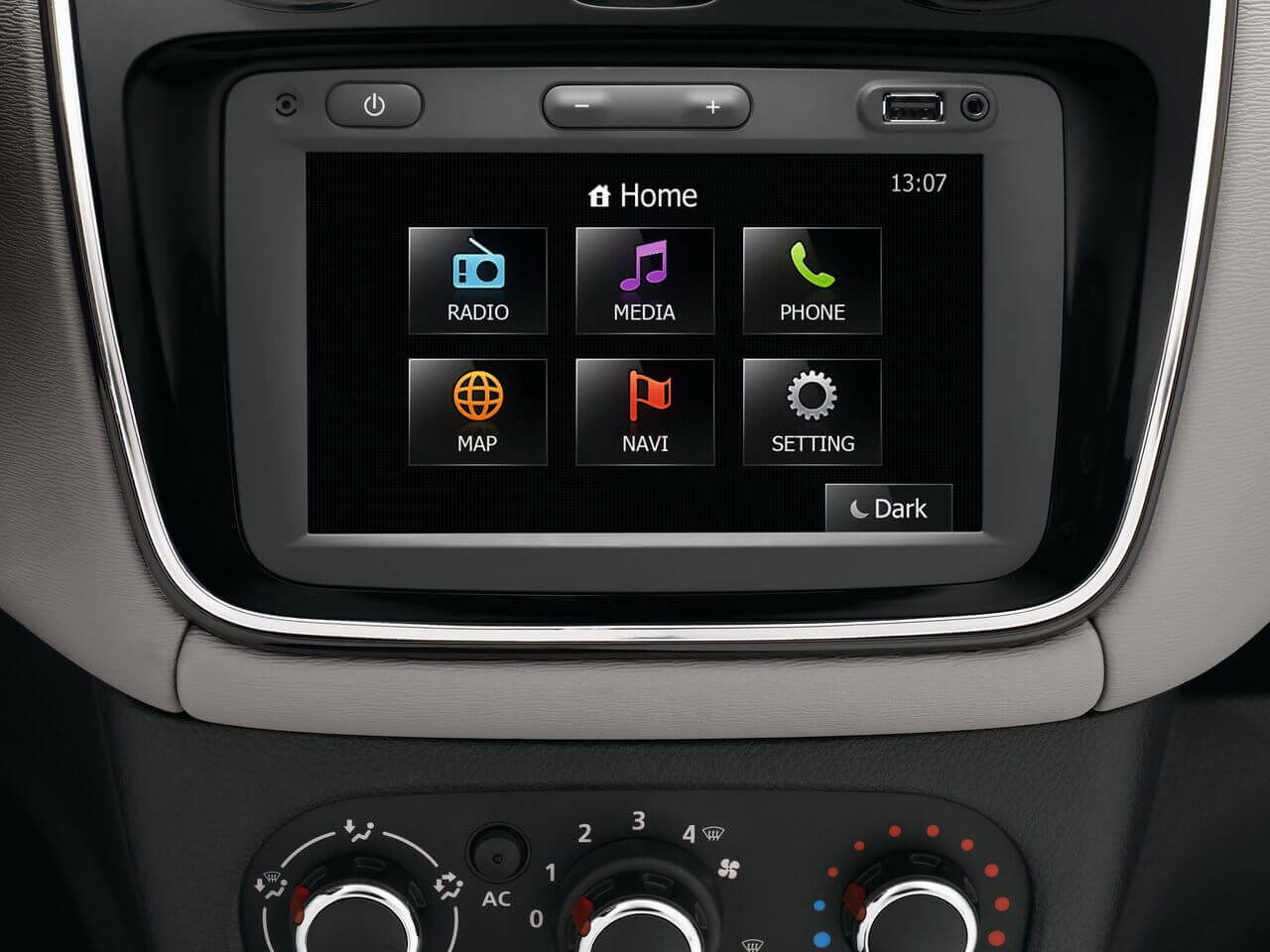
European Lodgys were sold in simple trim levels, from the basic Ambiance to the better-equipped Lauréate. The old version of this page named a later top version with a 7-inch touchscreen, navigation and 16-inch alloy wheels. Basic cars had few comforts, so the equipment list of a used car deserves a careful look. In India, Renault offered seven variants from launch.

Safety and crash tests
Safety was the Lodgy's weak point. Euro NCAP awarded it three stars in 2012, the lowest result for any car tested that year. Our earlier version of this page reported the detailed scores as 72 % for adult occupants, 77 % for children, 44 % for pedestrians and 29 % for safety assist.

In India, Global NCAP tested a version without airbags or ABS in 2018. It scored 0 of 17 points for adult protection and 15.67 of 49 points for child protection. Buyers should therefore check the specification of any used Lodgy: front airbags, ABS and stability control make a real difference in this car.
The Lodgy Glace: an ice-racing Lodgy
An unusual chapter was the Dacia Lodgy Glace built for the Andros Trophy, the French ice-racing series. Dacia announced its entry in November 2011, before the road car was even revealed. The race car had a mid-mounted 3.0-litre V6 with 265 kW (360 PS) and four-wheel drive, and with former Formula One champion Alain Prost at the wheel it won the seven-round series, with four victories and six further podiums. It had nothing in common with the road car apart from its silhouette, but it gave a budget MPV rare publicity.

Lodgy against its rivals
The Lodgy competed with compact MPVs such as the Volkswagen Touran, Ford C-Max, Kia Carens and Mazda5, which generally offered more equipment and a more modern feel, but at a clearly higher price. Another relative within the group was the Renault Kangoo, a van-based people-carrier with sliding doors. Since 2022, the Dacia Jogger has taken over the role of the low-cost seven-seater.

Renault Lodgy in our rankings
- No. 26 of 317 · Most economical cars (4.2 l/100 km · top 9%)
- No. 146 of 422 · Lightest cars (1,332 kg · top 35%)
- No. 387 of 1146 · Longest-running car nameplates (12 years · top 36%)
- No. 263 of 563 · Smallest cars (4,498 mm · top 47%)
- No. 22 of 42 · Fastest French cars (193 km/h · top 53%)
- No. 318 of 563 · Longest cars (4,498 mm · top 57%)
More economical than 91% of ranked cars in the 1CARS catalog (No. 26 of 317).
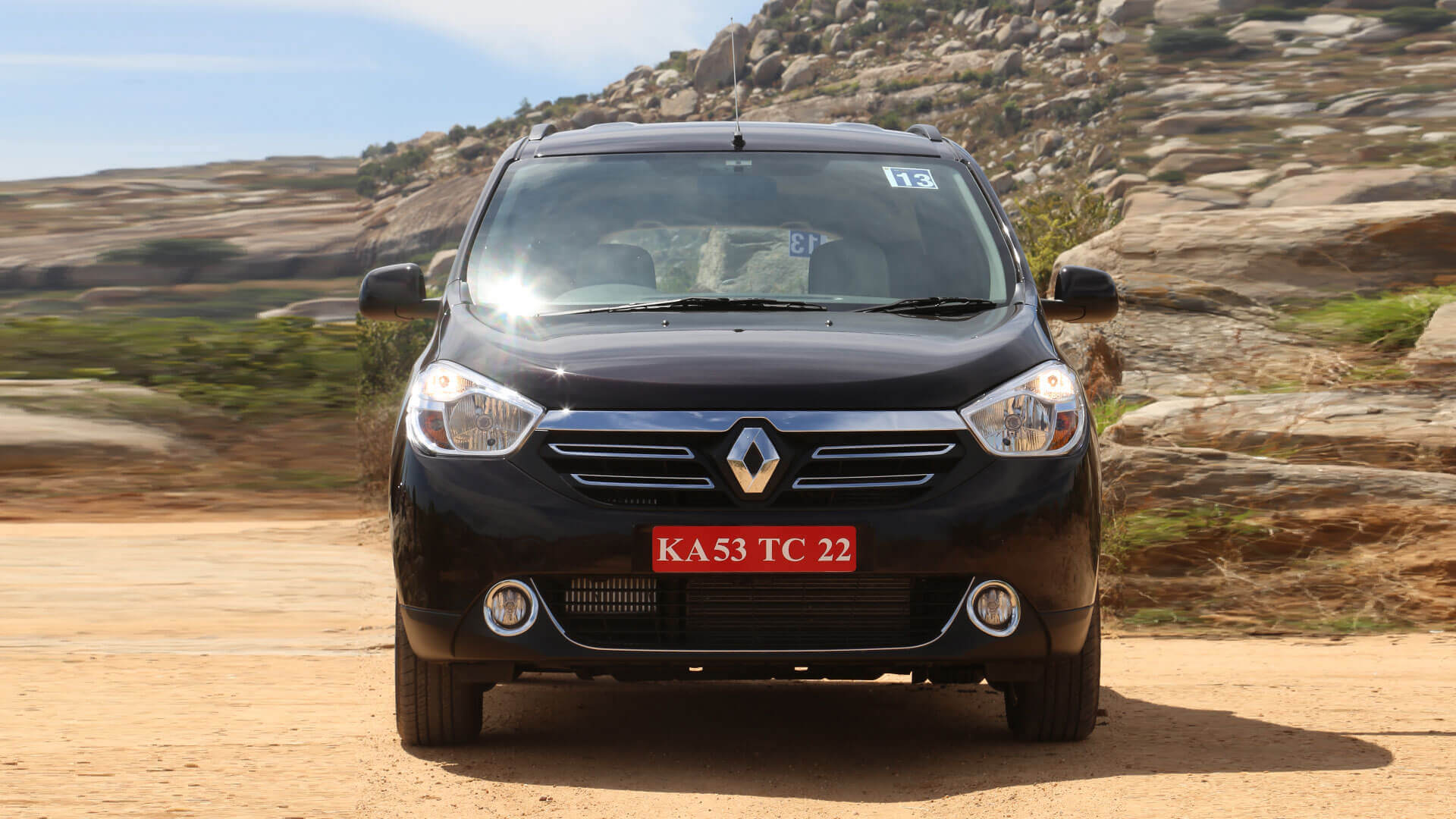
Renault Lodgy photos 15




Renault Lodgy videos 2

Renault Lodgy video 1

Renault Lodgy video 2
FAQ
Is the Renault Lodgy the same as the Dacia Lodgy?
Yes. Both are the same car, developed by Dacia and built mostly in Tangier, Morocco. Renault badges went on cars for India, Ukraine and a few other countries, while European buyers mostly saw Dacia badges.
Is the Lodgy a seven-seater?
It was sold with five or seven seats. The seven-seat version has two removable seats in the third row, and with all seven in place a small luggage space of about 207 litres remains behind them.
What replaced the Dacia Lodgy?
The Dacia Jogger replaced the Lodgy in Europe in early 2022. Assembly of the Lodgy continued for the Moroccan market until 2024, and Indian production ended in 2020.
How safe is the Lodgy?
Euro NCAP gave it three stars in 2012, the lowest score of any car tested that year, and a basic Indian version scored zero for adult protection in Global NCAP's 2018 test. Well-equipped versions with airbags and stability control are clearly safer.
Which Lodgy engine is the most economical?
The 1.5 dCi 90 diesel is the most frugal, with an official 4.2 l/100 km and 109 g/km of CO₂. The 1.5 dCi 110 uses only slightly more while offering 81 kW and 240 Nm.
Data sources
Data checked by an editor against the sources below.
- The text of this article (1cars archive)
- Wikipedia - Dacia Lodgy
- EEA CO₂ monitoring (European Environment Agency, CC BY 4.0)


