
 Renault Symbol
All generations, specs and history
Updated Published Sources (5) Report an error
By Oleksandr Hnatiuk, Automotive Editor & Used Car Specialist Reviewed by Felix Hartmann

- Built
- 1999–2021
- Generations
- 3
- Top power
- 85 kW (116 PS)
Timeline
Symbol generations
Click a generation for its own page


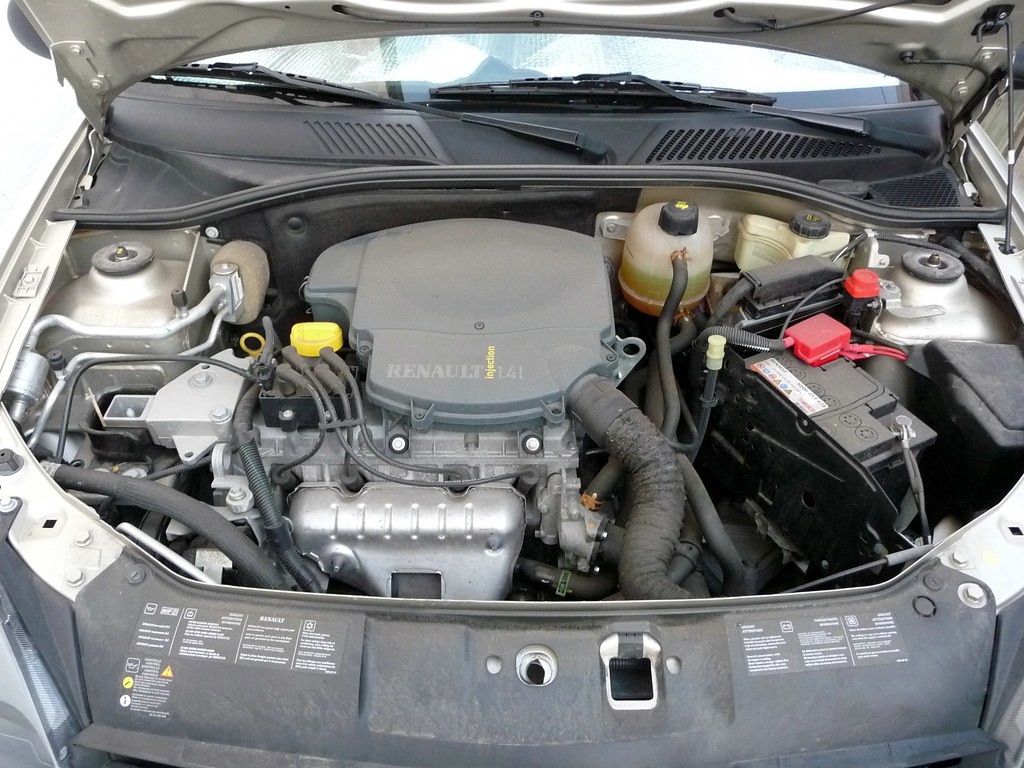
- Symbol I 1999–2008 · Sedan · 47–85 kW (64–116 PS)
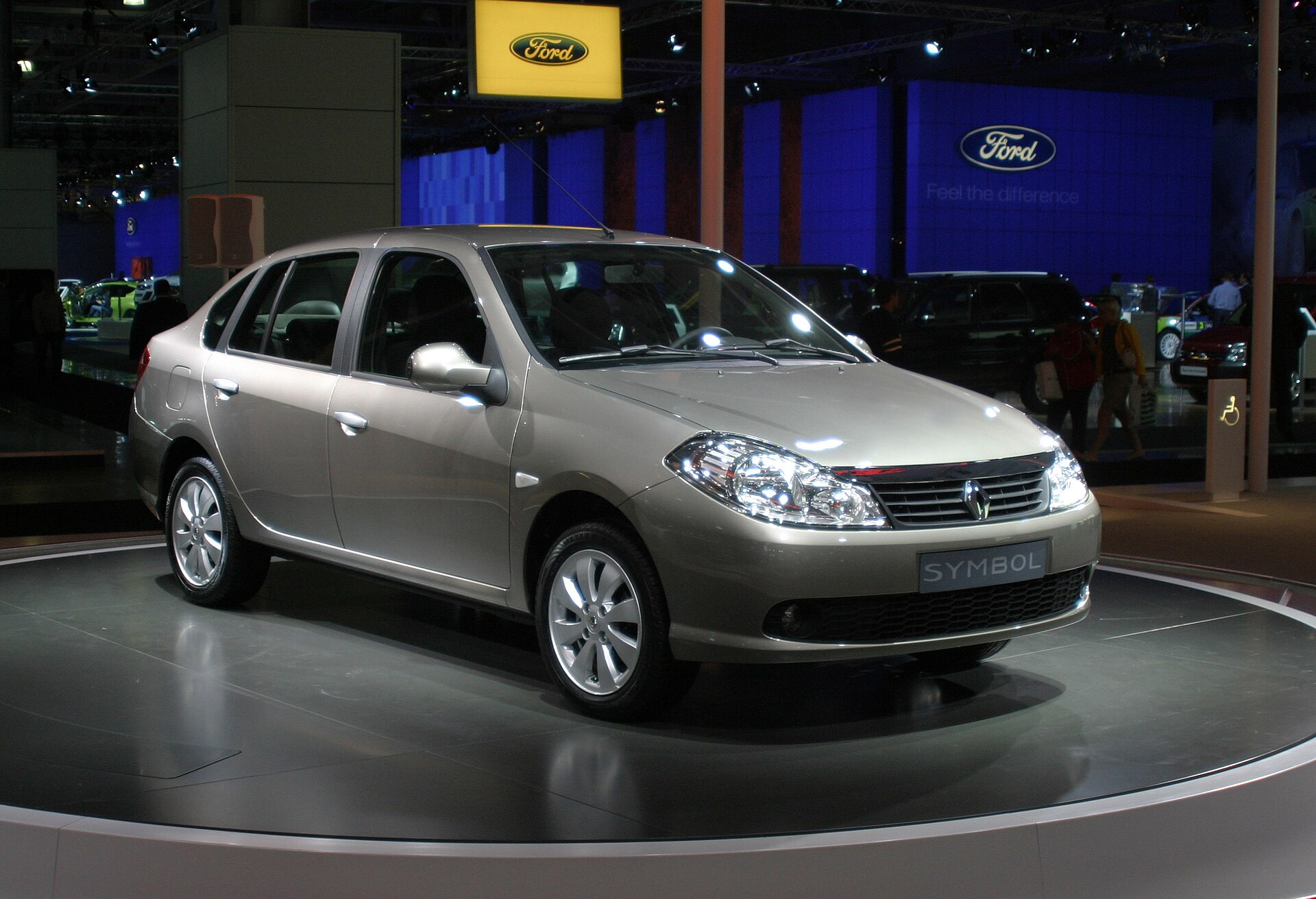
- Symbol II 2008–2012 · Sedan · 44–75 kW (60–102 PS)
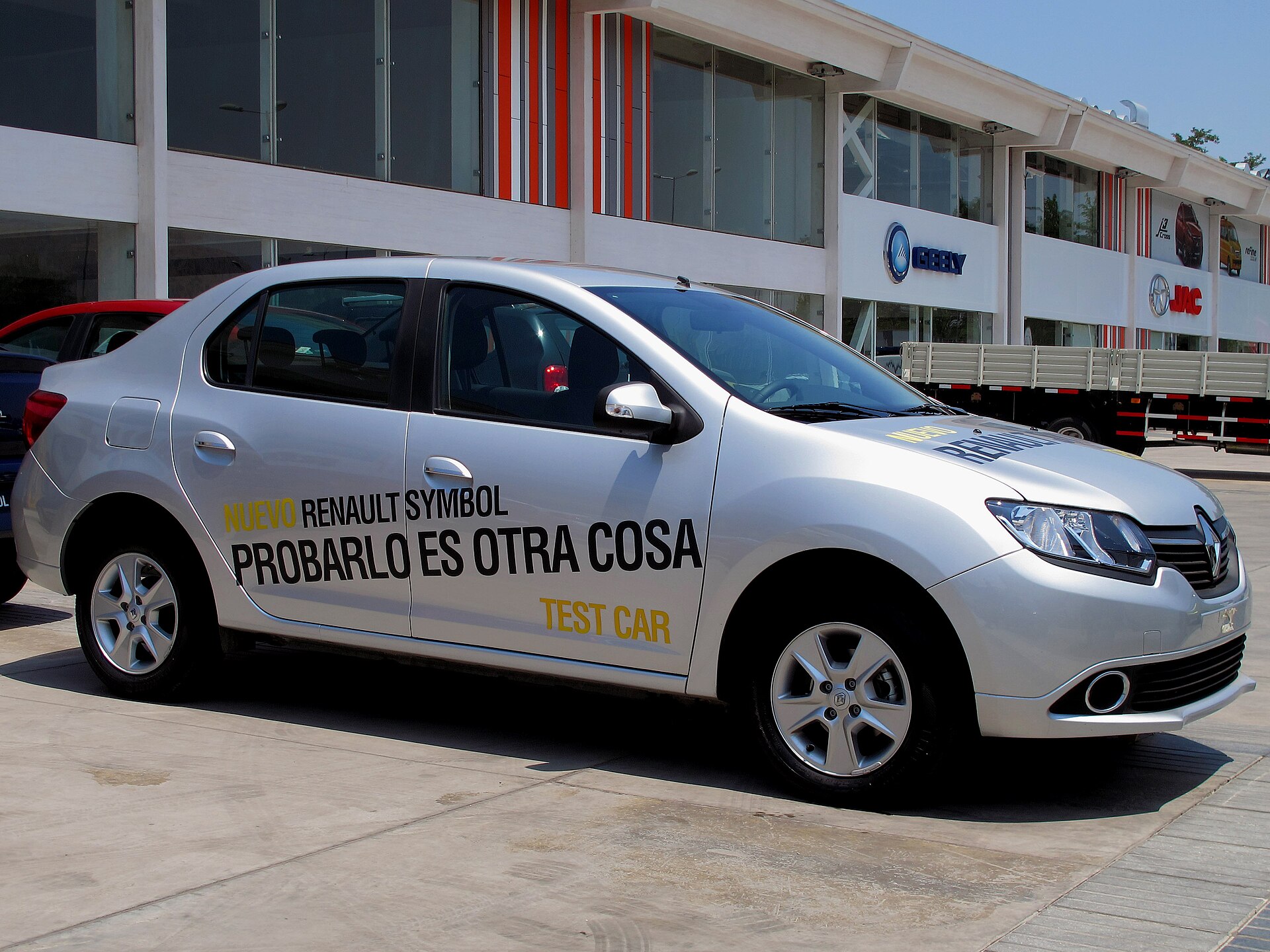
- Symbol III 2013–2021 · Sedan · 55–66 kW (75–90 PS)
Newest first · 3 generations since 1999
-
2013
-
2008
-
1999
All generations by year: Symbol III (2013–2021) · Symbol II (2008–2012) · Symbol I (1999–2008)
Which one is mine?
Pick the year of first registration to see which generation it is.
Check by VINWhich Renault Symbol to buy
Our verdict · Oleksandr Hnatiuk
For most buyers, the best choice is a post-2017 third-generation Symbol. It is the newest and has LED running lights, the Media Nav screen and the frugal 0.9 TCe or 1.5 dCi engines. A second-generation 1.4 16V suits buyers who want simple, cheap mechanicals and do not need modern safety. Choose a first-generation car only if it is very cheap and well maintained.
Avoid the weakest base engines if you often carry four people, and check diesel cars for bearing wear and service records. The full Renault range is in the Renault catalogue, and the company's story is told in the history of Renault.
The Renault Symbol is a small four-door saloon that Renault built from 1999 to 2021 for markets where buyers prefer a boot to a hatchback. The first two generations were based on the Clio II; the third was a rebadged Dacia Logan II. It was also sold as the Clio Symbol, Thalia, Clio Sedan and Nissan Platina, mainly from the OYAK Renault plant in Bursa, Turkey.
In short
- Generations: Symbol I (1999–2008), Symbol II (2008–2013) and Symbol III (2012–2021); the Taliant replaced it in Turkey in 2021.
- Petrol engines from 1.2 to 1.6 litres and 1.5 dCi diesels; front-wheel drive only.
- Large boots for the class: 510 litres in the first and third generations, about 506 litres in the second.
- More than 600,000 first-generation cars were sold worldwide.

Size at a glance
| Dimensions | Renault Symbol II |
|---|---|
| Length | 4,261 mm167.8 in |
| Width | 1,639 mm64.5 in |
| Height | 1,439 mm56.7 in |
| Wheelbase | 2,473 mm97.4 in |
| Boot | 502 L17.7 cu ft |
Specs by version
Engines
| Version | Engine | Power | Drive |
|---|---|---|---|
| Symbol I · 1.4 55 kW (75 PS) | 1.4 l · Petrol 1,400 cc | 55 kW 75 PS74 hp | Front-wheel drive |
| Symbol I · 1.4 K4J 72 kW (98 PS) | 1.4 l · 4 cyl · Petrol K4J | 72 kW 98 PS97 hp | Front-wheel drive |
| Symbol I · 1.6 K4M 79 kW (107 PS) | 1.6 l · 4 cyl · Petrol K4M | 79 kW 107 PS106 hp | Front-wheel drive |
| Symbol II · 1.1 55 kW (75 PS) | 1.1 l · Petrol 1,100 cc | 55 kW 75 PS74 hp | Front-wheel drive |
| Symbol II · 1.4 72 kW (98 PS) | 1.4 l 1,400 cc | 72 kW 98 PS97 hp | Front-wheel drive |
| Symbol II · 1.6 75 kW (102 PS) | 1.6 l · Petrol 1,600 cc | 75 kW 102 PS101 hp | Front-wheel drive |
Dimensions and weight
Show all 6 versions
| Version | Boot |
|---|---|
| Symbol I · 1.4 55 kW (75 PS) | 510 l18.0 cu ft |
| Symbol I · 1.4 K4J 72 kW (98 PS) | 510 l18.0 cu ft |
| Symbol I · 1.6 K4M 79 kW (107 PS) | 510 l18.0 cu ft |
| Symbol II · 1.1 55 kW (75 PS) | 502 l17.7 cu ft |
| Symbol II · 1.4 72 kW (98 PS) | 502 l17.7 cu ft |
| Symbol II · 1.6 75 kW (102 PS) | 502 l17.7 cu ft |
Verified Manufacturer and type-approval data from our catalog · Sources and methodology
The Renault Symbol at a glance

| Fact | Value |
|---|---|
| Type | Small four-door saloon, front-wheel drive |
| Years | 1999–2021 |
| Main plant | OYAK Renault, Bursa, Turkey |
| Other plants | Brazil, Colombia, Mexico (Nissan Platina), Argentina, Algeria |
| Other names | Clio Symbol, Thalia, Clio Sedan, Clio Classic, Nissan Platina; Logan in South America |
| Engines | 1.2–1.6 petrol, 0.9 TCe turbo petrol, 1.5 dCi diesel |
| Successor | Renault Taliant (Turkey, 2021) |
Three Symbol generations
| Generation | Years | Based on | Length | Boot |
|---|---|---|---|---|
| Symbol I / Thalia / Clio Sedan | 1999–2008 | Clio II | 4,150–4,171 mm | 510 l |
| Symbol II / Thalia II | 2008–2013 | Clio II, reworked | about 4,260 mm | 506 l |
| Symbol III | 2012–2021 | Dacia Logan II | as the Logan II | 510 l |
The first Symbol went on sale in Turkey in November 1999 as the saloon version of the Clio II. Renault meant it for developing markets and gave it local names. Production soon spread to Brazil (2000), Colombia (2001) and Mexico (2002), where Nissan sold it as the Platina. Updates came in March 2002, with the new Clio front end and more safety equipment, and in 2006, with body-coloured bumpers. The 2002 update also dropped the word "Clio" in many markets.

The second generation was revealed in August 2008. It kept much of the old structure but had a new body that was 7 cm longer, with better-balanced proportions. Bursa built most cars, and a plant in Córdoba, Argentina, added a 1.6-litre version from 2009. In Central European countries such as Poland, Czechia and Hungary, it was sold as the Thalia. In December 2008 a jury of 15 journalists gave it the Autobest award, which the old 1cars text describes as the prize for the best car in Central and Eastern Europe.
The third generation was shown at the Istanbul Motor Show in 2012 and went on sale in Turkey in early 2013. It was a Dacia Logan II with a Renault grille and bumpers. Brazil built it as the Renault Logan from November 2013, and a factory near Oran, Algeria, assembled it from November 2014. A facelift in early 2017 brought LED daytime running lights and a new rear end.
Petrol and dCi engines by generation
| Generation | Engine | Power | Gearbox |
|---|---|---|---|
| I | 1.4 8V K7J petrol | 55 kW (75 PS) | 5-speed manual |
| I | 1.4 16V K4J petrol | 72 kW (98 PS) | 5-speed manual, 4-speed automatic |
| I | 1.6 16V K4M petrol; 1.6 Hi-Flex (Brazil) | 77–85 kW (105–115 PS) | 5-speed manual |
| I | 1.5 dCi diesel | 47–62 kW (64–84 PS) | 5-speed manual |
| II | 1.2 and 1.2 16V petrol | 44–55 kW (60–75 PS) | 5-speed manual |
| II | 1.4 and 1.4 16V petrol | 55–72 kW (75–98 PS) | 5-speed manual, 4-speed automatic |
| II | 1.5 dCi diesel | about 59 kW (80 PS) | 5-speed manual |
| III | 1.2 16V petrol; 0.9 TCe turbo | 55–66 kW (75–90 PS) | 5-speed manual, Easy-R automated from 2017 |
| III | 1.5 dCi diesel | 55–66 kW (75–90 PS) | 5-speed manual |
The four-speed automatic was offered only with the 1.4 16V petrol. According to the old 1cars text, a second-generation 1.4 16V reached 100 km/h in about 11 seconds and 186 km/h, while the 1.6 needed about 10.5 seconds. With the automatic, the 1.4 took about 16.6 seconds. The diesel of that generation needed about 12 seconds and reached 177 km/h.
Every Symbol has front-wheel drive, MacPherson struts at the front and a semi-independent rear axle. The third generation used ventilated front discs, rear drums and hydraulic power steering, all taken from the Logan.
Size, cabin and the 510-litre boot
The Symbol's main selling point is space. The first generation offered 510 litres of boot space and a full-size spare wheel. The opening is narrow, though, and the hinges take some room from the load. The old 1cars text gives ground clearance of 155 mm for the first generation and 140 mm for the second.

Inside, the first Symbol had a simple cabin, with manual windows and mirrors in base form and four-way manual front seat adjustment. Three adults fit in the back, but only two are comfortable. The second generation added rear quarter windows that improved visibility, a two-tone cabin and a small trip computer. The third generation brought the Logan II dashboard, a three-dial cluster and, on later cars, a 7-inch Media Nav touchscreen with navigation, USB and Bluetooth.
The third-generation saloon and its twin, the Renault Logan 2, share the same 510-litre boot. To check how the Symbol's length compares with another car, use the 1cars size comparison tool.
Fuel consumption and running costs
Renault quoted 5.3 l/100 km for the third-generation TCe 90 and 3.9 l/100 km, or 103 g/km of CO2, for the dCi diesels. Over 15,000 km a year, that is about 795 litres of petrol or 585 litres of diesel by our calculation, a saving of 26 % for the diesel. In a 2008 eco-drive event in Turkey, a second-generation dCi covered 1,430 km at 3.15 l/100 km.

Real-world figures for older petrol cars are higher. The old 1cars text reports 8–10 l/100 km for first-generation 1.4 engines and about 10 l/100 km in town for the second-generation 1.4. The fuel cost calculator turns these figures into a yearly bill.
Trim levels and equipment
The first generation came as Authentique and Expression. Base cars had central locking, a driver's airbag, power steering, a full-size spare and a height-adjustable steering wheel. The Expression added air conditioning, a trip computer, electric mirrors and windows, fog lights, an immobiliser and a CD stereo. ABS, a passenger airbag and heated seats were options, and a steel engine guard was standard.

The second generation used Authentique, Expression and Privilège trims. On the third generation, early Turkish and North African cars had very simple base trims with one airbag. Even upper versions needed ABS as an option, according to the old text. Later cars added cruise control, automatic air conditioning and the Media Nav system, with a three-year or 100,000 km warranty.
Safety: what is known
Euro NCAP never tested the Symbol or the Thalia. The first two generations offered ABS and a passenger airbag only as options on many versions. The third generation used the stiffer Logan II body, with a reinforced front cross-member and strengthened front structure according to the old text. Buyers who need high crash-test ratings should look at newer cars.

Reliability and common problems by generation
The old 1cars text collected owners' reports. On first-generation 1.4 petrol engines, the typical faults were ignition coils, high-voltage leads, the starter drive and the alternator regulator. The engines themselves were described as long-lived. Early 1.5 dCi diesels were sensitive to fuel quality and could suffer crankshaft bearing wear, so service records matter.

Owners of all generations praise the soft suspension, the large boot and a body with good corrosion protection when the car has not been in an accident. Common complaints are road noise above about 130 km/h, weak base engines and simple interior materials.
The Symbol compared with its rivals
| Model | Body | How it differs from the Symbol |
|---|---|---|
| Dacia Logan | Saloon, estate | Same base as the Symbol III; the Dacia Logan MCV adds an estate |
| Renault Clio II | Hatchback | Same base as Symbol I and II, smaller boot |
| Chevrolet Aveo | Saloon, hatchback | Similar size and price class |
| Volkswagen Polo saloon | Saloon | Better finish, usually more expensive |
The Symbol's strengths were price, boot space and robust mechanicals. German and Korean rivals offered better interiors and more equipment. The 1cars comparison tool lets you compare the Symbol with any of them.

Renault Symbol evolution in numbers
Did you know?
- The Renault Symbol ran for 22 years, from 1999 to 2021, over 3 generations in our catalog.
- The longest-running generation is the Symbol I (1999–2008): 9 years.
- The most powerful Renault Symbol is not the newest: the Symbol I (1999–2008) offered up to 85 kW (116 PS), the Symbol III up to 66 kW (90 PS).
Most powerful version, kW
Figures from the 1cars catalog: power is the strongest version of each generation; generations without the figure are left out.
Renault Symbol: first vs latest generation
| Spec | Symbol I | Symbol III | Change |
|---|---|---|---|
| Years | 1999–2008 | 2013–2021 | 14 years apart |
| Most powerful version | 85 kW (116 PS) | 66 kW (90 PS) | −19 kW (−22%) |
Oldest and newest generation in the 1cars catalog. Power is the strongest version of each; other rows are shown only when both generations have the figure.
Image credits · Photos from Wikimedia Commons under free licences
- Renault Symbol I · Photo: *SHERWOOD* / Flickr, CC BY-SA 2.0
- Renault Symbol II · Photo: Basilex / Wikimedia Commons, CC BY 3.0
- Renault Symbol III · Photo: order_242 from Chile / Wikimedia Commons, CC BY-SA 2.0
Renault Symbol in our rankings
- No. 9 of 84 · Lightest sedans (904 kg)
- No. 27 of 446 · Lightest cars (904 kg · top 7%)
- No. 162 of 1172 · Longest-running car nameplates (22 years · top 15%)
- No. 19 of 126 · Smallest sedans (4,261 mm · top 16%)
- No. 153 of 588 · Smallest cars (4,261 mm · top 27%)
- No. 87 of 333 · Biggest boot: cars (510 l · top 27%)
Lighter than 93% of ranked cars in the 1CARS catalog (No. 27 of 446).
Renault Symbol photos 30


FAQ
Is the Renault Symbol the same as the Renault Clio?
The first two generations were saloon versions of the Clio II, with a longer body and a separate boot. The third generation was not a Clio: it was a Dacia Logan II with Renault styling. That is why it was sold as the Logan in South America.
Where was the Renault Symbol made?
Most cars were built by OYAK Renault at its Bursa factory. Other plants built the first generation in Brazil, Colombia and Mexico, the second in Argentina, and the third in Brazil and, from 2014, in Algeria.
What engines does the Renault Symbol have?
The Symbol used 1.2, 1.4 and 1.6-litre petrol engines, a 0.9-litre TCe turbo petrol on the third generation and 1.5 dCi diesels. Power ranges from 44 kW (60 PS) to 85 kW (115 PS) for the Brazilian flex-fuel 1.6.
How big is the Renault Symbol boot?
The first and third generations have 510 litres, and the second about 506 litres. All three have a narrow boot opening. On the first and third generations, the rear seat back folds on better-equipped versions.
What replaced the Renault Symbol?
In Turkey, Renault replaced the Symbol with the Taliant in 2021. In South America the same car continued under the Logan name, and in Europe the closest equivalent is the Dacia Logan.
Data sources
Data checked by an editor against the sources below.
- The text of this article (1cars archive)
- Wikipedia - Renault Symbol
- Planeterenault - 6949 Symbol 1999 2013
- Wikipedia - Renault K Type engine
- Carsized - Renault Symbol 2008 Sedan


