
 Renault Sandero
All generations, specs and history
Updated Published Sources (2) Report an error
By Oleksandr Hnatiuk, Automotive Editor & Used Car Specialist Reviewed by Felix Hartmann

- Built
- 2007–present
- Generations
- 2
- Top power
- 83 kW (113 PS)
Timeline
Sandero generations
Click a generation for its own page


I and II overlapped in 2012–2013, so II sits on a second lane
- Sandero I 2007–2013 · Hatchback · 55–77 kW (75–105 PS)
- Sandero II 2012–2020 · Hatchback · 60–83 kW (82–113 PS)
Newest first · 2 generations since 2007
-
2012
-
2007
All generations by year: Sandero II (2012–2020) · Sandero I (2007–2013)
Which one is mine?
Pick the year of first registration to see which generation it is.
- Sandero II 2012–2020
- Sandero I 2007–2013
Which Renault Sandero to buy
Our verdict · Oleksandr Hnatiuk
New, the third-generation 1.0 TCe or ECO-G LPG version balances performance and running costs best. Bear in mind the two-star Euro NCAP rating of 2021, earned mainly through limited driver assistance rather than weak occupant protection.
Used, a third-generation car has the best inspection record. A second-generation car with a full service history is the budget choice; AUTO BILD calls such cars rare but the better buy. Check the suspension and ignition lock. Buy a first-generation Sandero only after a careful rust and brake inspection.
The Renault Sandero is a five-door B-segment hatchback with front-wheel drive, derived from the Logan and built in three generations since 2007. In Europe it is sold as the Dacia Sandero; in Brazil and other Latin American markets it carries the Renault badge. It is the same car either way.
In short
- Three generations: first (revealed 2007, Europe 2008–2012), second (2012–2020) and third (from 2020, facelifted in October 2025).
- Petrol, LPG bi-fuel and, in the first two generations only, 1.5 dCi diesel engines; every version is front-wheel drive.
- Euro NCAP: 3 stars in 2008, 4 stars in 2013 and 2 stars in 2021 (tested as the Stepway).
- Inovev counted 237,461 Sanderos sold in 30 European markets in 2025, the most of any car.

Specs by version
Engines
| Version | Engine | Power | Torque | Drive |
|---|---|---|---|---|
| Sandero I · 1.4 55 kW (75 PS) | 1.4 l · Petrol 1,400 cc | 55 kW 75 PS74 hp | - | - |
| Sandero II · 60 kW (82 PS) | - | 60 kW 82 PS80 hp | 134 Nm99 lb-ft | Front-wheel drive |
| Sandero II · 75 kW (102 PS) | - | 75 kW 102 PS101 hp | 145 Nm107 lb-ft | Front-wheel drive |
| Sandero II · 83 kW (113 PS) | Petrol | 83 kW 113 PS111 hp | 152 Nm112 lb-ft | Front-wheel drive |
Dimensions and weight
Show all 1 versions
| Version | Boot |
|---|---|
| Sandero I · 1.4 55 kW (75 PS) | 320 l11.3 cu ft |
Verified Manufacturer and type-approval data from our catalog · Sources and methodology
Renault Sandero at a glance
The Sandero is a low-cost supermini built by Renault and its Romanian subsidiary Dacia, sharing much of its hardware with the Renault Logan saloon. The first two generations use Logan-derived underpinnings; the third moved to a low-spec version of the CMF-B platform.

The badge depends on the market: European buyers know it as a Dacia, while Brazil, Colombia and Argentina sell it as a Renault. Plants include Mioveni (Romania), São José dos Pinhais (Brazil), Envigado (Colombia), Casablanca and Tangier (Morocco) and Rosslyn (South Africa). The same low-cost engineering family also produced the Renault Lodgy MPV, and the Sandero sits in the wider history of Renault as the group's volume budget model.
Renault Sandero generations
There have been three Sandero generations, each refining the same low-cost concept.

| Generation | Code | Years | Body styles | Engines | Power (kW / hp or PS) |
|---|---|---|---|---|---|
| I | B90 (as usually listed) | 2007/2008–2012 (Brazil to 2014) | 5-door hatchback | petrol 1.2, 1.4, 1.6; diesel 1.5 dCi | petrol 55–77 kW (75–105 hp); diesel 55–66 kW (75–90 hp) |
| II | B52 (as usually listed) | 2012–2020 | 5-door hatchback | petrol 0.9 TCe, 1.0 SCe, 1.2; diesel 1.5 dCi; 2.0 RS (Latin America) | Europe 54–66 kW (73–90 PS); RS 110 kW (150 hp) |
| III | not confirmed | 2020–present | 5-door hatchback | petrol 1.0 SCe and TCe; LPG ECO-G; 1.2 ECO-G 120 from 2025 | 48–74 kW (65–100 hp) at launch; up to 88 kW (120 hp) on LPG from 2025 |
First generation (2007–2012)
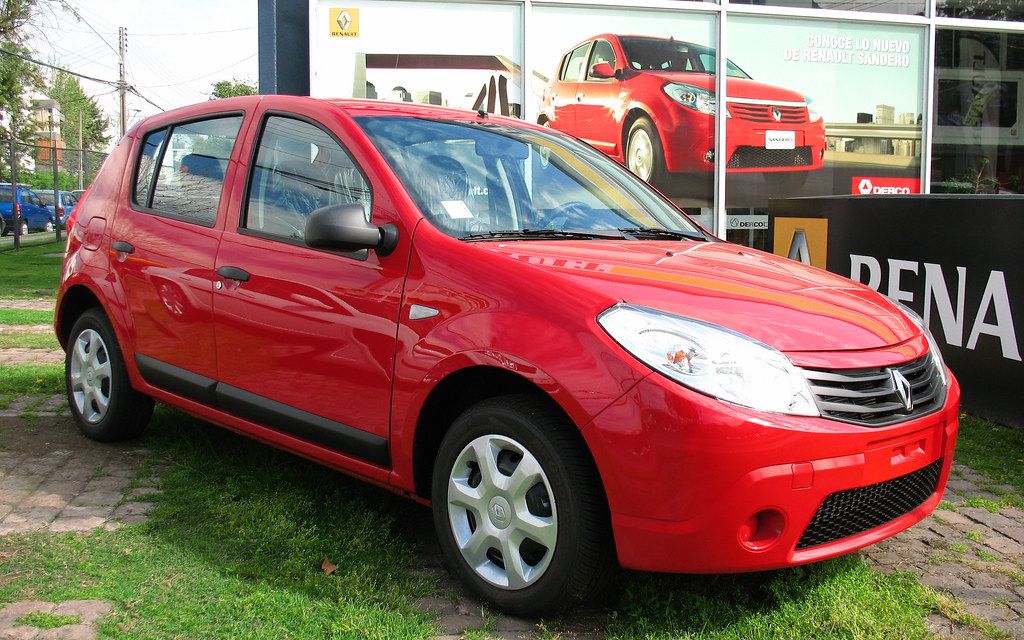
The first Sandero was revealed at the 2007 Frankfurt Motor Show and went on sale as a Renault in Brazil in December 2007, the first Renault model to debut outside Europe. The European Dacia version followed at the Geneva show in March 2008. It used a slightly shorter Logan wheelbase; ground clearance is quoted as 155 mm (6.1 in).
Second generation (2012–2020)
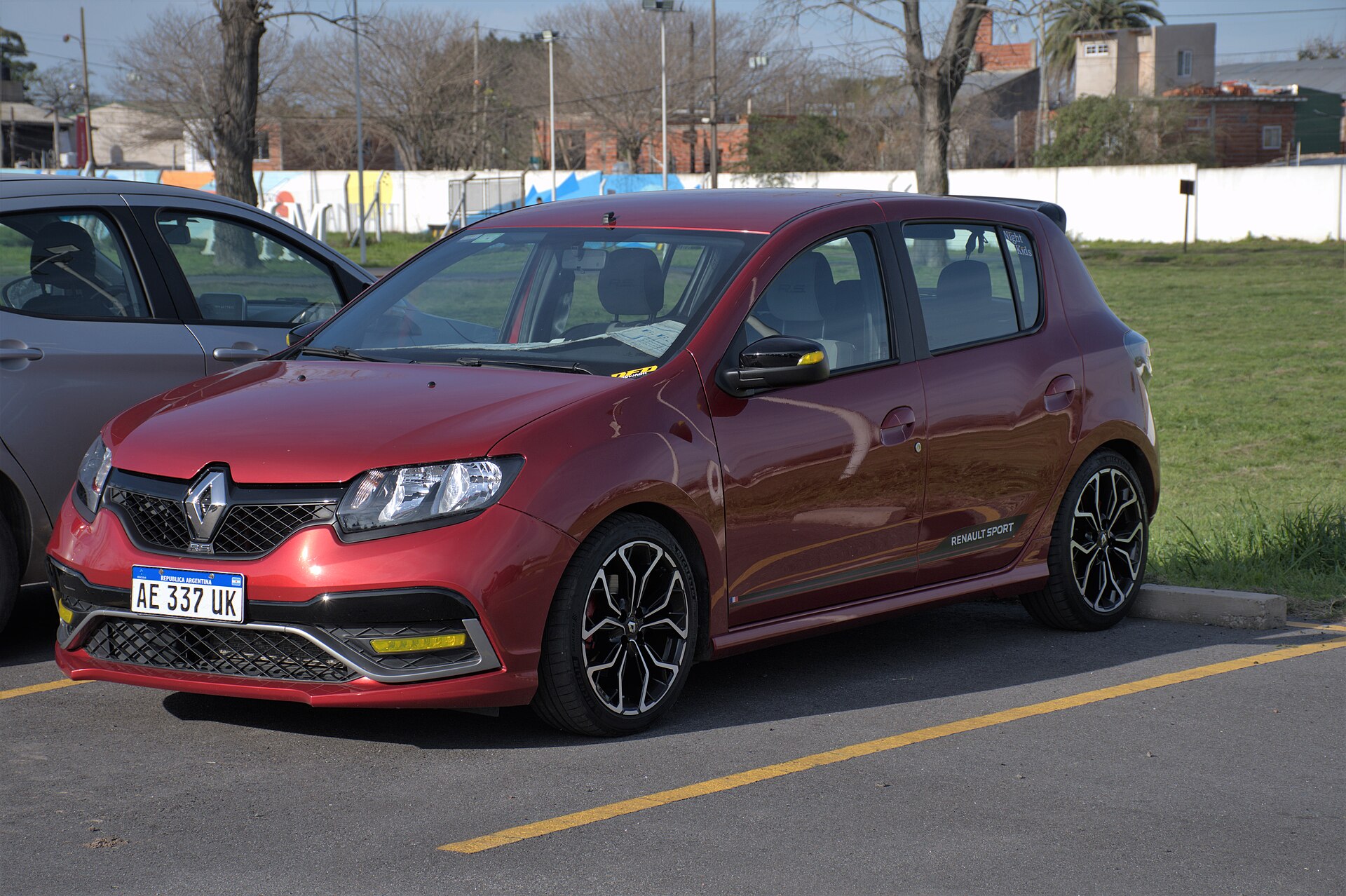
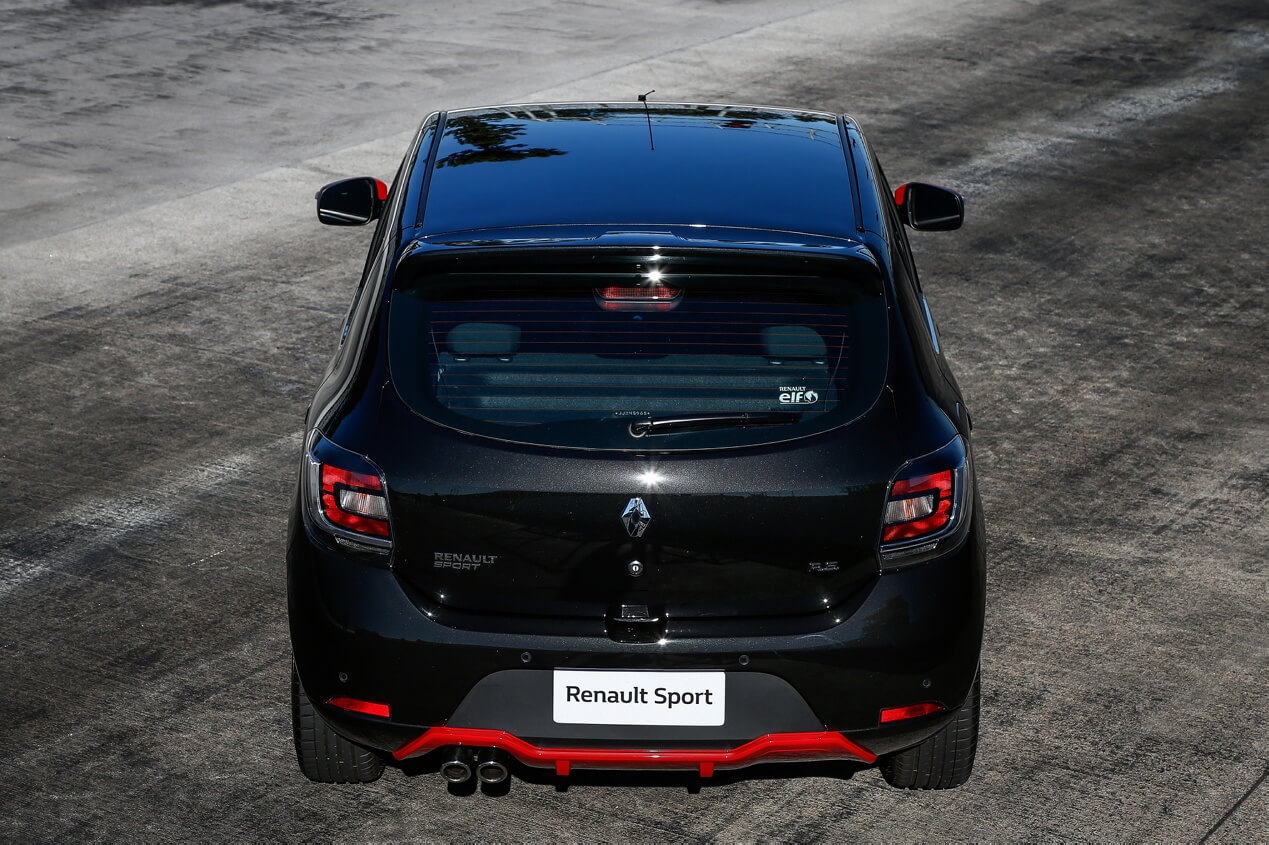
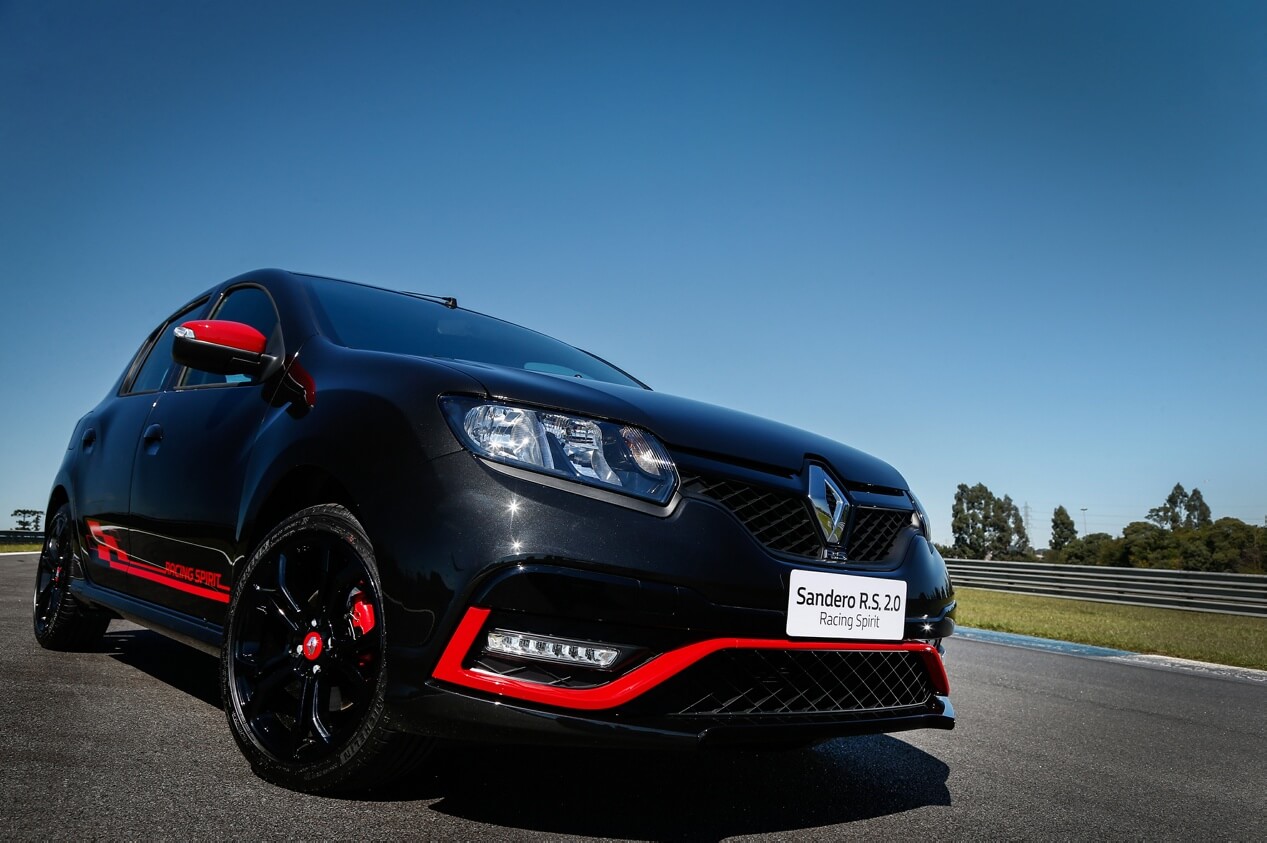
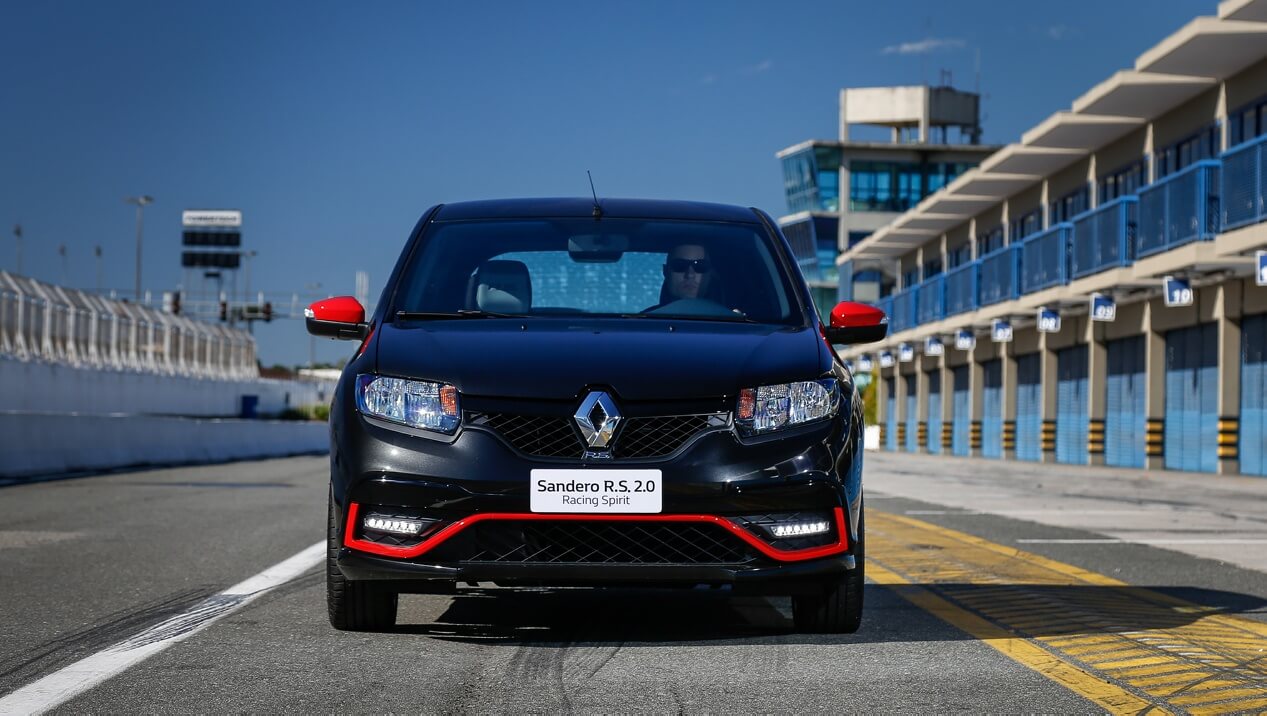
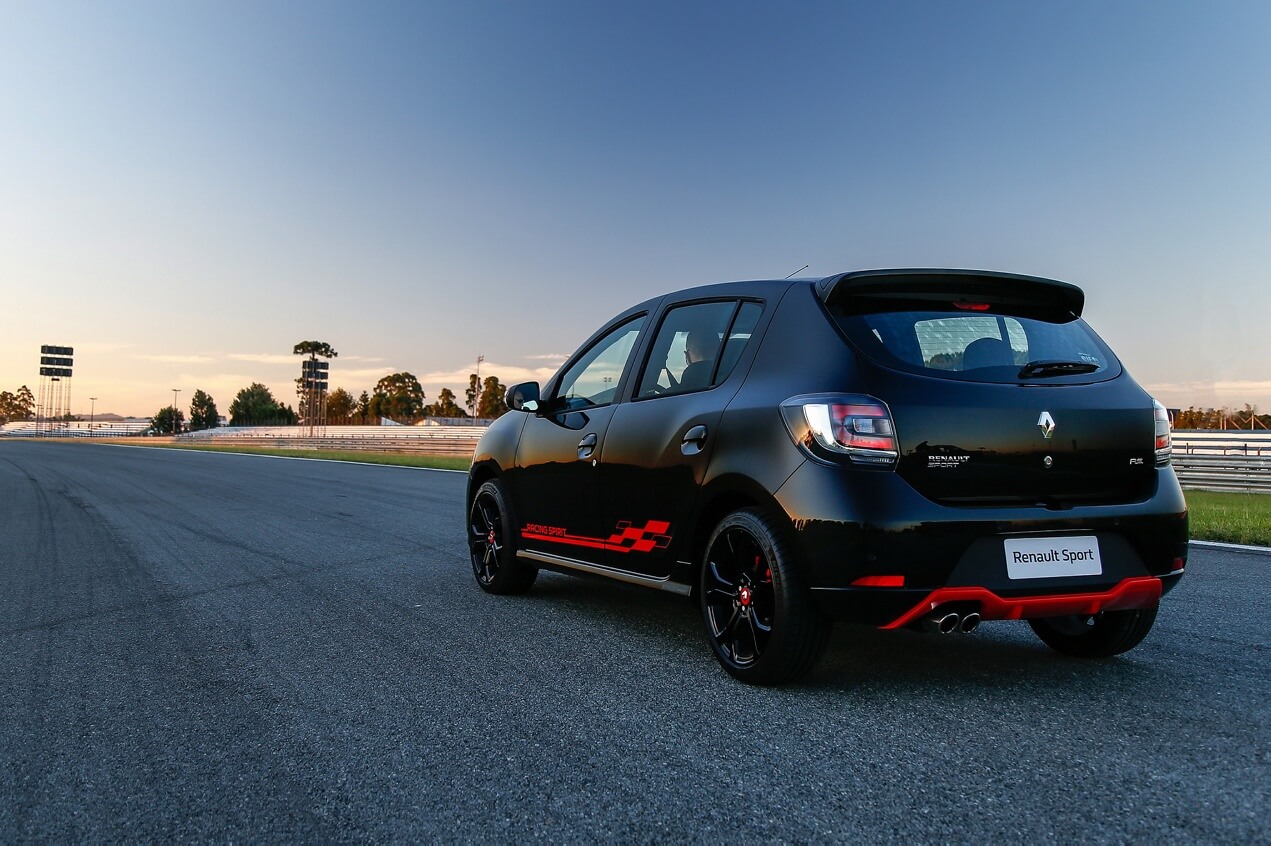
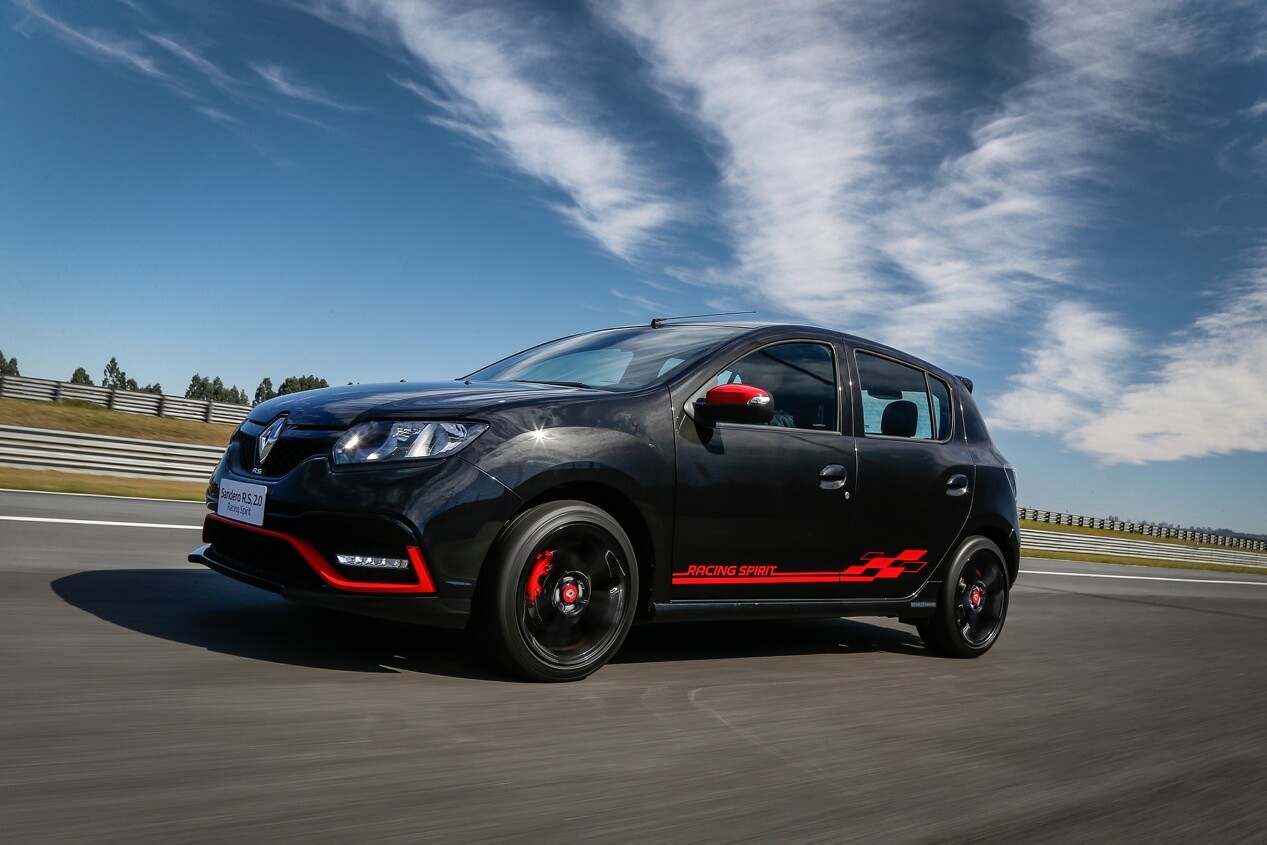
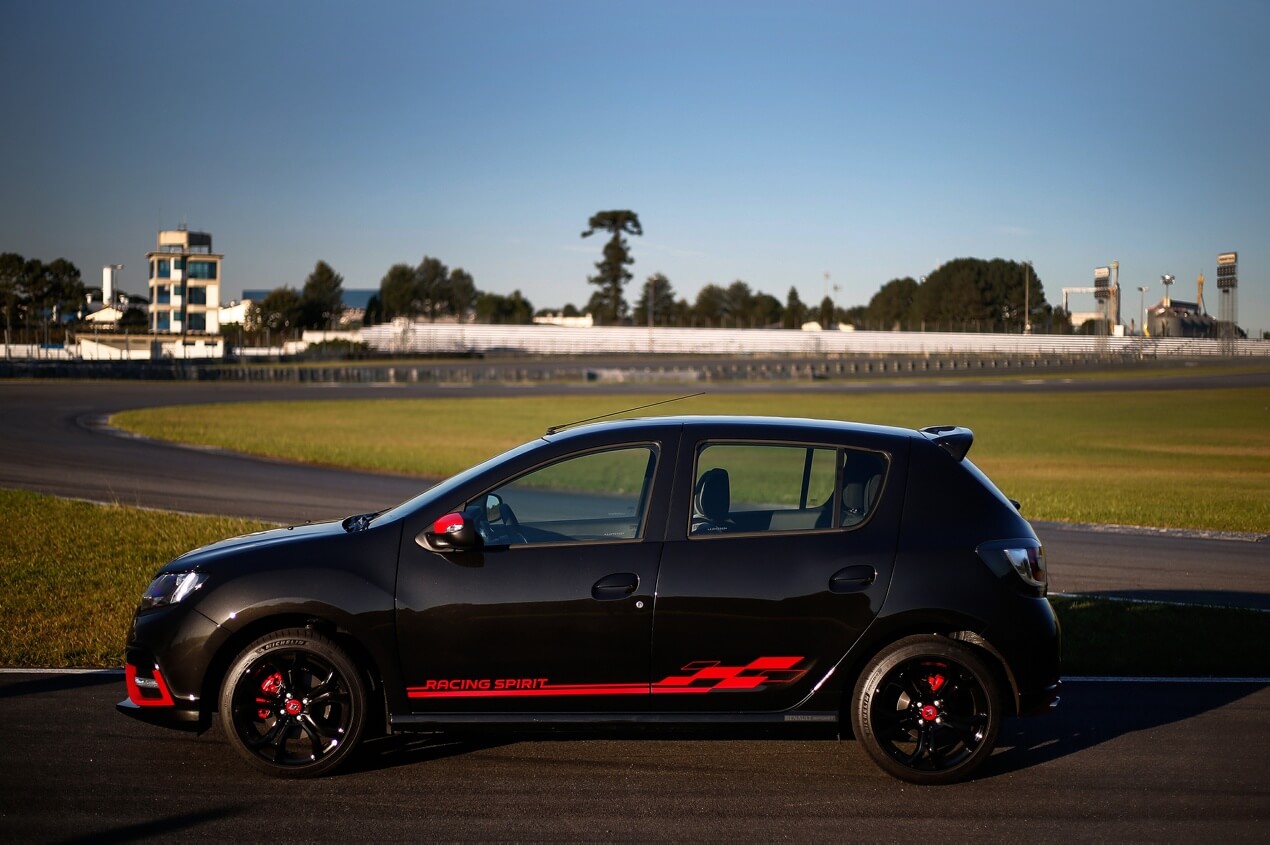
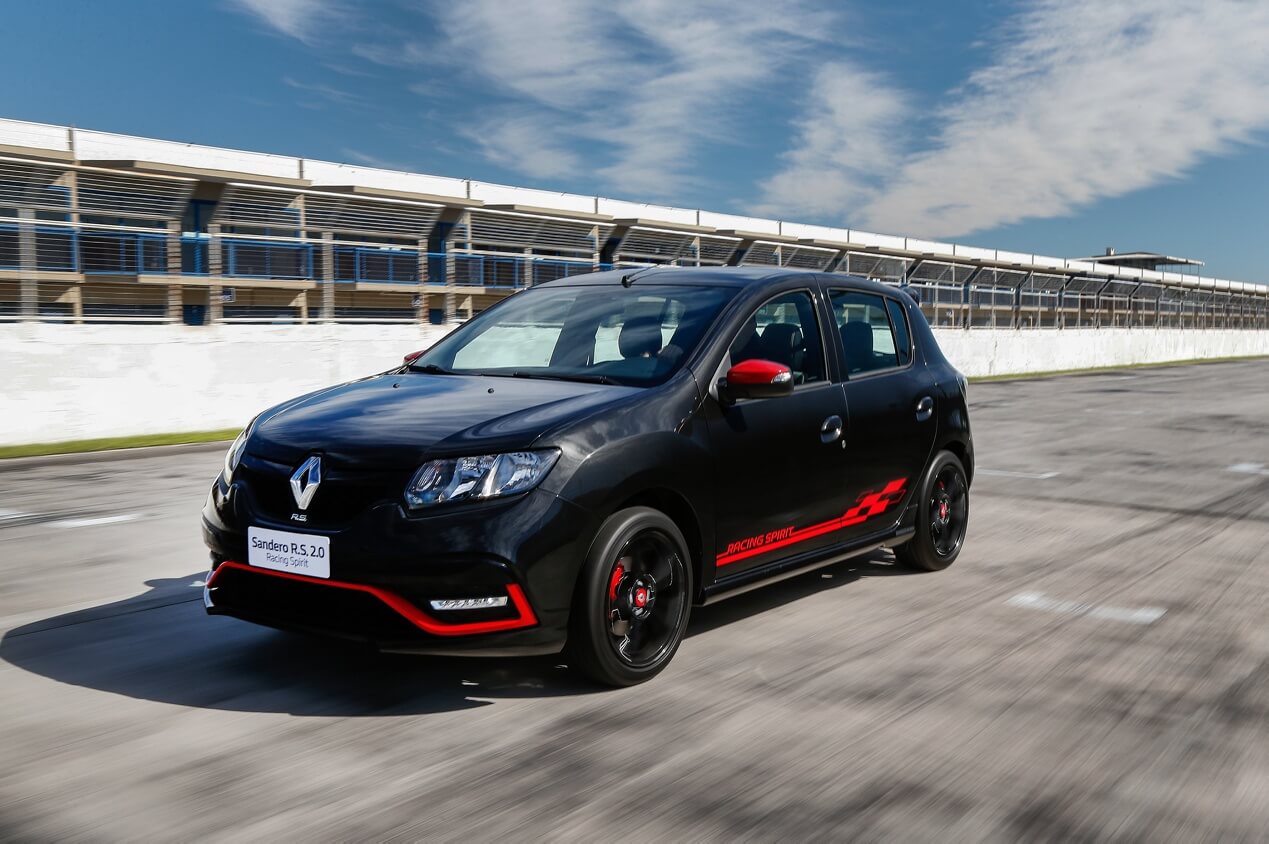
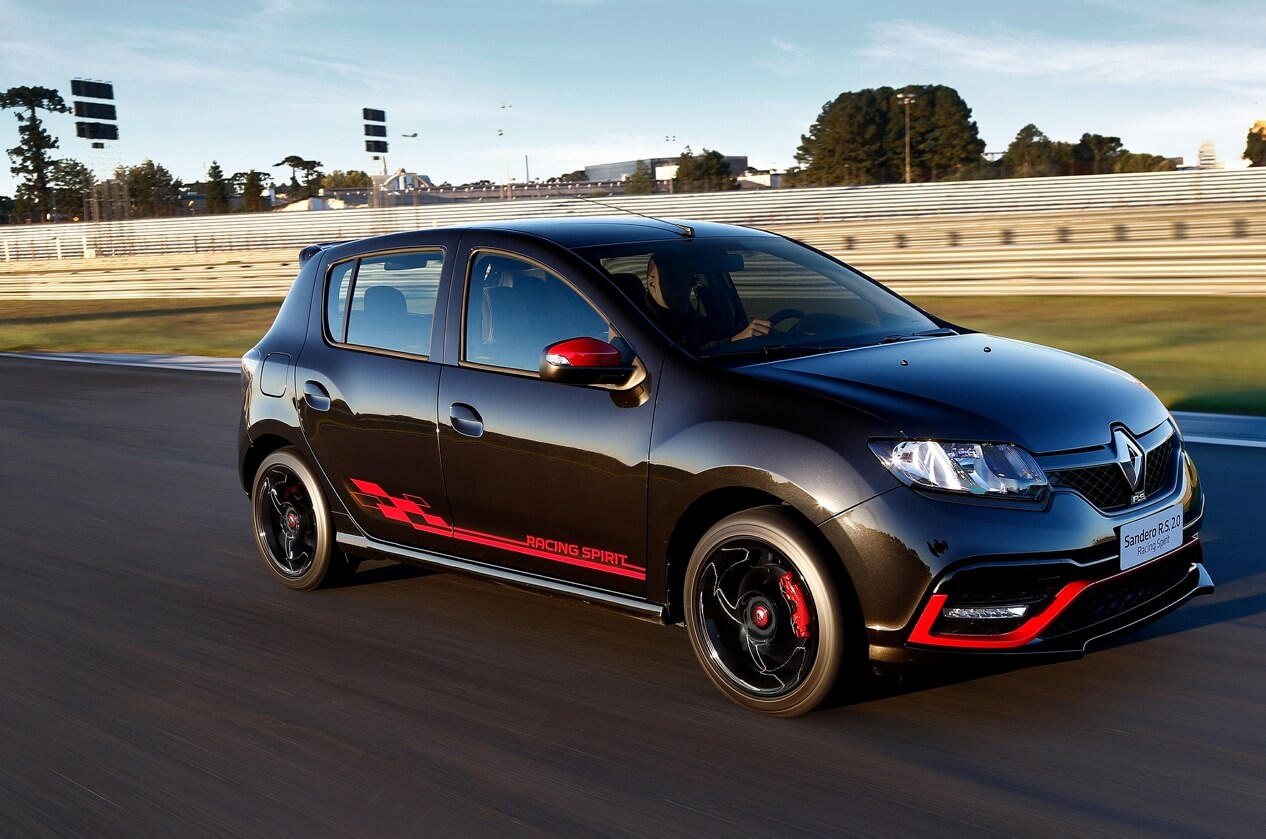
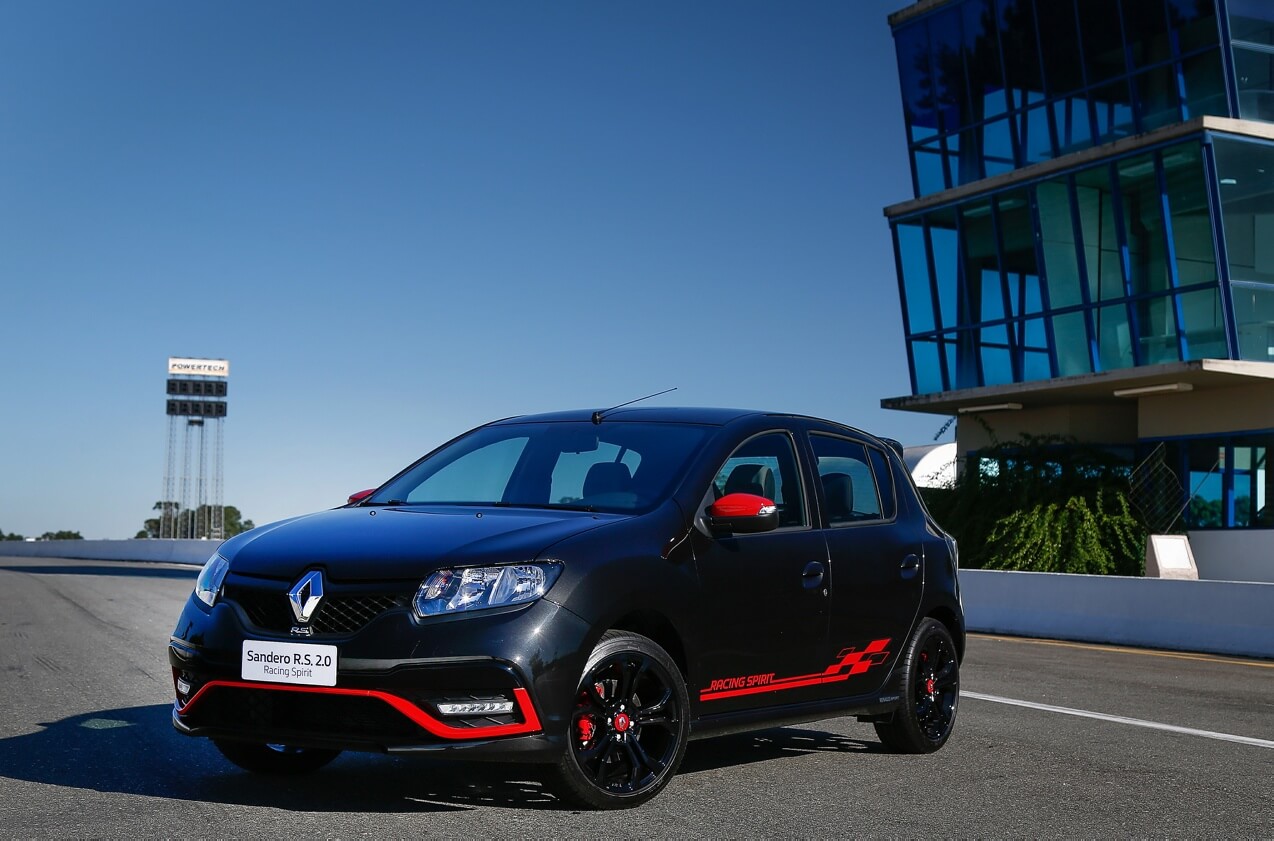
The second Sandero was revealed at the 2012 Paris Motor Show, reaching the UK in 2013 and Brazil in June 2014. It introduced the 0.9 TCe turbocharged three-cylinder. A facelift shown at the 2016 Paris show replaced the entry 1.2 with a 1.0 three-cylinder. The Sandero RS, released in Brazil in September 2015, used a 2.0 16v with 110 kW (150 hp) and was sold only in Latin America.
Third generation (2020–present)
The third Sandero was presented on 7 September 2020 on a low-cost version of the CMF-B platform, and German sales began in January 2021. It added LED headlamps and, on upper trims, an 8-inch touchscreen with Apple CarPlay and Android Auto. A minor update in June 2022 brought the new Dacia logo, and a larger facelift followed on 6 October 2025.
Sandero Stepway
The Stepway is the raised, crossover-styled version with plastic body cladding, offered in all three generations; the European car was unveiled in Barcelona on 7 May 2009. Its details are covered on our Sandero Stepway page.
Engines, transmissions and performance
Every Sandero has a transverse front engine driving the front wheels, mostly with manual gearboxes.

The first generation used a 1.2 16v and a 1.4 (also with LPG), both with 55 kW (75 hp), a 1.6 8v with 63 kW (85 hp) and a 1.6 16v with 77 kW (105 hp), plus the 1.5 dCi diesel.
In the second generation the key engine was the 0.9 TCe: 66 kW (90 PS) and 140 Nm (103 lb-ft), with a five-speed manual or the Easy-R automated manual. The 1.0 SCe gave 54 kW (73 PS), the 1.2 16v 55 kW (75 PS), and the 1.5 dCi carried over.
The third generation dropped diesel. At launch it offered the SCe 65 with 48 kW (65 hp), the TCe 90 with 66 kW (90 hp) and 160 Nm (118 lb-ft) with the six-speed manual or 142 Nm (105 lb-ft) with the CVT, and the ECO-G 100 bi-fuel with 74 kW (100 hp). The October 2025 facelift raised the 1.0 turbo to 100 PS and added the ECO-G 120, a 1.2 rated at 85 kW (115 hp) on petrol and 88 kW (120 hp) on LPG.
Dimensions, interior space and boot
The Sandero has grown only slightly, from 4,020 mm to about 4,088 mm, while boot space has stayed close to 320–330 L.

| Generation | Length | Wheelbase | Boot (seats up / down) |
|---|---|---|---|
| I | 4,020 mm (158.3 in) | 2,588 mm (101.9 in) | 320 / 1,200 L (11.3 / 42.4 cu ft) |
| II | 4,057–4,066 mm (159.7–160.1 in) | 2,589 mm (101.9 in) | 320 / 1,200 L (11.3 / 42.4 cu ft) |
| III | 4,088 mm (160.9 in) | 2,604 mm (102.5 in) | 328 / 1,108 L (11.6 / 39.1 cu ft) |
Key specifications: Sandero III 1.0 TCe 90
| Parameter | Metric | Imperial |
|---|---|---|
| Length | 4,088 mm | 160.9 in |
| Width (without / with mirrors) | 1,848 / 2,007 mm | 72.8 / 79.0 in |
| Height | 1,499 mm | 59.0 in |
| Wheelbase | 2,604 mm | 102.5 in |
| Kerb weight | 1,027–1,052 kg | 2,264–2,319 lb |
| Boot, seats up / down | 328 / 1,108 L | 11.6 / 39.1 cu ft |
| Fuel tank | 50 L | 13.2 US gal |
| Power | 66 kW (90 hp) | - |
| Torque (6-speed manual) | 160 Nm | 118 lb-ft |
| 0–100 km/h (CVT, as quoted) | 12.2 s | - |
| Top speed | 175 km/h | 109 mph |
| Fuel use, WLTP (manual) | 5.3 L/100 km | 44.4 mpg US (53.3 mpg UK) |
Sources differ slightly: one lists the length as 4,094 mm.
Sandero fuel economy and running costs
Official figures are close to 5 L/100 km, but the test cycle matters. The second-generation 0.9 TCe was rated at 4.9 L/100 km (48.0 mpg US) on the older NEDC cycle, while the third-generation 1.0 TCe 90 manual is rated at 5.3 L/100 km on the stricter WLTP cycle, with 120 g/km of CO2.

AUTO BILD names the LPG version as the cheapest to run in the current range. In Germany the facelifted Sandero was listed from €12,790 in December 2025. Used prices quoted by AUTO BILD in May 2026 start at about €800 for a first-generation car, €2,800 for the second and €10,200 for the third.
Sandero trims and equipment
The Sandero uses a short trim ladder: UK reports for 2026 name Essential, Expression and Journey. Third-generation options include blind-spot warning, parking assistance and Dacia's first factory sunroof.

Safety ratings by generation
Each crash-test result applies only to the generation and version tested; Euro NCAP scores rose, then fell as tests became stricter.

| Car tested | Programme, year | Result |
|---|---|---|
| Sandero I (Europe), basic version | Euro NCAP, 2008 | 3 stars adult, 4 stars child, 1 star pedestrian |
| Sandero I with optional safety pack | Euro NCAP, 2008 | equivalent of 4 stars adult |
| Sandero II, basic version | Euro NCAP, 2013 | 4 stars: adult 80%, child 79%, pedestrian 57%, safety assist 55% |
| Sandero III Stepway 1.0 TCe (left-hand drive) | Euro NCAP, 2021 | 2 stars: adult 70%, child 72%, vulnerable road users 41%, safety assist 42% |
| Renault Sandero, Latin America, no airbags | Latin NCAP, 2012 | 1 star adult |
| Renault Sandero, Latin America, four airbags | Latin NCAP, 2024 | 0 stars: adult 33%, child 61%, safety assist 0% |
In 2008 Euro NCAP criticised Dacia for not making the safety pack standard. In 2021 the radar-only emergency braking detected vehicles but not pedestrians or cyclists, and there was no lane support. The regular third-generation hatchback was not tested separately.
Reliability and common problems by generation
German inspection data show each generation improving, though the Sandero still trails the average. In the TÜV-Report 2026 (AUTO BILD, 21 May 2026), 12.6% of two- to three-year-old Sanderos had defects against a 10.6% average, and only 62.2% of eight- to nine-year-old cars passed without defects, against 71.7% across all models.

- Third generation: the best record, with a solid chassis and brakes. Watch for whining gearboxes and turbochargers, and check that recalls for bonnets that could open while driving and for faulty fuel lines have been done.
- Second generation: springs, dampers and axle mounts wear, ignition locks fail (ADAC reports), emissions-test failures are above average, and there were recalls for steering, brakes and airbags. Lighting faults are common in the second and third generations.
- First generation: rust, worn steering joints and front brakes; fewer than half pass without defects. Recalls covered loosening valve cotters, which could damage the engine, and ABS warning-lamp failures.
Rivals: how the Sandero compares
The Sandero competes with the Kia Rio, Hyundai i20, Skoda Fabia, Volkswagen Polo, Citroën C3 and its group sibling, the Renault Clio. It trades refinement and driver-assistance technology for a lower price and more space for the money. For more options, see other hatchbacks and all Renault models.

Renault Sandero: first vs latest generation
| Spec | Sandero I | Sandero II | Change |
|---|---|---|---|
| Years | 2007–2013 | 2012–2020 | 5 years apart |
| Most powerful version | 77 kW (105 PS) | 83 kW (113 PS) | +6 kW (+8%) |
Oldest and newest generation in the 1cars catalog. Power is the strongest version of each; other rows are shown only when both generations have the figure.
Image credits · Photos from Wikimedia Commons under free licences
- Renault Sandero I · Photo: RL GNZLZ / Flickr, CC BY-SA 2.0
- Renault Sandero II · Photo: BugWarp / Wikimedia Commons, CC BY-SA 4.0
Rivals
Compare with…
Compare Renault Sandero with
- Lada Kalina quick spec comparison
- Datsun mi-DO quick spec comparison
- Hyundai i20 quick spec comparison
-
Ended 2018
- Years
- 2013–2018
- Body
- Hatchback, Station wagon
- Fuel
- Petrol
- Power
- 64–78 kW (87–106 PS)
-
In production
- Years
- 2008–present
- Body
- Hatchback
- Fuel
- Petrol, Hybrid
- Power
- 62–88 kW (84–120 PS)
3 generations
- I
- GB
- BC3


Renault Sandero in our rankings
- No. 348 of 1146 · Longest-running car nameplates (13 years · top 32%)
- No. 41 of 71 · Biggest boot: hatchbacks (320 l · top 58%)
- No. 106 of 149 · Most powerful hatchbacks (83 kW · top 72%)
- No. 73 of 100 · Biggest engines: hatchbacks (1,400 cc · top 74%)
- No. 62 of 80 · Most powerful French cars (83 kW · top 78%)
- No. 75 of 96 · Most torque: hatchbacks (152 Nm · top 79%)
In production longer than 68% of ranked nameplates in the 1CARS catalog (No. 348 of 1146).
Renault Sandero photos 41




Renault Sandero videos 3

Renault Sandero video 1

Renault Sandero video 2

Renault Sandero video 3
FAQ
How many generations of the Renault Sandero are there?
Three: the first (revealed in 2007, sold in Europe 2008–2012), the second (2012–2020) and the third (from 2020), with facelifts in 2016, 2022 and October 2025.
Which Renault Sandero generation is the most reliable?
The third. AUTO BILD's analysis of the TÜV-Report 2026 rates it the least problematic Sandero, while the first generation has the weakest record.
What is the fuel consumption of the Renault Sandero?
The third-generation 1.0 TCe 90 manual is rated at 5.3 L/100 km (WLTP). The second-generation 0.9 TCe was rated at 4.9 L/100 km on the less demanding NEDC cycle.
Is the Renault Sandero available with all-wheel drive or as a hybrid?
Every Sandero is front-wheel drive. There is no hybrid hatchback, but a Stepway Hybrid 155 was announced with the October 2025 facelift, and LPG bi-fuel ECO-G versions are offered.
What is the difference between the Dacia Sandero and the Renault Sandero?
Only the badge. Dacia is Renault's Romanian brand; the car is sold as a Dacia in Europe and as a Renault in Latin America and some other markets.
Data sources
Data checked by an editor against the sources below.
- The text of this article (1cars archive)
- Wikipedia - Dacia Sandero


