
 Renault Master
All generations, specs and history
Updated Published Sources (3) Report an error
By Oleksandr Hnatiuk, Automotive Editor & Used Car Specialist Reviewed by Felix Hartmann

- Built
- 1980–present
- Generations
- 4
- Top power
- 125 kW (170 PS)
Timeline
Master generations
Click a generation for its own page
III and IV overlapped in 2023–2024, so IV sits on a second lane
- Master I 1980–1997 · Pickup, Van
- Master II 1997–2010 · Van, Minibus · 84–120 kW (114–163 PS)
- Master III 2010–2024 · Van, Chassis cab · 57–110 kW (77–150 PS)
- Master IV Current 2023–now · Van, Chassis cab · 77–125 kW (105–170 PS)
Newest first · 4 generations since 1980
-
2023
-
2010

-
1997

-
1980


All generations by year: Master IV (2023–now) · Master III (2010–2024) · Master II (1997–2010) · Master I (1980–1997)
Which one is mine?
Pick the year of first registration to see which generation it is.
- Master IV 2023–present
- Master III 2010–2024
- Master II 1997–2010
- Master I 1980–1997
Which Renault Master to choose
Our verdict · Oleksandr Hnatiuk
For a used van, a 2019–2024 Master III with the 2.3 dCi of 110 kW (150 PS) is the sensible choice. It is the last version of a proven design, and parts are shared across four brands. Choose rear-wheel drive with twin rear wheels for heavy towing or tipper bodies. For city deliveries, the Master IV E-Tech with the 87 kWh battery covers most daily rounds on one charge, while the 2.0 Blue dCi with the nine-speed automatic suits long motorway work. Every Master and its rivals can be found in our vans section and on the Renault catalogue page.
The Renault Master is Renault's large van, built since 1980 at the SoVAB plant in Batilly, north-eastern France. There have been four generations: the rear-wheel-drive original, the 1997 van of the year and the 2010 model shared with Opel and Nissan. The fourth, revealed in November 2023, is International Van of the Year 2025.
In short
- Generations: I (1980–1997), II (1997–2010), III (2010–2024) and IV (from late 2023).
- Twins: Opel/Vauxhall Movano, Nissan Interstar and NV400, and Renault Trucks Master.
- Current engines: 2.0 Blue dCi diesel with 77–125 kW (105–170 hp), or the E-Tech electric with 40 or 87 kWh and up to 460 km of range.
- Awards: International Van of the Year in 1998 and 2025.

Specs by version
Verified Manufacturer and type-approval data from our catalog · Sources and methodology
The Master at a glance

| Fact | Detail |
|---|---|
| Maker | Renault (France) |
| Built | since September 1980 |
| Main plant | Batilly (SoVAB), France; also São José dos Pinhais, Brazil |
| Generations | four |
| Bodies | panel van, crew van, minibus, chassis cab, platform |
| Drive | front-wheel drive; rear-wheel drive on heavy versions |
| Fuels | diesel, electric, hydrogen (fuel cell) |
| Gross weight | 3.5 to 4.5 tonnes, depending on version |
Renault Master generations
| Generation | Years | Main twins | Engines | Power (hp / kW) |
|---|---|---|---|---|
| Master I | 1980–1997 | Renault B-series / Messenger | 2.1–2.5 l diesel, 2.0–2.2 l petrol | figures not confirmed |
| Master II | 1997–2010 | Opel/Vauxhall Movano, Nissan Interstar | 1.9–3.0 l diesel | 80–160 PS (59–118 kW) |
| Master III | 2010–2024 | Movano B, Nissan NV400, Interstar | 2.3 dCi diesel; Z.E. electric | 100–150 PS (74–110 kW); 57 kW electric |
| Master IV | from 2023 | Nissan Interstar, Renault Trucks Master | 2.0 Blue dCi diesel; E-Tech electric; hydrogen | 105–170 ch (77–125 kW); 96–105 kW electric |
Renault's mid-size van, the Trafic, sits below the Master and shares many of these partners; see our guide to the Renault Trafic.

Master I (1980–1997): Fiat-Sofim diesel and rear drive
The first Master was launched in September 1980 and built at the new SoVAB plant in Batilly. It was a conventional rear-wheel-drive van with a sliding side door. At launch it used a 2,445 cc Fiat-Sofim diesel, joined in 1984 by a 2,068 cc diesel and in 1990 by a 2,499 cc Sofim engine; rare petrol versions had 2.0 or 2.2 litres.

The heavier models with twin rear wheels were sold as the Renault B-series, B70 to B120, and renamed Messenger in 1993. The B70 diesel had 51 kW (70 PS) and the B80 petrol 59 kW (80 PS). The first Master stayed in production for 17 years.
Master II (1997–2010): van of the year and the alliance twins
The second generation arrived in November 1997 with front-wheel drive for the standard vans and a much more modern cab. It was named International Van of the Year 1998, and its Opel/Vauxhall Movano twin won the same title for 1999. From 2002–2003 a third badge appeared: the Nissan Interstar. The vans were built in Batilly and, for South America, in São José dos Pinhais, Brazil.

The engine list was long. It started with the 1.9-litre F9Q diesel of about 80 PS (59 kW). Above it sat Renault's G-type diesels of 2.2 and 2.5 litres, the Sofim 8140 of 2.5 and 2.8 litres, and Nissan's 2.5-litre YD and 3.0-litre ZD. Buyers could choose a five- or six-speed manual or a six-speed automated manual gearbox. A facelift at the end of 2003 brought new headlamps, tail lamps, mirrors and dashboard, and Renault-badged vans got a new grille in 2007.
For the heaviest jobs Renault offered a rear-wheel-drive version, the Mascott (1999–2013), also sold as Master Propulsion, with a 3.0-litre diesel of 120 PS (88 kW) or 160 PS (118 kW). The Master II was also a favourite base for ambulances in Europe.
Master III (2010–2024): one van, four brands
The third Master appeared in the summer of 2010 and was the most widely shared. It was sold as the Renault Master, Renault Trucks Master, Opel/Vauxhall Movano (2010–2021), Nissan NV400 (2012–2022) and Nissan Interstar (2022–2024). For the first time Opel, Vauxhall and Nissan could also sell rear-wheel-drive versions.

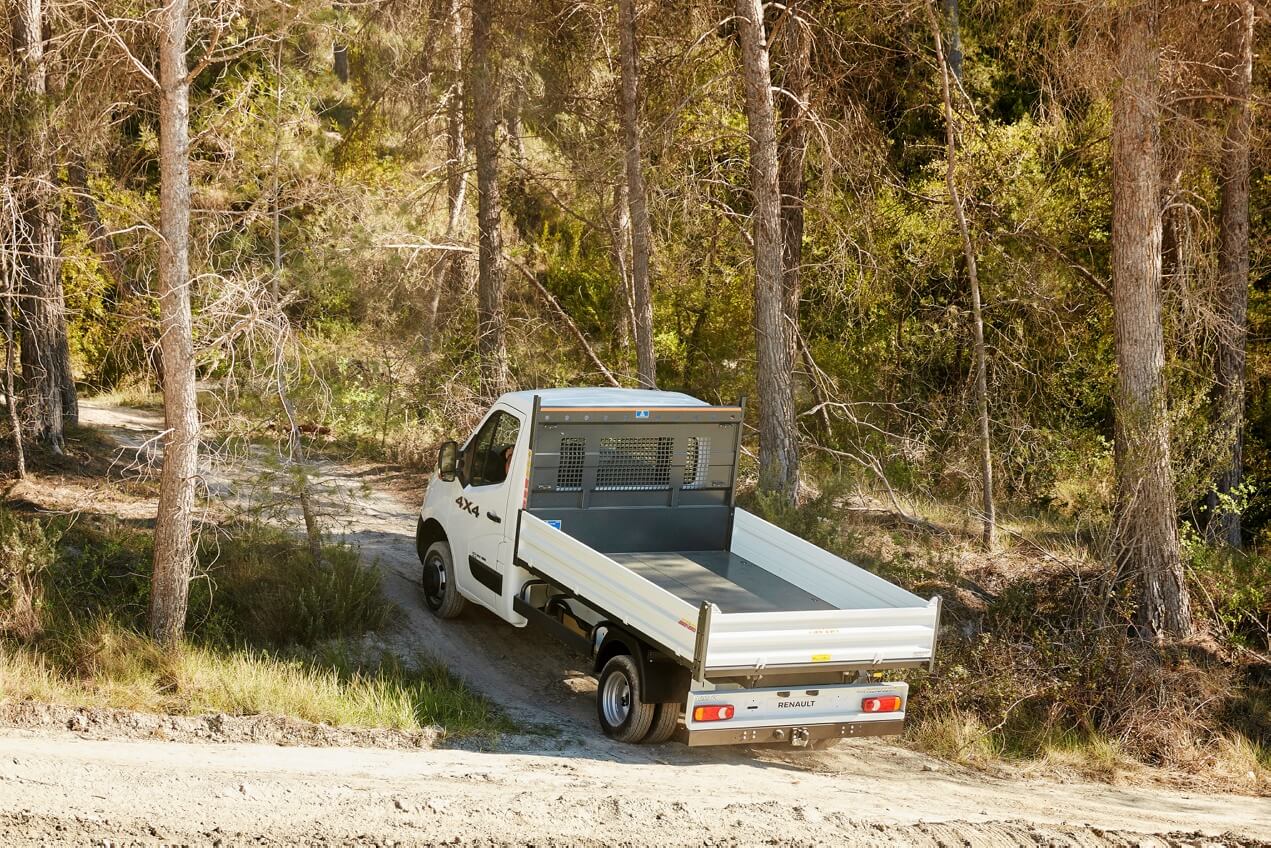
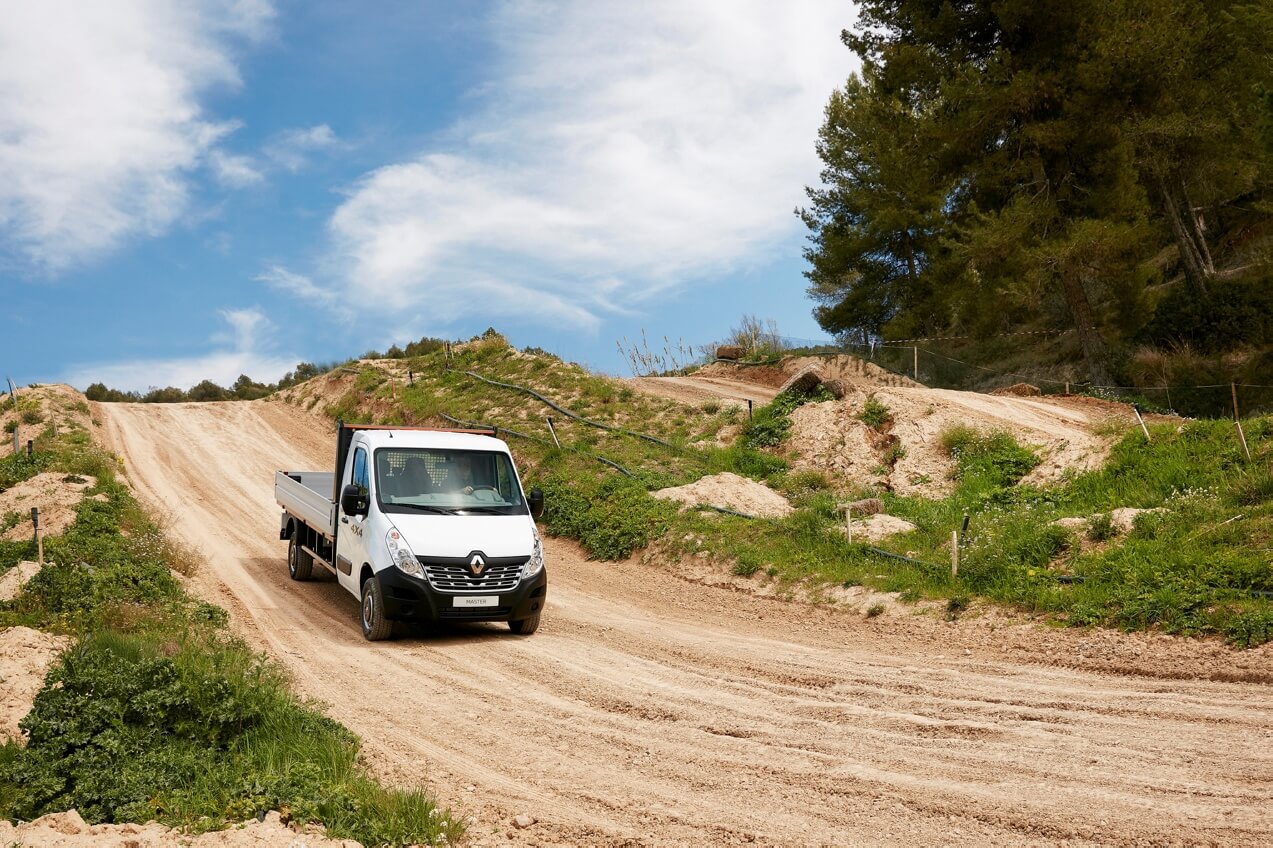
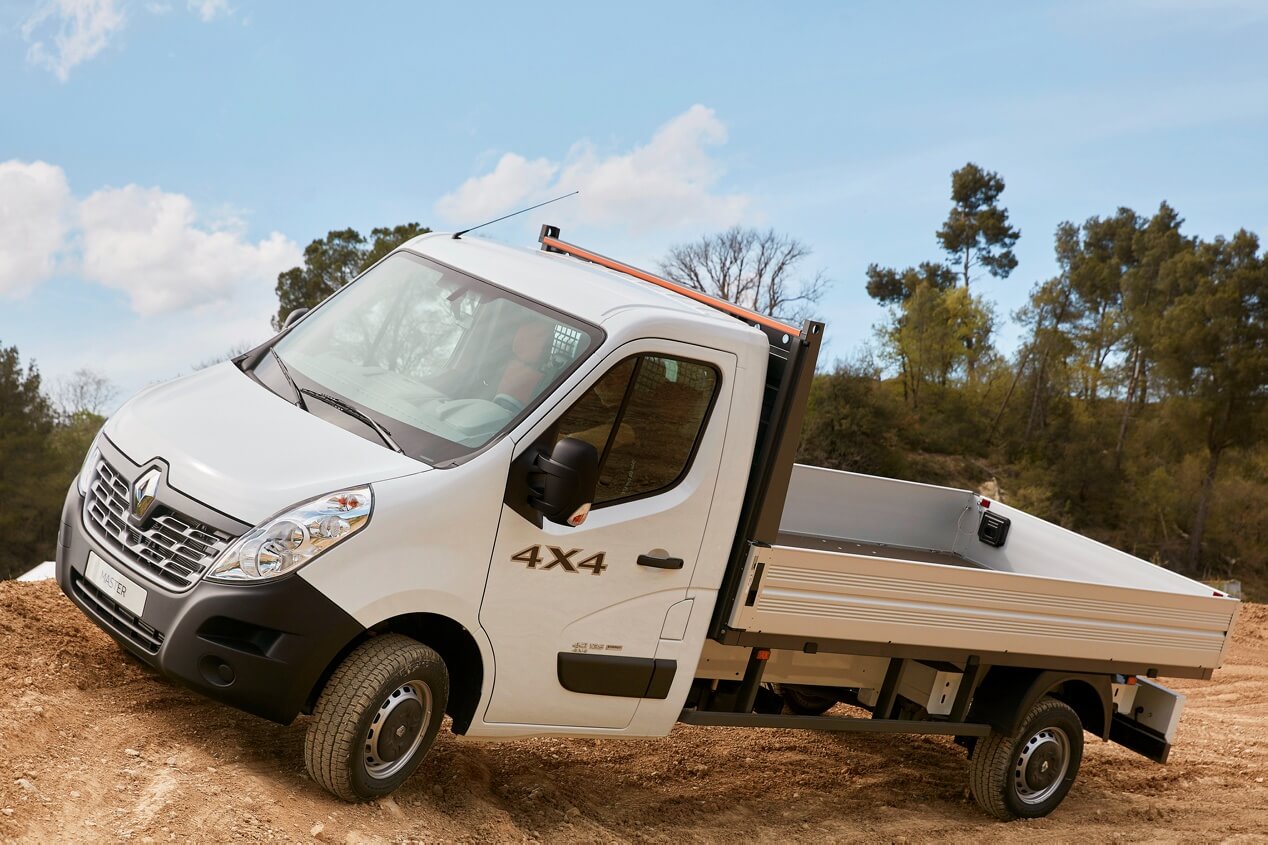
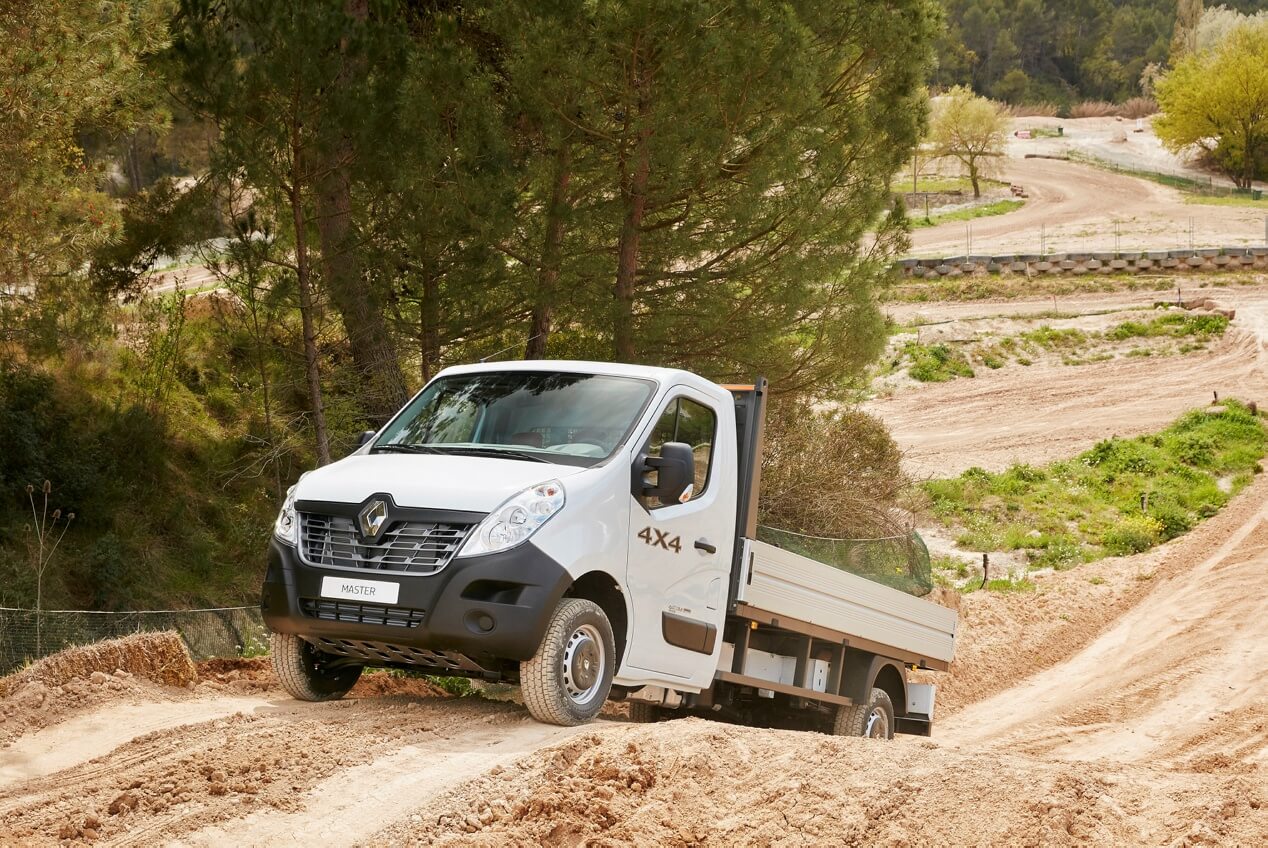
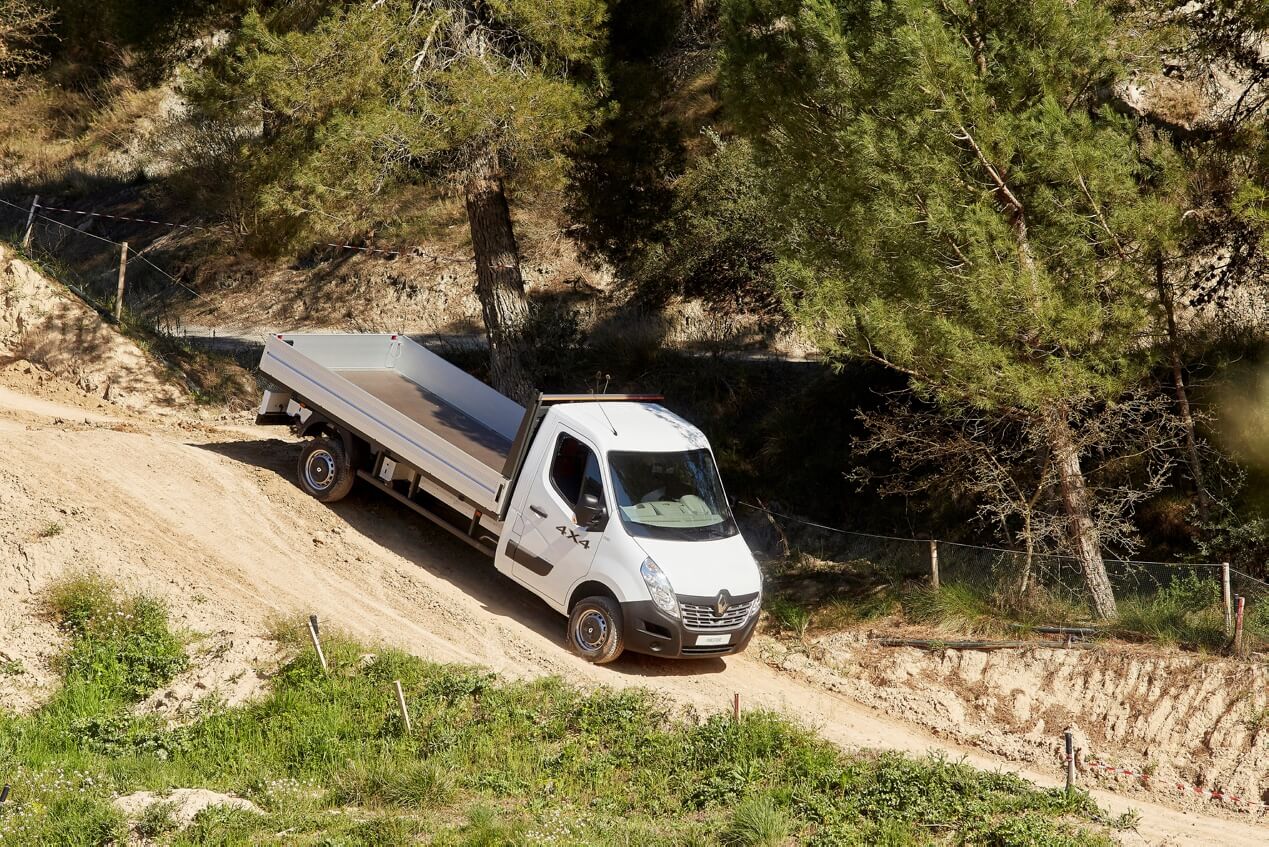
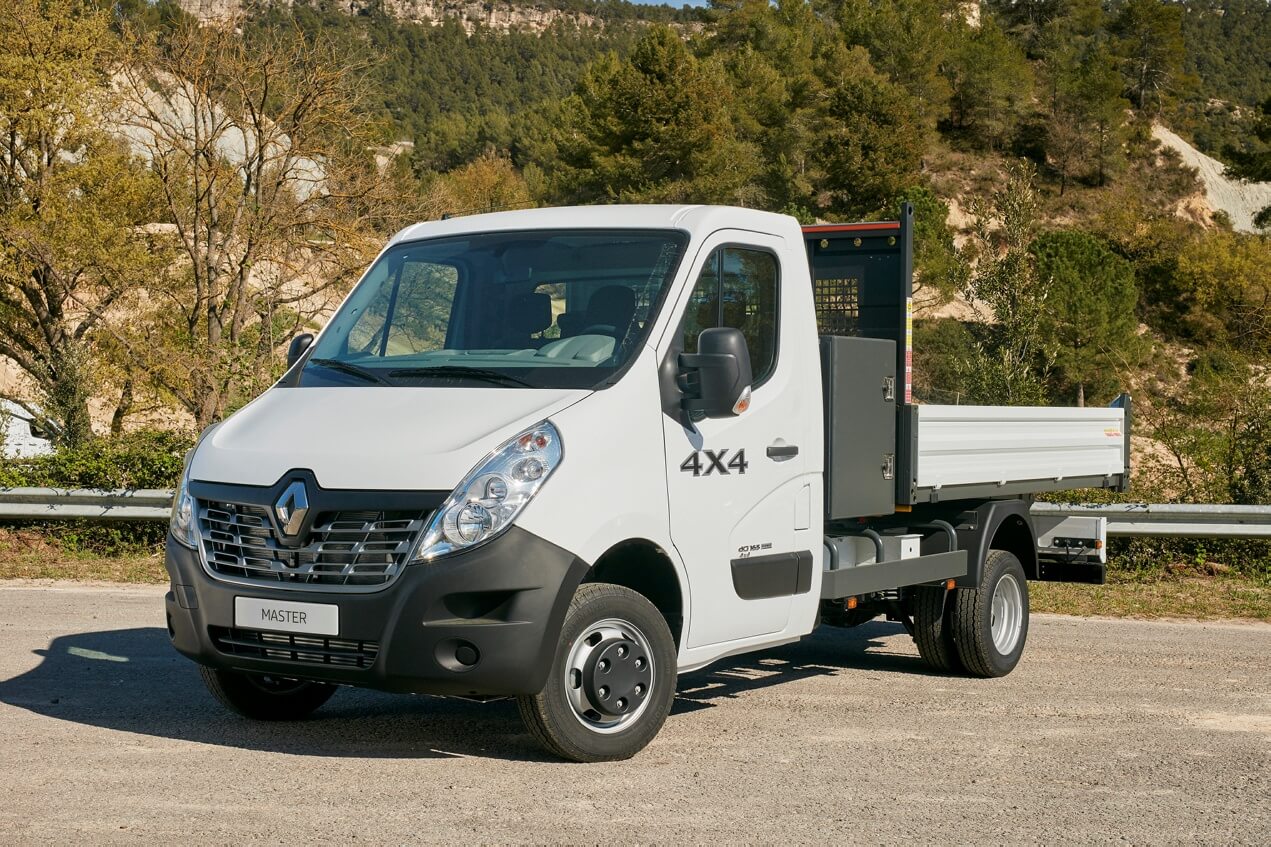
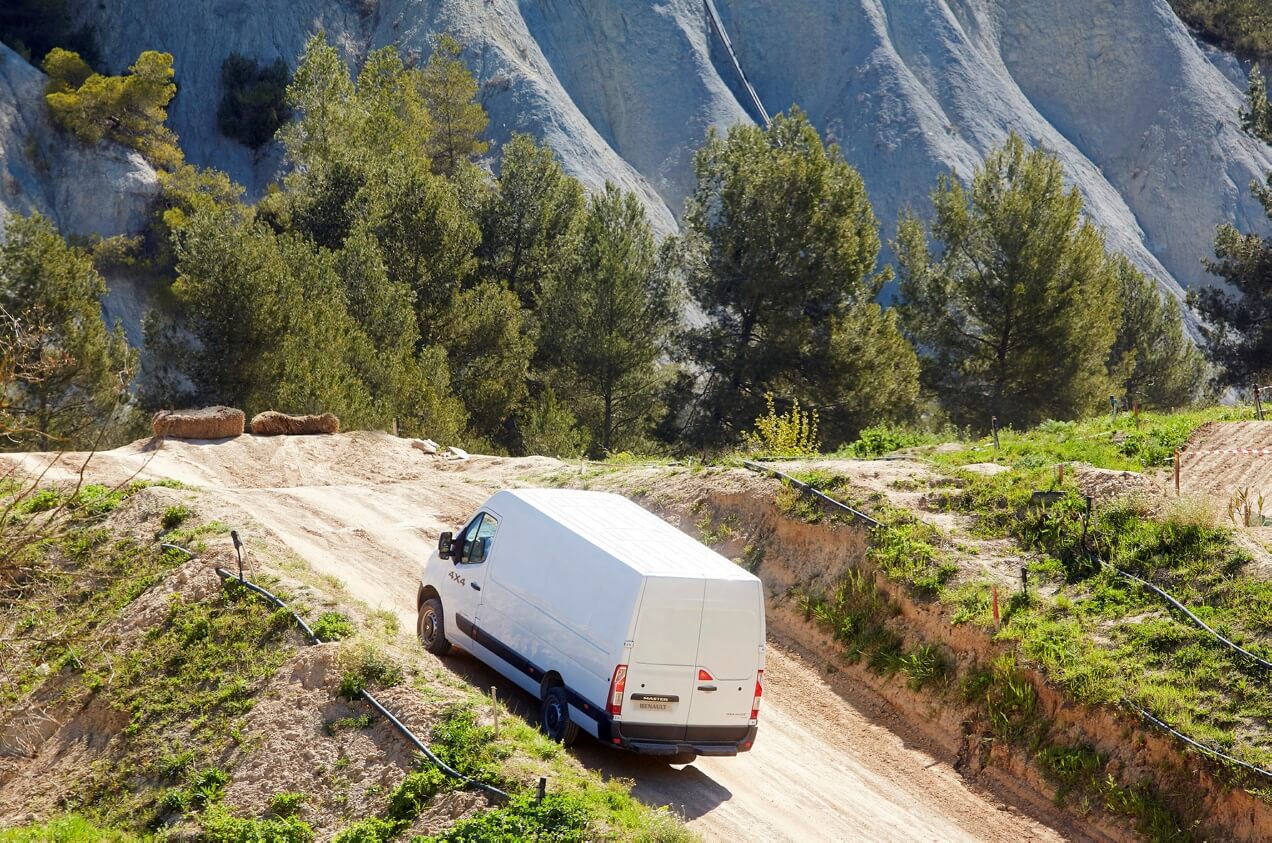
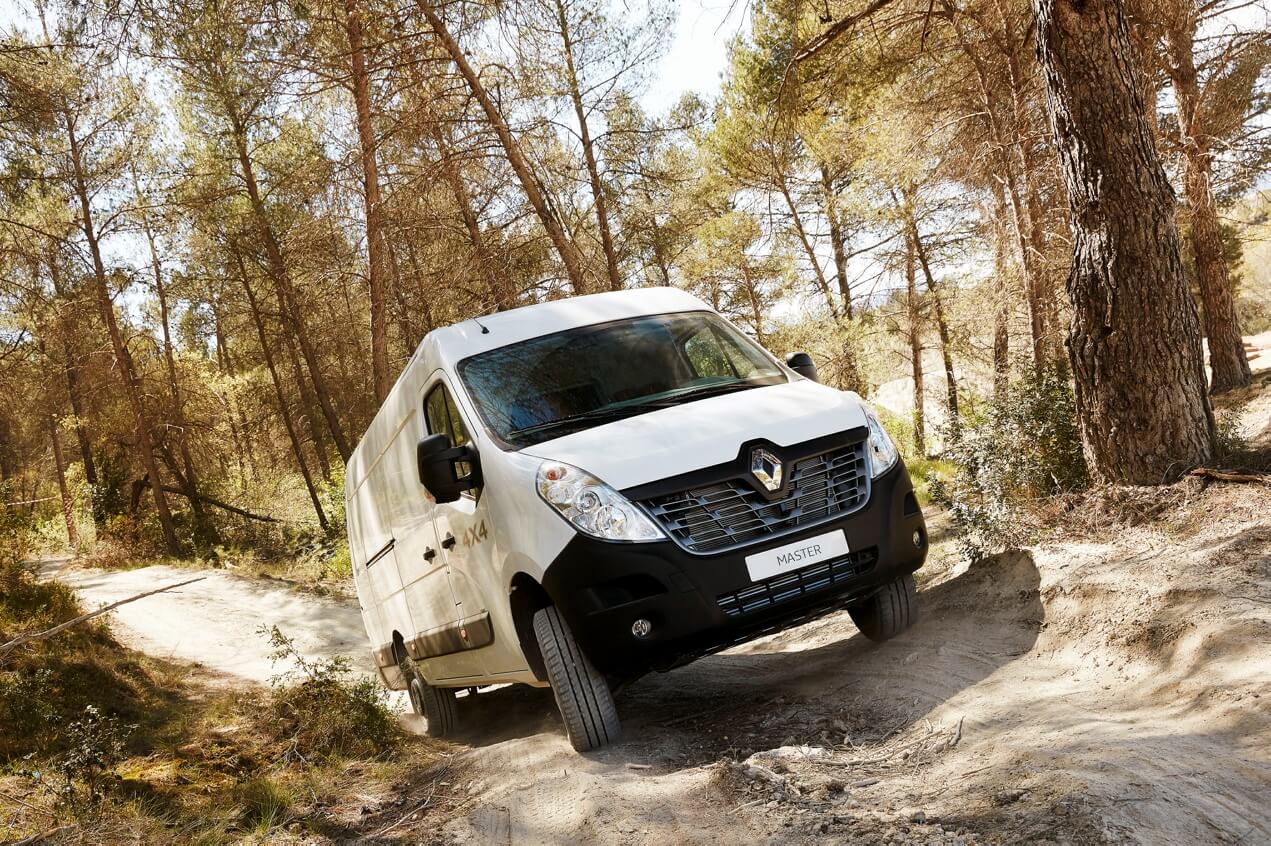
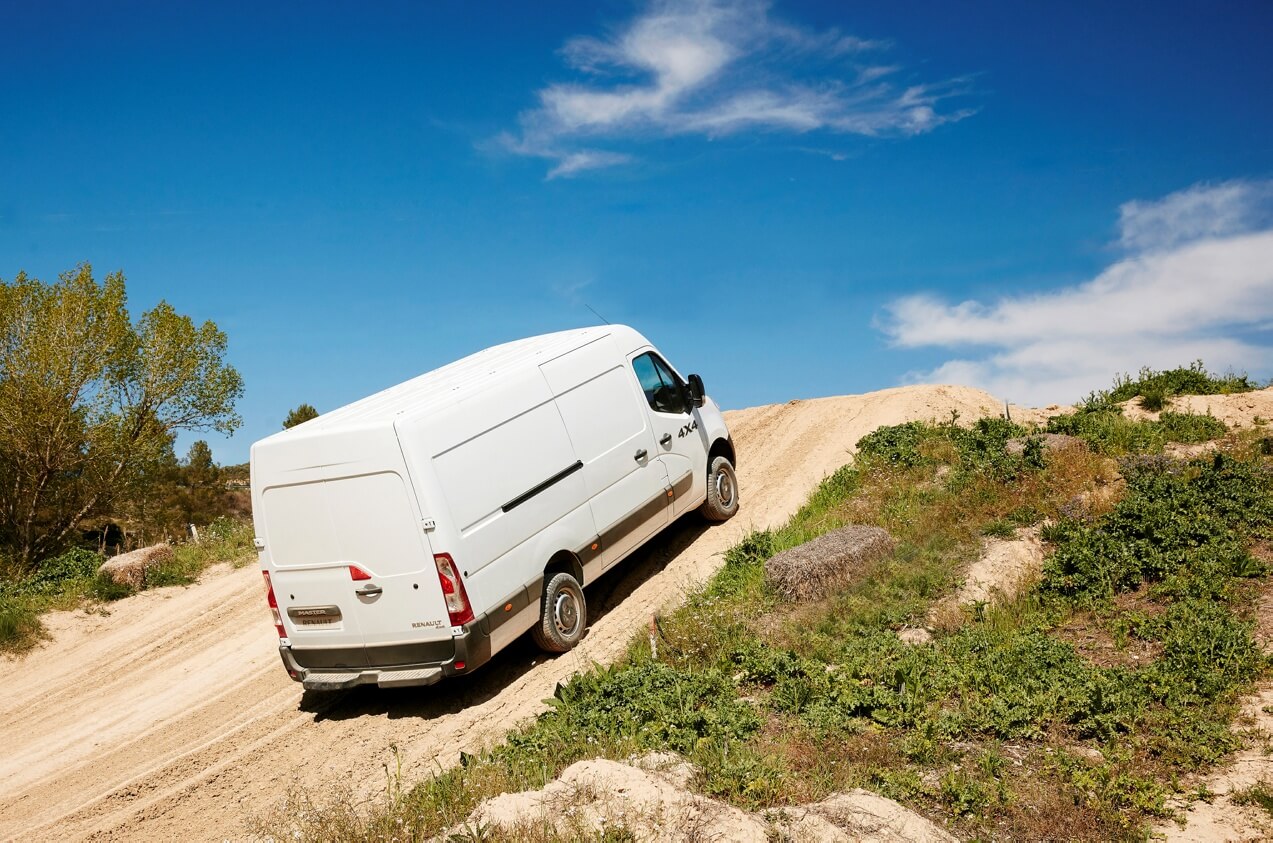
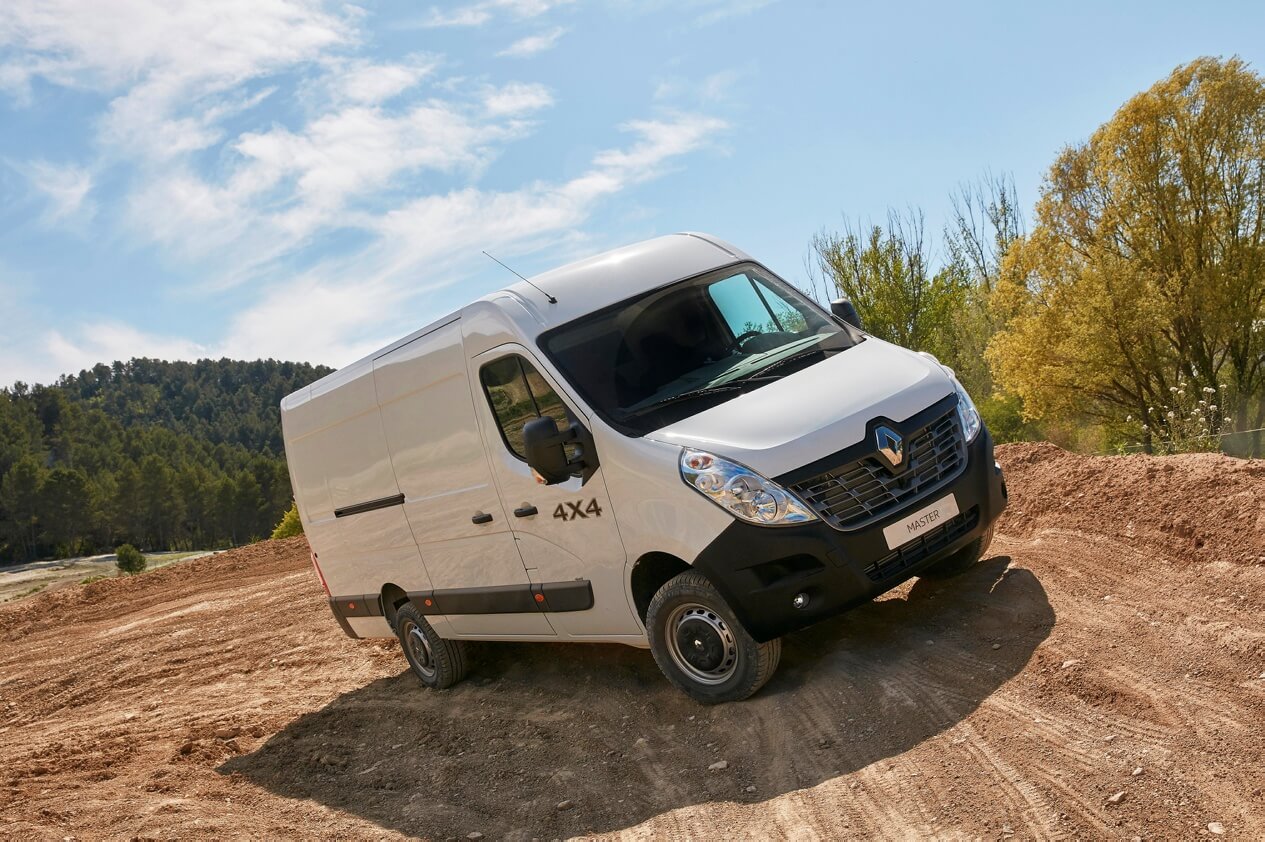
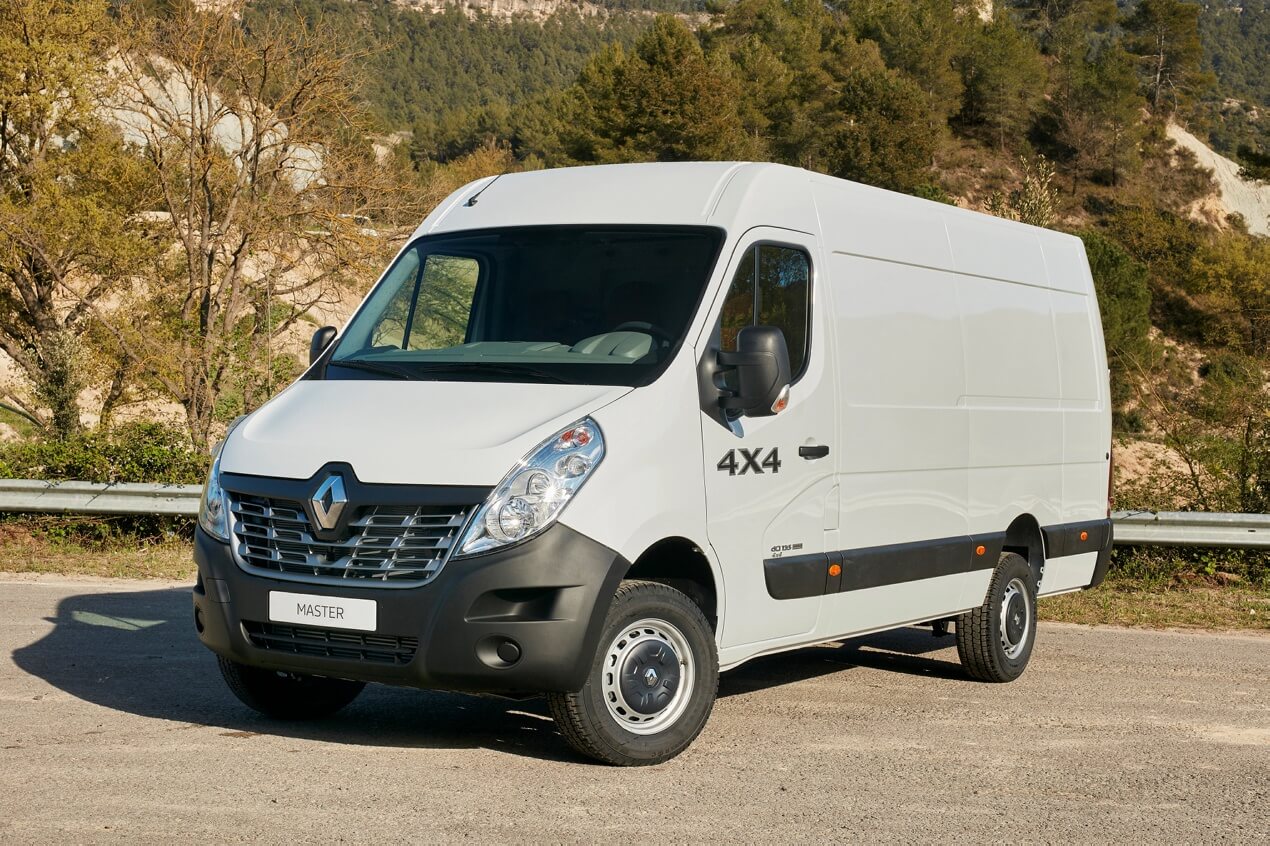
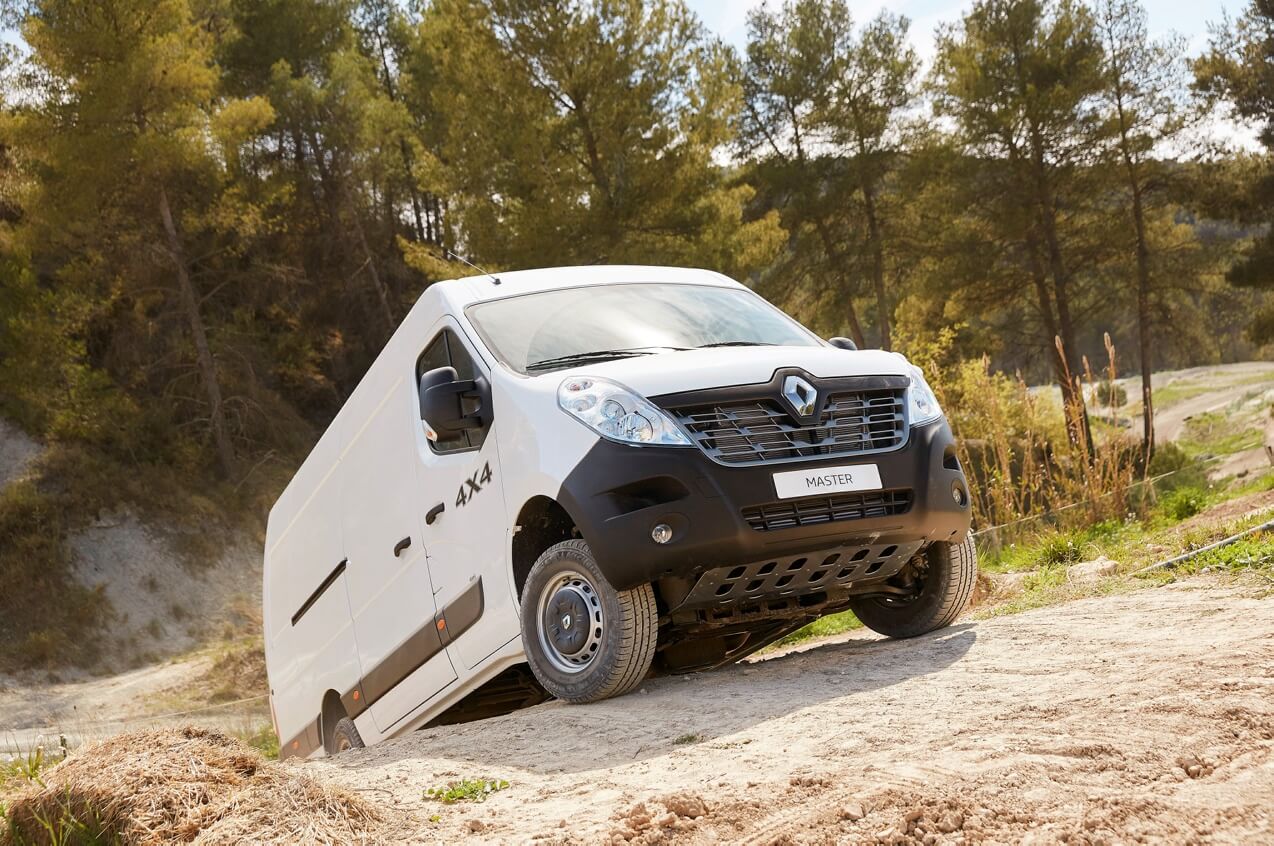
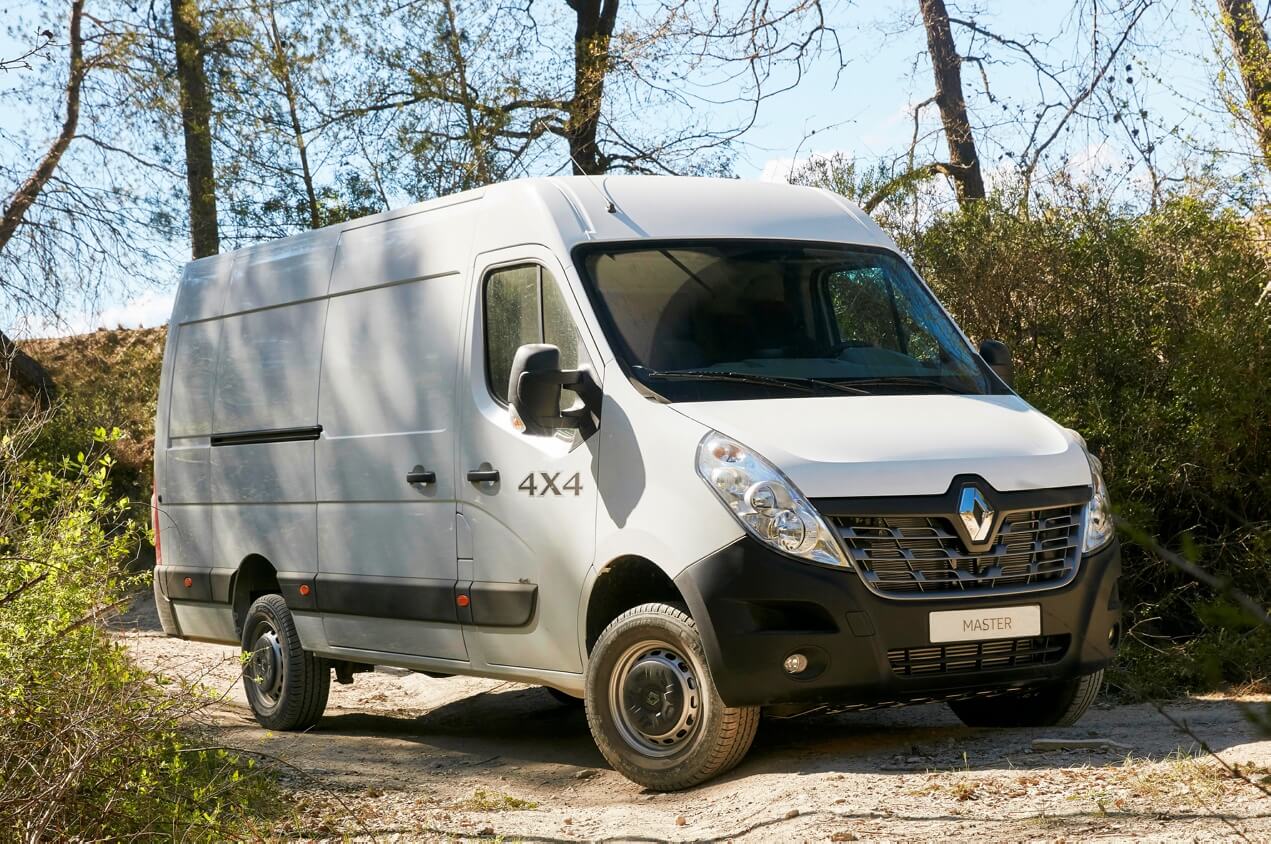
All four brands used Renault's 2.3-litre M9T diesel with 100 to 150 PS (74 to 110 kW), a six-speed manual or a six-speed automated manual. The range was huge: front- or rear-wheel drive, single or twin rear wheels, three lengths and three roof heights. Load volumes ran from 8 m³ for the low-roof van to 17 m³ for the longest high-roof model. Chassis cabs carried up to 2.5 tonnes, and some UK Movano versions were rated for 4,500 kg gross. A 4×4 version followed on 18 April 2016. Renault refreshed the grille in April 2014, and a bigger facelift came in September 2019 for the 2020 model year.
Master Z.E., the first electric Master
The electric Master Z.E. went on sale in 2018. It had a 33 kWh battery, a 57 kW (76 hp) motor with 225 Nm and a WLTP range of 120 km, charging at 7.4 kW on alternating current. In spring 2022 a 52 kWh battery raised the range to 190 km and added direct-current charging at up to 22 kW. In the same year Renault's joint venture Hyvia showed a production Master Van H2-Tech with a hydrogen fuel cell at the Paris Motor Show.
In Brazil the Master became a steady seller, from 1,308 vans in 2003 to a record 15,773 in 2025.
Master IV (from 2023): aerodynamic, electric and hydrogen-ready
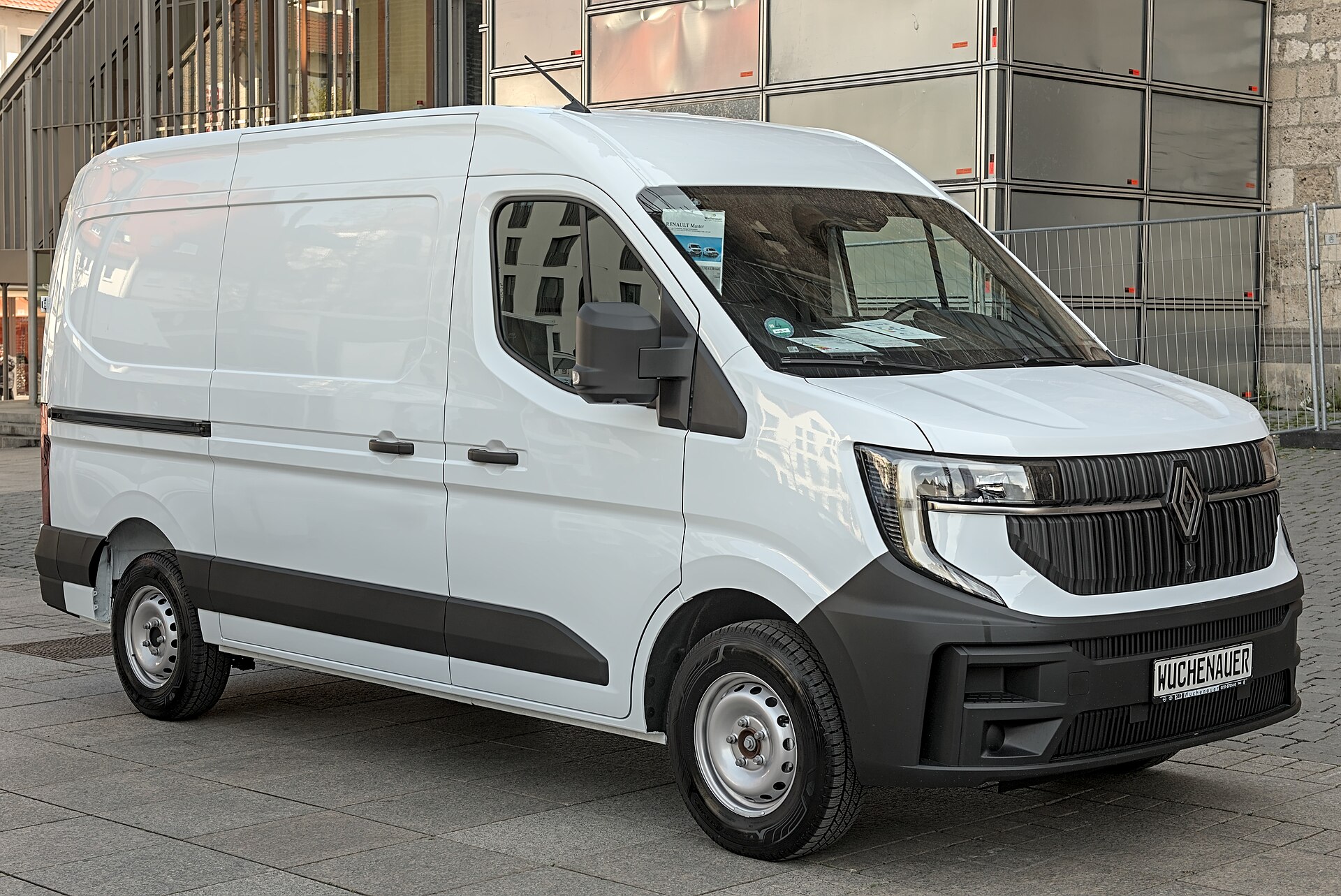
The fourth Master was unveiled on 21 November 2023 at the Solutrans show near Lyon. Production began at Batilly late that year, with 216 vans built before January. Its sharply raked front and smoother body cut the drag coefficient by 20 % compared with the third generation. It was designed from the start for three energies: diesel, battery-electric and hydrogen. Nissan launched its own version, a new Interstar, in February 2024.

| Version | Power | Torque | Battery | Range |
|---|---|---|---|---|
| 2.0 Blue dCi 105 | 77 kW (105 ch) | 330 Nm | - | - |
| 2.0 Blue dCi 130 | 96 kW (130 ch) | 350 Nm | - | - |
| 2.0 Blue dCi 150 | 110 kW (150 ch) | 360 Nm | - | - |
| 2.0 Blue dCi 170 | 125 kW (170 ch) | 360 Nm | - | - |
| E-Tech 40 kWh | 96 kW (131 ch) | 300 Nm | 40 kWh | 180 km |
| E-Tech 87 kWh | 105 kW (143 ch) | 300 Nm | 87 kWh | 460 km |
The 2.0-litre M9R diesels come with a six-speed manual or, for the two strongest versions, a nine-speed torque-converter automatic with the selector on the steering column. Renault quotes combined consumption of 7.4 to 8.4 l/100 km, on average 1.5 l/100 km less than the old 2.3, and 39 g/km less CO₂. The electric versions are limited to 120 km/h; the battery can also power tools on site.
By our calculation, the 87 kWh E-Tech uses about 19 kWh per 100 km on its official range (87 ÷ 460 × 100). The new Master was named International Van of the Year 2025 at the IAA Transportation show in September 2024, Renault's fifth win in that award.
Dimensions, payload and load space
| Parameter (Master IV) | L2H2 3.5 t | L3H2 3.5 t |
|---|---|---|
| Length | 5,680 mm (223.6 in) | 6,310 mm (248.4 in) |
| Height | 2,503 mm (98.5 in) | 2,501 mm (98.5 in) |
| Load volume | 10.8 m³ (381 cu ft) | 13 m³ (459 cu ft) |
| Payload | 1,134 kg (2,500 lb) | 1,047 kg (2,308 lb) |
| Payload, 4.0 t version | 1,631 kg | 1,544 kg |
By our count, moving from 3.5 to 4.0 tonnes gross adds about 500 kg of payload on both lengths. In many European countries, however, a 4.0-tonne van needs a heavier driving licence. If you need to check whether a high-roof van fits under a car-park barrier or into a workshop, our garage fit tool helps, and the comparison tool sets the Master against any rival.

Master IV against Master III and its rivals
| Point | Master III (2019–2024) | Master IV (from 2023) |
|---|---|---|
| Diesel | 2.3 l M9T, 74–110 kW (100–150 PS) | 2.0 l M9R, 77–125 kW (105–170 ch) |
| Automatic | 6-speed automated manual | 9-speed torque-converter automatic |
| Electric range | 120 km, later 190 km (WLTP) | 180 km or 460 km |
| Battery | 33 kWh, later 52 kWh | 40 or 87 kWh |
| Aerodynamics | baseline | drag coefficient 20 % lower |
| Badge twins | Movano, NV400, Interstar | Interstar, Renault Trucks Master |
By our count the new electric version more than doubles the best range of the old one (460 against 190 km). Its battery is only 67 % larger, so efficiency and aerodynamics explain much of the gain.

The main European rivals are the Mercedes-Benz Sprinter, the Volkswagen Crafter and the Iveco Daily, all offered with diesel and electric drive. The Master's strengths are front-wheel drive with a low load floor on standard vans, the long-range electric version and the many badge twins, which help with parts and service.
Renault Master evolution in numbers
Did you know?
- The Renault Master has been around for 46 years: 4 generations in our catalog since 1980.
- The longest-running generation is the Master I (1980–1997): 17 years.
- The biggest jump in power came with the Master IV: up to 125 kW (170 PS), 15 kW more than the Master III.
Most powerful version, kW
Figures from the 1cars catalog: power is the strongest version of each generation; generations without the figure are left out.
Image credits · Photos from Wikimedia Commons under free licences
- Renault Master IV · Photo: Alexander Migl / Wikimedia Commons, CC BY-SA 4.0
Rivals
Compare with…
Compare Renault Master with
- Ford Transit quick spec comparison
- Mercedes-Benz Sprinter quick spec comparison
-
EV version
In production
- Years
- 1965–present
- Body
- Pickup, Van
- Fuel
- Petrol, Diesel, Electric
4 generations
- Mk1/Mk2
- VE6
- V184
- IV
-
EV version
Ended 2018
- Years
- 1995–2018
- Body
- Pickup, Van
- Fuel
- Petrol, Diesel
- Power
- 58–190 kW (79–258 PS)
2 generations
- T1N
- NCV3


Renault Master in our rankings
More powerful than 38% of ranked vans and minibuses in the 1CARS catalog (No. 11 of 18).
Renault Master photos 43






Renault Master videos 3

Renault Master video 1

Video overview

Video overview
FAQ
How many generations of the Renault Master are there?
There are four: the first Master of 1980–1997, the second of 1997–2010 and the third of 2010–2024. The fourth was revealed in November 2023 and has been built in Batilly since late that year.
Is the Renault Master the same as the Vauxhall Movano?
The second and third Movano generations, sold by Opel and Vauxhall from 1998 to 2021, were rebadged Renault Masters built in France. Since 2021 the Movano has been based on the Fiat Ducato instead, while Nissan's Interstar remains a Master twin.
What engines does the new Renault Master have?
The 2024 Master uses a 2.0-litre Blue dCi diesel with 77, 96, 110 or 125 kW. The E-Tech electric version has 96 kW with a 40 kWh battery or 105 kW with an 87 kWh battery.
What is the range of the electric Renault Master?
The Master IV E-Tech is quoted at 180 km with the 40 kWh battery and up to 460 km with the 87 kWh battery. The earlier Master Z.E. managed 120 km, and 190 km after its 2022 battery upgrade.
Where is the Renault Master built?
Every generation has come from Batilly in Lorraine, where Renault's SoVAB factory opened for the first Master in 1980. Vans for South America have also been assembled in São José dos Pinhais, Brazil.
Data sources
Data checked by an editor against the sources below.
- The text of this article (1cars archive)
- Wikipedia - Renault Master
- Wikipedia - Renault Master IV


