
 Opel Astra
All generations, specs and history
Updated Published Sources (10) Report an error
By Felix Hartmann, Automotive Technology & EV Contributor Reviewed by Oleksandr Hnatiuk

- Built
- 1991–present
- Generations
- 6 · F to L
- Top power
- 206 kW (280 PS)
- New price
- from about €22,465 (2022)
Timeline
Astra generations
Click a generation for its own page


H and J overlapped in 2009–2010, so J sits on a second lane
- Astra F 1991–1998 · Sedan, Hatchback · 42–110 kW (57–150 PS)
- Astra G 1998–2004 · Sedan, Hatchback · 48–147 kW (65–200 PS)
- Astra H 2004–2010 · Sedan, Hatchback · 66–177 kW (90–241 PS)
- Astra J 2009–2015 · Sedan, Hatchback · 64–206 kW (87–280 PS)
- Astra K 2015–2021 · Hatchback, Station wagon · 66–147 kW (90–200 PS)
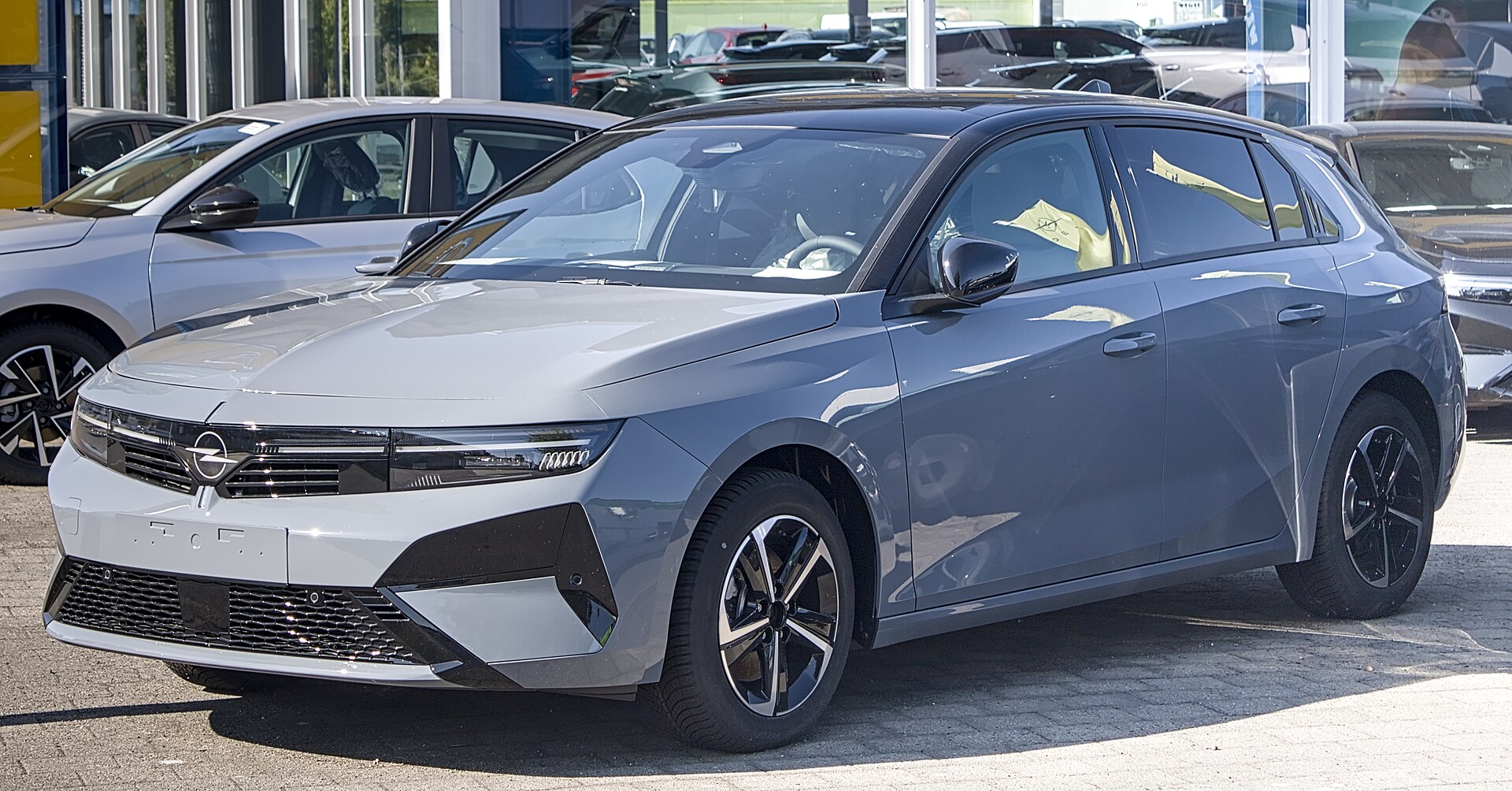
- Astra L Current 2021–now · Hatchback, Station wagon · 81–165 kW (110–224 PS)
Newest first · 6 generations since 1991
-
2021
-
2015
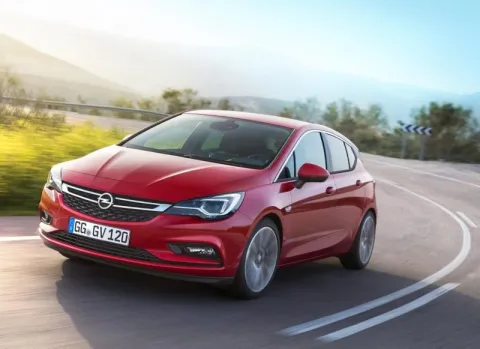 K 2015–2021 · Hatchback, Station wagon · 66–147 kW (90–200 PS)
-
2009
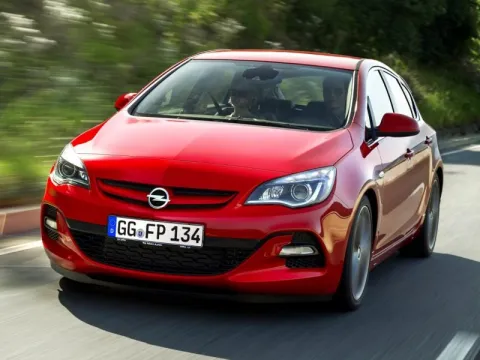 J 2009–2015 · Sedan, Hatchback · 64–206 kW (87–280 PS)
H and J overlapped in 2009–2010
-
2004
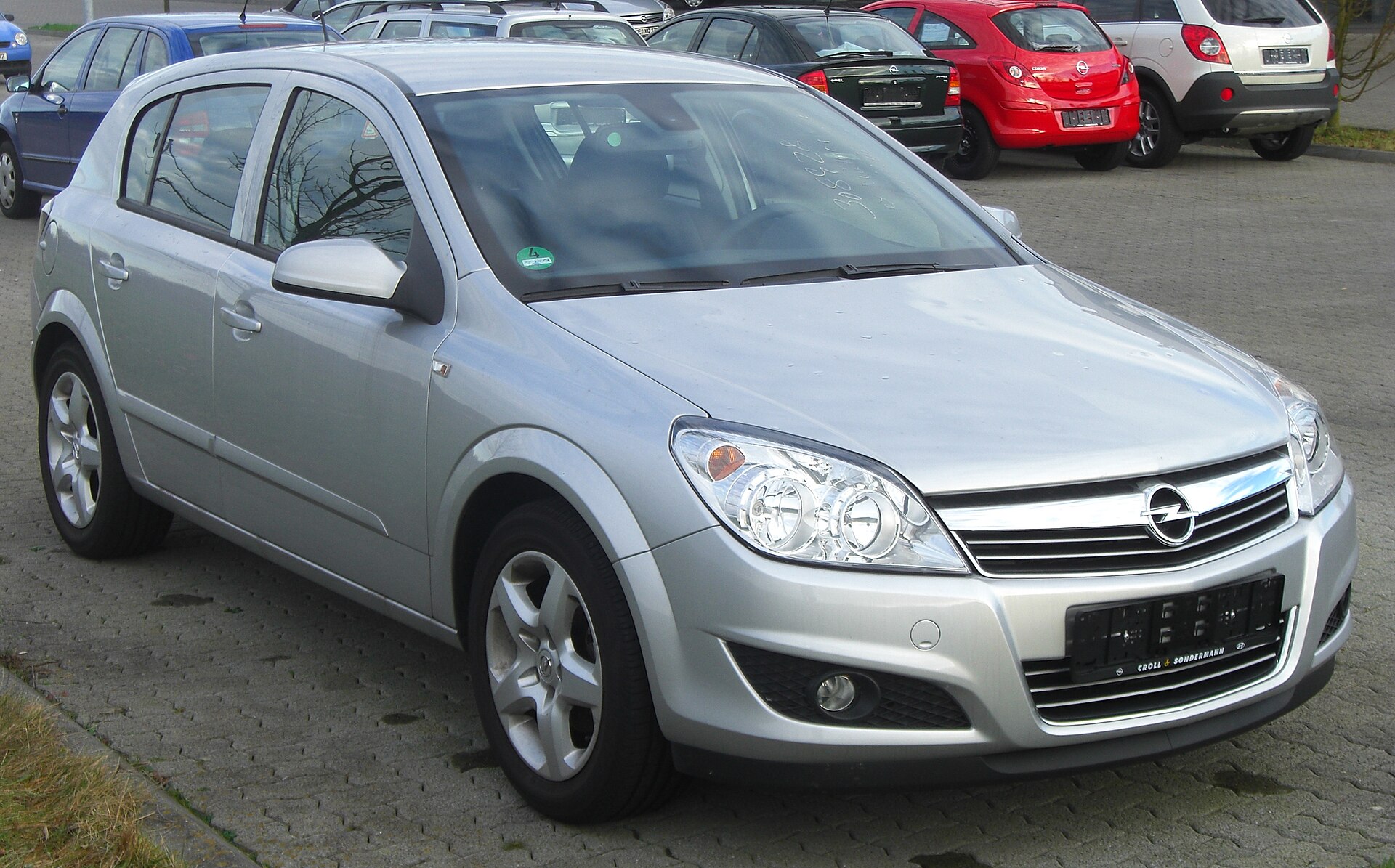
-
1998
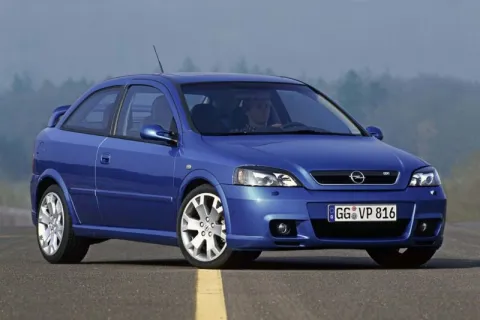 G 1998–2004 · Sedan, Hatchback · 48–147 kW (65–200 PS)
-
1991
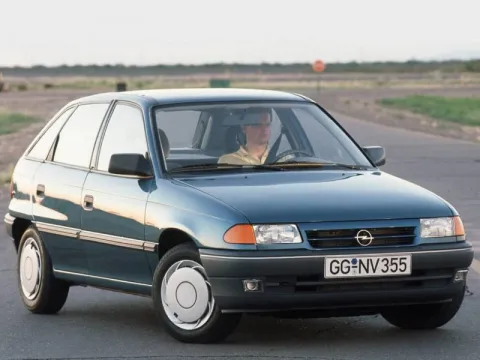 F 1991–1998 · Sedan, Hatchback · 42–110 kW (57–150 PS)
All generations by year: Astra L (2021–now) · Astra K (2015–2021) · Astra J (2009–2015) · Astra H (2004–2010) · Astra G (1998–2004) · Astra F (1991–1998)
Which one is mine?
Pick the year of first registration to see which generation it is.
Check by VINWhich Opel Astra to buy
Our verdict · Felix Hartmann
- Astra J: the budget choice. ADAC recommends the 1.4 Turbo with 103 kW (140 PS) and the 1.6 CDTI with 100 kW (136 PS), and calls the 1.3 CDTI with 70 kW (95 PS) sluggish. German used-car guides say six-speed gearbox noise was largely cured by the late-2012 facelift.
- Astra K: the best balance for most buyers. Lighter than the J, five stars in 2015 and average to good for ADAC. Check the oil-change history and look for leaks.
- Astra L: for a plug-in hybrid or EV; note that battery size changed with the 2026 facelift.
- Astra F, G and H: cheap or collectable, the F and G now counting among classic cars of the 1990s; at this age, body and underside condition matter more than the engine.
Watch out
- Turbocharger oil feed line leak, fire risk (petrol turbo engines)
- Brake pedal travel recall (1.6 CDTI with manual gearbox)
- Airbag control module recalls (side and front passenger airbags)
- Low-speed pre-ignition (1.0 Turbo, 1.4 Turbo, B10/B14 codes)
Watch-out points come from our verified ownership data, each with a source.
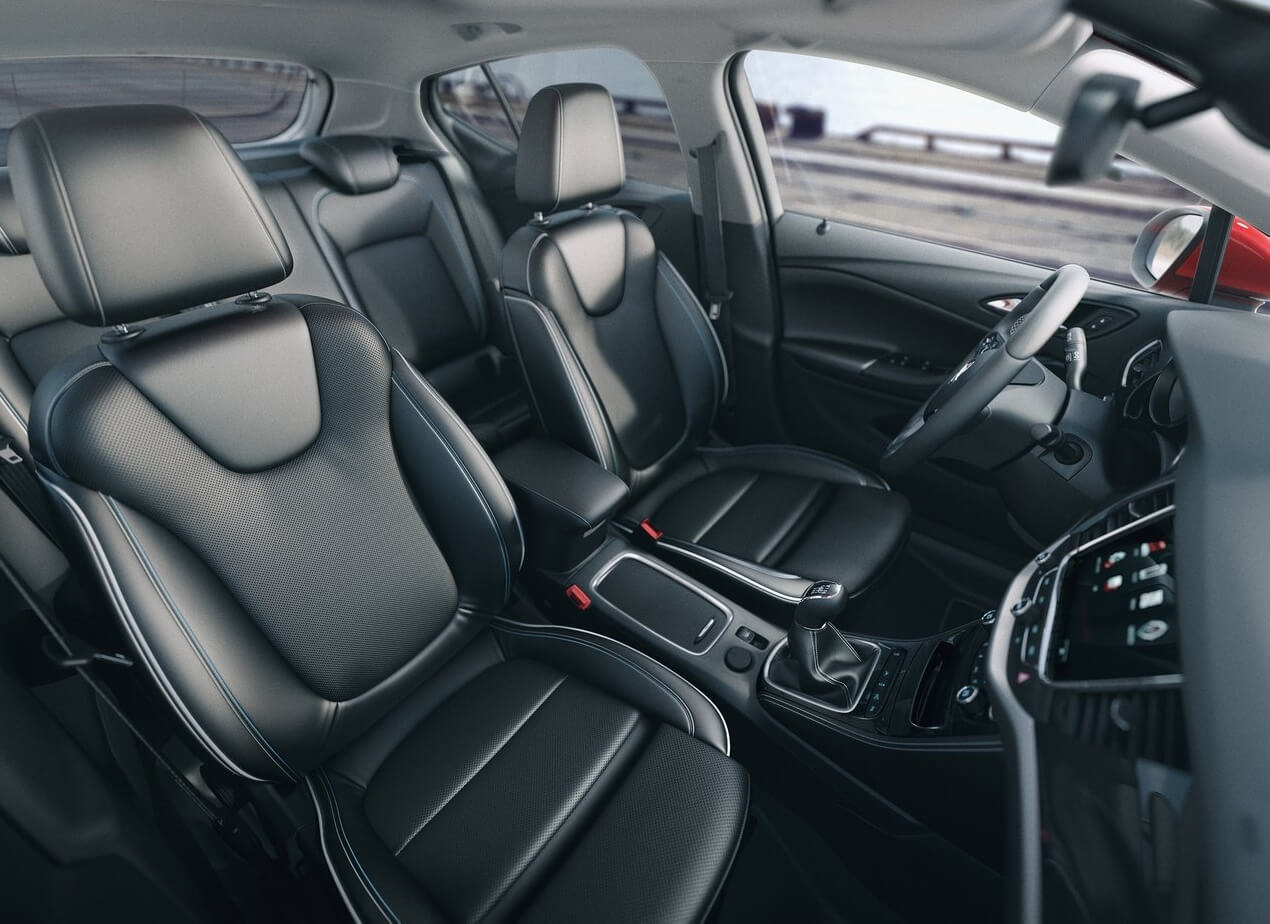
The Opel Astra is Opel's compact family car, a C-segment hatchback and estate built in six generations since 1991: F, G, H, J, K and the current L. It replaced the Kadett, is sold in Britain as the Vauxhall Astra and is now offered with petrol, diesel, plug-in hybrid and fully electric drive.
In short
- Six generations: F (1991), G (1998), H (2004), J (2009), K (2015) and L (2021); a facelifted Astra L was shown in January 2026.
- The most powerful series Astra is the J-generation OPC with 206 kW (280 PS).
- The Astra L shares its EMP2 platform with the Peugeot 308 and is also sold as a plug-in hybrid and an electric car.
- Euro NCAP gave five stars to the Astra J (2009) and Astra K (2015), and four stars to the Astra L (2022).

Size at a glance
Peugeot 308 II
The Opel Astra L is 121 mm longer, 56 mm wider and 16 mm lower than the Peugeot 308 II.
| Dimensions | Opel Astra L | Peugeot 308 II | Difference |
|---|---|---|---|
| Length | 4,374 mm172.2 in | 4,253 mm167.4 in | +121 mm+4.8 in |
| Width | 1,860 mm73.2 in | 1,804 mm71.0 in | +56 mm+2.2 in |
| Height | 1,441 mm56.7 in | 1,457 mm57.4 in | −16 mm−0.6 in |
| Wheelbase | 2,675 mm105.3 in | 2,620 mm103.1 in | +55 mm+2.2 in |
| Boot | 422 L14.9 cu ft | 470 L16.6 cu ft | −48 L−1.7 cu ft |
Ford Focus IV
The Opel Astra L is 35 mm wider and 13 mm lower than the Ford Focus IV.
| Dimensions | Opel Astra L | Ford Focus IV | Difference |
|---|---|---|---|
| Length | 4,374 mm172.2 in | 4,378 mm172.4 in | −4 mm−0.2 in |
| Width | 1,860 mm73.2 in | 1,825 mm71.9 in | +35 mm+1.4 in |
| Height | 1,441 mm56.7 in | 1,454 mm57.2 in | −13 mm−0.5 in |
| Wheelbase | 2,675 mm105.3 in | 2,700 mm106.3 in | −25 mm−1.0 in |
| Boot | 422 L14.9 cu ft | 375 L13.2 cu ft | +47 L+1.7 cu ft |
Opel Astra K
The Opel Astra L is 51 mm wider and 44 mm lower than the Opel Astra K.
| Dimensions | Opel Astra L | Opel Astra K | Difference |
|---|---|---|---|
| Length | 4,374 mm172.2 in | 4,370 mm172.0 in | +4 mm+0.2 in |
| Width | 1,860 mm73.2 in | 1,809 mm71.2 in | +51 mm+2.0 in |
| Height | 1,441 mm56.7 in | 1,485 mm58.5 in | −44 mm−1.7 in |
| Wheelbase | 2,675 mm105.3 in | 2,662 mm104.8 in | +13 mm+0.5 in |
| Boot | 422 L14.9 cu ft | 370 L13.1 cu ft | +52 L+1.8 cu ft |
Running cost
Fuel · Astra L 1.5 Diesel
about 1,200 EUR fuel a year at 15,000 km
4.8 l/100 km · diesel at 1.65 EUR/l · change mileage, fuel price or version
Known problems
-
Critical all years
Turbocharger oil feed line leak, fire risk (petrol turbo engines)
Oil weeps from the turbo oil line onto hot exhaust parts; a burning smell after a drive is the warning sign.
Fix: Free recall repair (ADAC lists it from July 2018); check the VIN with a dealer.
Verified Source: ADAC Gebrauchtwagen-Info Opel Astra (2015-2021) Benziner, with ADAC Pannenstatistik 2025 -
High 2016–2018
Brake pedal travel recall (1.6 CDTI with manual gearbox)
The brake pedal can travel further than normal during gentle deceleration.
Fix: Two-stage dealer recall: brake check and fluid change, then replacement of affected parts.
Verified Source: What Car? Used Vauxhall Astra 2015-2021 reliability -
High 2016–2017
Airbag control module recalls (side and front passenger airbags)
No symptom; the airbag may not deploy correctly in a crash on cars built between June and December 2016.
Fix: Dealer replaces the airbag module free of charge.
Verified Source: What Car? Used Vauxhall Astra 2015-2021 reliability -
High 2015–2018
Low-speed pre-ignition (1.0 Turbo, 1.4 Turbo, B10/B14 codes)
Knocking under load at low revs; in the worst case piston or ring damage over time.
Fix: Correct-spec oil at strict intervals; engines from about end-2018 (D10/D14) have revised oil scraper rings.
Verified Source: gebrauchtwagenberater.de: Opel Astra K 2015-2021 Probleme und Schwachstellen -
Medium 2020–2021
Boost pressure control and turbocharger faults (2020-2021 petrols)
Loss of power and engine warning light; ADAC names these as breakdown causes for 2020-2021 cars.
Fix: Diagnosis of boost control and actuators, turbo replacement if damaged.
Verified Source: ADAC Gebrauchtwagen-Info Opel Astra (2015-2021) Benziner, with ADAC Pannenstatistik 2025 -
Medium all years
Oil leaks and worn steering joints at TUV inspection
Oil-soaked engine and gearbox parts and play in steering joints are the main reasons the Astra K fails inspection.
Fix: Reseal the leaking gasket or seal; replace the worn steering joints or track rod ends.
Verified Source: ADAC Gebrauchtwagen-Info Opel Astra (2015-2021) Benziner, with ADAC Pannenstatistik 2025 -
Low 2015
Flat starter batteries (2015 cars)
Slow cranking or no start, especially after short trips in winter.
Fix: Battery test and replacement; check the charging system and parasitic drain.
Verified Source: ADAC Gebrauchtwagen-Info Opel Astra (2015-2021) Benziner, with ADAC Pannenstatistik 2025 -
Medium all years
Headlight warning on LED matrix headlamps
A headlight fault warning appears in the instrument cluster, with codes B3866 or B2580.
Fix: The headlamp unit is replaced.
Verified Source: Haynes: Vauxhall Astra K common problems 2016-2021 -
Medium all years
Timing chain stretch (1.6 CDTI and 1.5 diesel)
Rattling from the engine on a cold start or under load changes.
Fix: Replace the chain, tensioner and guides before the chain jumps.
Verified Source: gebrauchtwagenberater.de: Opel Astra K 2015-2021 Probleme und Schwachstellen
Specs by version
Engines
| Version | Engine | Power | Torque | Drive |
|---|---|---|---|---|
| Plug-in hybrid · 1 version | ||||
| 1.6 Plug-in Hybrid | 1.6 l · 4 cyl · Plug-in hybrid 1,598 cc | 133 kW 181 PS178 hp | - | - |
| Diesel · 11 versions | ||||
| F · 1.7 42 kW (57 PS) | 1.7 l · Diesel 1,700 cc | 42 kW 57 PS56 hp | - | - |
| F · 1.7 TD | 1.7 l · 4 cyl · Diesel X17DTL | 50 kW 68 PS67 hp | 132 Nm97 lb-ft | - |
| G · 50 kW (68 PS) | Diesel | 50 kW 68 PS67 hp | - | - |
| G · 60 kW (82 PS) | Diesel | 60 kW 82 PS80 hp | - | - |
| G · 2.0 Turbo (OPC 2, Coupé, Cabriolet) | 2.2 l · Diesel 2,200 cc | 147 kW 200 PS197 hp | 250 Nm184 lb-ft | - |
| H · 1.7 74 kW (101 PS) | 1.7 l · Diesel 1,700 cc | 74 kW 101 PS99 hp | - | Front-wheel drive |
| H · 1.7 92 kW (125 PS) | 1.7 l · Diesel 1,700 cc | 92 kW 125 PS123 hp | - | Front-wheel drive |
| H · 177 kW (241 PS) | Diesel | 177 kW 241 PS237 hp | - | Front-wheel drive |
| J · 1.3 CDTI | Diesel | 70 kW 95 PS94 hp | 190 Nm140 lb-ft | Front-wheel drive |
| J · 100 kW (136 PS) | Diesel | 100 kW 136 PS134 hp | - | Front-wheel drive |
| 1.5 Diesel | 1.5 l · Diesel 1,499 cc | 96 kW 131 PS129 hp | 300 Nm221 lb-ft | - |
| Petrol · 15 versions | ||||
| F · 1.4 i | 1.4 l · 4 cyl · Petrol C14NZ | 44 kW 60 PS59 hp | 103 Nm76 lb-ft | - |
| F · 1.4 55 kW (75 PS) | 1.4 l · Petrol 1,400 cc | 55 kW 75 PS74 hp | - | - |
| F · 1.4 Si | 1.4 l · 4 cyl · Petrol C14SE | 60 kW 82 PS80 hp | 114 Nm84 lb-ft | - |
| F · 2.0 C20XE 110 kW (150 PS) | 2.0 l · 4 cyl · Petrol C20XE | 110 kW 150 PS148 hp | - | - |
| G · 1.2 16V (1998–2000) | Petrol | 48 kW 65 PS64 hp | 110 Nm81 lb-ft | - |
| G · 2.2 108 kW (147 PS) | 2.2 l · 4 cyl · Petrol 2,200 cc | 108 kW 147 PS145 hp | - | - |
| H · 1.3 66 kW (90 PS) | 1.3 l · Petrol 1,300 cc | 66 kW 90 PS89 hp | - | Front-wheel drive |
| J · 64 kW (87 PS) | Petrol | 64 kW 87 PS86 hp | - | Front-wheel drive |
| J · 100 kW (136 PS) | Petrol | 100 kW 136 PS134 hp | - | Front-wheel drive |
| J · 103 kW (140 PS) | Petrol | 103 kW 140 PS138 hp | - | Front-wheel drive |
| J · 2.0 Turbo OPC | Petrol | 206 kW 280 PS276 hp | 400 Nm295 lb-ft | Front-wheel drive |
| K · 1.0 Turbo | 1.0 l · 3 cyl · Petrol 1,000 cc | 66 kW 90 PS89 hp | - | - |
| K · 1.4 (4-cyl, 1,399 cm³) | Petrol | 74 kW 101 PS99 hp | 130 Nm96 lb-ft | Front-wheel drive |
| L · 1.2 Turbo | 1.2 l · Petrol 1,199 cc | 81 kW 110 PS109 hp | 205 Nm151 lb-ft | - |
| L · 1.2 Turbo | 1.2 l · Petrol 1,199 cc | 96 kW 131 PS129 hp | 230 Nm170 lb-ft | - |
| Other · 13 versions | ||||
| F · 1.4 16V | - | 66 kW 90 PS89 hp | 125 Nm92 lb-ft | - |
| F · C20NE 85 kW (116 PS) | C20NE | 85 kW 116 PS114 hp | - | - |
| F · C18XE 92 kW (125 PS) | C18XE | 92 kW 125 PS123 hp | - | - |
| F · X20XEV 100 kW (136 PS) | X20XEV | 100 kW 136 PS134 hp | - | - |
| G · 1.4 16V | - | 66 kW 90 PS89 hp | 125 Nm92 lb-ft | - |
| G · 2.0 74 kW (101 PS) | 2.0 l 2,000 cc | 74 kW 101 PS99 hp | - | - |
| G · 2.0 16V (OPC 1) | - | 118 kW 160 PS158 hp | 188 Nm139 lb-ft | - |
| G · Z20LET 141 kW (192 PS) | Z20LET | 141 kW 192 PS189 hp | - | - |
| H · 1.6 85 kW (116 PS) | 1.6 l 1,600 cc | 85 kW 116 PS114 hp | - | Front-wheel drive |
| J · 1.6 | - | 85 kW 116 PS114 hp | 155 Nm114 lb-ft | Front-wheel drive |
| J · 1.6 SIDI Turbo (from Nov 2012) | - | 125 kW 170 PS168 hp | 260 Nm192 lb-ft | Front-wheel drive |
| J · 1.6 Turbo | - | 132 kW 179 PS177 hp | 230 Nm170 lb-ft | Front-wheel drive |
| J · 2.0 CDTI BiTurbo (late 2012) | - | 143 kW 194 PS192 hp | 400 Nm295 lb-ft | Front-wheel drive |
Performance
Show all 12 versions
| Version | 0–100 km/h | Top speed | Fuel consumption | CO₂ |
|---|---|---|---|---|
| Plug-in hybrid · 1 version | ||||
| 1.6 Plug-in Hybrid | 7.6 s 0–62 mph | 225 km/h140 mph | 1.3 l/100 km180.9 mpg US · 217.3 mpg UK | 30 g/km |
| Diesel · 3 versions | ||||
| G · 2.0 Turbo (OPC 2, Coupé, Cabriolet) | 7.1 s 0–62 mph | - | - | - |
| H · 177 kW (241 PS) | 6.4 s 0–62 mph | 244 km/h152 mph | - | - |
| 1.5 Diesel | 10.6 s 0–62 mph | 209 km/h130 mph | 4.8 l/100 km49.0 mpg US · 58.9 mpg UK | 127 g/km |
| Petrol · 5 versions | ||||
| J · 2.0 Turbo OPC | 6.0 s 0–62 mph | 250 km/h155 mph | - | - |
| K · 1.0 Turbo | 12.2 s 0–62 mph | 188 km/h117 mph | 5.6 l/100 km42.0 mpg US · 50.4 mpg UK | 127 g/km |
| K · 1.4 (4-cyl, 1,399 cm³) | 13.4 s 0–62 mph | 185 km/h115 mph | 5.5 l/100 km42.8 mpg US · 51.4 mpg UK | 128 g/km |
| L · 1.2 Turbo | 10.5 s 0–62 mph | 199 km/h124 mph | 5.4 l/100 km43.6 mpg US · 52.3 mpg UK | 123 g/km |
| L · 1.2 Turbo | 9.7 s 0–62 mph | 210 km/h130 mph | 5.6 l/100 km42.0 mpg US · 50.4 mpg UK | 125 g/km |
| Other · 3 versions | ||||
| J · 1.6 | 11.7 s 0–62 mph | 188 km/h117 mph | - | - |
| J · 1.6 SIDI Turbo (from Nov 2012) | 8.7 s 0–62 mph | 220 km/h137 mph | - | - |
| J · 1.6 Turbo | 8.5 s 0–62 mph | 221 km/h137 mph | - | - |
Dimensions and weight
Show all 30 versions
| Version | Boot |
|---|---|
| Plug-in hybrid · 1 version | |
| 1.6 Plug-in Hybrid | 352 l12.4 cu ft |
| Diesel · 7 versions | |
| F · 1.7 TD | 500 l17.7 cu ft |
| H · 1.7 74 kW (101 PS) | - |
| H · 1.7 92 kW (125 PS) | - |
| H · 177 kW (241 PS) | - |
| J · 1.3 CDTI | 370 l13.1 cu ft |
| J · 100 kW (136 PS) | 370 l13.1 cu ft |
| 1.5 Diesel | 422 l14.9 cu ft |
| Petrol · 13 versions | |
| F · 1.4 i | 500 l17.7 cu ft |
| F · 1.4 Si | 500 l17.7 cu ft |
| F · 2.0 C20XE 110 kW (150 PS) | 500 l17.7 cu ft |
| G · 2.2 108 kW (147 PS) | 370 l13.1 cu ft |
| H · 1.3 66 kW (90 PS) | 380 l13.4 cu ft |
| J · 64 kW (87 PS) | 370 l13.1 cu ft |
| J · 100 kW (136 PS) | 370 l13.1 cu ft |
| J · 103 kW (140 PS) | 370 l13.1 cu ft |
| J · 2.0 Turbo OPC | 370 l13.1 cu ft |
| K · 1.0 Turbo | 370 l13.1 cu ft |
| K · 1.4 (4-cyl, 1,399 cm³) | 370 l13.1 cu ft |
| L · 1.2 Turbo | 422 l14.9 cu ft |
| L · 1.2 Turbo | 422 l14.9 cu ft |
| Other · 9 versions | |
| F · 1.4 16V | 500 l17.7 cu ft |
| F · C20NE 85 kW (116 PS) | 500 l17.7 cu ft |
| F · C18XE 92 kW (125 PS) | 500 l17.7 cu ft |
| F · X20XEV 100 kW (136 PS) | 500 l17.7 cu ft |
| H · 1.6 85 kW (116 PS) | - |
| J · 1.6 | 370 l13.1 cu ft |
| J · 1.6 SIDI Turbo (from Nov 2012) | 370 l13.1 cu ft |
| J · 1.6 Turbo | 370 l13.1 cu ft |
| J · 2.0 CDTI BiTurbo (late 2012) | 370 l13.1 cu ft |
Verified Manufacturer and type-approval data from our catalog · Sources and methodology
Safety
-
L · Euro NCAP 2022
Full Euro NCAP result
Stars from different years and organisations are not directly comparable: test protocols change every few years.
Opel Astra at a glance
The Astra is a front-wheel-drive compact car in the European C-segment. The first Astra, the F, took over from the Kadett E in 1991. In Britain the name is older: Vauxhall used "Astra" for the Kadett D and E from March 1980, so the first two British Astras are really Kadetts.
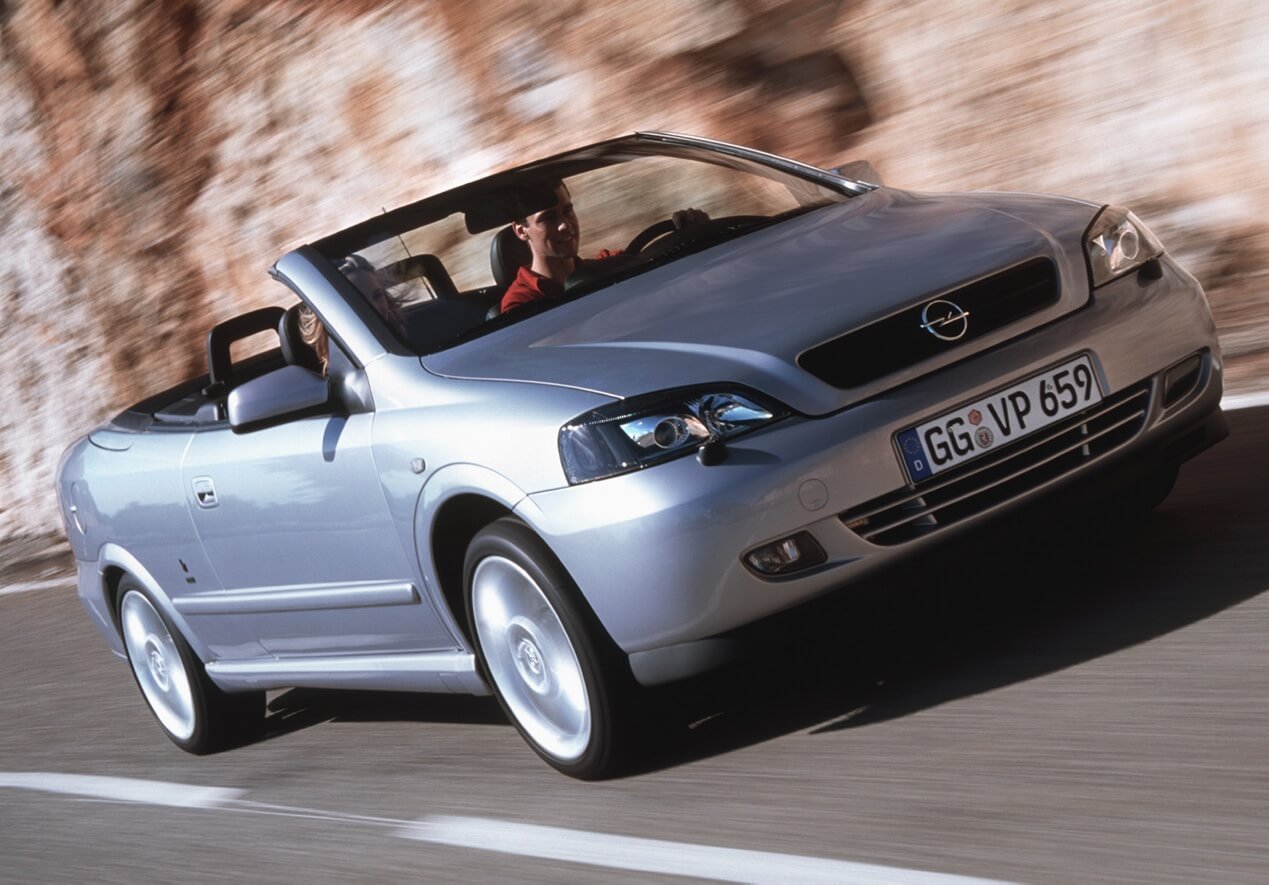
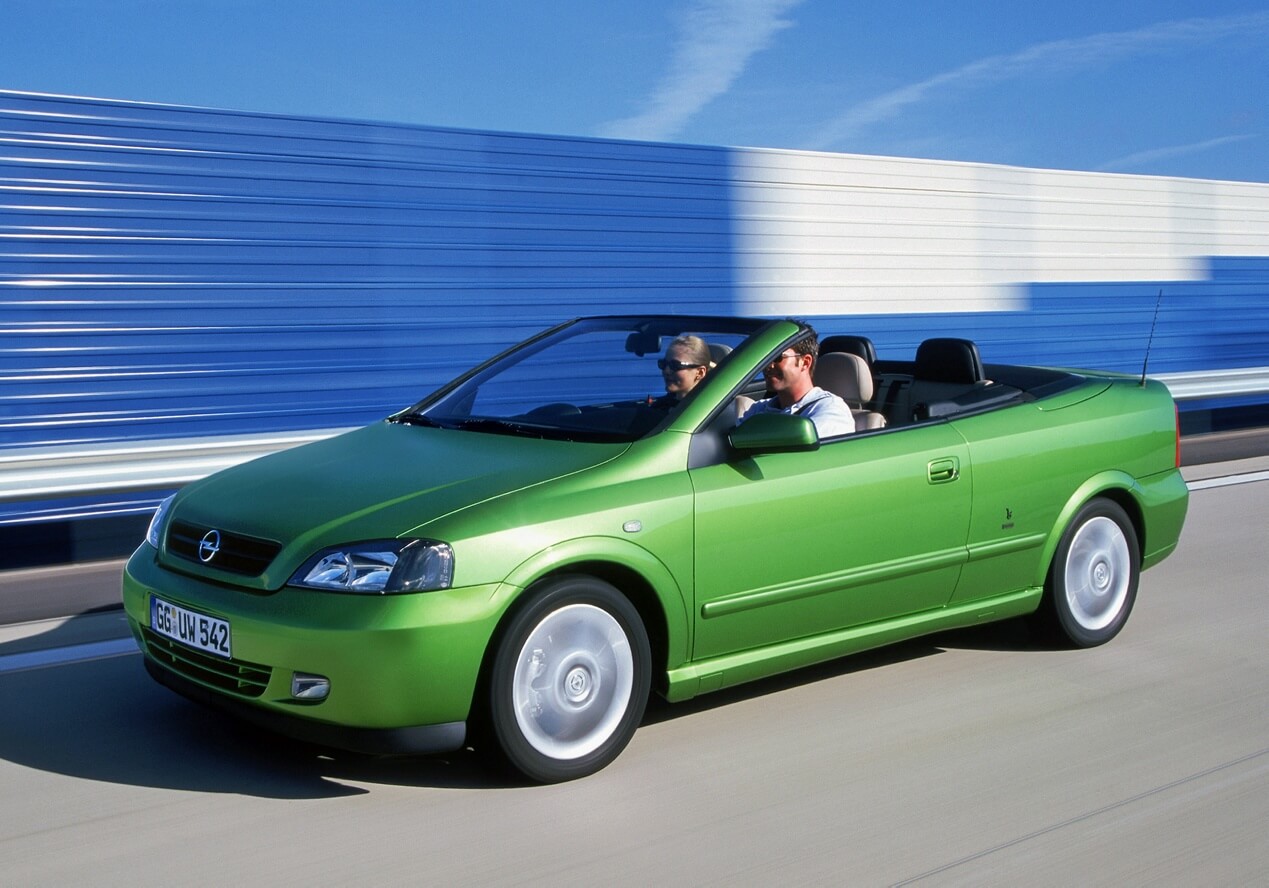
The range has included hatchbacks, saloons, estates (Caravan, renamed Sports Tourer with the J), a three-door GTC, a Coupé, cabriolets and the TwinTop with a folding steel roof. European cars have mainly been built in Germany, Poland and the UK. The Kadett years are covered in the history of Opel, the current range under all Opel models.
Opel Astra generations
Opel has built six Astra generations, F to L. Each will get its own page later; this overview gives dates, bodies and power ranges.

| Generation | Code | Years | Body styles | Engines | Power (kW / PS) |
|---|---|---|---|---|---|
| 1st | F | 1991–1998 (cabriolet to 2000) | 3/5-door hatch, saloon, Caravan, cabriolet, van | 1.4–2.0 petrol, 1.7 diesel | 42–110 / 57–150 |
| 2nd | G | 1998–2004 (cabriolet to 2005) | hatch, saloon, Caravan, Coupé, Cabriolet | 1.2–2.2 petrol, 2.2 diesel | 48–147 / 65–200 |
| 3rd | H | 2004–2010 | 5-door, Caravan, GTC, TwinTop, saloon | 1.4–2.0 petrol, 1.3–1.9 CDTI | 66–177 / 90–240 |
| 4th | J | 2009–2015 (GTC and OPC to 2018) | 5-door, Sports Tourer, GTC, saloon | 1.4–2.0 petrol, 1.3–2.0 CDTI | 64–206 / 87–280 |
| 5th | K | 2015–2021 | 5-door, Sports Tourer | 1.0–1.6 petrol, 1.4 CNG, 1.5/1.6 diesel | 66–147 / 90–200 |
| 6th | L | 2021–present | 5-door, Sports Tourer | 1.2 petrol, 1.5 diesel, plug-in hybrid, mild hybrid, electric | 81–165 / 110–225; Electric 115 / 156 |
Astra F (1991–1998)
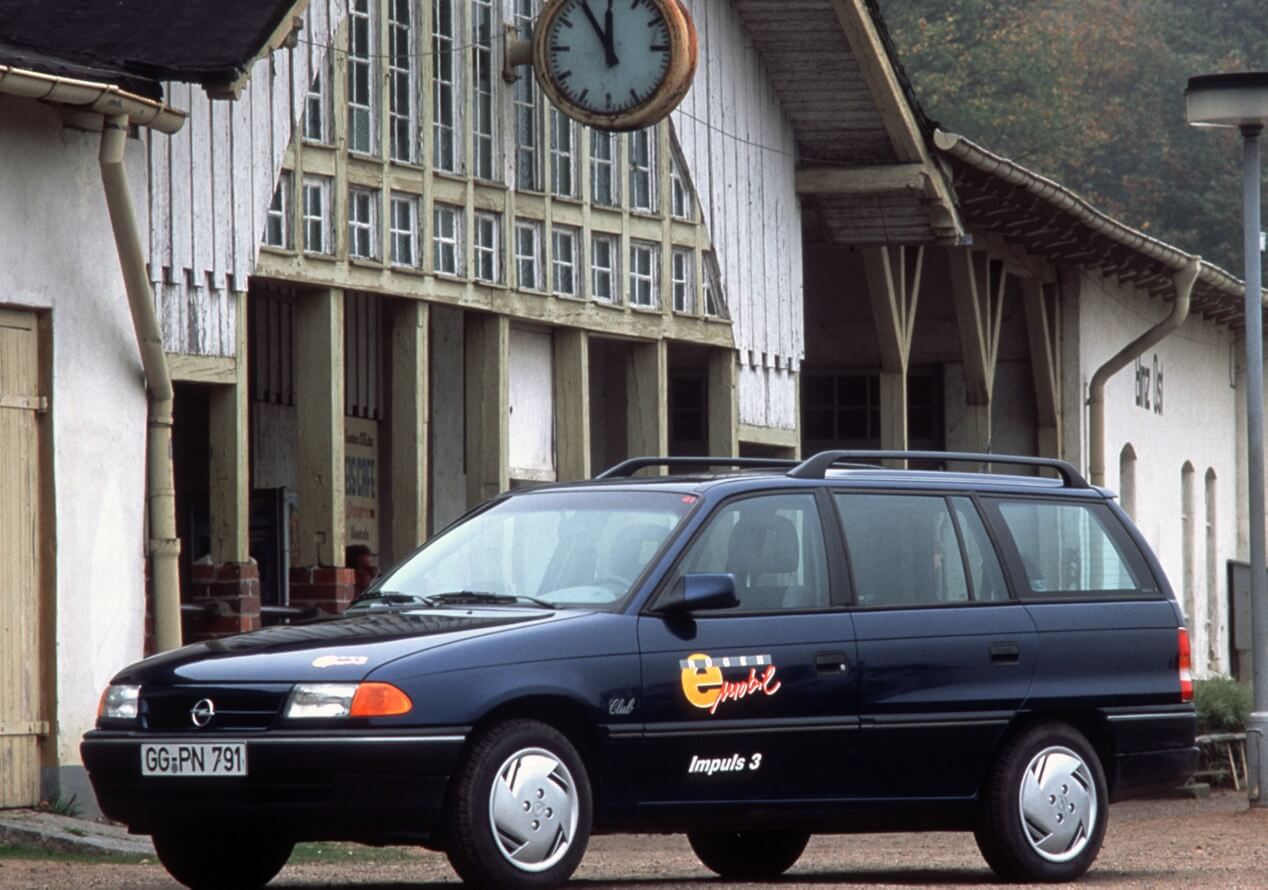
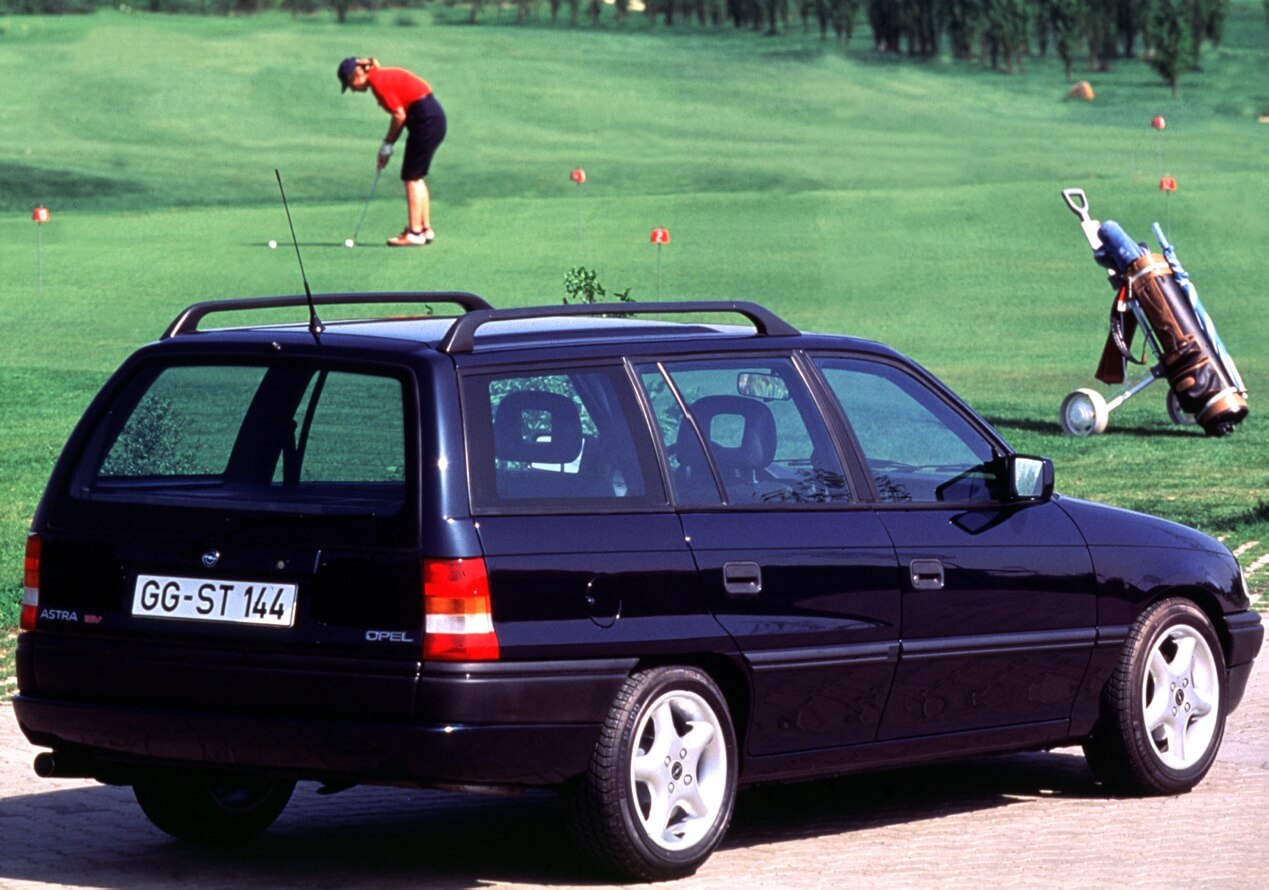
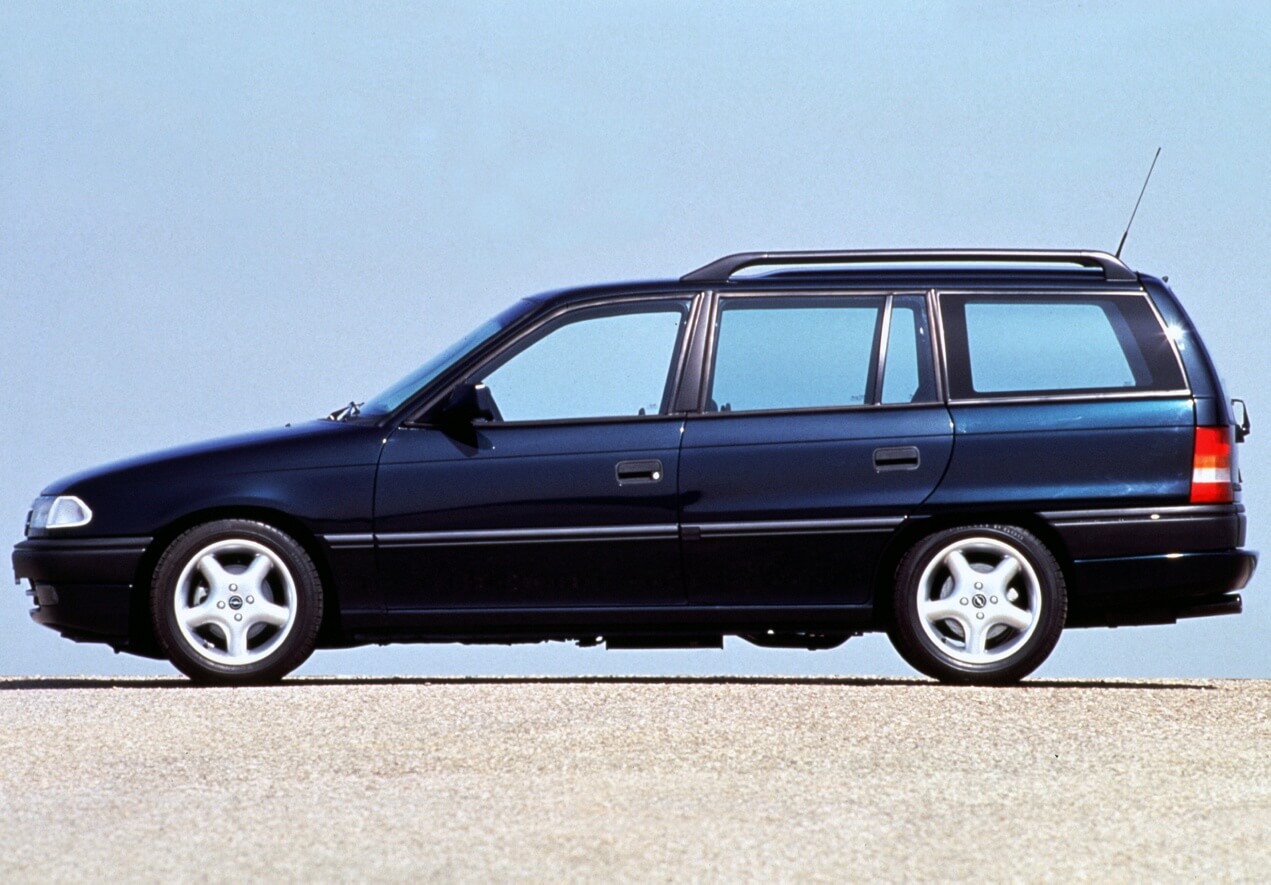
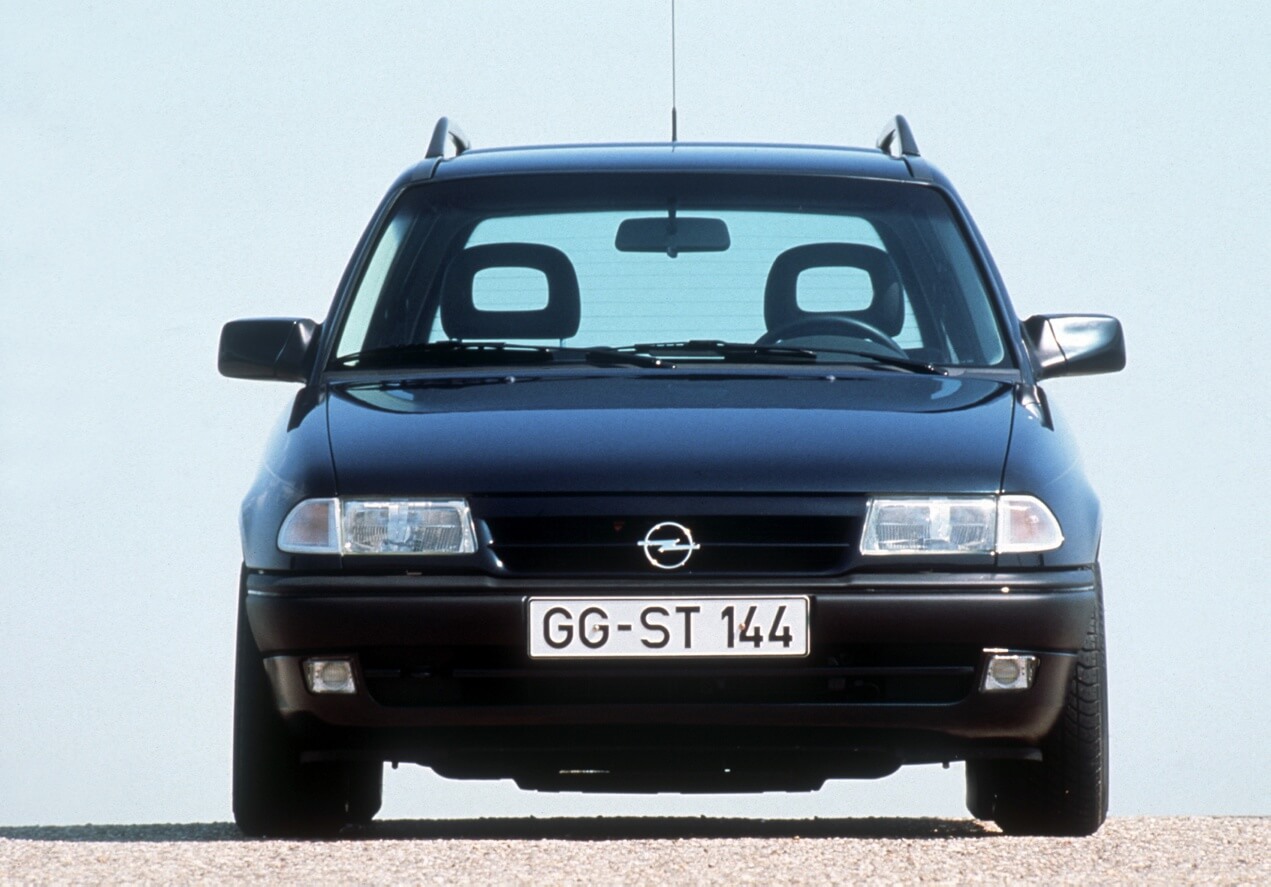
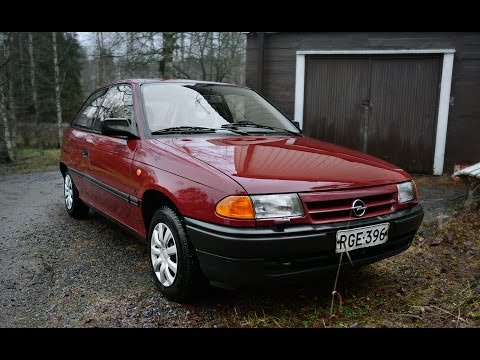
The hatchback arrived in September 1991, the Caravan a month later and the saloon in May 1992. A cabriolet built by Bertone joined in 1993, and a facelift followed in August 1994. Petrol engines ran from a 1.4 with 44 kW (60 PS) to the GSi's 2.0 16V; the 1.7 diesels gave 42 kW (57 PS) or 60 kW (82 PS). German production ended in spring 1998, while the Poland-built Astra Classic was sold until about 2002.
Astra G (1998–2004)
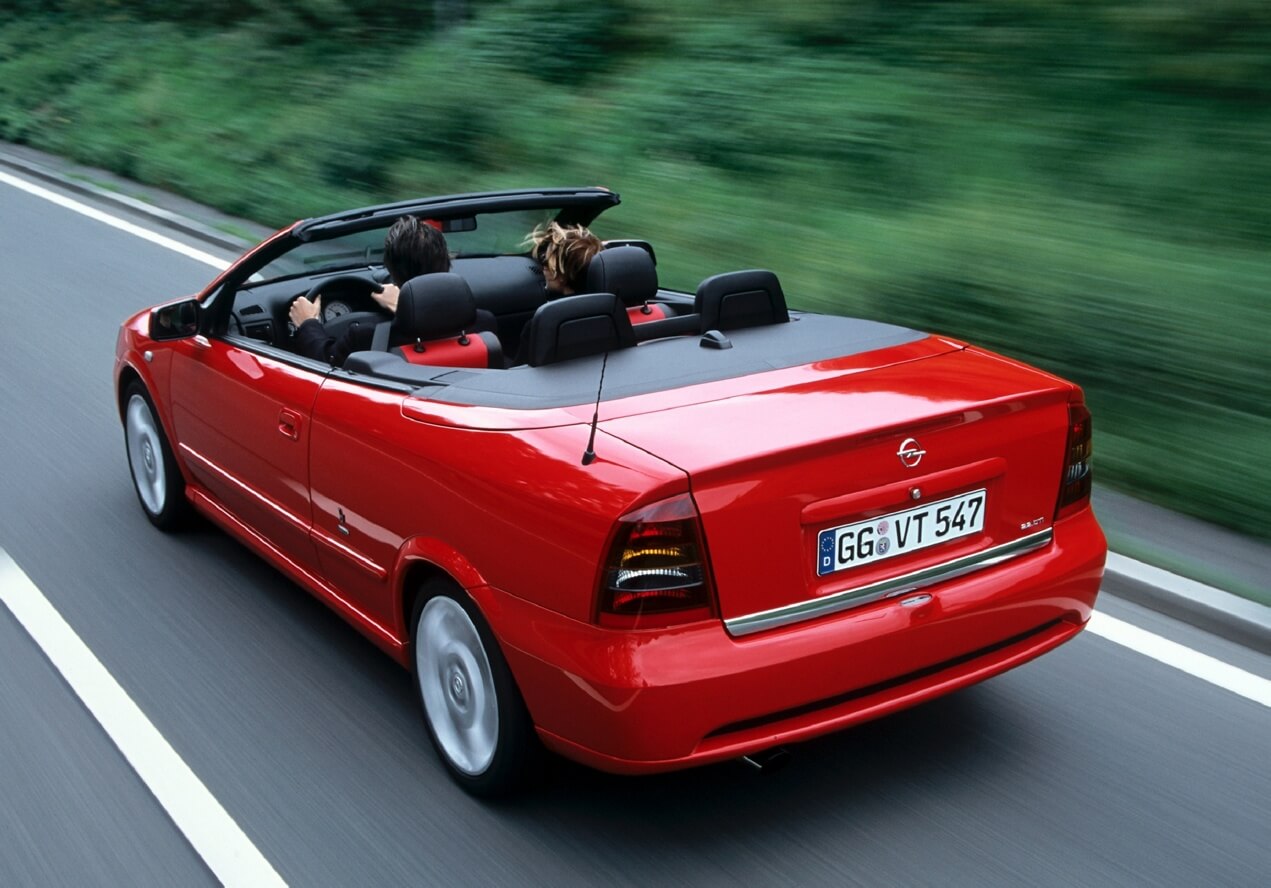
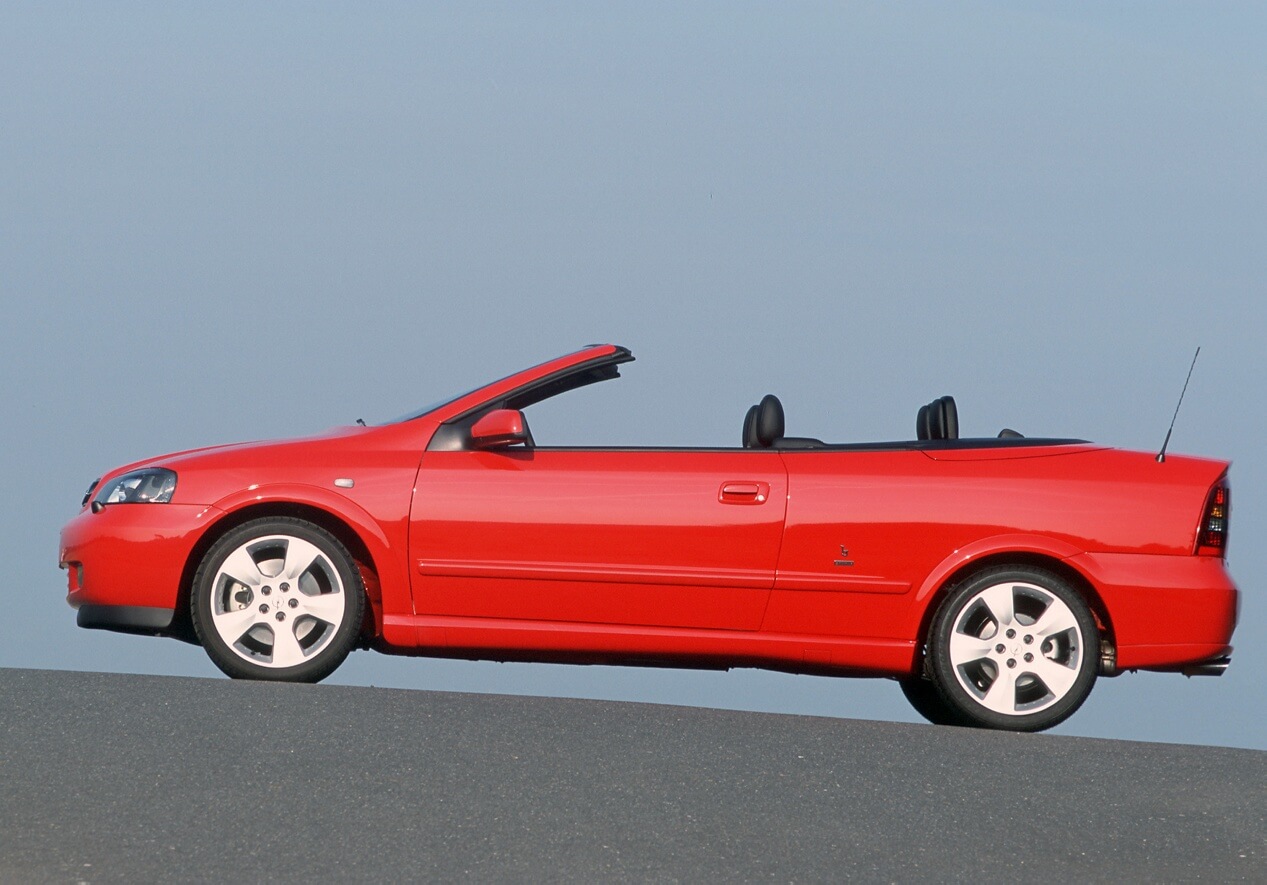
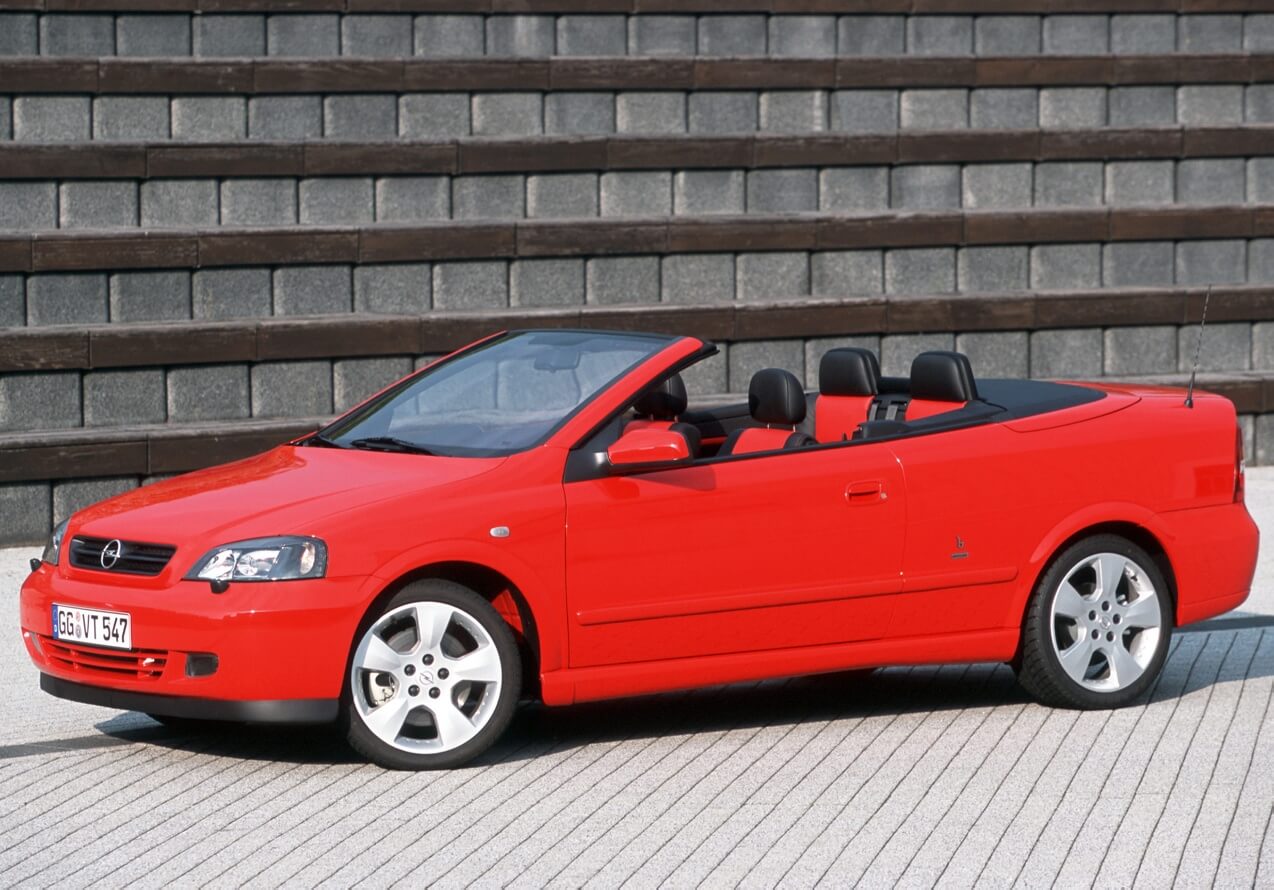
The G arrived in spring 1998 as a hatchback, saloon and Caravan. Bertone in Italy built the Coupé (2000–2004) and the Cabriolet (2001–2005). German sources describe the G as the first Opel with a fully galvanised body, backed by a 12-year anti-perforation warranty. Engines ranged from a 1.2 16V with 48 kW (65 PS) to a 2.0 Turbo. A Classic II stayed in production in Poland until 2009.
Astra H (2004–2010)
Production of the H began in March 2004. The Caravan followed in August 2004, the GTC in March 2005, the TwinTop in May 2006 and a saloon in October 2006. Diesels ran from a 1.3 CDTI with 66 kW (90 PS) to a 1.9 CDTI with 110 kW (150 PS). The hatchback ended in September 2009, the other bodies a year later.
Astra J (2009–2015)
The J went on sale in late 2009, and the estate became the Sports Tourer. Cars were built in the UK, Poland and Germany. The five-door ended in June 2015, while the GTC and OPC lasted until April 2018.
Astra K (2015–2021)
Opel first showed the K on 1 June 2015. Production began in July 2015 in the UK and Poland. The K was up to 200 kg lighter than the J and offered IntelliLux matrix LED headlights. German sources list it as European Car of the Year 2016. Production ended in December 2021.
Astra L (2021–present)
The L was unveiled on 13 July 2021 and the Sports Tourer on 1 December 2021. It uses the EMP2 platform of the Peugeot 308 and DS 4, and is built in Germany. A facelift shown at the Brussels Motor Show in January 2026 added a front light bar and Intelli-Lux HD headlights with more than 50,000 elements.
Engines, transmissions and electrification
Until the L, every Astra used petrol or diesel engines (plus CNG on the K) and front-wheel drive; the L added plug-in hybrid and electric versions. The F had a five-speed manual or a four-speed Aisin automatic, and the H offered the Easytronic automated manual.

Performance flagships by generation:
- F GSi: 2.0 16V, 110 kW (150 PS), suspension lowered by 15 mm.
- G OPC: 118 kW (160 PS) for the first 3,000 cars of 1999; German sources quote 147 kW (200 PS) for the later turbo.
- H OPC: 177 kW (240 PS), 0–100 km/h in 6.4 s and 244 km/h (152 mph).
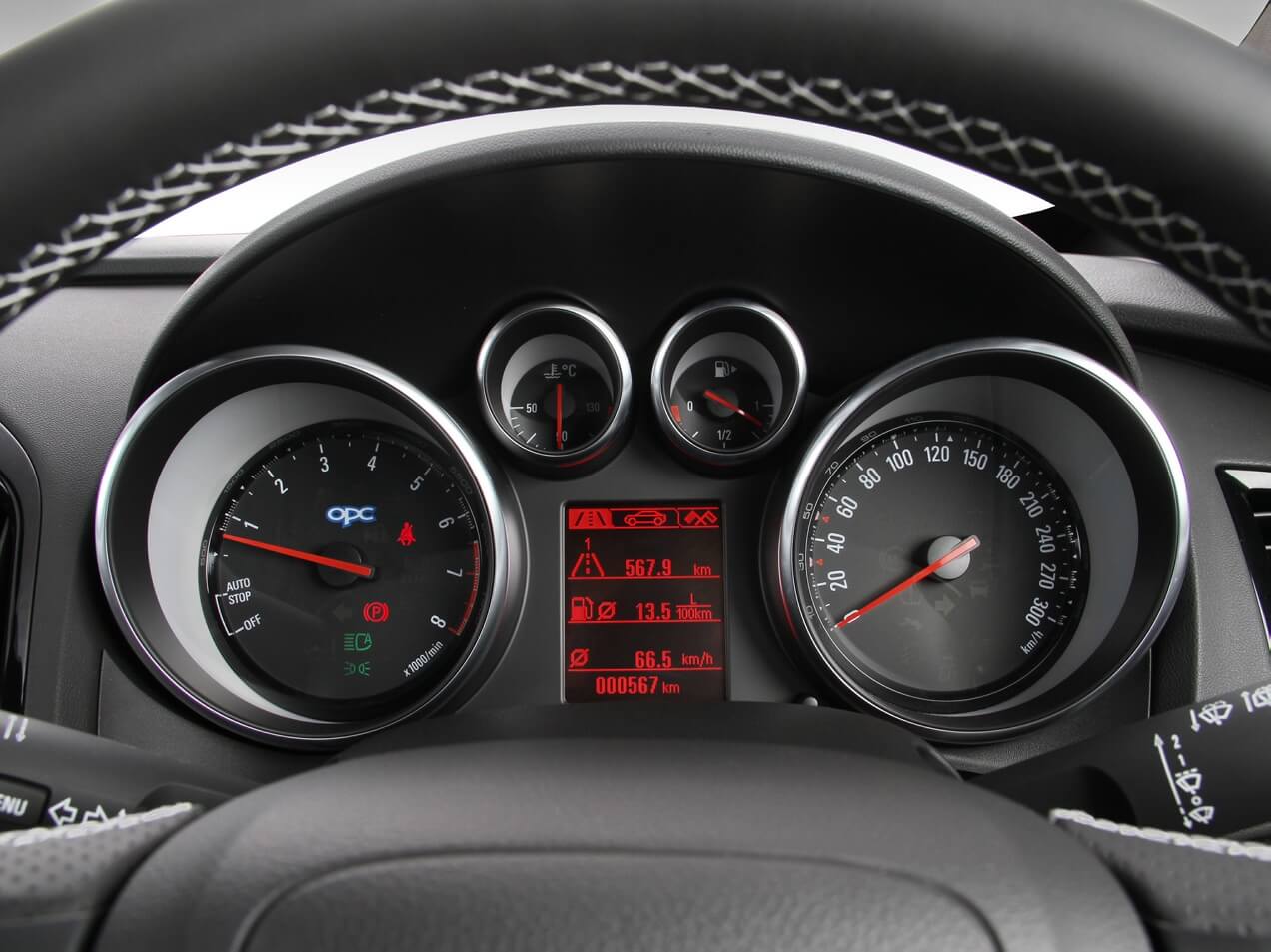
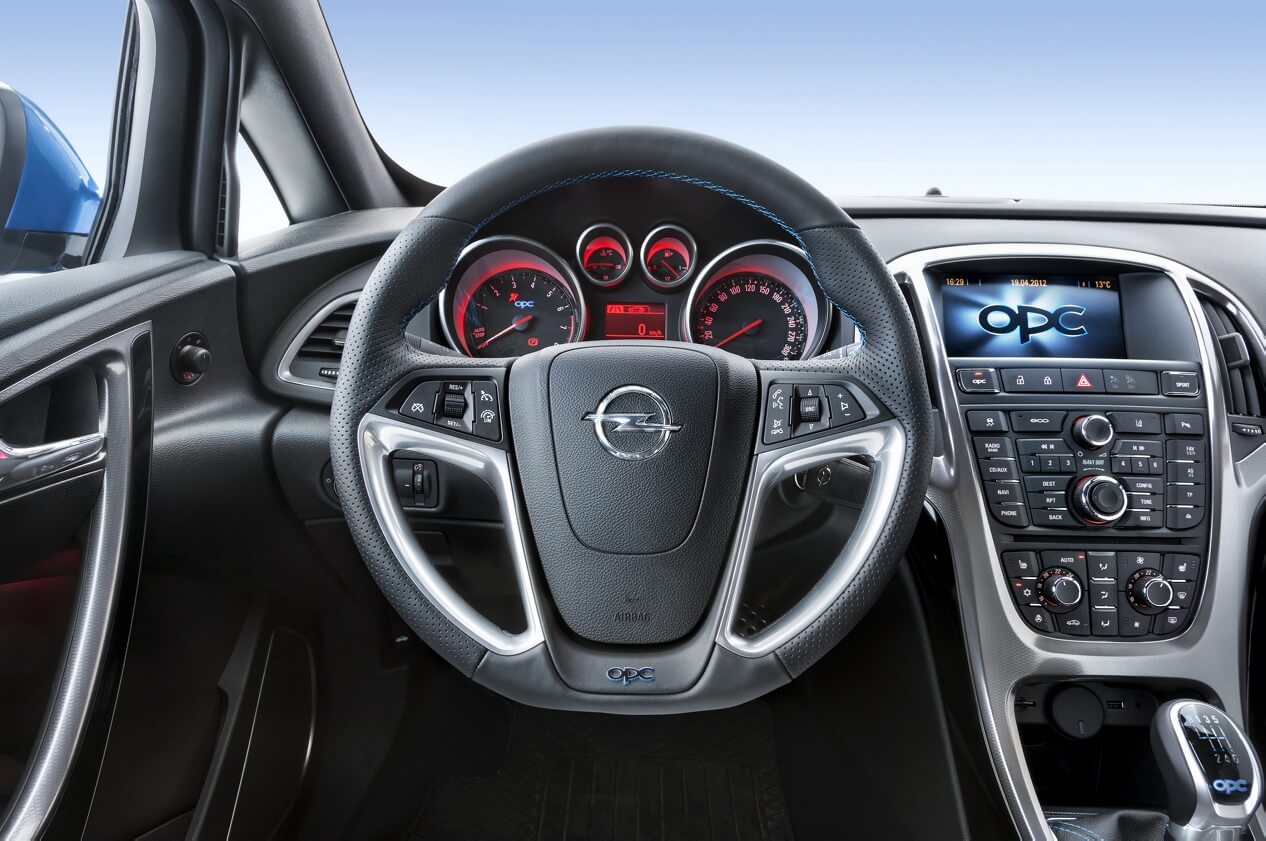
- J OPC: 206 kW (280 PS) and 400 Nm (295 lb-ft), 0–100 km/h in 6.0 s, limited to 250 km/h (155 mph).
- K: 1.6 Turbo, 147 kW (200 PS), 300 Nm (221 lb-ft) on overboost.
- L GSe: plug-in hybrid with 165 kW (225 PS) and 360 Nm (266 lb-ft).
The regular Astra L plug-in hybrid pairs a 1.6 Turbo with an electric motor for 133 kW (180 PS), and a 48-volt mild hybrid 1.2 is reported from February 2024. The Astra Electric has a 115 kW (156 PS) motor and a 54 kWh battery, about 410 km (255 miles) WLTP and 100 kW DC charging. For the 2026 facelift, launch reports quote 55.4 kWh usable and 454 km (282 miles) WLTP. Opel's earlier EV, the Ampera-e, was a separate model.
Dimensions, interior space and boot capacity
The table covers the current Astra L hatchback; hybrid and electric versions have smaller boots.

| Parameter | Metric | Imperial |
|---|---|---|
| Length | 4,374 mm | 172.2 in |
| Width (without / with mirrors) | 1,860 / 2,062 mm | 73.2 / 81.2 in |
| Height | 1,441 mm | 56.7 in |
| Wheelbase | 2,675 mm | 105.3 in |
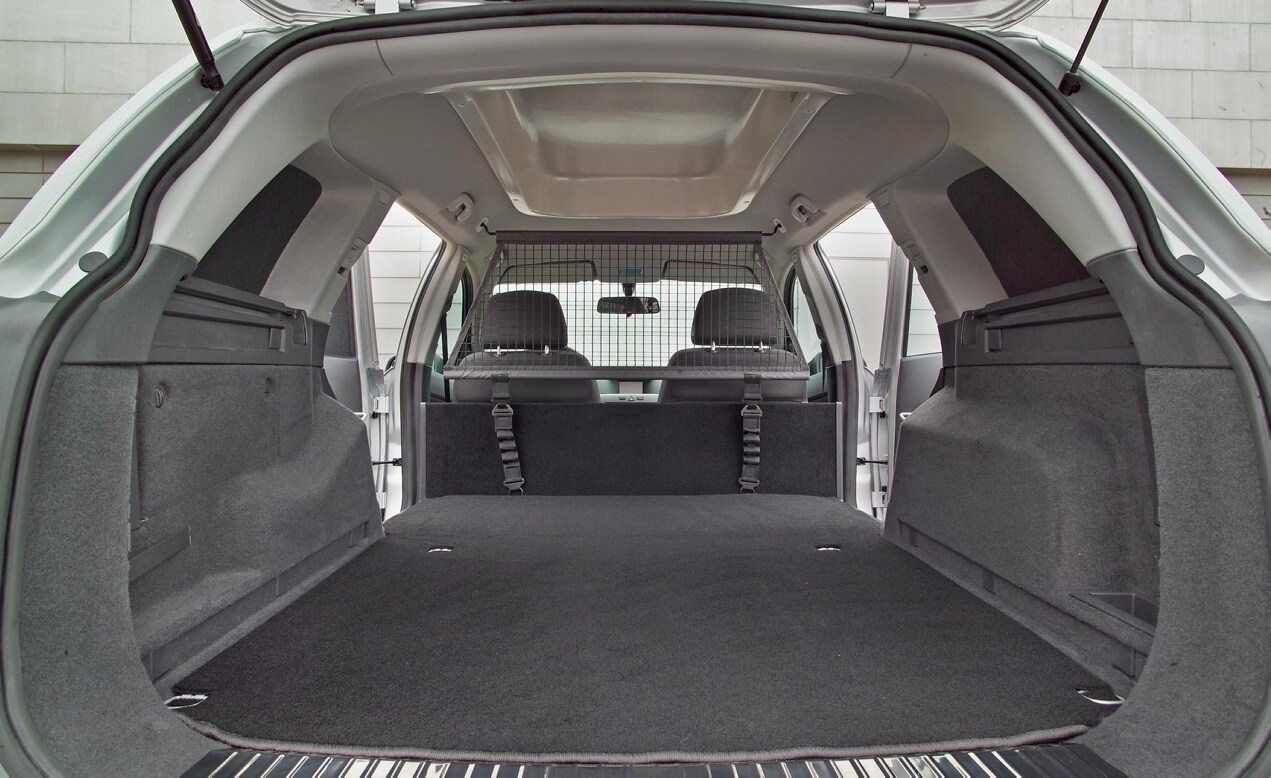
| Boot (petrol and diesel) | 422–1,339 L | 14.9–47.3 cu ft |
| Boot (hybrid and Electric) | 352–1,268 L | 12.4–44.8 cu ft |
| Kerb weight (1.2 tested by Euro NCAP) | 1,330 kg | 2,932 lb |
The Astra L Sports Tourer carries 597–1,634 L (21.1–57.7 cu ft) with petrol or diesel engines and 516–1,553 L (18.2–54.8 cu ft) as a hybrid or Electric.
Safety: Euro NCAP ratings by generation
Three Astra generations have Euro NCAP star ratings, each under a different test protocol.

- Astra J, 2009: five stars; the three-door GTC also received five stars.
- Astra K, 2015: five stars, with 86 % adult occupant, 84 % child occupant, 83 % pedestrian and 75 % safety assist.
- Astra L, 2022: four stars, with 80 % adult occupant, 82 % child occupant, 67 % vulnerable road users and 66 % safety assist.
Euro NCAP's datasheet explains the L's lower score: chest protection was rated marginal, there is no centre airbag, and some autonomous emergency braking tests were marginal. Results from 2015 and 2022 are not directly comparable, because the protocol was tightened in between. The G and H were tested too, but their star counts are not given in our sources.
Reliability, recalls and ownership
The best data covers the J and K. ADAC's breakdown statistics place the J in the lower midfield, with recurring EGR valve (2009–2012 cars), coolant hose, turbocharger and ignition coil faults. The K rates average to good: its breakdown index falls from 22.2 per 1,000 cars for 2015 registrations to 9.9 for 2021, with flat starter batteries on early cars and charge-pressure control faults on 2020–2021 cars.

The TÜV Report 2026, analysed by Auto Bild, groups the J and K together. At two to three years old 86.2 % passed without defects against an average of 89.4 %; at 12 to 13 years the figure was 48.8 % against 56.0 %. Oil loss is a main finding for both. Inspectors also note springs, brake discs and exhausts on the J, and headlight adjustment and emissions on the K.
German recalls listed by ADAC include 136,830 J models in September 2015 (parking-brake warning software) and, for the K, 575 cars in December 2016 (passenger airbag control unit) and 2,325 in January 2020 (seat backrest welds). Check that recall work has been done.
Rivals: how the Astra compares
The Astra competes with the Ford Focus, the Kia Ceed and the Skoda Octavia, and since the L also with its technical twin, the Peugeot 308. The Astra Sports Tourer is the version to set against the Octavia estate.

Opel Astra evolution in numbers
Did you know?
- The Opel Astra has been around for 35 years: 6 generations in our catalog since 1991.
- The longest-running generation is the Astra F (1991–1998): 7 years.
- The biggest jump in power came with the Astra G: up to 147 kW (200 PS), 37 kW more than the Astra F.
- The most powerful Opel Astra is not the newest: the Astra J (2009–2015) offered up to 206 kW (280 PS), the Astra L up to 165 kW (224 PS).
Most powerful version, kW
Length, mm
Figures from the 1cars catalog: power is the strongest version of each generation; generations without the figure are left out.
Opel Astra: first vs latest generation
| Spec | Astra F | Astra L | Change |
|---|---|---|---|
| Years | 1991–1998 | 2021–present | 30 years apart |
| Most powerful version | 110 kW (150 PS) | 165 kW (224 PS) | +55 kW (+50%) |
Oldest and newest generation in the 1cars catalog. Power is the strongest version of each; other rows are shown only when both generations have the figure.
Owning a Opel Astra
Common problems, best and worst years, maintenance and running costs - only data checked by our editors, with sources.
Best years
- 2017–2019 - ADAC's 2025 breakdown index is 11.6, 11.8 and 10.1 for these years, half the 22.2 of 2015 cars, and late-2018 engines got revised oil scraper rings. Verified Source: ADAC Gebrauchtwagen-Info Opel Astra (2015-2021) Benziner, with ADAC Pannenstatistik 2025
Years to avoid
- 2015–2016 - 2015 cars score 22.2 in ADAC's breakdown index, mostly flat batteries, and 2016 builds carry airbag and brake recalls that must be checked. Verified Source: ADAC Gebrauchtwagen-Info Opel Astra (2015-2021) Benziner, with ADAC Pannenstatistik 2025
Questions and answers
What are the most common Opel Astra problems?
Turbocharger oil feed line leak, fire risk (petrol turbo engines) (all years): Oil weeps from the turbo oil line onto hot exhaust parts; a burning smell after a drive is the warning sign.; Brake pedal travel recall (1.6 CDTI with manual gearbox) (2016–2018): The brake pedal can travel further than normal during gentle deceleration.; Airbag control module recalls (side and front passenger airbags) (2016–2017): No symptom; the airbag may not deploy correctly in a crash on cars built between June and December 2016.; Low-speed pre-ignition (1.0 Turbo, 1.4 Turbo, B10/B14 codes) (2015–2018): Knocking under load at low revs; in the worst case piston or ring damage over time.; Boost pressure control and turbocharger faults (2020-2021 petrols) (2020–2021): Loss of power and engine warning light; ADAC names these as breakdown causes for 2020-2021 cars..
What are the best years for the Opel Astra?
2017–2019: ADAC's 2025 breakdown index is 11.6, 11.8 and 10.1 for these years, half the 22.2 of 2015 cars, and late-2018 engines got revised oil scraper rings..
Which Opel Astra years should you avoid?
2015–2016: 2015 cars score 22.2 in ADAC's breakdown index, mostly flat batteries, and 2016 builds carry airbag and brake recalls that must be checked..
Data checked November 5, 2026 Used Opel Astra buying guide Euro NCAP ratings of other cars
Image credits · Photos from Wikimedia Commons under free licences
- Opel Astra F · Photo: Mr.choppers / Wikimedia Commons, CC BY-SA 3.0
- Opel Astra G · Photo: The original uploader was Topfklao at German Wikipedia. / Wikimedia Commons, Attribution
- Opel Astra H · Photo: No machine-readable author provided. M 93 assumed (based on copyright claims). / Wikimedia Commons, CC BY-SA 3.0
- Opel Astra J · Photo: Acgskup / Wikimedia Commons, CC BY 4.0
- Opel Astra K · Photo: Danny Galvez from Pinoso, España / Wikimedia Commons, CC BY-SA 2.0
- Opel Astra L · Photo: Alexander Migl / Wikimedia Commons, CC BY-SA 4.0
Rivals
Compare with…
Compare Opel Astra with
- Peugeot 308 II quick spec comparison
- Ford Focus full comparison
- Lada VAZ-2109 quick spec comparison
-
Ended 2021
- Years
- 2013–2021
- Body
- Hatchback
- Fuel
- Petrol, Diesel
- Power
- 60–199 kW (82–271 PS)
-
EV version
Ended 2025
- Years
- 1998–2025
- Body
- Sedan, Hatchback
- Fuel
- Petrol, Diesel, Electric
- Power
- 63–257 kW (86–349 PS)
4 generations
- I
- II
- C346
- IV
-
Ended 2004
- Years
- 1987–2004
- Body
- Hatchback
- Fuel
- Petrol
- Power
- 40–53 kW (54–72 PS)
-
Ended 2007
- Years
- 1995–2007
- Body
- Sedan
- Fuel
- Petrol
- Power
- 52–67 kW (71–91 PS)


Opel Astra in our rankings
- No. 10 of 72 · Quickest diesel cars, 0–100 (6.4 s)
- No. 81 of 533 · Smallest cars (4,110 mm · top 16%)
- No. 50 of 307 · Most economical cars (4.8 l/100 km · top 17%)
- No. 37 of 179 · Most powerful diesel cars (177 kW · top 22%)
- No. 87 of 396 · Lightest cars (1,230 kg · top 22%)
- No. 106 of 381 · Fastest cars (250 km/h · top 29%)
Quicker from 0 to 100 km/h than 86% of ranked diesel cars in the 1CARS catalog (No. 10 of 72).
Opel Astra photos 62









Opel Astra videos 9
Opel Astra video 1

Opel Astra video 2

Opel Astra video 3

Opel Astra video 4

Opel Astra video 5

Opel Astra video 6

Opel Astra video 7

Opel Astra video 8

Opel Astra video 9
FAQ
How many generations of the Opel Astra are there?
Six: F (1991), G (1998), H (2004), J (2009), K (2015) and L (2021). The first two British Vauxhall Astras of the 1980s were Kadetts.
Which Opel Astra generation is the most reliable?
No ranking covers all six. ADAC breakdown data rates the K average to good and the J lower midfield; the TÜV Report 2026 puts both below average. Check for oil leaks.
What is the fuel consumption of the Opel Astra?
It depends on generation, engine and test cycle. Compare the official values in each version's specification table, noting whether they are NEDC or WLTP.
Is the Opel Astra available as a hybrid or electric car?
Yes, the Astra L: plug-in hybrid with 133 kW (180 PS), GSe plug-in hybrid with 165 kW (225 PS) and Astra Electric with 115 kW (156 PS), plus a mild hybrid 1.2 from 2024.
What are the main rivals of the Opel Astra?
The Ford Focus, Kia Ceed and Skoda Octavia, plus the Peugeot 308, the Astra L's platform twin.
Why did the new Opel Astra get four Euro NCAP stars?
Euro NCAP marked down marginal chest protection, the lack of a centre airbag and some marginal emergency braking results; safety assist scored 66 %.
Data sources
Data checked by an editor against the sources below.
- The text of this article (1cars archive)
- 1cars archive: First-Generation Opel Astra (F): Kadett Successor, GSi and Cabrio
- 1cars archive: Second-Generation Opel Astra (G): Galvanised Body, Bertone Coupé, OPC
- 1cars archive: Third-Generation Opel Astra (H): Bodies, Engines and the OPC
- 1cars archive: Fourth-Generation Opel Astra (J): Bodies, Engines, Used Buying
- 1cars archive: Fifth-Generation Opel Astra (K): Lightweight Design, Engines, Buying
- 1cars archive: Sixth-Generation Opel Astra (L): Powertrains, Safety, Buying
- Wikipedia - Opel Astra
- Wikipedia - Opel Astra F
- Wikipedia - Opel Astra G


