 Opel Astra G (1998–2004)
Specs, engines, safety and known problems
Published Sources (4) Report an error
By Felix Hartmann, Automotive Technology & EV Contributor Reviewed by Oleksandr Hnatiuk

- Power
- 48–147 kW (65–200 PS)
- Boot
- 370 l
- Generation
- 2 of 6
Model timeline
Where the G sits in the Astra story
Predecessor Astra F (1991–1998) Successor Astra H (2004–2010)


H and J overlapped in 2009–2010, so J sits on a second lane
Newest first · 6 generations since 1991
-
2021
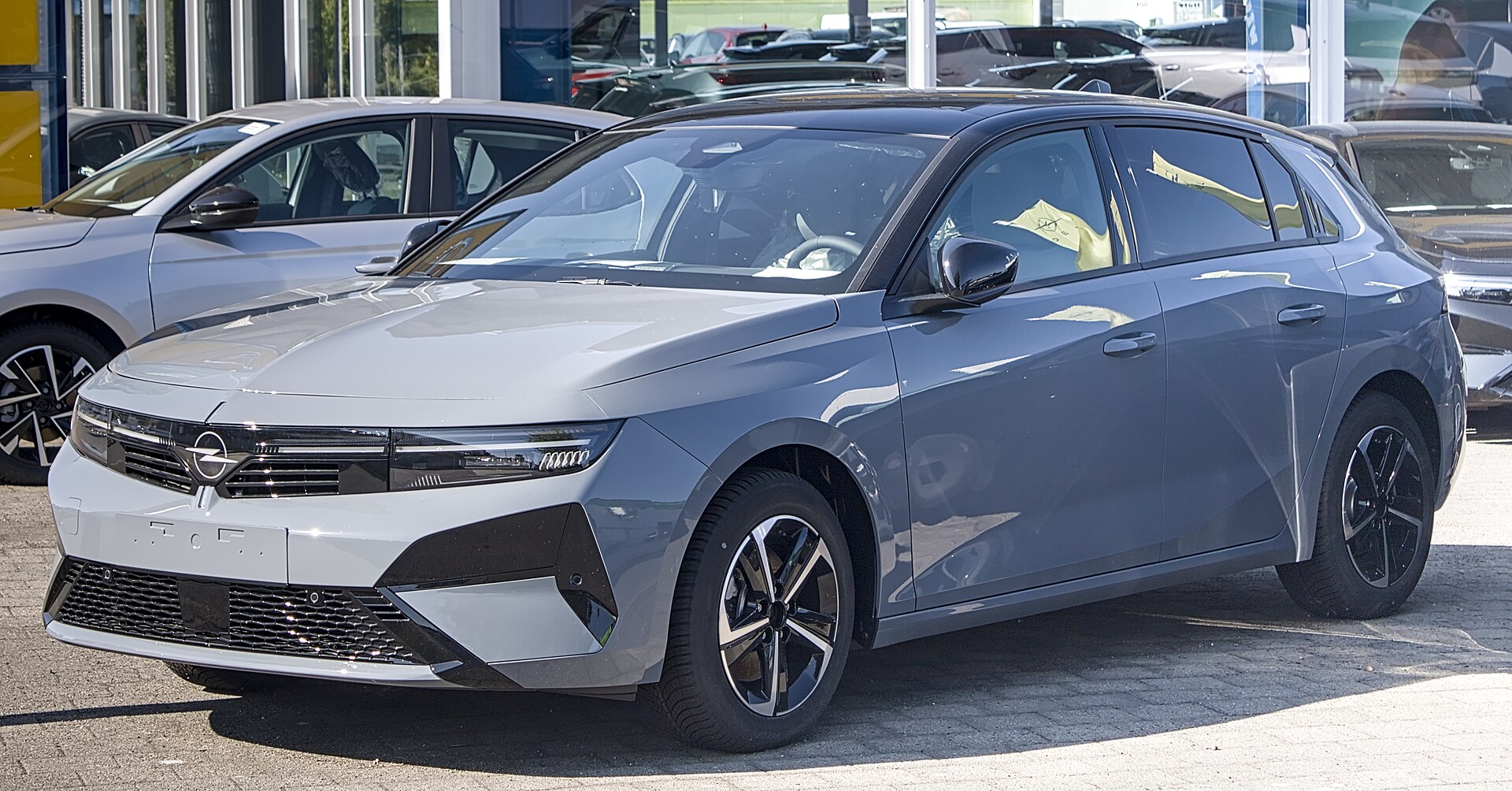
-
2015
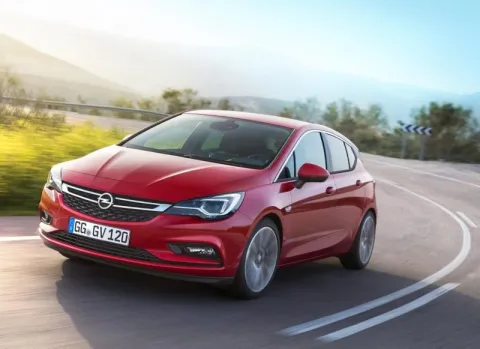 K 2015–2021 · Hatchback, Station wagon · 66–147 kW (90–200 PS)
-
2009
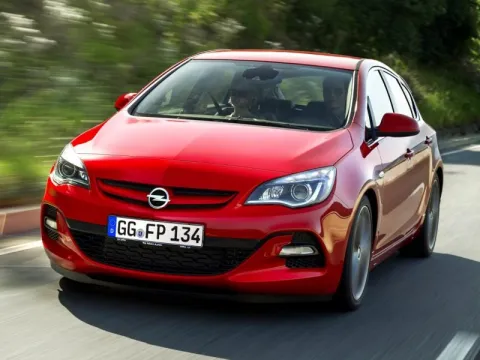 J 2009–2015 · Sedan, Hatchback · 64–206 kW (87–280 PS)
H and J overlapped in 2009–2010
-
2004
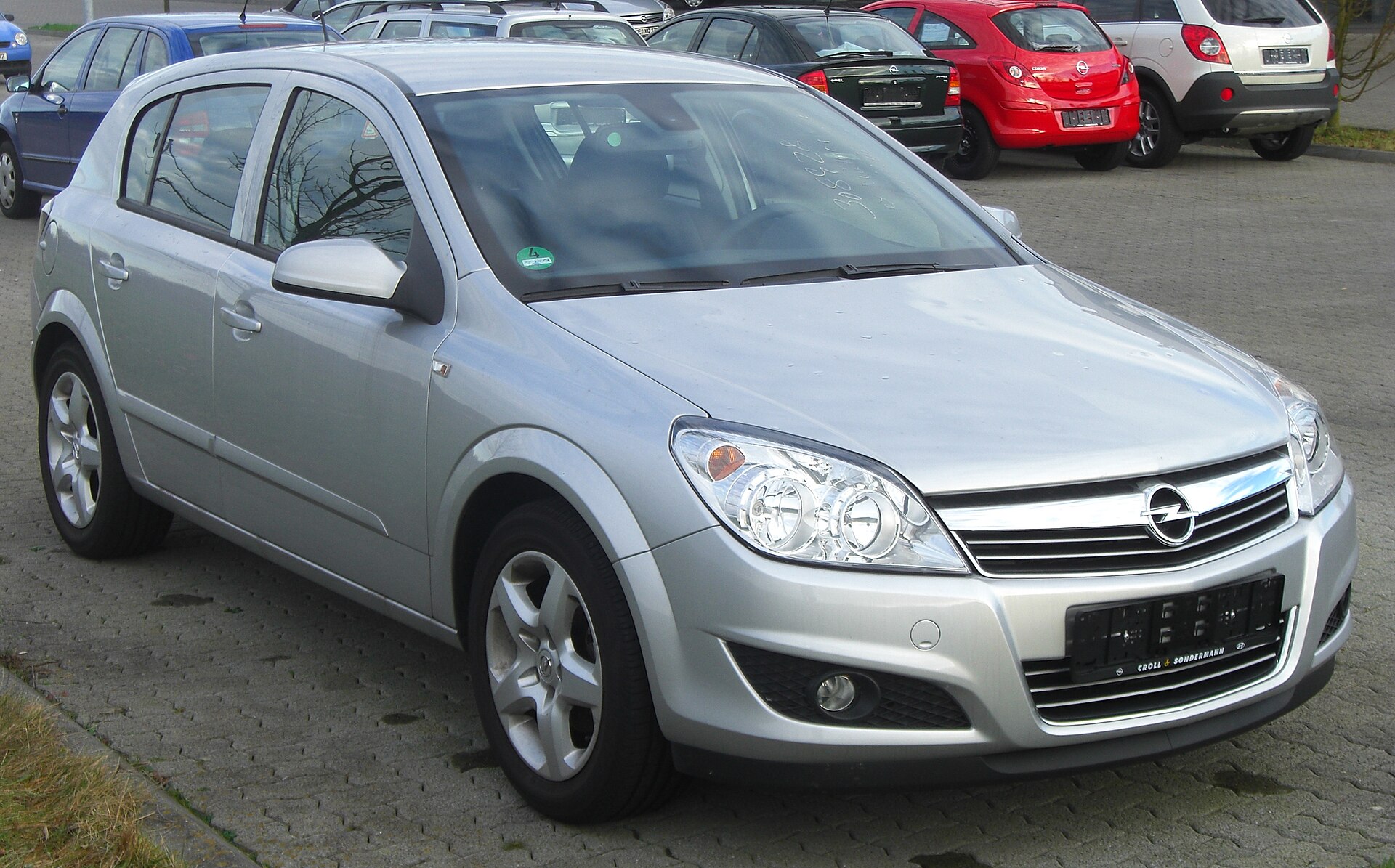
-
1998
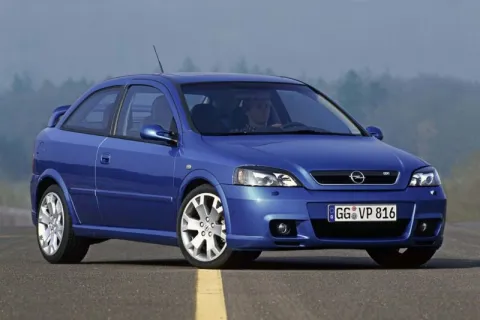 G You are here 1998–2004 · Sedan, Hatchback · 48–147 kW (65–200 PS)
-
1991
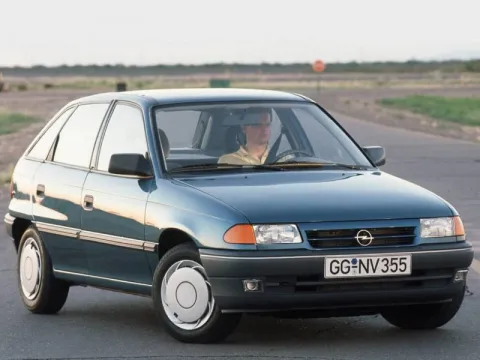 F 1991–1998 · Sedan, Hatchback · 42–110 kW (57–150 PS)
All generations by year: Astra L (2021–now) · Astra K (2015–2021) · Astra J (2009–2015) · Astra H (2004–2010) · Astra G (1998–2004) · Astra F (1991–1998)
The Opel Astra G is the second Astra, built in Germany from February 1998 and replaced by the Astra H in 2004. It was the first Opel with a fully galvanised body, gained a Bertone-built Coupé and Cabriolet, and introduced the OPC badge to the Astra. A Poland-built Classic II kept the design on sale in Central and Eastern Europe until 2009.
In short
- Hatchback and Caravan from March 1998, saloon from July 1998, Coupé from March 2000 and Cabriolet from March 2001.
- Petrol engines from a 48 kW (65 PS) 1.2 16V to a 2.0 Turbo with up to 147 kW (200 PS); diesels from 1.7 to 2.2 litres, plus a CNG Caravan.
- OPC 1 (1999 to 2001, 3,000 cars) had 118 kW (160 PS); the unlimited OPC 2 from 2002 had a turbo with 147 kW (200 PS).
- About 3.95 million continental European Astra G cars were built by July 2008, including about 250,000 Classic II.
Size at a glance
Peugeot 308 II
The Opel Astra G is 143 mm shorter, 95 mm narrower and 32 mm lower than the Peugeot 308 II.
| Dimensions | Opel Astra G | Peugeot 308 II | Difference |
|---|---|---|---|
| Length | 4,110 mm161.8 in | 4,253 mm167.4 in | −143 mm−5.6 in |
| Width | 1,709 mm67.3 in | 1,804 mm71.0 in | −95 mm−3.7 in |
| Height | 1,425 mm56.1 in | 1,457 mm57.4 in | −32 mm−1.3 in |
| Wheelbase | 2,606 mm102.6 in | 2,620 mm103.1 in | −14 mm−0.6 in |
| Boot | 370 L13.1 cu ft | 470 L16.6 cu ft | −100 L−3.5 cu ft |
Ford Focus II
The Opel Astra G is 378 mm shorter, 131 mm narrower and 72 mm lower than the Ford Focus II.
| Dimensions | Opel Astra G | Ford Focus II | Difference |
|---|---|---|---|
| Length | 4,110 mm161.8 in | 4,488 mm176.7 in | −378 mm−14.9 in |
| Width | 1,709 mm67.3 in | 1,840 mm72.4 in | −131 mm−5.2 in |
| Height | 1,425 mm56.1 in | 1,497 mm58.9 in | −72 mm−2.8 in |
| Wheelbase | 2,606 mm102.6 in | 2,640 mm103.9 in | −34 mm−1.3 in |
| Boot | 370 L13.1 cu ft | 526 L18.6 cu ft | −156 L−5.5 cu ft |
Astra G specs by version
Engines
| Version | Engine | Power | Torque |
|---|---|---|---|
| Diesel · 3 versions | |||
| 50 kW (68 PS) | Diesel | 50 kW 68 PS67 hp | — |
| 60 kW (82 PS) | Diesel | 60 kW 82 PS80 hp | — |
| 2.0 Turbo (OPC 2, Coupé, Cabriolet) | 2.2 l · Diesel 2,200 cc | 147 kW 200 PS197 hp | 250 Nm184 lb-ft |
| Petrol · 2 versions | |||
| 1.2 16V (1998–2000) | Petrol | 48 kW 65 PS64 hp | 110 Nm81 lb-ft |
| 2.2 108 kW (147 PS) | 2.2 l · 4 cyl · Petrol 2,200 cc | 108 kW 147 PS145 hp | — |
| Other · 4 versions | |||
| 1.4 16V | — | 66 kW 90 PS89 hp | 125 Nm92 lb-ft |
| 2.0 74 kW (101 PS) | 2.0 l 2,000 cc | 74 kW 101 PS99 hp | — |
| 2.0 16V (OPC 1) | — | 118 kW 160 PS158 hp | 188 Nm139 lb-ft |
| Z20LET 141 kW (192 PS) | Z20LET | 141 kW 192 PS189 hp | — |
Performance
Show all 1 versions
| Version | 0–100 km/h |
|---|---|
| 2.0 Turbo (OPC 2, Coupé, Cabriolet) | 7.1 s 0–62 mph |
Dimensions and weight
Verified Manufacturer and type-approval data from our catalog · Sources and methodology
Astra G against the Astra F: galvanised and grown
Corrosion protection was the headline change. No earlier Opel had been sold with a body galvanised all over, and the warranty against rust perforation ran for 12 years, according to German Wikipedia. From model year 2001, though, Opel switched to partial galvanising, so early and late cars are not equal in this respect.
The equipment list also moved up. German-market cars had power steering, four airbags, ABS and an immobiliser as standard, although export versions could have fewer airbags or no ABS. Air conditioning, navigation, traction control, xenon headlights and an electronically controlled four-speed automatic were on the options list, and automatic climate control arrived for model year 2002.
In Britain the G was the Vauxhall Astra Mk4; Holden sold it as the Astra TS in Australia and New Zealand. Dates, bodies and power for every Astra since 1991 are compared in our Opel Astra generations guide.
Coupé and Cabriolet from Bertone
The two-door models were built in Italy by Bertone, which marked them with its own badges on the side panels and sill plates. Production of each G body style, per German Wikipedia:
- Three- and five-door hatchback: March 1998 to March 2004.
- Saloon: July 1998 to March 2004, more popular outside Western Europe.
- Caravan estate: March 1998 to July 2004, with the CNG version running until January 2005.
- Coupé: March 2000 to December 2004; English Wikipedia puts output at about 90,000 cars.
- Cabriolet: March 2001 to December 2005.
Opel presented the Coupé as a successor to the Kadett C Coupé, while many buyers saw it as an unofficial Calibra replacement. The Coupé Turbo came only with 17-inch five-spoke wheels and larger front brakes. The Cabriolet had an electric fabric roof, standard with the 2.2 and 2.0 Turbo, which opened or closed in about 25 seconds with the car stationary; its boot is smaller than the Coupé's and the rear seats are not full size. Limited editions included Linea Blu, Linea Rossa and a 90 Jahre Bertone run. In motorsport, an Astra Coupé built to DTM rules won the Nürburgring 24 Hours in 2003.
Astra G engines from 1.2 16V to 2.0 Turbo
Most data below is from German Wikipedia's engine tables. Torque values are shown where the source gives them.
| Engine | Code | Power | Torque |
|---|---|---|---|
| 1.2 16V (1998–2000) | X12XE | 48 kW (65 PS) | 110 Nm (81 lb-ft) |
| 1.2 16V (2000–2004) | Z12XE | 55 kW (75 PS) | — |
| 1.4 16V | X14XE / Z14XE | 66 kW (90 PS) | 125 Nm (92 lb-ft) |
| 1.6 (Coupé, Cabriolet) | — | 74 / 76 kW (101 / 103 PS) | — |
| 1.8 16V (Coupé, Cabriolet) | — | 85 / 92 kW (116 / 125 PS) | — |
| 2.2 16V | Z22SE | 108 kW (147 PS) | — |
| 2.0 16V (OPC 1) | X20XER | 118 kW (160 PS) | 188 Nm (139 lb-ft) |
| 2.0 Turbo (OPC 2, Coupé, Cabriolet) | Z20LET | 140 to 147 kW (190 to 200 PS) | 250 Nm (184 lb-ft) |
| 2.2 diesel (Coupé, Cabriolet, from July 2002) | — | 92 kW (125 PS) | — |
The Z engines replaced the X units of the 1.2 and 1.4 for model year 2001. The 2.2 Z22SE was the first member of GM's L850 engine family and was also fitted to the Opel Speedster. English Wikipedia lists the diesel range as 1.7 TD, DTi, Di and CDTi, 2.0 Di and DTi and 2.2 DTi, without power figures; after the September 2002 facelift the economical Eco 4 version switched from the 1.7 DTI to the 1.7 CDTI. A natural-gas Caravan with the 1.6 16V Z16YNG was built from 2003 to 2005.
OPC 1 and OPC 2
The first OPC was a limited run of 3,000 cars built from September 1999 to the end of 2001 in black, silver or blue. The 2.0 16V was raised from 100 kW (136 PS) to 118 kW (160 PS) with forged pistons, new camshafts, larger ports, a free-flowing manifold and an oil cooler. The body sat 20 mm (0.8 in) lower, with a large rear spoiler, 17-inch BBS wheels and a drag coefficient of 0.30. It needed 8.2 seconds to reach 100 km/h and topped out at 220 km/h (137 mph).
The OPC 2 came with the facelift in September 2002 and was not limited. It used the Z20LET turbo, quoted at 141 kW (192 PS) at first and 147 kW (200 PS) from 2002, with 0 to 100 km/h in 7.1 seconds and 240 km/h (149 mph). Both OPCs used the short-ratio F23 sports gearbox.
Astra G measurements
Our sources give only part of the dimensional data; hatchback length, width and kerb weights were not available. The figures are from English Wikipedia.
| Parameter | Metric | Imperial |
|---|---|---|
| Length: saloon | 4,252 mm | 167.4 in |
| Length: Caravan estate | 4,288 mm | 168.8 in |
| Length: Cabriolet | 4,267 mm | 168.0 in |
| Wheelbase: Caravan | 2,611 mm | 102.8 in |
| OPC 1 ride height reduction | 20 mm | 0.8 in |
For comparison, the Astra H that followed was longer by 10 to 23 cm depending on body style. Later G cars sit alongside other German cars of the period in our catalogue.
The 1999 crash test and airbag count
Euro NCAP tested an Astra 1.6i Envoy with left-hand drive in 1999. English Wikipedia records 25 points for adult occupant protection and 7 points for pedestrian protection. We could not confirm the star rating from Euro NCAP's own record, so it is not stated here. ADAC also published a crash test of the G in February 1999.
On German-market cars, the four airbags and ABS were part of the standard specification from launch. Traction control and xenon lights stayed optional throughout.
Classic II and other markets
When the H arrived, Opel kept a cheaper G in production. The Astra Classic II was offered from October 2003 in Central and Eastern Europe and Turkey as hatchback, saloon and estate, and was built in Poland until August 2009. German Wikipedia counts about 250,000 of them. A saloon-only version was assembled in Egypt from 2002 to 2009, and GM sold a revised car as the Chevrolet Astra in Brazil, Argentina and Uruguay until 2011.
Points to check on a used Astra G
Most G models are now more than 20 years old, and the youngest Classic II cars are from 2009. Treat the following as a starting point rather than a complete list:
- Model year: cars built before model year 2001 have the fully galvanised body; later ones are only partly galvanised.
- Two-door models: the Cabriolet roof should open in about 25 seconds with the car stationary and the handbrake on, so test it through a full cycle.
- OPC 1 authenticity: genuine cars have a numbered plaque on the centre console, blue seat belts and Recaro or Opel sports seats.
The F and G are the Astras most likely to appear among classic cars of the 1990s. For the company background, see the history of Opel.
Did you know?
- The Astra G is generation 2 of 6 of the Opel Astra in our catalog.
- The Astra G offers up to 147 kW (200 PS) — 37 kW more than the Astra F (1991–1998) (+34%).
Image credits · Photos from Wikimedia Commons under free licences
- Opel Astra F · Photo: Mr.choppers / Wikimedia Commons, CC BY-SA 3.0
- Opel Astra G · Photo: The original uploader was Topfklao at German Wikipedia. / Wikimedia Commons, Attribution
- Opel Astra H · Photo: No machine-readable author provided. M 93 assumed (based on copyright claims). / Wikimedia Commons, CC BY-SA 3.0
- Opel Astra J · Photo: Acgskup / Wikimedia Commons, CC BY 4.0
- Opel Astra K · Photo: Danny Galvez from Pinoso, España / Wikimedia Commons, CC BY-SA 2.0
- Opel Astra L · Photo: Alexander Migl / Wikimedia Commons, CC BY-SA 4.0
G rivals
-
Ended 2021
- Years
- 2013–2021
- Body
- Hatchback
- Fuel
- Petrol, Diesel
- Power
- 60–199 kW (82–271 PS)
-
EV version
Ended 2025
- Years
- 1998–2025
- Body
- Sedan, Hatchback
- Fuel
- Petrol, Diesel, Electric
- Power
- 63–257 kW (86–349 PS)
4 generations
- I
- II
- C346
- IV
-
Ended 2004
- Years
- 1987–2004
- Body
- Hatchback
- Fuel
- Petrol
- Power
- 40–53 kW (54–72 PS)


FAQ
How long was the Opel Astra G in production?
German production started in February 1998 and the hatchback ran until March 2004. The Cabriolet lasted until December 2005 and the Classic II until August 2009 in Poland.
Is the Astra G body galvanised?
Early cars are fully galvanised, a first for Opel, and carried 12 years of cover against rust-through. Cars from model year 2001 onwards are only partly galvanised.
Who built the Astra G Coupé and Cabriolet?
Bertone built both in Italy: the Coupé from March 2000 to December 2004 and the Cabriolet from March 2001 to December 2005. About 90,000 Coupés were made.
What is the difference between the Astra G OPC 1 and OPC 2?
The OPC 1 (1999 to 2001, 3,000 cars) used a naturally aspirated 2.0 16V with 118 kW (160 PS). The OPC 2 from 2002 had a 2.0 turbo with up to 147 kW (200 PS) and was not limited.
What was the Astra Classic II?
A cheaper Astra G built in Poland from October 2003 to August 2009 for Central and Eastern Europe and Turkey, as a hatchback, saloon or estate.
Data sources
Data checked by an editor against the sources below.
- 1cars archive: Opel Astra: Generations, Specs and History
- The text of this article (1cars archive)
- Wikipedia — Opel Astra
- Wikipedia — Opel Astra G