 Opel Astra J (2009–2015)
Specs, engines, safety and known problems
Published Sources (5) Report an error
By Felix Hartmann, Automotive Technology & EV Contributor Reviewed by Oleksandr Hnatiuk

- Power
- 64–206 kW (87–280 PS)
- Boot
- 370 l
- Generation
- 4 of 6
Model timeline
Where the J sits in the Astra story
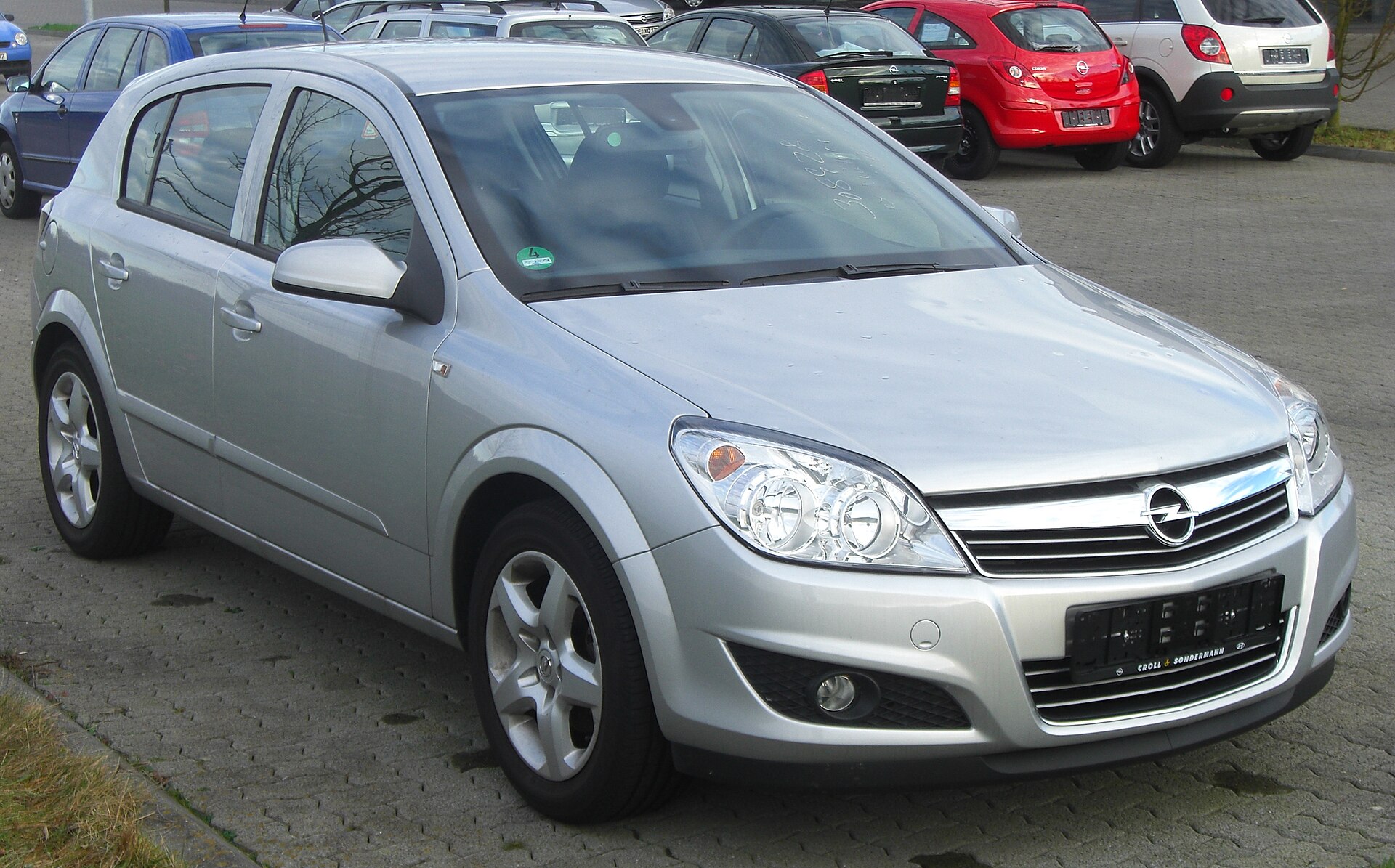
Predecessor Astra H (2004–2010) Successor Astra K (2015–2021)


H and J overlapped in 2009–2010, so J sits on a second lane
Newest first · 6 generations since 1991
-
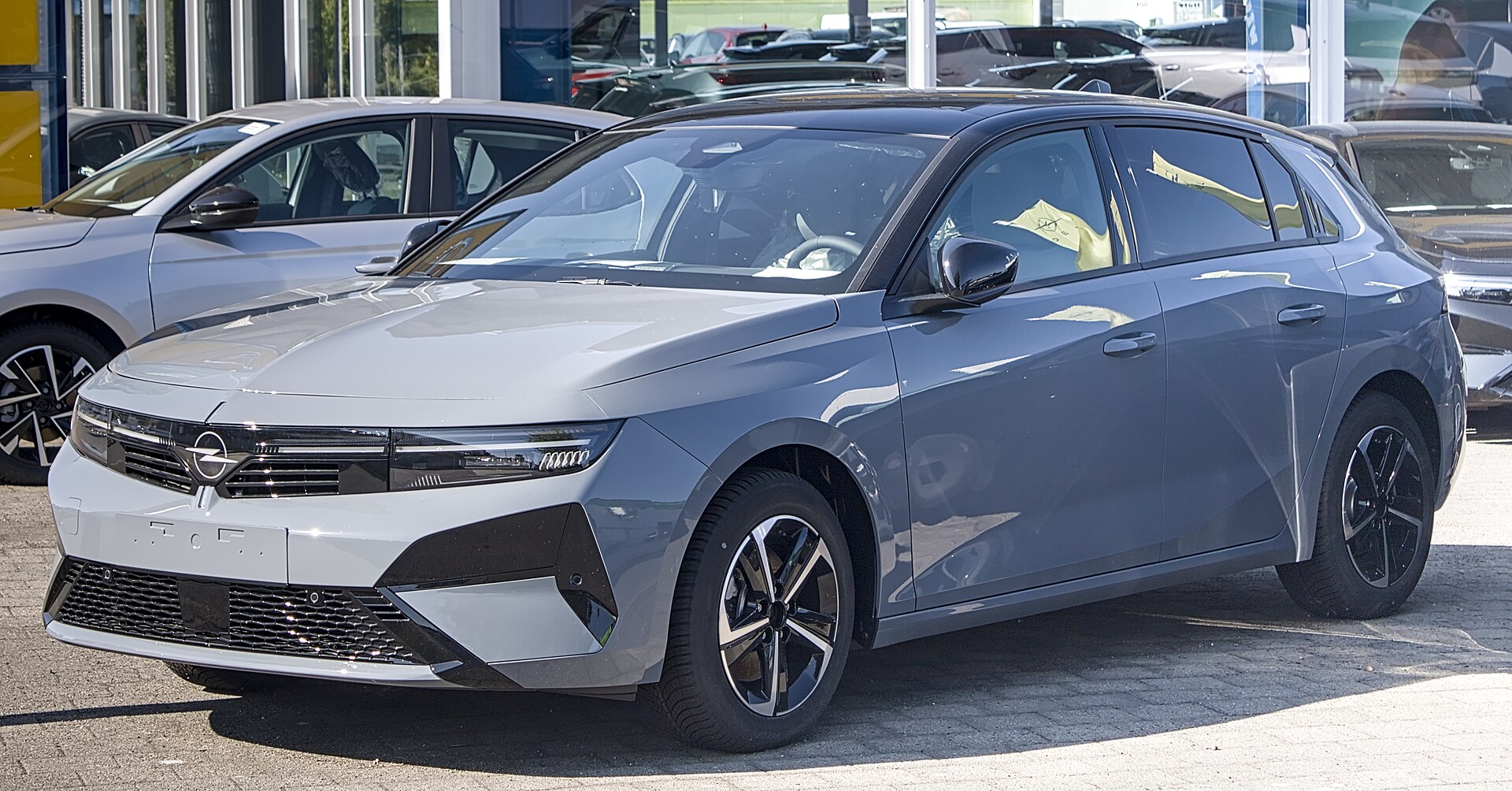
2021
-
2015
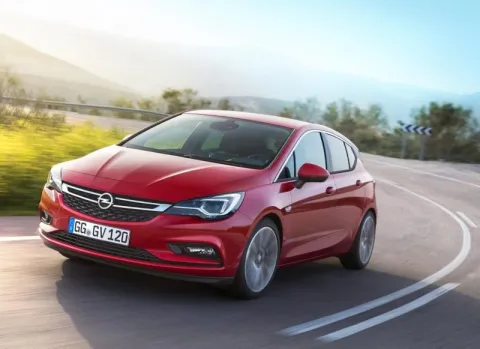 K 2015–2021 · Hatchback, Station wagon · 66–147 kW (90–200 PS)
-
2009
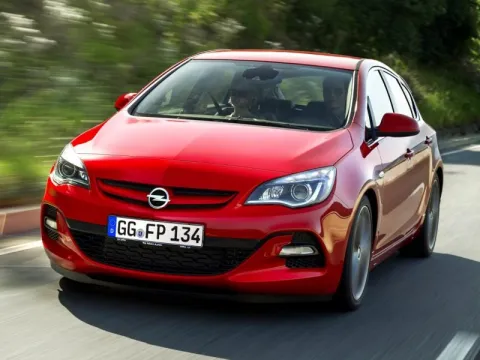 J You are here 2009–2015 · Sedan, Hatchback · 64–206 kW (87–280 PS)
H and J overlapped in 2009–2010
-
2004
-
1998
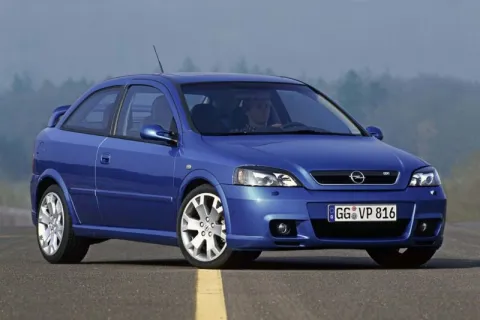 G 1998–2004 · Sedan, Hatchback · 48–147 kW (65–200 PS)
-
1991
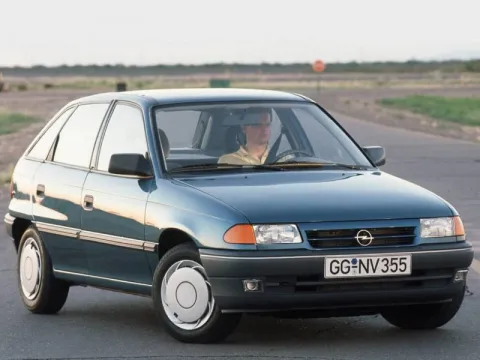 F 1991–1998 · Sedan, Hatchback · 42–110 kW (57–150 PS)
All generations by year: Astra L (2021–now) · Astra K (2015–2021) · Astra J (2009–2015) · Astra H (2004–2010) · Astra G (1998–2004) · Astra F (1991–1998)
Which Astra J to buy
Our verdict · Felix Hartmann
- Best compromise: the 1.4 Turbo with 103 kW (140 PS), which ADAC calls powerful enough, moderately thirsty and largely trouble-free.
- High mileage: the 1.6 CDTI with 100 kW (136 PS), recommended in ADAC's diesel guide; the 1.3 CDTI with 70 kW (95 PS) is sluggish in a car this heavy.
- Simple and robust: the 1.4 or 1.6 non-turbo petrol with the five-speed gearbox, if you accept slow acceleration.
- Enthusiasts: the GTC OPC, rare and expensive, with the most power any Astra has had.
On a test drive, listen for whining from six-speed gearboxes, look under the engine for oil and check that recall work is recorded. According to independent German used-car advice, cars built after the late-2012 update suffer far less from this noise. Rivals of the same era include the Ford Focus and other German cars in the class; for newer models, see the current Opel range.
The Opel Astra J is the fourth Astra generation, shown at the Frankfurt Motor Show in September 2009 and sold in Germany from December 2009. It grew in every direction over the Astra H and gained an upmarket cabin. The five-door ended in 2015, but the GTC, the 206 kW OPC and the saloon stayed in production until 2018.
In short
- Hatchback from December 2009, Sports Tourer estate from late 2010, three-door GTC from 2011, OPC from 2012 and saloon from the 2012 facelift.
- Petrol engines from 64 kW (87 PS) to the OPC's 206 kW (280 PS); diesels from a 70 kW (95 PS) 1.3 CDTI to a 143 kW (195 PS) 2.0 BiTurbo.
- Five Euro NCAP stars in 2009, with 95 % for adult occupant protection.
- ADAC places it in the lower midfield for breakdowns; watch for six-speed gearbox noise, broken springs and oil leaks.
Size at a glance
Peugeot 308 II
The Opel Astra J is 166 mm longer, 10 mm wider and 53 mm taller than the Peugeot 308 II.
| Dimensions | Opel Astra J | Peugeot 308 II | Difference |
|---|---|---|---|
| Length | 4,419 mm174.0 in | 4,253 mm167.4 in | +166 mm+6.5 in |
| Width | 1,814 mm71.4 in | 1,804 mm71.0 in | +10 mm+0.4 in |
| Height | 1,510 mm59.4 in | 1,457 mm57.4 in | +53 mm+2.1 in |
| Wheelbase | 2,685 mm105.7 in | 2,620 mm103.1 in | +65 mm+2.6 in |
| Boot | 370 L13.1 cu ft | 470 L16.6 cu ft | −100 L−3.5 cu ft |
Ford Focus C346
The Opel Astra J is 61 mm longer, 9 mm narrower and 26 mm taller than the Ford Focus C346.
| Dimensions | Opel Astra J | Ford Focus C346 | Difference |
|---|---|---|---|
| Length | 4,419 mm174.0 in | 4,358 mm171.6 in | +61 mm+2.4 in |
| Width | 1,814 mm71.4 in | 1,823 mm71.8 in | −9 mm−0.4 in |
| Height | 1,510 mm59.4 in | 1,484 mm58.4 in | +26 mm+1.0 in |
| Wheelbase | 2,685 mm105.7 in | 2,648 mm104.3 in | +37 mm+1.5 in |
| Boot | 370 L13.1 cu ft | 476 L16.8 cu ft | −106 L−3.7 cu ft |
Opel Astra H
The Opel Astra J is 170 mm longer, 61 mm wider and 70 mm taller than the Opel Astra H.
| Dimensions | Opel Astra J | Opel Astra H | Difference |
|---|---|---|---|
| Length | 4,419 mm174.0 in | 4,249 mm167.3 in | +170 mm+6.7 in |
| Width | 1,814 mm71.4 in | 1,753 mm69.0 in | +61 mm+2.4 in |
| Height | 1,510 mm59.4 in | 1,440 mm56.7 in | +70 mm+2.8 in |
| Wheelbase | 2,685 mm105.7 in | 2,614 mm102.9 in | +71 mm+2.8 in |
| Boot | 370 L13.1 cu ft | 380 L13.4 cu ft | −10 L−0.4 cu ft |
Astra J specs by version
Engines
| Version | Engine | Power | Torque | Drive |
|---|---|---|---|---|
| Diesel · 2 versions | ||||
| 1.3 CDTI | Diesel | 70 kW 95 PS94 hp | 190 Nm140 lb-ft | Front-wheel drive |
| 100 kW (136 PS) | Diesel | 100 kW 136 PS134 hp | — | Front-wheel drive |
| Petrol · 4 versions | ||||
| 64 kW (87 PS) | Petrol | 64 kW 87 PS86 hp | — | Front-wheel drive |
| 100 kW (136 PS) | Petrol | 100 kW 136 PS134 hp | — | Front-wheel drive |
| 103 kW (140 PS) | Petrol | 103 kW 140 PS138 hp | — | Front-wheel drive |
| 2.0 Turbo OPC | Petrol | 206 kW 280 PS276 hp | 400 Nm295 lb-ft | Front-wheel drive |
| Other · 4 versions | ||||
| 1.6 | — | 85 kW 116 PS114 hp | 155 Nm114 lb-ft | Front-wheel drive |
| 1.6 SIDI Turbo (from Nov 2012) | — | 125 kW 170 PS168 hp | 260 Nm192 lb-ft | Front-wheel drive |
| 1.6 Turbo | — | 132 kW 179 PS177 hp | 230 Nm170 lb-ft | Front-wheel drive |
| 2.0 CDTI BiTurbo (late 2012) | — | 143 kW 194 PS192 hp | 400 Nm295 lb-ft | Front-wheel drive |
Performance
Show all 4 versions
| Version | 0–100 km/h | Top speed |
|---|---|---|
| 1.6 | 11.7 s 0–62 mph | 188 km/h117 mph |
| 1.6 SIDI Turbo (from Nov 2012) | 8.7 s 0–62 mph | 220 km/h137 mph |
| 1.6 Turbo | 8.5 s 0–62 mph | 221 km/h137 mph |
| 2.0 Turbo OPC | 6.0 s 0–62 mph | 250 km/h155 mph |
Dimensions and weight
Show all 10 versions
| Version | Boot |
|---|---|
| Diesel · 2 versions | |
| 1.3 CDTI | 370 l13.1 cu ft |
| 100 kW (136 PS) | 370 l13.1 cu ft |
| Petrol · 4 versions | |
| 64 kW (87 PS) | 370 l13.1 cu ft |
| 100 kW (136 PS) | 370 l13.1 cu ft |
| 103 kW (140 PS) | 370 l13.1 cu ft |
| 2.0 Turbo OPC | 370 l13.1 cu ft |
| Other · 4 versions | |
| 1.6 | 370 l13.1 cu ft |
| 1.6 SIDI Turbo (from Nov 2012) | 370 l13.1 cu ft |
| 1.6 Turbo | 370 l13.1 cu ft |
| 2.0 CDTI BiTurbo (late 2012) | 370 l13.1 cu ft |
Verified Manufacturer and type-approval data from our catalog · Sources and methodology
Bigger and heavier: the J against the Astra H
The J was a clean-sheet design on General Motors' Delta II platform. During development it was called "Astra I", but Opel renamed it J to avoid confusion with the number one. German Wikipedia says the body is about 17 to 18 cm longer than the H; ADAC lists the five-door at 4,419 mm (174.0 in).
The extra size went into a more grown-up car. ADAC credits it with solid build quality, balanced handling, a comfortable ride and very good seats, especially the optional AGR-certified ergonomic ones. The downside was mass: ADAC lists high weight, weak non-turbo engines, relatively high fuel use and limited rear-seat space among its weaknesses. That weight problem is what the lighter Astra K set out to fix in 2015.
The J also changed the line-up. The Caravan name was dropped and the estate became the Sports Tourer, a name Opel still uses. The convertible was spun off as a separate model, the Cascada, launched in 2013. At the 2010 European Car of the Year vote, the Astra finished third with 221 points behind the Volkswagen Polo. The Opel Astra overview of all generations shows where the J sits in the family.
Five-door, Sports Tourer, GTC, OPC and saloon
ADAC's model history gives the clearest timeline for German-market cars:
- December 2009: five-door hatchback launched with nine engines, all Euro 5.
- October 2010: Sports Tourer estate, first shown at that year's Paris Motor Show.
- June 2011: three-door GTC, wider and lower than the five-door, with its own styling.
- March 2012: OPC, based on the GTC.
- June 2012: facelift and new four-door saloon. The update brought a chrome grille bar with upturned ends, black-backed headlights, a revised rear apron and new driver-assistance systems.
- January 2015: all engines meet Euro 6.
- June 2015 to August 2018: the five-door ended in June 2015, the Sports Tourer in April 2016, the GTC and OPC in April 2018 and the saloon in August 2018.
Cars came from the UK, Germany and Poland; five-door production moved from Germany to Poland in early 2014. In Britain the car was sold as the Vauxhall Astra.
The OPC is the most powerful series Astra ever made. Its 2.0 turbo petrol engine gives 206 kW (280 PS) and 400 Nm (295 lb-ft), and it adds a mechanical limited-slip differential, 355 mm Brembo front brakes and FlexRide adaptive dampers. ADAC quotes 6.0 seconds from 0 to 100 km/h, a limited 250 km/h (155 mph) and 8.1 L/100 km (34.9 mpg UK) on the NEDC cycle.
Astra J petrol and CDTI engines
The petrol figures below are from ADAC (NEDC values); torque for the diesels follows English Wikipedia. All versions are front-wheel drive.
| Engine | Power | Torque | 0–100 km/h | Top speed |
|---|---|---|---|---|
| 1.4 ecoFLEX | 64 kW (87 PS) / 74 kW (100 PS) | 130 Nm (96 lb-ft) | 15.1 / 13.9 s | 168 / 178 km/h |
| 1.6 | 85 kW (115 PS) | 155 Nm (114 lb-ft) | 11.7 s | 188 km/h (117 mph) |
| 1.4 Turbo | 88 kW (120 PS) / 103 kW (140 PS) | 200 Nm (148 lb-ft) | 11.0 / 9.9 s | 192 / 202 km/h |
| 1.6 Turbo | 132 kW (180 PS) | 230 Nm (170 lb-ft) | 8.5 s | 221 km/h (137 mph) |
| 1.6 SIDI Turbo (from Nov 2012) | 125 kW (170 PS) | 260 Nm (192 lb-ft) | 8.7 s | 220 km/h (137 mph) |
| 2.0 Turbo OPC | 206 kW (280 PS) | 400 Nm (295 lb-ft) | 6.0 s | 250 km/h (155 mph) |
| 1.3 CDTI | 70 kW (95 PS) | 190 Nm (140 lb-ft) | — | — |
| 1.7 CDTI | 81 kW (110 PS) / 96 kW (130 PS) | 260–300 Nm (192–221 lb-ft) | — | — |
| 1.6 CDTI | 81 kW (110 PS) / 100 kW (136 PS) | 300 / 320 Nm (221 / 236 lb-ft) | — | — |
| 2.0 CDTI | 118 kW (160 PS) / 121 kW (165 PS) | 350 Nm (258 lb-ft) for 160 PS | — | — |
| 2.0 CDTI BiTurbo (late 2012) | 143 kW (195 PS) | 400 Nm (295 lb-ft) | — | — |
Non-turbo petrol engines and the 1.3 CDTI used a five-speed manual, the rest a six-speed manual, with a six-speed automatic as an option. In November 2013 the 1.4 non-turbo was dropped and the 85 kW 1.6 became the entry engine.
Astra J dimensions by body style
Figures are from ADAC unless stated. The GTC wheelbase is from English Wikipedia.
| Parameter | Metric | Imperial |
|---|---|---|
| Length: five-door / GTC | 4,419 / 4,466 mm | 174.0 / 175.8 in |
| Length: saloon / Sports Tourer | 4,658 / 4,698 mm | 183.4 / 185.0 in |
| Width without mirrors (GTC) | 1,814 mm (1,840 mm) | 71.4 in (72.4 in) |
| Width with mirrors (GTC) | 2,013 mm (2,020 mm) | 79.3 in (79.5 in) |
| Height: five-door / Sports Tourer | 1,510 / 1,535 mm | 59.4 / 60.4 in |
| Wheelbase (GTC) | 2,695 mm | 106.1 in |
| Boot: five-door | 370–1,235 L | 13.1–43.6 cu ft |
| Boot: Sports Tourer | 500–1,550 L | 17.7–54.7 cu ft |
| Boot: saloon | 460 L | 16.2 cu ft |
| Fuel tank | 56 L | 12.3 UK gal |
ADAC counts the five-door's boot as a weakness, so the Sports Tourer or saloon makes more sense for families. Other estate cars are in our catalogue.
Euro NCAP 2009 result
Euro NCAP tested an Astra 1.6 Enjoy five-door in 2009 and gave it five stars. English Wikipedia lists 95 % (34.1 points) for adult occupant protection, 84 % (41.1) for child occupants, 46 % (16.4) for pedestrians and 71 % for safety assist. The GTC was also rated five stars.
Front, side and curtain airbags, front belt tensioners with force limiters and ESP were standard, and an adaptive cornering light was optional. ADAC names the pole impact and pedestrian protection as the weaker areas. In Australia, ANCAP gave the five-door, wagon and GTC five stars in 2012.
Known faults, TÜV results and recalls
ADAC's breakdown index is highest for 2010 registrations at 26.4 per 1,000 cars and falls to 16.5 for 2015. Recurring causes include the coolant or heater hose (2010 to 2011), the turbocharger (2014) and ignition coils (2010 and 2015); ADAC's diesel data adds EGR valves on 2009 to 2012 cars. Recurring faults in ADAC's guide are six-speed gearbox damage, broken suspension springs and frequent oil loss.
Auto Bild's TÜV Report 2026 analysis confirms the pattern for older J models: oil loss with high double-digit rates after the first inspection, above-average broken springs, brake disc wear and exhaust faults. On the positive side, drive shafts and steering joints rate as durable.
ADAC lists four German recalls that include the J: November 2010 (260 cars, passenger seat-rail bolts), September 2015 (136,830 vehicles, electric parking brake warning software), February 2017 (2,664 vehicles, airbag module ignition charge) and May 2019 (15,588 vehicles, hill-start assist software).
Did you know?
- The Astra J is generation 4 of 6 of the Opel Astra in our catalog.
- The Astra J offers up to 206 kW (280 PS) — 29 kW more than the Astra H (2004–2010) (+16%).
- At up to 4,419 mm long, it is 170 mm longer than the Astra H (2004–2010).
- Its lightest version weighs 1,373 kg, 143 kg more than in the Astra H (2004–2010).
Image credits · Photos from Wikimedia Commons under free licences
- Opel Astra F · Photo: Mr.choppers / Wikimedia Commons, CC BY-SA 3.0
- Opel Astra G · Photo: The original uploader was Topfklao at German Wikipedia. / Wikimedia Commons, Attribution
- Opel Astra H · Photo: No machine-readable author provided. M 93 assumed (based on copyright claims). / Wikimedia Commons, CC BY-SA 3.0
- Opel Astra J · Photo: Acgskup / Wikimedia Commons, CC BY 4.0
- Opel Astra K · Photo: Danny Galvez from Pinoso, España / Wikimedia Commons, CC BY-SA 2.0
- Opel Astra L · Photo: Alexander Migl / Wikimedia Commons, CC BY-SA 4.0
J rivals
-
Ended 2021
- Years
- 2013–2021
- Body
- Hatchback
- Fuel
- Petrol, Diesel
- Power
- 60–199 kW (82–271 PS)
-
EV version
Ended 2025
- Years
- 1998–2025
- Body
- Sedan, Hatchback
- Fuel
- Petrol, Diesel, Electric
- Power
- 63–257 kW (86–349 PS)
4 generations
- I
- II
- C346
- IV
-
Ended 2004
- Years
- 1987–2004
- Body
- Hatchback
- Fuel
- Petrol
- Power
- 40–53 kW (54–72 PS)


FAQ
What years was the Opel Astra J built?
The five-door ran from late 2009 to mid-2015. The Sports Tourer ended in 2016, and the GTC, OPC and saloon were built until 2018 without a direct replacement.
How powerful is the Astra J OPC?
The OPC has a 2.0 turbo petrol engine with 206 kW (280 PS) and 400 Nm (295 lb-ft). It reaches 100 km/h in 6.0 seconds and is limited to 250 km/h (155 mph).
How safe is the Opel Astra J?
Euro NCAP awarded five stars in 2009, with 95 % for adult occupants and 84 % for children. Pedestrian protection, at 46 %, was the weakest area.
What are the common problems with the Astra J?
ADAC names six-speed gearbox damage, broken springs and oil loss; breakdown causes include coolant hoses, turbochargers, ignition coils and EGR valves on early diesels.
Which Astra J engine is best?
ADAC recommends the 1.4 Turbo with 140 PS as the best petrol compromise and the 1.6 CDTI with 136 PS among the diesels.
Data sources
Data checked by an editor against the sources below.
- The text of this article (1cars archive)
- Wikipedia — Opel Astra
- ADAC — Opel Astra 191
- Euro NCAP — 2009 Safety Defying Brand Expectation
- Carsized — Opel Astra 2009 5 Door Hatchback